
In today’s world of endless information , knowing how to think is more important than knowing what to think .
From school projects to real – life decisions , critical thinking helps students question ideas , analyze facts and form logical conclusions .
But what exactly does critical thinking mean ?
Simply put , it’s the ability to evaluate information objectively , identify biases and make reasoned judgments . It’s not just about studying harder – it’s about thinking smarter .
Whether you’re solving a math problem , analyzing a news article or choosing which subject to focus on critical thinking is the skill that guides you toward better understanding and decision – making.
What is Critical Thinking ?
Critical thinking is the process of analyzing , evaluating and interpreting information rather than accepting it at face value . It means asking questions like :
- “Is this information accurate?”
- “What evidence supports this?”
- “Are there other perspectives I should consider?”
It’s a mindset that turns passive learning into active learning. Instead of memorizing facts, you understand the logic behind them.
The Core Elements of Critical Thinking
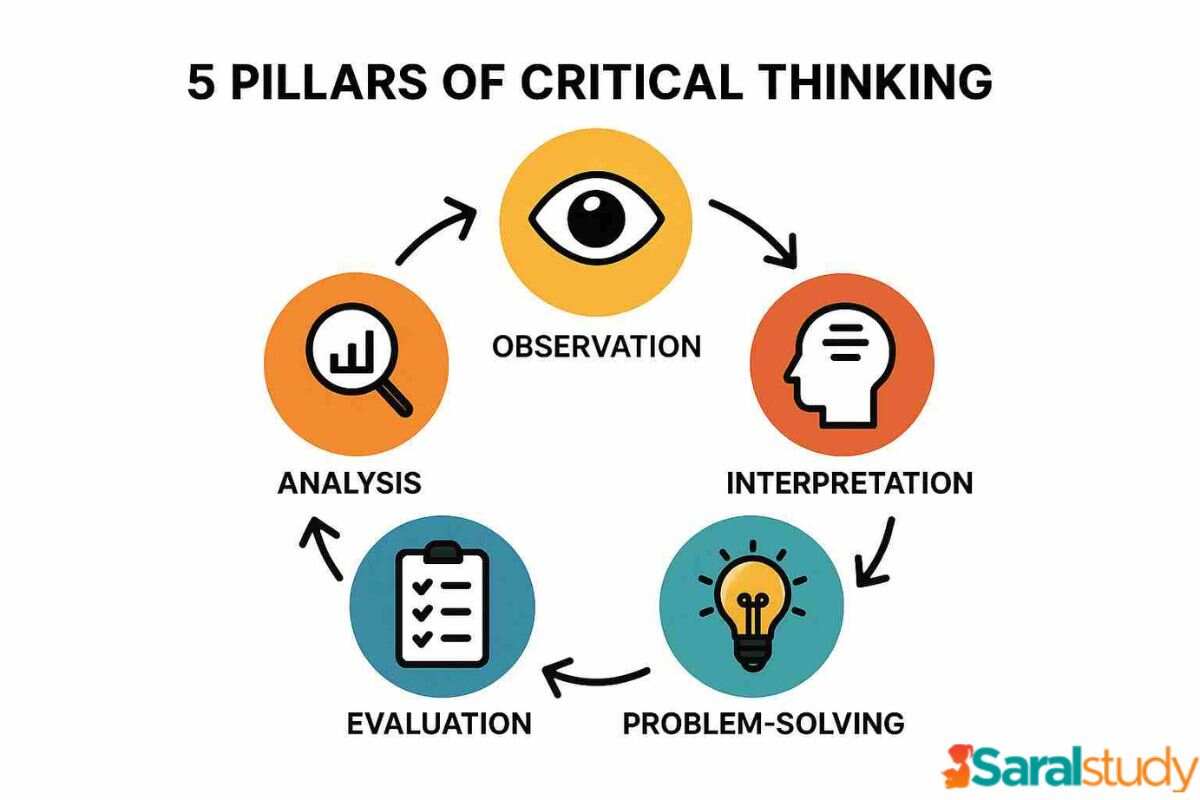
Observation: Paying attention to details and understanding the context.
Analysis: Breaking complex information into smaller parts to understand it better.
Interpretation : Understanding meaning , patterns and connections .
Evaluation : Judging the credibility of sources and evidence .
Problem – Solving : Using logic to find practical solutions .
Why Students Need Critical Thinking in Everyday Learning
When students think critically, they learn how to question, analyze and connect ideas – turning ordinary lessons into meaningful learning experiences.
Helps in Better Decision Making
From choosing which topic to study first to evaluating online resources , critical thinking helps you make logical choices rather than emotional ones . It strengthens reasoning and builds confidence .
Encourages Independent Thinking
Students who think critically don’t just follow instructions – they ask “why .” This curiosity leads to deeper understanding and stronger academic performance .
Improves Creativity and Innovation
Critical thinking isn’t only about logic – it also encourages creativity . When you question things and explore possibilities , you start thinking outside the box .
Builds Communication and Collaboration Skills
When you think clearly, you can express your thoughts better, back up your ideas with evidence, and respect different perspectives—skills valuable in both academics and real life.
How to Develop Critical Thinking Skills – Step by Step
Here is given simple methods to develop critical thinking:
Ask Questions Constantly
Every time you study something new , ask:
- Why is this important ?
- How does it work?
- What happens if I change one part of it?
Asking questions turns you into an active learner. Curiosity fuels understanding and strengthens reasoning .
Evaluate Information Sources
Not all information is reliable – especially online. Learn to check:
- The source’s credibility (author, institution or website)
- Evidence used to support claims
- Biases that might affect interpretation
Developing this habit helps you avoid misinformation and form balanced opinions.
Think from Multiple Perspectives
Critical thinkers don’t limit themselves to one side of a story. Whether it’s a historical event or a social issue, consider different viewpoints before reaching a conclusion.
This practice builds empathy and deeper understanding.
Practice Problem – Solving Daily
Critical thinking grows when you solve problems regularly.
Try:
- Puzzles and brain teasers
- Case studies
- Real-world examples related to your subjects
Each challenge teaches your brain to think logically and systematically.
Reflect on Your Learning
After every class or study session, spend a few minutes reflecting:
- What did I learn today?
- What did I find confusing?
- How can I apply this knowledge?
Reflection turns information into wisdom. It helps connect what you learn to how you think.
Discuss and Debate
Engage in healthy discussions with classmates, teachers, or friends. When you explain your ideas and defend your views logically, you sharpen your reasoning and communication skills.
Embrace Mistakes as Learning Opportunities
Instead of fearing errors, analyze them. Ask:
- Why did I make this mistake?
- What can I learn from it?
This attitude builds resilience and flexibility – core aspects of critical thinking.
Everyday Activities That Boost Critical Thinking
Also everyday activities helps to boost critical thinking:
Read Beyond the Textbook
Read newspapers, biographies, scientific articles, or even fiction that makes you think. Exposure to varied perspectives broadens your mind.
Journal Your Thoughts
Writing daily reflections helps organize your thoughts and track how your opinions evolve. It also improves clarity and logical expression.
Observe and Analyze Situations Around You
Critical thinking isn’t confined to classrooms. Try analyzing real-world scenarios—like understanding advertisements, political speeches, or social trends—to see how reasoning works in daily life.
Take Short Breaks to Think Deeply
Quiet moments often lead to the best insights. Step back, think, and connect the dots before drawing conclusions.
How Teachers and Parents Can Help Build Critical Thinking
Using these simple steps by teachers and parents ii is easy to develop critical thinking:

Encourage Open-Ended Questions
Instead of asking “Did you understand?” ask “What did you learn?” or “How would you apply this?”
Such questions promote deep thinking.
Promote Exploration Over Memorization
Allow children to experiment, make observations and learn through exploration.
Encouraging curiosity builds independent thinkers.
Model Critical Thinking
When parents and teachers reason aloud – showing how they make decisions or evaluate information – students naturally mirror those habits .
Real-Life Example: Critical Thinking in Action
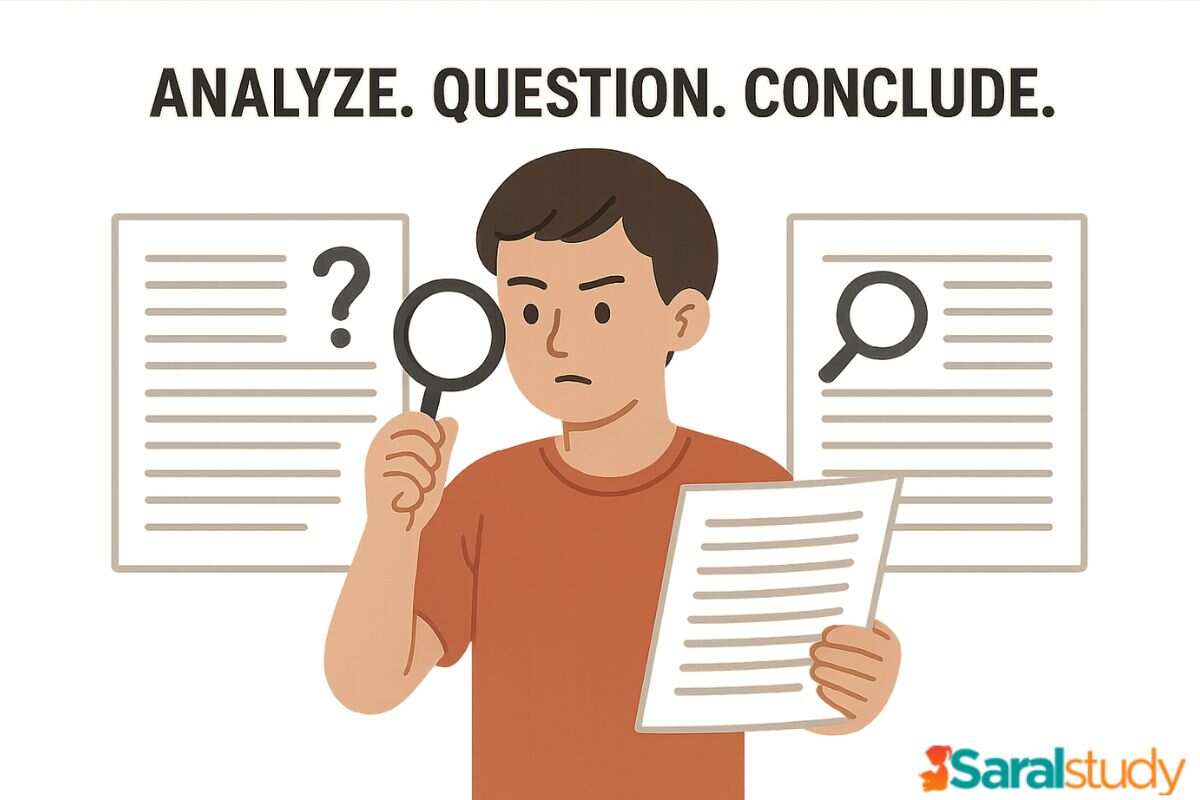
Imagine you’re researching a topic online . You find two articles with different opinions .
Instead of choosing one blindly, you :
- Check the author and date .
- Compare facts and evidence .
- Note biases or missing details .
- Form your own conclusion .
That’s critical thinking in action – objective, balanced and thoughtful.
Conclusion – Think, Question, Grow
Critical thinking isn’t a subject you memorize; it’s a skill you practice every day.
By questioning, analyzing, and reflecting, you train your mind to understand – not just remember.
The next time you study or read something new, pause and ask “Why?”.
That simple habit will shape you into a confident, independent, and lifelong learner – ready for the challenges of both academics and real life.
Also Read: The Hidden Risks of Online Gaming for Children — Is your child safe while gaming online?
Study Smarter, Not Harder: Build Productive Habits That Stick