

Have you ever noticed that doing activities such as playing outdoors, chilling with your friends, or using the mobile phone feels so effortless and fun?
Whenever you might have played sports, you kept on playing even when it felt hard initially just so you could get that feeling after the game, a feeling of accomplishment, joy and fulfillment.
But alas, what happens when it’s time to study?
Neither its effortless, nor the act of keep on going feels rewarding.
You get bored easily and do not feel like continuing studying, even when you know that there is a chance of a reward, that being good grades, admission into a prestigious college for higher studies or even the feeling of accomplishment.
This is where self-discipline gets into play. It is to delay instant gratification and do work which you don’t feel like doing. A lot of students do wish to perform well in exams but lack the will. They depend on their preparation for the last- minute cramming or some even put in hours to plan but never execute.
The underlying factor of students achieving good grades and ranks is self-discipline.
But why do we need self-discipline? Why not Motivation?
Let’s unveil the reasons ahead.
Why Self-Discipline is More Important Than Motivation?
Motivation is often seen as this magical start, once you feel motivated, all your work will be done effortlessly. Nevertheless, motivation is just a state of mind, which is not reliable at all. We all might know that. We wait for motivation to kick in but it never does.
Self-discipline on the other hand, once cultivated can get you through anything, even when it feels impossible.
For instance, you and your friend wanted to prepare for a competitive exam, you both started preparing and studying thinking how great it would be if you both cracked the exam. You both were motivated and driven. You relied on motivation to study, whereas your friend was cultivating self-discipline. After a few days, you felt unmotivated and started procrastinating, whereas your friend still continued to put in efforts because he was self-disciplined.
Studies have proven that self-discipline trumps IQ hands down. Psychologists Angela Duckworth and Martin Seligman conducted a landmark study that followed 140 eighth-graders for a full school year and discovered something fascinating: self-discipline was twice as powerful a predictor of academic achievement as IQ. Those with greater self-discipline earned higher grades, came to school more often, and watched less television.
Self-Discipline is not to overlook fun or limiting yourself from other things, it’s to set aside time for study and being consistent with it, even on days when you don’t feel like studying.
You need to identify the long-term benefits of your efforts such as academic achievement and use it as the anchor to self-discipline over short term joys such as binge-watching shows, constant gaming or social media scrolling, which last a few hours and lead you into guilt and shame later.
Self-discipline generates a virtuous circle that motivation can’t compete with. One recent study, which drew on over 900 participants, determined that when you manage to exercise self-discipline, it actually makes you more autonomously motivated and less prone to procrastination. Self-discipline compounds itself – each small win makes the next one easier, unlike temporary motivation.
Now that you know why self-discipline is important, let’s find out how to cultivate it and make it a daily part of our life.
How to Cultivate Self-Discipline?
Psychologists confirm that it becomes much simpler to learn when it becomes a habit. Habits lower the cognitive energy needed to make a choice and take action. For instance, if you always start studying at 6 PM every evening, your brain will sooner or later identify this as “normal” and provide less resistance to the regimen. But if you stay away from studying altogether, your brain gets used to that too – and as exams loom, you’ll find it close to impossible to concentrate because your neural circuits have not been conditioned for long periods of study.
Steps to Build Self-discipline
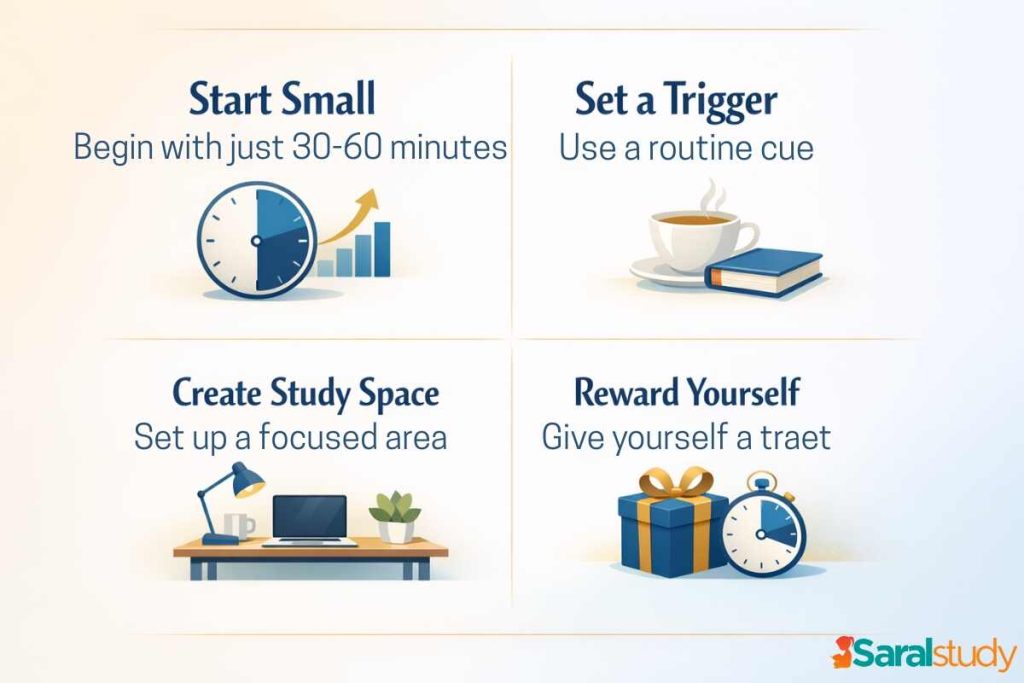
- Start Small: Instead of aiming for a 6 hours straight study marathon, start initially with just 1 hour. Gradually increase your study time and your brain won’t fight the change. After sometime you are going to get used to it and also might end up enjoying it, so much so that you would start looking forward to it.
- Set a Trigger: think about time to a day by day schedule (e.g., after evening tea, you begin revising).
- Create a study Space: An assigned consideration corner signals your brain that it’s “work mode.”
- Reward Yourself: Little rewards (like a 10-minute break, a favorite nibble) strengthen positive behavior.
This “habit loop” (signal → schedule → compensate) is the spine of teaching. Any break in this cycle of teach will lead to a disturbance of efficiency.
Delaying Delight: The Mystery Control of Self-Control
Self-control means saying no to small, instant pleasures so you can get bigger rewards later, like good grades or success. When you practice this, it becomes easier to stay focused and make better choices in studies and life.
Have you heard of the popular Stanford Marshmallow experiment?
In this oldie- but- goodie trial, kids who were suitably delayed 15 minutes for a second marshmallow rather than eat one right away ended up with good SAT scores, better social skills and reduced substance abuse decades later. The power of delaying gratification in early life literally forecasted success.
For exams, this means:
Saying “no” to quick fun (video diversions, parties) for the greater reward (great grades, opportunities). Prioritizing what things presently for future benefits.
When you delay the satisfaction, you prepare your brain to think long-term. Over time, this gets to be momentary so another time you sit to study, don’t just think of passing exams, think of scoring great grades and the reward you will get after that.
Training the Brain to stick to study Schedules
Creating a timetable is simple. Staying there is the difficult part. Self-discipline is what changes a plan into action.
- Pomodoro Strategy: Consider for 25 minutes, take a 5-minute break. This decreases burnout.
- Reasonable Objectives: Instep of arranging 10 chapters in a day, center on 2–3 thoroughly.
- Eliminate Diversions: Keep your phone in another room, utilize site blockers, or study in a library.
- Accountability Accomplice: Share your considered objectives with a companion or family part. Detailed advance makes a difference if you remain on track.
- Daily Reflection: Spend 5 minutes at night looking through what you accomplished and what to move forward with tomorrow.
This consistency, when rehashed every day, establishes your self-discipline.
The Mental Benefits of Self-Discipline
Self-discipline doesn’t give fair progress grades—it also reinforces your mental wellbeing and certainty. When you know what you are doing or what you are going to do in your day or life you pick up a sense of control over yourself. As well as offer assistance in other calculate such as:
- Reduced Stretch: When you take after a study arrange, last-minute freeze reduces.
- Greater Center: Your brain gets utilized to block distractions.
- Sense of Control: Instead of feeling powerless some time recently exams, you feel in charge of your progress.
- Confidence Boost: Consistency builds self-trust—“I can do this.”
This mental quality frequently carries over to other zones of life—fitness, career, and indeed relationships.
Self-Discipline in Action
Let’s see at two students planning for competitive exams:
Student A begins with eagerness, studies occasionally , and depends on inspiration. For two weeks soon after in exams, freeze sets in, driving to restless evenings and stress.
Student B builds every day habits—2 hours of revision, planned breaks, and negligible phone utilization. He remain calm, covers the syllabus, and enters the exam corridor with confidence.
Who do you think scores way better? Clearly, Understudy B.
Many toppers of UPSC, IIT-JEE, and SSC exams share one common message: discipline beats ability when ability isn’t disciplined.
How to Build Self-discipline
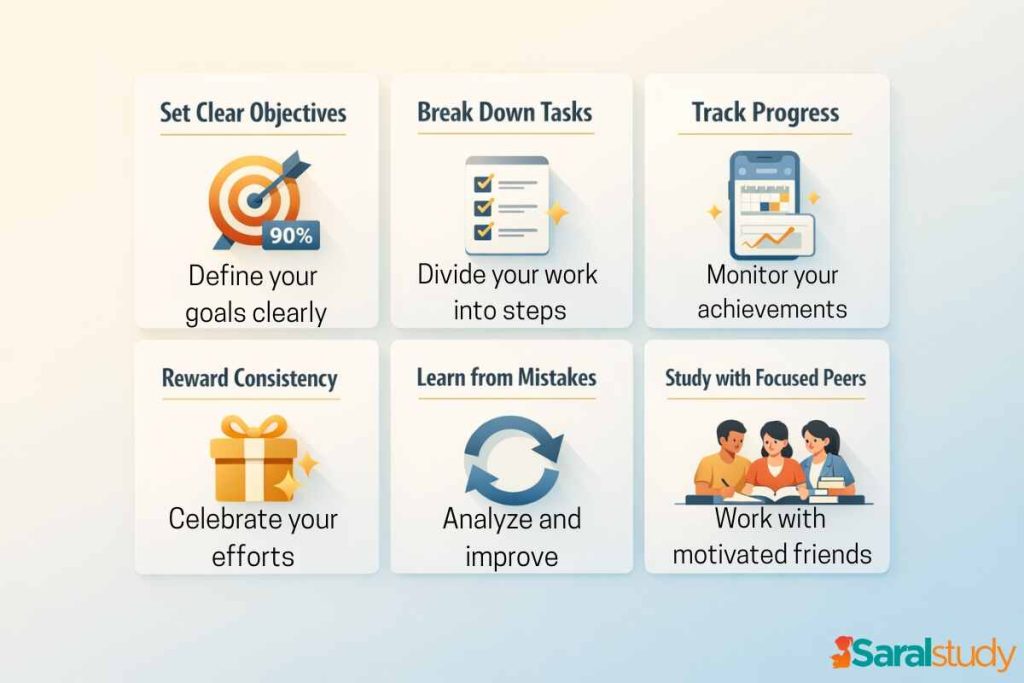
- Set Clear Objectives: Characterize what you need (e.g., score 90% in math, wrap up syllabus by March).
- Break Down Assignments: Separate enormous objectives into littler, day by day targets.
- Track Advance: Utilize apps, diaries, or planners.
- Reward Consistency: Treat yourself for completing milestones.
- Learn from Disappointments: If you miss a consideration session, don’t stop. Restart the other day. Surround Yourself with students like you: Consider with peers who esteem time.
Remember, learning is like a muscle—the more you work it out, the more grounded it becomes.
Common Set-backs and How to overcome them
Once you begin to consider being disciplined you must have seen your center fair blurs absent and you conclude up with your phone or some place profound in your imaginations from where there is no coming back lets
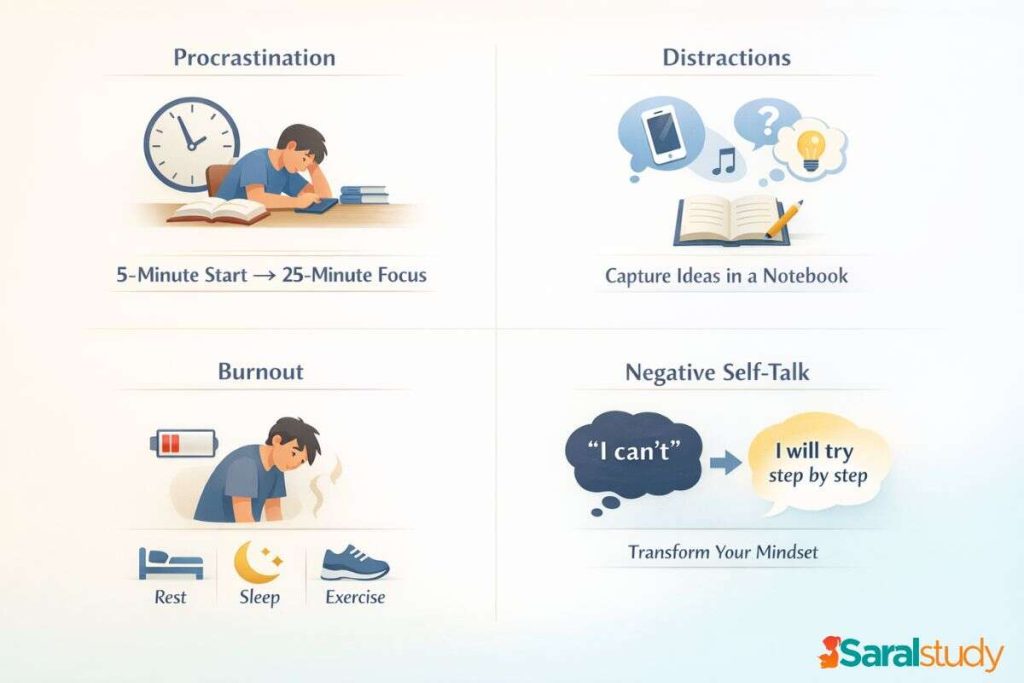
- Procrastination → Utilize the 5-minute run of the show: tell yourself to think about it for a fair 5 minutes. Once begun, force yourself to sit there for the next 25 min.
- Distractions → Keep a “distraction notebook” where you rapidly scribble down enticing contemplations and return to study.
- Burnout → Adjust study plan with rest, work out, and appropriate sleep.
- Negative Self-Talk → instead of “I can’t do this” with “I will attempt one step at a time.”
Conclusion
Self-discipline isn’t about perfection, it’s about persistently working towards your goal.
Academic achievement is not built overnight. It’s the result of day to day effort, steady execution and the control of self.
Whereas insights and ability grant you a head start, it’s learning that carries you over the wrap up line.
If you’re planning for exams, remember:
Motivation will fade. Distractions will entice you.But your self-discipline will choose your success.
So, begin little, construct consistency , delay delight, and stick to your plan. With time, you’ll not as it were to expert your exams but too develop an attitude that sets you up for deep rooted accomplishment.
Understanding Procrastination: Why Students Put Off Studying and How to Beat It
Also Read:The Science Behind Effective Study Habits: Boost Your Learning Efficiency