
Types of Natural Calamities
By Amit Kumar | Updated: December 8, 2022
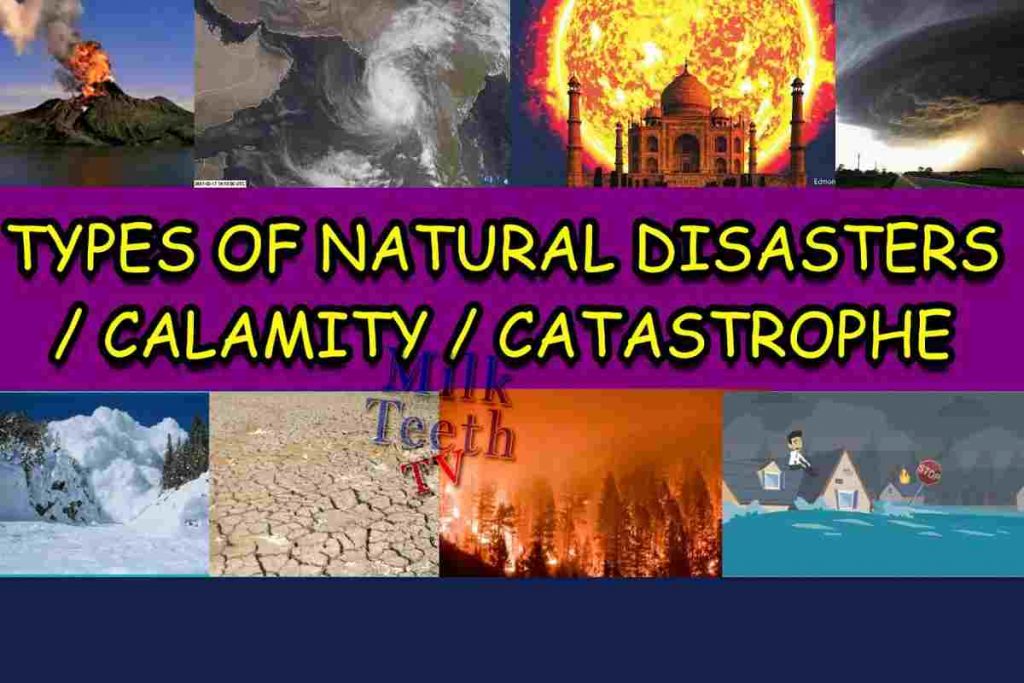
There are different forms of disasters or calamities. The duration of these natural calamities can be indefinite. It can range from a couple of hours to many days and even months. The following is a list of natural calamities.
Agricultural diseases
Agricultural diseases not only affect livestock. They affect human beings as well. The issue of foreign pests and diseases is common in many agriculture oriented countries. There is periodic outburst of agricultural diseases such as avian influenza, emerald ash borer, Asian long horned beetle, and many such pest infections in agricultural lands.
Heavy and damaging winds
These types of winds are called straight line winds. They cause destruction due to their high velocity and volume. These winds can be caused from a thunderstorm draft. They have an average speed of 50-60 mph which can increase in due course of time. There have been cases when damaging winds have crossed 150 mph.
Earthquakes
A severe earthquake is a frightening natural calamity. It causes damage en masse. To recover from an earthquake is as difficult as to recover from any other natural calamity. The severity of an earthquake depends on the level of urbanization in an area. Earthquakes can also damage plain land by offsetting them. Earthquakes have been happening for millions of years. The movement of tectonic plates will continue to happen and there is no way to stop it.
Extreme heat
Excessive heat causes fatalities. It causes sunstroke and dehydration. It creates an abnormal temperature in the body. The body is pressurized to maintain a normal temperature. A mass heat wave can kill a lot of people. Overexposure to the sun is one of the main causes. It is not necessary that extremely hot places cause fatalities. Poor air quality and atmospheric conditions also cause heat related calamities.
Floods
Areas with dense populations are the most affected by floods. Lesser the ground surface to absorb flood water more is the destructive potential of flash floods. The construction of structures such as buildings, highways, roads, and flyovers increase the destruction. Floods can also be caused in cities due to overwhelmed storm drains. Heavy rainfall fills these storm drains over their normal capacity. The water from these storm drains percolates into the streets and roads.
Hurricanes
Hurricanes generally affect coastlines. They cause high velocity winds in the range of 200 mph. The winds are spiral in nature and have great gravitational force. Hurricanes can induce heavy rainfall, thunderstorms, floods, and storms. There have been instances where hurricanes have caused landslides where many hundreds and thousands of people were buried under land. There is no generally accepted knowledge as to when a hurricane can appear. It is also not clear as to where they can appear. A hurricane can appear anywhere along the coastline.
Wildfire
Remote mountains and rural settings are becoming places of inhabitation. Human settlement is causing the creation of wildfires. These fires begin unnoticed. Soon they spread quickly and uncontrollably. Wildfires are a very real threat in forests and places of intense vegetation.
📚 Related Articles



👉 You May Also Read
📚 Related Articles
- Top Reasons of Floods in India: Causes & Impacts
- World’s Most Beautiful Birds – Nature’s Artistry
- Indian Birds – Types, Name and Images
- Harvesting Rainwater
- Should Plastic Be Banned In India?
🔥 Popular Posts




📌 Explore Categories
- About India
- Calendar
- Career
- Counselling
- Current Affairs
- Economy
- Education
- Exams
- Festival
- Health and Fitness
- Hindi Sahitya
- History
- Intelligence Agency
- International Personality
- Know India
- Knowledge
- Maths
- Maxim
- Moral Stories
- Nature
- NEWS
- Olympiad
- Others
- Personality Development
- Politics
- Scholarship
- Science and Environment
- Sports
- States of India
- Study Abroad
- Study Tips
- Technology
- The Greatest Indian
- Uncategorized