
Indian Birds – Types, Name and Images
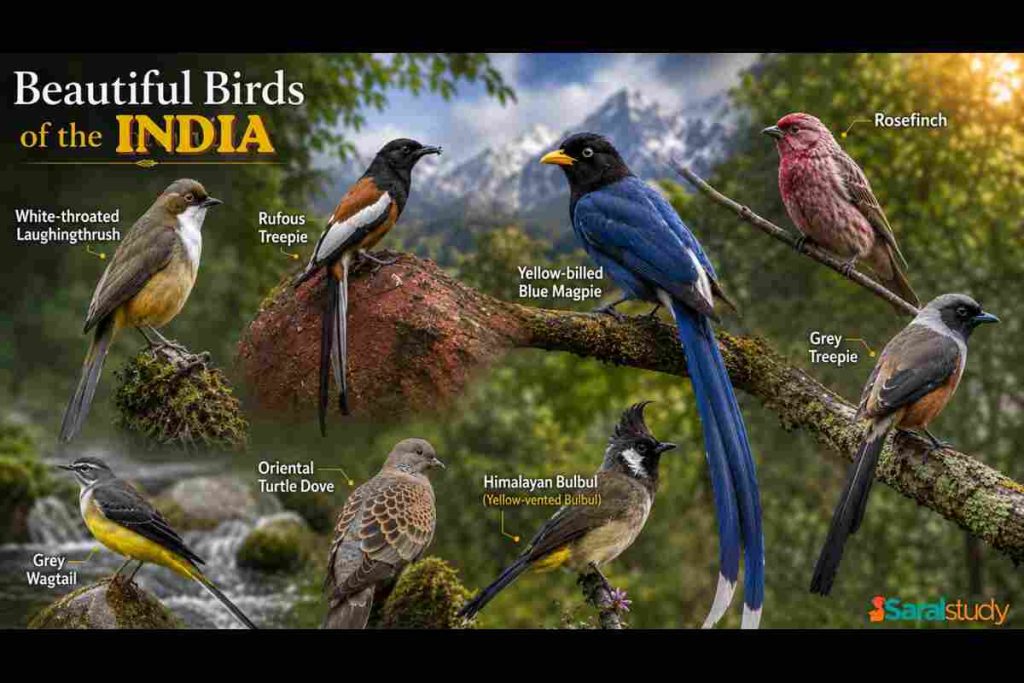
India is a vibrant mosaic of landscapes—from the snow-capped Himalayas to the tropical Western Ghats—that has nurtured some of the most diverse birdlife on the planet. Often described as a living textile of colors and songs, the types of birds in India represent a significant portion of the world’s avian population. As a well-defined group of vertebrates, birds are among the most beautiful creatures across all seven continents.
Biologically, every Indian bird name you recognize belongs to the Kingdom Animalia, Phylum Chordata, and Class Aves. These fascinating creatures evolved from prehistoric reptiles, with the Archaeopteryx serving as the famous evolutionary link. When exploring indian birds images with names, you will notice distinct characteristics that define this class:
-
Aerodynamic Features: Light, hollow bones and specialized feathers designed for flight.
-
Diverse Beak Shapes: Adapted specifically for different diets, from nectar-sipping to hunting.
-
Biological Traits: They are warm-blooded (endothermic) with efficient four-chambered hearts.
-
Reproduction: Being oviparous, they lay hard-shelled eggs to protect their young.
Whether you are searching for a specific indian bird name for a school project or just browsing indian birds photos with names for a hobby, understanding these biological foundations helps you appreciate the true wonder of India’s winged inhabitants.
Types Of Indian Birds
When we define birds, we categorize them primarily based on their physiological ability to navigate the skies. In the context of types of birds in India, they are broadly divided into two distinct groups:
1. Flight Birds
The vast majority of Indian birds fall into this category. These birds possess a specialized “locking mechanism” in their wing joints and powerful pectoral muscles that allow for sustained flight. From the high-flying Indian Spotted Eagle to the common House Sparrow, these birds have evolved hollow bones and aerodynamic feathers to master the air.
2. Flightless Birds
While rare in the wild within the Indian subcontinent, flightless birds are defined by the absence of the keel on their breastbone, which is necessary for attaching flight muscles. Instead, these birds have evolved strong legs for running or specialized feathers for different environments. In an Indian bird name context, most flightless birds seen in the country are found in zoological parks or specialized farms, such as the Emu or Ostrich.
Classification of Indian birds
The classification of the birds in India is a complex task due to the country’s vast geographical diversity. Scientists and ornithologists use a chronological and taxonomic checklist to organize the thousands of species found here. The Indian national bird name, Pavo cristatus (Peacock), is a prime example of how specific classifications help in global identification.
How Birds are Classified in India:
-
By Habitat: Birds are grouped into forest dwellers, wetland birds (waterfowl), grassland species, and coastal birds.
-
By Migration Patterns: India serves as a major hub for the Central Asian Flyway. Many types of birds in India are migratory, arriving from Siberia and Central Asia during the winter months.
-
By Rarity: While species like the Myna and Crow are common across all indian bird names, others like the Great Indian Bustard are endemic and found only in specific arid regions of Rajasthan and Gujarat.
Avian Diversity Across Indian Landscapes
The Indian bird names we recognize often depend on the specific “Unique Places” or ecoregions they inhabit. According to avian diversity studies, India’s birdlife is distributed across several key zones:
-
The Himalayan Zone: Home to high-altitude specialists like the Himalayan Monal and various types of Pheasants.
-
The Western Ghats: A biodiversity hotspot containing many endemic indian bird names that are found nowhere else on Earth, such as the Malabar Grey Hornbill.
-
The Indo-Gangetic Plains: Rich in wetlands, this area is famous for indian birds images with names like the Sarus Crane and various Kingfishers.
-
The Deccan Plateau: Host to a variety of raptors and hardy grassland birds.
Indian birds name along with their scientific names, habitat, diet, and conservation status
Here’s the completed table with Indian bird names and relevant details:
| Bird Name | Scientific Name | Habitat | Diet | Conservation Status |
|---|---|---|---|---|
| Peacock | Pavo cristatus | Forests, farmlands | Omnivorous | Least Concern |
| Indian Eagle | Aquila rapax | Grasslands, deserts | Carnivorous | Vulnerable |
| Indian Parrot | Psittacula krameri | Urban areas, forests | Herbivorous | Least Concern |
| House Sparrow | Passer domesticus | Urban areas | Omnivorous | Least Concern |
| Great Hornbill | Buceros bicornis | Dense forests | Omnivorous | Near Threatened |
| Indian Cuckoo | Cuculus micropterus | Woodlands, forests | Insectivorous | Least Concern |
| Common Myna | Acridotheres tristis | Urban areas, rural areas | Omnivorous | Least Concern |
| Indian Roller | Coracias benghalensis | Open grasslands, forests | Insectivorous | Least Concern |
| Painted Stork | Mycteria leucocephala | Wetlands, marshes | Carnivorous | Near Threatened |
| Indian Pitta | Pitta brachyura | Deciduous forests | Insectivorous | Least Concern |
| Black Drongo | Dicrurus macrocercus | Open fields, forests | Insectivorous | Least Concern |
| Baya Weaver | Ploceus philippinus | Grasslands, farmlands | Granivorous | Least Concern |
| White-throated Kingfisher | Halcyon smyrnensis | Forests, riversides | Carnivorous | Least Concern |
| Crested Serpent Eagle | Spilornis cheela | Forests, grasslands | Carnivorous | Least Concern |
| Indian Robin | Saxicoloides fulicatus | Scrublands, urban areas | Insectivorous | Least Concern |
| Greater Flamingo | Phoenicopterus roseus | Wetlands, saline lakes | Omnivorous | Least Concern |
| Common Tailorbird | Orthotomus sutorius | Gardens, bushes | Insectivorous | Least Concern |
| Black Kite | Milvus migrans | Urban areas, open fields | Carnivorous | Least Concern |
| Bar-headed Goose | Anser indicus | Wetlands, lakes | Herbivorous | Least Concern |
| Indian Pond Heron | Ardeola grayii | Wetlands, marshes | Carnivorous | Least Concern |
| Alexandrine Parakeet | Psittacula eupatria | Forests, urban areas | Herbivorous | Near Threatened |
| White-browed Wagtail | Motacilla maderaspatensis | Riversides, wetlands | Insectivorous | Least Concern |
| Spotted Owlet | Athene brama | Open fields, urban areas | Carnivorous | Least Concern |
| Green Bee-eater | Merops orientalis | Open grasslands, farmlands | Insectivorous | Least Concern |
| Rock Pigeon | Columba livia | Urban areas, cliffs | Herbivorous | Least Concern |
| Jungle Babbler | Turdoides striata | Scrublands, forests | Omnivorous | Least Concern |
| Indian Grey Hornbill | Ocyceros birostris | Forests, urban areas | Omnivorous | Least Concern |
| Indian Bush Lark | Mirafra erythroptera | Grasslands, scrublands | Insectivorous | Least Concern |
| Cattle Egret | Bubulcus ibis | Wetlands, farmlands | Carnivorous | Least Concern |
| Black-necked Stork | Ephippiorhynchus asiaticus | Wetlands, marshes | Carnivorous | Near Threatened |
| Common Kingfisher | Alcedo atthis | Riversides, lakes | Carnivorous | Least Concern |
| Lesser Whistling Duck | Dendrocygna javanica | Wetlands, lakes | Herbivorous | Least Concern |
| Eurasian Spoonbill | Platalea leucorodia | Wetlands, lakes | Carnivorous | Least Concern |
| Indian Swallow | Hirundo rustica | Open fields, urban areas | Insectivorous | Least Concern |
| Indian Silverbill | Euodice malabarica | Grasslands, open fields | Granivorous | Least Concern |
| Common Pigeon | Columba livia | Urban areas, cliffs | Herbivorous | Least Concern |
| Black-crowned Night Heron | Nycticorax nycticorax | Wetlands, marshes | Carnivorous | Least Concern |
| Eurasian Collared Dove | Streptopelia decaocto | Urban areas, farmlands | Herbivorous | Least Concern |
| Indian Eagle Owl | Bubo bengalensis | Forests, open woodlands | Carnivorous | Least Concern |
| Indian Scops Owl | Otus bakkamoena | Forests, urban areas | Carnivorous | Least Concern |
| Indian Silverbill | Euodice malabarica | Grasslands, dry areas | Granivorous | Least Concern |
| Shikra | Accipiter badius | Urban areas, forests | Carnivorous | Least Concern |
| Indian Paradise Flycatcher | Terpsiphone paradisi | Forests, gardens | Insectivorous | Least Concern |
| Indian Robin | Saxicoloides fulicatus | Scrublands, urban areas | Insectivorous | Least Concern |
| Indian Spot-billed Duck | Anas poecilorhyncha | Wetlands, lakes | Omnivorous | Least Concern |
| Blue-throated Barbet | Psilopogon asiaticus | Forests, gardens | Omnivorous | Least Concern |
Some birds are described on the basis of their size, shape, color etc.:
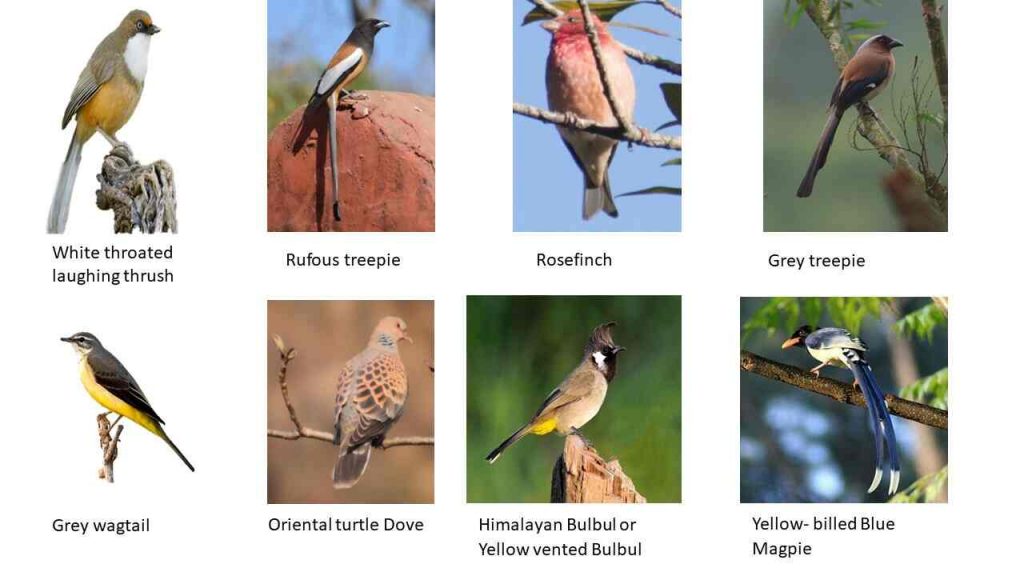
These are some bird pictures that are taken from the camera in the Himalayan region at the time of March or April. So these pictures show the diverse nature of their shape and size in their body, color patterns or beak shape and size, etc. Like the Yellow-vented Bulbul, we have a similar diversification in their species as Red-vented Bulbul which have the red vent; Dove has various varieties like the Oriental turtle Dove, spotted dove, etc., and great diversity contains magpies, treepie, etc.
Interesting Facts About Birds of India
1. The Indian Roller: A Biological and Cultural Icon
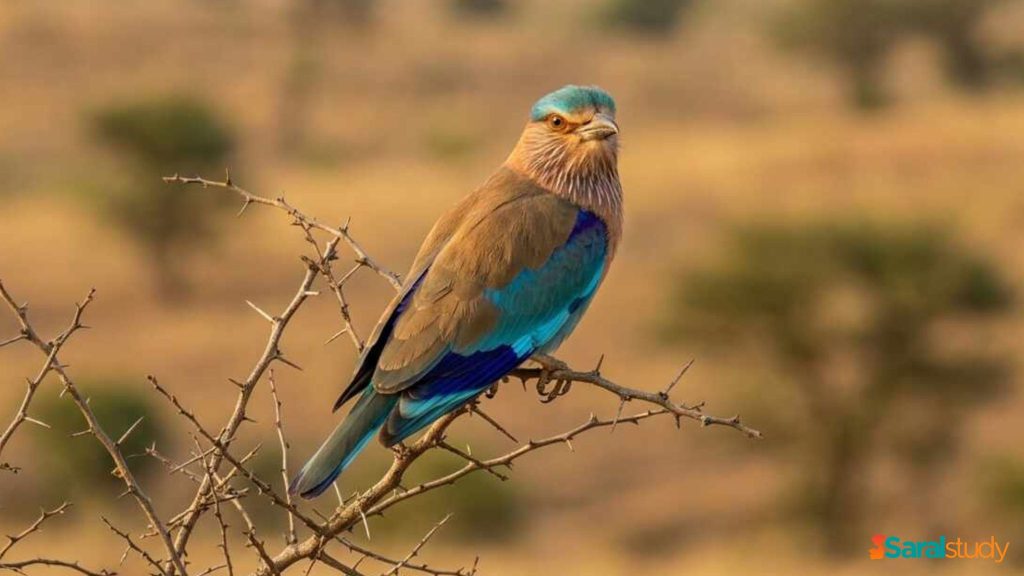
The Indian Roller (Coracias benghalensis) is more than just a colorful bird; it is a master of the skies and a symbol of good fortune. Known locally as the Neelkanth, it is frequently associated with Lord Shiva and is considered a lucky omen if spotted during festivals like Dussehra.
-
Vibrant Plumage: While it appears as a modest brown-buff bird when perched, it reveals a breathtaking flash of vibrant blue and purple feathers the moment it takes flight.
-
Aerial Acrobatics: Its name “Roller” comes from its spectacular courtship displays, where males perform stunning aerial acrobatics, including steep dives and 360-degree rolls to attract a mate.
-
State Symbol: Highlighting its widespread appeal, it is the official state bird of multiple Indian states, including Karnataka, Odisha, and Telangana.
-
Farmer’s Friend: Interestingly, these birds are a natural pest control system; they are often seen perched on roadside wires, scanning fields to hunt for beetles, grasshoppers, and even small scorpions.
2. The Painted Stork (Mycteria leucocephala)
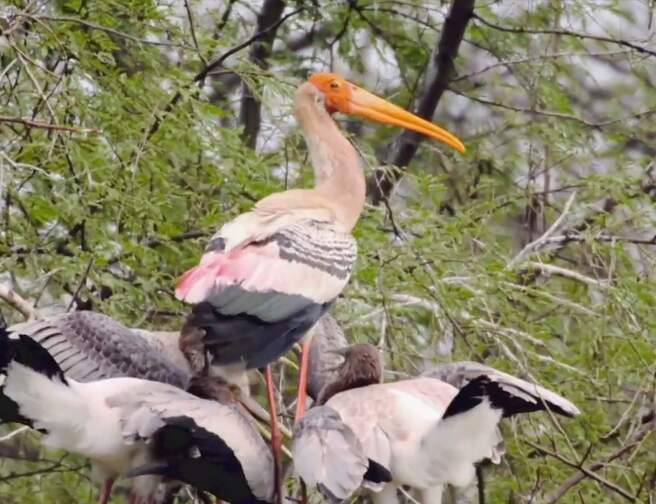
The Painted Stork is a large, colorful wader that brings a splash of vibrancy to India’s marshes and lakes.
-
Appearance: Easily identified by its yellow, curved beak and delicate pink feathers near the tail.
-
Social Nature: These birds are highly social and nest in large colonies, often sharing trees with other species.
-
Habitat: They are commonly found near water bodies across India, including wetlands and shallow lakes.
-
Feeding: They forage in shallow water, using their beaks to “feel” for fish in the mud.
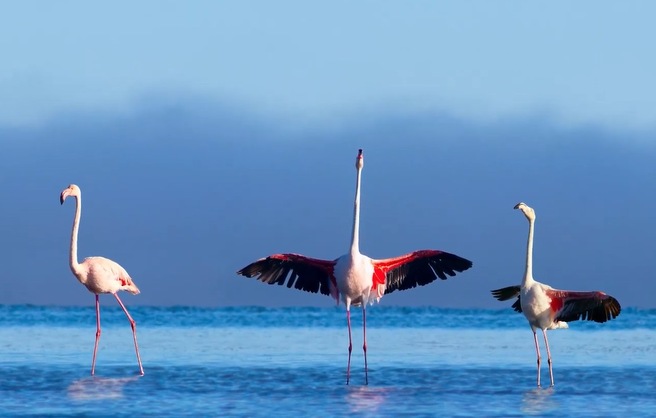
3. The Greater Flamingo (Phoenicopterus roseus)
The Greater Flamingo is the largest and most widespread species of the flamingo family, famously turning parts of the Indian landscape into a “pink sea.”
-
Regional Presence: These birds are found in large numbers in Gujarat and Rajasthan, with the Rann of Kutch being one of their only known breeding grounds in India.
-
Color Secret: Their iconic pink color is not genetic; it comes from carotenoids in their diet of algae and crustaceans.
-
Unique Physiology: They are known for their long, S-shaped necks and a specialized beak designed to filter-feed while holding their heads upside down underwater.
-
Stature: Standing up to 5 feet tall, they are easily distinguished from the Lesser Flamingo by their larger size and lighter, more whitish-pink plumage.
4. The Sarus Crane (Grus antigone)
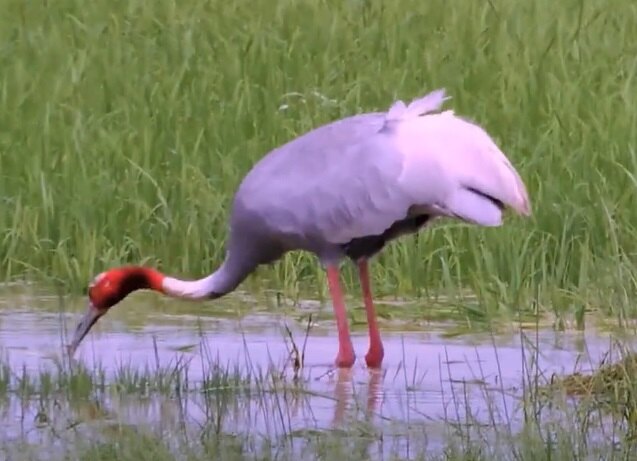
The Sarus Crane is a symbol of marital fidelity and the world’s tallest flying bird, often seen in the open wetlands of Northern and Central India.
-
World Record Holder: Standing at nearly 5 feet tall, it holds the title of the world’s tallest flying bird.
-
Life-Long Bonds: These elegant birds are famous for their lifelong pair bonding, staying with the same mate for their entire lives.
-
Iconic Rituals: They are known for their spectacular synchronized dancing rituals, which involve loud trumpeting calls, leaps, and wing flapping.
-
State Symbol: The Sarus Crane is the official state bird of Uttar Pradesh, where it is deeply revered by local communities.
5. The Indian Pitta (Pitta brachyura)
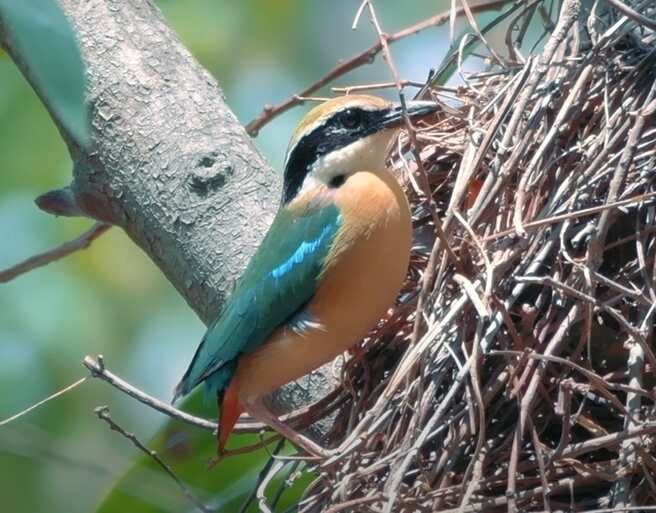
The Indian Pitta is a shy but spectacularly colorful bird, often described as a “living jewel” within the undergrowth of Indian forests.
-
Rainbow Plumage: It is famously known for its striking nine-colored plumage, which includes shades of green, blue, yellow, and red.
-
Cultural Name: Due to its vibrant appearance, it is popularly referred to as “Navarangi” (meaning “nine colors”) in Hindi.
-
Migratory Patterns: This species is migratory, breeding in the foothills of the Himalayas and traveling to Southern India and Sri Lanka for the winter.
-
Habitat: It is commonly found in forested areas and dense scrub across the subcontinent, where it forages on the ground for insects.
Bird Conservation Efforts in India
India is home to over 1,300 bird species, but growing threats from habitat loss, climate change, and human activities have made conservation crucial. To combat these challenges, several organizations and targeted projects are working to protect India’s avian diversity.
-
Key Organizations: The Bombay Natural History Society (BNHS) and the Wildlife Institute of India (WII) lead the way by preserving bird habitats, raising public awareness, and advocating for stronger environmental legislation.
-
Targeted Recovery Programs: Specific initiatives like “Save the Indian Vulture” and “The Great Indian Bustard Recovery Program” focus on preventing the extinction of India’s most endangered species.
-
Mission: These efforts aim to secure a future for birds by protecting the delicate ecosystems they rely on across the subcontinent.
Bird-Watching in India: Popular Destinations
India is home to numerous bird sanctuaries that attract bird-watchers from across the world. Here are a few notable ones:
| Place | Location | Establishment | Significance |
|---|---|---|---|
| Bharatpur Bird Sanctuary (Keoladeo Ghana National Park) | Bharatpur, Rajasthan | 1971 | A UNESCO World Heritage Site, home to over 370 species of birds, especially during winter migration. |
| Ranganathittu Bird Sanctuary | Karnataka | 1940 | Located near the Cauvery River, this sanctuary attracts migratory birds from Siberia and North America. |
| Chilika Lake Bird Sanctuary | Odisha | 1981 | Asia’s largest brackish water lagoon, a wintering ground for hundreds of species, including flamingos. |
| Kumarakom Bird Sanctuary | Kerala | 1980 | Nestled along Vembanad Lake, known for migratory species like Siberian cranes and waterfowl. |
| Vedanthangal Bird Sanctuary | Tamil Nadu | 1936 | One of the oldest bird sanctuaries in India, known for species like painted storks and pelicans. |
| Sultanpur Bird Sanctuary | Haryana | 1989 | Popular for bird-watching and is home to 250 bird species, particularly migratory waterfowl during winter. |
These destinations offer rich birding experiences, with many sanctuaries serving as vital stopovers for migratory birds from around the globe. Visitors can enjoy bird-watching in these peaceful natural reserves, especially during the migratory season (November to February).
Impact of Climate Change on Bird Migration
The changing climate has significantly altered bird migration patterns across India. Traditionally, migratory species like Siberian Cranes and Amur Falcons followed strict seasonal schedules, but erratic weather and shifting temperatures have caused unpredictable arrival times.
-
Altered Patterns: Many species are now delaying their migrations, changing traditional flyway routes, or skipping migration entirely.
-
Ecological Disruption: These shifts disrupt the balance of local ecosystems, raising serious concerns regarding the long-term stability of biodiversity in the region.
-
The Threat of Extinction: Human interference is a primary driver of species degradation, largely due to habitat destruction and chemical contaminants from industrial and developmental projects.
-
Conservation Necessity: To protect India’s flora and fauna, reducing pollution is essential. As several species reach the brink of extinction, urgent measures are being implemented to stabilize and restore their populations.
What is Ornithology?
The study of birds is known as Ornithology which is done by Ornithologists as they are diversified in their body shape and size, color illustration, habitat, distribution on the local, regional, or continental scale, etc. Birds also have been studied or identified on the basis of their feeding habits, breeding, mating, courtship dance, or behavior.
The diversity of flora vegetation and fauna depends on latitude, longitude, and Climatic factors. For the wealth of bird’s abundance, they seek migration. Bird migration is the movement from one place to another according to seasonal or climatic influence. Where the temperature is too low there will be low bird diversity and where there is a moderate temperature, diversity will be high. Most of the bird species adapted or migrated the low land areas or lower altitudes for habitation because of the suitable temperature or the environment for example Blue-throated barbet, Great barbet, etc. were seen at the time of April but not in March at the same place. But some birds are native to their place and are found in the same place. Some are only found in the rainy season like the variety of Rose finches.
Practical Methods for Identifying Indian Birds
Identifying the vast types of birds in India requires a systematic approach, combining traditional observation with modern technology. Whether you are looking for a specific indian bird name or documenting a new sighting, these methods will help you achieve accuracy.
1. Key Identification Features
Birds can be distinguished by observing specific physical and behavioral traits:
-
Physical Structure: Look at the beak shape and size (e.g., tit birds have short beaks), as well as tail shape and size (e.g., Drongos and Magpies are known for their long tails).
-
Visual Patterns: Note the color distribution and body-streaked patterns.
-
Behavior and Audio: Pay attention to their feeding habits, unique songs, and calls.
-
Habitat: Observe if they live in domesticated settings, open areas, or forest edges.
2. Bird Counting Techniques
To track avian populations, researchers use several standardized methods:
-
Random Visualization: General sightings during field trips.
-
Point Counts: Observing birds from a fixed location for a specific duration.
-
Area Searches: Systematically searching a defined geographic area.
3. Steps to Identify an Unidentified Bird
If you encounter a bird and don’t know its indian bird name, follow these steps:
-
Document Immediately: Draw a sketch, write down key characteristics in a notebook, or click a picture with a camera.
-
Use a Field Guide: Consult authoritative books like Birds of the Indian Subcontinent to match characteristics.
-
Cross-Reference: If multiple birds look similar, check their geographical distribution to see which species is likely to be in your area.
-
Digital Tools: Use Google to search for physical descriptions and find similar indian birds images with names.
-
Professional Help: For complex identification, consider hiring a field assistant or expert guide.
Indian birds species with voice descriptions, and interesting facts
| Bird Name | Scientific Name | Voice/Call | Other Information |
|---|---|---|---|
| Indian Peafowl / Peacock | Pavo cristatus | Loud, repetitive “mee-ow” | The national bird of India, males display feathers in courtship. |
| Rose-ringed Parakeet | Psittacula krameri | High-pitched screeching | Common pet, vibrant green color. |
| Great Hornbill | Buceros bicornis | Deep, resonant calls | Known for casque on beak, found in forests. |
| Asian Koel | Eudynamys scolopaceus | Distinct “ku-oo” | Often heard in early morning, parasitic bird. |
| House Sparrow | Passer domesticus | Chirping, chatter | Common in urban areas, small and social. |
| Indian Roller | Coracias benghalensis | Harsh calls | Noted for its vivid blue wings. |
| Common Hoopoe | Upupa epops | “hoo-hoo-hoo” calls | Known for its distinct crown of feathers. |
| Red-vented Bulbul | Pycnonotus cafer | Varied whistles and chirps | Found in gardens and forests, active singer. |
| Painted Stork | Mycteria leucocephala | Silent, occasional clattering | Large wading bird found near wetlands. |
| Indian Cuckoo | Cuculus micropterus | Repeated “bo-ko bo-ko” | Migratory, associated with monsoon season. |
| Common Myna | Acridotheres tristis | Loud, clear whistles and chatter | Often found in human settlements, opportunistic feeder. |
| Baya Weaver | Ploceus philippinus | Continuous chirping | Known for intricate nest weaving. |
| Black Drongo | Dicrurus macrocercus | Sharp, aggressive calls | Small, aggressive bird, protects its territory. |
| Indian Pitta | Pitta brachyura | Sharp two-note whistle | Colorful, ground-dwelling bird. |
| Brahminy Kite | Haliastur indus | High-pitched shrieks | Often seen near coasts and rivers. |
| Jungle Babbler | Turdoides striata | Harsh chattering | Known as “Seven Sisters” due to its social groups. |
| Greater Flamingo | Phoenicopterus roseus | Low honking sounds | Found in large flocks near wetlands and salt flats. |
| Black Kite | Milvus migrans | Shrill whistling | Scavenger bird, commonly seen circling in urban areas. |
| Indian Paradise Flycatcher | Terpsiphone paradisi | High-pitched trills | Strikingly long tail feathers in males. |
| White-throated Kingfisher | Halcyon smyrnensis | Loud, cackling calls | Found near water bodies, feeds on fish. |
| Cattle Egret | Bubulcus ibis | Soft, low croaking | Often seen near grazing cattle, feeds on insects. |
| Common Tailorbird | Orthotomus sutorius | Rapid, repetitive “chee-up” | Known for stitching leaves to build nests. |
| Indian Robin | Saxicoloides fulicatus | Melodic whistles | Found in scrublands and urban areas. |
| White-breasted Waterhen | Amaurornis phoenicurus | Loud, grating calls | Seen in marshy areas, recognizable by white face and breast. |
| Crested Serpent Eagle | Spilornis cheela | Shrill, high-pitched cries | Feeds mainly on snakes and other reptiles. |
| Bar-headed Goose | Anser indicus | Honking calls | Known for high-altitude migration over the Himalayas. |
| Spot-billed Pelican | Pelecanus philippensis | Silent, occasional grunting | Found in large water bodies, feeds on fish. |
| Indian Scops Owl | Otus bakkamoena | Soft, mellow hoots | Small owl found in forests and urban areas. |
| Eurasian Collared Dove | Streptopelia decaocto | Cooing “coo-coo-coo” | Often seen in rural and urban gardens. |
| Lesser Whistling Duck | Dendrocygna javanica | Soft whistling calls | Common in wetlands and paddy fields. |
| Rufous Treepie | Dendrocitta vagabunda | Harsh, grating calls | Related to the crow family, known for its boldness. |
| Grey Francolin | Francolinus pondicerianus | Repeated “ka-tee-turrr” calls | Ground-dwelling bird often found in dry scrublands. |
| Common Kingfisher | Alcedo atthis | Shrill, high-pitched whistles | Found near freshwater bodies, bright blue and orange plumage. |
| Alexandrine Parakeet | Psittacula eupatria | Loud screeching calls | Large parakeet with a green body and maroon shoulder patches. |
| White-browed Wagtail | Motacilla maderaspatensis | High-pitched chirps | Often seen near water bodies, wags its tail continuously. |
| Indian Bush Lark | Mirafra erythroptera | Melodic whistles | Found in grasslands, known for its aerial display. |
| Black-headed Ibis | Threskiornis melanocephalus | Silent, occasional croaking | Found in wetlands, easily recognizable by its black head and neck. |
| Brown Fish Owl | Ketupa zeylonensis | Deep, booming hoots | Found near water bodies, preys on fish and small mammals. |
| Indian Grey Hornbill | Ocyceros birostris | Loud, cackling calls | Found in forests and urban areas, known for its casque on the beak. |
| Indian Swallow | Hirundo rustica | Soft, melodic twittering | Found in open country, often nests in human structures. |
| Little Cormorant | Microcarbo niger | Grating, croaking calls | Common in wetlands, feeds on fish. |
| Spotted Owlet | Athene brama | High-pitched screeching | Small, nocturnal bird often seen in urban areas. |
| Eurasian Spoonbill | Platalea leucorodia | Silent | Large, white bird with a distinctive spoon-shaped bill. |
| Indian Pond Heron | Ardeola grayii | Harsh croaks | Common near freshwater bodies, often seen hunting fish. |
| Indian Silverbill | Euodice malabarica | Soft, twittering calls | Small, gregarious bird found in grasslands and open areas. |
| Shikra | Accipiter badius | Shrill “kee-kee” calls | Small bird of prey, commonly found in forests and urban areas. |
| Blue-throated Barbet | Psilopogon asiaticus | Resonant, repetitive “kutroo-kutroo” | Colorful bird found in forests, known for its bright blue throat. |
| Rock Pigeon | Columba livia | Soft cooing | Common in urban areas, a symbol of peace in various cultures. |
| Green Bee-eater | Merops orientalis | Soft trill | Known for catching bees and other insects mid-flight. |
| Black-necked Stork | Ephippiorhynchus asiaticus | Grunting and hissing | Large stork found in wetlands, known for its striking black and white plumage. |
| Indian Parakeet | Psittacula eupatria | Loud screeching calls | A large green parrot found in forests and urban areas. |
Hope this content helps you to find detailed information on Indian birds. Do let us know in case of you have any questions or suggestions for this topic. Feel free to put your comments below.
Also Read: World’s Most Beautiful Birds
Which bird is the tallest flying bird in the world?
Why is the Indian Roller called “Neelkanth”?
How do Greater Flamingos get their pink color?
What are the best methods for identifying an unknown bird?
– Physical Traits: Beak shape, tail size, and color distribution.
– Behavior: Feeding habits and unique flight patterns (like the “rolling” of the Indian Roller).
– Audio: Specific songs and calls.
– Tools: Using field guides like Birds of the Indian Subcontinent or taking a photo to search online.
How is climate change affecting bird migration in India?
What are the major threats to bird populations in India?
📚 Related Articles



👉 You May Also Read
📚 Related Articles
- Top Reasons of Floods in India: Causes & Impacts
- Sangam City Prayagraj – History, Significance, and Kumbh Mela
- Bardo Chham Dance: Cultural Heritage of Arunachal Pradesh
- Food, Dance and Language of States of India: Complete Guide
- World’s Most Beautiful Birds – Nature’s Artistry
🔥 Popular Posts



📌 Explore Categories
- About India
- Artificial Intelligence & Machine Learning
- Calendar
- Career
- Counselling
- Current Affairs
- Economy
- Education
- English Grammar
- Exams
- Festival
- Health and Fitness
- Hindi Sahitya
- History
- Intelligence Agency
- International Personality
- Know India
- Knowledge
- Maths
- Maxim
- Moral Stories
- Nature
- NEWS
- Olympiad
- Others
- Personality Development
- Politics
- Scholarship
- Science and Environment
- Sports
- States of India
- Study Abroad
- Study Tips
- Technology
- The Greatest Indian
- Uncategorized