
The Unstoppable Rise of Dhirubhai Ambani: India’s Greatest Tycoon
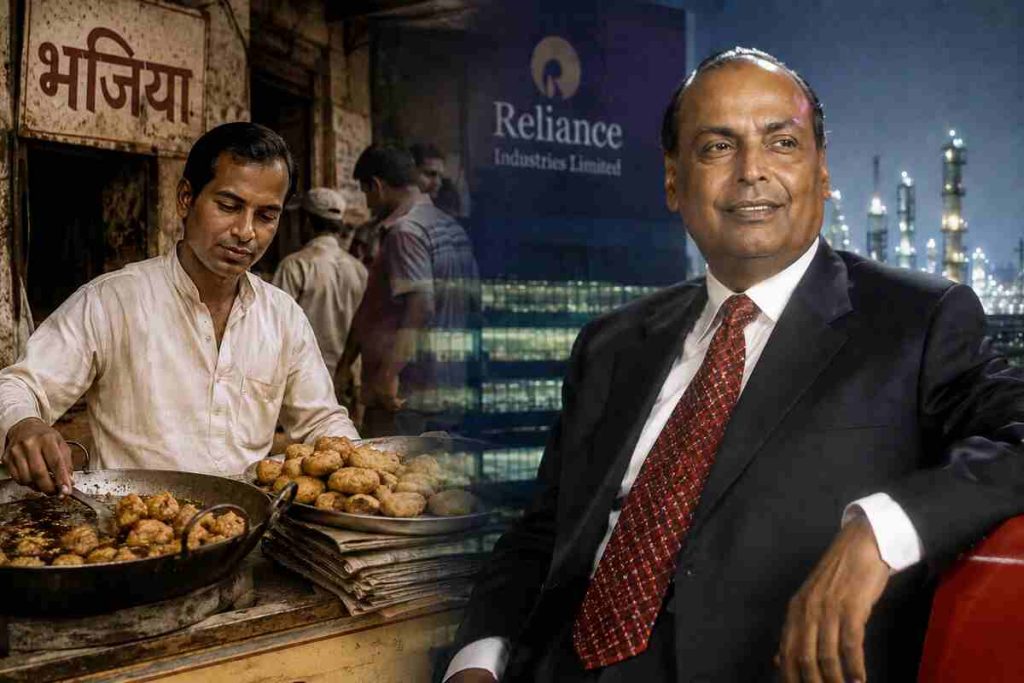
India is a land that has produced legendary warriors, leaders, and martyrs. However, when it comes to the world of global commerce, one name stands as the ultimate symbol of the Indian Dream: Dhirubhai Ambani. Born into a modest Gujarati family, his journey is the quintessential rags to riches story. Unlike many modern billionaires, he was not a “born rich” individual; rather, he was a visionary who built an empire through sheer grit and disruptive innovation.
In this article, we explore the life of the man who changed the face of the Indian stock market and founded Reliance Industries.
Who is Dhirubhai Ambani?
While many today recognize his sons, Mukesh and Anil Ambani, the foundation of their success was laid by the patriarch, Dhirubhai. Born to Hirachand Gordhanbhai Ambani, a village school teacher, Dhirubhai was the third of five children.
If you are wondering, “Was Dhirubhai Ambani born rich?”, the answer is a resounding no. Living in a small house in Chorwad, Gujarat, his early life was defined by financial struggle. He didn’t have a silver spoon; instead, he had a “golden” instinct for trade. At the age of 17, he migrated to Aden (Yemen) to work as a gas station attendant—a humble start for a man who would eventually build the world’s largest refinery.
How Dhirubhai Ambani Became Rich: The Famous Coin Story
The secret to how Dhirubhai Ambani became rich lies in his ability to see value where others saw nothing. One of the most famous legends of his early days is the Dhirubhai Ambani coin story.
While working in Aden, Dhirubhai noticed that the value of the silver “Rial” coins being used was higher than their face value because of the silver content. He began buying these coins from the locals, melting them down, and selling the silver to bullion dealers in London. Although he only made a few cents per coin, the sheer volume of his trade showed his budding genius for arbitrage. This early venture provided him with the initial capital and the confidence to return to India and start his own business.
The Reliance Revolution and Nambi Narayanan
Upon returning to India, Dhirubhai founded Reliance Commercial Corporation in a tiny 350 sq. ft. office with just one telephone. He moved from trading spices to textiles, launching the iconic brand Vimal.
Interestingly, his legacy often intersects with other Indian visionaries. While Dhirubhai was revolutionizing the economy, scientists like Nambi Narayanan were revolutionizing India’s space capabilities. Both men faced immense institutional hurdles in the 1970s and 80s, but their collective “Can-Do” attitude helped propel India toward self-reliance. Ambani’s ability to navigate the complex “License Raj” era remains a case study for business students worldwide.
Early Life and Humble Beginnings
Dhirubhai Ambani was born on December 28, 1932, in the village of Chorwad, Gujarat. As the third son of Hirachand Gordhanbhai Ambani, a humble school teacher, he was raised in an environment where financial resources were scarce but values were abundant.
Many ask, “Was Dhirubhai Ambani born rich?” The answer is no; his early life was marked by the grit of the Indian middle class. Even as a student, his entrepreneurial spark was evident. He famously sold bhajias (snacks) to pilgrims at Mount Girnar, demonstrating a precocious understanding of supply, demand, and customer service.
From Gujarat to Yemen
At just 17 years old, Dhirubhai migrated to Aden, Yemen, seeking better opportunities. He began his career as a dispatch clerk for A. Besse & Co., which later became a distributor for Shell Products.
This period was pivotal for his business expertise. He didn’t just perform his duties; he studied the mechanics of international trade, oil refining, and commodity distribution. His rapid rise from a clerk to a manager within the firm proved that he was a “smart worker” who could navigate complex commercial landscapes.
The Dhirubhai Ambani Coin Story: An Absolute Masterclass in Arbitrage
One of the most legendary chapters of his life is the Dhirubhai Ambani coin story. While in Yemen, he noticed that the silver “Rial” coins were being undervalued. He discovered that the intrinsic value of the silver in the coins was worth more than their face value.
Acting on this insight, he began:
-
Purchasing Rial coins in bulk.
-
Melting them into pure silver bullion.
-
Selling the silver to bullion traders in London.
Though he only operated this venture for a few months before the authorities took notice, he accumulated several lakhs of rupees. This provided the vital “seed capital” that would eventually fuel his return to India.
The Founding of Reliance Commercial Corporation
In 1958, Dhirubhai returned to Mumbai with 15,000 INR and a vision. He established the Reliance Commercial Corporation, initially operating out of a tiny 350 sq. ft. office with a single telephone.
His business model was a “Split Strategy”:
-
Imports: Focusing on high-demand polyester yarn.
-
Exports: Trading traditional Indian spices to global markets.
By maintaining thin margins but achieving massive volumes, he disrupted the established trading houses of the time.
Return to India
In 1958, Ambani returned to India and established Reliance Commercial Corporation in Mumbai, focusing on importing polyester yarn and exporting spices. He used 15000 INR as capital to establish Reliance Commercial Company in Mumbai. Operating from a small office, he emphasized high-quality products and customer satisfaction, laying the foundation for Reliance’s future success.
Expansion into Textiles: The Birth of ‘Only Vimal’
By 1966, Ambani transitioned from trading to manufacturing by founding Reliance Textiles in Naroda, Gujarat. He launched the brand ‘Vimal’, named after his nephew, Vimal Ambani.
In an era where the “License Raj” made business difficult, Dhirubhai focused on uncompromising quality. Vimal became a household name, eventually earning the distinction of being the first Indian textile brand to be audited and approved by the World Bank. This move signaled the transition of Reliance from a small trading firm into a burgeoning industrial empire.
The Public Offering: A Capital Market Revolution
In 1977, Dhirubhai Ambani made a decision that would permanently change the Indian economy: he took Reliance Textile Industries public. At a time when the Indian stock market was the playground of a wealthy elite, Ambani’s IPO attracted an unprecedented 58,000 investors.
His approach was revolutionary because he:
-
Democratized Wealth: He encouraged middle-class families to move their savings from gold and bank deposits into equity.
-
Prioritized Shareholders: By consistently issuing dividends and bonuses, he earned the title of the ‘father of India’s capital markets’.
-
Built Unmatched Trust: His transparent business practices ensured that Reliance annual general meetings (AGMs) had to be held in football stadiums to accommodate the massive number of loyal shareholders.
Strategic Growth: Diversification and Backward Integration
How did Dhirubhai Ambani become rich enough to sustain a global conglomerate? The answer lies in his masterful use of backward integration. Instead of just selling textiles, he decided to own every step of the production process.
This strategy allowed Reliance to expand into:
-
Petrochemicals: Producing the raw materials for polyester yarn.
-
Refining: Processing crude oil into petrochemical feedstocks.
-
Oil Exploration: Seeking the primary resources needed for the entire chain.
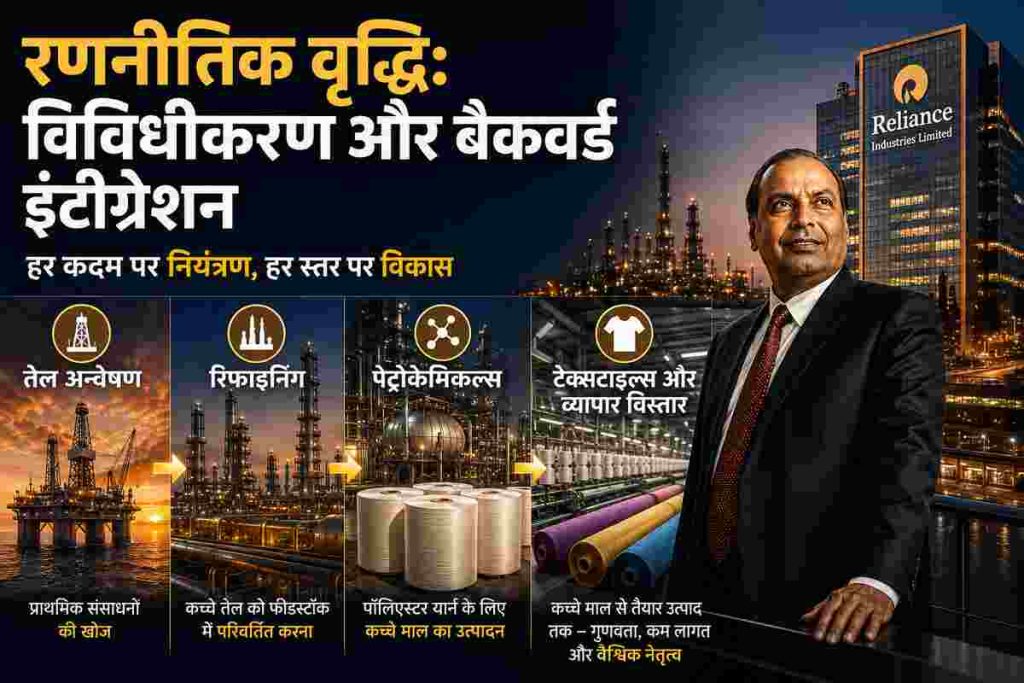
By controlling the entire supply chain, Ambani eliminated middleman costs, protected the company from price fluctuations, and maximized long-term profitability.
Legacy and Global Recognition
The impact of Dhirubhai Ambani’s vision was officially recognized by the Government of India with the Padma Vibhushan in 2016, the nation’s second-highest civilian award.
Today, his legacy is carried forward by Reliance Industries, which has evolved into a global powerhouse with interests in:
-
Telecommunications: Revolutionizing digital connectivity through Jio.
-
Retail: Becoming India’s largest retailer.
-
Energy: Operating the world’s largest refinery complex at Jamnagar.
Under the leadership of his sons, Mukesh Ambani and Anil Ambani, the foundation laid by the son of Hirachand Gordhanbhai Ambani continues to drive India’s industrial narrative.
Also Read: Maharashtra : A Home to Marathi and Bollywood Film Industry
Ratan Tata: A Grounded Business Tycoon | Legacy, Achievements & Future
Was Dhirubhai Ambani born rich?
No, he was born into a family of modest means. His father, Hirachand Gordhanbhai Ambani, was a village teacher.
How did Dhirubhai Ambani start his business?
He started by trading spices and later moved into polyester yarn and textiles, eventually establishing Reliance Industries in 1966.
What is the Dhirubhai Ambani coin story?
It refers to his time in Aden where he profited by melting silver Rial coins whose intrinsic metal value was greater than their face value.
What was the role of Hirachand Gordhanbhai Ambani in his life?
Hirachand was Dhirubhai’s father. His disciplined lifestyle as a teacher influenced Dhirubhai’s early values, though the family struggled financially.
Why is Dhirubhai Ambani called the father of Indian capital markets?
He is credited with bringing the stock market to the common man, encouraging millions of small investors to participate in India’s industrial growth.
What was his strategy for Reliance’s growth?
He used backward integration, which meant expanding from finished products (textiles) back to raw materials (petrochemicals and oil) to control the full supply chain.
Who currently leads the empire founded by Dhirubhai Ambani?
The various segments of the original Reliance empire are led by his sons, Mukesh Ambani and Anil Ambani.
📚 Related Articles



👉 You May Also Read
📚 Related Articles
- Sangam City Prayagraj – History, Significance, and Kumbh Mela
- Bardo Chham Dance: Cultural Heritage of Arunachal Pradesh
- Food, Dance and Language of States of India: Complete Guide
- Ratan Tata: A Grounded Business Tycoon | Legacy, Achievements & Future
- Ravindra Jayanti – History, Significance, And Importance
🔥 Popular Posts



📌 Explore Categories
- About India
- Calendar
- Career
- Counselling
- Current Affairs
- Economy
- Education
- English Grammar
- Exams
- Festival
- Health and Fitness
- Hindi Sahitya
- History
- Intelligence Agency
- International Personality
- Know India
- Knowledge
- Maths
- Maxim
- Moral Stories
- Nature
- NEWS
- Olympiad
- Others
- Personality Development
- Politics
- Scholarship
- Science and Environment
- Sports
- States of India
- Study Abroad
- Study Tips
- Technology
- The Greatest Indian
- Uncategorized