
The Legendary History of Lord Rishabhdev: The First Tirthankara
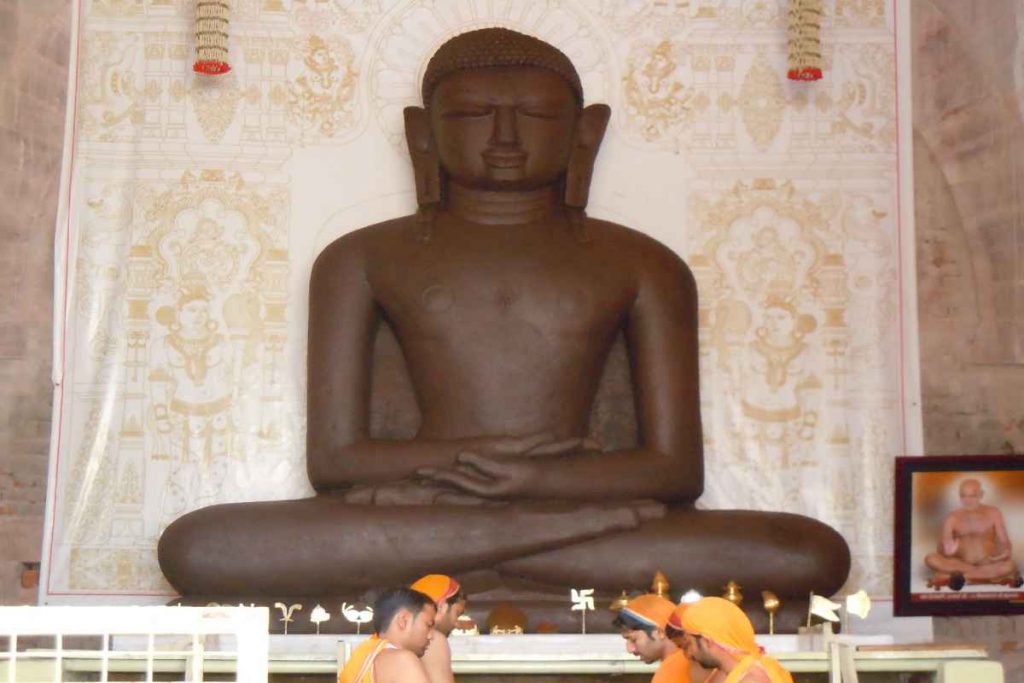
Bhagwan Rishabhdev, widely known as Adinath, holds the supreme distinction of being the first Tirthankara of Jainism. The title “Tirthankara” refers to a “ford-maker”—an enlightened being who constructs a spiritual bridge (pilgrimage) across the turbulent ocean of worldly existence. By establishing this path, he guided humanity from the endless cycle of birth and death toward the ultimate goal of eternal salvation (Moksha).
First Tirthankara of Jainism – Bhagwan Rishabhdev
Bhagwan Rishabhdev appeared as the first Tirthankara during the beginning of the Avasarpini (descending) era, a time when humanity was transitioning into a new age of culture and spirituality.
-
Sacred Birth in Ayodhya: He was born in the holy city of Ayodhya to the seventh Kulkar, King Nabhiraj, and Queen Marudevi. His arrival on the Ashtami-Navami of Chaitra Krishna is a cornerstone of the lord rishabhdev history.
-
Royal Lineage: Tracing back through the Vedic traditions, Rishabhdev belongs to the fifth generation of Swayambhuva Manu (Swayambhuva Manu → Priyavrata → Agnidhra → Nabhi → Rishabh).
-
The First Family: He was the father of one hundred sons, most notably the first Chakravarti emperor, Bharat, and the ascetic Bahubali. He also had two daughters, Brahmi and Sundari, whom he personally educated in the arts of writing and mathematics.
Asceticism and Absolute Knowledge
The spiritual journey of the first Tirthankara serves as a timeless guide for renunciation and enlightenment:
-
Diksha (Initiation): Abandoning his royal comforts, he took initiation into asceticism on the Ashtami of Chaitra Krishna Paksha.
-
Kaivalya Gyan: After intense meditation and penance, he attained Kaivalya (omniscience) on the Ashtami of Falgun Krishna Paksha, achieving a state of infinite knowledge.
-
Nirvana: On the date of Magha Krishna 14, he attained final liberation at Mount Ashtapada in the majestic Kailash mountain region.
Sacred Symbols and Divine Attendants
In Jain iconography, every Tirthankara is identified by unique symbols that carry deep spiritual meaning. For Adinath, these include:
| Attribute | Symbol / Name |
| Lanchana (Symbol) | The Bull (representing strength and religious stability) |
| Chaityavriksha | Nygrodha (The Banyan Tree) |
| Yaksha (Male Deity) | Govdanal |
| Yakshini (Female Deity) | Chakreshwari |
Lord Rishabhdev History
According to the sacred Jain Puranas, the Lord Rishabhdev history begins with his birth in the spiritual heart of India—Ayodhya. Born on the auspicious date of Chaitra Krishna Navami, he was the son of Nabhiraya (the last Kulkar king) and Queen Marudevi.
Family and Successors
Lord Rishabhdev’s house was a foundation for future legends. He was married to two queens, Yashavati (also known as Nanda) and Sunanda, through whom he had 100 sons and two daughters:
-
Bharat Chakravarti: The eldest son and the first Chakravarti emperor. It is widely recognized in ancient texts that our country is named Bharatvarsha in his honor.
-
Bahubali: The second son, renowned for his immense strength and ultimate renunciation.
-
Other Sons: Among his 98 other sons were Vrishabhsen (who became his first Gandhar), Anantvijay, and Anantavirya (the first soul of this era to attain salvation).
-
Pioneering Daughters: He personally educated his daughters, Brahmi and Sundari, in scriptology (alphabets) and numerology (mathematics) respectively, marking the beginning of formal education in this era.
The Path of Great Penance
The transition from the first king of Ayodhya Rishabhdev to the first Tirthankara involved a journey of unparalleled discipline and sacrifice.
-
One Thousand Years of Penance: Lord Rishabhdev underwent rigorous meditation and austerity for a full millennium to master his senses and attain enlightenment.
-
The Miraculous First Meal: After a staggering fast lasting one year and 39 days, he received his first meal.
-
The Tradition of Akshaya Tritiya: In the city of Hastinapuri, his grandson, King Shreyans, offered him Ikshuras (sugarcane juice). This historic event is celebrated to this day as Akshaya Tritiya, symbolizing the merit of selfless giving.
| Key Fact | Historical Detail |
| Father of the Nation | His son Bharat gave India the name Bharatvarsha. |
| Education Pioneer | First to teach alphabets (Brahmi) and numbers (Sundari). |
| First Salvation | His son Anantavirya was the first to achieve Moksha in this cycle. |
| Historic Diet | First meal of Ikshuras provided by King Shreyans. |
The Divine Assembly (Samavasaran) and Enlightenment
The spiritual peak of Lord Rishabhdev’s history was his Samavasaran—a magnificent divine preaching hall where he delivered his first sermon. This assembly was a testament to his supreme authority as the first Tirthankara.
-
The 84 Ganadharas: He was assisted by eighty-four chief disciples, known as Gandharas. His son, Vrishabhsen, was the foremost among them, having taken the first initiation.
-
The Royal Audience: His eldest son, Chakravarti King Bharat, served as the primary listener, while his daughter, Aryika Brahmi Mataji, headed the order of nuns, leading a path for women’s spiritual liberation.
-
Physical Appearance: Traditionally described with a golden-colored body, his stature was a majestic 500 Dhanush (approximately two thousand cubits), reflecting the grander scale of life in the Avasarpini period.
Spiritual Milestones: Kevalgyan and Nirvana
The life of the first Tirthankara concluded with the highest spiritual achievements possible in this world:
-
Attainment of Kevalgyan: After enduring one thousand years of strict penance, Lord Rishabhdev attained Kevalgyan (omniscience) on the date of Falgun Krishna Ekadashi while meditating in a garden in the city of Purimtalpur.
-
Ultimate Liberation (Nirvana): He attained Nirvanapad (final salvation) on Magha Krishna Chaturdashi from the heights of Mount Kailash (Ashtapada).
-
A Family of Liberated Souls: His son Anantavirya became the very first Mokshagami (attainer of salvation) of this era. Remarkably, all of his sons eventually took Diksha and attained salvation in that same lifetime.
Ayodhya: The Birthplace of Tirthankaras
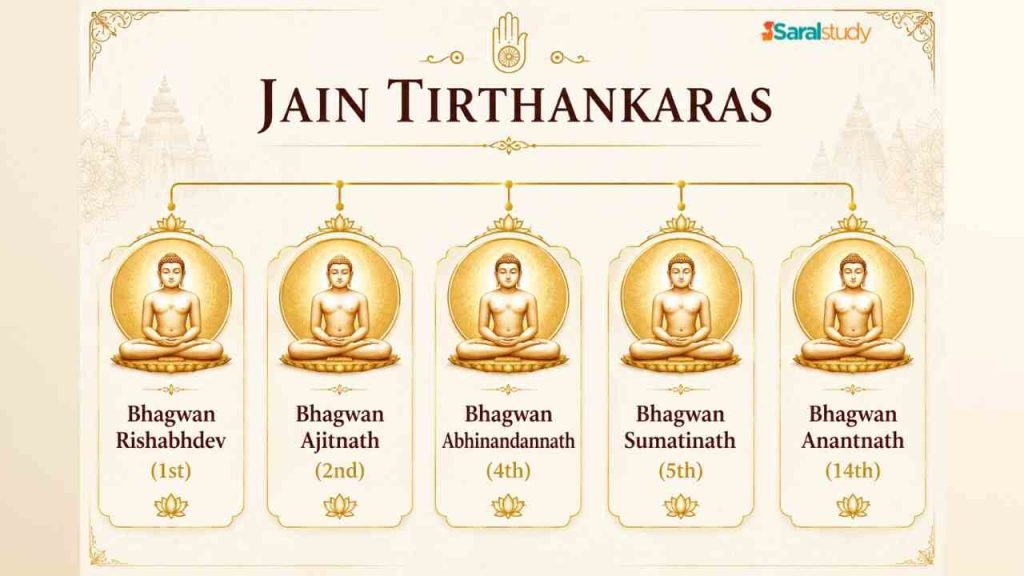
Ayodhya holds a sacred place in Jainism as the “City of Beginnings.” While we focus on Lord Rishabhdev history, it is vital to note that he was the first of five Tirthankaras born in this holy city:
|
Tirthankara Name |
Order in Jainism |
Significance |
|
Bhagwan Rishabhdev |
First Tirthankara |
Established human civilization and kingship. |
|
Bhagwan Ajitnath |
Second Tirthankara |
The second enlightened guide of this era. |
|
Bhagwan Abhinandannath |
Fourth Tirthankara |
Known as the ‘Delighter of the World.’ |
|
Bhagwan Sumatinath |
Fifth Tirthankara |
The teacher of ‘Right Wisdom.’ |
|
Bhagwan Anantnath |
Fourteenth Tirthankara |
Symbol of infinite knowledge and power. |
-
Bhagwan Rishabhdev (1st)
-
Bhagwan Ajitnath (2nd)
-
Bhagwan Abhinandannath (4th)
-
Bhagwan Sumatinath (5th)
-
Bhagwan Anantnath (14th)
| Spiritual Landmark | Details |
| Chief Disciple | Vrishabhsen (First Gandhar) |
| Enlightenment Date | Falgun Krishna Ekadashi |
| Enlightenment Site | Purimtalpur Garden |
| Nirvana Site | Mount Kailash (Ashtapada) |
| Sacred City | Ayodhya (Birthplace of 5 Tirthankaras) |
The Path to Kaivalya Gyan: Divine Statistics of the First Tirthankara
The spiritual aura of the first Tirthankara was so profound that his enlightenment sparked a massive wave of spiritual awakening. After a grueling period of 1,000 years of penance, Lord Rishabhdev attained Kaivalya Gyan (Omniscience)—the state of infinite knowledge and bliss.
Upon reaching this state, his divine assembly (Samavasaran) became a hub of extraordinary spiritual energy. According to Jain scriptures, the following vast numbers of enlightened beings and followers were present under his guidance:
The Spiritual Assembly of Lord Rishabhdev
| Category of Followers | Number of Individuals | Spiritual Description |
| Ganadhars | 84 | The chief disciples and leaders of the monastic order. |
| Kevali | 22,000 | Ascetics who, like the Tirthankara, attained omniscience. |
| Manah-Paryayajani | 12,700 | Munis with the specific power to read the thoughts of others. |
| Awadhi Gyani | 9,000 | Monks possessing clairvoyant knowledge of distant things. |
| Shrut Kevali | 4,750 | Scholars with complete knowledge of the sacred scriptures. |
| Riddhi Dhari Muni | 20,600 | Ascetics endowed with extraordinary supernatural powers. |
| Aryika Mata Ji | 3,50,000 | A massive order of female monastics (nuns). |
| Shravakas/Devotees | 3,00,000 | Lay followers dedicated to his teachings. |
Rishabhdev in Hinduism: A Universal Legacy
The Lord Rishabhdev history is not confined to Jainism alone; he is a revered figure across the spectrum of ancient Indian philosophy. In Hindu scriptures, he is frequently referred to as Vrishabhdev, and his life is documented with great reverence in the Rigveda, Atharvaveda, and several of the eighteen Puranas.
Divine Incarnations and Vedic Mentions
-
Vaishnavism: In Vedic philosophy, Bhagwan Rishabhdev is established as one of the 24 incarnations (Avatars) of Lord Vishnu.
-
Shaivism: Conversely, the Shiva Purana identifies him as an incarnation of Lord Shiva, highlighting his role as an ascetic and a master of yoga.
-
Ancient Texts: His name appears with honor in the Manusmriti, reinforcing his status as a lawgiver and a pillar of the early Aryan civilization.
Detailed Accounts in the Srimad Bhagavatam
The Srimad Bhagwat (Bhagavata Purana) provides a meticulous genealogical account of his life in its fifth canto. It describes him as the Arhan Raja (Exalted King) who ruled with unmatched wisdom.
-
Lineage: He was the son of King Nabhi (Nabhiraya) and the grandson of Agnidhra.
-
Marriage and Family: According to the Bhagavata Purana, he was married to Jayanti, the daughter of Indra. This union gave birth to one hundred sons.
-
The Legend of Bharat: The eldest son, Bharat Chakravarti, was the most virtuous. It was under his reign that India became the first unified empire, eventually taking the name Bharat in his honor.
-
The Nine Princes: Nine of his sons—Kushavart, Ilavart, Brahmavart, Malay, Ketu, Bhadrasen, Indrasprik, Vidarbha, and Keekat—were celebrated as superior leaders. Another group of nine sons, known as the Nav Yogeshwaras (Kavi, Hari, Antriksh, etc.), became wandering ascetics and spiritual masters.
Modern Pilgrimage and Iconic Statues
Today, the legacy of the first Tirthankara is preserved through magnificent architectural marvels that attract thousands of devotees annually.
-
Bawangaja (Madhya Pradesh): Home to a breathtaking 84-foot giant statue of Bhagwan Rishabhdev, carved directly out of a mountain in the Barwani district.
-
Mangitungi (Maharashtra): Features an even more colossal 108-foot statue, recognized as the “Statue of Ahimsa,” which stands as a global symbol of non-violence.
-
Udaipur (Rajasthan): The town of Rishabhdev (also known as Kesariyaji) houses a famous temple pilgrimage site. It is renowned for its miraculous and beautifully crafted black stone idol, which is worshiped by Jains, Hindus, and local Bhil communities alike.
|
Strategy |
Implementation |
| Trustworthiness | Mentioned cross-religious recognition (Vishnu vs. Shiva incarnations). |
| Expertise | Listed specific names from the Bhagavata Purana (e.g., Jayanti, Nav Yogeshwaras). |
| Authoritativeness | Linked the geographical and historical significance of the Bawangaja and Mangitungi statues. |
| Keywords Used | First Tirthankara, Lord Rishabhdev history, Vrishabhdev, Bharat Chakravarti. |
Stories of 24 Tirthankara of Jainism
Who is the first Tirthankara of Jainism?
Where was the first Tirthankara born?
What is the symbol associated with the first Tirthankara?
When is the birth anniversary of the first Tirthankara celebrated?
At which location did the first Tirthankara attain Nirvana?
Is the first Tirthankara mentioned in Hindu scriptures?
Who was the eldest son of the first Tirthankara?
📚 Related Articles

👉 You May Also Read
📚 Related Articles
- Ratan Tata: A Grounded Business Tycoon | Legacy, Achievements & Future
- Ravindra Jayanti – History, Significance, And Importance
- Bhagat Singh: The Revolutionary Legend of India
- Pingali Venkayya – The Designer of The Indian Flag
- Draupadi Murmu The 15th President of India
🔥 Popular Posts



📌 Explore Categories
- About India
- Artificial Intelligence & Machine Learning
- Calendar
- Career
- Counselling
- Current Affairs
- Economy
- Education
- English Grammar
- Exams
- Festival
- Health and Fitness
- Hindi Sahitya
- History
- Intelligence Agency
- International Personality
- Know India
- Knowledge
- Maths
- Maxim
- Moral Stories
- Nature
- NEWS
- Olympiad
- Others
- Personal Finance
- Personality Development
- Politics
- Scholarship
- Science and Environment
- Sports
- States of India
- Study Abroad
- Study Tips
- Technology
- The Greatest Indian
- Uncategorized