
15 Best High-Demand Careers in India to Consider in 2027
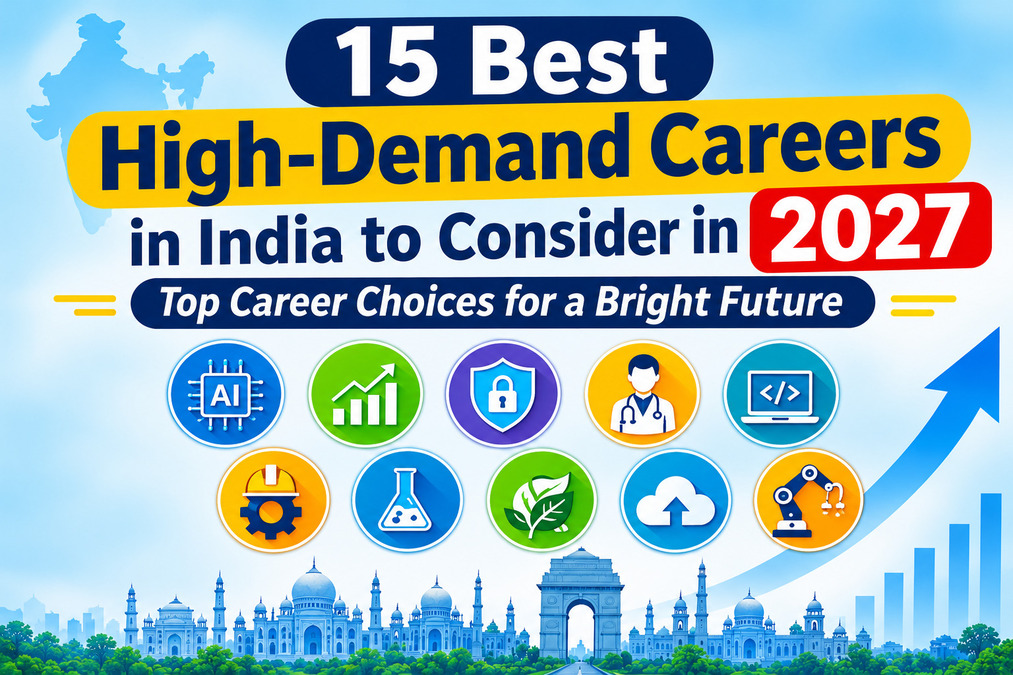
Technology, healthcare, finance, engineering, business and emerging industries are all represented in the following career options. They can be used with varying levels of experience and education. The selection is made on the basis of latest Industry Reports, employment trends, technological advancements and the growing business sectors in India. These are even indications of the jobs that are poised to grow rather than positive ranking of job growth.
Top 15 High-Demand Careers in India in 2027
| No. | Career | Main Job Opportunities | Estimated Starting Salary |
| 1 | AI and Machine Learning | AI Engineer, ML Engineer | ₹4–10 LPA |
| 2 | science?utm_source=chatgpt.com" target="_blank" rel="noopener">Data Analytics | Data Analyst, Data Scientist | ₹3–7 LPA |
| 3 | Cybersecurity | Security Analyst, Ethical Hacker | ₹3–7 LPA |
| 4 | Healthcare | Doctor, Nurse, Medical Technologist | Varies by profession |
| 5 | Cloud Computing | Cloud Engineer, DevOps Engineer | ₹4–9 LPA |
| 6 | Software Development | Software Developer, App Developer | ₹3.5–8 LPA |
| 7 | Renewable Energy | Solar Engineer, Energy Analyst | ₹3–6 LPA |
| 8 | Electric Vehicles | EV Engineer, Battery Specialist | ₹3–7 LPA |
| 9 | Finance and FinTech | Financial Analyst, Risk Analyst | ₹3–7 LPA |
| 10 | Digital Marketing | SEO Specialist, Marketing Executive | ₹2.5–5 LPA |
| 11 | Robotics and Automation | Robotics Engineer, PLC Programmer | ₹3–7 LPA |
| 12 | Biotechnology | Biotechnologist, Research Associate | ₹2.5–5 LPA |
| 13 | Supply Chain Management | Logistics Analyst, Operations Manager | ₹2.5–5 LPA |
| 14 | Business Analysis | Business Analyst, Consultant | ₹3–7 LPA |
| 15 | Semiconductor Technology | VLSI Engineer, Electronics Engineer | ₹3–7 LPA |
1. Artificial Intelligence and Machine Learning Engineer
Artificial Intelligence (AI) and Machine Learning (ML) are becoming important across industries, including banking, healthcare, education, manufacturing, and information technology.
Companies are using AI to automate repetitive activities, analyse business information, improve customer service, and develop intelligent applications.
AI and ML engineers help design, train, test, and implement intelligent systems that can learn from data and perform specific tasks.
Popular job roles:
- AI Engineer
- Machine Learning Engineer
- Generative AI Developer
- NLP Engineer
- AI Research Assistant
- Computer Vision Engineer
Educational qualifications:
A degree in Computer Science, Information Technology, Mathematics, Statistics, or Engineering can provide a strong foundation. Candidates from other backgrounds can also enter selected AI-related roles through programming, mathematics, and practical AI training.
Skills to learn:
- Python programming
- Machine learning fundamentals
- Deep learning
- Statistics and mathematics
- Generative AI and large language models
- Data processing and model evaluation
Estimated salary: ₹4–10 LPA for many entry-level AI/ML positions, with higher compensation possible for candidates with strong technical skills and relevant experience.
Career opportunities: IT companies, technology startups, financial institutions, healthcare organisations, research centres, and multinational companies.
Why consider this career in 2027?
AI adoption is creating opportunities for professionals who can develop, integrate, and manage intelligent systems. According to the India Skills Report 2026, AI skills are among the important capabilities shaping India’s future workforce. Read the India Skills Report 2026.
2. Data Analyst and Data Scientist
Data analytics is another promising career option for students and graduates interested in working with numbers, business information, and technology.
Companies collect large amounts of information from customers, websites, sales, financial transactions, and business operations. Data professionals help convert this information into useful insights.
A data analyst mainly studies existing data and prepares reports, while a data scientist uses statistical methods and machine learning to solve more complex problems and develop predictive models.
Popular job roles:
- Data Analyst
- Business Analyst
- Data Scientist
- Data Engineer
- Business Intelligence Analyst
- Junior Analytics Consultant
Educational qualifications:
Graduation in Mathematics, Statistics, Economics, Commerce, Computer Science, Engineering, or related fields can be useful. Some employers also consider candidates with other degrees if they have strong analytical and technical skills.
Skills to learn:
- Advanced Excel
- SQL
- Python or R
- Power BI or Tableau
- Statistics
- Data visualisation
- Business reporting
Estimated salary: ₹3–7 LPA for entry-level data analyst roles. Data scientist positions may offer higher salaries depending on qualifications and technical ability.
Career opportunities: Banking, insurance, e-commerce, healthcare, consulting, retail, IT services, and manufacturing.
Why consider this career in 2027?
Organisations increasingly depend on data to understand customers, control costs, measure performance, and make business decisions. Data analytics is also useful in non-technical industries, making it accessible to graduates from different academic backgrounds.
3. Cybersecurity Specialist
As businesses move their operations online, protecting digital information has become increasingly important.
Cybersecurity specialists help organisations prevent hacking, data theft, online fraud, malware attacks, and unauthorised access to computer systems.
Banks, government departments, hospitals, IT companies, and online businesses require professionals who can identify security risks and protect their networks.
Popular job roles:
- Cybersecurity Analyst
- Security Operations Centre (SOC) Analyst
- Ethical Hacker
- Penetration Tester
- Network Security Engineer
- Information Security Consultant
Educational qualifications:
A degree or diploma in Computer Science, IT, Cybersecurity, or Networking can be useful. Candidates from other backgrounds can also explore entry-level IT support and security pathways after building the necessary technical foundation.
Skills to learn:
- Computer networking
- Linux fundamentals
- Network security
- Ethical hacking fundamentals
- Cloud security
- Risk assessment
- Security monitoring
Estimated salary: ₹3–7 LPA for many entry-level positions, depending on certifications, practical knowledge, and employer requirements.
Career opportunities: Banks, government agencies, IT companies, cybersecurity consulting firms, telecom companies, and financial institutions.
Why consider this career in 2027?
Cyberattacks and digital security risks are making cybersecurity an important business requirement. India’s digital and data security skills are also receiving greater attention from employers. Explore NIIT’s India Skills Gap Report 2026.
4. Healthcare and Medical Professionals
Healthcare is one of the essential sectors of the Indian economy. Demand for medical treatment, diagnostic services, nursing care, rehabilitation, and specialised healthcare services creates opportunities for qualified professionals.
Students interested in biology and patient care can explore medical and allied healthcare careers.
Popular job roles:
- MBBS Doctor
- Specialist Doctor
- Registered Nurse
- Pharmacist
- Physiotherapist
- Medical Laboratory Technologist
- Radiology and Imaging Technologist
- Operation Theatre Technologist
Educational qualifications:
The required qualifications depend on the profession.
- MBBS requires admission through NEET-UG and completion of the prescribed medical degree.
- Nursing requires an approved nursing qualification.
- Pharmacy requires an appropriate D.Pharm or B.Pharm qualification.
- Allied healthcare careers require relevant recognised courses and practical training.
Skills to develop:
- Medical knowledge
- Patient communication
- Clinical observation
- Diagnostic skills
- Medical equipment handling
- Digital healthcare knowledge
Estimated salary: Entry-level allied healthcare positions may offer approximately ₹2.5–5 LPA. Doctors’ earnings vary widely depending on specialisation, experience, location, and employment type.
Career opportunities: Government hospitals, private hospitals, diagnostic centres, medical colleges, pharmaceutical companies, rehabilitation centres, and healthcare technology organisations.
Why consider this career in 2027?
India continues to invest in healthcare infrastructure and skilled healthcare personnel. The government announced plans to add 100,000 allied healthcare professionals over five years in the 2026 Budget, indicating the importance of strengthening this workforce. Read the government update on allied healthcare professionals.
5. Cloud Computing and Cloud Engineering
Cloud computing allows businesses to store information, run applications, and manage digital services using internet-based infrastructure instead of depending entirely on physical computer servers.
Many organisations are moving their applications and business systems to cloud platforms to improve flexibility, accessibility, and scalability.
Cloud engineers help design, maintain, secure, and manage these systems.
Popular job roles:
- Cloud Engineer
- Cloud Architect
- Cloud Administrator
- DevOps Engineer
- Cloud Security Specialist
- Site Reliability Engineer
Educational qualifications:
A degree or diploma in Computer Science, IT, Electronics, or related engineering fields is useful. Practical training and recognised cloud certifications can also help candidates develop the required skills.
Skills to learn:
- Amazon Web Services (AWS)
- Microsoft Azure
- Google Cloud
- Linux
- Networking
- Virtualisation
- Docker and Kubernetes
- Cloud security
Estimated salary: ₹4–9 LPA for many entry-level cloud and infrastructure positions, although salaries vary according to technical depth and certification.
Career opportunities: IT services, multinational companies, cloud service providers, banking, e-commerce, and technology startups.
Why consider this career in 2027?
The growing use of AI, online applications, and digital business systems is increasing the importance of cloud infrastructure. Cloud computing is also closely connected to cybersecurity, software development, and data engineering.
6. Software Development and Application Engineering
Software development continues to offer career opportunities as businesses depend on websites, mobile applications, enterprise software, and digital platforms.
Software developers create, test, maintain, and improve applications used by individuals and organisations.
This career is suitable for people who enjoy logical thinking, problem-solving, and working with technology.
Popular job roles:
- Software Developer
- Full-Stack Developer
- Front-End Developer
- Back-End Developer
- Mobile App Developer
- QA Automation Engineer
Educational qualifications:
B.Tech, B.E., BCA, MCA, B.Sc. Computer Science, and related qualifications can provide a foundation. Some employers also consider candidates with strong programming portfolios and practical development experience.
Skills to learn:
- Python, Java, or JavaScript
- HTML and CSS
- Database management
- Software testing
- Git and GitHub
- Application development
- Problem-solving
Estimated salary: ₹3.5–8 LPA for many entry-level software development positions.
Career opportunities: IT companies, product-based companies, startups, financial technology firms, e-commerce businesses, and multinational organisations.
Why consider this career in 2027?
Businesses continue to require customised software, secure applications, and digital services. Professionals who combine programming knowledge with AI-assisted development and software architecture skills may find additional opportunities.
7. Renewable Energy and Sustainability Specialist
Renewable energy is becoming an important career sector as India expands its use of solar power, wind energy, hydropower, and other cleaner energy sources.
The industry requires engineers, technicians, project managers, environmental specialists, and maintenance professionals.
Popular job roles:
- Solar Energy Engineer
- Renewable Energy Consultant
- Wind Energy Technician
- Energy Analyst
- Sustainability Specialist
- Environmental Engineer
- Energy Project Manager
Educational qualifications:
Students can pursue Electrical Engineering, Mechanical Engineering, Environmental Science, Renewable Energy, or related technical courses.
Diploma and ITI qualifications can also provide entry pathways into installation, electrical maintenance, and technical operations.
Skills to learn:
- Solar panel installation
- Electrical systems
- Energy management
- Environmental assessment
- Project management
- Renewable energy technologies
- Safety and maintenance
Estimated salary: ₹3–6 LPA for many entry-level technical and engineering roles, depending on qualifications and project responsibilities.
Career opportunities: Solar energy companies, wind power companies, electrical equipment manufacturers, environmental consulting firms, and government-supported energy projects.
Why consider this career in 2027?
India’s renewable energy expansion is creating opportunities across manufacturing, installation, operations, and maintenance. A CEEW–NRDC study released in June 2026 estimated that India’s clean-energy targets could generate more than 44 lakh full-time-equivalent jobs by 2030. Read the CEEW renewable energy workforce report.
8. Electric Vehicle and Battery Technology Specialist
Electric vehicles (EVs) are changing India’s automobile and transportation industries. As more companies invest in electric cars, two-wheelers, buses, charging infrastructure, and battery manufacturing, specialised technical professionals are becoming increasingly important.
This sector offers opportunities for engineering graduates as well as diploma and vocational candidates.
Popular job roles:
- EV Design Engineer
- Battery Technology Engineer
- Battery Management System Engineer
- EV Service Technician
- Charging Infrastructure Specialist
- Automotive Electronics Engineer
Educational qualifications:
Mechanical, Electrical, Electronics, Automobile, and Mechatronics Engineering are relevant academic pathways. ITI and diploma courses can help candidates enter technical maintenance and service roles.
Skills to learn:
- Battery technology
- Electric motor systems
- Power electronics
- Embedded systems
- Battery management systems
- Vehicle diagnostics
- Electrical safety
Estimated salary: ₹3–7 LPA for many entry-level technical and engineering positions.
Career opportunities: Automobile manufacturers, battery companies, EV startups, charging infrastructure providers, component manufacturers, and automotive research organisations.
Why consider this career in 2027?
The EV industry is expanding beyond vehicle assembly into batteries, electronics, charging systems, recycling, and supporting infrastructure. An Adecco India report cited by The Economic Times projects substantial employment growth in India’s EV ecosystem by 2030. Read the EV employment outlook.
9. Financial Analyst and FinTech Professional
Banking and finance are changing through digital payments, online lending, financial technology, automated investment platforms, and data-driven financial services.
Financial analysts help businesses understand financial performance, assess investments, prepare budgets, and manage risks.
Students interested in mathematics, commerce, business, and economics can consider this career.
Popular job roles:
- Financial Analyst
- Investment Analyst
- Credit Risk Analyst
- FinTech Associate
- Financial Planning Analyst
- Banking Operations Analyst
- Fraud Risk Analyst
Educational qualifications:
B.Com, BBA, Economics, Finance, Mathematics, and related degrees are useful. Professional qualifications such as CA, CFA, CMA, and relevant financial certifications can improve career opportunities depending on the chosen role.
Skills to learn:
- Financial modelling
- Advanced Excel
- Accounting
- Financial analysis
- Risk management
- Business communication
- Data analytics
Estimated salary: ₹3–7 LPA for many entry-level financial analyst and finance operations positions.
Career opportunities: Banks, insurance companies, investment firms, financial technology companies, consulting firms, and multinational corporations.
Why consider this career in 2027?
India’s financial services industry is becoming more technology-driven. Professionals who understand finance and digital tools can explore opportunities in traditional banking as well as emerging FinTech businesses.
10. Digital Marketing and Performance Marketing Specialist
Digital marketing is an attractive career option for people interested in communication, creativity, advertising, and online business. Companies use websites, search engines, social media, email campaigns, and online advertisements to reach customers. Digital marketing professionals help businesses improve online visibility, generate leads, increase sales, and build their brands.
Popular job roles:
- SEO Specialist
- Digital Marketing Executive
- Social Media Manager
- Performance Marketing Specialist
- Content Marketing Executive
- PPC Advertising Specialist
- Marketing Analytics Executive
Educational qualifications:
A degree in Marketing, Business Administration, Journalism, Mass Communication, or any other discipline can be useful. Practical experience and a portfolio are particularly important in this field.
Skills to learn:
- Search Engine Optimisation (SEO)
- Google Ads
- Social media marketing
- Content writing
- Email marketing
- Google Analytics
- Marketing automation
- AI-assisted content tools
Estimated salary: ₹2.5–5 LPA for many entry-level digital marketing positions.
Career opportunities: Advertising agencies, e-commerce businesses, media companies, startups, IT firms, educational institutions, and freelance projects.
Why consider this career in 2027?
Businesses increasingly depend on online marketing to attract and retain customers. People with a combination of content, analytical, advertising, and AI skills can explore several career paths.
11. Robotics and Automation Engineer
Robotics and automation are transforming manufacturing, automobile production, logistics, healthcare, and industrial operations.
Companies use automated machines and robotic systems to improve productivity, reduce repetitive manual work, and maintain consistent production quality.
Robotics engineers design, programme, test, and maintain automated systems.
Popular job roles:
- Robotics Engineer
- Automation Engineer
- PLC Programmer
- Industrial Automation Technician
- Robotics Software Developer
- Control Systems Engineer
Educational qualifications:
Mechanical, Electrical, Electronics, Mechatronics, and Robotics Engineering are suitable academic pathways. Diploma and ITI courses can also lead to technician-level roles.
Skills to learn:
- Robotics fundamentals
- Python or C++
- PLC programming
- Industrial automation
- Sensors and controllers
- Embedded systems
- CAD design
Estimated salary: ₹3–7 LPA for many entry-level technical positions.
Career opportunities: Automobile manufacturing, industrial plants, electronics manufacturing, logistics companies, research organisations, and robotics startups.
Why consider this career in 2027?
Manufacturing companies are adopting automation to improve production efficiency. Robotics and automation also connect with AI, computer vision, and industrial IoT, creating opportunities for specialised professionals.
12. Biotechnology and Pharmaceutical Research
Biotechnology combines biology, chemistry, genetics, and technology to develop products and solutions for healthcare, agriculture, pharmaceuticals, and industrial applications.
This field is suitable for students interested in scientific research and laboratory work.
Popular job roles:
- Biotechnologist
- Research Associate
- Clinical Research Associate
- Quality Control Analyst
- Pharmaceutical Research Assistant
- Bioinformatics Analyst
Educational qualifications:
B.Sc. Biotechnology, Microbiology, Biochemistry, Genetics, or related degrees can provide an entry point. Some specialised research and scientific positions require postgraduate qualifications or a PhD.
Skills to learn:
- Molecular biology
- Genetics
- Laboratory techniques
- Microbiology
- Research methodology
- Bioinformatics
- Data analysis
Estimated salary: ₹2.5–5 LPA for many entry-level laboratory and research support roles.
Career opportunities: Pharmaceutical companies, biotechnology firms, hospitals, diagnostic laboratories, agricultural research centres, and academic institutions.
Why consider this career in 2027?
Developments in healthcare research, diagnostics, pharmaceuticals, genomics, and personalised medicine are creating specialised opportunities for biotechnology professionals.
13. Supply Chain and Logistics Management
Supply chain management is essential for businesses that manufacture, store, transport, and distribute products.
With the growth of e-commerce, manufacturing, organised retail, and international trade, companies need professionals who can manage inventory, transportation, warehousing, and delivery operations.
Popular job roles:
- Supply Chain Analyst
- Logistics Coordinator
- Warehouse Manager
- Procurement Executive
- Inventory Analyst
- Operations Manager
- Demand Planning Analyst
Educational qualifications:
BBA, B.Com, Logistics Management, Supply Chain Management, and MBA qualifications can be useful. Diploma courses are also available for logistics and warehouse operations.
Skills to learn:
- Inventory management
- Advanced Excel
- ERP software
- SAP fundamentals
- Procurement
- Data analysis
- Communication and negotiation
Estimated salary: ₹2.5–5 LPA for many entry-level operations and logistics positions.
Career opportunities: E-commerce companies, manufacturing industries, retail businesses, logistics providers, transportation companies, and export-import organisations.
Why consider this career in 2027?
The expansion of online shopping, manufacturing, and distribution networks is increasing the importance of efficient supply chain operations. This career also offers opportunities for candidates without advanced programming knowledge.
14. Business Analyst and Management Consultant
Business analysts help organisations understand problems, improve business processes, and make informed decisions.
They work with management teams, customers, developers, and other departments to identify business requirements and recommend improvements.
This is a suitable option for graduates who enjoy problem-solving, communication, planning, and analytical work.
Popular job roles:
- Business Analyst
- Management Consultant
- Operations Analyst
- Business Intelligence Analyst
- Process Improvement Specialist
- Product Analyst
Educational qualifications:
BBA, B.Com, Economics, Engineering, Management, and related degrees can be suitable. MBA qualifications may help candidates move into specialised consulting and management roles.
Skills to learn:
- Business communication
- Excel
- Power BI
- SQL basics
- Process mapping
- Data interpretation
- Project management
- Problem-solving
Estimated salary: ₹3–7 LPA for many entry-level analyst positions.
Career opportunities: Consulting firms, banks, IT companies, manufacturing businesses, e-commerce companies, and multinational organisations.
Why consider this career in 2027?
Companies need professionals who can connect business requirements with technology and data. Business analysts can also move into product management, operations management, and consulting.
15. Semiconductor and Electronics Engineering
Semiconductors are essential components in smartphones, computers, electric vehicles, medical equipment, communication systems, and industrial machines.
India’s growing interest in semiconductor manufacturing and electronics production is creating opportunities for engineers and technical professionals.
Popular job roles:
- Semiconductor Design Engineer
- VLSI Design Engineer
- Embedded Systems Engineer
- Electronics Engineer
- Chip Verification Engineer
- Semiconductor Process Technician
Educational qualifications:
Electrical Engineering, Electronics and Communication Engineering, Electronics Engineering, and related technical degrees are suitable.
Diploma and ITI qualifications can provide opportunities in manufacturing, equipment maintenance, and production operations.
Skills to learn:
- Digital electronics
- VLSI design
- Verilog and SystemVerilog
- Embedded systems
- Circuit design
- Semiconductor fundamentals
- Testing and verification
Estimated salary: ₹3–7 LPA for many entry-level engineering and technical roles, with specialised design positions potentially offering more.
Career opportunities: Semiconductor companies, electronics manufacturers, chip design firms, automobile companies, research centres, and technology organisations.
Why consider this career in 2027?
Semiconductor manufacturing is becoming strategically important for India’s technology and manufacturing sectors. Professionals with electronics, chip design, testing, and production skills may find opportunities as the domestic ecosystem develops.
Best Free and Affordable Courses to Prepare for High-Demand Careers
Students and job seekers do not always need expensive training programmes to begin learning new skills. Several recognised platforms provide free or affordable courses in technology, business, finance, and professional development.
The following resources can help beginners get started.
1. SWAYAM

Offers online courses from Indian universities and educational institutions. Useful for students interested in computer science, management, engineering, and other academic subjects.
Best for: Students and graduates.
2. NPTEL
Provides courses in programming, engineering, data science, mathematics, and technical subjects through participating institutions.
Best for: Engineering and technical learners.
3. Skill India Digital Hub

Provides access to skill development programmes, courses, certifications, job opportunities, and apprenticeships.
Best for: Vocational and job-oriented training.
4. Microsoft Learn

Offers learning paths covering cloud computing, AI, data analytics, software development, and Microsoft technologies.
Best for: Technology beginners and IT professionals.
5. Google Skillshop

Provides training in Google advertising products, digital marketing, analytics, and related tools.
Best for: Digital marketing learners.
6. Cisco Networking Academy
Provides learning opportunities in networking, cybersecurity, programming, and digital technology.
Best for: Networking and cybersecurity beginners.
7. Coursera

Offers courses and professional certificates from universities and companies. Course access and certificates may require payment.
Best for: Structured professional learning.
Before enrolling: Check course eligibility, fees, syllabus, practical training, certification conditions, and whether employers in your target industry recognise the qualification.
How to Choose the Right Career in 2027
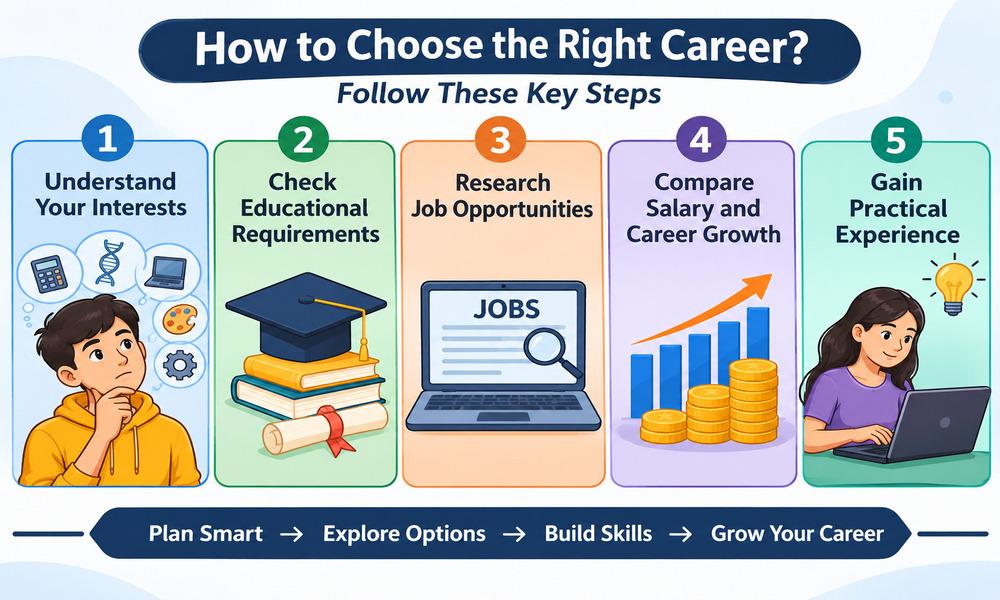
A career that is suitable for one person may not be the right choice for another. Students should consider their abilities, interests, financial situation, and long-term goals before selecting a profession.
Follow these steps to make a better decision.
Step 1: Understand Your Interests
Identify the subjects and activities you enjoy.
For example:
- Mathematics and logical thinking: Data analytics, finance, engineering.
- Biology and healthcare: Medicine, nursing, biotechnology.
- Computers and technology: Software development, AI, cybersecurity.
- Communication and creativity: Digital marketing, media, business.
- Practical and technical work: Electrical engineering, EV technology, robotics.
Step 2: Check Educational Requirements
Every profession has different qualification requirements.
Some jobs require a professional degree, while others accept diploma holders, vocational qualifications, or candidates with relevant practical skills.
Check eligibility before investing money in a course.
Step 3: Research Job Opportunities
Look at current job openings to understand which skills companies are requesting.
Useful platforms include:
- National Career Service (NCS) – Government-supported job search and career guidance.
- LinkedIn Jobs – Professional job opportunities.
- Naukri – Job listings across different industries.
- Indeed India – Job vacancies and employer information.
Do not judge a career only by the number of job advertisements. Also examine experience requirements, location, salary, and qualifications.
Step 4: Compare Salary and Career Growth
Research entry-level salaries, future promotion opportunities, and the qualifications needed to move into senior positions.
A career with a moderate starting salary may provide better long-term stability and growth than a job offering a high initial package.
Step 5: Gain Practical Experience
Try internships, projects, workshops, apprenticeships, and entry-level assignments.
For example, a student interested in data analytics can practise using Excel and Power BI to prepare a sample business report. Someone interested in digital marketing can create a small website and practise SEO.
Practical experience helps demonstrate skills to potential employers.
A Practical Six-Month Career Preparation Roadmap for Beginners
Students and graduates who are unsure where to start can follow this simple six-month learning plan.
6-month skill development plan
- Month 1: Career Research
Select one career, understand its qualifications, and identify the skills required by employers. - Month 2: Learn the Basics
Enrol in a beginner course and develop foundational knowledge of your selected field. - Month 3: Develop Practical Skills
Practise using relevant tools and software. Complete small assignments and exercises. - Month 4: Build Projects
Create two or three practical projects that demonstrate what you have learned. - Month 5: Improve Your Resume
Prepare a professional resume, update your LinkedIn profile, and organise your project portfolio. - Month 6: Apply for Opportunities
Start applying for internships, apprenticeships, entry-level jobs, and suitable trainee positions. Practise interviews.
This is a suggested beginner roadmap, not a guaranteed job-placement timeline. Regulated professions and specialised technical careers require longer formal training.
Government Initiatives Supporting Career and Skill Development in India
The Indian government has introduced several programmes and platforms to improve access to vocational training, digital education, and employment opportunities.
Some useful initiatives include:
1. Skill India Digital Hub
The Skill India Digital Hub provides access to training programmes, skill courses, certifications, apprenticeships, and job-related opportunities across different industries.
Website: Skill India Digital Hub
2. Pradhan Mantri Kaushal Vikas Yojana (PMKVY)

PMKVY supports skill development and vocational training through industry-related programmes. Training opportunities vary by scheme, location, and available courses.
Website: Ministry of Skill Development and Entrepreneurship
3. National Career Service (NCS)

NCS provides job search facilities, career counselling, vocational guidance, job fairs, and employment-related information.
Website: National Career Service
4. Apprenticeship India
The apprenticeship portal helps candidates explore apprenticeship opportunities and practical workplace training with participating organisations.
Website: Apprenticeship India
5. SWAYAM
SWAYAM offers online courses from recognised educational institutions, allowing students and working professionals to learn different subjects.
Website: SWAYAM Online Learning Platform
These platforms can help learners identify suitable courses and improve their employability. However, completing a course does not automatically guarantee employment.
Top Indian Cities Offering Career Opportunities in 2027
The availability of jobs varies depending on the industry, employer, and educational qualifications. However, some Indian cities have established strong employment ecosystems in technology, finance, manufacturing, healthcare, and renewable energy.
| City | Major Employment Sectors |
| Bengaluru | AI, IT, Software Development, Startups |
| Hyderabad | IT, Pharmaceuticals, Biotechnology, Data Science |
| Chennai | Automobile, IT, Manufacturing, Healthcare |
| Pune | Engineering, IT, Automotive, Finance |
| Mumbai | Banking, Finance, Media, Business |
| Delhi NCR | IT, Consulting, Government, Finance |
| Ahmedabad | Manufacturing, Pharmaceuticals, Renewable Energy |
| Coimbatore | Manufacturing, Engineering, IT Services |
| Gurugram | Corporate Services, FinTech, IT, Consulting |
| Noida | IT, Electronics, Software, Digital Services |
Bengaluru, Hyderabad, and Delhi NCR are prominent technology hiring locations. Chennai and Pune also offer opportunities in engineering, manufacturing, and IT-related industries.
Interestingly, Coimbatore is also emerging as a growing technology and business location. A November 2026 report on GCC hiring highlighted growth in technology recruitment in the city. Read the Economic Times report on GCC hiring in India.
Common Mistakes to Avoid When Choosing a Career
Selecting a career without proper research can lead to unnecessary expenses, dissatisfaction, and difficulty finding suitable employment.
Students and job seekers should avoid these common mistakes.
- Choosing a Career Only for Salary
A high-paying profession may not match your interests or abilities. Consider the educational requirements, working conditions, and long-term opportunities.
- Following Popular Career Trends Blindly
AI, data science, and cybersecurity are attracting attention, but they are not suitable for everyone. Choose a field that matches your strengths.
- Ignoring Practical Skills
Having a degree without practical knowledge can make it difficult to compete for certain positions. Develop relevant skills through projects and internships.
- Spending Too Much on Unverified Courses
Do not enrol in expensive training programmes based only on advertisements promising guaranteed jobs. Verify the course quality, certification, and placement claims.
- Not Updating Your Skills
Technology and business requirements change over time. Continuous learning is important for maintaining career relevance.
- Ignoring Communication Skills
Technical knowledge alone may not be sufficient. Communication, teamwork, time management, and problem-solving are valuable in almost every profession.
Frequently Asked Questions (FAQs)
- Which career will be most in demand in India in 2027?
Artificial Intelligence, data analytics, cybersecurity, healthcare, cloud computing, renewable energy, and software development are promising career areas in India for 2027. Actual hiring demand will vary by industry and location.
- Which career has the highest salary potential in India?
AI engineering, senior software engineering, investment banking, specialised medical professions, cybersecurity architecture, and senior management roles can offer high salaries. However, these positions generally require specialised qualifications and experience.
- Which career is best for students after Class 12?
The right career depends on the student’s academic background and interests. Science students can explore engineering, medicine, biotechnology, and computer science. Commerce students can consider finance, accounting, and business analytics. Arts students can explore law, psychology, management, and digital marketing.
- Can I get a high-paying job without an engineering degree?
Yes. Careers in digital marketing, financial analysis, business analytics, sales, accounting, management, and selected technology roles are accessible to candidates from different educational backgrounds. Practical skills and relevant experience are important.
- Which IT skills should I learn in 2027?
Python, SQL, cloud computing, cybersecurity, data analytics, AI fundamentals, and software development are useful skills for people interested in technology careers.
- Is data analytics a good career option in India?
Yes. Data analytics is useful across banking, healthcare, retail, manufacturing, insurance, and IT. Beginners can start with Excel, SQL, statistics, and Power BI before moving towards more advanced tools.
- Which career is suitable for students who are weak in mathematics?
Students who are less comfortable with mathematics can explore digital marketing, human resources, communication, content creation, healthcare support, psychology, law, and business operations, depending on their educational qualifications.
- Can I change my career after 30 or 35?
Yes. Working professionals can change careers after 30 or 35 by identifying transferable skills, completing relevant courses, building practical experience, and applying for suitable entry-level or transition roles.
- Are online certifications enough to get a job in 2027?
Online certifications can improve your knowledge and strengthen your resume. However, employers may also evaluate educational qualifications, practical projects, work experience, and interview performance.
- Which government websites can help me find career opportunities in India?
The National Career Service, Skill India Digital Hub, Apprenticeship India, and SWAYAM are useful platforms for exploring employment, vocational training, apprenticeships, and educational opportunities.
Conclusion
India’s employment landscape is changing, creating opportunities for students, graduates, and working professionals across traditional and emerging industries.
Careers in AI, data analytics, cybersecurity, healthcare, cloud computing, renewable energy, electric vehicles, and semiconductor technology are worth considering in 2027. At the same time, finance, digital marketing, business management, and logistics continue to offer opportunities for candidates with different educational backgrounds.
The best career is not necessarily the one with the highest salary or the most popular job title. It is the profession that matches your interests, qualifications, abilities, and long-term goals.
Instead of following career trends blindly, invest time in learning relevant skills, gaining practical experience, and researching employment opportunities.
Read More: Best Career Options After Class 12 for Average Students in 2026
📚 Related Articles



👉 You May Also Read
📚 Related Articles
- Best Computer Skills to Learn for Government Jobs in India
- Government Jobs Without UPSC or SSC: Career Options, Eligibility and Opportunities in India
- How to Build a Career in Data Analytics Without a Computer Science Degree
- Business After 30 or a Stable Job: Which Path Should You Choose?
- How to Return to Work After a Career Break: Skills, Jobs and Preparation in 2026
🔥 Popular Posts



📌 Explore Categories
- About India
- Artificial Intelligence & Machine Learning
- Calendar
- Career
- Counselling
- Current Affairs
- Economy
- Education
- English Grammar
- Exams
- Festival
- Health and Fitness
- Hindi Sahitya
- History
- Intelligence Agency
- International Personality
- Know India
- Knowledge
- Maths
- Maxim
- Moral Stories
- Nature
- NEWS
- Olympiad
- Others
- Personal Finance
- Personality Development
- Politics
- Scholarship
- Science and Environment
- Sports
- States of India
- Study Abroad
- Study Tips
- Technology
- The Greatest Indian
- Uncategorized