
Selling Tobacco Should Be Banned

Selling Tobacco Should Be Banned

Nowadays millions of people are using tobacco around us and smoking cigarettes. These are still in the market due to the absence of strong rules and regulations. Tobacco is destroying the whole world slowly.  It has a very adverse impact on the environment. There would be a 5% reduction in global deforestation because approx. 500,000 acres a year get destroy due to tobacco farming. Tobacco has been around for many years and it should be stopped but the economy cannot handle it. The tobacco reaching our children and non-smokers as well and destroy their life. Many organizations are working to convince people to stop smoking but it is really hard because people are already addicted. They accept the negative effects of tobacco and continue to smoke cigarettes. 

The only people winning in the tobacco field are tobacco company owners because they make all the money. If profit falls all they have to do is advertise a little harder and profit will roll. The environmental tobacco smoke the second-hand cigarette smoke breathed by non-smokers is known as carcinogen and the most pollutant environmental pollutants many people die because of the second-hand smoke it causes many deaths like tobacco smokers to do there are many reasons for death from second-hand smoke “lung cancer is the best-known reason of second-hand smoke” the simple smoke is really very harmful then it really looks  “ when a person breaths in smoke a million particles enter in our body and the main material in the cigarettes is nicotine which affects our nervous system. Nicotine is a poison that is present in tobacco leaves that defends the plant against insect attacks.

Forms of Tobacco

  • Cigarettes 
  • Cigar, little cigar, cigarillos
  • Dissolvable products 
  • Electronic cigarettes 
  • Traditional smoker’s tobacco products 

Mechanism of Tobacco

Tobacco contains nicotine and it is an amine (it is a group of a compound which contain nitrogen) nicotine acts as receptors known as nicotine acetylcholine receptors which are present in the smoker’s muscle and throughout the brain.

Nicotine helps to stimulate receptors to start a reaction that results in further release of neurotransmitter (chemical messages that move between nerves, muscle, or glands to affect many body function, mood, and behavior).

The nicotine receptor present in the brain is composed of 5 different units around the central nervous system. These units work in the way they respond to nicotine and affect the transfer of nicotine impulse so can each nerve produce a variety of responses to nicotine at different rates of concentration.

The low dose of nicotine can stimulate the central and peripheral system resulting in other effects like increases in heart rate in increase in a heart attack or blood pressure at high dose nicotine blocks veins, resulting in low blood pressure and changes in the body’s capacity to releases adrenaline.

How can Nicotine delivered its effect?

Smokers can combustible tobacco products that contain more than 7000 chemicals. Nicotine is a very important component of tobacco. 100 components are added to tobacco to enhance its flavour and the absorption of nicotine 

The cigarettes are a very efficient and highly engineered drug-delivery system. By inhaling tobacco smoke.  The average smoker takes in 1-2 milligrams of nicotine per cigarette. When tobacco is smoked nicotine rapidly reaches peak level in the bloodstream and enters the brain.

Tobacco and Its Effect on Our Body Organs

Body Organs Effect
Eyes
  • Cataracts
  • Blindness excessive tearing,
  • Blinking
Hair
  • Odour
  • Discoloration
Ears
  • Hearing loss
  • Ear infection
Brain and Psyche
  • Stroke
  • Addiction and withdrawal
  • Altered brain chemistry
  • Anxiety about the tobaccos health effect
Nose
  • Cancer of Nasal Cavity, and Paranasal issues
  • Chronic Rhinosinusitis
  • Impaired sense of smell
Mouth and throat
  • Cancer of lips, mouth and throat larynx, and pharynx
  • Sore throat
  • Impaired sense of taste
  • Bad breathe
Lungs
  • Bronchus, lungs, and tracheal cancer
  • Chronic obstructive pulmonary diseases
  • Chronic bronchitis
  • Respiratory infection
  • Shortness of breath, asthma
  • Chronic cough, excessive sputum production
Heart
  • Coronary thrombosis ( heart attack )
  • Atherosclerosis (damage and occlusion of coronary vasculature )
Chest and abdomen
  • Oesophageal cancer
  • Gastric, colon, and pancreatic cancer
  • Abdominal aortic aneurysm
  • Peptic ulcer (esophagus, stomach, the upper portion of the small intestine) Possible increased risk of breast cancer
Skin
  • Psoriasis
  • Loss of skin tone, wrinkling
  • Premature aging
Urinary system
  • Bladder kidney, and Ureteral cancer
Hands
  • Peripheral vascular diseases
  • Poor circulation (cold fingers )
Immune system
  • Impaired resistance to infection
  • Possible increased risk of allergic diseases
Others
  • Diabetes
  • And sudden death
Legs and feet
  • Vascular diseases
  • Cold feet, leg pain, and gangrenes

Why tobacco should be banned?

Check below the points of why tobacco should be banned:

1. Healthcare

Tobacco smokes contain more than 400 chemicals in it and out of these chemicals 250 are very harmful to the body and other are carcinogen and the other form chewable form contains 28 proven carcinogen has many of 60 % of cancer cases worldwide among men and 25% of cancer in women are tobacco included. People can be mainly vulnerable to the bad effects of tobacco. So that the ban on tobacco will help to reduce health issues.

2. Diminish tobacco consumption

The benefits of stopping tobacco are evident. This will be good for their health and their finances. Tobacco has become very expensive in many countries. Tobacco users also claim that banning tobacco may help them with quitting.

3. The fewer financial cost of society

In the united state, more than $ 156 billion a year of productivity is lost due to death from tobacco and diseases caused by second-hand smoke. Another $ 170 billion go to direct medical costs for smokers. If tobacco vanished, so would those cost to society researchers estimate that the 1964 surgeon general’s report and the tobacco control efforts that followed it have saved approx. 8 million lives in the U.S. Tobacco causes over 7 million deaths per year and kill 1 billion this century if current trends continue.  

Lungs and head and neck cancers which are most common in developing countries are included by tobacco in 80 % of the cases. 

How to Control Addiction to Tobacco?

Tobacco is one of the most important causes of premature deaths in the world more than 6 million people were dying because of consumption of tobacco smoking tobacco causes exposure to a mixture of more than 7000 toxic chemicals including 70 known carcinogens which can damage our body parts it is very dangerous to the pregnant lady who smokes give births to an infant at higher risk of congenital disorder like cancer, lung diseases, and sudden death. Newly-identified risk of smoking is renal failure, intestinal ischemia, and hypertensive heart diseases  

The risk of death is increased with the increases in the number of smoked cigarettes but like long the smokers lose at least 10-12 years of their life because of tobacco. Combustible tobacco use is extremely hazardous to human health and is responsible for more than 90 % of tobacco death and disease. The efforts by the tobacco industry to market safer–sounding alternatives such as low-tare cigarettes and water pipes so a top priority to avoid combustible tobacco products and the only way for an individual to eliminate tobacco-related harm full is not to use them.  

Conclusion

Tobacco should be totally banned because of its severe health risks. To stop this habit, the government are working on the different solution the tobacco ban is a very complex issue the tobacco is known as a killer of humans for many years it occurs diseases like cancer, HIV, and other different diseases the world is trying our best to fight these types of diseases.

Frequently Asked Questions

Q1. What are the different forms in which tobacco is available in the market?
Ans. Tobacco is sold in many forms like Cigarettes, Cigar, little cigar, cigarillos, Dissolvable products, Electronic cigarettes, Traditional smoker’s tobacco products, etc.

Q2. What are the health hazards of using Tobacco?
Ans. Tobacco is very hazardous for the human body. It can cause dangerous diseases like cancer. It affects differently on various body parts for example like blindness, High BP, Bronchitis, etc.

Q3. I am 25 years old and a regular smoker but I don’t have any symptoms of cancer or any disease. Does this mean tobacco is not harming me?
Ans. Don’t think Tobacco is not harming you. It’s a silent killer. You are just 25 years old. Maybe you are a new smoker and your immune system is strong that’s why you are feeling any health issues but remember once you get older and your immune system drops, you will catch severe diseases. It’s better to quit now and lead a healthy life.

Q4. I use flavoured Hookah once a week. It contains only 0.5% tobacco. Is it also harmful?
Ans. Yes, It is harmful. You are taking it in a small amount, it will harm you slowly but remember you are playing with your health. Better to stop it now.

Q5. I have heard that cigarettes harm all the family members even those who are not smoking. It is true?
Ans. Yes, It is true. The smoke from cigarettes harms other people around the smoker too.
Free Education: Education Should Be Free in India

Education Should be free in India

Free Education: Education is the basis of our successful future. Education should be free for everyone, because not every person can afford it. Nowadays, schools and university fees are too high. Most parents, work hard to have an opportunity to give that education to their children. But, there are also a large number of people who cannot do it because their money is not enough for that. Children, who want to study, cannot afford that. Many families are faced with such a problem. Parents were very upset and deep in thought about what to do, how to find jobs with high salaries, and how not to disappoint a child. Furthermore, they needed money to pay not only university fees but also spent their earnings on tutors and extra classes that would help prepare for exams. Additionally, the transport expenses required money. Consequently, children had been left without education.

Should There Be Free Education in India

From an early age, they went to work, without any experience or knowledge. As you might have understood, they did not have any achievements. As a result, people need free education to be able to succeed. The government needs to make education free in India, to make the nature of education in India more homogenous and widespread. 

Education is the right of every child, and not everyone is born into financially stable families. We can do our part, belonging to the post-modern era of civilized and educated individuals, by setting up private institutions where we can teach the slum children of our locality for free. These small steps can lead to bigger changes on a broader spectrum.

The Indian government should provide free education to support poor families and meanwhile, they should allow private firms to run educational institutions. The rich families who desire high-quality education can send their children to private firms. The government firms when competing with the private firms would result in delivering high quality in delivering their service.

Major Challenges faced by Education System in India

The major challenges faced by the education system in Indian are:

  1. Expense on education
  2. Expensive higher education:
  3. Capacity utilization
  4. Infrastructure facilities
  5. Wastage of resources:
  6. General education-oriented
  7. Student-teacher ratio

Let’s explain these points one by one below.

1. Expense on Education

A very big amount of funds should be allotted for the development of the education system in India. The lack of adequate funds is the main problem in the development of education. The expense for education in Five Year Plans has been decreasing. Due to lacking funds, most educational institutions lack infrastructure, and libraries, etc. Due to this reason, desired outcomes cannot be achieved.

2. Expensive Higher Education

University and professional education have become costly in India. The fee structure of professional institutes has quite a high charge. It is beyond the reach of the common man. The privatization of higher education has commenced the growth of profit-hungry entrepreneurs. Nowadays higher education is a much costly task.

3. Capacity Utilization

The world now needs creative minds and the Government must encourage schools to boost the students and utilize their capacities to the max and not let their ideas go unheard.

4. Infrastructure Facilities

Better infrastructure must be given mainly in Government schools. Since Government is now concentrating on digital education, they must undertake steps to provide all necessary facilities in the Government schools and rural areas as well

5. Wastage of Resources

Our education system is based on General Education. Most of the students leave school before completing their education. It commences to wastage of financial and human resources.

6. General Education-Oriented

The educational system is of General Education in nature. The development of technical education is quite unsatisfactory. So our education is unproductive. Therefore, the number of educated unemployed persons is increasing day by day. This has become a great concern for Government.

7. Student-Teacher Ratio

The number of students in search of proper education is way more in comparison to the teachers available. So, qualified teachers must be appointed to impart knowledge to the future of the country

Reasons Why Education Should be free in India

  • Free education can help reduce existential nuclear, poverty, and climate threats.
  • Due to the huge population in India, free education becomes a very difficult goal to achieve. Though, when medication is the right of the people and is given by governmental hospitals for free, the same should be done with educational institutions because basic education is the right of every citizen of the country.
  • Since most of the country is not e-literate, due to booming technology and education going primarily online, has resulted in a large part of the population lagging way behind. 
  • To overcome the ignorance and blind orthodoxy among Indian people, education is very important and should be available to every single citizen, despite their financial stability. 
  • Free education would encourage more parents to get their children admitted into educational institutions, rather than making them work in factories and spoil their entire childhood. 
  • Most people in India, especially in the poorer sections of society, have more than two children. So paying for the education of all of them becomes very difficult for the earning members of the family. Therefore, free education will be a convenient means of imparting education.
  • Educational institutions must hire quality teachers even though education is imparted free of cost, otherwise, underprivileged children will only get wrong knowledge and information. 
  • Since more than half of the Indian population consists of poverty-stricken people and farmers, education should be free as most of these people cannot afford to pay for their children’s education, and so they abstain from admitting their children into schools. 

Conclusion

Government firms are not efficient as private firms. Private firms usually compete with each other and focus on delivering the highest quality possible to sustain their business in their competitive world. For these reasons, private firms deliver much better quality in their service than a government firm who is usually protected from the competition. Therefore, when we aim for the best quality education in our society it is required that education should be privatised.

Frequently Asked Questions

Q1. Is there any scheme in India to support the idea of free education?

Ans. Yes, the Right to Education Act has the provision of providing free elementary education to children of age from 6 to 14 years. 

Q2. How will the children get benefit if education will be free in India?

Ans. Free education in India will bring a huge change in the lives of poor children. Very importantly, it will vanish child labor to a great extent and increase the literacy rate of the country. 

Q3. What are the challenges India is facing in the field of education?

Ans. There are many challenges in India regarding education like the education in India is getting more and more expensive. Middle-class or poor people find it hard to admit their children to schools and higher education. The infrastructure is not at all developed and the ratio of students and teachers is low.

Also Read: Philosophy of Education & Characteristics and Importance

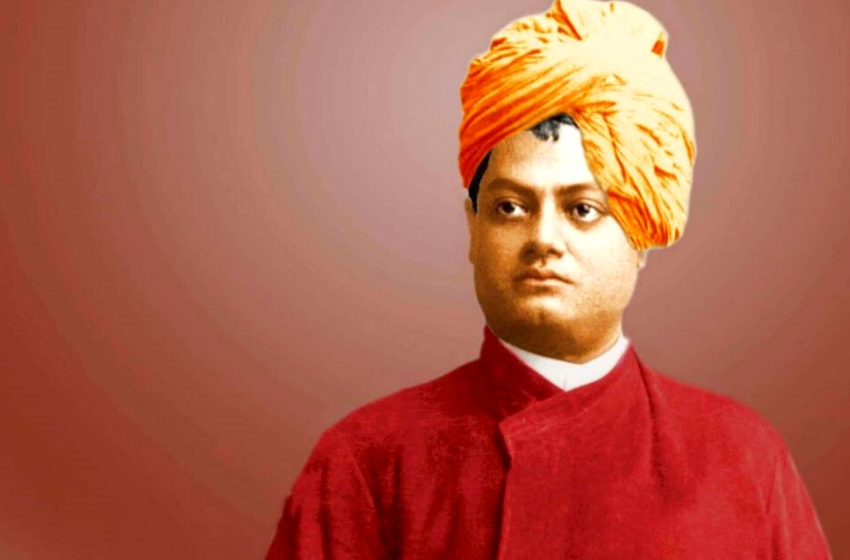
Swami Vivekananda – A Spiritual Genius

Swami Vivekananda

Swami Vivekananda was a spiritual genius of preeminent leadership and the icon crammed immense work and achievement into his life. His passion for knowledge concerning God and Hinduism took him to Sri Ramakrishna. He made Sri Ramakrishna, his master, who gave him God’s vision, clear his doubts, and inspired him to teach and changed him into a philosopher. Swami Ji played a major role in originating India’s philosophy of Yoga and Vedanta in the Western world. He was the leading one among the modern philosophers of our country. 

Swami Vivekananda was a Hindu monk. He was more than just a spiritual mind. He was responsible for the restoration of Hindu spiritualism and established Hinduism as a revered religion on the world stage. His views of universal brotherhood and self-awakening prevail relevant particularly in the current backdrop of widespread political turbulence around the world. Swami Ji’s teachings have been an influence to many, and his words have become goals of self-improvement especially for the youth of the country. Because of this, his birthday, January 12, is celebrated as the National Youth Day in India.

Early Life and Education

Swami Vivekananda was born on 12 January 1863, on the occasion of Makar Sankranti in a rich Bengali family in Calcutta. He was one of the eight children of Bhuvaneshwari Devi and Vishwanath Dutta. His birth name was Narendranath Dutta. Father Vishwanath was a successful lawyer with a significant impact on society. His mother Bhuvaneshwari was a woman enriched with a strong, God-fearing mind who had a great influence on her son. 

As a young boy, Narendranath displayed sharp intellect. His naughty nature denied his interest in music, both instrumental as well as vocal. He exceeded in his studies as well, first at the Metropolitan Institution, and later at the Presidency College in Calcutta. By the time he graduated from college, he had gained a vast knowledge of different subjects. He was good in sports, gymnastics, wrestling, and bodybuilding. He was an enthusiastic reader and read up on about everything under the sun. He studied the Hindu scriptures like the Bhagavad Gita and the Upanishads as well as he studied western philosophy, history, and spirituality by David Hume, Johann Gottlieb Fichte, and Herbert Spencer.

Swami Vivekananda Ji’s Contributions to Hinduism

The main contributions to hinduism of Swami Ji’s are:

1. Unification

Before Swami Ji came, there was a lot of dispute and competition among the different sects of Hinduism. Likewise, the leaders of different systems and schools of philosophy were commanding their views to be the only true and valid ones. By applying Sri Ramakrishna’s doctrine of Harmony. Swami Ji brought the overall unification of Hinduism based on the principle of unity in diversity. 

2. Identity

It was Swami Vivekananda who gave to Hinduism as a whole a clear-cut identity, a distinct profile. He was the first person, as supervised by his Master Sri Ramakrishna, to accept all Hindu beliefs and the views of all Hindu philosophers and sects as different perspectives of one total view of truth and way of life known as Hinduism. 

3. Defense

Another important service contributed by Swami Ji was to raise his voice in defense of Hinduism. Christian missionary promotion had given a wrong understanding of Hinduism and India in Western minds. Swamiji had to face a lot of resentment in his attempts to defend Hinduism.

4. Meeting the Challenges

At the end of the 19th century, India in general, and Hinduism in particular, faced serious hurdles from Western materialistic life, the ideas of Western free society, and the proselytising activities of Christians. Swami Ji faced these challenges by integrating the best elements of Western culture into Hindu culture.

5. New Ideal of Monasticism

A main contribution of Vivekananda to Hinduism is the revival and modernization of monasticism. Vivekananda promoted social service to the status of divine service.

6. Refurbishing of Hindu Philosophy and Religious Beliefs

Vivekananda did not merely interpret ancient Hindu scriptures and philosophical ideas in terms of modern thought. He also enumerated numerous illuminating original concepts based on his own original experiences and vision of the future. This, however, requires a detailed study of Hindu philosophy which cannot be endeavored here.

The main contributions that Swami Vivekananda made to the modern world

1. New Understanding of Religion

One of the most important contributions of Swami Vivekananda to the modern world is his explanation of religion as a universal experience of transcendent truth, common to all humanity. Swami Ji met the challenge of modern science by pointing that religion is as scientific as science itself religion is the science of consciousness. 

2. New View of Man

Vivekananda’s concept of the potential divinity of the soul’ gives a new, ennobling concept of man. The present age is the age of humanism which endures that man should be the main concern and center of all actions and thinking. By science and technology, man has achieved great prosperity and power, and modern methods of communication and travel have changed human society into a global village. Swami Ji has set the foundation for spiritual humanism, which is revealing itself through several neo-humanistic movements and the current interest in meditation, Zen, etc all over the world. 

3. New Principle of Morality and Ethics

The prevalent morality, in both individual life and social life, is mostly based on fear – fear of the police, fear of public contempt, fear of God’s punishment, fear of Karma, and so on. The modern theories of ethics also do not justify why a person should be moral and be good to others. Swami Ji has given a new theory of values and a new principle of morality based on natural purity and oneness. We should be pure because purity is our real nature, our true divine Self or Atman. Likewise, we should love and help our neighbors because we are all one in the Supreme Spirit acknowledged as Paramatman or Brahman.

4. Bridge between the East and the West

Another prominent contribution of Swami Ji was to construct a bridge between Indian culture and Western culture. He did it by rendering Hindu scriptures and philosophy and the Hindu way of life and institutions to the Western people in an idiom which they could understand. He made the Western people realize that they had to learn much from Indian spirituality for their own well-being.

Swami Vivekananda – Death

Swami Vivekananda was suffering from many health issues such as chronic insomnia, asthma, and diabetes. Swami Ji was died on July 4, 1902, while meditating at Belur Math. According to his discipline, the legend Swami Vivekananda achieved Mahāsamādhi. It is said that Swami Vivekananda met his prediction that he will not live forty years. The Iconic personality was cremated on the bank of Ganga (River Ganges) on a sandalwood funeral pyre in Belur just opposite the place where his Guru Shri Ramakrishna has cremated sixteen years ago. Swami Vivekananda’s  writings and lectures have been assembled into nine volumes.

Legacy

Swami Vivekananda explained to the world the true foundations of India’s unity as a nation. He taught how a feeling of humanity and brotherhood could bind together a nation with such a vast diversity. Vivekananda highlighted the points of disadvantages of western culture and the enrichment of India to overcome those. And that is why he is great. Our countrymen have gained miraculous self-respect, self-reliance, and self-assertion from his teachings. Swami Ji was successful in building a virtual bridge between the culture of the East and the West. He interpreted the Hindu scriptures, philosophy, and way of life to the Western people. Swami Ji made them apprehend that despite poverty and backwardness, India had a great contribution to make to world culture. He played a great role in ending India’s cultural isolation from the rest of the world.

Frequently Asked Questions

Q1. What are the main contributions swami Vivekanand made for the world?
Ans. The contributions made by Swami Vivekanand for the world are: New understanding of religion, New view of Man, New principles of moral and ethics, and bridge between the east and the west.

Q2. What Swami Vivekanand did for Hinduism?
Ans. Swami Vivekanand unified the Hindus, He gave a clear cut identity to Hinduism, he defended Hinduism at the time when christian missionary spread the wrong idea about Hindus, He integrated the best of western cultures in Hinduism, he developed a new idea of monasticism and he refurbished Hindu philosophies and religious beliefs. 

Q3. Why did Swami Vivekanand’s birthday is celebrated as the National Youth Day in India?
Ans. Swami Vivekanand birthday is celebrated as the National Youth Day in India because of the contributions done by the Swamiji for the betterment of Indian youth. His words brought self-improvement to the Indian youth. 

Q4. When did Swami Vivekanand die?
Ans. Swami Vivekanand died at the age of 39 on 4th July 1902.

Q5. What was the Date of Birth of Swami Vivekanand and where was he born?
Ans. Swami Vivekanand was born in Calcutta on 12th January 1863.

Q6. What was the birth name of Swami Vivekanand?
Ans. His birth name was Narendranath Dutta.

Best Reference Books for Class 12 CBSE 2021 – Science, Maths, English, Accounts

Best Books for CBSE Class 12

CBSE conducts (Central Board of Secondary Education) conducts Class 12 Board Examinations for students in the month of March but this year, due to the Pandemic effect, CBSE will conduct class 12 board examination 2020-21 from 4th May 2021. The date sheet is already released by the Board on its official website cbse.gov.in and cbse.nic.in.

Class 12 board examinations are the most important for students as it decides the higher education of the students. Get enlisted into the college cut-off list, Clearing the entrance examinations, etc. depend on your class 12 Board examination scores. The more you score, the more career fields are open for your higher education. Students preparing for class 12 boards always have the stress of preparing the best they can. Best preparation requires the best books. The first preference goes to NCERT. You can’t ignore NCERT, These are the very first books to start your preparation with. After NCERT, you need to consult reference books. Students must be vigilant while choosing the reference books for different subjects as endless options are available in the market and you have to choose the best one. Choosing the correct reference book will help you to increase your scores in Board examinations. In this article, we have listed some of the best reference books for class 12 CBSE Board examination 2021.

Best Reference Books for Class 12 CBSE

Class 12 is divided into various streams and students are free to choose their desired subjects. The various stream includes Science, Commerce, and Humanities. Let’s have a look at the best reference books for class 12 CBSE, subject wise:

Subject Best Reference Books for Class 12 CBSE Authors/Publications
Physics Concepts of Physics H C Verma
Objective Physics DC Pandey
Fundamental of Physics Halliday, Resnick& Walker
Chemistry ABC of Chemistry Modern Publication
Physical, Organic, and Inorganic Chemistry O P Tandon
Dinesh Objective Chemistry Dinesh
Maths Senior Secondary School Maths Class 12 R S Aggarwal
Mathematics Class 12 R D Sharma
Biology Elementary Biology Trueman
Objective Biology Dinesh
MTG’s Objective MTG
English CBSE Topic/Chapter Wise Question Bank Oswaal Publications
Computer Science Together with Computer Science Class 12 RachnaSagar
Computer Science with Python Class 12 Sumita Arora
Accountancy Part A Double Entry Book Keeping TS Grewal
Part B Analysis of Financial Statements TS Grewal
Business Studies Business Studies for class 12 paperback Subhash Dey
Case Studies Mentor in Business Studies class 12 AlkaDhawan
Economics Introductory Microeconomics Sandeep Garg
Introductory Macro Economics Sandeep Garg
History CBSE Question Bank Class 12 Oswaal
History class 12 CBSE (2020-21) Full Marks
Geography Satish Geography for class 12 CBSE  Satish
CBSE chapter-wise solved paper geography Arihant
Political Science MBD Class 12 Political Science V.K Puri
Sociology CBSE Question Bank Class 12 Sociology Oswaal
15 Sample Questions Political Science Class 12 CBSE Arihant

Best Book for Physics Class 12

Best Book for Physics Class 12 of NCERT is important for the preparation for the Class 12 Physics board exam. We recommend HC Verma and Xam Idea. H C Verma is a go-to book for Class 12 Physics. Apart from it, S L Arora, Pradeep’s and Xam Idea are other excellent options. We would strongly recommend ‘Xam Idea’ as it includes lots of conceptual questions, which are more frequently asked in CBSE Class, 12 boards.

Best Book for Chemistry Class 12

We recommend Pradeep’s Chemistry. Pradeep’s Chemistry is really helpful. You can also use OP Tandon as a good and reliable reference. However, do not neglect your NCERT book. Refer to these other books only when you have completed revising the NCERT book completely. Best Book for Chemistry Class 12 of NCERT is well known for its updated and thoroughly revised syllabus. The NCERT Chemistry Books are fully based on the latest exam pattern and CBSE syllabus.

Best Book for Maths Class 12

We strongly recommend RS Aggarwal & ML Khanna. For commerce students, Part 1 and 2 by R D Sharma has a good set of problems. You could also refer to U-Like papers as Mathematics is one of the scoring subjects and you absolutely don’t want to miss that opportunity. NCERT provides Best Book for Maths Class 12 because it is not only suitable for studying the regular syllabus of various boards but it can also be useful for the candidates appearing for various competitive exams.

Best Book for Biology Class 12

We recommend Elementary Biology by Trueman and ABC Biology for CBSE Class 12 Board Exam preparation. ‘Pradeep’s – A textbook for Biology’ is also a good option because it contains all the study material according to the CBSE curriculum. The CBSE Class 12 Biology contains lots of theoretical parts about biological processes, It is important to understand them properly. NCERT Best Book for Biology Class 12 syllabus mainly focuses on this book to make it student-friendly to make it useful for the students.

Best Book for English Class 12

We recommend Oswaal Question Banks of CBSE because it is the Best Book for English Class 12 and U-like Papers are also a good source of important questions and previous year CBSE question papers. For the literature part, NCERT is the best book. Firstly, students must read the NCERT chapters thoroughly, then jump to these reference books for practicing different questions. The reading and Writing section for CBSE Class 12 Board examination will also be covered in these books.

Best Book for Computer Science Class 12

We recommend Together with computer science Class 12 by Rachna Sagar because it is the Best Book for Computer Science Class 12. It covers all the topics under the CBSE Computer science syllabus with proper explanation and is also loaded with important questions from the exam’s point of view. Sumit Arora’s Computer science with Python Class 12 is also the best reference book for understanding Python.

Best Book for Accountancy Class 12

We recommend TS. Grewal’s Part A Double Entry Book Keeping and Part B Analysis of Financial Statements. NCERT provides Best Book for Accountancy Class 12 because these are the very important books for CBSE Class 12 Board Examination. These contain tested and high-graded study material with a simple textual flow. The content in these books imparts all the best theoretical and conceptual bases.

Best Book for Business Studies Class 12

We strongly recommend Business Studies for class 12 by Subhash Dubey because it is one of the Best Book for Business Studies Class 12. It contains Case studies base on the latest CBSE Sample papers, a recap at the end of every topic for understanding the important points, and 20 Sample question papers with answers and hints for practice.  Case Studies Mentor in Business Studies class 12 by AlkaDhawan is also good for exam preparation.

Best Book for Economics Class 12

We strongly recommend Introductory Microeconomics and Introductory Macroeconomics by Sandeep Garg. NCERT provides Best Book for Economics Class 12 because these books contain a detailed explanation of different topics which are necessary for the CBSE Board examination. It is important to go through the NCERT Textbook first and then consult the reference books for clearing the doubts.

Best Book for History Class 12

We recommend Full Marks History for Class 12. It covers the huge syllabus of CBSE class 12 history in a very simplified form with Chapter-wise keynotes, chapter-wise previous year board questions, and Practice papers. Apart from this, Oswal’s CBSE question bank class 12 is also good for practice. Remember, not to neglect your NCERT Books which provides Best Book for History Class 12 as they contain all the important study material for CBSE Class 12 Board examination.

Best Book for Geography Class 12

We recommend Best Book for Geography Class 12 of CBSE chapter-wise solved paper geography by Arihant. Once you have thoroughly read and understood your NCERT textbook, this book is your next step toward practicing important questions from the exam’s point of view. Satish Geography for class 12 CBSE is also a must-have book as it contains the concept explanation along with the last 10 years CBSE Class 12 Board Examination question papers.

Best Book for Political Science Class 12

MBD Class 12 Political science by V.K. Puri is highly recommended for CBSE Class 12 Board examinations as it contains NCERT Exercises with answers, Summary of each chapter, Self-Evaluation Test, and Important information which must be remembered. It is a large pool of very short, short, and long answer-type questions that why is referred to as Best Book for Political Science Class 12.

Best Book for Sociology Class 12

We recommend 15 Sample Questions Political Science Class 12 CBSE as it provides sample papers containing the most important questions for Board examinations. CBSE Question Bank Class 12 Sociology is also a good choice but both these books are useful after the proper understanding of NCERT textbooks. Students are advised to go understand NCERT textbooks before jumping to sample papers. NCERT provides Best Book for Sociology Class 12 that helps you in your preparation and you crack the Class 12 exams or competitive exams with excellent scores.

Frequently Asked Questions

Q1. Is the NCERT exemplar is good for CBSE Class 12 Board exam preparation?
Ans. Yes, NCERT Exemplar is the best book for CBSE Class 12 Board Exam preparation. It is based on the CBSE recommended curriculum and contains all the important questions with answers.

Q2. Which book is best for practicing lots of questions for class 12 computer science?
Ans. If you are looking for a good amount of questions for class 12 computer science, go for ‘All in One Computer Science CBSE class 12’.

Q3. I am a student for class 12 and my subjects are PCMB. I am weak at Maths subject, which reference book should I prefer for CBSE Class 12 Board Exam preparation-exam idea, all in one, U-like any other?
Ans. Firstly, we strongly recommend the NCERT textbook. After the NCERT textbook, you can choose any book from exam idea, all in one and U-like. All these books are good for CBSE exam preparation.

Small Scale Industries in India

Small Scale Industries

Small scale industry is a profitable business idea for it has certain benefits for the businessperson as well as the economy of the nation. Despite being a labor-intensive industry, it needs less capital to start a small scale industry. Hence, a lot of small business people wish to start a small scale industry of their own.

There are some guidelines for small-scale industries by the Government of India. In terms of financing the company is making and the revenue, it has generated. Small scales industries are classified into three parts are mention below:

  • Manufacturing / Production
  • Ancillary
  • Service industries

Manufacturing/Production Industries: Units that produce finished goods either for consumption or used in processing industries. These types of small scale industries are usually solely owned. Some examples of manufacturing small scale industries are engineering industries, food processing, etc

Ancillary Industries: Big companies or MNC manufactures complete goods, but they don’t generally make all the parts themselves. Vendors of these companies are ancillary industries. Ancillary industries can also be known as those companies which make machines for multinational companies or medium scale industries

Service Industries: Restoration shops and maintenance industries come under the category of service industries.

Objectives of Small Scale Industries

Some objectives of the small scale industries are mention below:

  • To create more employment opportunities
  • To aid improve the rural and less developed regions of the economy.
  • To reduce regional imbalances
  • To ensure maximum utilization of unexploited resources of the country
  • To assure equal distribution of income and wealth
  • To solve the unemployment problem
  • To attain self-reliance
  • To utilize the latest technology aimed at producing better quality goods at lower costs.

Role of Small Scale Industries (SSIs) in the Indian Economy

Check below the few role of small scale industries in the Indian economy:

1. Production

Small Scale Industries enterprises estimate for almost 40% of the total production of goods and services in India. Small Scale Industries are one of the foremost reasons for the growth and strengthening of the economy.

2. Make in India

Small Scale Industries are one of the best examples of the Make in India initiative. SSIs concentrate on the mission to manufacture in India and sell the products worldwide. That also assists create more demands from all over the world.

Exportation contribution: India’s export industry majorly depends on these small industries for their growth and development. Almost half of the goods that are exported from India are manufactured or produced by these industries.

3. Employment

These small scale industries are a main cause of employment in the country. The labor force cannot find work in the formal sector of the economy. So these labor-intensive industries give a livelihood to a large portion of the workforce.

4. Contribution to Export

Approximately half of the goods that are exported from India are produced by these small enterprises. Nearly 35% of direct exports and 15% of the indirect exports are from the small scale industries. So India’s export industry majorly depends on these small industries for their growth and development.

5. The welfare of the Public

Other than financial reasons, these industries are also necessary for the social growth and development of our country. These industries are normally started by the lower or middle-class public. They have an opportunity to gain wealth and employ other people. It aids with income distribution and contributes to social progress.

Examples and Ideas of Small Scale Industries

Below are the some example and ideas of small scale industries:

  • Handlooms
  • Handicrafts
  • Sericulture
  • Power Loom
  • School stationeries
  • Water bottles
  • Small toys
  • Paper Bags

Opportunities and Performance of Small Scale Industries

Below are the opportunities and performance of small scale industries:

  • Origination of employment
  • Equitable distribution of income
  • Assembling of resources and entrepreneurial skill
  • Regional dispersion of industries.
  • Export enhancement
  • Supports the growth of large industries
  • Better relation between employer and employees

Characteristics of Small Scale Industries

Below are the characteristics of small scale industries:

  1. Ownership: Small Scale Industries generally are under single ownership. So it can be a sole proprietorship or sometimes a partnership.
  2. Administration: Usually both the management and the control are with the owner/owners. Hence the owner is actively involved in the day-to-day activities of the business.
  3. Labor Intensive: Small Scale Industries dependence on technology is pretty limited. Therefore, they tend to use labor and manpower for their production activities.
  4. Flexibility: Small Scale Industries are more adaptable to their changing business environment. Because of some acts or unexpected developments, they are flexible enough to accommodate and carry on, unlike large industries.
  5. Limited Range: Small scale industries have a restricted zone of operations. Therefore, they can reach their local and regional demand.
  6. Resources Utilization: They use local and readily available resources which help the economy fully utilize natural resources with minimum wastage.

Challenges faced by Small Scale Industries

Despite the practical contribution by the Small Scale Industries towards the Indian economy, Small Scale Industries do not get the essential support from the Government departments, financial institutions, banks, credit societies, and corporate thus the Small Scale Industries are becoming handicap in the face of competition at the national and international markets. The major problems faced by the Small Scale Industries are mention below.

  • Scanty credit assistance 
  • Uneven and poor quality of raw material
  • Absence of organised meeting practices
  • Inadequate infrastructure

Problems of Small Scale Industries

  1. Lack of Investment: It is the most common problem faced by small scale business. They lack the money to raise funds as borrowed capital.
  2. Shortage of Raw Materials: Small producers cannot bear to buy in quantity due to limited funds. Hence, their bargaining power is low.
  3. Lack of Managerial Abilities: Since they are operated by single owners, they lack managerial skills.
  4. Incompetent Labor: As they cannot afford to pay high wages, they generally do not get competent manpower.
  5. Marketing Problems: A small business cannot afford to spend too much on an advertisement, offers, and to get information on customer’s changing tastes and preferences.
  6. Low-Quality Products: Small businesses do not have enough resources to invest in quality research and maintain the standards of the industry. They also do not have the capability to upgrade the technology.
  7. Idle Capacity: Many small units operate below their capacity.
  8. Outdated Technology: The use of outdated technology also makes them incompetent in the market.
  9. Sickness: Many SSIs are sick due to internal as well as external problems like lack of trained labor, delayed payments, lack of working capital, etc.
  10. Global Competition: Due to the policy of LPG (Liberalization, Privatization, and Globalization) there is an increased competition which is further adding o the problems of small businesses.

Conclusion

The advancement and advancement of Small Scale Industries are important for the development of the Indian economy to accomplish the impartial distribution of income and wealth, economic self-dependence, and economically sustainable developments. To boost the Small Scale Industries sector so that it can take deserved place in the growth mechanism of the Indian economy. Some appropriate measures to be taken by the government in providing financial assistance at minimum formalities, a platform to be built by the government to help the MSMEs in the procurement of quality raw material and train them for the organized marketing process.

Frequently Asked Questions

Q1. What are small scale industries?
Ans. Small Scale Industries are industries that manufacture products on a small scale.

Q2. What kind of manufacturers are termed small scale industries?
Ans. Industries like leather manufacturers, bakeries, photo studios, parlors, and the like come under small scale industries.

Q3. What are the properties of a small scale industry?
Ans. The properties of small scale industries are ownership, labor-intensive, flexibility, management, reach, and resource utilization.

Q4. What industries can be registered under SSI?
Ans. Manufacturing Enterprises and Service Enterprises can be registered as SSI.

Mother Teresa – One Woman, One Mission

Mother Teresa

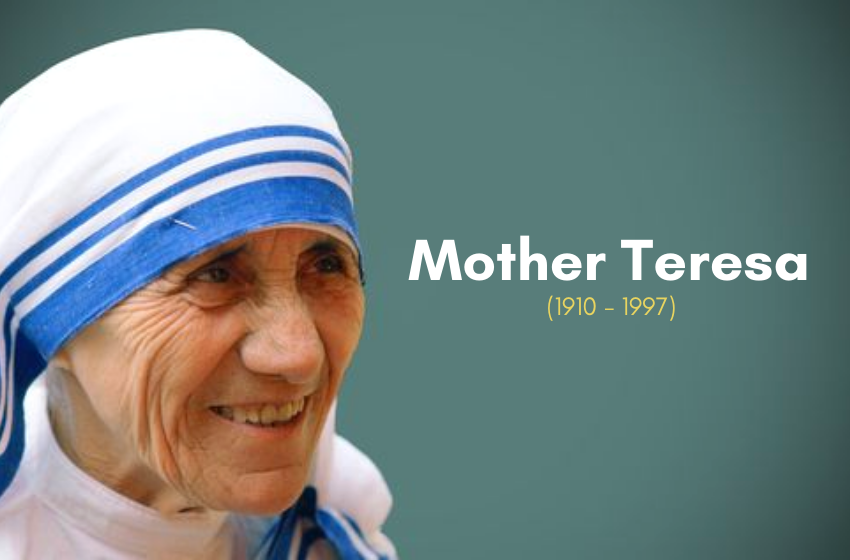
Mother Teresa was a great lady and known as “One Woman, One Mission” she had taken a big step to change the world. Mother Teresa (1910–1997) was a Roman Catholic nun who dedicated her life to helping the poor and poor around the world. Mother Teresa was a humanitarian. This means she did things to help out other people. Her entire life was fully devoted to helping the poor, the sick, the needy, and the helpless. Mother Teresa has bestowed with the Nobel Peace Prize, in 1979. And became a symbol of charitable, selfless work. 

Where did Mother Teresa grow up?

This luminous messenger of God’s love (Mother Teresa) was born in Uskub, Ottoman Empire on August 26, 1910. Uskub is now called Skopje and is the capital of the Republic of Macedonia. She was the youngest of the children born to Nikola and Drana Bojaxhiu. Her father was involved in Albanian-community politics in Ottoman Macedonia, died when she was eight and she was raised by her mother. Her birth name was Agnes Gonxha Bojaxhiu later it became famous as Mother Teresa after her great works and life achievements. Agnes grew up in the Roman Catholic Church and decided to devote her life to God at an early age. When she turned 18, Agnes joined the Sisters of Loreto to become a missionary to India. Before going to India, she had to learn English. She spent one year in Ireland learning to speak English at the Loreto Abby. A year later, She began her missionary work in Darjeeling, India. She learned the local language, Bengali, and taught at the local school. In 1931, she took her pledges as a nun and chose the name, Teresa. Teresa taught for several years becoming the headmistress at a school in eastern Calcutta in India.

Nunhood & Education

When she was twelve years old, she felt strongly the call of God. She wants to be a missionary to spread the love of Christ. Mother Teresa left her parental house at the age of eighteen. She followed the Sisters of Loreto, an Irish community of nuns with missions in India. After a few months of training in Dublin she was sent to India, where on May 24, 1931, she took her initial pledges as a nun. Mother Teresa taught at St. Mary’s High School in Calcutta from 1931 to 1948. In 1948, the suffering and poverty she glimpsed outside the convent walls made such a deep impression on her that she got permission from her superiors to leave the convent school and dedicate herself to working among the poorest of the poor in the slums of Calcutta. Mother Teresa had no funds, she relies on Divine Providence and began an open-air school for slum children. Shortly she was joined by voluntary helpers, and economic support was also forthcoming. This made it possible for her to increase the scope of her work.

One Woman, One Mission

Mother Teresa was the founder of the Missionaries of Charity, a Roman Catholic congregation of women dedicated to serving the poor. Mother Teresa was recognized as one of the 20th Century’s most prominent humanitarians. She was canonized as Saint Teresa of Calcutta in 2016. The primary objective of this mission was to look after people, whom nobody else was prepared to look after. Mother Teresa felt that serving others was a fundamental principle of the teachings of Jesus Christ.

Missionaries of Charity

Mother Teresa established a group within the Catholic Church called the Missionaries of Charity, in 1950. Mother Teresa explained the purpose of the Missionaries of Charity as an organization that would take care of the hungry, the naked, the homeless, the crippled, the blind, the untouchables, all those people who feel unwanted, unloved, uncared for throughout society, people that have become a burden to the society and are ignored by everyone. Mother Teresa had some lofty goals. She herself was craving only a few years of the beginning, she accomplished some amazing things. Initially, when she started the Missionaries of Charity there were only 13 members. Now, the group has over 4,000 members who care for people all over the world.

Awards are given to Mother Teresa

  • In 1971: The first Pope John XXIII Peace Prize and Kennedy Prize
  • In 1972: The Nehru Prize for the promotion of international peace and understanding
  • In 1975: Albert Schweitzer International Prize
  • In 1979: The Nobel Peace Prize 
  • In 1985: States Presidential Medal of Freedom
  • In 1994: Congressional Gold Medal 
  • In 1994: U Thant Peace Award 
  • In 1996:  Honorary citizenship of the United States

Criticism of Mother Teresa

Notwithstanding this widespread admiration, Mother Teresa’s life and work have not gone without its disputes. In particular, she has drawn criticism for her vocal support of some of the Catholic Church’s more controversial doctrines, such as opposition to contraception and abortion.

When and How Mother Teresa Died

After several years of deteriorating health, including heart, lung, and kidney problems, Mother Teresa died on September 5, 1997, at the age of 87. Mother Teresa’s death, the Vatican commenced the process of beatification, which is the second step on the way to canonization and sainthood. In October 2003, she was formally beatified by Pope John Paul II.

Legacy

After her death, Mother Teresa has remained in the public spotlight. For her consistent commitment to aiding those most in need, Mother Teresa stands out as one of the greatest humanitarians of the 20th century. She combined profound empathy and a fervent commitment to her cause with incredible organizational and managerial skills that allowed her to develop a vast and effective international organization of missionaries to help impoverished citizens all across the globe.

Despite the large scale of her charitable activities and the millions of lives she touched, she retained only the most humble conception of her own actions. Mother Teresa’s life in a characteristically self-effacing fashion. Mother Teresa stated that By blood, I am Albanian. By citizenship, an Indian. By faith, I am a Catholic nun. As to my calling, I belong to the world. As to my heart, I belong entirely to the Heart of Jesus.

Interesting Facts about Mother Teresa

  • She was on 26 August 1910, Uskup (now Skopje), Ottoman Empire (now the Republic of Macedonia) 
  • She died on 5 September 1997, Calcutta, India 
  • Mother Teresa nevermore met with her mother or sister again after leaving home to become a missionary. 
  • Mother Teresa plays the role of Leader of Missionaries of Charity, Calcutta
  • Albania’s international airport is named after her, the Aeroporti Nene Tereza. 
  • In 1979, she has bestowed the Nobel Peace Prize. instead,  of the traditional Nobel honor banquet, she demanded that the funds for the banquet be donated to the poor of India. 
  • She received numerous awards for all her charity work including the Presidential Medal of Freedom from President Ronald Reagan.
  • It takes around 9 years of service to become a full member of the Missionaries of Charity.

Frequently Asked Questions

Q1. Why was she given the name ‘Mother Teresa”?
Ans. After joining the Irish order sisters of Loreto, she was called “Sister Teresa” and become Mother Teresa after making the final vows.

Q2. How many awards did Mother Teresa Received?
Ans. She received so many awards including the Nobel Prize for Peace, Presidential Medal of Freedom from President Ronald Reagan, The first Pope John XXIII Peace Prize and Kennedy Prize, The Nehru Prize for the promotion of international peace and understanding, Albert Schweitzer International Prize, States Presidential Medal of Freedom, Congressional Gold Medal, U Thant Peace Award and Honorary citizenship of the United States.

Q3. At what Age did Mother Teresa die?
Ans. She died at the age of 87 on 5th September 1997.

Q4. In which year did Mother Teresa received the Nobel Prize?
Ans. In year1979, she received the Nobel prize for peace.

Best Reference Books for Class 10 CBSE Board Exam 2021: Science, Maths, English, Social Science

Best Books for CBSE Class 10

Preparation for class 10 CBSE board examinations is a real challenge for students. Endless options of books available in market and pressure of preparing the best leads to lots of confusion. In this article, we have listed some of the best books to study for class 10th 2021.

Have you heard about Student’s Bible? – NCERT. The best and the appropriate book to start your preparation is reading your NCERT. You can learn the basic and the examination syllabus. Once you have done with your NCERT books, now it’s time to move to reference books.

Best Reference Books for Class 10 Maths 2021

Check below the list of best reference books for class 10 Maths:

  1. Mathematics for class 10th by R D Sharma
  2. Secondary school Mathematics by R S Aggarwal
  3. One Mathematics by Arihant

Best Reference Books for Class 10 Science 2021

The CBSE class 10th science subject is divided into 3 parts – Physics, Chemistry, and Biology.

Best Books for Class 10 Physics

  1. Principles of Physics by N.K. Chaudhry
  2. Fundamental of physics by Pradeep Publications

Best Books for Class 10 Chemistry

  1. Chemistry Science for Class 10th by Manjit Kaur and Lakhmir Singh

Best Books for Class 10 Biology

  1. Science for Class 10th by Manjit Kaur and Lakhmir Singh

Best Reference Books for Class 10 Social Science 2021

Check below the list of best reference books for class 10 Social Science:

  1. Comprehensive CCE Question Bank by Laxmi Publication

Best Reference Books for Class 10 English and Hindi 2021

Check below the list of best reference books for class 10 English and Class 10 Hindi

  1. CBSE- CCE English Communicative Term 1 by Oswal school books
  2. Navyug Hindi Vyakaran

CBSE Class 10 Preparation Tips 2021 – Subject wise

CBSE Class 10 Physics Preparation Tips

  • Firstly, Understand the fundamental concepts of chemistry clearly.
  • Make sure to learn and practice theorems and laws thoroughly.
  • Practice will make you perfect in physics. So, solve as many sample papers and previous year papers as you can.

CBSE Class 10 Chemistry Preparation Tips

  • Chemistry includes lots of chemical formulas, equations, and reactions. You must learn few chemical equations and learn chemical equations.
  • Make charts of formulas and revise them daily.

CBSE Class 10 Biology Preparation Tips

  • Biology includes diagrams and theory. You must practice the diagrams properly.
  • Familiarize yourself with biological terms as they are very important to understand the
  • theory part.
  • Solve previous year question papers and sample papers to understand the type of questions.

CBSE Class 10 Maths Preparation Tips

  • It is important to learn formulas properly and learn to derive the theorems.
  • Learn to apply the theorems and formulas properly to get the correct answers.
  • Speed up your calculation by practicing daily.

CBSE Class 10 English and Hindi Preparation Tips

  • Scoring in English and Hindi is easy but if your vocabulary and grammar are not strong, you can lose marks.
  • You must focus on your grammar and vocabulary along with literature.

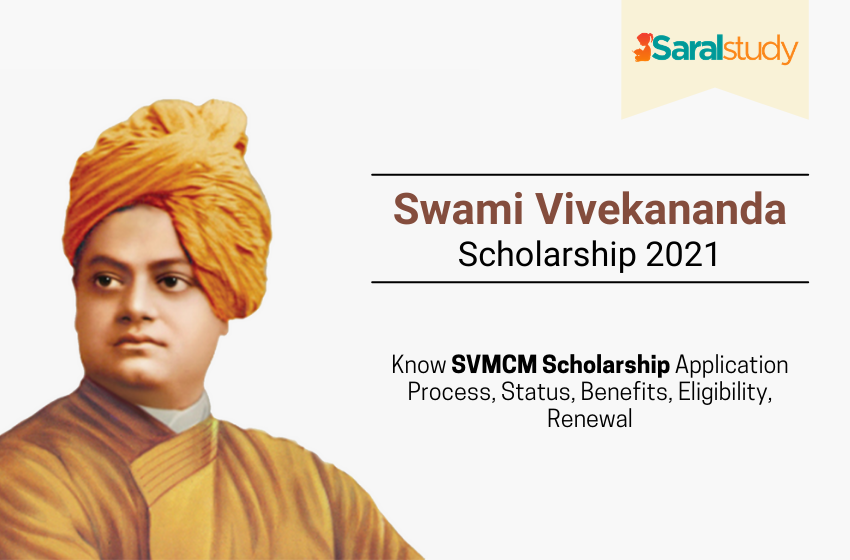
Swami Vivekananda Scholarship 2021: Application Process, Eligibility, Documents, Rewards

Swami Vivekananda Scholarship 2021

Bikash Bhavan Scholarship or as more popularly known Swami Vivekananda Scholarship is a merit-cum-means scholarship programme (SVMCM) for the commendable students of West Bengal. These are students that belong to the minority communities of the State and are studying in class 11th, 12th or pursuing graduation, post-graduation and other higher levels of education.

Before the year 2016, this scholarship programme offered a lesser number of seats, however acknowledging the importance of this scheme and how it benefited students, the Swami Vivekananda Scholarship for minority students now promises a larger no. of seats and rewards to worthy candidates.

The Government of Bengal administers this scheme and thus, has permitted a scholarship amount of INR 2000 Crore.

The aim of this scholarship programme is to motivate students at undergraduate, post graduate, M.Phil. and Doctorate levels to pursue education within West Bengal.

From eligibility criteria, important dates, rewards and benefits to application process and renewal of the same, you can find all the information regarding the Swami Vivekananda Scholarship in this article.

In case by the end of the article, you still have any questions regarding the scheme, you can also reach out to the providers of this scholarship by using the contact information given at the end.

Swami Vivekananda Scholarship 2021 – Highlights

Name of the Scholarship

Swami Vivekananda Merit-cum-Means Scholarship (SVMCM)

Provider

Government of West Bengal (WBHED)

Courses Offered

High School, Under graduate honours, Post-Graduate, Engineering Medical, Paramedical, Nursing, Diploma

Application

Online

Application process begins from

September

Last Date of Application

November (for new) and July for renewal of scholarship

Official Website

svmcm.wbhed.gov.in

Swami Vivekananda Scholarship 2021 – Important Dates

Below are the Important Dates for Swami Vivekananda Scholarship 2021:

Application Type Opening Date Closing Date
Fresh Application 2021 September 2021 November 2021
Renewal Application Form for 2021-22 session September 2021 September 2021
Kanyashree (K3) Application Form 2021 September 2021 November 2021

Swami Vivekananda Scholarship 2021 – Eligibility Criteria

SVMCM is only offered to candidates who have recently passed Madhyamik, higher secondary examination or are currently pursuing courses in the field of engineering, medical, M.Phildiploma, doctorate etc.

However, based on the different categories/levels of students that can apply for this scholarship, there are some other things too that play an important role in deciding whether or not the candidate is eligible for the same.

The current course of study Specific Eligibility Percentage marks obtained in the last exam
For Higher Secondary Level of studies Candidates should have passed Madhyamik Pariksha or equivalent examination 75% in aggregate
For Diploma (Polytechnic) Level Candidates should have passed Madhyamik Pariksha for first-year diploma courses.Candidates should have passed the higher secondary examination for 2-years diploma in – 75% in aggregate
For Undergraduate courses Candidates should have qualified higher secondary examination or equivalent to that. 75% in aggregate (Best of five)
For Postgraduate courses Honors subjects at graduation level 53%
Honors in Engineering subjects at graduation level 55%
For Kanyashree applicants (K-3 component) Students should have a valid receipt sanctioned K-2 IDStudents should be pursuing a PG course in Science, Arts, and Commerce 45%
For M.Phil./ Non-NET/NET-LS Research Fellow The students enrolled for an M.Phil or Ph.D. program at a state-aided institution can apply. Not Applicable

Swami Vivekananda Scholarship 2021 – Benefits

The main benefits of Swami Vivekananda Scholarship (SVMCM) are:

  • The Scholarship amount that you will be rewarded with under the Bikash Bhavan Scholarship programme depends on the course of study or the level of education that you’re pursuing.
  • The amount can range from INR 1,000 per month to INR 5,000 per month.

Swami Vivekananda Scholarship 2021 – Application Process

The applications identified with the grant are just acknowledged through the authority site. The link for the application will rely upon the category of the student. Additionally, no printed copies of the application will be accepted under this. The following is the step by step guide for applying under the Swami Vivekananda Scholarship 2021 Online Application Form:

Step 1: In order to apply online for Swami Vivekananda Merit-cum-means scholarship or (SVMCM), candidates must visit the website www.svmcm.wbhed.gov.in and click on the option ‘register here’.

Step 2: Read the given information on the page that opens up. After that tick on the box below and press ‘Proceed for Registration’.

Step 3: Select the correct Directorate according to your current course in the registration category and then tap on “apply for fresh application”.

Step 4: Now provide your Name, phone number, date of birth, email Id and other information. Then create a password and register yourself. You will need this password for logging onto the dashboard in the future.

Step 5: Once registration is done you will receive an application ID. You will require this ID number for your future logins.

Step 6: Now you have to login to the dashboard by using your application ID and password. In order to add more details to the information regarding the scholarship scheme, tap on ‘edit/profile application’.

Step 7: Fill out the complete form with your current course details, address, communication details, qualifying exam details and upload your scanned photograph along with your signature. Now click on save and next.

Step 8: Here is a list of documents that you will need to upload to the website portal for verification.

  • Mark list of your last qualifying Exam.
  • Admit Card for your last exam.
  • Original income certificate.
  • Bank account details.
  • Domicile.
  • Ration card / voter card / Aadhar card.
  • Madhyamik exam admit card

Step 9: After you have uploaded all the documents mentioned above, save your application form and review it. Finally, you can click on the finalize application and submit your application form. Once submitted, you cannot edit your form anymore.

In case any further modification is required even after the submission of the application form, candidates can approach the HOI for unlocking your application form.

Applying for the Swami Vivekananda Merit-cum-means scholarship is a really easy process. Since everything is conducted online, candidates are not required to carry their documents everywhere.

Swami Vivekananda Scholarship 2021 – Documents Required

While applying for Swami Vivekananda scholarship you must be ready with the following documents:

  • Mark list of your last qualifying examination.
  • Income affidavit.
  • Income certificate.
  • Your admit card for the madhyamik examination.
  • Bank account details of the candidate.
  • Candidate’s Aadhar Card, ration card or voter ID card.
  • A passport size photograph of the candidate (size less than 50kb).

Swami Vivekananda Scholarship 2021 – Application Status

If you wish to check your Swami Vivekananda scholarship status online you can visit the website svmcm@wbhed.gov.in

All you have to do is log in to the web portal by inserting your application ID number and your password and you’ll see your scholarship application status and verification procedure on the screen.

Swami Vivekananda Scholarship 2021 – Rewards

The Rewards that you will get under the Swami Vivekananda Scholarship depend on the course or level of study you are currently pursuing. Here are the rewards as follows:

Course and Level Scholarship amount (monthly)
DPI UG(Arts) INR 1000/-
Undergraduate (Commerce) INR 1000/-
Undergraduate (Science) INR 1500/-
Undergraduate (Other Professional Courses that are UGC approved) INR 1500/-
Postgraduate (Arts) INR 2000/-
Postgraduate (Commerce) INR 2000/-
Postgraduate (Science) INR 2500/-
Postgraduate (Other Professional Courses that are UGC approved) INR 2500/-
NON-NET M.Phil./NON NET Ph.D INR 5000/- / INR 8000/-
DSE HS INR 1000/-
DTE UG (Engineering), PG (Engineering) and Other Professional Courses (AICTE Approved) INR 5000/-
DTE&T UG (Polytechnic) INR 1500/-
DME UG (Medical Degree) and Diploma Courses INR 5000/- and 1500/- Respectively

Swami Vivekananda Scholarship 2021 – Renewal

Every year the lucky candidates chosen for the Swami Vivekananda scholarship for class 12th are required to apply for its renewal.

In order to apply for the renewal of the scholarship during your move from HS level to undergraduate and diploma levels, candidates must score 60% marks.

Whereas, in order to apply for renewal of scholarship at postgraduate level candidates are required to score a minimum of 50 percentage marks.

To be able to apply for the scholarship candidate must pass all the semesters.

Following are the steps to apply for renewal of the scholarship:

Step 1: Head to the website portal for Swami Vivekananda scholarship.

Step 2: Tap on or select the renewal application option.

Step 3: Use your registered ID and password for logging in.

Step 4: Fill out the form and upload all the scanned documents.

Step 5: Now you can submit the application.

Swami Vivekananda Scholarship 2021 – Fees

Zero fee is charged for the application of this scholarship.

Swami Vivekananda Scholarship – Contact Information

In case of any queries regarding the SVMCM scholarship, interested applicants can contact at- Higher Education, Science & Technology and Biotechnology Department

Bikash Bhavan, 6th Floor, Salt Lake, Kolkata 700091
Helpline number : 1800-102-8014 (Toll-Free Number)
Email : helpdesk.svmcm-wb@gov.in

Swami Vivekananda Scholarship 2021 – FAQs

Q1. When does the online application for Bikash Bhavan Scholarship 2021 begin?
Ans. West Bengal Higher Education Department will commence the process for online application for scholarships in September.

Q2. How can I apply for the Swami Vivekananda Scholarship for minority students?
Ans. Aikyashree is a new scholarship scheme initiated by the Government of West Bengal for the students that belong to the minorities.

Q3. Can students who have passed the HS Exam in 2019, apply for the scholarship in 2020?
Ans. Yes you can apply for the SVMCM 2020 but you will be required to provide a good reason at the time of application as to why you had to drop a year.

Q4. Can I apply for both Kanyashree K3 scholarship and SVMCM 2020?
Ans. No. You can only apply for one of these scholarships.

Q5. What do I do to check the status of my SVMCM application?
Ans. Login to the web portal for SVMCM and check your application status.

Q6. Am I supposed to submit all the documents to school or college even after online application?
Ans. There is no need for you to submit any documents to the institutions once you have applied for the scholarship online. However, there are certain institutions who ask for documents for verification so in this case you will have to contact the institution.

Q7. When will the displacement of SVMCM scholarship 2020 take place?
Ans. It usually takes three to four months to process the applications. The payment is disbursed only after that to the candidate’s bank account.

Q8. Can I modify my application after submitting?
Ans. You cannot edit your SVMCM application form once you have submitted it. However, in order to make urgent changes to your application you must get it unlocked from the HOI.

Indian National Flag – History, Signification, And Importance

National Identity Element And National Symbol

The Indian National Flag also called the tricolour is a horizontal rectangle of saffron white and India green and Ashoka chakra at the centre with 24 spokes in navy blue colour. It was adopted on 22nd July 1947 during a meeting of the constituent assembly.

The Indian National flag was designed by Pingali Venkayya and is based on the Swaraj flag. The Indian flag is to be made of khadi cloth which is a special hand-spun material. The Bureau of Indian Standards has laid out the manufacturing process and specifications of the flag. Karnataka Khadi Gramodyoga Samyukta Sangha is the sole manufacturer of the Indian Flag.

As per the Flag Code of India, the Width and height ratio of the flag should be 3:2 and all three horizontal bands should be equal in size. The spokes of the Ashoka Chakra are 24 and evenly spaced.

The use and display Guidelines of the Indian Flag are governed by the Flag Code of India 2002, The Emblem and Names Act, of 1950, and the prevention of insults of the National Honor Act, of 1971. The violation of the provisions of these acts is punishable by law with three years imprisonment or fine, or both.

National Identity Elements

The most important national identity element for any country is the National Flag. If we look at the case of India, there are many national identity elements along with the Indian National Flag. These are also known as National Symbols.

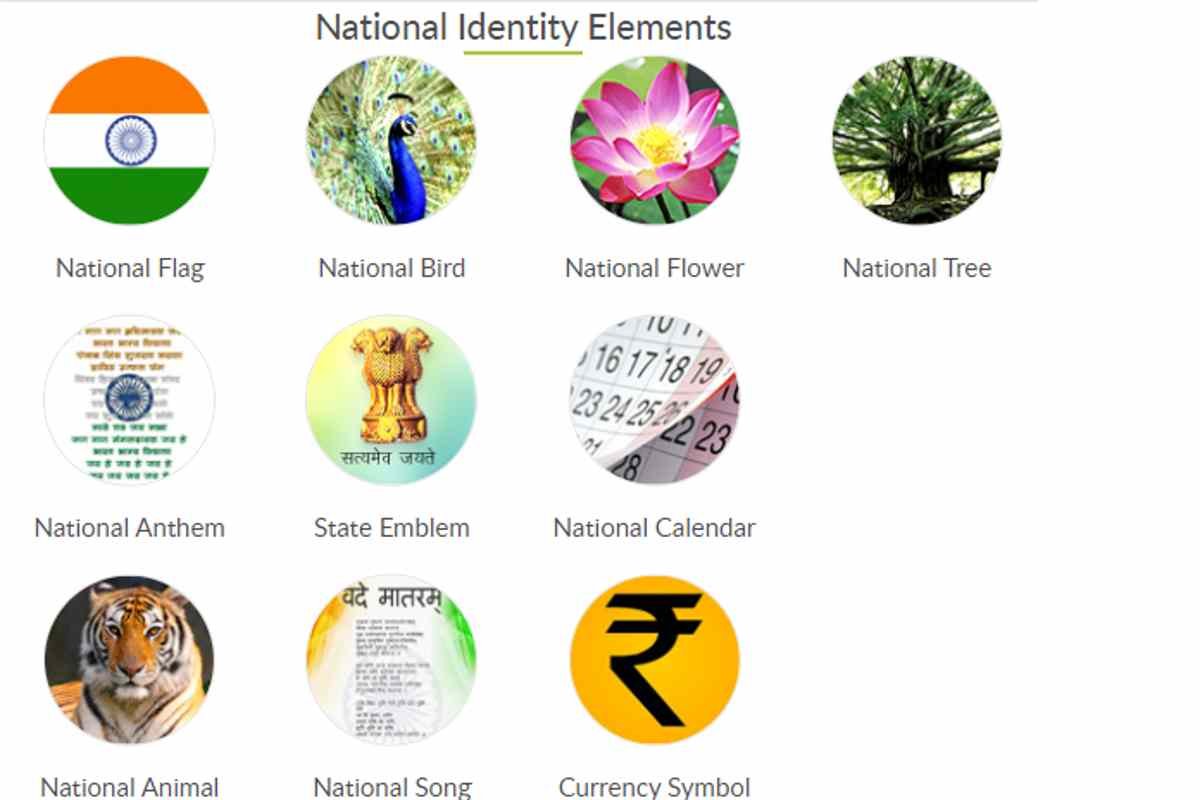
There are 10 elements known as national identity elements of India which define the perception of the public about India. The 10 national Identity elements / Indian Symbols are:

  1. National Flag
  2. National Anthem
  3. The State Emblem
  4. The National Bird
  5. The National Animal
  6. The National Flower
  7. The National Tree
  8. National Calendar
  9. National Currency Symbol
  10. National Song

Out of these 10 National identity elements, National Flag and National Anthem are the most respected.

Meaning of the Indian National Flag – Tricolour

The National Flag of India consists of three colours and an Ashoka Chakra. The Indian Flag is just not a simple coloured piece of cloth each and every feature of the flag has its significance. Let us decode the Indian flag.

Indian National Flag

1. Saffron

The saffron colour strip of the Indian flag denotes courage and selflessness. This colour signifies renunciation and absolution of the ego and it is the religious colour of Hindus, Jains, and Buddhists. This colour reminds the leaders to work without getting attracted to material gain. It reminds leaders to work for the benefit of the Nation.

2. White

This Strip on the Indian flag denoted cleanliness, peace, purity, honesty, and knowledge. It guides the citizens toward the path of truth. It reminds the Indian leaders to work in order to attain national peace and not to repeat the bloodshed which was witnessed by the nation during the partition and freedom movements.

3. Green

The Green strip denotes Fertility, prosperity, and Faith. It is a festive and stable colour which represents happiness and liveliness. This reminds the Indian leaders to save the nation from external enemies and human destruction.

4. Ashoka Chakra

The Ashoka Chakra at the centre of the flag represents motions and growth which tells that India cannot oppose the change and that National growth is the key to success in the fast-running world. It also represents the different religions in India as it is the Wheel of Dharma and all the religions of India subscribe to the concept of Dharma.

History of the Indian National Flag

Under the leadership of Gandhiji, the Indian national congress struggles for decades to rally the British-ruled people in the Indian subcontinent. They felt the need for national symbols to represent their national objective. In the year 1921, Pingali Venkayya came up with a design a flag consisting of 2 colours, red and green depicting two major communities of India. Red for Hindus and green for Muslims. Lala Has raj suggested placing a spinning wheel in the centre of the flag where the flag was divided horizontally. The idea of adding the spinning wheel on the flag was to make Indians self-dependent by fabricating their own cloth.

When this design was shown to Gandhiji, he suggested adding one more horizontal strip in between the red and green. The strip was white in colour for the other religious communities of India. This white stripe also provided a clear visible background for the spinning wheel. This flag was carried by thousands of Indian people during the peaceful protest against British rule in May 1923 in Nagpur and many of them were arrested by the British government. The congress flag became a national symbol for India and was recognized in August 1931 at an annual meeting and the red colour strip was replaced by the deep saffron colour.

To avoid the formation of communal organizations, new characteristics were associated with the three colours of the flag. The saffron colour was said to stand for courage and sacrifice, the white colour for Peace and truth, and the Green colour for Faith and Chivalry.

After the Britishers agreed to free India from its rule, this was officially hoisted as the national flag on July 22, 1947, but the spinning wheel was replaced by the blue chakra – Dharma Chakra (Wheel of the Law). The chakra was designed with 24 spokes of Navy blue colour.

Evolution of the Indian National Flag

The Indian flag has undergone various stages of evolution and finally reached the tricolour we have today. The journey of the Indian national flag evolution started in 1906 during the national freedom struggle.

The very first time the unofficial flag was hoisted was on 7th August 1906 in Calcutta. This flag was designed by Freedom activists Sachindra Prasad Bose and Hemchandra Kanungo. They designed it with 3 horizontal strips – Red, Yellow, and Green, and Vande Mataram Written in the middle of the flag on the Yellow strip, The sun and crescent moon on the red stripe, and eight half-open lotuses on the Green strip.

In 1907, Madame Cama hoisted the second flag along with other exiled revolutionaries. It was similar to the first flag but there were some changes like the top strip had 7 stars depicting the saptarishi and it was exhibited at the socialist conference which was held in Berlin.

During the Home rule movement, Lokamanya Tilak and Dr Annie Besant hoisted the third flag which had five red and Four green strips alternatively. It depicted the seven stars arranged in saptrishi configuration. One corner was occupied by the crescent and another by the union jack.

As the Activists felt the need for the Indian flag, in 1921, Pingali Venkayya designed a flag with a spinning wheel in the middle of the flag. This flag had 2 horizontal strips of red and green colour.

During the All India Congress meeting, Gandhiji 1921, Gandhiji suggested adding a white colour strip to represent the remaining communities of India. Initially, Pingali designed red and green strips to represent Hindu and Muslim communities respectively.

In the year 1931, the Indian flag was adopted with some changes. The red colour was replaced by the deep saffron colour and the white strip was moved to the middle of the flag and chakra was placed on it. The spinning wheel was replaced by the Ashoka Chakra and the attributes of the Saffron, White, and Green colours were changed to courage, peace, and chivalry respectively. The Chakra in the middle stands for movement and growth and 24 spokes represent 24 virtues.

Size of Indian National Flag

The ratio of width and the height of the National Flag of India is 3:2 check below the specific sizes of the Flag and Ashoka Chakra declared by the Bureau of Indian Standard:

S.No. Size of Flag (WxH)
(mm)
Size of Ashoka Chakra
(mm)
1 6300 x 4300 1295
2 3600 x 2400 740
3 2700 x 1800 555
4 1800 x 1200 370
5 1350 x 900 280
6 900 x 600 185
7 450 x 300 90
8 225 x 150 40
9 150 x 100 25

Facts about Indian National Flag

  1. On 29th May 1953, the Indian flag was hoisted on Mount Everest along with the Nepalese flag and union jack.
  2. The First Indian who raised the Indian flag in Foreign land was Bhikaji Rustom Cama.
  3. In the year 2002, the Right to Hoist the Indian flag was declared as a Fundamental right under Article 19 (i) A of the Indian Constitution.
  4. As per the flag code, The Indian Flag should be hoisted in the day time and there should be no other flag or symbol above it.
  5. If there are other flags lined up along with the Indian flag, the other flags should be placed on the left of the national flag.
  6. The national flag should always be taken down during the evening.
  7. While in Parade, the Flag should be on marching right or at the front of the centerline, in case there is a line of other flags.
  8. The National Flag and its imitations can not be used for business or trade purposes.
  9. The Flag should not touch the ground or water and should not be held upside down.
  10. The Indian flag is flown at Half-mast in case of mourning at the death of the Prime Minister or the President of India.
  11. There are 7 National Identity elements in total and National Flag is the most important one. It is also known as National Symbol.

Indian National Flag – FAQs

Q1. When was the Indian Flag adopted?
Ans. Indian National Flag was adopted on 22nd July 1947 during a meeting of the constituent Assembly after the Britishers agreed to leave India.

Q2. What is the proportion of the size of the National flag of India and is there a fixed size of the Ashoka Chakra?
Ans. The ratio of width and the height of the National Flag of India is 3:2 and there is no fixed size of the Ashoka Chakra but there are specific sizes of the flag and the chakra declared by the Bureau of Indian Standard.

Q3. Which Articles of the Indian constitution have provisions about the handling of the National Flag of India?
Ans. Flag Code of India 2002, The Emblem and Names Act, 1950 and the prevention of insults of National Honor Act, 1971

Q4. What is the punishment for the people violating the provisions of the Flag code of India 2002 and the emblem and Names Act 1950?
Ans. The people violating these acts will be punished with 3 years imprisonment or a fine or both.

Q5. What is the sequence of the colors in the Indian National Flag?
Ans. The saffron color strip remains at the top and white in the middle. The green color strip remains at the bottom and the Ashoka chakra along with 24 spokes in the middle of the flag on the white strip.

Q6. What is the importance of national symbols?
Ans. The National Symbols of any country are the representations that the country presents itself as a national community in the world. The National Symbols spreads patriotism and unity among the country’s citizens. The main aim of the National symbols is to unite people through verbal, visual, and iconic symbolism.

Q7. What are the national identity elements of India?
Ans. There are 7 Indian national Identity elements – National Flag, National Anthem, National Emblem, National Animal, National Bird, National Tree, and National Flower.

Q8. Do all the nations have national identity elements?
Ans. All the nations in the world have their national identity elements according to their history and culture.

UGC Scholarship 2022-23: How to Apply Online, Eligibility, Renewal, Last Date

UGC Scholarship

University Grants Commission (UGC) is a famous statutory board constituted under the Ministry of Human Resource Development, Government of India proposes various scholarships to the scholars to continue their studies without any financial issues. Scholars of graduate and post-graduate can apply for this scholarship. A UGC Scholarship can be avail by both meritorious and underserved scholars. A scholar pursuing graduation, Post- Graduation, M.Phil, Ph.D. can get benefit from this scholarship.

UGC Scholarship 2021 – Highlights

Conducted By University Grants Commission
Eligibility Students pursuing undergraduate to postdoctoral level
Region India
Rewards Up to INR 22,000 per month
Last Date of Application October 31, 2022

University Grants Commission (UGC) is a legal association under the Ministry of Human Resource Development of the Government of India that decides and keeps up the norm of advanced education in the country. The UGC Scholarship gives more than 20,000 scholarships and cooperations to students everywhere in the nation to seek after their school and college-level studies.

UGC Scholarship 2021 – Details

Scholarship Name No. of Scholarship Application Period
Post Graduate Indira Gandhi Scholarship for girl child 3000 July-October
Post Graduate Merit Scholarship for Rank Holder 3000 July-October
Post Graduate Scholarship for Professional studies (S.C, S.T) 1000 July-October
Ishan Uday Special Scholarship for N.E.R 10,000 July-October
Swami Vivekananda one Girl Child Scholarship for Analysis in Social Science NA Available all time
Emeritus Fellowship 200 Available all time
Dr. S. Radhakrishnan Post- Doctoral Fellowship (Humanities and Social Sciences) 200 NA
Dr. D. S. Kothari Postdoctoral Fellowship Scheme NA Available all time
Post-Doctoral Fellowship to Women Candidates 100 NA
Post-Doctoral Fellowship to SC/ST Candidates 100 NA
National Fellowship for Scheduled Caste Students 2000 NA
National Fellowship for Higher Education of ST Students 750 NA
National Fellowship for Persons with Disabilities 200 October-November
Maulana Azad National Fellowship for Minority Students 756 NA
National Fellowship for OBC Candidate 300 NA

UGC Scholarship 2021 – Important dates

Events Dates
Post Graduate Indira Gandhi Scholarship for girl child deadline 31st December 2020
Post Graduate Merit Scholarship for Rank Holder deadline 30th November 2020
Post Graduate Scholarship for Professional Studies (S.C, S.T) deadline 15th January 2021
Ishan Uday Special Scholarship for N.E.R deadline 30th October 2020
Swami Vivekananda one Girl Child Scholarship for Analysis in Social Science deadline January
Emeritus Fellowship deadline March 2020
Dr S. Radhakrishnan Post-Doctoral Fellowship in Humanities and Social Sciences deadline 30th September 2020
Dr D. S. Kothari Postdoctoral Fellowship Scheme deadline Available throughout the year
Post-Doctoral Fellowship to Women Candidates deadline September
Post-Doctoral Fellowship to SC/ST Candidates deadline June
National Fellowship for Scheduled Caste Students deadline May
National Fellowship for Higher Education of ST Students deadline 31st October
National Fellowship for Persons with Disabilities June
Maulana Azad National Fellowship for Minority Students December
National Fellowship for OBC Candidate June

UGC Scholarship 2021 – Eligibility Criteria

For UGC scholarship mainly age, educational qualification, and family income is focused. Besides this, the caste category is also taken into account. Check the table for more details.

UGC Scholarship Eligibility in Detail

Scholarship Name Category Eligibility
Post Graduate Indira Gandhi Scholarship for girl child Open to all
  • Only girl students below the age of 30 years can apply.
  • Only a single child from a family is eligible.
  • The candidate should have taken admission in the 1st year of a regular, Post-Graduation course at an established university or college.
Post Graduate Merit Scholarship for Rank Holder Open to all
  • The students who have completed their graduation in the following course can apply: Life Sciences, Physical Science, Chemistry, Mathematics, Social Science, Languages, Commerce
  • The students should be the 1st or 2nd rank holders atUG level and listed in a full-time, regular master’s degree program at a recognized university or college.
  • The minimum age must be less than 30 years.
  • The candidate should obtain a minimum of 60% marks.
Post Graduate Scholarship for Professional studies (S.C, S.T) SC, ST
  • Students who are studying in the 1st year of the professional course at the PG level during the recent year from a recognized university, college.
  • The courses sanctioned from recognized restrictive bodies like MCI, Bar Council of India, NCTE, NCTIS, RCI, DCI, PCI, AICTE, Development Authority of India, Forensic Regulatory, INC, and ICAR are taken into account as skilled courses.
Ishan Uday Special Scholarship for N.E.R All
  • Students who are residents of the North Eastern Region (NER) state and who have passed their Grade 12 or equivalent examination.
  • The student ought to have taken admitted in a technical, professional, or general degree course from a recognized institute, university, or college.
  • The annual gain of the family should be less than Rs. 4.5 Lac.
Swami Vivekananda one Girl Child Scholarship for Analysis in Social Science All Category
  • Open for only a single girl child from each family.
  • The applicant ought to be studying a regular, full-time PhD course in Social Science from a recognized University, institute, College.
  • The maximum age group for general category students is 40 years and for S.C, S.T, O.B.C, and PWD it is 45 years.
  • Candidates who are studying PhD through distance mode are not eligible.
  • Transgender candidates can also apply.
Emeritus Fellowship All Category
  • It is available to highly qualified, old, and trained teachers of recognized institutions, universities, and colleges.
  • The Applicant should have given their career service with high-quality research work.
  • It allows the rewarded applicant to give a distinct time-bound action plan until the age of 70 years.
Dr. S. Radhakrishnan Post- Doctoral Fellowship (Humanities and Social Sciences) All
  • It is available for unemployed young researchers, minimum age 35 years before the last date of online application submission. (Relaxation of 5 years is given for S.C, S.T, O.B.C, P.W.D and Women scholars).
  • The minimum proportion of marks to be secured by general category students at the UG level is 55% marks and at the PG level is 60% marks. (For reserved categories including S.C, S.T, O.B.C, and P.W.D, a relaxation of 5% is obtainable).
  • The transgender candidate also can apply.
Dr. D. S. Kothari Postdoctoral Fellowship Scheme All
  • The fellowship is procurable for candidates under 35 years of age who hold a Ph.D. degree in the science department. (A relaxation of up to 3, 5, and 10 years will be given to S.C, S.T, O.B.C, ladies, and P.W.D applicants).
  • Teachers, performing on a permanent post and are under 35 years of age can apply.
  • The previous candidates of the fellowship also can apply if they were announced unsuccessful.
Post-Doctoral Fellowship to Women Candidates All
  • The fellowship is available for unemployed female candidates holding a PhD degree.
  • The minimum age should be less than 55 years (A relaxation at the age of 5 years is given to S.C, S.T, O.B.C, P.W.D students).
  • The minimum proportion of marks secured by general category candidates at UG level is 55% and at PG level is 60% (A relaxation in the minimum percentage of marks of 5% is given to S.C, S.T, O.B.C, P.W.D candidates).
Post-Doctoral Fellowship to SC/ST Candidates S.C, S.T
  • The fellowship is given to unemployed candidates who have a Ph.D. degree in the relevant subject.
  • The maximum age limit for boys is 50 years while for girl candidates it is 55 years.
  • The candidate should have secured 50% of marks at the UG level and 55% of marks at PG level.
National Fellowship for Scheduled Caste Students SC
  • The students who passed the PG examination and have enlisted for the M.Phil./PhD course are eligible.
National Fellowship for Higher Education of ST Students ST
  • The students having a PG degree can apply for the fellowship.
  • The applicant should be enrolled in a full-time regular M.Phil./PhD course at a recognized university, institution, or college.
National Fellowship for Persons with Disabilities PWD
  • It is for students with special needs who have been registered in the Ph.D./M.Phil course at a University.
Maulana Azad National Fellowship for Minority Students Minority
  • Minority category students can apply.
  • The student should be registered in a full-time and regular M.Phil./PhD course.
  • The annual gain of the family should be less than Rs 2.5 Lakh.
  • The minimum percentage of marks to be secured in post-graduation (PG) is 50%.
National Fellowship for OBC Candidate O.B.C
  • The students who passed the post-graduation and have registered for M.Phil.or PhD courses are eligible.
  • The annual gain of the family should be less than Rs. 6 Lakh.

UGC Scholarship 2021 – Documents Required?

The required documents for UGC scholarship:

  1. Aadhaar card
  2. Bonafide certificate
  3. Caste certificate
  4. Residential certificate
  5. The bank passbook (First Page)
  6. Income certificate
  7. Mark sheets of last qualifying exam
  8. Fee receipt number
  9. The Latest Passport size Photograph
  10. Student ID proof

UGC Scholarship 2021 – Benefits

  • It helps deserving candidates to pursue their education without any financial issues.
  • Fellowship etc are given.

Further in this article, there is a complete detail of the rewards and benefits provided to the candidates.

The stepwise application process to apply for the UGC Scholarship are:

  1. Visit the official page of UGC @ https://www.ugc.ac.in/page/Scholarships-and-Fellowships.aspx
  2. Click the particular Scholarship and press apply now.
  3. Fill UGC scholarship online correctly in a prescribed manner including all the details.
  4. Upload all self-attested scanned documents.
  5. Take a printout after submitting the form.
  6. Enclose the application form in an envelope and send it to the postal address mentioned on the official website.

UGC Scholarship 2021 – Online Status

Scholarships are given to the applicant who fulfils the desired eligibility criteria and is found real and true during verification, the fellowships are disbursed to scholars who get the recommendation from the Expert Committee situated by the UGC after an interview. The results will be declared on the official website https://www.ugc.ac.in/page/Scholarships-and-Fellowships.aspx.

The student gets a Direct Bank Transfer facility from UGC. The amount of scholarship is directly credited to the student’s bank account.

UGC Scholarship 2021 – Application Status

UGC Scholarship applications can be tracked.

  • Select the scheme
  • Enter the Applicant ID
  • Enter Date of Birth
  • Enter the Captcha
  • Select login option

UGC Scholarship 2021 – Terms and Conditions

The main terms and conditions for a UGC scholarship are:

  1. Applications suspected will not be processed and will be thrown away at the same time.
  2. Failed students are not eligible and should not apply for the UGC scholarship
  3. Candidates should provide their effective mobile phone number, and current email ID.
  4. All the details and documents produced by the candidate must be authentic and true. If the information given is found wrong, then the application form and data collected will be rejected.

UGC Scholarship 2021 – Rewards

Scholarship Name Rewards
Post Graduate Indira Gandhi Scholarship for girl child
  • Rs 36,200 p.a for 2 years
Post Graduate Merit Scholarship for Rank Holder
  • Rs 3,100 p.a for 2 years
Post Graduate Scholarship for Professional studies (S.C, S.T)
  • Rs 7800 per month for 2 years for ME, M.Tech scholars.
  • Rs 4500 per month for 2 years for other professional programs.
Ishan Uday Special Scholarship for N.E.R
  • Rs 5400 per month for general degree scholars.
  • Rs.7800 per month for students studying technical, professional, and medical courses
  • Note: The scholarship award is sensible for one year which may be reviewed every year for the degree course subject to your good conduct and maintenance of prescribed attendance.
Swami Vivekananda one Girl Child Scholarship for Analysis in Social Science
  • For the First 2 years- Rs. 25,000 per month.
  • For the Remaining Period- Rs. 28,000 per month.
  • A contingency grant of Rs. 10,000 p.a for the first two years and Rs 20,500 p.a for the remaining period.
  • Escort and reader assistance of Rs 2,000 per month (for disabilities).
Emeritus Fellowship
  • An honorarium of Rs. 31,000 per month for two years.
  • A contingency of Rs 50,000 p.a.
Dr S. Radhakrishnan Post-Doctoral Fellowship (Humanities and Social Sciences)
  • Fellowship of Rs. 38,800 for the 1st year, Rs  40,300 for the 2nd year, and Rs 41,900for the 3rd year.
  • A contingency of Rs. 50,000 p.a for three years.
  • Escorts and readers assistance of Rs. 2,000 per month for PwD (Disabilities) candidates.
Dr. D. S. Kothari Postdoctoral Fellowship Scheme
  • Rs. 43,400, Rs. 45,000 and Rs. 46,500 for 1st, 2nd and 3rd year respectively.
  • Higher fellowship of Rs 46,500 for the 1st, 2nd, and 3rd year.
  • Contingency grant of Rs 1 Lac p.a.
Post-Doctoral Fellowship to Women Candidates
  • First Rs. 38,800 per month for 2 years and Rs. 46,500 per month after the next 2 years.
  • A contingency of Rs 50,000 p.a for 5 years.
  • Escorts and reader allowance of Rs. 2,000 per month (for PwD candidates)
Post-Doctoral Fellowship to SC/ST Candidates
  • Rs. 38,800 per month for 1st two years and Rs. 46,500 per month after 2 years.
  • A contingency of Rs. 50,000 p.a for 5 years.
  • Escorts and reader allowance of Rs. 2,000 per month (for PwD candidates).
National Fellowship for Scheduled Caste Students
  • Fellowship in Social Sciences, Humanities, and Sciences include JRF of Rs. 25,000 per month for the first 2 years and SRF of Rs. 28,000 per month for the remaining period.
  • Contingency for Humanities and Social Sciences is Rs. 10,000 p.a for the initial 2 years and Rs. 20,500 p.a for the remaining period.
  • Contingency for Science, Technology, and Engineering is Rs. 12,000 p.a for the first 2 years and Rs. 25,000 p.a for the remaining period.
  • Escorts and reader assistance of Rs. 2,000 per month (for blind, physically disabled scholars).
National Fellowship for Higher Education of ST Students
  • Fellowship in Social Sciences, Humanities, and Sciences include JRF of Rs. 25,000 per month for the initial 2 years and SRF of Rs. 28,000 per month for the remaining period.
  • Contingency for Humanities is Rs. 10,000 p.a for the first two years and Rs. 20,500 p.a for the remaining period.
  • Contingency for Science, Engineering & Technology is Rs. 12,000 p.a for the initial two years and Rs. 25,000 p.a for the remaining period.
  • Escorts and reader assistance of Rs. 2,000 per month (for blind, physically disabled scholars).
National Fellowship for Persons with Disabilities
  • Monthly stipend of Rs. 16,000 for the initial two years and the remaining period Rs. 18,000 per month.
  • Contingency allowance for Humanities, Commerce, and Social Science is Rs. 10,000 p.a for the first two years and Rs. 20,500 for the remaining period.
  • The contingency allowance for Science and Engineering & technology is Rs. 12,000 and Rs. 25,000 for the remaining period.
  • Departmental assistance of Rs. 3,000 p.a HRA as per the rules of University Escorts, reader assistance of Rs. 2,000 per month (for blind and physically disabled students).
Maulana Azad National Fellowship for Minority Students
  • Fellowship of Rs. 2,000 per month (JRF) for the initial 2 years and Rs. 28,000 per month (SRF) for the remaining period.
  • Contingency for Humanities, Social Sciences, and commerce is Rs. 10,000 p.a for the initial two years and Rs. 20,500 p.a for the remaining period.
  • Contingency for Science is Rs. 12,000 p.a for the initial two years and Rs. 25,000 p.a for the remaining period.
  • Escorts and reader assistance of Rs. 2,000 per month (for blind and physically disabled students).
National Fellowship for OBC Candidate
  • Fellowship in Social Sciences, Humanities, and Sciences include JRF of Rs. 25,000 per month for the initial two years and SRF of Rs. 28,000 per month for the remaining period.
  • Contingency for Humanities and Social Sciences is Rs. 10,000 p.a for the initial two years and Rs. 20,500 p.a for the remaining period.
  • Contingency for Science, Engineering & Technology is Rs. 12,000 p.a for the initial 2 years and Rs. 25,000 p.a for the remaining period.
  • Escorts and reader assistance of Rs. 2,000 per month (for blind and physically disabled scholars).

UGC Scholarship 2021 – Fee Charges

No fee is charged for the application process. It’s free to register.

UGC Scholarship 2021 – FAQ’s

Q1. How much is given for JRF?
Ans. The government has revised the fellowship amount from over 20% to Rs. 31,000 from Rs. 25,000.

Q2. What is the difference between JRF and Ph.D.?
Ans. A Ph.D. degree is needed for employment as a researcher, professor while a JRF provides financial assistance for studying.

Q3. What is the UGC scholarship?
Ans. The University Grants Commission under the Ministry of Human Resource Development provides several scholarships to scholars.

Q4. How many scholarships are awarded to OBC candidates?
Ans. About 300 candidates get scholarships under the National Fellowship for OBC.

Q5. What is the full form of NTA?
Ans. National Testing Agency.