10 Points of Consideration before Choosing the Best Graduation Course

Choosing the Best Graduation Course

The confusion while choosing the best graduation course is natural because it decides your career. Everyone wants to join the best course that can provide them with the brightest career and settled life. The varying suggestion and information from different peoples can increase your anxiety about choosing any course for yourself.  

10 Things to consider before Choosing the Graduation Course

If you are also a student who has just passed your high school and facing great confusion about graduation course selection, Here we have listed 10 points to guide you. Consider these points while choosing the best graduation course and you will surely reach the best-suited conclusion for yourself.

So, let’s have a look on these points.

[lasso rel=”amazon” id=”5490″]

1. What is the reason for your graduation?

This is the most important point to understand why do you need to opt for a graduation course. You must know the reason before choosing a graduation course for yourself. 

If you want to extend your skills through your graduation course, in that case, you must choose the graduation course according to your already existing skills. The graduation course must polish your skills. For example, If you want to polish your Art, you can opt for the related subjects and the same goes for music and other skills also. 

If you want to take up your graduation course with the aim of your progress with your current profession, you must discuss the study options and suitable courses with your seniors in your company or your employer. Chose the course that can help you to progress in your profession and can lead to promotions. 

In short, consider your existing skills and experiences, your dream career and employment opportunities, your interests, and the suggestions from your peers. Once you are clear about the reason for your graduation, jump to the next point.

2. What are your field of interest?

Considering your interests before selecting the graduation course can help you to build a successful career. Studying the course of your interest is never difficult, but is fun. Choosing the graduation course according to your interest can help you to go far and wide in your career.

Question yourself and understand your field of interest, you can find the exact path you want to move on.

3. What is your study style?

Consider your study style as one of the criteria to choose your graduation course. Some students like to regular assignments or semester exams while some like to face examinations only once a year. Some students like to present their assignments in written form while others like them verbally. Some students like to study only the theory part while live to have hands-on- experience and practicals. Which study style do you prefer? Understand your preferences and choose the best-suited course for you. This way you will be more comfortable in graduation and will get success. 

[lasso rel=”amazon” id=”5494″]

4. Where do you like to live or study?

There are two faces to this thing. One, look for the country where you can get the best educational institution for your field. Some countries can provide you the specialized education in your desired field. For example, Australia is the best for marine biology. Second, Question yourself about where you would like to live and start your career. This is also an opportunity to learn a new culture, languages, and face a new world. 

5. Your Budget

Yes, this is also one of the most important points you must keep in mind while selecting the graduation courses for you. You can get the cheapest to the most expensive course in Graduation. Or you can also search for different countries where you can get the same course on less budget. For example, many students prefer to move to Germany or Russia for their MBBS just because they can afford the fees there which was impossible for them in India. Many students leave their dream fields just because they find them unaffordable. So, better to have a rough idea of how much you or your family can spend on your graduation and then shortlist the best-suited course for you.

6. Homework is Important

Now, You have shortlisted a few courses and colleges that you find useful for yourself for graduation but you still need to do lots of homework. Search online about the courses and universities you have selected, read student blogs, talk to people who already have experience with those universities or courses. The glossy prospectus can never be trusted completely, you need to search to know the inner truth and choose the best for yourself. 

7. Whether the course is recognized or not?

Some courses in the field of medical, engineering, law, or accountancy require a professional license to start your career. Before choosing your graduation course, check if they are recognized by the relevant professional bodies or not

8. What are the internship opportunities?

Internship becomes your strength when you apply for any job after your graduation. Internships involve the real experience you have in your field. If you are choosing a practical course, you must check what internship opportunities your course is providing. 

9. Does this course provides you better opportunities in the future?

While choosing the best graduation course for you, Make sure to look for the future opportunities that you will get after the completion of the course. The course you have selected should provide you a good job and a good opportunity for higher studies. 

[lasso rel=”amazon” id=”5498″]

10. Check the university and visa application process

If you are choosing to study abroad, you must research well about the university and the country as well. Better to know the visa application process in advance. It is recommended to consult a student visa consultation company to make the procedure easy.

Conclusion

Graduation courses are the basis of your career planning. This is the time when you start studying in the direction of your profession. The choices made here can have huge effects on your life. As a student, you must have a clear understanding of what you have to do in your future and choose the graduation course wisely.  Consider the points mentioned above. These points will surely help you to find the best course for you. All the best for this biggest decision of your life.

Frequently Asked Questions on Graduation Course

Q1. Which Visa consultation company is the best?
Ans. There are many Visa consultation companies out there. You can always search on the Internet and find the best one. Remember to go through testimonials and reviews to know the company better.

Q2. I am interested in the medical field but the fees are very high. What I can I do?
Ans. Well, If you find the college fees very high you can search for other colleges and universities offering courses at reasonable fees or you can also apply for scholarship examinations. Another thing you can do is to opt for Para-medical courses like Nursing, BMLT, Physiotherapy, etc.

Q3. I have done Class 12th with English, Maths, Physics, Chemistry, and Biology. What should I choose as a graduation course?
Ans. You have many options to choose from. Firstly, understand your field of interest. You can opt for the medical field, engineering, etc.

Q4. In case I find the course useless for me in the middle of the graduation. Can I change it?
Ans. Yes, You can anytime change your mind. You just need to meet the academic counselor and inform your college faculty. You can apply for another course in the next academic year.

Also Read: What To Do After Graduation

Agneepath Kavita: हरिवंश राय बच्चन की अग्निपथ कविता का प्रतिपाद्य

Main Causes Of Earthquake and Environmental Effects

MHRD Scholarship 2021: Apply Online, Eligibility, Application Process, Rewards

MHRD Scholarship

The full abbreviation of the MHRD is the Ministry of Human Resource Development. It plays an important role in the education sector of the country. Class 1 to 10 students can apply for the Pre Matric scholarship. Class 11 and 12 students can apply for the Post Matric scholarship. Graduation and Post – Graduation scholars can also apply.

This is a central scholarship. There are two types of MHRD scholarship i.e. National Scholarships, External scholarships. The national level scholarship is administered by the various departments of MHRD. The international level scholarships are provided in collaboration with the foreign country’s government under Educational and Cultural exchange programs. There are many MHRD scholarships to study abroad also like Sri Lanka, U.K, Italy, South Korea, Israel, China, Mexico, New Zealand and Japan and also in India.

The Ministry of Human Resource Development helps the meritorious students who are financially weak so that they can continue their studies nationally or internationally.

MHRD Scholarship to Study Abroad
MHRD Scholarship gives opportunities to the students of India to study abroad in foreign countries like Sri Lanka, U.K, Italy, South Korea, Israel, China, Mexico, New Zealand, and Japan. Visa fees, airfare are also provided by the MHRD.
MHRD Scholarship 2021 – Highlights

Conducted By Ministry of Human Resource Development
Eligibility Students from class IX to PhD degree or above
Region India and Overseas
Rewards Up to GBP 29,944.85
Last Date of Application January 31, 2021

MHRD Scholarship 2021 – Details

Scholarship Name Provider Name Application Period
Central Sector Scheme of Scholarship for College & University Students National level Between July and October
Prime Minister SpecialScholarship Scheme for Jammu & Kashmir National level Between March and May
National Scheme for Girl student for Secondary Education Incentive National level Between August and October
National Means cum Merit Scholarship National level Between July and October
Prime Minister’s Research Fellowship National level Between March and April
AICTE Pragati Scholarships for Girls National level Between August and October
AICTE Saksham Scholarship Scheme National level Between August and October
CommonwealthScholarship in the UnitedKingdom (U.K) Foreign Between December and February
New Zealand Commonwealth Foreign Between January and March
Chinese Scholarship Foreign Between January and March
South Korean Government Scholarship Foreign Between February and March
Government of Japanese scholarship Foreign Between February and March
Government of Italy scholarship Foreign Between March and April
Government of Mexico Scholarship Foreign Between April and May
Government of Israel Scholarship Foreign Between October and November
Government of Brazil Scholarship Foreign Between June and August
Sri Lanka Presidential scholarship Foreign Between August and October
Ms. Agatha Harrison Memorial Fellowship Foreign Between January and February

MHRD Scholarship 2021 – Important Dates

Events Dates
Online application start date 15th July
Last date of application 31st October

MHRD Scholarship 2021- Eligibility Criteria

The eligibility criteria for the MHRD scholarship are discussed below in the table.

Scholarships Name Eligibility
Central Sector Scholarship for College & University Scholars
  • It is for students, studying in a regular course of Medical, Engineering, from the AICTE, D.C.I, or M.C.I famous college.
  • The students should obtain above 80% of marks in the particular stream in grade 12 to become eligible.
  • The annual gain of the family should be less than Rs 8 Lac.
  • The student ought to not receive any other scholarship.
  • The students studying through correspondence or distance learning are not eligible.
Prime Minister Special Scholarship Scheme (PMSSS) for Jammu and Kashmir
  • It is applicable for candidates who are residents of Jammu and Kashmir.
  • The students should have passed grade 12 or 10+3 diploma from the J&K board, CBSE, J&K state polytechnic.
  • The students who are ready to study outside J&K can also apply.
  • The annual gain of the family should be less than Rs. 8 lacs.
National Scheme for Girls of Incentive for Secondary Education
  • It is available for unmarried girl candidates below the age of 16years of S.C, S.T category who are enlisted in grade 9.
  • The candidates should have passed the grade 8 exam from Kasturba Gandhi Balika Vidyalaya School and register in grade 9 in government-aided schools or state government schools.
National Merit cum Means Scholarship
  • This scholarship is for grade 9 students and they must be continuing their study in grades 10 to 12.
  • The minimum percentage of marks in the class 8 exam must be 55% (5% relaxation for S.C, S.T).
  • To appear in the selection exam, the candidates need to secure a minimum of 55% of marks in grade 7.
  • The annual gain of the family must be less than Rs. 1.5 lac.
Prime Minister’s PM Research Fellowship
  • The students studying in the 1st year or have completed B.Tech, M.Tech, Integrated MSc from I.I.T, I.I.I.S, N.I.T, I.I.S.E.R, I.I.I.T are eligible.
  • The scholars admitted through UCEED, JEE, KVPY can apply.
  • The scholars who have completed the program in the last 5 years are eligible.
AICTE Pragati Scholarships for Girls
  • It applies to the girl students who are admitted to the 1st year of the degree, diploma course at a recognized AICTE institution.
  • The annual gain of the family should be less than Rs 8 Lac.
  • Two girl children from a family can apply.
AICTE Saksham Scholarship
  • It is for disabled students with a disability level of more than 40% and taken admission in the 1st year of a technical degree program at an AICTE institution.
  • The annual gain must be less than Rs. 8 lac.
Commonwealth Scholarship of the United Kingdom (U.K.)
  • The minimum percentage of marks secured should be 65% in the Science stream and 60% in the Social Science stream.
  • Candidates ought to study in graduate, postgraduate, M.Phil, Ph.d.
  • The age limit should be less than 40 years.
New Zealand Commonwealth
  • The candidate must be a graduate or postgraduate with at least 65% marks.
Chinese Scholarship
  • The candidate must be class 12 passed or more with at least 60% marks.
South Korean Government Scholarship
  • The candidate must pass graduation under the age of 40 years to get admission in PG, M.Phil, Ph.D
Government of Japanese scholarship
  • The candidate must have 65% of marks to get admission to PG, M.Phil, Ph.D. under the age of 35 years.
Government of Italy scholarship
  • The student must be a graduate to get admitted.
Government of Mexico Scholarship
  • The student must be a graduate.
Government of Israel Scholarship
  • The students who hold a letter of acceptance from an Israeli university are eligible.
  • Candidates must know English or Hebrew language proficiently.
Government of Brazil Scholarship
  • The age of the applicant must be between 18 to 25 years.
  • Applicants must secure a minimum 60% of marks.
Sri Lanka Presidential scholarship
  • Age must be under 25.
  • Graduate courses are eligible.
Ms. Agatha Harrison Memorial Fellowship
  • A minimum post-graduate degree is required.

MHRD Scholarship 2021 – Documents Required?

The required documents for MHRD scholarship are:

  1. Aadhaar card
  2. Caste certificate
  3. Residential certificate
  4. The bank passbook (First Page)
  5. Income certificate
  6. Mark sheets of last qualifying exam.

MHRD Scholarship 2021 – Benefits 

This scholarship helps the student to pursue their studies nationally and internationally as well. Further in this article, there is a complete detail of the rewards and benefits provided to the candidates.

The stepwise application process to apply for the MHRD Scholarship.

Students should go through the following points to apply for the MHRD Scholarship.

  • Scholars must visit the official website @ www.mhrd.gov.in
  • Read the notification on the home page.
  • Select the particular scholarship to apply.
  • Fill the application form correctly.
  • Upload various documents like income certificate, ID proof, admission letter, Disability certificate (if any), caste certificate, photo, Signature.
  • Then, the application should be verified by the respective institute.
  • Submit the duly filled form and take a print copy for future references.

MHRD Scholarship 2021 – Application Status

For the MHRD scholarship every year the application opens in June and July. Login to “Student Login” by entering permanent student ID and Date of Birth. Click on the “Check Your Status” option.

MHRD Scholarship – Terms and Conditions

Below are the MHRD scholarship terms and conditions:

  • Candidates should provide their correct mobile phone number, and email ID as they will be used in future also.
  • The documents should be original and authentic. If the information given is found wrong, then the application form and data collected will be rejected.
  • Applications suspected will not be sent for scholarship and will be thrown-away at the same time.
  • Failed candidates are ineligible and need not apply.

MHRD Scholarship 2021 – Rewards

Scholarships Rewards
Central Sector Scheme of Scholarship for College & University Students
  • Graduation: Rs. 10000 p.a.
  • Post-Graduation: Rs. 20000 p.a.
  • 5-year professional course: Rs. 20000 p.a. in 4th and 5th year.
Prime Minister Special Scholarship Scheme for Jammu and Kashmir
  • Complete Academic fees
  • Maintenance charges: Rs.1 lacs paid in 2 equal instalments.
National Scheme of Incentive for Girls for Secondary Education
  • Rs.3000 p.a. with interest
National Means cum Merit Scholarship
  • Rs.500 per month
Prime Minister’s Research Fellowship
  • Rs.70000 per month for 1st & 2nd year
  • Rs.75000 per month for 3rd year
  • Rs.80000 per month for 4th & 5th year
  • Additional research grant of Rs. 2 lac for 5 years
AICTE Pragati Scholarships for Girls
  • Tuition fees of Rs.30000 or actual fees(whichever is less)
  • Incidental charges: Rs 2000 per month for 10 months every year.
AICTE Saksham Scholarship Scheme
  • Tuition fees of Rs.30000 or actual fees (whichever is less)
  • Incidental charges: Rs 2000 per month for 10 months every year.
Commonwealth Scholarship in the United Kingdom
  • Air ticket fare, Tuition fees, a stipend of GBP 1065 per month or GBP 1306 per month, thesis grant, study travel grant, child allowance.
New Zealand Commonwealth
  • Tuition fee, medical & travel insurance, assistance with research and thesis cost, living allowance.
Chinese Scholarship
  • Tuition fee, accommodation, monthly stipend, and medical insurance.
South Korean Government Scholarship
  • Settlement allowance: KRW 200,000
  • Monthly allowance: KRW 1,500,000
  • A research allowance: KRW 240,000 per semester
  • Language training fees are fully paid
  • Degree tuition is fully paid
  • Reimbursement of thesis printing fee
  • Medical insurance: KRW 20,000 per month
  • Korean proficiency grant: KRW 100,000 per month
Government of Japanese scholarship
  • Monthly stipend: 1,43,000 Yen
  • Round trip air ticket fare
  • An exemption in tuition fees
Government of Italy scholarship
  • Monthly stipend: EUR 900
Government of Mexico Scholarship
  • Monthly stipend: MXN 9800.96 for masters and specialization and MXN 12251 for doctoral and postdoctoral studies.
  • Tuition fee & registration fee
  • Health insurance
  • Visa expense
Government of Israel Scholarship
  • Tuition fee, basic health insurance, and a monthly allowance for an academic year (8 months only)
Government of Brazil Scholarship
  • Full tuition fee coverage
Sri Lanka Presidential scholarship
  • Tuition and registration fee
  • Free Visa for studies
  • Settlement allowance: LKR 10,000
  • Monthly living allowance: LKR 30,000
  • Reimbursement of cost of return air fee(economy class) to come to Sri Lanka
  • Reimbursement of IELTS, TOEFL examination fees
Ms. Agatha Harrison Memorial Fellowship
  • GBP 33143 p.a (including stipend amount, travel allowance, tiffins, table dinner, and other management charges).

MHRD Scholarship 2021 – Fee Charges

No fee is charged for the application process. It’s free to register.

MHRD Scholarship for GATE Qualified Students

One should qualify the GATE Exam to get a scholarship in masters or doctorate. An amount of Rs. 12,400 per month is provided to M.tech students. Only those students who achieve the score more than the qualifying marks are eligible. 70% is the weightage given to the GATE scorers while 30% is given to the scholars in the interview and previous records.

MHRD Scholarship 2021 – FAQ’s

Q1. What is the full form of MHRD scholarship?
Ans. The full form of MHRD is the Ministry of Human Resource Development.

Q2. Who funded the Agatha Harrison Memorial Scholarship?
Ans. It is fully funded by the Indian Government though it is a foreign scholarship.

Q3. What is the GATE Scholarship amount?
Ans. IITs, IISc, Ph.D. researchers get Rs.70000 as a monthly scholarship.

Q4. What is the last date of application for this year?
Ans. The last date for application for 2021 is January 31, 2021.

Q5. How can I apply for the MHRD scholarship?
Ans. To apply for the national level scholarship, one should apply through the National Scholarship Portal (NSP), and for the external scholarship, one should apply through the respective portal.

Important Study Tips for Cracking the Board Exams

Study Tips for Board Exams

CBSE class 10th and 12th board exams for the year 2020-21 will be starting soon with the reduced syllabus. We know that all the students have extreme pressure on their mind about how to score well in these exams which can result in lots of negative effects like depression, fear of paper, etc. and this academic year went awful due to pandemic. Students are attending their classes online which cannot compete with the offline school classrooms. Students cannot get the doubt clearing sessions which they can get in the classroom, Although, there are lots of ways on the internet to solve your doubts they cost too much which is not friendly with the pockets of the middle-class student. At this time students are busy with the preparation of their board exams and they all wanted to give their 100% on this. At this time of Pandemic, all the students are in stress and struggling with the exam preparation. Now in this article, we will discuss some of the most important points which you should remember when you are preparing for the board exams and want the best result. If you follow these tips you will get high scores in your board exams without stressing your mind and body. These Tips are highly beneficial especially for the students who have to attempt their board examinations this year. So let’s start-

Some Tips to Crack your Board Exam

  1. Start your preparations early: We know that all the students have their own capabilities for the learning and understanding of topics, but you should start from the beginning of the session to avoid the tension and to reduce the burden on your mind. But, if you have not yet started the preparation, you can start from today, it is not late yet.
  2. Proper time table: Researches have proved the importance of a proper time table to reach your goal. So, every student should prepare a proper time table and have to stick to it to get better results. Make your time table in such a way that you can spare some time for your hobbies and fun activities without disturbing your studies. Divide your study time properly in order to avoid over-stress on your mind.
  3. Sufficient time for self-study: No matter that you are going to coaching, tuitions, or other educational institutions but you have to give an ample amount of time for self-study. You can use this time to revise the topics which you have learned in school or coaching. When you learn a topic in school then again you go through it in tuitions or coaching classes and then again during your self-study time, the topic gets printed in your mind in such a way that you can solve any problem or answer any questions related to that topic. You can also go through the topics which you will be studying in school or coaching next day for better clarification but do this only if you have time left after revising today’s topic. Self- study is a boon for examination preparation. Especially during this pandemic year, Self-study is great support for the students. This is one of the important pillars that can help you to get your result.
  4. Best study habits adaptations: To stand in the queue of toppers, you must adopt proper study habits by creating well-planned study strategies and sticking to it. This will also help you to be disciplined and will be helpful in your future also. Giving proper time to academics as well as your personal life can lead to a good quality living and better preparations for your exams. These adaptations will become a habit if you do it in a disciplined manner which is important for a student in his/her life.
  5. Strategy to learn long answers: It is natural that every student whether he/she is a topper or an average student has a phobia of learning long answers and these long answers contain the maximum marks in the examination that is why they cannot be left un-attempted at any cost. So, the student should make a strategy for learning these answers like you can break it into paragraphs, pen it down again and again on the paper or relating it with the real-life can help you a lot in learning these long answers.
  6. Solving previous year question papers: If you are in a race and you have an idea of it, your chance of winning it doubles. So, in the same way, you can solve the previous year question papers so that you can understand the pattern of the exam, the frequently asked questions, marking scheme and important topics. As a result your chances to perform in the board exams will increase. Solving the previous year question paper introduces you with your weakness and strong points.
  7. Solving sample papers: Solving the cbse sample papers will do the same work as done by question papers but it has an additional advantage that it contains the marking scheme of the paper which will come in that particular year. It will also give you the idea of the number of questions that will come and their types like no. of MCQs, Short answers, etc.
  8. Take regular breaks: Do not get too engaged in studies all the time. Remember to take breaks in between to freshen up your mind. Research has proved that everyone’s mind has its own power to work without getting rest. So, when your mind and brain have reached that particular limit, you will start to lose focus on your studies. This is the signal that you need to rest. Understand your mind and body and take rest after every 2:00 – 2:30 hours of studying.
  9. Throw the fear of exams away and just relax: If you will fear your board exam then you will definitely not be able to do well as proved by the research. So in place of taking useless tensions, start the preparations with a relaxed mind. You just need to give your best and definitely the result will be good. As the syllabus is huge and time is less. Don’t waste it in taking tension and stressing out yourself. Focus on studies and utilize every single minute.
  10. Write your board exam answers appropriately: After preparing for the exams and doing so much hard work, now it is the time to reflect it on your answer sheet. You should write the answers according to the questions asked and its weightage in terms of marks. Always write answers up to the mark rather than writing answers which are full of riddles. Make sure to utilize your first 15 minutes which are given to you as a reading time.
  11. Don’t keep too much food on your plate: This means do not try to study everything in a single day, if a chapter is too long and is also hard to understand, try to break it into parts and do not mug up all the parts in a one single day. Take 3-4 days to study that chapter thoroughly.
  12. Have proper food and rest: Remember to have a healthy diet. Many students start ignoring their lunch and dinners which leave them exhausted and they end up tired and sick. Make sure to have some snacks at least 2 times a day (between breakfast and lunch, between lunch and dinner). Also, take proper rest and at least 7 hours of sleep is necessary for a student to study well. Eat a balanced diet that is full of vitamins, minerals, and other nutrients. It will also safeguard you from the illness which you can face at the time of the exam or near it.
  13. Do meditation: Do meditation when you wake up. It will help you to understand the topics better. Meditation helps you to calm your mind and increases your mental capacity. Students doing meditation daily can focus on their studies very well.
  14. Don’t force yourself to be a morning or evening person: Always remember that everyone is not a morning person who can wake up early in the morning and do study. Some people have that kind of mind which works well in the evening or night. So, study at that time in which your mind is ready. Don’t force yourself to wake up too early in the morning or to study too late at night if you are not comfortable with it.
  15. Take Mock Test: Mock tests are available everywhere. Attempting them is the best way to get familiar with the real examination, environment, and exam day stress.
  16. Work on your weak and strong points: Once you find out your weak subjects or topics, Try to work hard on them and find different ways to understand them. You can also ask for assistance from your teachers or friends. Give extra time to these topics and try to crack them. Polish your strong topics and subjects. These can be very scoring for you and can make a great impact on your result. Prepare them in such a way that you can attempt any question from these topics.

Conclusion

Every student has unique abilities and studying strategies. It is important to keep in mind that these board exams are the most important part of your study. You have to score good in these exams to shape your future in a better way. Give your 100% efforts in exam preparation and don’t be afraid. No need to overstress yourself and study with a calm mind. Follow the above – listed tips, you will surely get the best result. All the best for your Board Examinations. 

Frequently Asked Questions

Q1. I am a student of class 10th and very afraid of examinations. What should I do to get rid of this fear?
Ans. Firstly, remember Examinations are not ghosts. Calm yourself, Do meditation, and study hard. Once you start understanding the topics, you will feel confident. Attempt mock tests, previous year question papers, and sample papers to increase your confidence. Try talking to your friends and do group studies. Remember, nothing is impossible and you are capable enough to score well in these examinations.

Q2. Board Examination Pattern remains the same or does it change?
Ans. The Board examination pattern can change but the board will definitely inform you about the new pattern with the means of sample papers released by it or through official notifications. Make sure to go through the sample papers properly and check for any changes. 

Q3. How much syllabus is reduced for board examination this year?
Ans. The CBSE has reduced its syllabus due to the disturbance in the study because of the pandemic. You can get the proper information of the reduced syllabus subject -wise on its official website. 

Q4. Only classes 10th and 12th have board examinations?
Ans. Yes, Majorly only class 10th and 12th have board examinations but many state boards also have class 8th board examinations.

Q5. Why are Board examinations important?
Ans. Board examinations are very important in a student’s life as they are the evaluation of the knowledge of the students and their preparation level. They help students to understand their strengths and choose their careers accordingly. They strengthen the student’s insight and prepare them for their future. Board exams teach students punctuality, time management, Toleration power, and perseverance. Students get a chance to compete with the students outside their school and learn to face stress and get success. 

Q6. What are the Passing marks in the CBSE Board examination?
Ans. The passing marks for the CBSE Board examination are 33%. The student must score at least 33% in every subject to pass the examination. If he/she fails to score 33% in all the subjects, needs to apply for re-examination or the compartment examination. 

Q7. Do we need to study the whole syllabus for the Board examinations or there are any selected topics?
Ans. Usually, students are required to study the whole syllabus for board examinations but this year the syllabus is reduced in CBSE. The reduction of the syllabus is done due to the huge disturbance in studies because of the pandemic. 

Q8. What are MCQs?
Ans. MCQs are multiple-choice questions. As the name suggests, these types of questions comprise four options and you need to select the right answer. You are likely to get these questions in all your board examinations. Please go through the sample papers released by the board for further information.

Nabanna Scholarship 2021 – Application Process, Eligibility, Last Dates, Rewards

Nabanna Scholarship

This scholarship is given under the Chief Minister’s Relief Fund to trainees who are merit listed and want to pursue their higher education. With the help of this scholarship, the Government of West Bengal is taking the initiative to improve the education of students who are ready to take their higher education to a level where their dreams can be fulfilled. Only students who have applied for post-graduation should have 12th pass and middle or 10th pass for students of upper secondary classes. College or university students can also apply in this scheme for financial assistance.

The Nabanna Scholarship scheme is an initiative of the Government of West Bengal that seeks to provide education to deserving and needy students who wish to advance in their studies. Scholarships are awarded only to students who meet the eligibility criteria. Scholarships are given to students residing in West Bengal. Registration takes place offline, for which students can find a link here. Elected candidates will bear the rewards of this scheme. This scholarship offers an amount of Rs.10,000/- per year.

Nabanna Scholarship 2021 – Details

Name of the
Scholarship
Provider’s Name Application Period
Nabanna Scholarship West Bengal Chief Minister Relief Fund Always open

Nabanna Scholarship 2021 – Important Dates

There is no particular date to apply for the Nabanna Scholarship. The Scholarship form is available throughout the year.

Nabanna Scholarship 2021 – Eligibility Criteria

The Nabanna Scholarship Eligibility criteria are given below, students should check the eligibility details before applying for the scholarship

  1. The candidate must be a resident of West Bengal and possess a domicile.
  2. Board Scholars can study at any institution in the state after passing the State Board / Council of Secondary Education or State-aided University in West Bengal.
  3. Candidates should get 65% marks in the Class 12 examination for Class 12.
  4. Candidates should get at least 60% marks in the 12th class for the UG level.
  5. For the PG level, the candidate should get 55% marks in graduation.
  6. At the time of application, the candidate should not get any Central / State Scholarship or stipend in the same type of study in the last year.
  7. Annual Income of the family must be less than Rs. 60,000/-.

Nabanna Scholarship 2021 – Application Process

The stepwise application process to apply for Nabanna Scholarship:

The Nabanna scholarship application process is an offline process. Candidates need to follow the following steps to apply for the same:

  • Visit the official website http://wbcmo.gov.in/
  • Click on the donation option.
  • A new page will appear on the screen, scroll to “Educational Assistance”.
  • Download the Nabanna Scholarship 2021 form.
  • The form is available in Pdf format online.
  • Enter the details carefully in the form according to the instructions provided.
  • Submit the form with all the required documents to

           The Assistant Secretary,
           Chief Minister’s Office,
           Nabanna 325, Sarat Chatterjee Road,
           Howrah, Pin: 711102,
           West Bengal.

Note: Candidates are advised not to send the application form by speed post as your application may be rejected. A copy of the receipt will be provided when the application form is submitted. This is proof of your application.

Nabanna Scholarship 2021 – Documents Required

The required documents for Nabanna Scholarship are:

  1. Photocopies of Rank Card and Selection Committee Assignment Letter (for JEE or equivalent examination only)
  2. Monthly Family Income Certificate from MDM / SDO / BDO / Group-A Govt. In the case of Municipal Corporation / Deputy Commissioner, Joint BDO. / Not less than the rank of Executive Officer.
  3. Copy of the reference from the MP / MLA to the Hon’ble Chief Minister declaring the monthly family income of the student.
  4. Education Receipt of year/semester details along with self-declaration under his signature regarding the current course of study and receipt of any scholarship assistance/assistance will be calculated with the seal of the head of the current institution.
  5. A bank account statement with a copy of the bank passbook such as Pass IFSC Code, Branch Code, Branch Name, Account Number, Bank Name.
  6. Photocopies of all the Mark sheets.
  7. Photocopy of fees booklet.
  8. Contact Details

Nabanna Scholarship 2021 – Renewal

The whole process followed for the submission of fresh application shall be followed for the renewal process as well.

  • The application form for the renewal process will be available on the official website.
  • Choose the ‘RENEWAL’ option on the application form.
  • Fill all the details mentioned in the form.
  • Attach attested copies of all documents required for the application form.
  • Submit the form at the Nabanna center.

Nabanna Scholarship 2021 – Benefits and Rewards

This scholarship scheme aims at providing financial aid to the students who wish to pursue their higher studies but are facing financial issues. The scholarship provides the amount of Rs.10,000 per year to the students.

Nabanna Scholarship 2021 – Contact Details

In case of any query, candidates are free to contact:
Phone no. : 033-22141902, 033-22525278
Email id. : cm@wb.gov.in
Website : http://wbcmo.gov.in

Nabanna Scholarship 2021 – FAQ’s

Q1. Who can apply for a scholarship without a scholarship?
Ans. West Bengal citizens and family income are Rs. Less than 60,000/-, he can apply for this scholarship based on his educational qualification and safe percentage.

Q2. When can we apply?
Ans. No specific dates have been specified for the Nabanna Scholarship 2021 pdf. Students can apply for this scholarship anytime.

Q3. How to apply for a Nabanna Scholarship 2021?
Ans. Students who have fulfilled the eligibility criteria prescribed by the West Bengal Chief Minister’s Relief Fund can apply for the scholarship without visiting the official website wbcmo.gov.in. Download the Scholarship Application Form and fill in the required information. Finally, send it to Nabanna’s official address.

Q4. How much is the prize money given to scholars?
Ans. Students who have applied for a non-subsidized scholarship will be given a prize of Rs. 10,000/- per annum irrespective of the scholarship.

Difference between Government and Private Sector Job

Government Job vs Private Job

The Government of India is very active in providing employment to the citizens and it can be proved by the estimate released by the Reserve Bank of India which says in the year 2011-2012 Indian Government employed about 17 million citizens in both Central and State government positions. However, the number of private-sector jobs is very high in India but most of the citizens prefer to prepare for the government jobs because of its benefits and perks. 

There are endless numbers of jobs available in government jobs as well as in the private sector. If you are also going to start your career and are confused about whether to opt for government jobs or private sector jobs, here we are enlightening some of the major differences among these two sectors that will help you to choose the best for yourself. 

Examples of Government sector job areas: Health and care, Emergency services, Armed forces, Teaching, Civil services, and city councils, etc.

Examples of Private sector Job areas: Finance services, Law firms, Newspapers, Magazines, Veterinarians, Hospitality, Aviation, non-governmental hospitals, Non-governmental schools, etc.

Differences between Government jobs and Private sector jobs

Security of the job

Government jobs in India are “Never Say Bye” kinds of jobs and are very steady and there is no effect of market variations on these jobs. While in the private sector, jobs can Say you Goodbye anytime. These jobs mainly depend on market variations. You can even get fired without your fault just because of the recession. Many people in India have witnessed the recession period in private jobs which results in suddenly losing your job without any prior notice. In the Government sector, jobs are secure, no one can ask you to leave before your retirement period.

If we talk about the job securities in Private sector jobs, We find that these jobs are free from any terminations based on caste, religion, regional or political basis. While in Government sector jobs, you are most likely to face these issues. 

However, In the case of Government sector jobs, Employers are bound to follow certain rules which include the valid reason before terminating the employee. Even while terminating a single employee the sector has to present the cause and prove it. While many a time Private sectors terminate their employees without any valid explanation.

According to a study conducted by the National Bureau of Economic Research, The number of Employees losing jobs was very low in the Government sector while it was surprisingly high in private sectors. The study said that job security is 4.2% higher in the Government sector during the non-recession time while it increases to 6.5% during the recession period.

Growth chances in Job

Well, As discussed earlier, the government job gives better job security but when it comes to job growth, this sector is lagging behind. In the private sector, the hard-working and talented employees are provided with the chance to grow more. They get promotions and can reach different levels of success according to their abilities while in the Government sector, an employee who has passed the probation period is given a post and no one knows when he/she will get a promotion. The Government sector employees have to wait for a long time to get the promotion. The promotion in Government jobs is done after the senior officer is retired and the sector needs a person to fill the vacant seat, so they simply promote the junior one to that post.

So, From the job growth aspect, the Private sector is leading as they promote their employees based on their talent and hard work only. 

Job Benefits

Job benefits include the additional offers that the employers offer to their workers such as medical facilities, Accommodation, Transportation, Pension, etc. Government jobs are more active in offering job benefits to the employees than the private sector. The government sector employees get amazing pension plans for after-retirement life. Earlier, there was a fixed amount that employees use to get at the time of retirement but it changed from the year 2004. However, the Government contributes an amount in favor of the employee. This amount directly goes to the National Security Depository limited where fund managers use it to invest in the market. 

On the other hand, The private sector employees do not invest in any such pension plans. Private sectors are not responsible for the after-retirement life of the employees. 

Along with pension benefits, government sector employees can also avail better bank benefits like easy loans. The travel perks, accommodation allowances are available for all the government employees. While in private sector jobs, the employee just gets the salary. However, some of the reputed posts in the Private sectors also provide accommodation, transportation, and medical benefits. 

Job Opportunities

When it comes to job opportunities, the Government sector has many opportunities but the process is always challenging. Government jobs are open for a particular period and the applications are accepted from all over India. These jobs have long selection processes, highly competitive exams, and many more steps. The eligibility criteria are fixed that most candidates fail to meet. Cracking the government job exams is not everyone’s cup of tea. While private job opportunities are open throughout the year. The selection can be done directly on the interview basis, online application, reference-based, and campus selections. The recruitment process for private jobs is easy and quick. 

Salaries

The government sector is always leading in terms of Salaries. The salaries of government jobs are quite competitive entry-level. The pay commission revision has managed to raise the salary of the Government employees to a remarkably higher level. For example, In a bank, the entry-level salary of the clerk can be around INR 50,000. The higher-level officers can get an entry-level salary as high as INR 70,000 or above. The senior officers can enjoy the attractive salaries of about INR 1.5 lacs to 2 lacs. While the salaries in the Private sector are good but not as compared to the Government sector. High salaries are only paid to the highest post employees.

The salary increment is also a benefit in the Government sector. The increment is fixed no matter if the employee is getting a promotion or not while in the private sector increment walks at the speed of a snail. 

The balance between professional and personal life

This is one of the important aspects to maintain the balance between job and life. Private sector jobs are famous for long hours and no weekends however Government jobs have fixed working hours and week offs along with all the national holidays. 

It is hard to maintain a balance between the personal life and professional life in Private sector jobs, Employees are always under pressure to keep the job on priority and keep their personal lives at second place while government sector employees are free to enjoy their personal lives and spend enough time with their family. 

However, many private-sector jobs also provide weekend leaves but the numbers of such employers are very less. 

Conclusion

Deciding between the Government sector or private sector is not easy as few things are beneficial in the Private sector while other things are attractive in government sectors. Before making the decision, know your preferences and what you want from your career. Do you like to have a fast-moving career with low job security or a slow-moving career with the highest job securities? 

Frequently Asked Questions

Q1. What is the selection process for Government sector jobs?
Ans. The selection for Government sector jobs commonly includes 2 or more steps – Written examination and interview/skill test. The selection process of the posts differs and you can get the complete information in the recruitment notification released by the government.

Q2. I have done my Graduation with science (CBZ), can I apply for Government jobs?
Ans. Yes, You can apply for Government jobs. There are many job opportunities available for science graduates in the Government sector. Please keep yourself updated about the recruitment notifications. 

Q3. I want to get quick promotions in my job. Which sector will be suitable for me?
Ans. For quick promotions, you need to work hard and show the results. For hard-working and capable employees, the Private sector provides many opportunities for promotion, whereas, in the Government sector, the chances of promotion are not very high. 

Q4. Can I work in the private sector while preparing for a Government job examination?
Ans. Yes, why not. If you can handle both things properly.

Q5. Which sector provides more job security? Government sector or private sector?
Ans. The government sector provides more job security. There are no unexplained terminations and no fear of recession periods. 

Q6. Do pregnant women get any benefits in the Government sector job?
Ans. Yes, the Government sector is very beneficial for pregnant women. It provides paid maternity leave for around 6 months (approx.). 

Q7. What are the job benefits of government jobs and private sector jobs?
Ans. Job benefits of government jobs- High salaries, transportation allowance, residence allowance, medical facilities, easy loans, after retirement security, etc.

Job benefits in the private sector- Good Salaries on high posts, residence allowance to high posts, quick chances of promotions, Medical facilities in some companies, etc.

White Revolution in India – History and Impacts!

White Revolution in India

After the success of the Green Revolution in India, the Government came up with the idea of the White Revolution which is also known as Operation Flood. The Objective behind the White Revolution was to increase the production of milk in the country just like the production of wheat and rice was increased by the Green Revolution. The motive was to make India one of the largest milk-producing countries in the world. The white revolution was initiated by the Government of India to make India a self-dependent nation in milk production. Dr. Verghese Kurien was the father of the White Revolution in India. He was also chairman, and founder of AMUL India.

In the year 1964-1965, The people involved in cattle farming were provided with the package of improved animal husbandry under the Intensive Cattle Development Program. The National Dairy Development Board of India (NDDBI) came up with a new initiative toward the White revolution named Operation Flood to accelerate the revolution in 1970. 

India had low milk productivity but with the introduction of the white revolution, India has become the largest milk-producing country in the world. The major milk-producing states in India are Uttar Pradesh, Rajasthan, Andhra Pradesh, Haryana, and Punjab. The largest buffalo milk producer in the world is India and credit goes to the White revolution initiative.  In the year 2014-15, India produced 146.31 million tonnes of milk. 

There were 3 main objectives of introducing the White revolution in India. First, Increasing milk production creates a flood of milk in India. Second, Increasing the income of the farmers belonging to the rural population and third, bring the prices low and affordable for everyone. 

Phases of the White Revolution in India

Phase 1 (1970-1980): In 1970, the white revolution started with the aim of setting up dairy cooperatives in 18 milk sheds in 10 states of India and they were linked with 4 major metropolitan markets of the country. This phase was financed by the sale of butter oil and skimmed milk powder. These products were donated by the European Union during the world food program. This phase ended in 1981 with 13000 village dairy cooperatives and 15000 farmers.

Phase 2 (1980-1985): This phase started with the aim of building the phase 1 design and assisted dairy development programs in 3 states of India i.e Karnataka, Rajasthan, and Madhya Pradesh. The production of domestic milk powder reached 140,000 tonnes by 1989 and the sale of milk also increased. This phase ended by 1985 with 136 milk sheds and 34,500 village dairy cooperatives and 36 lakhs members. 

Phase 3 (1985-1996): This phase started with combining the gains of stage 1 and stage 2 to improve the productivity and efficiency of the dairy sector in the long term. By 1996, there were 73,300 dairy cooperatives and 9.4 million farmers. 

Key Features of White Revolution in India

  1. Adopting new methods of animal husbandry in the case of Cattle.
  2. Changing the composition and proportion of the ingredients in the feed. 
  3.  Fixing the cost of different producers on a sliding scale of India. 
  4. Dairy cooperatives were introduced to create a small farmer-controlled network. 
  5. From 1998 onwards, India became the highest milk producer in the world surpassing the USA and contributed 17% of global output in milk production in the year 2010-11.
  6. The milk availability per person in India doubled in 30 years.
  7. Due to the successful implementation of the White revolution in India, the total milk production output was increased 4 times. 
  8. The White revolution increased production and hence removed the role of middlemen. 70%-80% of the cost was directly given to the farmers by the customers. 
  9. In 40 years, the phenomenal growth of milk production reached 100 Mt million from 20 MT million. 
  10. The dairy cooperative movement under the White revolution stretched across the country covering about 125,000 villages of 180 districts and 22 states. 

Impacts of White Revolution in India

The white revolution came out to be the most successful step taken by the Indian Government to increase milk production. It had many positive impacts on India. It was as important for milk production as the green revolution for the increase in the yield of wheat and rice. Some of the positive impacts of the white revolution in India are listed below:

  • The White Revolution had a great impact on the rural population and encouraged them to adopt dairying as an occupation.
  • The white revolution turned India into the leading milk producer in the world. The milk production was just 17 million tonnes in 1950-51 but after the white revolution, it increased to 105 million tonnes in 2007-08. If compared with the milk production with that of during the pre-independence, it has increased up to 6 times.  
  • The per capita availability of milk per day was 100 gm before the white revolution but now it is more than 200 gm.
  • India no longer needs to import milk or milk production. The nation is capable enough to meet the milk demand of the country. Now India is exporting milk powder to many countries across the world. 
  • The marginal farmers and small laborers are highly advantaged with the introduction of the White revolution.
  • The research centers are developed at Anand, Mehsana, and Palanpur, and three regional centers are developed in Siliguri, Jalandhar, and Erode. There are metro diaries in 10 major metropolitan cities in India and there are 40 plants established with the capacity to handle more than one lakh liter of milk at a time. 
  • In 2005-2006, the Government implemented livestock insurance on a pilot basis.
  • Cross-breeding was adopted extensively to improve the quality of the livestock.
  • The government introduced many health schemes to ensure disease-free status. 
  • White revolution removed the regional and seasonal price variations of the milk. It ensured that the producer gets the major share of what is paid by the consumer along with customer satisfaction. 

Milk Production and Per Capita Milk Availability in India

Year

Production
(Million Tonnes)

Per Capita Availability
(gms/Day)

1991 – 1992 55.6 178
1992 – 1993 58.0 182
1993 – 1994 60.6 186
1994 – 1995 63.8 192
1995 – 1996 66.2 195
1996 – 1997 69.1 200
1997 – 1998 72.1 205
1998 – 1999 75.4 210
1999 – 2000 78.3 214
2000 – 2001 80.6 217
2001 – 2002 84.4 222
2002 – 2003 86.2 224
2003 – 2004 88.1 225
2004 – 2005 92.5 233
2005 – 2006 97.1 241
2006 – 2007 102.6 251
2007 – 2008 107.9 260
2008 – 2009 112.2 266
2009 – 2010 116.4 273
2010 – 2011 121.8 281
2011 – 2012 127.9 290
2012 – 2013 132.4 299
2013 – 2014 137.7 307
2014 – 2015 146.3 322
2015 – 2016 155.5 337
2016 – 2017 165.4 355
2017 – 2018 176.3 375

Negative Impacts of White Revolution in India

As everything has two sides, negative and positive, so as the white revolution. Although the white revolution was highly advantageous but there were a few disadvantages also. A few of the disadvantages are listed below:

  1. The new fascinating dairy products lead to a decrease in the demand of the Indian product as the import was stopped.
  2. There were chances of many contagious diseases spread because of the high risk of diseases in livestock.
  3. The major issue was the adulteration of milk and dairy products during the white revolution.  

Conclusion

The White Revolution in India had modernized the Indian Dairy Industry and made the country self-sufficient in milk. It had significantly increased the income and employment of the household farmers as it was the small farmers’ oriented program.  This program targeted the small farmers with limited land, animals, and resources, most of the families owned only 2 milch animals whereas about 20% of families were landless and 65% were small and marginal farmers with less than 4 hectares of land. 

Frequently Asked Questions on White Revolution

Q1. When did the white revolution started in India?
Ans: White Revolution in India started in the year 1970.

Q2. What were the main impacts of the white revolution in India?
Ans: The white revolution in India had many positive impacts. This revolution led to an increase in the production of milk and India became the leading milk-producing country in the world. The income and employment of small and marginal farmers increased a lot. 

Q3. Who was the father of the white revolution in India?
Ans: Dr. Verghese Kurien was the father of the white revolution in India.

Q4. What were the three phases of the white revolution in India?
Ans: The three phases of the white revolution in India are:

     Phase 1: From 1970 to 1980
     Phase 2: From 1980 to 1985
     Phase 3: From 1985 to 1996

Q5. What are the major milk-producing states?
Ans: The major milk-producing states in India are Uttar Pradesh, Rajasthan, Andhra Pradesh, Haryana, and Punjab.

Also Read: Green Revolution in India

What Are 5 Major Rice Farming Challenges in India?

NISAR Mission – How will it change the future of disaster response forever?

18 Interesting Facts about Schools around the World

Facts about School around the World

How much do you know about schools around the world apart from different curriculums? There are many things beyond the books and buildings that you probably don’t know about it. Have a look at some interesting facts about schools from around the world, which might just make you look at it with a new perspective.

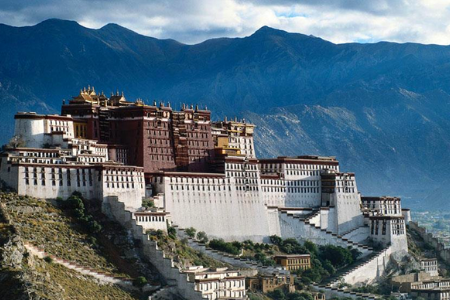
1. Phumachangtang School in Tibet at the Top of the World

Phumachangtang School in Tibet

Phumachangtang, on the plateau of the Tibet autonomous region, is referred to be the world’s highest town. Phumachangtang is a primary school in Tibet, situated at 5, 373 meters above sea level. It’s only primary school is also the closest of its kind to the sky. 

About 5,373 meters over sea level, it is 200 meters higher than the base camp of Mount Qomolangma, the world’s highest mountain, known as Mount Everest in the West.

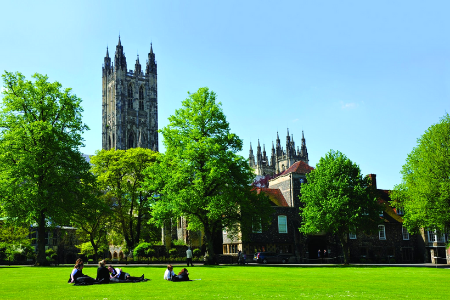
2. The King’s School, Canterbury, is reputedly the oldest in the World

The King’s School, Canterbury

The King’s School in Canterbury was founded in 597 CE after St. Augustine arrived in England. It is considered to be the oldest school in Europe. History of The King’s School Canterbury, there is a strong sign that the school was run as part of Canterbury Cathedral during the Middle Ages.

The school has a strong academic curriculum that is continually adapting to encompass the ever-changing demands of modern education. The wide-ranging co-curricular program has been developed to provide opportunities for all pupils to discover their passions and encourage them to develop their talents. Art, Music, and Sport play a large role in school life, and numerous other activities to suit all tastes.

3. A school in the Philippines is made completely of recycled Pepsi bottles

Recycled Pepsi Bottles School, Philippines

Pepsi partnered and the My Shelter Foundation to make this school of plastic bottles in San Pablo, Philippines. Around 9,000 bottles were collected each 1.5 and 2-liter bottle was stuffed with adobe (sand, clay, and water with a bit of straw, twigs, or manure thrown in). Thousands of volunteers hired by Pepsi collected the used bottles, helped to raise awareness of the Philippines classroom shortage, and engaged in building the structure.

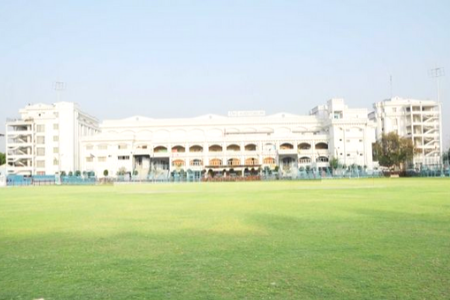
4. The world’s largest school in terms of pupils is the City Montessori School in Lucknow, Uttar Pradesh, India

City Montessori School in Lucknow

City Montessori School is the world’s largest school. It consists of around 56,000 students and 4,500 staff across 17 campuses in the city of Lucknow. Established in 1959 by Dr. Jagdish Gandhi and Dr. Bharti Gandhi, CMS students from Montessori to Class XII achieve some of the highest exam results in India.

There are more than 32,000 students attending the school daily. It possesses over 1,000 classrooms, 3,700 computers, and goes by thousands of pounds worth of stationery and books each year.

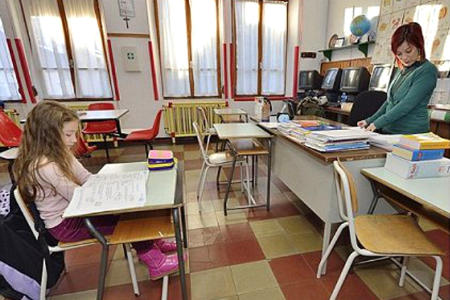
5. There was an elementary school in Turin, the smallest school in the world

The Smallest School in the World, Turin

The school in Alpette, Turin, is considered to be the smallest in the world, with only one student and a teacher. The student admits that sometimes feels lonely in class and imagines other students attending classes with them.

Administrators have decided to keep it open as long as there is at least one student at the school.

6. The kids in Holland begins school on their 4th birthday so there is always someone new in class

Kids in Holland begins school on their 4th birthday

Primary education in Holland includes general primary education, special primary education, and special education for children with learning and behavioral difficulties and children with learning disabilities. Primary education is designed for all children aged 4 to about 12 years.

While this does imply that older pupils get more time to settle in and make friends. It does at least imply that pupils should be at a similar development level at the time their first day at school rolls around.

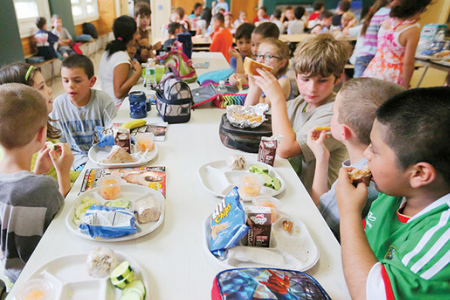
7. In France, Meal-time is considered part of the curriculum

Meal-time is considered part, FRANCE

Children are supposed to learn not only about different foods and where they come from (schools try to source locally) but also to display good manners and behavior.

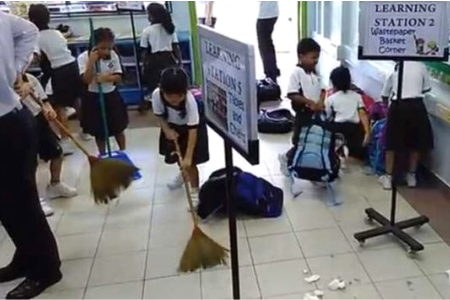
8. In South Korea, students are expected to stay and assist clean and tidy the classroom when lessons are over

First graders clean and maintain their classrooms, South Korea

Pupils who are in first graders clean and maintain their classrooms, serve lunch to their classmates and even clean the toilets. It is not a government order, but every school reflects this national trend with little variations. In fact, this practice may be close to some in other parts of the world. As it is shown in many anime series representing Japanese school life.

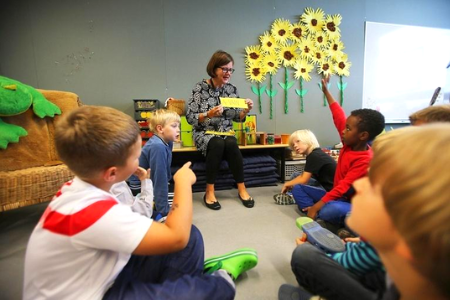
9. No school until age seven, that is one of the oldest ages around the world to start school in Finland

No school until age seven, Finland

School is not compulsory until the age of seven. There are no national tests, no inspections, no selective schools, and very few private schools. For every 45 minutes of studying, students enjoy 15 minutes of play.

10. In Russia, the first day of school is called ‘Knowledge Day’ (September 1st). It starts on 1 September even if it’s a weekend or a holiday

First day of school called Knowledge Day, Russia

Knowledge Day may be known as 1st September as that is the day all children in Russia, Soviet republics, and former Eastern countries excluding Romania go back to school even if it is a weekend.

The morning normally begins with a school assembly during which 11th-graders (the oldest students) take the first-graders by the hand and guide them into the school while ringing a ceremonial bell.

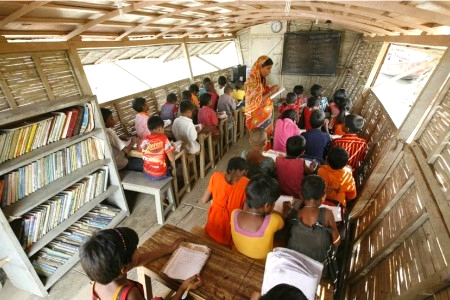
11. Floating Schools in Bangladesh, there are more than 100 boat schools and all of one have internet access, a library, and are solar-powered

Floating Schools in Bangladesh

In Bangladesh, annual flooding can obstruct school for hundreds of thousands of pupils. In some areas, roads are impassable during the rainy season from July to October, when rivers rise as much as four meters or 12 feet. Hence, the need for boat schools. The inside of the boat is tied with narrow benches which in turn are filled with children. The children sit shoulder-to-shoulder facing a blackboard in the back of the boat.

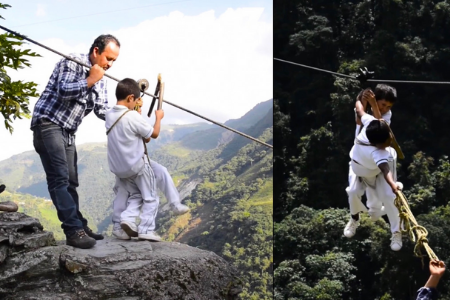
12. In Colombia, Children ZipLine Over A Large Canyon Just To Get To School

Children ZipLine Over A Large Canyon, Colombia

Children in a small village in Colombia only have two choices when it comes to making the commute to their school. They can either make a two-hour hike down the side of a mountain to cross through a canyon or they can save some time and zip line. 

The cable that moves the children to school hangs about 754 feet above the canyon and is about half a mile long. During the journey, the children on the zip line can reach up to 55 miles per hour as they zip over the canyon and to town. Very young children are not permitted to use the zip-line alone. Hence, they travel with the cable with their parents or an older sibling. If the children did not travel this way, they would have to walk through the rainforest and it would take two hours to go to school.

13. In Germany, Cat Shaped School Has a Slide for a Tail

Cat Shaped School, Germany

The whimsical Kindergarten Wolfartsweier School is built like a big white cat. When pupils enter the school, they enter the building by the mouth of the cat. Once inside, it’s just like any other school. But there’s at least one more perfect feature that students can enjoy: the cat’s tail found at the back of the building doubles as a slide!

14. In Chile, summer vacations begin in middle December and end in early March

Summer vacations begin in middle December, Chile

The summer holiday is a school break in summer between school years. And the break in the school academic year. Students are on holiday between eight and nine weeks, but not staff, depending on the country and district. In the US, summer break is nearly two and a half months, with students typically finishing the school year. 

15. In Germany, First Graders students get a special treat on their first day of school that is a Schultute

German School Cones, Schultute

A Schultüte is a colorful and decorated cone that is given to students on their first day of first grade. A school cone is prepared by a students’ parents and filled to the edge with goodies such as small school supplies like pens, pencil cases, erasers, toys, and candy, etc. These bundles of gifts extract excitement in students during one of the most important days of their childhood – the day that school begins.

16. In Japan, small kids take the subway and run tasks alone, with no parent in sight

Small kids take the subway and run tasks alone, Japan

In Japan, Students, cleaning their own classroom and school is a part of their school education. Students as young as first graders travel to school alone,  clean and maintain their classrooms, serve lunch to their classmates, and even clean the toilets. There are no janitors or canteens in schools.

17. In Kenya, preschool education is not compulsory

Pre-school education is not compulsory, Kenya

Pre-primary or early childhood development and education class before joining the primary school for kids.

In Kenya, Primary education starts the first phase of the formal educational system. It begins at six years of age and runs for eight years. Before the development of schools in the early 1970s, the beginning age did not matter. But, as school enrollment grew in the late 1980s, a starting age for attending school became important.

18. France schools have the longest school day and also the shortest school year from August to June

France have shortest school year

In French students go to school four days a week. They got about two hours each day for lunch. And they have more vacation than their equivalents almost anywhere in the West. The French school day starts around 8:30 and ends at 4:30 p.m., even for the youngest, despite studies proving the capacity of young children to learn deteriorates as the day goes on.

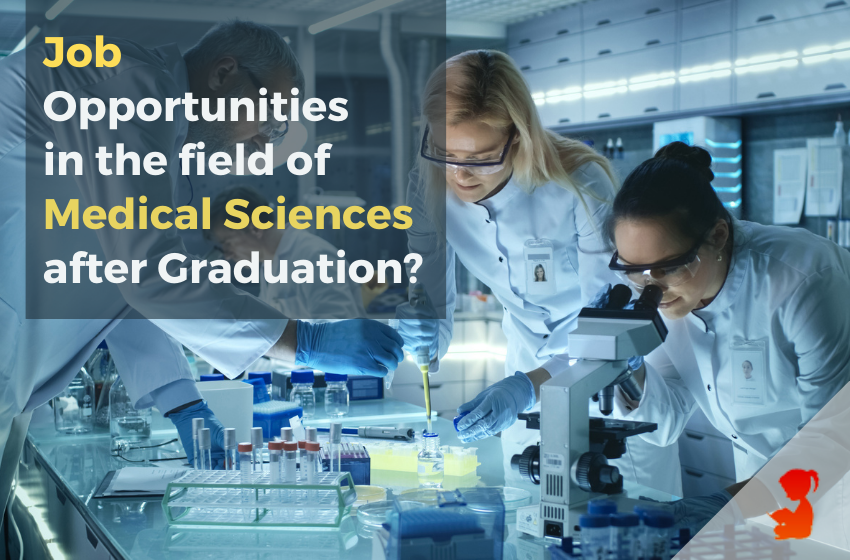
Job Opportunities in the field of Medical Sciences after Graduation?

Job Opportunities after Graduation

Health care is one of the rare industries that really grew during the Great Recession and is resuming to expand rapidly. Directed by increased demand driven by a declining population and new health care legislation, the next decade is projected to be favorable for qualified health care workers. 

The medical and health sectors are classified into various specialty areas, allowing prospective students to pursue a diverse array of academic and career avenues. Medicine is a vocational degree, giving us to enhance both the practical and clinical abilities particular to medicine, and the professional and personal qualities needed to become a doctor.

Our careers in medicine, medical sciences, and research can contain some of these things at some time. But definitely not all the time. Every career in this sector is difficult, challenging, and hugely prominent in other people’s lives. There are also a large number of career choices available, many of which we apparently didn’t even know existed. Therefore, before we choose to get into medicine, medical sciences, and research, we should firstly discover what it’s really all about.

The Realities of a Medical Career

It’s all regarding serving people who are having problems with their physical health. It’s all about saving lives and improving lives. It’s all about treatments, cures, medicine and drugs, and about research, innovation, and breakthroughs.

Everybody is dependent on the expert skills of dentists, medical staff, and medical scientists at some point in their lives: if we break a bone, if we need an operation, if we have an accident, when we go for a dental check-up, even when we take Paracetamol. It may appear obvious, though without doctors, nurses, and medical science specialists, people would physically not be able to survive.

The National Health Service (NHS) is the fifth-largest in the world. However, several private institutions also employ tons of people in medicine, medical sciences, and research arenas.

There are so several specialist areas within all of these areas. Some careers need a greater amount of medical, technical, and scientific knowledge. Reasonably, dentists, doctors, surgeons, pharmacologists, and medical research scientists require to be absolute experts in their specialist field. So those who seek these careers need to have an excellent academic background. But, several other career opportunities available in medicine, medical sciences, and research, which simply require people with specialist practical or care skills, such as nurses, technical healthcare assistants, and laboratory assistants.

Opportunities in the Medical Field

Different jobs opportunities for the students related to the medical field are as follows: 

1. Histology Technician

A histology technician works in a medical lab and focuses on converting tissue samples into microscope slides for disease diagnosis. This role is vital in the diagnosis and treatment of diseases like cancer. They work behind the scenes to provide doctors with relevant information. Histology technicians work with pathologists and lab managers daily.

2. Dentist/Orthodontist

Careers in dental professions are all regarding teeth and gums. Dentists, orthodontists, dental hygienists, dental therapists, and dental technicians all perform an integral role in keeping our gnashes healthy and in tip-top condition. Without these guys, we wouldn’t be capable of chewing our food and our breath would be also worse than it already is. Numerous dental professionals work in common practice or a dental hospital, and others are self-employed, allowing private services within their own dental surgeries.

3. Hospital Administration

One of the most lucrative career alternatives after MBBS is to get into hospital Administration. The administrative jobs are the long-standing opportunities for doctors, particularly for the senior and elder doctors. It’s a fact that clinical experience makes doctors more qualified administrators as they understand the health system inside out thus improving the hospital’s credibility.

To win the challenge of a lack of business intelligence, many doctors are opting for this alternative career and taking up business courses and pursuing an MBA in a try to position themselves for the purpose of a hospital administrator.

Medical Teacher/ Professor Medical education is one of the best career ways for us to choose after MBBS. With a teaching career, we can always be in touch with our medical world along with many other things. We can assist trainee medical trainees or doctors, teaching the public, be it in our home country or abroad. It can make us a handsome amount as well for our expertise.

4. Public Health Worker

Public health is serving and protecting the health of the general population. It is one of the most challenging and important jobs for us. We might work on preventing the extent of infectious diseases or environmental health hazards and work with our government on many important projects on saving millions of lives. We could also be included in plans to increase the accountability, performance, and effectiveness of our health service.

5. Health / Medical Journalism and Medical Writing

Journalism in itself is a vast field, but those with scientific & medical credentials and have enough experience have the advantage over the wide majority of journalists who frequently come from other social science backgrounds. Thus some medics undertake this as an addition, rather than an option to their clinical practice. 

Therefore, as a medical writer, you can work in academia, industry (medical devices, pharmaceuticals, etc.), news organizations, government, or for yourself. You can also write books, reports on clinical trials, news articles, regulative submissions, meeting abstracts, patient education materials, and even slide stories. 

Hence, you may require to gain an extra qualification for this alternative career path to start a successful journalism career. As it can also be a productive career for those Doctors who have a passion for writing, undertake clinical writing and editorial activities for pharmaceutical and healthcare companies.

6. Nurses

The one who can be considered as a true heart and soul of the medical profession is Nurses. As they work in every area of healthcare, from casualty and primary care trusts to general practices and in people’s own homes, and provide significant support to doctors and direct care for patients as well. 

One of the most rewarding and satisfying jobs that you can pursue is the job of nursing as sometimes it can be extremely challenging but the satisfaction it gets after serving or helping patients is one of the best feelings. Thus you can specialize in many different areas of nursing, including positively serving the nation neonatal (newborn babies), pediatrics (children), adult, mental health, and many more.

7. Clinical Forensic Medical Examiner

After completing your course you can take up this interesting route to become a Clinical Forensic Medical Examiner. Their main role is to deal with examining the living while forensic pathologists are guided to carry out medical examinations on the dead.

8. Medico-Legal Advisor

It can be one of the highly paid alternative career options for those who are more likely interested in a medico-legal career. They may be required to attend court trials, writing articles, holding lectures as well as running workshops regarding the same. Therefore, the respective field is quite difficult as they deal with the legal angle of the medical cases.  

9. Forensic Psychiatry

A subspecialty of psychiatry, Forensic psychiatry is related to criminology. It incorporates the interface between law and psychiatry. As it involves the treatment and healing of mentally ill criminal offenders, this field is also closely related to the field of medico-legal study. 

10. Medical / Pharmaceutical Researcher

The medical research field is a vibrant one that is constantly developing. Thus a Medical researcher is the one who conducts experiments and analyses results to learn more about the human body and potential treatments. They are often required to work in the pharmaceutical industry, academia, hospital labs, and research institutes, etc. Hence, through directed research and analysis they formulate new drugs and clinical approaches.

For medical science graduates, Translational Medicine or Translational Research is a great career path for those who wish to combine lab/bench research and clinical duties.  

11. Transplant Coordinator

Both administrative and medical alternatives to MBBS are those professionals who coordinate activities associated with organ donation and transplantation as an alternative of both medical and administration to MBBS. They cooperate with medical, paramedical, and non-medical personnel and may be involved in different stages of the process, from meeting with donors and recipients to post-surgical care and follow-up. As this role demands both medical and administrative tasks.

12. Radiology / Diagnostic Imaging

The person involved in the respective imaging is in charge of staying on top of medical imaging programs such as X-Rays, CT scans, ultrasounds, and MRIs. They are assured to meet the correct professional standards.

13. Academic Medicine

Another feasible career option after graduation in the medical field is Academic medicine where the doctors not only involve in clinical practices but also contribute their knowledge in teaching medical students and taking part in several research programs. Many senior doctors opt for this profession option and settle down with an impressive salary.

14. Sports Doctor

A career in sports medicine nowadays is another one of the common sought-after careers because of its dynamic and high-profile client base which also includes traveling abroad. Therefore, a sports doctor career can make you earn the best salary or a high paying salary amongst other competitive careers.

15. Public Services

The students graduated with a medical degree can also appear for different government exams to serve the nation. 

16. Investment Banking

It may sound crazy. But investment banks help companies to obtain funds and offer guidance on alliances, acquisitions, and equity research. So therefore with your medical background, you could work as a healthcare equity researcher to advise people on parts of the health industry such as biotech companies. 

17. Health Analytics and Informatics

Graduates who have got a love for numbers and analytics than Data Analytics and Health Informatics can be considered two excellent career options for you.

18. Bio-medical scientist

With Diagnostic tools or therapeutic strategies, Bio-medical scientists work with patients and in labs to find new measures to cure or treat disease. They work at diagnosing diseases and illnesses like HIV, cancer, diabetes, food poisoning, hepatitis, and meningitis.

Conclusion

With different opportunities across a massive range of interests, one can look at the list of careers available within the sectors of medicine, medical sciences, and research which are almost endless. As to whether you want to develop drugs for the treatment to save lives first hand or bringing them into the world you are going to find a place in the respective field. Hence, it’s rather safe to say that the people working in this sector are extremely important for all.

Frequently Asked Questions

Q1. What are the best medical courses in India?
Ans. The colleges/ universities offer all medical and allied courses, but the most sought after courses in India are:

  • MBBS
  • BDS
  • BAMS (Ayurvedic)
  • BHMS (Homoeopathy)
  • BUMS (Unani)
  • Bachelor of Naturopathy & Yogic Science (BNYS)
  • Bachelor of Physiotherapy

Q2. What are the medical courses without NEET?
Ans. There are various medical courses that one can pursue without appearing for NEET. Some popular medical courses are – Veterinarian, Food Technology, Biochemist, Pharmacist, Biotechnologist, Naturopathy, and Yogic Sciences, Clinical Research, etc.

Q3. What options do I have if I want to do a certificate medical course?
Ans. There are a lot of 6 months – 1 year certificate medical courses, however, the eligibility criteria for each course may be different. Applicants are proposed to go through the eligibility criteria for the course he/ she wants to pursue before applying for it.

  • Yoga and Naturopathy
  • Public Health Management
  • Yoga Teacher’s Training
  • Food and Nutrition
  • Medical Lab Technology

Q4. Which medical courses can I pursue after BSc?
Ans. Numerous options are available for candidates after completing BSc. Some of the popular medical courses that one can select from are mention here: MBBS, BAMS, BHMS, BDS, BUMS, MSc, MBA in hospital administration psychology, pharmacy, etc.

Q5. Which medical course can a student with PCM opt for?
Ans. There are not many medical courses that you can choose if did not have Biology in class XII. But, you can choose from among the following few courses that are related to medicine:

  • BSc in Radiography
  • Biomedical Engineering
  • Biotechnology
  • Pharmacy

How Online Education Bridges Learning Gaps

Online Education Bridges

Traditional education ensures a classroom full of students which is a part that is not present in online learning. Though, technology has made it possible to affect this environment. Therefore bridge the gap between school and college by enabling a connection to a wider community to share resources and assist one another, virtual-learning allows an interactive approach irrespective of geographical location. Through providing access to global instructors and exposure to countless invaluable resources to facilitate learning, students can learn through their peers whilst developing a more in-depth and critical understanding. 

Now, we are facing a high recession, there is unemployment everywhere. All educational institutes have been closed due to this current pandemic. This addition led to a major disturbance to the public education system. According to The Print, about 320 million students were affected due to this current pandemic in India. Now, it is nearly impossible for a scholar to attend their classes physically. Therefore, due to current situations, the gap between the schools and students is getting more comprehensive day-by-day.

The 21st century is the age of technology and this technology has affected education on a large scale. Today, from the workplace to the classroom, scholars are having the advantages of online courses, training modules, or the mixture of both online and offline learning, which is called blended learning. But, sometimes we become so engaged in online learning that we ignore those human learners who are on the other side of that computer screen. But true education is that which should be allowed without disrupting the rights of others. Hence, the best education system should be intended as such which must try to bridge the gap between our learners. The users of our content, and the online learning technology we use in our studies.

To assure that education is not allowed due to the pandemic, the government started the ‘Pradhan Mantri e-VIDYA’ initiative. Under this comprehensive initiative, digital education will be given through multi-media modes that combine online teaching through the internet, radio, TV channels, and podcasts. Additionally, by the ‘DIKSHA’ scheme e-content and QR-coded textbooks will be given for all grades. The scheme will also have extraordinary e-content for visually and hearing-impaired students.  But, certain issues need to be taken into account for the successful execution of the program, such as:  

  • Teacher-student gap: India possesses a low teacher-student ratio and it intends that the small number of teachers are overburdened. Virtual learning has only added to the burden. Several teachers say that developing content for online classes is time-consuming and coming up with innovative ways to keep students involved virtually is challenging. Steps should be taken to increase teacher strength.
  • International standards courses: Students who wished to study abroad are now seeking admissions in institutes in the country. While this is a suitable time to stop the brain drain, we need to develop relevant courses of international standards, so that the purposes of such scholars are met.
  • Technological advancement: Digital adaptation in education will be proving many opportunities for students and educators to learn through myriad platforms and enhance their skills. This will make the youth future-ready, which would have been a more moderate process with traditional classroom learning. But, the unavailability of high-speed internet and the lack of digital skills of teachers require it to be pleaded.
  • Engaging content: Our education system requires more getting up. The syllabus requires to be updated to provide today’s requirements and demands. Currently, there is more focus on the theoretical part with teachers reading out the concepts orally. Though, there is a need to focus more on the practical features and skill-building. There are many pleasant resources available and we want to include them in our education method too to make learning more interesting while educational institutions are closed.

Why opt for online learning?

Nothing can really match the experience of face-to-face classes. But, virtual or online learning presents a collection of new learning opportunities.

In an online learning plan, teachers leverage interactive tools and technologies that assist foster online student engagement. Being capable to interact with data and information on the screen aids students to learn as well as learn concepts better.

Accessories such as user interfaces or applications and hands-on learning exercises. It can be practiced to introduce interactivity into the course element. Virtual labs or simulations performed can augment student’s engagement, and assist them to understand difficult subjects in a simple way.

There has been a time when questions occur in the quality of education when conducted online. The reality is, by online learning students have a way to world-class faculty. The purpose of conducting online classes isn’t new to international universities.

The pandemic has easily acted as a catalyst to promote online education. Unlike physical classes, online learning gives different channels such as mail, online chat, and video conferences, by which learners and instructors can communicate with each other. Online learning runs community engagement that improves the exchange of new ideas behind boundaries.

Learning should never stop, and technology is the most suitable channel for that. There are new-age facilities such as artificial intelligence, deep learning, and data analytics. It requires regular training to assure students remain up to date with industry needs. This can be executed through online learning.

Different ways through which Online Education Filling the Gaps

Accessibility of content

The dropout rate in India is at a depressing 57% according to a recent report which is uniquely placed in the world as having a low enrolment and a high dropout percentage. The main reason behind this is the absence of teachers with the unavailability of sturdy education infrastructure. Due to which the online education system grants students an ever-expanding information base, connecting them to a pool of experienced knowledge providers and enabling the smooth exchange of material.

Affordable courses

Online courses are usually cost-effective as the fees charged by them are lower than the fee paid in a brick and mortar school. As these courses’ providers do not acquire maintenance costs in terms of land, property, and building. Even the study material provided in these online courses are affordable as well as environmentally beneficial. With this, it also eliminates the expenditure on accommodation that a student would have faced otherwise.  

Convenient schedule to study

While sitting in the comfort of their home’s students can understand the complex theories by opting for a digital mode of learning. As it saves the time that would have been wasted on going to and fro from the colleges. As well as, online courses can also be useful for individuals who are working and interested in adding a new degree to their resume.

Further, it allows students to access information according to their convenience as it does not bind students with a rigorous time-frame. Hence, in times like these with all the schools and colleges shut, examinations postponed, completion dates pushed; online classes continue to run and students face no difficulty with it.

Multi-way communication

The students failed to get individual attention, as the traditional method of teaching was time-bound. The digital medium makes education a one-on-one procedure as disciples can continuously interact with experts. Further, this improved interaction allows students to clear their doubts, follow their coursework development, and distinguish improvement areas. Live classroom sessions and the conduction of webinars have given rise to peer-to-peer learning and prepare the students for different competitive exams.

In a nutshell, the online teaching techniques along with the establishment of the myriad technological improvements have played a key role in bridging the age-old socio-economic gap faced by the Indian education systems. Education is no longer a luxury rather an easily accessible entity.

Collaboration and facilitated-learning

It can still be difficult to team up and share ideas even though students have the presence of their peers inside a classroom. As classes not always provide for group work or enough time to participate in a discussion can sometimes hinder learning due to this lack of discussion. Whereas students can converse with each other outside of class, this discussion often needs to take place in real-time to allow time for questions and clarification of their thought process. It is through this discussion of thoughts and questions that students can work together to discover the things that they are learning while flashing new ideas. It is often during this back-and-forth process that students can fully hold topics and it is, therefore, vital for discussions to take place in a classroom setting.

A lack of discussion in class can sometimes cause traditional education to become a more solitary experience, thus virtual-learning makes it possible to bridge this gap by creating a space for this conversation to take place. Students can converse in real-time as they learn through an online chat platform or social media. This makes it possible for them to share ideas and thoughts which will not only ease their learning but will also support a deeper understanding of topics. Technology offers many opportunities for students to collaborate without having to interrupt a teacher in a classroom or become worried about a time limit. This is something that can also allow students to connect with their peers and tutor one another, which is essential in getting success. Classroom settings can often prevent this and virtual-learning is therefore vital.

Shifting the focus from teacher to student

Virtual-learning shifts the weight of learning onto the student rather than on the instructor, therefore it allows students to convey out their research and use their learning as a means to be more independent. A virtual education nurtures a well-balanced student and provides them with the right skills to go on to thrive within the workplace by letting students have the capacity to ease and be accountable for their learning. This will not only ensure efficiency and productivity but will also allow them to be engaged and go on to implement this within the workplace.

Students learn to pursue help or resources when experiencing difficulties, which will not only help to make them more well-informed but shifts the responsibility from the teacher to the student. By allowing the student to ask questions and clarify their understanding, it provides them with the ability to broaden their comprehension of subjects.

Education should cater to the needs of students as it is important for everyone. With the evolution of technology, it is now possible for students to distinguish their learning styles and inescapably go on to pursue these courses, whether in the form of blended learning or through a course that is only based online.

Eliminating challenges

Now students can attend classes from anywhere and anytime as online teaching and learning eliminated the challenges of time and place. They can receive immediate feedback and can learn from their mistakes with the help of an automatic grading system in an online setup. It also helps students to set reminders for their assignment deadlines.

What to look forward to?

The university programs traditionally have been based around the physical attendance of the students, while digital learning has continued to be a supplementary support instrument. Yet, there is always a way if you look for one. Due to the current situation, many academic institutions across the globe are adopting the online system of education. So to keep the class running teachers are using online tools to ensure that the next generation workforce develops the skills that they need.

To bridge the current gap in contact time with students several international universities have also begun online classes. In many countries (such as the UK, US, and Singapore) international universities have substituted in-person teaching with an online teaching-learning model.

A current declaration from the UK Home Office said that international students can start their courses online and join on campus by April 2021 and still be eligible for the graduate course. The pronouncement replicates the detail that most UK universities are keen to implement a mix of face-to-face and online teaching a “blended learning” approach. The UK Visa and Immigration Services have also restarted operations in a phased method in India.

To hasten the reduction of poverty and fuel the eradication of socio-economic inequality, education is often considered as a resource. Online education inclines to have a multiplier effect in society as it initiates self-reliance, encourages economic growth by enhancing skills, and improves the lives of individuals by providing them with opportunities. However, in India, the predictable education system has created an alarming gap between those who come from strong socio-economic backgrounds and the ones from economically weaker sections.

 For a country which is set to become one of the youngest nations in the world by 2030, with around 140 million people projected to be in the college-age group, it is impervious to break the restraints of traditional methods and move towards a more affordable, reachable and convenient mode of teaching and learning. The modern-day technological commotions and availability of economical smartphones, computers, and the internet have made education inexpensive.

The figures of Internet users in the world

  • Today there are almost 4.66 billion internet users in the world.
  • In the past 12 months, the total number of internet users grew by 321 with more than 875,000 new users each day around the world.
  • In many developing economies the number of internet users is growing at an annual rate of more than 7 percent.
  • Almost 7 hours online each day is spent by an average global internet user according to a report.
  • Added together, the world’s internet users will spend more than 1.3 billion years of social time online in 2020 alone.
  • 91 percent of internet users use mobile devices to go online at least some of the time.
  • In the world’s largest economies more than three-quarters of internet users go online via laptops and desktops for at least some of their connected activities.

Conclusion

An efficient online learning course created respectively with purposes including the brain’s preferences for recognition, organization, chunking, and patterns. It is important to recognize that the wanted learning outcomes cannot be achieved without motivated teachers. A responsive incentive system can stimulate essential motivation among teachers and support local initiatives. Administrators should be motivated and trained to function as leaders who can transform their schools. All these have to be complemented with a mechanism to give academic role building and training guidance for teachers.

Frequently Asked Questions

Q1. What does learning gaps mean?
Ans. The learning gaps can be said as the difference between what a student is expected to have learned at a particular grade level versus what they have really learned up to that point.

Q2. What are the challenges in Online Learning?
Ans. When comparing face-to-face learning with online learning you can look at the lack of human connection, absence of opportunities for collaborative learning, and teacher supervision in complex subjects like Mathematics and Science.

Q3. Do certificates of online courses count for employers?
Ans. It may differ from others perspective but nowadays certificates from MOOC courses can be very positive in a CV, as they also show that the person can take their own lead to learn new things.

Online Education vs Traditional Education: The Pros and Cons

Online education vs Traditional Education

In recent years, Education has become one of the fastest-growing trades. And online education also becomes more famous in the fast-paced expanding society. In this article we will look into the detailed comparison of online education vs traditional education.

Online Education vs Traditional Education: What is the difference?

Online courses enable scholars to take courses from different countries. Some universities, schools also allow Online courses or blended courses in both in-class and online mediums. These traditional brick and basin institutions are also giving more online courses to cope up with the excellent learning process. The emergence of online education is moving just because of the expansion of technology and the desire of people to learn at their own pace.

Therefore, the transition of classroom learning to online learning has created a surefire for both learners and teachers. Still, some unique characteristics form a thin line between the two options of learning. Despite the tremendous popularity of online education, most people stay away from such methods. The individuals get the type, of course, appropriate depending upon their requirements and choices.

What is Online Education?

Online education involves taking courses on the internet. It is versatility and convenience which allow learners by allowing them to read at their own pace without following a strict schedule.

Online learning is best suited for regular students. However, the course can be completed anywhere just with the help of a device with internet connectivity. This form of learning makes it ideal and cost-effective for students who can’t attend regular classes. The students can get online learning materials, online video lectures, animated videos, online games, graphics, and many more to secure online education. Live communication is the best way to learn in online learning as this gives a two-way interaction through video conferencing.

Professionals can expand their talents and career opportunities with the help of online education. Online degrees are very effective for professionals to get promotion in an organization. The learners cannot attend the regular classes after the restless and exhausting schedule of your job life. They can save their precious time, money, and energy easily. The online courses usually allow online forums, webinars, emails, chat interaction with professors for solving the doubts. There are some online search engines such as Google, Yahoo, etc. give the information resources for free which helps appropriately.

Advantages of Online Education

  • More flexibility for students who work full-time
  • The capability to complete assignments at times when it is most convenient
  • The ability to get a degree from a school in another state without moving
  • Less Travel

Disadvantages of Online Education

  • Less direct contact with students and professors
  • Limited opportunities for student and campus activities
  • Subject to “technical difficulties” and software crashes

Also Read: Bardo Chham Dance: Cultural Heritage of Arunachal Pradesh

What is Traditional Education?

The traditional education method consists of daily attendance in classes, the interaction between students and teacher at their own class, manage discipline by following a schedule on campus, enhance the student’s health as well as mental alertness.

This process helps the teachers to recognize their students personally through this they can evaluate the strengths and weaknesses of students and can lead to better possibilities. The constant interaction between the teachers and learners helps to build a better relationship between them.

The students also share their aspects directly with the teacher and clarify their doubts at the right moment. Books, materials, notes, question, and answer patterns are the generalized way of learning that serve the students in a better way. The scholars can easily get the laboratories, workshops, clinics, etc. on the campus to get practical knowledge of a subject.

This process is best suited for the younger students who are attending the college, who wants more guidance and direct contact with teachers or professors. Traditional learning can be more convenient for students who value the campus experience more desirable than online learning.

[lasso rel=”amazon-2″ id=”5494″]

Advantages of Traditional Education

  • Direct contact with teachers, students, and advisors
  • More access to campus activities
  • More suitable for hands-on training

Disadvantages of Traditional Education

  • Less flexibility in class scheduling
  • Less cost-effective
  • More travel to and from class

Online School vs. Traditional School

Online education can be as comprehensive and connected as an online, real-time video lecture. The term “online education” means any sort of educational, pedagogical practice that uses the internet as a means of conveying information, but it can be done in several ways.

For instance, a teacher may want to hold an online class, and the students will log on with their personal computers at a given time. In this way, the class can be conducted the same way it would be in a classroom. In other situations, the teacher may pre record a set of lectures. Students will have important information and can access it in their free time, communicating questions and concerns electronically.

Pros of Traditional Education

Experience of different campus activities:

Traditional education gives several types of experiences like clubs, live seminars, sports activities, communal activities, live presentations, and eating in canteens, etc.

1. Develop a vast network

The physical presence provides interaction between teachers, students. Moreover, we can meet several people like old students. We can build a large network which aids in gaining personality and knowledge.

2. Recognition from degree

We will get recognition from a college, board, or university for the validity of our education. The certificate will give us credit for the time spent to get it. We will receive a certificate even if we cleared the subject with a marginal grade.

3. Get facilities for different activities

We will get the related material and other facilities needed for our courses in classroom learning.

The traditional classroom training gives a way of interaction with the learners and teachers by raising the hands, discussing various topics, asking questions, giving a presentation, etc.

4. Degree for certain career opportunities

If we want to get some higher degrees like Masters and Ph. D, we can only get the degrees after having a bachelor’s degree certificate from a traditional learning center like universities.  It is an excellent way to flourish being exposed to colleagues, mentors, and professors.

Cons of Traditional Education

The different types of disadvantages of traditional education are as follows:

1. Expensive

At traditional education centers, education is usually expensive as the institutions or schools have to look for sitting arrangements, extracurricular activities, sports, and much more which increases the cost of courses.  

2. Cost of commuting

The other cons of traditional education are the cost of traveling from schools to homes or from home to school as sometimes the distance between the schools is much more. 

3. No flexibility

The studies have become more difficult for students due to the rigid schedules in schools, colleges, and universities. Due to which students have to organize their classes according to their timetable which makes fewer chances for students to express their skills or to enhance their skills.

[lasso rel=”amazon-4″ id=”5519″]

What are the Benefits of Online Classes vs. Traditional Classes?

Learners who earlier could not afford a four-year college are now able to enroll in online classes at certified universities and do the coursework in their own time. Many universities now have an online arm, providing the chance for quality education and the university’s level of instruction to be available to scholars for whom geography would make attendance in person impossible. 

Despite the advancements in online education, it is yet assumed by the educational community to be an inferior sort of education, particularly when compared with a university education. Though, there are different layers of online education that might be tried out by various students. In addition to traditional undergraduate education, online programs are given at the graduate level.

Beyond that, short courses that do not offer degree credits are also possible. Studying a different language online, for example, is now possible with a teacher in the native country. In many ways, the tool of online education can enhance classroom instruction and in doing so make all education more comfortable and more powerful.

Differences between Online education vs Traditional education

Some of the key factors that play a significant role when we look at online education vs traditional education differences:

1. Social Interaction

When we look at online education vs traditional education, we can not afford to leave social interaction out of question. One of the important questions students should ask themselves before enrolling is, do I need face to face interaction with my instructors? Online education normally provides an opportunity for lecturers and students to interact with one another through an online portal or video conferencing software. With the use of such online meeting software as Google Meet, Zoom, etc. meetings, it is easier to hold or attend classes online from anywhere at any time. This platform not only provides learners to experience live streaming of full HD and crystal clear audio classes. But also provides them to attend lessons with minimal distractions. Teachers can also take advantage of the screen sharing feature to easily begin their lessons by using the software. 

The traditional college or school is a great choice for those looking for face-to-face communication. It makes it possible for learners to have direct engagements with instructors and classmates. With this method of learning, learners are capable of having detailed discussions, they can ask lots of questions, and cover many concepts in one topic. That will improve student performance and skill in the field of specialization.

2. Flexibility

Flexibility is one of the major features that fresh and working students need to consider before enrolling in any course. Studying online gives flexibility to students, especially those who are already engaged in work and family. With online-based courses, you can take classes in your own free time, without being forced to attend lessons at specific times.

While traditional education can be excellent for students who have more time in their daily schedule. This opportunity is ideal for students who are not working. Though some on-campus courses have classes scheduled for evenings that might give a convenient choice for working students. The only challenge might be the long distance between the student’s home or workplace and the campus.

3. Budget

Online courses and programs assist to give cheaper options for learning than traditional education benefits. Recent reports show that a degree course in a traditional university or college costs much. On the other hand, an online degree is estimated to cost less. That means enrolling for a course online gives learners the chance to save more tuition fees while enjoying greater flexibility.

While traditional education might be expensive, it does give real learning programs and materials that match the amount paid. Different institutions tend to offer real-time learning or study experience. Students can use such things as using the library, school trips, etc. In reality, that might end up saving a little the student or parent has set aside for studies classes online. Even when practical lessons are carried out, they cannot provide one-on-one experience as the traditional education system would do.

4. Methods, Tools, and Facilities of Teaching

Traditional education usually gives experience to all learners who want to learn from practical lessons. It usually has basic facilities and accessories for practical studies and activities. Whether a learner is taking a Chemistry, Physics, Mathematics, Biology, Nursing, Medicine, or Athletics course, learners will enjoy plenty of lab lessons or field training. That cannot be accomplished with online education as most learners usually take classes while resting on the couch or in bed.

5. Discipline

Discipline is a key feature when scaling between enrolling for an online program and taking a traditional on-campus degree. The success of the learner mostly depends on his or her level of engagement. Therefore, it’s always important for students to take study options based on their overall performance of tasks. Online education methods can be excellent for those who are self-motivated and competent in prioritizing tasks and setting deadlines. Without a proper method or plan, a student taking online classes might perform badly in the long run.

Traditional education can be the best opportunity for those that need the discipline to get the work done. With well-structured classes, to-do lists, and regular assessments, students can have full aid to perform tasks or assignments on time. The fact that we must make class appearances for us to learn is one step to making a disciplined student. With responsibility and hard work, success on any degree course or program can simply be assured.

What are the Benefits of Online Education vs. Traditional Education?

With the change in time students are now able to enroll themselves in online classes at certified universities and can do the coursework in their own time which previously was difficult for the students who could not afford a four-year college. Several challenging brick-and-mortar universities now have an online arm, which allows the opportunity for quality education at the university’s level of instruction for those who could not attend a traditional class due to their geographical location.  Thus, it is a huge factor in the debate about online and traditional education.

But it is still believed that online education is an inferior type of education when compared with a university education, despite the progress in online education. However, different layers of online education might be queried out by numerous students. But still online programs are offered at the college level through different universities in addition to traditional undergraduate education.

Beyond that, short courses that do not offer degree credits are also available. For example, studying a foreign language is now possible with a teacher living in their native country. In various ways, the means of online education can improve classroom instruction. While doing so the education system can get richer and more powerful.

Online Education vs. Traditional Education: The Blended Education Model

It is clear to us that both online and traditional education each have their perks. So is there a process to get the best of both systems? Thus one alternative that is growing in popularity is called “blended learning.”

In this arrangement, the curriculum is planned to execute both traditional, in-person learning and online coursework. The implementation of this can change hugely, depending on the topic and instructor. But as an example, instructors may need only meeting once weekly for lectures, while allotting projects or other activities for students to complete online on their own time. This allows learners to obtain some of the positives from face-to-face social learning while still allowing for scheduling flexibility.

A program that offers some courses on campus and others online could be another example. Such as a nursing program may add an online anatomy course and a nursing simulation lab on campus. The thought here is that some courses involve material that is helpful to online learning, while other lessons can only be explained in a real classroom or lab.

Conclusion

Both online and traditional educational institutions have unique advantages. As we can see they both come with their own set of challenges. Therefore, any student who wishes to enroll in any degree program must consider online vs traditional education advantages. Thus a student can look at it from the aspect of adaptability, affordability, practicality, and method of taking classes. It is upon the students to decide between online and traditional systems of education to enroll in.

As the online system of education can work well for some while for some pursuing a degree course through traditional on-campus education is best for them.  So, therefore, first, consider our desired education than comparing between online and traditional education than select the course. After going through the differences between online and traditional education, we can easily decide the better option suitable for our career.

Frequently Asked Questions On Online Education vs Traditional Education

Q1. What is better traditional or online education?
Ans. Online learning is surely the more efficient choice for learners, but it’s also better for the environment.

Q2. Why Online schooling is bad?
Ans. Taking too many online courses or having poor online guidance can be harmful to a student’s future. One of the most obvious issues with online education is the lack of interpersonal communication.

Q3. Can online education replace traditional education?
Ans. Not really, because both have different characteristics that make them worthwhile. People will learn to use the two together. But, when it comes to college education, the truth is that online learning can never really replace an on-campus experience.

Q4. Is online school harder than regular school?
Ans. Online classes are no easier than classes given in the traditional classroom setting and in some instances. It can even be more difficult. There are various reasons for this. Online courses require more self-motivation. It can be tough for some learners to stay motivated when they’d rather be doing something else.

Q5. How does online education affect students?
Ans. Taking a course online, instead of physical classes, reduces student success and progress in college. Grades are less for the course taken online. Students are less expected to remain enrolled at the university.

Also Read: Essence of Educational Consultancies When It Comes To Studying Abroad