10 Budding Countries to Work Abroad

Looking for a job abroad? A lot of people from India look for jobs in foreign countries so as to generate better income and lead a better life. But before you decide on which to work in, check out this list of top ten countries based on the work environment, pay packages and perks they give to employees:

1. Germany

According to figures cited by the Organization for Economic Cooperation and Development (OECD), the working hours for employees every week is just 27.8 hours. Furthermore, the standard of living is quite high and Germany is one of the strongest economies in Europe. The lesser working hours give you time to be with your family and pursue your hobbies, thus providing you a healthy and balanced lifestyle.

2. Bulgaria

If you are looking for a job that also allows you to raise a family, Bulgaria is the place for you. In Bulgaria, employees are given up to 410 days of paid maternity leave. Employees are also allowed a second year of paid maternity leave on minimum salary.

3. Brazil

The country is known to offer the most number of paid vacation days per year in the world. Full time employees are entitled to 41 days of paid holidays. While 30 are mandatory, 11 are federal holidays. So you can work hard and party harder.

4. United States of America

The US witnesses a major inflow of expats from all over the world. Your pay package may be good in the US, but the number of holidays and the cost of living is quite high. A basic studio apartment can cost anything between $1, 800 to $2, 500 per month.

5. Australia

Australia is becoming an increasingly popular destination among expats. The country has a booming economy and its most popular cities Sydney and Melbourne are two among the most expensive cities in the world. The market potential of Australia is huge and the country is abundant in resources.

6. France

According to the OECD, the working hours in France are much lesser as compared to other member countries of the organization. Employees also get as many as 40 paid holidays, out of which 30 are mandated and 10 are federal holidays. The popular industries in France include chemicals, automobiles, electronics and textiles. The opportunities in the job market are huge and the capital city of Paris is replete with recreational activities. However, the rental expenses are too high in Paris.

7. United Arab Emirates

Like the US, UAE, especially Dubai, is one of the most popular destinations for expats. The UAE is highly popular among expats because of its high standards of living and huge expat force. However, the rental charges are humongous in UAE.

8. Netherlands

Like Germany, the Netherlands maintains a strong GDP and a high standard of living. Employees work for 27.6 hours a week and get 28 paid leaves. Women employees are allowed a paid maternity leave of 16 weeks at full salary.

9. Hong Kong

Hong Kong is another popular destination for working abroad. The low tax rates and high standards of living are attracting expats into Hong Kong from all over the world. Hong Kong is a major financial centre and hence offers a vast job market. However, the rental and accommodation charges are quite high in Hong Kong.

10. Singapore

Singapore has the most open, least corrupt and most business friendly economy in the world. Low tax rates and high GDP figures make Singapore a favourable place for expats. The standard of living is quite high in Singapore; however it comes at a price. The accommodation and recreational charges are quite high in Singapore.

What is Tripartite Personality? Theory of Personality, Id, Ego, Superego

Personality development is a process of enhancing the individual personality of a person which makes him stand out from the crowd, make their personal peculiar mark. Sigmund Freud gave a very famous theory of personality which is also known as the tripartite model of personality.

The famous theory given by Sigmund Freud, The Theory of Personality is also commonly referred to as the tripartite model of personality.

Theory of Tripartite Personality

Freud gave a psychoanalytic theory of personality development which consisted of 2 simple factors helping people to drive their persona and shaping their personality. The 2 factors are – Love and Aggression.

3 Parts of Human Psyche

According to Freud, Psyche is structured into 3 parts (Tripartite). This is the reason that this theory is also known as the tripartite theory. The three parts are- The id, Ego, and Superego.

Roles of 3 Parts of Human Psyche

These 3 parts play different roles in developing the different parts in a whole human life cycle.

Role of 3 Parts of Human Psyche

1. The Id

The Id contains all the inherited traits connected to one's personality like-

  • life instinct – Eros
  • Death or Aggressive Instinct- This is the impulsive or unconscious part of a person’s psyche.

The id is never affected by realistic or logic or actual-world that’s why it functions on the pleasure principle.

2. The Ego

One of the important parts of the Id is Ego. It gets modified with the influence of the external world. It is developed as a mediator between the external world and the unrealistic id. Unlike Id, Ego functions on reality principle and works on reasoning.

3. The Superego

In Superego, the morals and values of the society are incorporated by the person. These can be

learned from parents or the people in the society. This Superego is developed around the age of 4 to 5 years. 4 to 5 years of age is also called the phallic age of psychosexual development. The Superego takes control over the impulse of Id and 2 mina systems. The superego consists of 2 mina systems – The conscience and The ideal Self.

Top 10 most risky cities in India for Earthquake

The Indian subcontinent has had its share of earthquakes. From mild, to moderate and to devastating ones, Earthquakes happen every year in India. One of the reasons why this happens is because there is a tectonic shift of the Indian plate at a rate of forty seven millimeters a year. As per geologists, more than half the landmass of the Indian subcontinent is prone to Earthquakes.

Top ten earthquake prone cities in India

The following are the top ten cities where the probability of an Earthquake happening is more.

  1. Guwahati – Assam
  2. Srinagar – Jammu and Kashmir
  3. Delhi
  4. Mumbai – Maharashtra
  5. Chennai – Tamilnadu
  6. Pune – Maharashtra
  7. Kochi – Kerala
  8. Kolkata – West Bengal
  9. Thiruvananthapuram – Kerala
  10. Patna – Bihar

Seismic Zoning

The land mass of India has been converted into seismic zones. Each seismic zone has a defined level of intensity and frequency of earthquake occurrence. Geologists have estimated that more than 50% of India fall into Earthquake prone areas with varying levels of intensity and frequency. Out of this 11% of land in India is prone to very serious earthquakes with devastating results. This zone is called the high risk zone.

Zone 2

The regions in Zone 2 are less likely to be affected by earthquakes. These cities, towns, rural areas, and villages experience earthquakes very rarely.

Zone 3

This Zone has moderate risk. Some areas in the Western Himalayas, Kashmir, and Andaman & Nicobar Islands fall in Zone 3.

Zone 4

Also called the High Damage Risk Zone, Zone 4 is an area that has the highest possibilities of earthquakes of a large magnitude. Delhi falls in this zone. Southern parts of Kashmir also fall in Zone 4.

Zone 5

These regions in Zone 5 not only experience frequent earthquakes, but these earthquakes are devastating ones. The earthquakes that occur here have the highest intensity than recorded in other parts of the country. The entire state of Kashmir falls in this area. Western Himalayas are also classified as Zone 5. Some North-East Indian cities such as Guwahati fall in this area. The Rann of Kutch is classified as Zone 5.

Earthquake mitigation

The government of India has released information on Earthquake mitigation tips to civil contractors engaged in building structures for citizens. This applies to all citizens of the country no matter where they reside. Some of the salient features of this Earthquake mitigation plan are:

All civil contractors are required to have an Earthquake readiness plan.

Homeowners will need to consult professional and accredited architects and building contractors. There are various techniques to build sturdier homes. Some of the methods are to bolt bookcases. These bookcases are then attached to wall studs. During an earthquake, cupboards might fall down. Using strong latches to cupboards that binds them to the ground prevents this.

Every room should have a place where nothing will happen to a person who stands there in case of an Earthquake. This will be a place in the room where nothing will fall down on the person.

Summer Vacation Time to do Sport

Planning to make your summer vacations out-of-the-ordinary and most thrilling ones, why not plan to enjoy some sporting activities this summer. Summer vacations are the best time when the kids can indulge in some exciting sports like water sports, swimming etc. to make their holidays special ones.

Why Choose Sports during Summer Vacations?

During summer time the kids feel too bored and need some activity to indulge in. Since they do not have schools to go during summers, they need some leisure interest. Sports can be the best leisure activity which can add spice to their summer vacations.

Benefits of Sports during Summer Vacations

  • Staying healthy during summers
  • Keeping away from boring routine
  • Making summer holidays adventurous
  • Learning new sports and skills

Reasons for Joining Sports during Summer Vacations

Sports help your kids in spending some healthy time with nature. The kids can get benefitted from the healing powers of the sun and even you can get benefitted by taking some sunshine everyday by going out in the sun. Below listed are some reasons why you should get out and sport your playing shoes this summer vacations:

  • Getting Vitamin D
  • Keeping physically fit
  • Improving Personal Relationships
  • Getting Better Sleep
  • Make it a Baseball Season
  • Relieve stress
  • Improved eyesight

Summer means loads of sunshine and lots of Vitamin D , so indulging in sports during summer vacations will help the kids in getting tins of Vitamin D. Vitamin D in turn will help you in making bones stronger, decreasing depression, strengthening the immunity system, and prevention of several diseases along with increasing the lifespan.

Best Time to Pick Sports

A summer time and especially summer vacation when the kids are completely free is considered to be the best time to pick up a new sport. You just need to step out of the house and indulge in various sports like jogging, swimming etc. You can also start learning great moves of football in the park nearby. These small and real-time efforts to stay active during the summer season will pay you huge dividends in the form of keeping your health, weight and overall personality all in shape.

Playing active sports during summers helps in developing personal relationships too as almost all your friends go outside for playing. Therefore summers are supposed to be the perfect time to rekindle your relationships or to create new relationships with new people. Few exciting sports which will help you in spending some quality time with your friends are:

  • Group Sports
  • Camping
  • Beach Going
  • Baseball matches
  • Lake-side picnics
  • Hiking
  • Fishing
  • Biking

This way summer vacations can be made the perfect time to use for learning or enjoying sports and staying active. For adventure sports lovers this is the best time to head off to mountains for biking, hiking or fishing, while the ones who want to spend a relaxed and cool summer vacation can head off to beaches or lakes. Beaches and coasts are the most exciting places to spend some fun time playing under the sun.

Getting To Know More about Earth Hour

The Earth Hour is an annual event organised by the World Wide Fund for Nature every last Saturday of March. The event is held to create awareness about climate change all across the globe. Households and business organisations all over the world turn off their unessential lights and appliances for one hour.

  • The Earth Hour in 2013 was held on March 23 from 8.30 pm to 9.30 pm.
  • The Earth Hour in 2014 is scheduled on March 29, 2014 at the same time across time zones.

The concept was first conceived by the WWF and Leo Burnett, an advertising agency, and first implemented in Sydney in 2007. Gradually, other countries followed the example and today the Earth Hour is observed worldwide.

In 2004, alarmed by the findings on climate change, WWF in collaboration with Leo Burnett worked on the idea of large scale shutting down of electrical appliances and devices to create awareness on climate change in Australia.

The event was originally named as the ‘Big Flick’ and it got the backing of the then Mayor Clover Moore in 2007.

The first Earth Hour was held on March 31, 2007 at 7.30 pm in Sydney.

Following the example, San Francisco ran its own version of the campaign and called it ‘Lights Out’.

In 2008, the Earth Hour was observed internationally on March 29. As many as 35 countries and 400 cities participated in the event in 2008.

The Earth Hour 2008 was observed in all seven continents.

Some of the renowned landmarks of the world expressed their consolidation by switching off lights for one hour on Earth Day. Some of these monuments are the Sydney Opera House, the Empire State Building, the Golden Gate Bridge, the Petronas Towers etc.

The shutting down of lights and electrical appliances globally helped in reducing energy consumption. While Bangkok reported a reduced usage of 73.34 megawatts, Philippine Electricity Market Corp reported a drop of 78.63 MW.

Google also gave free publicity to the Earth Hour event in 2008. The Google homepage blacked out in the US, Colombia, Ireland, Denmark and UK from 12.00 am till the end of the Earth Hour in order to remind people of the event.

As many as 96 countries participated in the Earth Hour in 2009.

The Earth Hour in the subsequent year i.e. in 2010 is reportedly the biggest Earth Hour so far. It has participation from 126 countries.

The event grew bigger and received more participation over the years.

Through the Earth Hour, people all across the globe get a chance to unite for a greater cause and contribute to reducing climate change and effects of global warming by switching off lights for an hour.

Reduced use of electricity can create a major difference in reducing the effects of global warming. Electricity usage can be reduced by shutting off lights that are not in use, switching off televisions, computer screens and other appliances after use.

Top 10 Natural Disasters of India

The floods of June 2013 in Uttarakhand have refreshed memories of many such calamities that have ravaged life in India over the years. Time and again, the Indian subcontinent has had to face such natural disasters that have destroyed life and property to a large extent. Here are some of the worst catastrophes that Indians have faced so far:

Deccan Famine (1630 -1632)

The failure of three consecutive crops led to the Deccan famine that ravaged the land for two years. It was during the reign of Emperor Shah Jahan that the famine caused destruction at an extremely large scale. Although the Emperor contributed generously to take the situation in control, the famine took the lives of 20 lakh Indians.

Calcutta Cyclone (1737)

One of the worst cyclones in the history of India, hit the city of Calcutta in October 1737. Strong hurricane winds accompanied by earthquakes and floods claimed the lives of as many as 3,00,000 persons. The fatalities happened in the city of Kolkata and the coastal villages that are now in Bangladesh. It has also been proven that flooding was also a major contributor in increasing the number of fatalities. As many as 20,000 ships were destroyed by the cyclone.

Bengal Famine (1769-1777)

Bengal was under the control of the British Empire when the famine hit in 1737. Crops failed for two consecutive years and the next year brought with it a severe drought, which led to a severe shortage of food. The famine affected the nearby states of Bihar and Orissa too. Furthermore, British law forced the farmers to cultivate opium and prohibited hoarding of rice because of which millions lost their lives in the famine. As many as 1 crore people died due to the Bengal Famine.

Coringa Cyclone (1839)

A 40-feet storm ravaged the ancient coastal city Coringa of Andhra Pradesh. It was in November 1839 that a furious storm and cyclone hit the city destroying the settlement and 25,000 vessels and killing 3,00,000 people. The city was known for ship building and repairing and had served as an important trading port.

Third Plague Pandemic(1855)

The plague that originated in China in 1855, entered the Indian land in 1894. High fever, delirium, swollen glands and ultimately death claimed those who had been affected by the disease. Initially the disease was reported from port cities such as Mumbai, Kolkata, Pune, Karachi etc but in 1900 Chennai came under its fold. Over the next 30 years, the plague had claimed the lives of 1.2 crore Indians.

The Great Famine (1876 to 1878)

This was one of the deadliest famines that took the lives of millions. This famine which continued for a period of two years mostly affected people in South India. It gradually spread to South Western and Central India and covered a total area of 6,70,000 sq. Km.

Bengal Famine (1943)

As many as 15 to 40 lakh people were killed in the Bengal famine of 1943. Although Bengal had experienced severe famines earlier too, this one had the most severe repercussions. A major part of the rice in Bengal came from the exports that Burma sent to India. After Japan occupied Burma, the exports became nil. People began to save up all money on cash and limited spending on luxuries such as artisans. A majority of deaths were reported from the artisan group.

Latur Earthquake (1993)

The earthquake measured 6.4 on the Richter scale and took the lives of more than 20,000 people. Latur district in Maharashtra had to bear three more aftershocks on the same day, which destroyed as many as 2,00,000 homes in thirteen nearby districts. As many as 1,27,000 families had to bear losses due to the earthquake.

Gujarat Earthquake (2001)

The Gujarat earthquake was one of the horrendous disasters that struck the Indian subcontinent on January 26, 2001. The earthquake measured 7.7 on the Richter scale and caused large scale destruction to life and property. As many as 20,000 people lost their lives, 1,67,000 were severely injured and 6,00,000 persons were left homeless. The city nearest to the epicentre of the earthquake, Bhuj, was completely destroyed in the earthquake.

Indian Ocean Tsunami (2004)

The Indian Ocean tsunami was a natural calamity that triggered panic and concern nationally and internationally. The disaster was triggered by an earthquake in Indonesia. The earthquake measured 9.0 on the Richter scale and resulted in the disastrous tsunami which ravaged the coastal belt of Kerala and destroyed life and property severely in the Andaman and Nicobar Islands. As many as 10,136 persons lost their lives, 5,832 persons went missing and several lakhs lost their homes.

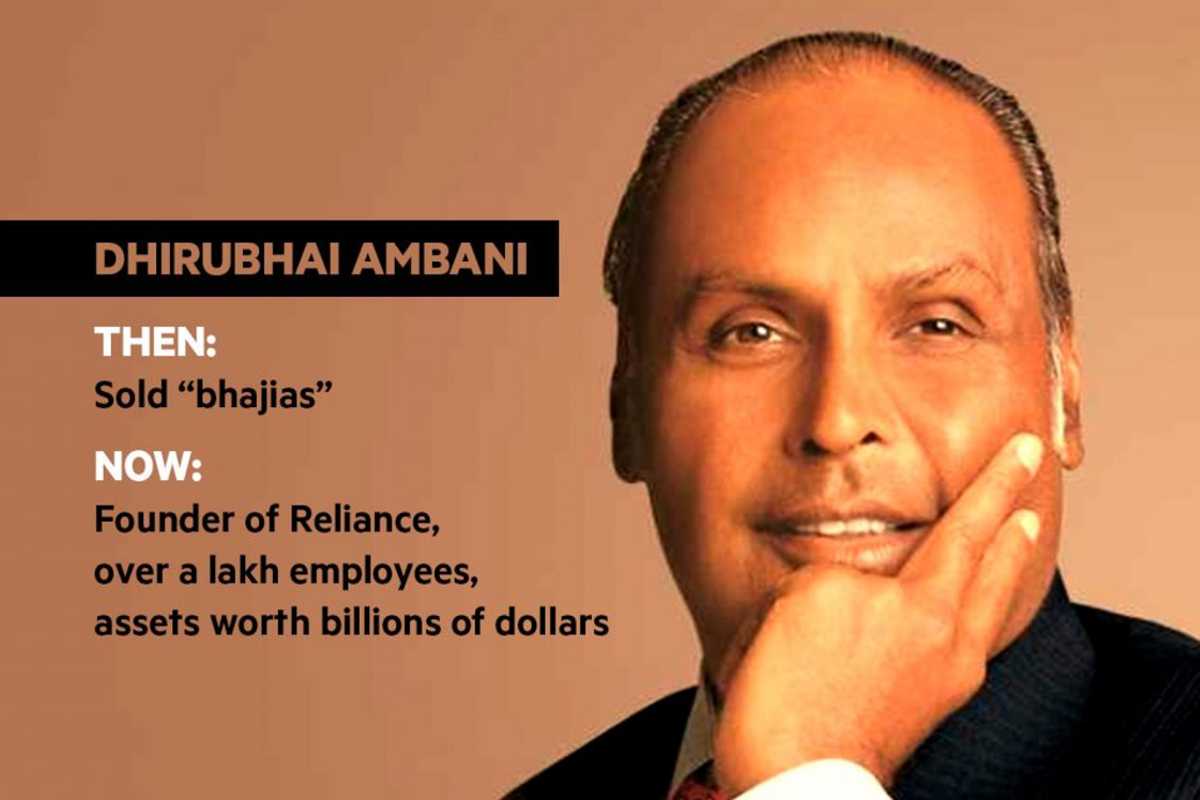
Dhirubhai Ambani: The Rags to Riches Story

Dhirubhai Ambani: The Rags to Riches Story

India is a land that has produced several heroes, including warriors, soldiers, leaders, actors, martyrs, sportsmen and business tycoons. One such person who changed the face of India and reached the stars is Dhirubhai Ambani. Born in a small Gujarati family with modest means, Ambani’s rise to fame and his constant endeavours to reach the top are nothing less than a narrative, rags to riches story!

1. Who is Dhirubhai Ambani?

You may have heard about Mukesh and Anil Ambani. But do you know that these two business tycoons are actually sons of magnate Dhirubhai Ambani? Well, it was Dhirubhai who founded the current enterprises Reliance Industries, a conglomerate that operates in several segments such as exploration, refining, retail stores, telecommunications and petrochemicals. But Dhirubhai Ambani wasn’t a born rich man with a silver spoon in his mouth. In fact, as a third son of a school teacher, he didn’t even have enough money to fulfil his basic necessities. So, how did he manage to grow and thrive?

Early Life and Humble Beginnings

Born on December 28, 1932, in Chorwad, Gujarat, Dhirubhai Ambani grew up in a modest family. His father was a school teacher, and financial constraints were a constant challenge. Despite these hardships, Ambani exhibited an entrepreneurial spirit from a young age, selling snacks to pilgrims and showcasing a knack for business.

2. From Gujarat to Yemen

It is true that Ambani lived in moderate means, but that didn’t hinder him from dreaming high. At the tender age of 16, Dhirubhai went to Aden in Yemen to earn. The boy with dreamy eyes began his career as a dispatch clerk and soon, with his hard work and skills managed to become a distributor for Shell Products. But he wasn’t just a hard worker, he was a smart worker!

This experience provided him with valuable insights into international trade and commerce.

3. Melting coins to silver

While working at Yemen he realized that the London Stock Exchange had high demand for Rial, the Yemen coins that had high content of silver during those days. Therefore, Ambani acted smartly and purchased those coins in bulk. Later he melted them in silver and sold it to gold traders. And guess what, even though he did this for a few months, he ended up with lakhs of rupees, which was and still quite a big amount for an average Indian. But he wasn’t content. His dreams weren’t yet fulfilled.

4. Founding of Reliance Commercial Corporation

The young boy, who started with rags and little means, had a few lakhs in his pocket when he came back to India after 10 years.

Return to India

In 1958, Ambani returned to India and established Reliance Commercial Corporation in Mumbai, focusing on importing polyester yarn and exporting spices. He used 15000 INR as capital to establish Reliance Commercial Company in Mumbai. Operating from a small office, he emphasized high-quality products and customer satisfaction, laying the foundation for Reliance’s future success.

Expansion into Textiles

Then in 1964, he started with Reliance Textiles, produced and sold polyester cloth under brand name ‘Vimal’, named after his nephew. Because of his constant urge to maintain high quality standards, Vimal was applauded as the best polyester clothing brand. Dhirubhai Ambani had begun to fly high!

5. Public Offering and Capital Market Revolution

In 1977, Reliance Textile Industries went public, attracting over 58,000 investors. Ambani’s transparent business practices and focus on shareholder value earned him the title of the ‘father of India’s capital markets.’

6. Diversification and Backward Integration

Ambani pursued a strategy of backward integration, expanding Reliance’s operations into petrochemicals, refining, and oil exploration. This approach ensured control over the entire supply chain, enhancing efficiency and profitability.

7. Legacy and Recognition

Dhirubhai Ambani’s contributions were recognized with numerous accolades, including the Padma Vibhushan in 2016. His legacy continues through Reliance Industries, a conglomerate with interests in telecommunications, retail, and energy, under the leadership of his sons, Mukesh Ambani and Anil Ambani.

Also Read: Maharashtra : A Home to Marathi and Bollywood Film Industry

What should students do in summer Vacation

Summer is the time when the kids are looking for something exciting, productive and positive to spend their holidays. Even the parents are busy searching and thinking of best activities in which their kids can indulge during summer holidays. Watching TV the whole day long or just playing video games is not a better summer vacation idea so why not look for some really productive and constructive things which will keep the children engaged during summer.

Few Best Summer Vacation Ideas

  • Wake up Early in the Morning
  • Follow a fitness regime
  • Indulge in New Sports or Games
  • Study for Few hours
  • Try to learn something new
  • Start a small-time business
  • Maintain Good Health and Hygiene

Wake Up Early in the Morning

This is a good habit which can be inculcated in the kids. This way they will get benefited from the fresh air of the morning and can get into the habit of getting up early. Getting up early will make them healthy, wealthy and wise.

Follow a Fitness Routine

Make them so small and easy exercises or go for running with them early in the morning. This will help them in staying fit and healthy.

Indulge in Sports and Games

Summer is the right time when they can learn swimming and they will definitely enjoy the cool water of the swimming pool. Swimming is considered to be the favorite sports activity to keep them busy during the warm summer season.

Studying

Keep at least 2-3 hours aside for studying, so that they do not get out of the habit of reading and writing. This will also help them to complete their holiday homework on time, instead of keeping it piled up for the last days.

Learning something new

Arts and crafts or some hobby classes are the best idea to join during summer. Here they will learn simple things like sewing new outfits or fine art of coloring and drawing.

Starting a business

Kids can go for small-time business or start their own business like creating a lemonade stand. This way they will learn the tricks and tips for business, about money, profits and expenses etc. Elder kids can also join summer jobs like distributing newspapers, volunteer jobs etc.

Maintaining Good Health and Hygiene

Teach good hygiene habits, like washing hands after playing, before eating food. Teach them to brush teeth every morning and before sleeping at night. All these good hygienic habits can be inculcated in them during vacations. Tell them about the benefits of eating healthy food and fruits. Make them learn to eat fruits and vegetables to stay healthy and nourished during summer vacations.

Various other Summer Vacation Ideas

  • Make the kids read books to keep reading alive
  • Adopt Fathers Reading Every Day Program
  • Join Summer Day Camps
  • Enjoy Daylong Field Trips
  • Taking them to movies with popcorns

Thus by trying out all these effective summer vacation ideas you can make their vacations enjoyable as well as productive at the same time.

Best ways to Prepare for Aptitude Test for CAT 2013

CAT or the Common Admission Test is one of the biggest entrance exams held in India. Conducted online, the test aims at measuring quantitative aptitude of students along with measuring their skills at logical and analytical reasoning and interpretation of data. Thousands of students appear for CAT’s aptitude test every year, hoping to join one of the prestigious IIM’s or the best business schools in the country.

Do you dream of joining India’s premier B-schools? Are you planning to sit for the CAT 2013?

If yes, then you need to be prepared, ready on your toes to score a good percentile in the aptitude test. Here are some tips and best ways in which you can prepare for Aptitude Test for CAT 2013.

  1. Time Management: The best way to start preparing for the aptitude test is to manage your time. This doesn’t mean that you have to devote 12 hours to study. The timing of your study should vary according to your concept understanding capacities. Instead of devoting too many hours to studying, manage your time wisely. For instance, study two subjects for 2 or 3 hours a day instead of studying a single subject for six hours. This will increase your attention span and avoid boredom.
  1. Don’t study from a single ‘textbook’: It is true that textbooks are an expanse of knowledge, but you need practically oriented knowledge if you want to prepare for the Aptitude test. Therefore, check out books like ‘Quantitative Aptitude for MBA entrance examinations’ by Abhijit Guha if you are interested in learning the concepts that are commonly tested in CAT Examinations. Also, never read a single book. Expand your knowledge and aptitude by reading more and more.
  1. Enjoy Quizzes: CAT is such a common exam that you will end up finding a lot of people who will be giving the test in 2013. So, make your study group and take quizzes. Ask each other different types of questions. This will make it fun. If that isn’t possible, then take part in online quizzes and get your answers scored.
  1. Check out preparatory information: Merely studying for CAT 2013 is not enough. You will also have to make sure that you understand the preparation aspects. For instance, check out books like ‘How to prepare for Quantitative aptitude for CAT’ by Arun Sharma. The book will give you precise ideas about what study plans and tips you should follow to increase the chances of your success.
  1. Eat well and sleep well: What is the point of studying everything if you aren’t physically fit to take exams or healthy enough to keep learning intact? So, make a point that you sleep well and eat a nutritious diet to boost you mentally and keep you physically fit. If you do that, you will be able to learn better, organize yourself in efficient ways and prepare well for CAT 2013.

So, what are you waiting for? Start preparing for AT 2013 and turn your MBA dreams into reality.

Sharpening Quantitative Aptitude

Whether you wish to go for a science or social sciences profession, MBA, engineering or civil services, you need to have an excellent grasp on quantitative aptitude. Although, a regular aptitude test simply examines your competency for the subject, quantitative aptitude measures your overall reasoning and analytical skills. It makes sure that you have the ability to deal with practical issues and skills to achieve desirable success in life. Quantitative aptitude comprises questions such as, if 2+3 = 5 and 4+6= 11 then what is 5+7? Although, some of them may seem too easy, in reality they are quite tricky. So, here is a list of tips you could follow to sharpen quantitative aptitude.

1. Formulae and tricks

The first step is to learn all basic formulae, the most important being the rule of BODMAS, this will allow you to solve simple mathematical questions. Then try to learn various tricks to solve a quantitative aptitude problem. For instance, tricks such as learning where addition or multiplication is to be used can help. The best way to learn tips and tricks is to follow logical thinking and attitude.

2. Common sense

Believe it or not! Common sense is the most important tool when it comes to solving quantitative aptitude problems. So, use common sense. Think what could be more practical and then choose your solution.

3. Time management

Generally, students spend too much time solving a single quantitative aptitude question. And although they end with the correct answer, they might not be able to complete all questions. Therefore, divide time. Ideally, nothing more than two minutes should be given to a quantitative aptitude question.

4. Practice makes a man perfect

Yes! Practice is the key. Don’t expect yourself to be too intelligent, rather hone your skills by practicing mock tests. These tests will give you a fair idea about what type of questions may come and also allow you to find the best ways to produce the right answer. Moreover, practicing tests gives you an opportunity to learn time management and reduces average time for getting a solution.

5. Make friends

Sounds weird?Isn’t it? Well, if you are actually interested in clearing the quantitative aptitude test with flying colours, then you should practice by making friends. Friends, who have common goals can help you in studying and finding different ways of getting a solution. Moreover, you can do mock tests and ask each other questions, discuss the techniques used for deriving an answer.

6. Sleep and exercise

Finally, it is important to treat your body well if you want to enhance your capabilities. Therefore, sleep at least 8 hours a day to make sure that your brain has enough time to rest. Also, start exercising. This will not just keep you fit on physical levels, but it will also make sure that your mind exercises and receives better blood flow to protect your memory.

So, what are you waiting for? Keep a goal and achieve it by sharpening your quantitative aptitude skills! All the best!