Saral Study staff mostly works for helpful articles and other posts which include student-related news, education-related news, updates, informative lists, etc.
Schools are over!! Now it’s time to enjoy summer vacation. But what are you going to do? Don’t let the confusion take over the excitement of summer vacation. It is the time to take a break from your mundane and monotonous daily life routine and indulge in something new and exciting. You can do tons of things but make sure you don’t get caught in the dilemma which turns into the boredom of doing nothing at all. Here is a list of pretty exciting things which you can learn during summer vacation. Enjoy and make the most out of your summer vacation!
Swimming
Self-Defence
Develop a Hobby
Music and Dramatics
Play Games
Learn New skills
Travel and Visit Places
Go Camping
Join a Volunteer Group
Swimming
Summer vacation gives an excellent opportunity to learn to swim. It’s the best thing to beat the heat and have fun in the water. So, grab your friends and enrol for exciting swimming lessons.
Self-Defence Classes
If you are thinking about joining a gym or doing something to add to your fitness then why not enroll yourself in self-defence classes like judo, karate etc. It’s the best way to stay fit and focused. These classes also help you in improving concentration and confidence.
Develop a Hobby
To make your summer vacation productive indulge yourself in a hobby. Gardening, you can grow your small garden, do some carpentry and build something, cooking some delicious dishes.
Music and Dramatics
Summer vacation is the perfect time to enroll in Acting, Guitar, Dancing or Singing classes. Not only you will be learning great activities but it also brings out the hidden talent in you. So, give it a shot!
Play games
Why not engage yourself in playing some fun-filled outdoor and indoor games. Playing outdoor games like cricket or basketball with friends and family is a nice way to spend summer. You can also play some indoor games like learn how to play chess or other strategy-based games to improve your IQ. For more excitement join a sports camp with friends and make your vacation memorable.
Learn new skills
If you are an eager learner then learn some amazing new skills. Computers are a basic necessity in daily life, so why not learn computer basics, or how about learning the ancient way of calculation by using Abacus, or maybe learn Driving. Learn something new to make your summer gainful and exciting.
Travel and visit places
Why not spend your summer vacation travelling to some exotic places in your state or maybe town. Grab your buddies and pack your bags to create some wonderful memories.
Go camping
One of the exciting ways to spend your summer is by building tents, hiking, or trekking to nearby hills or open fields. But make sure you have an adult to accompany you.
Join a volunteer group
Why not spend your summer helping others by going to some communities. You with your friends can be a part of a volunteer group at church or help elderly people. The community service will make you proud and you can also add it to your college resume.
So, don’t get stuck at home playing video games, sleeping and eating junk food all day long. It will not only ruin your precious summer holidays but also adversely affect your health and fitness.
Kalpana Chawla, an inspiration for many kids and women, was the first Indian aeronautical engineer who travelled in space. Her achievements and contributions have been immense and that is why she is considered to be a role model for many people across the globe. A very tragic event in space shuttle “Columbia” killed seven preeminent astronauts and one of them was Kalpana Chawla, an Indian-born first woman to travel in space.
Early Life of Kalpana Chawla
Kalpana was born in 1961 on 1st July in a very small town located in Karnal, Haryana. Being the youngest child amongst four kids in the family, she was the most pampered one. She started her education in Tagore Public School and finally for graduation got enrolled in Punjab engineering College to complete her degree in aeronautical engineering in 1982. The very same year she went to the US and got married to Jean-Pierre Harrison in 1983. In the year 1984 she finished her master’s degree from the University of Texas in Aerospace Engineering. In 1988 she got a PhD in aerospace engineering from the University of Colorado, Boulder.
Kaplan’s Flying Career
She was a certified flight instructor as well as commercial pilot and because of so many degrees in Aerospace engineering she landed with a job in NASA as a Vice President of Overset Methods Inc in the year 1993. Being extensively involved in computational fluid dynamics research related to Vertical/Short takeoff and Landing she became a vital part of the Astronaut Corps at NASA in 1995.
She was chosen for her first mission to travel around Earth in a huge space shuttle in 1996 and her first mission began on November 19, 1997. During her first mission she travelled 6.5 million miles in 252 orbits around earth, but this mission proved to be a failure.
She was chosen for the second flight and for extensive training she was stationed at Lyndon B Johnson Space Center located in Houston, Texas. Her second mission got delayed in July 2002 due to identification of three cracks in the shuttle. But after six months the shuttle was cleared and she boarded the ill-fated STS-107 mission which met with an accident.
Kalpana Chawla had been totally dedicated to the scientific goals of FREESTAR/ SPACEHAB microgravity research mission, and along with the whole crew she conducted around 80 experiments related to studying space and earth science, astronaut health & safety, and advanced technology development.
Personal Characters
Kalpana was a very strict vegetarian and on every mission she carried a white silk banner in order to pay a token of respect to teachers across the globe. She was fond of Indian music and always carried dozens of CDs along, especially of famous singers like Abeeda Perveen, Deep Purple, and Ravi Shankar etc.
Although she lived in the US but will always be considered as a pride of India. Her achievements are and will always be great inspirations for others. All through her lifetime Kalpana won many prestigious awards like NASA Space Flight medal and many more.
Festivals of India: India is a land of joy, a land of amalgamations and a land of different cultures and that is why every day in India is celebrated. Every day has significance and every day people of different faith join hands together, praying for their happiness and prosperity.
Being a highly spiritual country with many religions and faiths, India is not new to celebrating festivals. In fact, the country celebrates a number of festivals with zeal, zest and vigour, giving each festival a new meaning.
Major Festivals Of India
Every festival celebrated in the country has its own mythological significance. Whether you are a Hindu, Muslim, Sikh, Buddhist or Christian, every festival is marked with an occasion and a celebration that binds people of different faiths together. Here is a list of the top ten festivals in India.
1. Diwali – The Festival Of Lights
One of the most popular Indian festivals, Diwali, also known as Deepavali is the festival of lights. Diwali means a row of lights that were lit up when Lord Rama, a major deity in Hinduism returned with Goddess Sita after defeating Ravana.
Diwali Festival
The day is celebrated on a no-moon night, therefore, diyas or candles are stacked together and lights light homes and societies. Before the festival, families clean their homes vigorously and invite Goddess Laxmi and Lord Ganesha. After several rituals and customs, fireworks are lit and people exchange gifts and sweets.
Significance: Celebrate the return of Lord Rama to Ayodhya.
When: October/November
Celebrations: Lighting of diyas, fireworks, and family feasts.
2. Eid-Ul-Fitr
Arabic word of festivity, Eid is one of the most popular festivals in India. Celebrated majorly by Muslims, Eid is followed twice a year- Eid ul-Fitr and Eid-ul Zuha. While Eid ul-Fitr is the end of Ramadan, the month of fasting, it is celebrated for three days with great enthusiasm. Eid ul-Zuha or Bakra Eid is celebrated on the 10th of Zil Hajj month in the Islamic calendar. This is a festival of generosity where people share fortune with less fortunate people.
Significance: Marks the end of Ramadan.
When: Varies according to the Islamic calendar.
Celebrations: Prayers, feasting, and giving alms.
3. Holi – The Festival Of Colors
Holi Festival
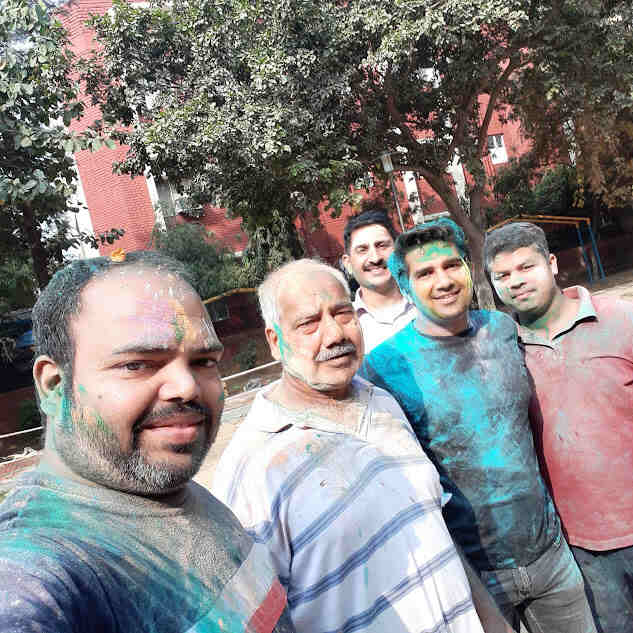
The festival of colours, holi is celebrated in the spring harvest season wherein people throw coloured powder and water on each other. Celebrated in the morning, the festival has received a modern twist with dances under sprinklers and drinking of Bhang, which is prepared from a paste of cannabis plant leaves. This is one day where no one minds being dirty.
Significance: Marks the victory of good over evil.
When: March
Celebrations: Throwing of coloured powders, music, and dance.
Religious Festivals of India
4. Ganesh Chaturthi
Ganesh Chaturthi Festival
The festival of Ganesh Chaturthi is spectacular, and regularly shown in television serials and movies to depict its magnificence. The festival is followed by Lord Ganesha, the elephant-headed God who honours his birth. This eleven-day festival witnesses several huge, elaborately decorated and crafted statues of Lord Ganesha. People dance and colour each other in vermillion and podiums are made for celebration. After a lot of joy and singing, Lord Ganesha is submerged in the ocean.
Significance: Celebrates the birth of Lord Ganesha.
When: August/September
Celebrations: Installation of Ganesha idols, prayers, cultural events, and immersion of idols in water.
5. Christmas
Over the years, Christmas is one of the festivals that have gained prime importance in the country. The festival, which is celebrated as the birth of Lord Christ is celebrated all over India, particularly by children who wait for 25th December and Santa Claus. This is a modern festival which has gained immense popularity over the years. During winters, places of interest, especially malls are filled with workers clad in Santa Claus outfits tempting kids!
Significance: Commemorates the birth of Jesus Christ.
When: December 25th
Celebrations: Decorating Christmas trees, attending church services, exchanging gifts, and family feasts.
6. Kumbh Mela
Celebrated once in every 12 years, Kumbh Mela sees thousands and lakhs of devotees from all over the world! A huge gathering of devotees come to bathe in the holy river of Ganges. While Ardh Kumbh Mela is carried out once in every six years in Haridwar, Nashi, Ujjain and Prayagraj, the festival is renowned for dutiful and religious customs along with long parades by naga sadhus.
Significance: It celebrates the victory of good over evil and the divine nectar of immortality.
When: Every 12 years, with Ardh Kumbh Mela held every 6 years.
Celebrations: Devotees take a holy dip in sacred rivers, participate in religious discussions, and attend mass feeding programs. The event includes grand processions with sadhus and saints, religious rituals, and cultural performances.
Cultural and Seasonal Festivals
7. Navratri and Dussehra
Navratri celebrates the victory of Goddess Durga over the demon Mahishasura. Dussehra marks Lord Rama’s victory over the demon king Ravana.
Navratri involves nine nights of dance (Garba/Dandiya) and worship of Goddess Durga. Dussehra includes effigy burning of Ravana, grand processions, and dramatization of the Ramayana.
Significance: Celebrates the victory of Goddess Durga over Mahishasura.
When: September/October
Celebrations: Nine nights of dancing (Garba/Dandiya), culminating in Dussehra.
8. Makar Sankranti
Makar Sankranti marks the transition of the sun into the zodiac sign of Capricorn, signifying the end of the winter solstice and the beginning of longer days.
It is celebrated with kite flying, bonfires, traditional dances, and feasts. Special sweets made of sesame and jaggery are prepared and shared among friends and family.
Significance: Marks the transition of the sun into Capricorn.
When: 14th January Every Year
Celebrations: Kite flying, feasts, and bonfires.
9. Pushkar Camel Fair
Again, this isn’t exactly a festival that has a mythological significance, yet it is celebrated with great fanfare. More than 50000 camels converge in Rajasthan’s land of Pushkar, where several contests are held for these camels. Some of these contests include races, trades, parades and beauty contests. This is one of the festivals that is celebrated as an old tradition in the country and garners a lot of tourists from country and abroad.
Significance: A livestock fair that also hosts cultural performances and competitions.
When: November
Celebrations: Trading camels and other livestock, folk dances, music, and various competitions
10. National Kite
Festival Although it isn’t a mythological festival, the National Kite Festival is one of the most popular festivals in the country that is held in the state of Gujarat. People from all over the world visit the state to celebrate this festival during Makar Sankranti in January. This is one of those days when you can see kites soaring high in the sky.
The kites are elaborately crafted and decorated in a variety of styles including different sizes, shapes, patterns and colours. The sky itself looks like an amalgamation of a million hues of different colours. Expert kite makers and flyers come from the USA, Indonesia, Italy and China to celebrate the festival.
Significance: Celebrated to mark Makar Sankranti with the flying of kites.
When: January 14th
Celebrations: Kite flying competitions, fairs, and traditional sweets.
Harvest Festivals in India
11. Baisakhi
India is a land of farmers with agriculture being one of the prime occupations in the country. Therefore, the festival of Baisakhi is widespread and is followed by different names in the south. The festival is a celebration held for the harvest of the Rabi crop and takes place from April to May. People offer prayers and Amritsar’s Golden Temple.
Dances and cultural treats are offered throughout North India with colourful fairs organized for farmers and their families. In South India, it is celebrated as Onam, a ten day harvest festival that has a rich cultural significance. On this day people welcome the homecoming of mythical king Mahabali.
Significance: Harvest festival of Punjab.
When: 13th April Every Year
Celebrations: Dancing Bhangra, fairs, and rituals in Gurudwaras.
12. Pongal
Significance: Harvest Festival of Tamil Nadu.
When: January
Celebrations: Cooking of Pongal dishes, decoration of cows, and traditional dances.
Apart from this, every state and every culture celebrates a variety of other national festivals like Independence Day and Republic Day. Diwali, Durga Puja, Eid, Holi, Ganesh Chaturthi, National Kite Festival, Kumbh Mela, Baisakhi Christmas, Pushkar Camel Fair.
Regional Festival
13. Durga Puja
This is nine days that no one in West Bengal wants to miss. The whole state seems to be covered in hues of red, yellow and orange as people dress up themselves and create beautiful statues of Goddess Durga. During this period, homes are decorated, gifts are purchased and people stay on the street all night, dancing and celebrating Durga Puja with each other. The last day of Durga Puja is conducted on the evening of Dashami.
Significance: Celebrates the goddess Durga.
When: September/October
Celebrations: Idol immersion, pandal hopping, and cultural performances.
14. Onam
Onam is the harvest festival celebrated by the people of Kerala, marking the homecoming of the legendary King Mahabali.
The festival Onam features elaborate floral decorations (Pookalam), traditional dance performances, boat races, and the grand Onam feast known as Onasadya. People dress in traditional attire and participate in various cultural events, showcasing Kerala’s rich heritage.
Significance: Harvest festival of Kerala.
When: August/September
Celebrations: Pookalam (floral arrangements), boat races, and traditional dances.
15. Chhath Puja
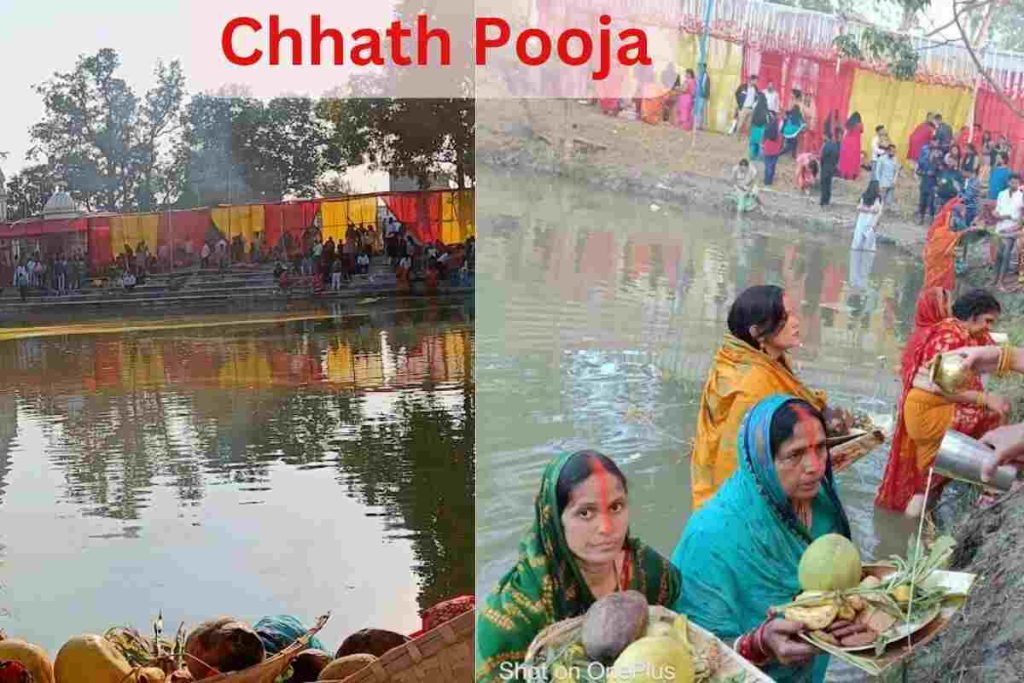
Chhath Puja is a major Hindu festival dedicated to the Sun God, Surya, and his sister, Chhathi Maiya. It symbolizes the gratitude towards the Sun for sustaining life on Earth and requests for prosperity and well-being.
Chhath Pooja Festival
The festival spans four days, including holy bathing, fasting, and standing in water to offer prayers to the setting and rising sun. Devotees perform rituals on riverbanks and make offerings of fruits, sweets, and grains. Women observing the fast often sing traditional songs and maintain a rigorous fast without water.
Significance: A festival dedicated to worshiping the Sun God and Goddess Nature for health and prosperity.
When: It is celebrated twice a year, in summer (Chaiti Chhath) and winter (Kartika Chhath), typically in October or November.
Celebrations: Devotees perform holy bathing, and fasting, and offer prayers to the Sun at riverbanks.
List Of Major Festivals in India
Festival
Significance
Month/Date
Diwali
Return of Lord Rama to Ayodhya
October/November
Holi
The victory of good over evil
March
Eid-ul-Fitr
End of Ramadan
Varies (Islamic calendar)
Pongal
Harvest Festival of Tamil Nadu
January
Baisakhi
Harvest Festival of Punjab
April
Navratri
Victory of Goddess Durga
September/October
Dussehra
End of Navratri
September/October
Makar Sankranti
Sun’s transition into Capricorn
January
Onam
Harvest Festival of Kerala
August/September
Durga Puja
Celebration of Goddess Durga
September/October
Festive Food and Traditions
Unique Dishes: Sweets during Diwali, biryani during Eid, and Pongal dish during Pongal.
Cultural Practices: Traditional dances, music, and rituals associated with each festival.
Importance of Festivals in Indian Culture
Cultural Unity: Festivals bring people together irrespective of their backgrounds.
Preservation of Traditions: They help in keeping age-old traditions alive.
Economic Impact: Boost local businesses and tourism.
List Of Other Festivals in India
S. No.
Festival
Description
Significance
Celebrations
1
Hanuman Jayanti
Celebrates the birth of Lord Hanuman, the ardent devotee of Lord Rama.
Honours the devotion and strength of Hanuman.
Special prayers, reading of Hanuman Chalisa, and offerings at Hanuman temples.
2
Ram Navami
Marks the birth of Lord Rama, the seventh incarnation of Vishnu.
Celebrates the virtues of Rama and his role in the Ramayana.
Chanting of bhajans, reading Ramayana, processions, and temple rituals.
3
Krishnashtami
Also known as Janmashtami, it celebrates the birth of Lord Krishna, the eighth incarnation of Vishnu.
Highlights the teachings and playful activities of Krishna.
Fasting, singing devotional songs, night vigils, and reenactments of Krishna’s life events.
4
Muharram
The first month of the Islamic calendar, it commemorates the martyrdom of Imam Hussain.
Observes the sacrifice and sorrow of Imam Hussain and his followers.
Mourning processions, public recitations, and self-flagellation in some communities.
5
Guru Purnima
Dedicated to teachers and spiritual gurus, it is celebrated on the full moon day (Purnima) in the Hindu month of Ashadha.
Pays tribute to the role of teachers and gurus in guiding one’s life.
Offering respect to teachers, performing Guru Puja, and reading scriptures.
6
Ganga Snan
A ritualistic bath in the holy river Ganges, believed to cleanse sins and bring spiritual merit.
Reveres the Ganges as a divine river that purifies and blesses devotees.
Mass bathing events, prayers, and offerings to the river.
7
Basant Panchami
Marks the onset of spring and is dedicated to Goddess Saraswati, the deity of knowledge and arts.
Celebrates learning, wisdom, and the spring season.
Wearing yellow clothes, kite flying, and Saraswati Puja.
8
Maha Shivratri
Celebrates the wedding of Lord Shiva and Goddess Parvati.
Symbolizes overcoming darkness and ignorance.
Night-long vigils, fasting, chanting of “Om Namah Shivaya,” and visiting Shiva temples.
9
Baisakhi
Marks the harvest festival in Punjab and the Sikh New Year.
Celebrates the formation of the Khalsa in Sikhism.
Community fairs, traditional dances like Bhangra and Gidda, and visiting Gurudwaras.
10
Buddha Purnima
Celebrates the birth, enlightenment, and death (Nirvana) of Gautama Buddha.
Honors the teachings and legacy of Buddha.
Processions, meditation, sermons, and offering flowers and candles at Buddha statues and monasteries.
11
Cheti Chand
The Sindhi New Year, marking the birth of Lord Jhulelal, the patron saint of Sindhis.
Celebrates new beginnings and the protection of Jhulelal.
Processions, worship at Jhulelal temples, and sharing traditional Sindhi foods.
12
Rath Yatra
A chariot festival dedicated to Lord Jagannath, his brother Balabhadra, and sister Subhadra.
Celebrates the annual journey of Jagannath, Balabhadra, and Subhadra to Gundicha Temple.
Pulling chariots through the streets, devotional songs, and large gatherings.
13
Hartalika Teej
A festival for women, it celebrates the union of Lord Shiva and Goddess Parvati.
Symbolizes marital bliss and the well-being of one’s spouse.
Fasting, prayers, wearing new clothes, and decorating hands with henna.
14
Nag Panchami
Worships snakes, particularly the serpent god Naga, for protection and blessings.
Acknowledges the importance of snakes in Hindu mythology and nature.
Offering milk and sweets to snake idols, and snake charmers display live cobras.
15
Pongal
A harvest festival celebrated in Tamil Nadu, marking the sun’s journey northwards.
Gives thanks for the harvest and the sun’s role in agriculture.
Cooking and sharing of Pongal (a sweet dish), decorating cattle, and family reunions.
16
Karva Chauth
A festival where married women fast from sunrise to moonrise for the safety and longevity of their husbands.
Emphasizes marital devotion and the bond between spouses.
Day-long fasting, dressing up in bridal wear, and performing rituals under the moon.
17
Makar Sankranti
Celebrates the sun’s transit into Capricorn, marking the end of winter solstice.
Signifies a new harvest season and auspicious beginnings.
Kite flying, bonfires, and sharing of sweets made from sesame and jaggery.
18
Navratri
A nine-night festival dedicated to the worship of Goddess Durga and her nine forms.
Symbolizes the victory of good over evil and the divine feminine energy.
Fasting, dance (Garba and Dandiya), and recitation of Durga Saptashati.
19
Pushkar Camel Fair
An annual livestock fair and cultural festival held in Pushkar, Rajasthan.
Signifies the importance of livestock in rural economy and showcases Rajasthani culture.
Camel trading, cultural performances, competitions, and local crafts market.
20
National Kite Festival
Celebrates the joy of kite flying, held annually in Gujarat during Makar Sankranti.
Symbolizes the spirit of freedom and festivity.
Kite flying competitions, night kite flying, and local food stalls.
21
Chhath Puja
Dedicated to the Sun God, it is celebrated to thank the Sun for sustaining life on earth and to seek his blessings.
Reveres the Sun God for sustaining life and prosperity.
Fasting, standing in water to offer prayers to the setting and rising sun, and sharing of prasad.
22
Mahavir Jayanti
Celebrates the birth of Lord Mahavir, the 24th Tirthankara of Jainism.
Highlights the principles of Jainism, such as non-violence and truth.
Prayers, processions, and acts of charity.
23
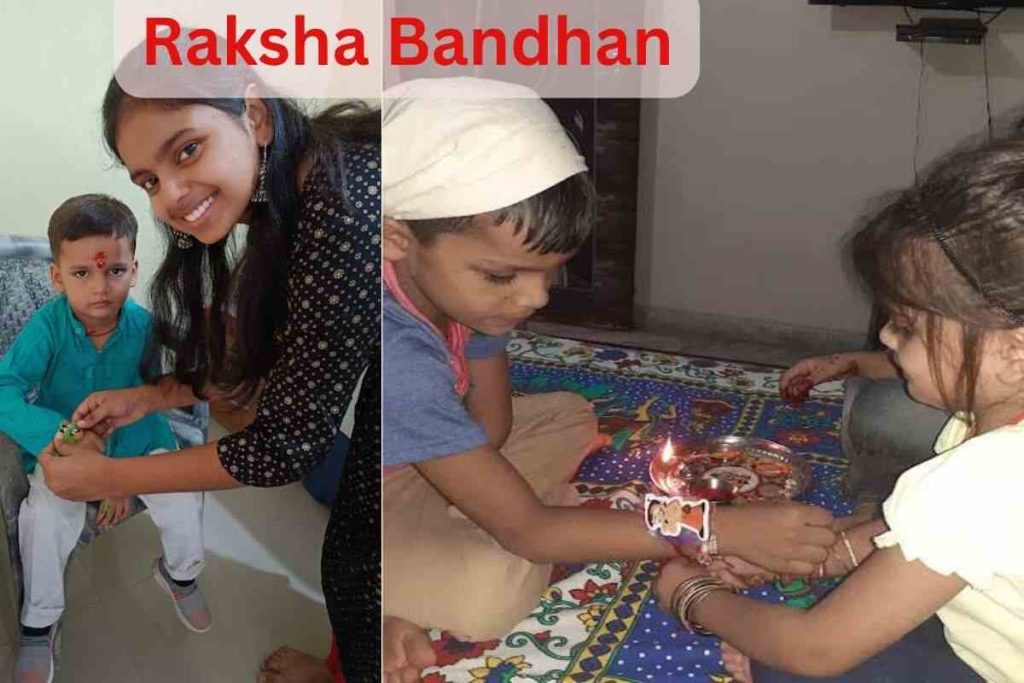
Raksha Bandhan
A festival celebrating the bond between brothers and sisters.
Symbolizes the protective and loving relationship between siblings.
Sisters tie a rakhi (sacred thread) around their brothers’ wrists, and brothers give gifts in return.
24
Bihu
A set of three Assamese festivals: Rongali (Bohag) Bihu, Kongali (Kati) Bihu, and Bhogali (Magh) Bihu, celebrating the Assamese New Year and the harvest season.
Marks the Assamese New Year and the harvest season.
Traditional dances, songs, feasting, and community events.
25
Maha Shivaratri
Celebrates the union of Lord Shiva and Goddess Parvati.
Represents the overcoming of darkness and ignorance.
Fasting, night-long vigils, chanting of mantras, and visiting Shiva temples.
26
Hemis
A Tibetan Buddhist festival celebrated at the Hemis Monastery in Ladakh.
Commemorates the birth of Guru Padmasambhava, the founder of Tibetan Buddhism.
Masked dances, music, and religious ceremonies.
27
Vishu
Celebrates the Malayalam New Year in Kerala.
Symbolizes prosperity and the beginning of a new year.
Viewing the Vishu Kani (auspicious items), bursting firecrackers, and feasting.
28
Maha Saptami
The seventh day of Durga Puja, involving rituals and worship dedicated to Goddess Durga.
Highlights the victory of Goddess Durga over the buffalo demon Mahishasura.
Elaborate rituals, cultural performances, and offerings to the goddess.
29
Bhogi
The first day of the four-day Pongal festival, marking the last day of the Tamil month Margazhi.
Symbolizes the disposal of old belongings to welcome new beginnings.
Bonfires to burn old items, cleaning and decorating homes, and preparing traditional dishes.
Significance and Celebrations Of Other Festivals in India
Hanuman Jayanti
Significance: Celebrates the birth of Lord Hanuman, the ardent devotee of Lord Rama.
Celebration: Special prayers, reading of Hanuman Chalisa, and
Ram Navami
Significance: Marks the birth of Lord Rama, the seventh incarnation of Vishnu.
Celebration: Chanting of bhajans, reading Ramayana, processions, and temple rituals.
Krishnashtami (Janmashtami)
Significance: Celebrates the birth of Lord Krishna, the eighth incarnation of Vishnu.
Celebration: Fasting, singing devotional songs, night vigils, and reenactments of Krishna’s life events.
Muharram
Significance: Commemorates the martyrdom of Imam Hussain.
Celebration: Mourning processions, public recitations, and self-flagellation in some communities.
Guru Purnima
Significance: Dedicated to teachers and spiritual gurus.
Celebration: Offering respect to teachers, performing Guru Puja, and reading scriptures.
Ganga Snan
Significance: Reveres the Ganges as a divine river that purifies and blesses devotees.
Celebration: Mass bathing events, prayers, and offerings to the river.
Basant Panchami
Significance: Marks the onset of spring and is dedicated to Goddess Saraswati.
Celebration: Wearing yellow clothes, kite flying, and Saraswati Puja.
Maha Shivratri
Significance: Celebrates the wedding of Lord Shiva and Goddess Parvati.
Celebration: Night-long vigils, fasting, chanting of “Om Namah Shivaya,” and visiting Shiva temples.
Baisakhi
Significance: Marks the harvest festival in Punjab and the Sikh New Year.
Celebration: Community fairs, traditional dances like Bhangra and Gidda, and visiting Gurudwaras.
Buddha Purnima
Significance: Celebrates the birth, enlightenment, and death (Nirvana) of Gautama Buddha.
Celebration: Processions, meditation, sermons, and offering flowers and candles at Buddha statues and monasteries.
Cheti Chand
Significance: The Sindhi New Year, marking the birth of Lord Jhulelal.
Celebration: Processions, worship at Jhulelal temples, and sharing traditional Sindhi foods.
Rath Yatra
Significance: A chariot festival dedicated to Lord Jagannath, his brother Balabhadra, and sister Subhadra.
Celebration: Pulling chariots through the streets, devotional songs, and large gatherings.
Hartalika Teej
Significance: A festival for women, it celebrates the union of Lord Shiva and Goddess Parvati.
Celebration: Fasting, prayers, wearing new clothes, and decorating hands with henna.
Nag Panchami
Significance: Worships snakes, particularly the serpent god Naga, for protection and blessings.
Celebration: Offering milk and sweets to snake idols, and snake charmers display live cobras.
Pongal
Significance: A harvest festival celebrated in Tamil Nadu, marking the sun’s journey northwards.
Celebration: Cooking and sharing of Pongal (a sweet dish), decorating cattle, and family reunions.
Karva Chauth
Significance: A festival where married women fast from sunrise to moonrise for the safety and longevity of their husbands.
Celebration: Day-long fasting, dressing up in bridal wear, and performing rituals under the moon.
Makar Sankranti
Significance: Celebrates the sun’s transit into Capricorn, marking the end of winter solstice.
Celebration: Kite flying, bonfires, and sharing of sweets made from sesame and jaggery.
Navratri
Significance: A nine-night festival dedicated to the worship of Goddess Durga and her nine forms.
Celebration: Fasting, dance (Garba and Dandiya), and recitation of Durga Saptashati.
Ganesh Chaturthi
Significance: Commemorates the birth of Lord Ganesha, the remover of obstacles and the god of beginnings.
Celebration: Installing Ganesha idols, daily prayers, and immersing the idols in water after ten days.
Christmas
Significance: Celebrates the birth of Jesus Christ, the central figure of Christianity.
Celebration: Church services, decorating Christmas trees, exchanging gifts, and festive meals.
Pushkar Camel Fair
Significance: An annual livestock fair and cultural festival held in Pushkar, Rajasthan.
Celebration: Camel trading, cultural performances, competitions, and local crafts market.
National Kite Festival
Significance: Celebrates the joy of kite flying, held annually in Gujarat during Makar Sankranti.
Celebration: Kite flying competitions, night kite flying, and local food stalls.
Chhath Puja
Significance: Dedicated to the Sun God, it is celebrated to thank the Sun for sustaining life on earth and to seek his blessings.
Celebration: Fasting, standing in water to offer prayers to the setting and rising sun, and sharing of prasad.
Mahavir Jayanti
Significance: Celebrates the birth of Lord Mahavir, the 24th Tirthankara of Jainism.
Celebration: Prayers, processions, and acts of charity.
Raksha Bandhan
Raksha Bandhan Festival
Significance: A festival celebrating the bond between brothers and sisters.
Celebration: Sisters tie a rakhi (sacred thread) around their brothers’ wrists, and brothers give gifts in return.
Bihu
Significance: A set of three Assamese festivals: Rongali (Bohag) Bihu, Kongali (Kati) Bihu, and Bhogali (Magh) Bihu, celebrating the Assamese New Year and the harvest season.
Celebration: Traditional dances, songs, feasting, and community events.
Maha Shivaratri
Significance: Celebrates the union of Lord Shiva and Goddess Parvati.
Celebration: Represents the overcoming of darkness and ignorance, fasting, night-long vigils, chanting of mantras, and visiting Shiva temples.
Hemis
Significance: A Tibetan Buddhist festival celebrated at the Hemis Monastery in Ladakh.
Celebration: Commemorates the birth of Guru Padmasambhava, the founder of Tibetan Buddhism, masked dances, music, and religious ceremonies.
Vishu
Significance: Celebrates the Malayalam New Year in Kerala.
Celebration: Viewing the Vishu Kani (auspicious items), bursting firecrackers, and feasting.
Maha Saptami
Significance: The seventh day of Durga Puja, involving rituals and worship dedicated to Goddess Durga.
Celebration: Highlights the victory of Goddess Durga over the buffalo demon Mahishasura, elaborate rituals, cultural performances, and offerings to the goddess.
Bhogi
Significance: The first day of the four-day Pongal festival, marking the last day of the Tamil month Margazhi.
Celebration: Symbolizes the disposal of old belongings to welcome new beginnings, bonfires to burn old items, cleaning and decorating homes, and preparing traditional dishes.
Conclusion
India’s festivals are a true celebration of its cultural diversity and rich heritage. They offer a glimpse into the country’s traditions, beliefs, and communal harmony. Whether you are looking to participate or simply learn about them, understanding these festivals can provide deep insights into India’s vibrant cultural tapestry.
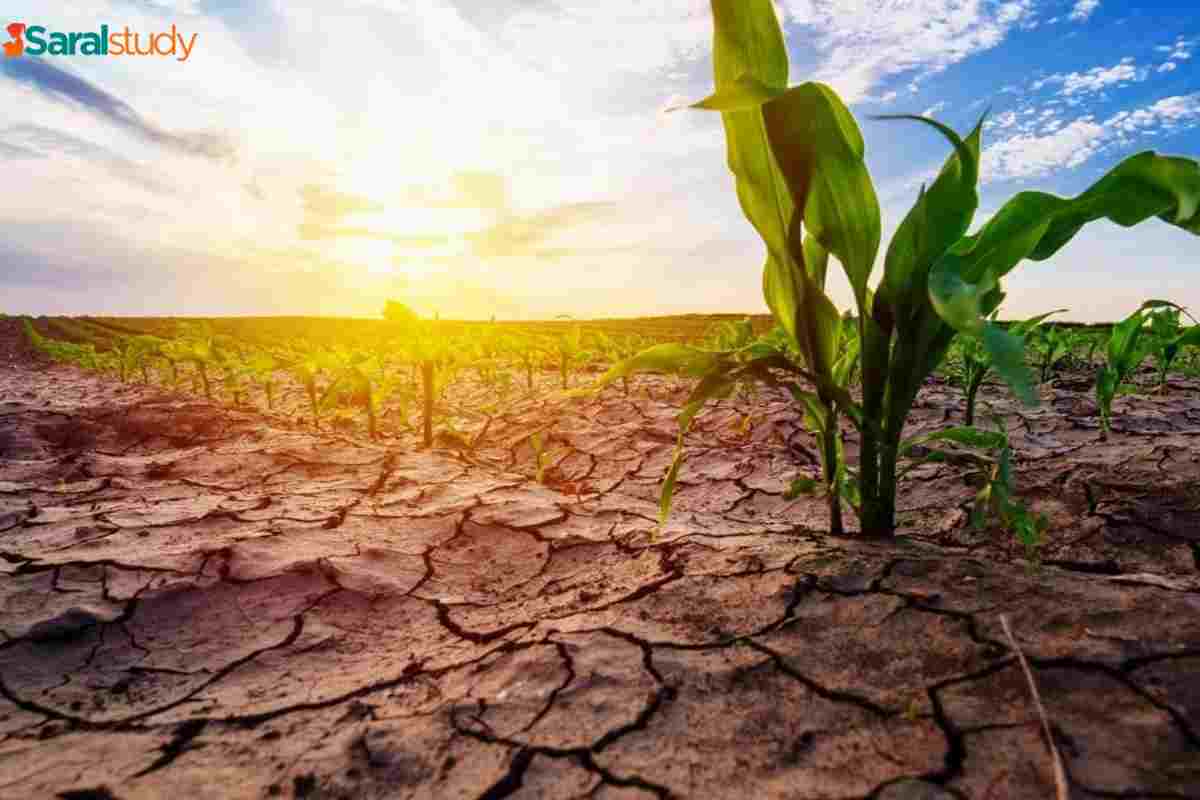
Droughts are one of the scariest and deadliest natural calamities. Droughts have claimed innumerable lives in India in the 18th, 19th and 20th centuries. Since agriculture is one of the main livelihood sources in India and it is dependent on rainfall and water supply, a shortage in water affects agriculture badly resulting in famine and causes deaths on a large scale.
Location
Certain regions in India are drought prone. These areas receive an annual rainfall upto 60 cm and hence are severely affected where the monsoons aren’t enough. The Irrigation Commission of India has identified 67 districts in the country that are drought prone. Some of the states that have been identified as drought prone include Rajasthan, Odisha, Andhra Pradesh, Northern Karnataka and Maharashtra.
Inadequate Rainfall
Inadequate or failure of monsoons is a major reason for droughts in India. Inadequate rainfall causes crop failure which leads to famines. Several famines have ravaged the country time and again and have claimed millions of deaths over the centuries.
Lack of water vapour in the atmosphere
This is also related to rainfall to low or erratic monsoons. When there is less water in the atmosphere, the moisture present in the soils tends to evaporate into the atmosphere. However, this leaves the land barren and produces low yield of crops, resulting in famine.
Climate change
The increasing heat during the summers causes more water to evaporate and unless there is rain to compensate for the loss, droughts are imminent. Even burning of fossil fuels are contributing to climate change and imminent rise in temperature, thus evaporating more and more water from the land surface.
Ocean temperatures
The El-Nino effect has been held responsible for controlling monsoons in the Indian subcontinent. Abnormally high sea surface temperatures have resulted in increased evaporation and heavy rains across many places in India. However, a contrasting phenomenon that instead of the high pressure air mass above the southern part of the Indian Ocean, the El-Nino creates a low pressure which pulls out dry air from Central Asia and dehydrates the Indian landmass.
Changes in Jet Stream
Jet streams are narrow bands of air that move around the earth at very high speeds. Jet streams can stall a high pressure system resulting in sunny weather and no rain. This is again a major contributing factor to droughts.
Changes in local landscape
Deforestation, changes in the vegetation type and drainage issues are some of the changes in the landscape that can cause droughts. Due to these factors, the water retention capacity of the soil is reduced and hence droughts are caused.
Hydrological Drought
This kind of drought is caused when water reservoirs, man-made and natural, experience depletion due to high temperatures. This can affect agriculture and hydel projects.
Meteorological Drought
This kind of drought is caused due to insufficient precipitation. There is not much water in the soil or water reservoirs for the rain cycle and hence a drought is caused.
Agricultural Drought
This kind of drought is caused due to many reasons. Insufficient precipitation, high levels of evapo-transpiration and reduced groundwater table can pose serious threats to agriculture and related industries.
Inadequate Agricultural Practices
Rainwater harvesting and creating storage and reservoirs for storing water is an important and essential step to prevent droughts. However, in many regions such practices are not followed and this results in severe losses in case of droughts.
About ISRO: The Indian Space Research Organization is the premiere space agency of the Government of India. It was established in 1969 and is administered by the Department of Space of the Indian government.
The Indian Space Research Organization is the sixth largest government run space agency in the world and stands in line with the other leaders of space research and development such as NASA, RKA, ESA, CNSA and JAXA. Early Development.
Historical Development About ISRO
ISRO’s roots trace back to 1962 with the formation of the Indian National Committee for Space Research (INCOSPAR) under Dr. Vikram Sarabhai, often regarded as the father of the Indian space program. In 1969, INCOSPAR evolved into ISRO, aiming to leverage space technology for societal and developmental benefits.
ISRO’s predecessor was the Indian National Committee for Space Research. The organization’s first venture was the Aryabhatta which was indigenously developed and launched by the Soviet Union in 1975. ISRO later achieved a significant milestone by launching Rohini in 1980 using its own SLV-3 (Satellite Launch Vehicle).
Subsequently, the organization developed two launch vehicles-the Polar Satellite Launch Vehicle (PSLV), which could place satellites in a polar orbit, and Geostationary Satellite Launch Vehicle (GSLV), which could introduce satellites in a geostationary orbit. Contributions and Roles.
In 2008, the ISRO launched its most ambitious project so far-the Chandrayaan-I, which was the organization’s first lunar probe.
Leadership History: Visionaries Behind ISRO
ISRO owes its foundation and growth to visionary leaders who transformed India’s space dreams into reality:
Dr. Vikram Sarabhai, the founder of ISRO, is often referred to as the “Father of the Indian Space Program.” His foresight established India’s space program as a tool for national development.
Dr. APJ Abdul Kalam, a pioneering scientist, played a key role in the development of the SLV-3 launch vehicle and India’s ballistic missile program. His leadership in integrating space technology into defense systems earned him the title of the “Missile Man of India.”
Dr. K. Sivan and Dr. S. Somnath are among the contemporary leaders steering ISRO towards global recognition, with a focus on cutting-edge technology and collaborative advancements.
Budget and Funding: A Model of Cost-Effectiveness
ISRO has consistently demonstrated how groundbreaking achievements can be accomplished within limited budgets.
The Mars Orbiter Mission (Mangalyaan), launched in 2013, cost just $74 million, making it one of the most economical Mars missions in history.
ISRO’s ability to optimize resources has drawn global admiration, showcasing India’s ingenuity in achieving high-tech solutions at a fraction of the cost compared to agencies like NASA and ESA.
Key Achievements and Contributions
ISRO has developed a robust infrastructure of satellites and launch vehicles, achieving self-reliance in space technology.
1. Satellite Development
ISRO has developed an extensive network of satellites serving diverse purposes:
INSAT (Indian National Satellite System): A series of satellites for telecommunications, television broadcasting, and meteorology.
IRS (Indian Remote Sensing Satellites): Used for agriculture, forestry, water resource management, and urban planning.
2. Launch Vehicles
PSLV (Polar Satellite Launch Vehicle): Known for its versatility and reliability, it has launched satellites into polar and sun-synchronous orbits.
GSLV (Geosynchronous Satellite Launch Vehicle): Designed to place satellites into geostationary orbit, with an advanced version (GSLV Mk III) capable of carrying heavier payloads.
3. Iconic Missions
Chandrayaan-I (2008): India’s first lunar probe, which discovered water molecules on the Moon.
Mangalyaan (2013): The Mars Orbiter Mission (MOM), making India the first country to reach Mars orbit in its maiden attempt.
Chandrayaan-3 (2023): A historic soft landing on the lunar south pole, showcasing India’s technological prowess.
4. Contributions to Society
Telecommunication and Broadcasting: ISRO’s satellites power one of the world’s largest satellite communication networks.
Disaster Management: Its remote sensing satellites aid in predicting natural disasters, agricultural monitoring, and urban planning.
Education and Healthcare: Satellite-based telemedicine and distance education have transformed rural healthcare and education accessibility.
5. Defense Applications
ISRO’s technology has bolstered India’s defense capabilities. The Agni missile series, derived from SLV-3, exemplifies ISRO’s contribution to defense in collaboration with DRDO.
6. Commercial Achievements: Expanding Horizons
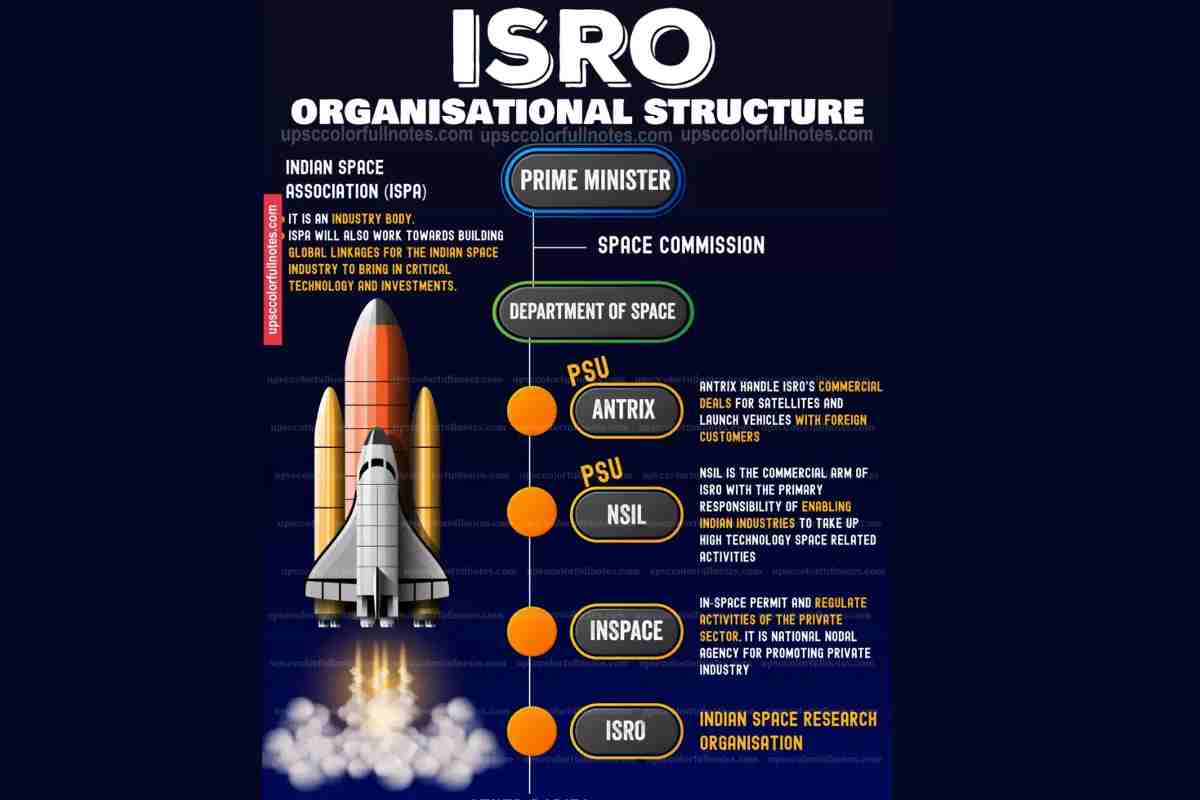
ISRO has emerged as a leader in the commercial satellite launch market through its Antrix Corporation, the commercial arm of ISRO, and NewSpace India Limited (NSIL).
Foreign Satellite Launches: ISRO has successfully launched over 300 satellites from 33 countries, strengthening its reputation in the global satellite market.
PSLV-C37 Mission: In 2017, ISRO set a world record by launching 104 satellites in a single mission, showcasing its reliability and technical prowess.
The GSAT series and collaboration with private clients have further solidified ISRO’s commercial success.
7. Collaborations with Indian Space Startups
Recognizing the potential of private space ventures, ISRO has embraced partnerships with Indian startups to foster innovation.
Skyroot Aerospace: This Hyderabad-based startup, with ISRO’s support, launched India’s first privately developed rocket, Vikram-S, in 2022.
Agnikul Cosmos: ISRO is collaborating with Agnikul for the development of 3D-printed rocket engines and low-cost satellite launch systems.
The Indian National Space Promotion and Authorization Center (IN-SPACe) serves as a nodal agency facilitating public-private partnerships in the space sector, bolstering India’s space ecosystem.
Role Of Indian Science and Research Organization
The Indian Science and Research Organization plays a major role in managing the logistics in various fields of administration, management and industries. The satellite communication network used by India is one of the largest networks in the world and is employed in fields such as land management, natural disaster forecasting, weather forecasting, water resources management, administrative services, radio networking etc.
Furthermore, the Indian satellite and launch vehicles have also found use as spin off products that could be used in the military. The medium range missile Agni was drawn from the SLV-3. The missile was made through the collaborative efforts of resources and technology from ISRO. Former President of India, Dr APJ Abdul Kalam was the head of the project and designed the Agni missile using the SLV-3’s technology.
There are many universities in the country that use satellite services for educational purposes. Furthermore, satellite service has played a pivotal role in the implementation and success of telemedicine.
ISRO’s Global Impact
ISRO’s cost-effective approach has made it a preferred partner for international space missions. The Antrix Corporation, ISRO’s commercial arm, facilitates satellite launches for international clients, contributing to its global reputation.
Future Plans of ISRO
The Indian Science and Research Organization plans to send manned missions to space, take further steps at lunar exploration and conduct interplanetary missions, besides indigenously developing the GSLV. The ISRO has so far undertaken many domestic and international projects.
ISRO has an ambitious roadmap to advance India’s presence in space exploration:
Gaganyaan Mission: India’s first manned spaceflight mission, aiming to send astronauts into low Earth orbit.
Aditya-L1 Mission: A solar observation mission to study the Sun’s corona and other solar activities.
Lunar Exploration: Chandrayaan-4 and collaborative international lunar exploration missions.
Interplanetary Missions: Proposals to explore Venus and Jupiter, extending ISRO’s planetary research capabilities.
Commercial Satellite Launches: Strengthening its position as a cost-effective launch service provider for global clients.
FAQs About ISRO
Q. What is ISRO full form?
Ans. ISRO full form is Indian Space Research Organisation.
Among all the planets in the solar system, Earth stands out as the densest planet. Despite its relatively small size, Earth boasts several remarkable physical properties that contribute to its high density.
The Densest Planet – Earth
In this article, we delve into what makes Earth the densest planet, how density is measured, and the comparison of Earth’s density with other celestial bodies in our solar system.
What is Density?
Density is defined as the mass of a substance divided by its volume, calculated using the formula ρ = m/v. In the SI system, density is measured in kilograms per cubic meter (kg/m³). Other common units include grams per cubic centimetre (g/cm³) and pounds per cubic meter (lb/m³).
Simple Explanation
In simpler terms, density measures how tightly the molecules of a substance are packed together. Homogeneous substances, where all molecules are of the same shape and size, allow for easy and accurate density calculations. However, for heterogeneous substances, the results may not be as precise.
Layers of the Earth
Calculating Earth’s density is particularly challenging due to its heterogeneous nature. Earth comprises several layers, each with distinct density values:
Continental Crust
Oceanic Crust
Mantle
Outer Core
Inner Core
These varying densities make it difficult to determine an exact overall density for the planet.
Scientific Efforts
The first significant attempt to calculate Earth’s density was made by the renowned scientist Henry Cavendish. Through a series of experiments, Cavendish determined the mean density of Earth to be approximately 5.6 g/cm³. His calculations also revealed that Earth’s mass is about 5.9736 x 10²⁴ kg and its volume is around 1.08321 x 10¹² km³.
Comparison with Other Planets
The densities of other planets and celestial bodies in our solar system have also been calculated:
Sun: 14.08 g/cm³
Mercury: 5.43 g/cm³
Venus: 5.243 g/cm³
Mars: 3.934 g/cm³
Jupiter: 1.326 g/cm³
Saturn: 0.687 g/cm³
Uranus: 1.270 g/cm³
Neptune: 1.638 g/cm³
Why Earth is the Densest
Earth’s high density can be attributed to its lack of gaseous components and its compact, concentrated mass. This dense composition reduces Earth’s volume, thereby increasing its overall density value. Unlike gas giants like Jupiter and Saturn, Earth’s solid and liquid layers contribute to its significant density.
Conclusion
Earth’s status as the densest planet in the solar system is a fascinating aspect of our home planet. Its unique layered structure and the scientific efforts to measure its density highlight the complexity and diversity of celestial bodies within our solar system. Understanding Earth’s density not only provides insights into our planet’s composition but also offers a comparative perspective on the nature of other planets orbiting our Sun.
Take a note of this
Regular updates on Earth’s density values are derived from earthquake analysis reports and experiments conducted by rock scientists. These continuous studies ensure that our understanding of Earth’s physical properties remains accurate and up-to-date.
Almost every Indian, whether from higher, lower or middle strata has at least once thought about cracking UPSC or civil services examinations! The attractive pay packages, benefits of working in a government organization, reputed and respectable posts along with challenging but efficient environment has inspired hundreds and thousands of students to sit for the exams every year.
But cracking UPSC Exams is no piece of cake. Since the requirement is quite less in proportion to millions of aspiring students, hence the exams are quite tough. It is true that an average student receives three attempts to clear the exam, yet you need a specific set of skills and tips to ensure that your preparation for UPSC is up to mark.
Here are a few tips that will help and guide you through the competitive exam. Have a look!
During the preparation of UPSC exam the most important thing is to learn general knowledge and keep a track of all current affairs
The syllabus might look pretty vast but with proper management it is quite easy. Therefore, maintain a schedule and stick to it.
Start your preparation with General studies which mainly consist of history, economics, politics etc.
You must have learnt about these topics earlier; just recall and clear the concept. It’s best if you read thoroughly from your Class 11th and 12th books published by NCERT.
General studies paper mainly consists of questions related to general knowledge, so don’t miss them. Regularly read newspapers, business and political magazines.
These reading habits will offer you immense advantage in your language skills and as well you can easily crack the essay and English paper.
The next important thing is to choose one optional subject for the prelims and the main exams. Stick with a subject which you are familiar with like you have studied during your college years.
Smart work Vs. Hard work! Which is the better way of working? People have been debating over this topic for years. The old saying ‘hard work gets ahead’, is true to some extent. But simply working hard doesn’t ensure success in the long run. Or else people who work all through day and do two jobs would have been richer than a businessman who hardly puts five hours to work.
So, it might be possible that after working so hard you might not be successful completing all tasks effectively. Then what will you do?
This is where working smart can be of your assistance!
1. Why is smart work more effective than hard work?
With hard work, you can complete your tasks, but that won’t ensure that the completed task is unique and worth appreciating or recognition. For instance, a child may study for 10 hours for an exam, but if he doesn’t know the right way to write answers, then he might not get expected results.
Plus, when you work hard, you remain focused on the work you are doing and that results in developing wrong eating habits, lack of sleep and no rest at all. You work hard for one day and the next day you feel low with some health problem. How are you going to put yourself back in line?
Mental stress, depression and excessive tension are some other problems faced by a person working hard for long hours. After a few days you may start to hate your work which you loved before and life will be miserable.
A very important reason why you should work smartly is because it allows you to explore more. You may work hard to hammer a nail into the wall, but it would be smarter to drill it as it will save you more time! Do you still want to work day and night or working less in a smart way is your new mantra?
2. A smart example to help you!
Suppose a man has been assigned a task of cutting trees. He can do that in two ways, working hard and working smart. He can start early without losing time with a saw that isn’t very sharp and keep on cutting trees skillfully. He would probably have to work for hours without rest to make sure that the trees are cut.
Smart work on the other hand would be taking two or three sharp saws to ensure that the saw works faster and he could rest or complete work earlier.
With MBA becoming a rage amongst students, aspirants from across the country appear in huge numbers for several MBA entrance tests out which CAT and MAT are the most famous and recognized ones. Now most of the students get confused between MAT and CAT, as to how they are different and which one is worth the most. To get an answer to this question have a look at the below mentioned points and decode for yourself, which of these is more beneficial for you.
Academic body
CAT or the Common Aptitude Test is conducted by the IIMs (Indian Institute of Management) for admission into MBA or equivalent programs in one of the IIMs, which is the top most B-school in India. These IIMs have limited seats hence the competition is very tough. While on the other hand MAT or the Management Aptitude Test is conducted by the All India Management Association (AIMA) for admission into MBA or equivalent programs in the second tier B-schools in the country. Most of the students who couldn’t compete through CAT prefer appearing in MAT since it’s comparably easier to crack.
Other Factors
Several other differences in the factors include that while CAT is completely a computer based test while in MAT both paper-pencil and computer-based formats are used. Moreover CAT is carried out once in a year while MAT is conducted four times in a year. Now one major difference, which makes CAT more difficult than MAT is the fact that it is application based while MAT, is formula based in which one is familiar with the kind of questions that are about to come unlike that in CAT in which a candidate has to develop formulations and apply accordingly wherever required. Apart from this the time pressure adds more to the difficulty of the CAT examination, in which if a candidate is able to answer 80% of questions it is considered to be a great attempt. While on the other hand time is certainly not that big a hurdle in cracking MAT.
In the pages of Indian history and that of reform movements, one revolutionary that shines bright among all is Mohandas Karamchand Gandhi, better known as Mahatma Gandhi. Armed with strict discipline and non violent vision, he shone as one of the harbingers of peace, heralding freedom from ruling forces. Gandhi built his principles on the belief that the end result of any violence is always violent and retrogressive.
Satyagraha
The major principle on which Gandhi led the reform movements was Satyagraha. This principle was an extension to the concepts of love and ahimsa. His philosophy preached conviction and firm stand on one’s ideologies, but with no hatred. In the days to follow, Satyagraha took shape into civil disobedience and non cooperation.
Civil disobedience took the form of breaking the law that Indians could not make salt. The Dandi march in 1930 bears an important mark in the face of history. The law was broken by making salt from the sea water. Non cooperation took form in later years. Mahatma Gandhi’s principles fixated on the sole fundamentals of perseverance without any ill thoughts or acts.
The Draconian rule set up by the British faced the ferocity of non violence. Such nonchalant responses shook the roots of the oppressive rule of the foreigners. Gandhi held on to his words of no violence till it won India her independence.
Inspiring Quotes
In the publication “the story of my experiments with truth”, there is a quote that states ‘an eye for an eye will make the whole world blind’. Such was his vision. He reiterated the fact that if every individual seeks for revenge in the same manner, the world will no longer be a place for harmonic coexistence. What would remain are only crippled souls who look for more revenge and will eventually be ripped off their existential morality.
In a defence trial held in 1922, his opening words were “Non violence is the first article of my faith. It is also the last article of my creed”. Such was his firmness in non violent measures that he stresses upon it being the ambition of every soul. Time and again, he put forth the thesis that a good achievement of violence is transitory and the evil that results is capable of permanent damage.
He preached shunning the path of violence. He could foresee the fact that violence would lead to massive anarchy. Violence could never be a solution, even if hurled in the name of seeking justice. The mantra of ahimsa did not constrict only to physical harm. It included not brewing any ill feelings for anyone, and shunning hatred too.