
Tenses Rules Chart with Examples
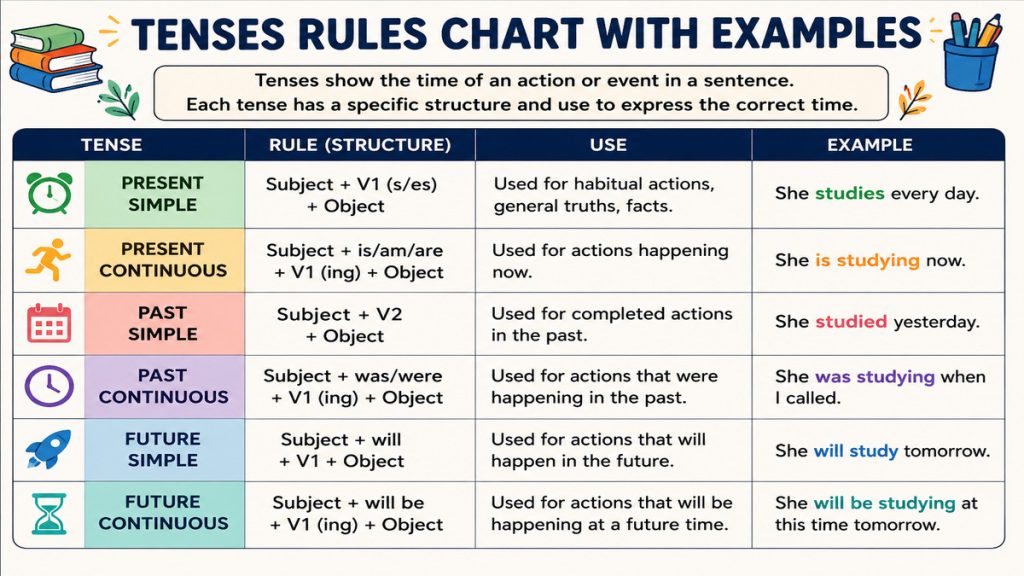
The tense is one of the most important aspects of the English grammar. They show us when the action took place, or when the event or situation occurred. Students can have their speaking, writing, reading and communication skills enhanced by learning tense rules. It is important to note that the tenses in English grammar can be broadly divided into three types: Present Tense, Past Tense, and Future Tense. There are 4 types in every category, in total 12 tenses. All tense rules, structures, charts and examples have been explained in a simple and professional way in this article.
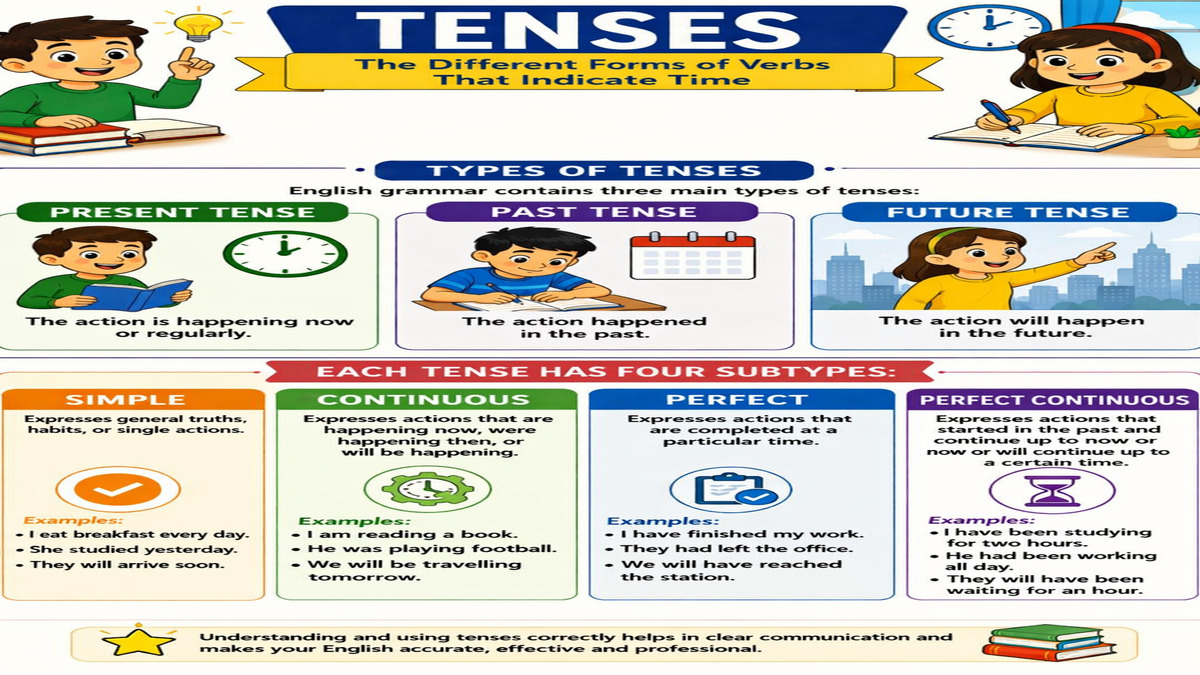
Types of Tenses
English grammar contains three main types of tenses:
- Present Tense
- Past Tense
- Future Tense
Each tense has four subtypes:
- Simple
- Continuous
- Perfect
- Perfect Continuous
Complete Tenses Rules Chart
| Tense | Structure | Example |
|---|---|---|
| Simple Present | Subject + V1 + Object | She writes a letter. |
| Present Continuous | Subject + is/am/are + V1+ing | She is writing a letter. |
| Present Perfect | Subject + has/have + V3 | She has written a letter. |
| Present Perfect Continuous | Subject + has/have been + V1+ing | She has been writing for two hours. |
| Simple Past | Subject + V2 + Object | She wrote a letter. |
| Past Continuous | Subject + was/were + V1+ing | She was writing a letter. |
| Past Perfect | Subject + had + V3 | She had written a letter. |
| Past Perfect Continuous | Subject + had been + V1+ing | She had been writing for two hours. |
| Simple Future | Subject + will + V1 | She will write a letter. |
| Future Continuous | Subject + will be + V1+ing | She will be writing a letter. |
| Future Perfect | Subject + will have + V3 | She will have written a letter. |
| Future Perfect Continuous | Subject + will have been + V1+ing | She will have been writing for two hours. |
Present Tense Rules
Present tense describes actions happening now, regularly, or generally.
Simple Present Tense
Structure
Subject + V1 + Object
He + Plays + Cricket
Usage
- Daily activities
- Habits
- Universal truths
- Regular actions
Present Continuous Tense
Structure
Subject + is/am/are + V1+ing + Object
They + are +watching + television
Usage
- Actions happening now
- Temporary actions
Present Perfect Tense
Structure
Subject + has/have + V3 + Object
He + has + completed + the project
Usage
- Completed actions
- Actions connected to the present
Present Perfect Continuous Tense
Structure
Subject + has/have been + V1+ing + Object
She + has been + working + since morning.
Usage
- Actions continuing for a period of time
Past Tense Rules
Past tense describes actions that happened in the past.
Simple Past Tense
Structure
Subject + V2 + Object
He + visited + Delhi.
Usage
- Completed past actions
Past Continuous Tense
Structure
Subject + was/were + V1+ing + Object
They + were + playing + football.
Usage
- Actions happening at a specific time in the past
Past Perfect Tense
Structure
Subject + had + V3 + Object
He + had + finished + the work.
Usage
- Actions completed before another past action
Past Perfect Continuous Tense
Structure
Subject + had been + V1+ing + Object
She + had been + studying + for three hours.
Usage
- Continuous past actions before another event
Future Tense Rules
Future tense describes actions that will happen later.
Simple Future Tense
Structure
Subject + will + V1 + Object
She + will + travel + tomorrow.
Usage
- Future plans
- Predictions
- Promises
Future Continuous Tense
Structure
Subject + will be + V1+ing + Object
They + will be + attending + the meeting.
Usage
- Actions continuing in the future
Future Perfect Tense
Structure
Subject + will have + V3 + Object
He + will have + completed + the task.
Usage
- Actions completed before a future time
Future Perfect Continuous Tense
Structure
Subject + will have been + V1+ing + Object
She + will have been + working + for five hours.
Usage
- Continuous future actions for a duration
Rules for Using Tenses Correctly
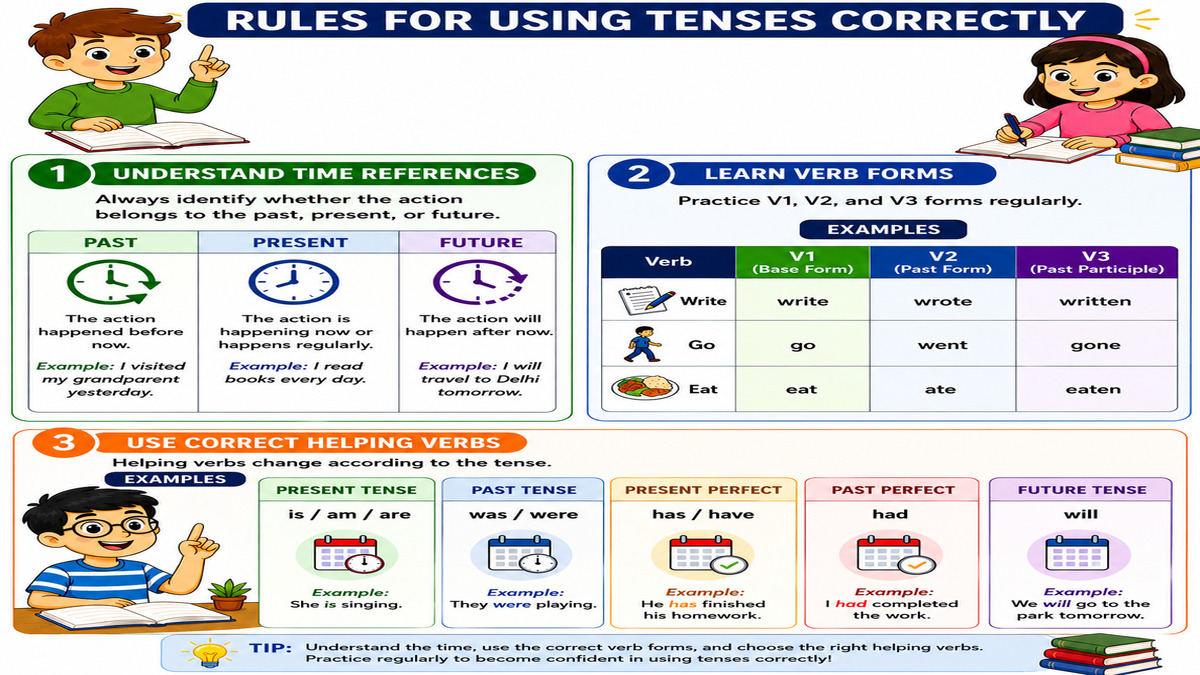
Understand Time References
Always identify whether the action belongs to the past, present, or future.
Learn Verb Forms
Practice V1, V2, and V3 forms regularly.
Examples
| Verb | V1 | V2 | V3 |
|---|---|---|---|
| Write | write | wrote | written |
| Go | go | went | gone |
| Eat | eat | ate | eaten |
Use Correct Helping Verbs
Helping verbs change according to the tense.
Examples
- is/am/are
- was/were
- has/have
- had
- will
Common Mistakes in Tenses
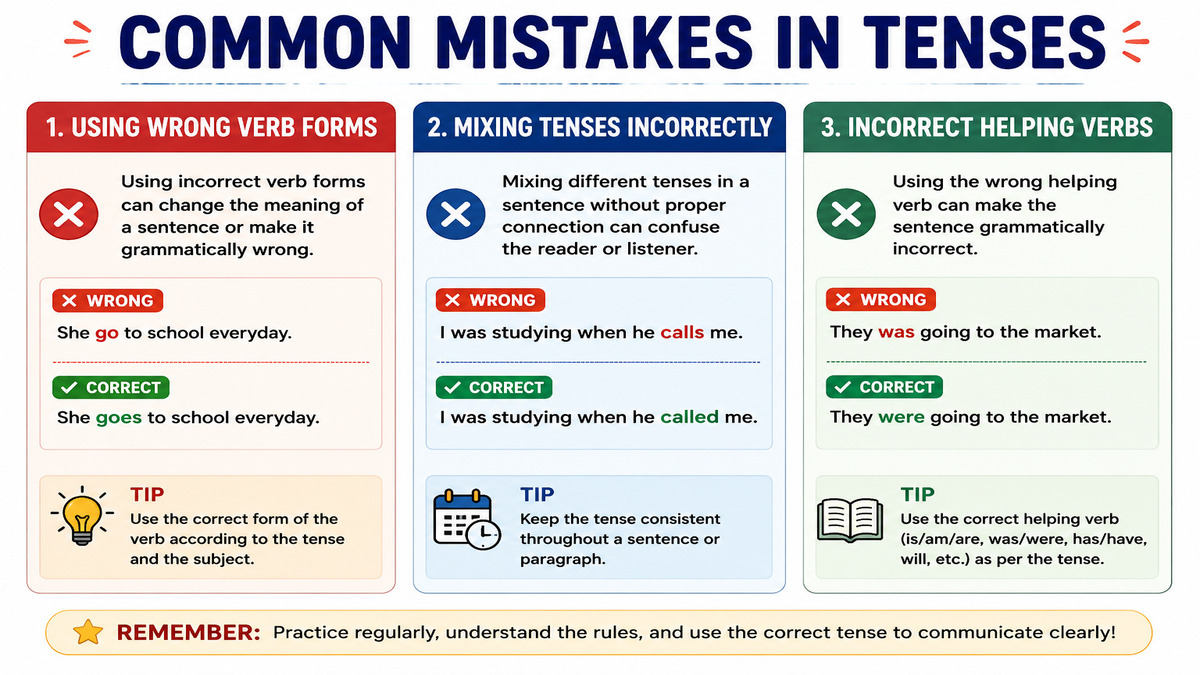
Using Wrong Verb Forms
❌ She go to school.
✔ She goes to school.
Mixing Tenses Incorrectly
❌ He was playing and eats food.
✔ He was playing and eating food.
Incorrect Helping Verbs
❌ They has completed the task.
✔ They have completed the task.
Tips to Learn Tenses Easily
Advantages of Learning Tenses
Final Thoughts
Tenses are the foundation of English grammar. They help express actions accurately according to time. Understanding tense rules, structures, and examples improves communication skills and sentence formation. By practicing all twelve tenses regularly, students can master English grammar more effectively and confidently.
FAQs for Tenses Rules Chart with Examples
1. What are tenses in English grammar?
Ans: Tenses are verb forms that show the time of an action, event, or situation in a sentence.
2. How many types of tenses are there in English?
Ans: There are three main types of tenses in English grammar: Present Tense, Past Tense, and Future Tense.
3. How many total tenses are there in English grammar?
Ans: English grammar contains twelve tenses, including simple, continuous, perfect, and perfect continuous forms.
4. Why are tenses important in English grammar?
Ans: Tenses help express the correct time of actions and make communication clear, meaningful, and grammatically accurate.
5. What is the simple present tense used for?
Ans: Simple present tense is used for daily routines, habits, universal truths, and regular actions.
6. What is the difference between present continuous and present perfect tense?
Ans: Present continuous describes actions happening now, while present perfect describes actions completed recently or connected to the present.
7. What are helping verbs in tenses?
Ans: Helping verbs are auxiliary verbs such as is, am, are, was, were, has, have, and will that support the main verb in a sentence.
8. What is the structure of simple past tense?
Ans: The structure of simple past tense is:
Subject + V2 + Object
9. What is the formula for future perfect tense?
Ans: The formula for future perfect tense is:
Subject + will have + V3 + Object
10. Why is a tenses chart useful for students?
Ans: A tenses chart helps students quickly understand tense structures, rules, formulas, and sentence patterns in an organized way.
11. What is V1, V2, and V3 in grammar?
Ans: V1 is the base form of the verb, V2 is the past form, and V3 is the past participle form of the verb.
12. Which tense is used for actions happening right now?
Ans: Present continuous tense is used for actions happening at the current moment.
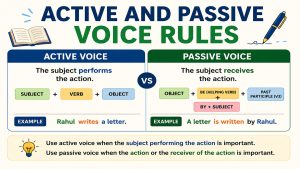
Read More: Active and Passive Voice Rules

👉 You May Also Read
📚 Related Articles
🔥 Popular Posts



📌 Explore Categories
- About India
- Artificial Intelligence & Machine Learning
- Calendar
- Career
- Counselling
- Current Affairs
- Economy
- Education
- English Grammar
- Exams
- Festival
- Health and Fitness
- Hindi Sahitya
- History
- Intelligence Agency
- International Personality
- Know India
- Knowledge
- Maths
- Maxim
- Moral Stories
- Nature
- NEWS
- Olympiad
- Others
- Personality Development
- Politics
- Scholarship
- Science and Environment
- Sports
- States of India
- Study Abroad
- Study Tips
- Technology
- The Greatest Indian
- Uncategorized