Deepak is an EdTech writer and education researcher specializing in exam preparation, study techniques and academic success strategies. He creates structured and easy-to-understand content on maths, science, career guidance and competitive exams.
He actively analyzes educational trends, exam patterns and learning methods to provide practical and accurate insights. His goal is to simplify complex topics into clear, student-friendly explanations that improve understanding and performance.
Deepak regularly follows updates from educational boards and learning platforms to ensure his content remains relevant and reliable.
He actively analyzes educational trends, exam patterns, and learning methods to provide accurate and practical insights. His goal is to simplify complex topics into structured, student-friendly explanations that improve understanding and performance.
Deepak regularly follows updates from educational boards, exam authorities, and learning platforms to ensure content accuracy and relevance.
Outside of writing, he enjoys exploring digital learning tools and staying updated with innovations in the education sector.
SSC CGL exams are undoubtedly regarded as the most prestigious among all recruitment exams managed in India. Around 65 lacs candidates register for the SSC CGL exam every year. Therefore, the competition has grown quite tough over the years. With only a few days remaining in SSC exams (tier-I), it is high time that the candidates should pull up their socks and perform the best they can.
Tips To Clear SSC CGL Exam
One needs to realize that he/she needs to follow a systematic exam-oriented preparation because only then you will grab that correct path to success. Keeping this in mind, follow subject-wise preparation tips and follow the below mentioned pointers of SSC exams.
Quantitative Aptitude (Maths)
The Maths section comprises of four major areas in SSC exams: Algebra, Arithmetic, Geometry and Trigonometry.
Geometry is the most crucial among all the areas. The candidates need to offer special emphasis to this sub-segment.
Trigonometry shouldn’t be avoided at any cost. Also, focus on height and distance along with different trigonometric identities.
Gaining a good knowledge about percentage would help you in Data interpretation and Analysis. The same goes for learning ratio and proportion. Algebra, including simplification, is often tagged as tough to clear. Offer more practice to this segment as compared to other areas.
Under the arithmetic segment, simple interest, profit and loss, compound interest, time and work along with time and distance happen to be the prime topics
Reasoning (General Intelligence)
For a major share of candidates sitting for the SSC exams, reasoning is regarded as the most scoring section.
A good focus must be offered to the key areas such as: non-verbal reasoning, Analogy and classification, syllogisms, blood relations, coding-decoding, direction test and series.
Under non-verbal reasoning, the most crucial types of questions offered in the exam include: (a) paper cutting, punching and folding, (b) mirror image and water image, (c) embedded figures and (d) figural series completion.
For questions based on series and finding the missing number questions, one can expect both semantic series and number series to be present in the exam.
Do not avoid statement-conclusion & statement-assumption questions.
English preparation for SSC CGL Exams
Below are the preparation tips of English in SSC exams:
Preparation for this section would need you to focus on the following topics: one- idioms and phrases, word substitution, fill in the blanks (sentence completion), synonyms and antonyms, sentence errors, sentence rearrangement, reading comprehension and jumbled-up sentences.
Narration and active voice / passive voice is not necessarily be there in tier-I exam. But do not skip it and learn these topics for the tier-II exam.
Usually vocabulary-based questions (synonyms, antonyms and one-word substitution) along with well as idioms and phrases from the previous SSC papers do get repeated. Make sure to go through the previous year exam papers and practice such questions.
The toughness level of reading comprehension passages is not that much. However, some amount of practice is obviously needed to locate the answers for the questions asked from the passages.
In order to solve sentence error spotting questions, a good level of knowledge of grammatical rules is required. If you think you are lacking in grammar, try to focus on practicing English usage questions like fill in the blanks, jumbled-up sentence and sentence rearrangement.
General Knowledge
As compared to all other sections, GK holds the most comprehensive syllabus and demands a lot of time for preparation of SSC exams. It means that, the candidates should understand the pattern of the questions.
Always make sure that, go through the previous year SSC questions papers, and focus on the frequently asked questions from politics, science, geography and history.
You must surely pay attention on questions based on (a) common chemical compounds (b) the firsts in India (c) Indian constitution (d)folk dances of India & traditional festivals (e) socio-religious movements of pre-independent India (f)important scientific phenomena (g) national income & market structure (h) medieval & modern Indian history.
Some Effective Tips to Clear SSC Exams
Gather the syllabus of the SSC exams. One can download it from the official website of SSC.
Get the SSC exam books from a better publication and do not forget to get separate books for every different section of the SSC exams paper.
Prepare a time table of your study. Try to focus on at least 4 hrs. a day for a year.
Study with full concentration and learn to clear basics of various topics.
Try to focus on shortcuts of doing the questions and build your own shortcuts to solve the different problems in a faster manner.
One can also buy various books for understanding shortcuts and implementing them to solve problems.
Always remember to work on your speed for solving problems. Practice previous year question papers daily to in order enhance speed by putting yourself on a time limit.
Work to polish your weaker sections and build them as your strength through practice.
In the SSC paper, try to solve as many questions as you can but only those about which you are sure. Do not attempt questions which you aren’t familiar with. Remember negative marking is active in the SSC exams.
If a particular question makes you feel stuck, then move onto the next question. Save your precious time and work to solve maximum known questions.
Do not forget to wear a watch while giving any kind of examination.
Try to work on your quickness to solve problem. Most of the aspirants do not clear these tests due to the time limit.
Work harder and plan a systematic order when you approach the questions.
The Final Word
The above mentioned points are quite crucial and helpful for each and every candidate who is planning to sit for the SSC exams. Hard work isn’t always the key, but sensible study schedule along with speed together makes the difference. Consult your elders, friends or family members who have already given the SSC exams. They would prove as a perfect counselor for gaining knowledge about the true reality of these tests.
PCS means the Provincial Civil Service. This PCS exam is held basically for the recruitment of candidates in the civil service posts of the given state. Majorly, the civil service posts fall under the control of the State Government. If a candidate is recruited under one state in PCS, then he cannot be transferred to another state.
PCS Full Form
The full form of PCS is Provincial Civil Service. It refers to a state-level administrative service in India. PCS officers are recruited through the State Public Service Commission’s exams and are responsible for maintaining the administration of their respective states.
Role and Responsibilities of PCS Officers
PCS officers handle crucial functions, such as:
Implementation of government policies.
Law and order maintenance.
Revenue collection.
Development programs in various sectors (education, health, etc.).
Eligibility Criteria and Exam Structure for PCS Exam
To become a PCS officer, candidates must meet the following criteria:
Educational Qualification: A bachelor’s degree from a recognized university.
Age Limit: Typically between 21 to 40 years (with certain relaxations for reserved categories).
Selection Process: PCS recruitment is conducted through a competitive examination that includes three stages—Preliminary exam, Mains exam, and an Interview round.
Career Growth and Benefits as PCS Officers
PCS officers enjoy a stable career path, with opportunities for promotions and responsibilities like District Magistrate, Commissioner, etc. They also benefit from job security, respectable pay, and retirement benefits.
Tips to prepare for PCS exam
For anyone, who applies for the post of civil services, the PCS exam is extremely important. So, here we have come up with a few tips to help you clear your PCS exam.
Tip #1 PCS exams are state exams. So, one should be very well aware of the history and geography of the given state.
Tip #2 Secondly, since it is a civil service exam it is needless to say that the candidates ought to be prepared for a high difficulty level. They must also be mentally ready to involve a substantial degree of hard work to clear the exams.
Tip #3
Though PCS is a state exam, you should still have a basic knowledge of the country including the latest happenings in India. To keep a tap on these, the candidates can begin following one national newspaper to keep you well acquainted with all the happenings in and around the world. Tip #4 Fourth, the candidate appearing for the exam must pay enough attention in enhancing their General Knowledge. They must be prepared to grasp and learn new things at any and every moment.
Tip #5 Next, when it comes to the interview the candidates must be very well prepared with the regional language, customs, traditions and culture. This will only add to your credit.
Tip #6 Since, the PCS exam is conducted by UPSC, the exam pattern remains the same. You’ll have to appear for prelims first, mains next and then the interview. However, there are certain small states which directly head to the mains. Get absolute clarity on the pattern of the exam and the stages that you need to pass through.
Tip #7
Further, the candidates must pick up at least 5 past year question papers and try to solve them under exam conditions. This will not only let you know how well you are prepared for your exam but will also give you a thorough understanding of the pattern of the exam. It is necessary to make you comfortable with this pattern well before the actual exam. This will save you a substantial amount of time during the exam. In some cases, questions similar to the past years may be asked in the exam.
Tip #8
Getting coaching for your exam simply does not harm you. It is always a plus to be guided by an experienced teacher who can help you channel your efforts, time and energy in the right direction. However, when you choose a tutor, be wise. Go with someone who has years of experience in this field. Only then, he would be able to guide you in the best manner possible.
Tip #9 Candidates must repeatedly appear for the mock papers. This will help them keep a check on the time because besides preparing well it is also important to attempt all the questions in the stipulated time.
Tip #10 Last but not the least, it is highly recommended for the students to appear for both UPSC as well as PCS exams simultaneously since the syllabus for the two is almost similar with minor changes here and there.
Final Word
Hopefully, with the given tips and tricks clearing your PCS exams would be easier than ever before.
Karnataka is located in the southern part of India and was formed on 1 November 1956 after getting recognition through the Reorganization Act by the Karnataka government. Before the separation, it was named Mysore. It is bordered by the Arabian Sea, Telangana, Tamil Nadu, and Andhra Pradesh.
This place has its heritage, history, and prestige. It has an important place in the diversification of India as it is a rich, known place for its culture, literature, community, and various locations. It is the foremost choice of the visitor who wants to explore nature and its beauty. One should surely visit this place.
Glimpse of Karnataka in a table
Attribute
Information
Country
India
Formation
1 November 1956
Capital
Bengaluru
Districts
31
Governing Body
Government of Karnataka
State Mammal
Elephant
State Flower
Lotus
State Tree
Sandalwood
Area
191,791 square kilometres
Population (2023 est.)
70 million
Languages Spoken
Kannada (official), English, Hindi
Major Rivers
Kaveri, Tungabhadra, Krishna
Climate
Tropical monsoon
Major Industries
Information Technology, Biotechnology, Aerospace, Agriculture
Tourist Attractions
Mysore Palace, Hampi, Coorg, Jog Falls, Bannerghatta National Park
Capital of Karnataka
Banglore is the capital of Karnataka. It is officially known as Bengaluru. It has a population of about 10 million and is the 3 rd most populous city in India. Sometimes Bengaluru has the title of the Silicon Valley of India as it has a primary role in India’s leading information technology. Bengaluru is India’s fastest-growing metropolis.
It also contains many technical institutions like the Indian Institute of Science (IISC), the Indian Institute of Fashion Technology, the National Institute of Design, the Federal Law School of India, etc.
History of Karnataka
In the 3rd century BC, Karnataka was part of the Nanda Empire. After that, it came under the rule of Satvahanas according to the Hindu inscription. Then, the Kadampa, Ashok, and Mauryan dynasties ruled in the 5th century.
The copper coins were discovered at Banavasi. These dynasties were followed by the Kannada Empire, like Badami, Chalukyas, the Rashtrakuta kingdom, Cholas, and the Hoysala rule. After the first millennium, Hoysala gained the throne, and many kinds of literature flourished at that time. In 1565, many significant shifts occurred in Karnataka because of the fall of the Vijay Nagar Empire.
After this, the Nizams of Hyderabad, the Maratha, and the British ruled here. Also, many significant wars were fought, like the Anglo-Indian war in which Tipu Sultan died, and Mysore came under the rule of the British.
After independence, Maharaja Jaychamarajendra Wonder came to India, and in 1950, Mysore became an independent state. In 1975 Hyderabad and Madras joined the Mysore state under the State Reorganization Act 1956.
Art and culture of Karnataka
When you hear about Karnataka, you feel the ethnicity of this state has emerged in itself. Karnataka has a thriving culture with many festivals, celebrations, occasions, and art. Before the craft was usually done on walls, paper leaves, and wood, artists showed the whole process using drawing. Artistic brushes were unavailable then, so artists used brushes made of animal hair.
The most famous painting style was the Mysuru style which was liked by the legends and kings and was usually seen in royal castles. It is known throughout India because of its simplicity and detailing work. The paintings seen in Karnataka are approximately 150 years old, but the globe is still the same.
The tribal community covers Karnataka’s large area, and they have their own culture and customs. For example, they made Chitra mud painting, which is an art form that is famous all over the world.
Main Occupation in Karnataka
A large population of Karnataka depends upon farming for their livelihood. Despite moving to urban states, people prefer cultivating their farms. Rice is the staple food of Karnataka, and it shows excellent earnings. Karnataka is considered a rich place for its plantation and soil type. The most grown crops in Karnataka are Jowar, Ragi, Bajra, and premium plantations, such as coffee and tea, are grown in the slope areas in the Western Ghats. It is a bushy state with a lot of greenery and forestry.
The forest of Karnataka produces a large amount of precious wood and bark like sandalwood which also provides an excellent living to the locals. People also prefer working in product making through dyes, gum collection, spice extraction, etc. other than agriculture, the people of Karnataka are also engaged in manufacturing, resources-based work, transportation, and official government officers.
The local people import and export from the Arabian Sea, providing excellent earnings. Since during British rule, the Kannada officials also played a prominent role. Many people work as department offices, clerks, etc. every year Karnataka government provides a lot of vacancies for the youth.
Significant tourist places in Karnataka
Hampi
image source: karnataka.gov.in
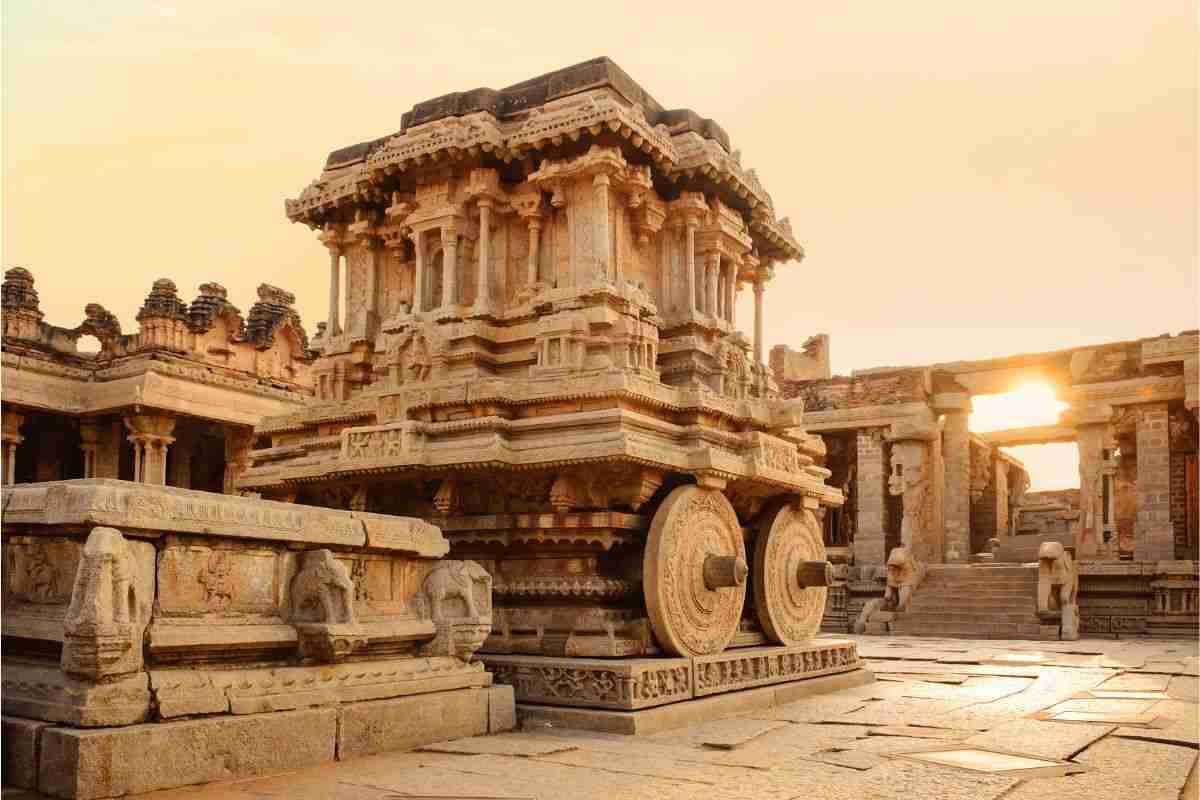
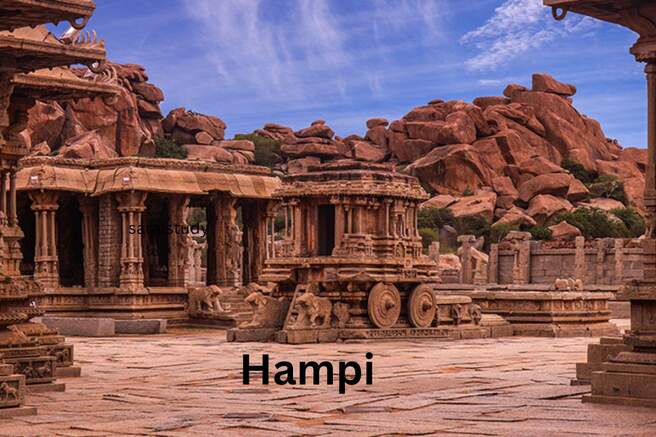
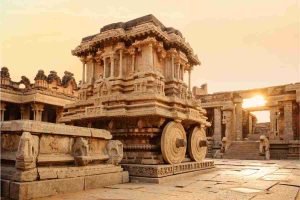
According to UNESCO, it is a world heritage site famous for its marvelous architecture and is situated on the bank of the Tungabhadra river. This place has its historical importance from the period of Vthe Vijayanagar kingdoTherehere are 500 magnificent pieces of architecture made up of rocks and stone carvings.
Mysore
Also called a city of charm and the oldest and second biggest city of Karnataka, Mysore is one of the cities which managed their old world charm. There are many impressive places, museums, temples,s and unique heritage structures. Gokarna Is a small town with the lowest situated in the north Kannada district of Karnataka, and it has a very peaceful environment. Mahabaleshwar is the famous place of Gokarna.
Jog Falls
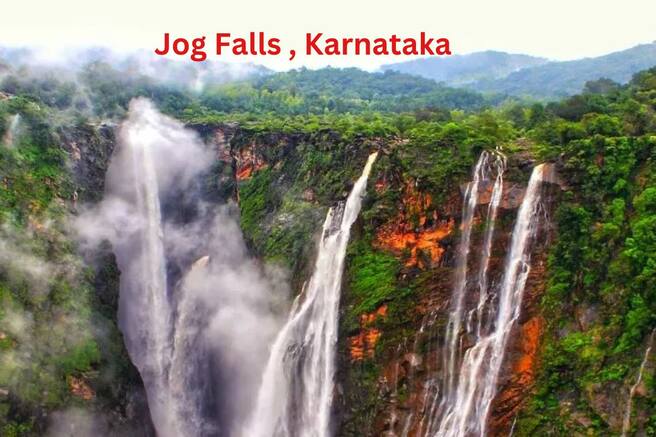
It is the third-highest waterfall in India. It is 850 feet below the ground and has a stunning viewpoint full of natural and beautiful creations.
Famous Food in Karnataka
Neer Dosa:
Neer dosa is a simple dish made of rice. The rice is soaked overnight, made into a paste, and cooked into dosa. Rice is the staple food of Karnataka, so this dish is readily available all over the place.
Alleged:
Alleged is a side dish served with trial cuisine. It is made of potatoes sauteed with tomato, black gram, and onion, usually spicy, as many locals like it that way.
Korri Gassi:
Korri gassi is a chicken curry with many spices and coconut. It is the most famous dish among the people of Karnataka, known for its authentic chili flavor. It is served with dosa and roti.
Mysore Pak:
Mysore Pak is a popular sweet dish made of gram flour, ghee, sugar, and milk. Its texture is soft and rich due to the use of a large amount of ghee, commonly served during Diwali and other important occasions.
Haalbai:
Haalbai is a beloved sweet dish made of rice, coconut, coconut milk, and jaggery. Its texture is a bit flowy due to the coconut milk. It is highly served during the festive season and can be eaten cold or hot as you like.
Kundapura Koli:
Kundapura Koli is a chicken curry in a different style, popular among the locals of the Mangalorean coast. It is boiled in a thick gravy of onion, ginger, garlic, tomato, other spices, and coconut milk. It is a savory dish served with roti or dosa.
Rava Kesari:
Rava Kesari is a sweet Karnataka dish made of semolina, ghee, dry fruits, water, sugar, and coloring essence. It is served on special occasions and pujas in the mandir. Semolina is roasted till it turns its color and then cooked with sugar water until thoroughly done.
Kane Rava Fry:
Kane Rava Fry is considered Karnataka’s most famous and authentic dish. It is made of fish coated with red paste and other spices, then covered with semolina and roasted well till fully cooked.
Climate of Karnataka
Karnataka has a subtropical climate throughout the year, experiencing four types of climate: summer, winter, monsoon, and post-monsoon. During winter, the temperature is around 80°F, while summer is humid with temperatures around 30°C. The monsoon season brings significant rainfall, about 20 inches in drier areas and 160 inches in coastal plains. Winter is relatively dry compared to other seasons.
Due to the different climates, Karnataka is divided into three meteorological regions:
Coastal Karnataka:
This region includes Udupi, Uttara Kannada, and Dakshina Kannada districts, receiving very high rainfall with an average of about 3456mm.
North Interior Karnataka:
This area covers Bagalkot, Belgaum, Bijapur, Bidar, Bellary, Dharwad, Haveri, Gadag, Koppal, and Raichur districts. It is an arid zone with the least amount of rainfall, about 731mm annually.
South Interior Karnataka:
This region includes Bangalore, Chitradurga, Chamraj Nagar, Hassan, Kodagu, Kolar, and Mysore districts. It is a semi-arid zone with an annual average rainfall of about 1286mm.
Major Rivers in Karnataka
The major rivers of Karnataka originate from the Western Ghats and join the river Kaveri near Krishna Raj Sagar. The main tributaries of the Kaveri river are Krishna and Kabini, which originate in Kerala and flow eastward.
Tungabhadra:
Starts from Shimoga district, flows towards the Deccan plateau, joins the Krishna river in Andhra Pradesh, and eventually reaches the Bay of Bengal.
Ghataprabha:
Originates from the Western Ghats in Belgaum district, flows eastward, and joins Krishna.
Malaprabha:
Starts from the Western Ghats, flows northeast, and joins the Krishna river at Kudalasangama.
Bhima:
Originates from Bhimashankar, flows through Maharashtra and Karnataka.
Mantra:
A tributary of the Godavari river, originating from the Balaghat range.
Palar:
Starts from the Talagavara district, flows through Karnataka, Andhra Pradesh, and Tamil Nadu.
West-Flowing Rivers:
Mandavi: Originates from the Western Ghats, flows towards Karnataka and Goa.
Gangavalli: Originates from the Southwestern Ghats.
Sharavathi: Starts from Ambuthirtha in Thirthahalli Taluk, flows northwest, forming Jog Falls before reaching the Arabian Sea.
Famous Personalities of Karnataka
Ambareesh:
Born on May 29, 1952, and passed away on November 24, 2018. He was an Indian National Congress leader and an actor. His full name was Malavalli Huchchegowda Amarnath.
Basavanna:
An Indian philosopher who fought against the caste system and spread awareness among people.
Akka Mahadevi:
A significant revolutionary of the Bhakti movement from Karnataka.
Sarvajna:
A Kannada poet and philosopher.
Festivals of Karnataka
Pattadakal Dance Festival:
Celebrated in towns established in the 7th century, recognized as a world heritage site by UNESCO.
Hampi Festival:
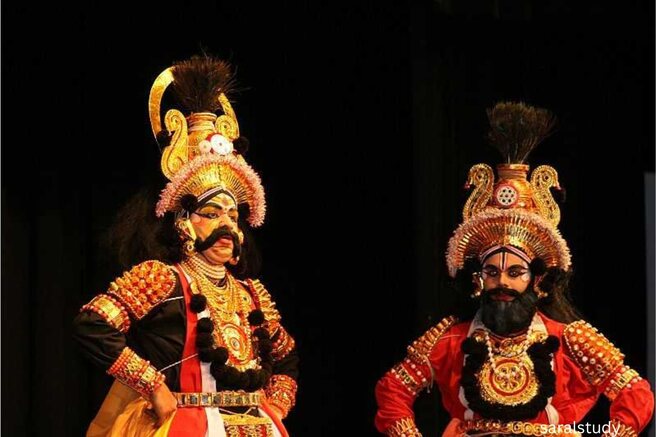
Also known as Vijaya Utsav, it is the largest cultural program in South India, held in Hampi, a UNESCO World Heritage site.
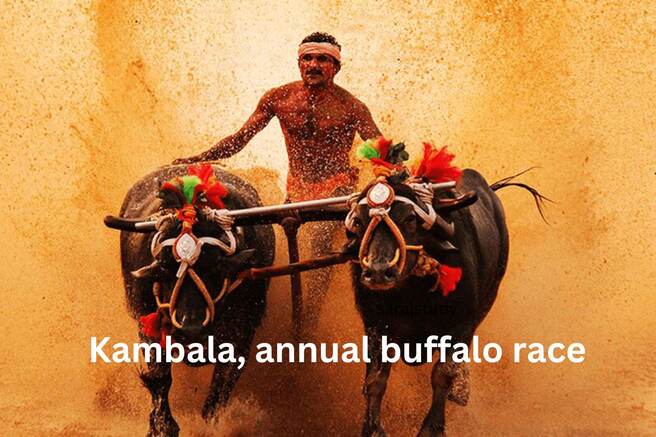
Kambala Festival:
A buffalo race held annually by farming communities in South Kannada and Udupi districts celebrated between November and March.
image source: karnataka.gov.in
Makar Sankranti Mela
Held every January at Rajgir, where devotees offer flowers to deities and dip in holy water.
Ugadi:
Also known as Gudi Padwa, marking the New Year as per the Hindu calendar, believed to be the day Brahma created the universe.
Costumes of Karnataka
Karnataka’s traditional dresses reflect simplicity and elegance. Women usually wear sarees (Kanjiwaram, silk, Kasuti embroidery, Guledgunda), while men wear dhoti and kurta.
Flora and Fauna of Karnataka
Karnataka’s forests cover around 43,356.47 square km, featuring evergreen, semi-evergreen, moist deciduous, dry deciduous, thorny forests, shrubs, and grasslands. The Western Ghats are home to eucalyptus, teak, rosewood, and casuarina trees, as well as species like Iphigenia Mysorensis, Derris Indica, and more.
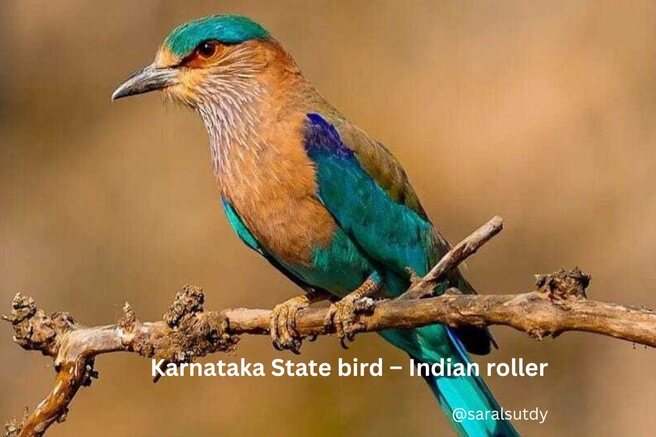
The fauna includes 25% of India’s elephants and 20% of tigers. Other mammals include leopards, slender loris, gaur, wild pig, pangolin, Malabar giant squirrel, mouse deer, bonnet macaque, common langur, and barking deer. Bird species include ruby-throated bulbul, Indian shama, Malabar whistling thrush, and more. Reptiles like crocodiles, tortoises, lizards, chameleons, and snakes are also found.
Demographics of Karnataka
According to the 2011 census, Karnataka’s population is around 61,095,297, with 30,966,657 males and 30,128,640 females. Approximately 38.6% live in urban areas, while the rest reside in rural areas. The literacy rate is 75.36%, with male literacy at 82.47% and female literacy at 68.08%. The state’s birth rate is 2.2%, death rate is about 0.7%, infant mortality rate is 5.5%, maternal mortality rate is 0.2%, and fertility rate is 2.2%.
Language of Karnataka
Karnataka has a wide variety of linguistic ethnicities; since the separation, Karnataka has been the home of many tribal and other communities. The ancient culture of the state lies in its language and speaking features. Karnataka is a centre of living for Tuluvas, Kodavas, and Konkanis. Some most common languages of Karnataka are as follows:
Kannada: Kannada is the native language of Karnataka and is spoken by almost 72% of the state’s population. Kannada-speaking people are the most dominant group in society. It is the administrative language and is commonly used for all document-related purposes. It is considered the classic language, as most officers and other officials are the users.
Konkani: Uttar Karnataka covers a large number of Karnataka’s Konkani-speaking population. Konkani speakers cover almost 76% of the population, a significant amount. The Konkani speakers are the prime people in Karnataka.
Tulu: Tuluvas is the native language of the people of Tulu, the dominant-speaking group of Karnataka. According to a recent census, the Tuluvas cover almost 2.30% of the total percentage of Karnataka.
Byari: Byari is the prime speaking language among the Muslim Community of Karnataka in Dakshin Karnataka. This language has different linguistic features, such as Arabic, Urdu, and Kannada. It covers a small population of around 8.85% of the state.
Kodava: It is the least-known language among the people of India; many people didn’t even hear about this. It is considered one of the native languages, which is usually used by a significantly small percentage of the population of Karnataka. Since its abundant language, many communities such as Banna, Meda, and Kodava are the prime users.
Urdu: After Kannada, Urdu is considered the most spoken language of Karnataka, covering a large population of around 9.72% of speakers. The estimation of the speakers is uneven as people are wholly distributed among the state’s different regions.
Important Lakes and National Parks in Karnataka
Krishna Raja Sagara Lake:
It is the most famous and visited place in Karnataka. The dam was built on this lake, and the dam and lake are both famous due to the Brindavan Garden and the Barrie.
Karanji Lake:
It is situated near the Chamundi Betta, and this lake is enclosed in the zoo area. This place is famous for the migratory bird. Several species made this lake their temporary and permanent home. Apart from the lake, Chamundi hills and Chamundi temple is also a wonderful place.
Herbal Lake:
It is the most popular place in Bangalore and is located near the national highway number 7, situated in the north of Bangalore. It is an artificial lake built by blocking the natural valley system and was established in 1537.
Nagarhole National Park:
It is located in the Nilgiri biosphere reserve and is also known as Rajiv Gandhi National Park, the largest wildlife sanctuary in South India. This place is famous for wildlife spotting, vehicle safari, boat safari, and coracle rides.
Bandipur National Park:
This place is popularly known for its tigers. This park came under the scheme of the Tiger Project in 1974.
Kabini Wildlife Sanctuary:
It is a private hunting ground for the Maharajas of Mysore. It is one of the popular sanctuaries in Karnataka, situated nearly 80 km from Mysore and about 250 km from Bangalore. The sanctuary is famous for leopard, cheetah safari, sambar, panther, and boat ride.
Government and Administration
Karnataka government contains two houses (Lok Sabha and Rajya Sabha), the legislative assembly, and the legislative council. The member strength of the legislative assembly is 224, who are elected for a limited tenure of five years. The legislative committee is a permanent body consisting of 75 members, with one-third of members retiring yearly.
The government of Karnataka is headed by the chief minister, chosen by the ruling party member, and exercises almost all executive powers. The governor is the constitutional and formal head of the government, which the president appoints for five years.
The 28 members were elected from Lok Sabha and 12 from Rajya Sabha; however, the Karnataka estate is divided into four revenue divisions, 49 subdivisions, 31 districts, and 175 talukas.
Economy of Karnataka
56% of the population is included in agricultural work. Much of the agriculture depends on the southwest monsoon. Only 26% of the sown area is irrigated, and Karnataka is a large manufacturing hub. Karnataka also contains large private industries like Hindustan Aeronautical Ltd, National Aerospace Laboratories, Bharat Heavy Electricals Limited, and Bharat Earth Movers Ltd.
Many science and technology centres, such as the Indian Space Research Organization, Central Power Research Institute, Mangalore Refinery, and Petrochemical Limited, are oil refineries. Karnataka is the largest bio cluster, with 60% of biotechnology firms. Seven Indian banks are located here Canara Bank, Karnataka Bank, ING Vysya Bank, and State Bank of Mysore. It is the headquarters of India’s silk industry.
Conclusion
Karnataka is India’s oldest civilization, containing many different religions, traditions, and cultures. Karnataka is always on top of the food list, tourist places, and most important festivals. It covers a small area of India, but it shows a significant and incredible impact on its prosperity worldwide.
FAQs on Karnataka
1. Who was the most significant coffee exporter in India?
Karnataka is the largest producer in India. The first plantation was cultivated in Chikkamagaluru.
2. Which is the second-highest plunge waterfall, and where is it located?
The second-highest plunge was the Jog Falls, situated in Karnataka.
3. Where was the Gomateshwar statue situated?
It is situated in Shravanbelagola, and it is a giant monolith statue that is made up of granite.
It is no hidden truth that a government job comes with hordes of benefits. We have often encountered a debate on whether a government job is more beneficial than a private sector job. Although many people prefer private sector jobs for many reasons, we can’t ignore the advantages that a government employee gets. Let’s see some major benefits of doing a government job.
Advantages of Government Jobs vs. Private Sector Jobs
If you are still confused about which sector offers more benefits, the following points shall make it clear.
1. Good salary
One of the biggest advantage why people choose government jobs is because of the high salary it rewards you with. The government employees receive comparatively equivalent or higher salary than the private jobs. Also, government employees receive their salary on time irrespective of the situation unlike private sector jobs where there can be delays in the payments. This is one of the major reasons why people love government jobs.
2. Health Insurance and Medi claims
Health of a person is highly unpredictable. We just don’t know what a person might suffer when. Also, with ever increasing costs of hospitals, it has become difficult to seek good medical care. Keeping these factors in mind, the government provides free healthcare for all the employees working with them. To add up on this benefit, the government also takes responsibility to bear all the expenses of employee’s entire family.
No matter how costly the medical costs are, the government will completely take care of it. This also increases employee loyalty of the people who work in the government sector.
3. Allowances
For some reasons, if your monthly or even yearly expenses has increased then in such case, you don’t need to worry if you are working in government sector as they will take care of all your extra expenses. For example, you are traveling too much or your grocery shopping has increased considerably, then the government provides you with Dearness Allowances (DA) and Travelling Allowances (TA) that will help you cover all the extra expenditure incurred.
These allowances will be provided even if the inflation rates are high. Also, if you wish to travel anywhere in the country, the government will offer you concession on your travel tickets. These benefits are not provided in many private sector jobs but are fully assured in government jobs.
4. Vacations
We all love to have vacations where we can spend time with our family and friends. To lower the workload of the employees, the government offers them many holidays throughout the year. This enables an employee to visit their holiday destination and spend the time with their loved ones. In case of private sector jobs, there are hardly any holidays awarded to employees apart from the usual ones.
Also, the government may give an employee a weekly off if they are dealing with too much stress. This allows government employees to deal with stress and come back to work with more energy and vigor.
5. Housing benefits
This is probably the best advantage you can take out of a government job. In times where the prices of real estate are going up with every passing day, it has become very difficult for a common man to either buy or rent a house. This is where being a government employee will work in your favor. The government has made such provisions that they provide you a home at government quarters where you can stay with just a nominal amount or at times, completely free of cost.
This will allow you to save a good amount of money in housing. However, you can’t stay at the same place after retirement. But this is an advantage which probably no other private company offers.
6. Complete insurance after retirement
A big disadvantage of working at a private sector is that after you retire, you don’t get enough money which allows you to stay stress free and enjoy the rest of your life peacefully. A pension is necessary to meet your daily expenditure after retirement. It is also helpful when you encounter any health problems in your old age days. But if you are associated with government as an employee then after your retirement you tend to receive complete insurance of your life.
Hence, you will not have to worry about your future and can retire peacefully with a handsome amount of money as pension.
7. Social security
In this competitive world where the cost of living is rising day by day and pay slips are getting shorter, it has become a major concern for most of the people to survive without the fear of future. Also, if you are working with a private sector firm, there is no guarantee of job security, one can be thrown out of the company any moment if the company is not making enough profits. This is where government job will benefit you.
In governmental jobs, one gets salary on time, free health care, lifelong pension and other allowances that will enable you to live your life without any worries.
8. Job security
Layoffs have become more common in private sectors in the recent years. With companies not making desirable profits, it has become mandatory for them to lay off their employees in order to keep their company running with minimal loss possible. Government layoffs do take place but they are rare and very less as compared to private firms. Working as a government employee allows you to enjoy the benefits of job security.
This is also one of the major reasons why people prefer government jobs over private sector jobs.
Government Jobs Promise the Highest Job Security!
Government jobs are rightly appreciated for all the benefits that they provide. It is an employee’s delight to be working in a government organization. It provides a huge number of advantages as well as a good pay scale for employees to be satisfied. The benefits that a government job usually provides is not offered by private firms and this is a major differentiator between government jobs and private job. However, a government job is highly revered for the job security it provides. The exceptional amount of job security that it offers is unmatched with any other kind of job elsewhere. Let’s see the reasons why government jobs are able to promise such high level of job security.
1. No Loss of Job
You never might have heard of a government employee losing their job due to recession or layoffs because these concepts don’t exist in government organizations. For them, retaining the employees is their highest priority and they don’t let go employees who have been working with the organization since a long time. This is certainly not the case with private firms as any shake up in the structure of the organization can lead to many employees losing their job.
2. No Decrement of Salaries
In private firms, employees often experience decrement in salaries or salary cuts due to low performance. This is often taken by employees in a bad way and it lowers their morale. In a government setup, there is no such concept as decrement of salaries. An employee will never receive less salaries than what is promised and there are no salary cuts even if the performance of a particular employee is not up to the mark. This also ensures high job security and the loyalty of the employees for their company is retained.
3. Guaranteed Pay
Private companies or even startups at times can delay your pay or not pay you at all in certain cases. However, in a government job there will never be a time when your monthly pay is delayed. Your payment will reach you on time irrespective of how the external or internal situations are. This is one of the best perks an employee can have. An assurance of timely and guaranteed pay goes a long way in creating a positive environment in the organization.
4. Festive Bonuses
Every government employee receives festive bonuses on major occasions so that they can spend it on themselves as well as their family to buy new clothes, renovate their homes and majorly celebrate the festival. This is something only government employees tend to receive. These days, private firm employees also receive a bonus for festivals as well as for a better performance which keeps them at par with government employees. But such bonuses let the employee know that the government cares for them and wants them to be happy.
5. Availability of Provident Fund
For Provident Fund, a small amount is deducted from a government employee’s salary which is available for them to be used anytime they like without any interest rates. In case an employee doesn’t use the money from the Provident Fund during their employment, the complete money is returned to them with the current interest rate. This is definitely one of the best funds in which a government employee puts his money into and it is highly beneficial in times of financial constraints or during retirement.
6. Defined Working Hours
In every government job, the working hours are already pre-defined and you won’t have to work for extra time in any circumstances. Whereas in a private firm, you constantly need to work extra hours to finish your work and it usually doesn’t pay you any extra amount. This is something most employees don’t like and it is also one of the major reasons of people choosing a government job. If you are looking for a job which has pre-defined work hours and it doesn’t demand you to work extra time, a government job is perfect for you.
7. Casual Leaves
All the government employees are offered ample number of casual leaves which they can use for anything they like. A work life balance is important for every working professional and enough casual leaves ensure that the employees enjoy spending time with their friends and family along with doing what they like. The important thing about these leaves is that they are paid for and no amount of salary is cut for it. Such casual leaves can also be used when you are sick or suffering from any health issues.
8. Pensions after Retirement
We all are aware that government employees receive a huge sum as pension after their retirement. This is something why a lot of people choose government jobs over others. You can be completely tension free even once you have stopped working as you will receive a certain amount of money once you retire. This will allow you to spend your old days without any hassles and the pension amount is decent enough to cover all your expenses at that point of time.
9. Various Allowances
There are various kinds of allowances that you receive if you are a government employee. Almost all the extra expenses that you incur for doing your job are covered in this section. Also, due to the rise in inflation, the market prices of various goods rise and a bonus amount is given to the employees as dearness allowances. Many other kind of allowances such as travel allowances and house rent allowances are also offered to the employees so that they can use their salary on better things. These allowances are usually missing in jobs at private firms.
These are the various reasons why government jobs offer a great level of job security. We all crave for job security among other perks in a job and no other job offers better security to an employee than a government job. If you are a loyal employee who wishes to spend a long part of their career in a single job, a government job is perfect for you.
Conclusion: Government Jobs Outrun Private Sector Jobs
You may find some of the above advantages in private sector jobs too but having all of them is pretty rare in any other kind of job. These advantages play a major role in the smooth and effective functioning of your life. Also, it leads to a satisfying professional career and retirement.
After knowing the advantages of a government job, it is safe to say that government jobs outrun private sector jobs by a huge margin in terms of advantages.
Banking has become much more than just handling accounts, fixed deposits, granting loans, issuing demand drafts, exchanging foreign currency. A banker’s job today entails dealing in capital markets, enabling and maintaining internet and telephonic banking, financial consultancy on investment, mutual funds, insurance, building and retaining customers and management are some of the few responsibilities that a new age banker has. Banking has become global in its nature offering a highly dynamic working environment, with multinational banks trading round the clock across economies, cultures and currencies. So it doesn’t matter if you are not a commerce, statistics and economics student, a large number of bankers come from different streams of education including arts, science and engineering, all you need is a passion for numbers with the right set of skills and attitudes and you are into the world of number crunching.
Commitment as a Student & Job Commitment
A banker is responsible for establishing and maintaining positive customer relationships, planning and delivering strategies to monitor the progress of new and existing financial products. So staying up to date with the market trends is a must for a banker. Working with staff and customers to achieve targets has become a major part of the job. Bankers with area and regional responsibilities adopt a strategic role and are accountable for service and product delivery in the branch. Banking job requires your commitment for long hours of work and travel to different braches within the country and abroad for multinational banks. Your job entails communicating, implementing and monitoring compliance with corporate standards and procedures. Networking with appropriate professionals is the most important requirement to stay in business. Long work hours and intermittent travelling are an integral part of the job for an investment banker.
Basic Qualification
Banks employ people from multiple professional backgrounds like accountancy; legal; statistics; economics and Information Technology. Graduates as well as MBAs form the core of the banking industry with graduates forming the team of tellers and administrative support while MBA’s deal with the Management, business, Investment Banking and financial aspect of the banking industry. Banks also recruit specialists like chartered/cost accountants and with technology forming the core of the banking industry, computer and IT engineers are also recruited.
Probationary Officers are recruited in the public sector banks through their own selection procedure depending on vacancies. The standard procedure for both Private
Attitude Aptitude & Skills
The banker has to exhibit professionalism and efficiency at all times. He should possess exemplary written and oral communication skills along with analytical skills and computer knowledge. A banker should have business acumen, a clear mind, accuracy, integrity and should be able to work in a team. He should be full of enthusiasm and have an appetite for risk to be able to work under pressure. He has to be competent; a keen learner and customer friendly to be able to sell financial products flooding the market everyday. It is a big number game that requires competence along with drive, dynamism along with patience, initiative along with focus on result, to promise you success. A banker should have a competitive spirit, with banking practices, rules and regulations on his fingertips to make new customer and retain the old ones.
Finances
There is no dearth of opportunities in the banking sector. You can join the bank at any level and rise the corporate ladder with time and effort. You can also switch from one area of work to another. You can join the bank as a graduate or an MBA which will require a financial commitment depending on the institute you graduate from. Educational loans are available if you wish to pursue an MBA to enter the banking Industry, contingent on the college where you get admission.
Future Prospects
With lot of private banks trying to establish their footing in the India market, there is increased demand for trained professionals at various levels. Investment banking and management consultancy are popular career options for graduates from the country’s top management institutes. As customers increasingly use ATMs, direct deposit, debit cards, and telephone and Internet banking to perform routine transactions, banks require IT/ computer specialists in banks. With the focus on customer satisfaction, customer service representatives are required to staff call centres and respond to emails.
Area of Specialisations
Corporate Finance and Banking
Corporate finance is an area of finance dealing with the financial decisions corporations make and the tools and analysis used to make these decisions. The primary goal of corporate finance and Banking is to maximise corporate value while managing the firm’s financial risks. They also deal with mergers and acquisitions, raising capital, credit and loan transactions, receiving deposits and transferring funds for well-established organisations.
Investment Banking
Investment bankers advise companies on strategies for corporate mergers and acquisitions, managing sale of company shares. They raise money through issuing and selling securities in the capital markets and insuring bonds. Investment bankers should have an excellent grasp of finance and economics as they act as financial analysts and strategists, helping their clients implement their plans.
Personal and Retail Banking
Personal banking involves providing financial advice through daily functioning of the bank by attending to individual customers requirements like deposits, loans, credit, mortgages, investment schemes, insurance policies, pension funds, lockers etc.
Retail banking is concerned with money transfers, deposit and withdrawal transactions, en-cashing travellers` cheques, making demand drafts etc.
Treasury
Treasury is about managing foreign exchange reserves, dealing with foreign currency and portfolio management. Treasury managers need to be aware of the fluctuations in various foreign currencies of the world and efficiently manage their portfolio to avoid depreciation of the currency value. Treasury managers are amongst the highest paid in the bank due to highly stressful job profile.
Are you cut out for management education and a demanding career ahead? If you can align your interests and aptitude with the basic requirements of an MBA, go for the degree.
An MBA program introduces the student to all the main management functions of an organization such as finance, human resource management, information management, marketing, production, and operations management, business policy, government and the international economy, organizational behavior, quantitative methods, and all its practical applications. Exposure to a particular industry during an internship provides a glimpse into the operation of an organization. This will also help you give a glimpse of a career ahead.
Commitment as a Student & Job Commitment
An MBA degree from some of the best institutes across the globe will open a wide range of opportunities in all management functions. It�s not just the entrance test that you need to prepare for, the MBA course itself demands lots of hard work. You will have to prepare your mind for long hours of studies and concentration. You will be always occupied with case studies, presentations, research, etc. Further, in your professional life, you will always be under pressure to meet targets and deadlines and stay ahead of the competition. The high-paying job comes at a cost. You need to prepare yourself for the hard work and the ability to handle pressures and long hours.
Basic Qualification
Basic qualifications requirements for an MBA degree course may vary from institute to institute or country to country but in most cases, a bachelor�s degree is the minimum requirement. Some of the premier institutes have set the eligibility criteria as at least 50% marks in bachelor`s degree in any stream, from a recognized university. Some institutes also look for relevant work experience. To get through a reputed institution you need to score well in a written test, Group Discussion, and a Personal Interview along with a good academic record and relevant work experience.
Attitude Aptitude & Skills
In general, to get through the entrance test and interview, you need quantitative aptitude, reasoning skills, comprehension power, English language skill, strong vocabulary, and general knowledge. You need excellent communication skills with self-confidence and persuasive powers. It�s important to be a team player with basic business acumen and a sense of responsibility and accountability. Having resilience with a lot of physical and mental energy will help you in climbing the corporate ladder with ease.
Finances
Be aware of the fee structure of the institution you are applying to as an MBA is an expensive degree to acquire. Fee structures vary from institute to institute and country to country. Normally, you need to pay the fee in installments, which are payable on a per-semester basis or per academic-year basis.
You also need to preplan the funding of your course. Getting an education loan is not difficult for admission to a recognized institute. As a working professional, you can also get your organization to fund your degree, provided it comes under the company policy. Many companies support their employees and get the employees to sign a bond in return for funding the course.
Future Prospects
Management students from a good institute will always be in demand. Specialization specific demand may vary with the economy of the country but all industries need management graduates in every sphere to run the organization professionally. The institute you graduate from will just decide on your first job but you can only climb the corporate ladder if you have the ability to learn and grow with the experiences in the workplace. To succeed you need to anticipate the market trends and identify organizations with better opportunities for growth. You have to be open to learning and should be able to evolve and innovate with the demands of the times.
April 15, 2021 – Choosing the right career path is important for lawyers. Whether or not you have the current education level, knowing which subjects to study in order to excel in law schools will directly influence how you get through the course. Choosing a topic that interests you can be an important step, but research is required. In this article, we explain why lawyers do what they do in the law, what topics to learn and the steps necessary to start their careers. Similar.
Contents
Do you have it?
Commitment as a Student & Job Commitment
Basic Qualification
Attitude Aptitude & Skills
Finances
Future Prospects
Area of Specializations
Other Professions
Do you have in you?
Law is the set of rules which governs the behavior of a person, companies, the government at the center, and states and any other entity. Law is considered the third leg of democracy and lawyers work toward ensuring that justice prevails in society. An entire legal structure depends on them and they are the torchbearers for the common mass. The job of a lawyer may not always be very attractive. If you have the drive to fight for justice then this is a profession for you.
Commitment as a Student & Job Commitment
Commitment is required while preparing for various exams, Once through the student is expected to do research or even assist legal aid centers. Apart from daily lectures, the curriculum includes mock courts, case studies, and project assignments combining library research, and field investigations. A person qualified with an LLB and the articles required can start their career as an advocate and then become a solicitor. An advocate pleads in court and is actively involved in litigation, while a solicitor provides legal advice to clients on a wide variety of business and personal subjects. The process of becoming an advocate is referred to as “devilling”. Devilling lasts for nine months and comprises a mix of skills training courses and time spent working with the advocate.
Basic Qualification
You can enroll for a five-year course after class 12 or take a course in law after graduation in any discipline. The candidate has to appear for an entrance exam conducted by law schools. The minimum percentage is 55 percent to be eligible to write the exam conducted by the institute. To be able to qualify for legal practice, the candidate will also require a one-year apprenticeship. To practice law, one has to clear an exam of articled clerk along with two years of articleship.
Attitude Aptitude & Skills
A lawyer should not only possess the quality of finding the fact but also be able to apply the law in the situation under scrutiny and present it in a convincing way to the Judge in order to protect their client. As a lawyer, you not only have to assimilate and analyze the fact quickly but also be able to distinguish the relevant from the irrelevant and look out for the correct reference that you may need to present in defense of your client�s case. A lot of in-depth knowledge, reading, and research goes into preparing arguments and the cross-examinations that follow in the court.
Finances
Financing your education is not difficult with various banks giving out educational Loans. After becoming a lawyer money doesn’t come in at once. There�s a lot of leg work involved. Money is also directly dependent on the field you have chosen. Once you cross the initial hurdles in your area then the sky is the limit for you.
Future Prospects
Almost all individuals and companies need lawyers in their lives in some sphere or the other. Those with intelligence, capacity, and courage have ample opportunity. All Industries need lawyers and with the growth of globalization, one sees the growth of new areas of specialization in law. In the corporate sector, there are a lot of opportunities with multi-national companies opening their offices in India. Legal Departments of Corporate Houses – Big MNCs and Indian Companies all need a lawyer to help them out with legal obligations. Solicitor Firms need lawyers to provide legal advice to clients on a wide variety of business and personal subjects. Independent Civil, Criminal Lawyers, Notaries, are all in demand in our legal setup. Newspapers and magazines need lawyers to write on legal matters and issues. Government Jobs at a Central Govt. and State Govt. level, Investigating Agencies like CBI, etc., Teaching Institutions for teaching law, all need lawyers.
Area of Specializations
Civil Law
Deals with disputes between individuals or organizations. It concerns the private rights of individuals, leases, wills, mortgages, defamation, property disputes, work-related disputes, insurance claims, contracts, sale agreements, lease agreements, breach of contract, etc.
Family and Marriage Laws
Pertains to special marriages (inter-caste marriage laws),h3orce benefits to claim from separation, children rights, etc.
Labor Law
Involves sorting out differences between the management and workers.
Income Tax Law
Deals with cases relating to problems of income tax, inheritance, excise duties, gift tax, wealth tax, etc.
Motor Vehicle Claim
Lays down claims for accidents, the compensation to be paid to victims, violation of rules, etc.
Criminal Law
Any behavior that breaks the rules governing society falls under the governance of criminal law. A criminal lawyer deals with petty offenses like stealing to serious offenses like murder or terrorism etc.
Corporate Law
Deals with legal implications of corporate decisions arising due to increasing level of competition among companies. As a corporate lawyer you can specialize in the field of Company Laws, Income Tax Laws, Copyright Act, Patent Acts, Industrial Disputes Act, Labor Laws etc.
Property Law
Deals with the disputes relating to a property, transfer of property, leasing of property, rental laws, etc.
Cyber Law
Today with the growth of Information technology there is great demand for lawyers specializing in cybercrime.
Environmental Law
Deals with regulating the interaction of humanity with the rest of the biophysical or natural environment, to reduce the impact of human activity on the natural environment for its own sake, and on humanity itself.
The main job of a Journalist is to inform and educate the masses through a local newspaper, a magazine feature, broadcast news on radio/television, or news portals. A Journalists interview sources and review records to assemble, collect local, national, and international news through interviews, investigation, and observation, and explore the implications of the facts before reporting it. Television and radio reporters may have to compose and report news live as it happens and are part of the team gathering the news as it unfolds. If you are curious about people and current affairs, possess good listening and communication skills along with an attitude to face the challenges, and can write clear, concise, objective, and accurate reports quickly then you are suited to be called a journalist.
Commitment as a Student & Job Commitment
As a student, you will be learning the skills to prepare for the real world. Freelancing and internships during graduation, working on school/ college magazines, and writing for various publications would generate published work adding value and experience to your profile. On the job, you are always working within a time frame which can create a lot of pressure. The uncertainty of the daily routine makes it difficult to incorporate family, hobbies, and any regularity in daily life making each and every day unique. To survive as a journalist you should be prepared to work along with the editor and should not be protective of your prose since articles will often be edited for publication without your consultation. In the broadcast industry, you should be able to work with the entire team of photographers and editors. A journalist depending on personal interest and caliber can choose one of the core categories of news from hardcore news about politics, international affairs, crime, etc, to business and sports news, and entertainment news. You also need to be very versatile and adaptable to be absorbed easily by different mediums.
Basic Qualification
Eligibility to sit for a competitive exam for graduation in journalism is 50% in 10+2 with any combination of subjects. A graduation degree in any discipline is required for admission to a post-graduate program in journalism which provides training in the technicalities of presenting information, news, and opinions. Most prominent institutions conduct a written test and interview as part of the selection process. Postgraduates in Economics, Commerce, and Business Management can become journalists based on their educational background if they possess the necessary skills.
Attitude Aptitude & Skills
Along with excellent written and oral communication skills you need to be persistent and willing to work irregular hours against tight deadlines. A journalist should possess the capacity to conduct independent research and should be capable of evaluating the newsworthiness of information before presenting it. Journalists must maintain a point of view while remaining objective. It is important for a journalist to be driven by the opportunity to reach a large audience and the initial low pay, uncertainty and occasionally dangerous conditions, and chaotic schedule should not affect the enthusiasm. Journalists not only need credentials and experience but also courage and hard work to survive in such a competitive environment. A budding journalist should always be willing to take initiative and have the stamina and the desire to tell real stories about real events. An important skill to possess is networking skills and the ability to make contacts in your own field. Overall, it’s your understanding of the medium and its demands that counts. A journalist must have a good knowledge of the subject being reported and should have a knack for presenting it well.
Finances
There is not much financial commitment that you need to pursue journalism. Moreover, a journalist after acquiring basic knowledge learns on the job and there’s no need in investing on any further courses to excel as a journalist.
Future Prospects
The media sector with the growth of television and the launch of new publications and broadcast channels having 24 X 7 news has great demand for journalists. There are multiple news channels, business channels, business publications, and regional as well as English publications. Journalists have diverse employment opportunities within print, radio, television, and online media. You can also be a part of production or the editorial side in a broadcast news house. The knowledge and skills the journalists develop are valued in careers in public relations, reality TV, publishing, marketing, and communications management/media management positions in large organizations. Journalists can eventually become editors, professors, researchers, and analysts in their field of expertise.
Jewelry has always attracted women, and to an extent even men, to itself. Why it acts as a magnet is not known, but the value, significance, and craze for jewelry is an undisputed fact. Gone are the days when goldsmiths and diamond cutters were the sole custodians of ornamentation. The conservative and similar patterns are history today. Everyone wants to adorn a unique design. The commonality is a thing of the past, and so is the relying only on gold or silver for ornaments. This is because of the experimentation and innovation by the jewelers of today. If you cannot resist the sparkles and glitters of ornaments, and believe that you can embellish women and men alike, with your creative alluring designs, then Jewelry Designer is definitely the profession for you.
Commitment as a Student & Job Commitment
You have to be committed enough to be in this profession. It is demanding and the competition is highly offensive. If you falter or have a laid-back attitude, you will be wiped off the scenario even before you realize it. It is an upcoming field, and the numerous colleges that have opened up, are training the interested to join the league. Thus with the growing demand for designers, the supply is also increasing manifold.
Basic Qualification
To be a Jewelry Designer, you need essential training. This means that you will have to get enrolled in a specific jewelry design course. You can do so at the undergraduate level or even after graduation. Today there are dedicated colleges for this. They will teach you the basics of design, the materials used for jewelry, the cutting and shaping to form designs, and other requisites of the process of jewelry design. Thus you cannot enter the market unless you have ground-level know-how of the process. After the course, it is always advisable to work with an established designer for a few years to gain experience, know the market, know the clientele, the demand and supply, and other concerns of the profession. And you must remember that learning has to go on as long as you stay in this profession. The market scenario keeps changing, new combinations, designs are being launched, and the latest inventions. You have to be updated about these if you want to survive in this field and be successful. Thus learning never ceases.
Attitude Aptitude & Skills
You will have to have an eye for detail, information, design, and trends. You have to be immensely creative as no one wants to wear the design already owned and worn by someone else. So the ability to be unique and original has to be worked upon. Ideas should be overflowing and everything around you should provide you with a new design concept. You have to be fearless and confident, to not only try new designs that may be at times quoted as rebellious and prodigal, but also a combination of materials, like gold with pearl, etc. You have to learn from peers and designers, but not copy them or trust them blindly. Your survival and position in the market will depend on the brand you create, and how different, attractive, and coveted it is. The work of a jewelry designer is not only creative but a lot strenuous as well. You have to be able to explain the concept and design to the makers or craftsmen, be able to market your creations, and also build up a client base. Shows and advertising is a part of the profession if you want to be a top-notch designer who is known all over. All this is not easy, but quite mind-boggling. As long as you are working with a designer or label, you need not worry about the processes of making, advertising, selling, etc. But an independent establishment demands that you pay attention to all of them. If you falter in any of them, it will have an adverse effect on your business and profession. Thus it is a dextrous, delicate profession that needs a lot of commitment and hard work.
Finances
To be a jewelry designer, the course does not require very high funds, but finances are required if you want to pursue it from abroad. Also if you are planning to have a design label of your own, you will need enough funds to establish yourself – the infrastructure, basic requirements, remuneration of those who will work with you, overhead costs, etc. So it is a better idea to work with a renowned jewelry designer for a few years so that the journey ahead can be smooth and less hassled.
Future Prospects
The future of the profession is bright and is full of radiance. This is not solely because of the demand of the market but also because of many other economic and social conditions. Jewelry designers are being employed by jewelry companies, and chain outlets, and are also in demand in the entertainment industry. The big fat Indian weddings and parties also have provided immense scope to designers. A designer who knows to play around with metals and combine them artistically, who can meet the specific demands of the client and also create unique adornments, which are readily picked up, are sure to be successful, famous, and rich.
Members will get a free PDF of the templates we offer as personal documents. Please consider if these forms and policies are not in compliance with applicable laws and should be updated accordingly. No member, nor nonmember, can reproduce any of these samples without SHRM permission. For requests for a particular item, click the re-use button on the website that contains that item.
Contents
Do you have it you?
Commitment as a Student & Job Commitment
Basic Qualification
Attitude Aptitude & Skills
Future Prospects
Other Professions
Do you have in you?
Human resource professional’s responsibility lies in the strategic and coherent approach to managing the most valued asset of an organization that is the people working there who individually and collectively contribute to the achievement of the objectives of the business. As a HR Manager you will need to handle all aspects of human resources in the company including recruiting, training, team building, performance updates, employee policy, compensation, employee benefits and health benefits, appraisals. HR managers take care of various employee requirements and facilitate employer-employee relationships to increase productivity. As a HR professional you are responsible for creating an environment that would bring out the best in employees while at the same time, enabling them to grow. The job of a HR professional is to keep employees abreast with the competition and developing employee services concerning health and welfare. So if you are a kind of person who can not only interact with people but also understand human relations, can work well under pressure and multitask at a given time then your profile is most suitable to be a HR manager.
Commitment as a Student & Job Commitment
HR professional will deal with an employee’s personal issue one minute, a benefit claim the next and a recruiting strategy there after. HR professionals need to consider the needs of both employees and management. When taking important decision, explaining your choices might compromise confidential information, so dealing with sticky situations will be a routine. Employees expect Human Resources professionals to advocate for their concerns, yet you also have to enforce top management’s policies so you have to regularly pull off this delicate balancing act to win the trust from all concerned. To become a successful HR professional you need to demonstrate fairness by having clear communication, having an ear for every employee, following laws and policies and maintaining privacy and respect for each individual. As a HR manager you will have to understand team dynamics and find ways to bring disparate personalities together and make the team work. You will need to evaluate the performance of the employee as part of their career development which effects salary increment, promotion etc. You will also be involved to understand the training needs of the employee. As the HR professional you will need to maintain the financial records of salaries and related matters such as basic wages, deductions etc. All this will require long hours of commitment from your end.
Basic Qualification
You can enter the field of by completing bachelors in Human resources administration and management after 10+2. People with Psychology or anthropology background can also enter the field. After graduation in any discipline you can do a master’s which is of two year duration in business administration and specialize in human resources. There are also various PG diploma courses available that you can take up after graduation with minimum 50% marks. Admission to these programmes will be based on an aptitude test. Short listed candidates will be selected on the basis of Group Discussion and interview.
Attitude Aptitude & Skills
Human resource professional should have a basic ability to interact well with people, and understand human relations as that forms the core of his profile. To be a HR manager you not only need leadership, negotiation and excellent communication skills but also time management skills and personal efficiency. You need to be flexible and patient to create an appropriate balance between staff and organization. Understanding and tact are the two main traits to make a successful career in this field. Analytical and problem-solving skills are required along with aptitude for financial calculations and managing statistical data to manage labor turnover, absence rates and salary budget for policy planning and forecasting future staffing needs. You should have clarity of thought and make decisions to protect the individual, and the organization, its culture, and values. Human Resources professionals are the conscience of the company and manage confidential information for the top management.
Future Prospects
Human resource professional have a lot of potential as every industry and organization need them to manage their employees. You will be responsible for key functions like collecting employee details to maintaining the human resource information systems, handling recruitment, compensation, managing employer-employee relation, HR auditing, get involved with strategic employee related decisions. HR managers required in corporate houses, multinational companies, banking and financial institutions and public and private sector industries. You can also become an entrepreneur by having your own HR consultancy after few years of experience.