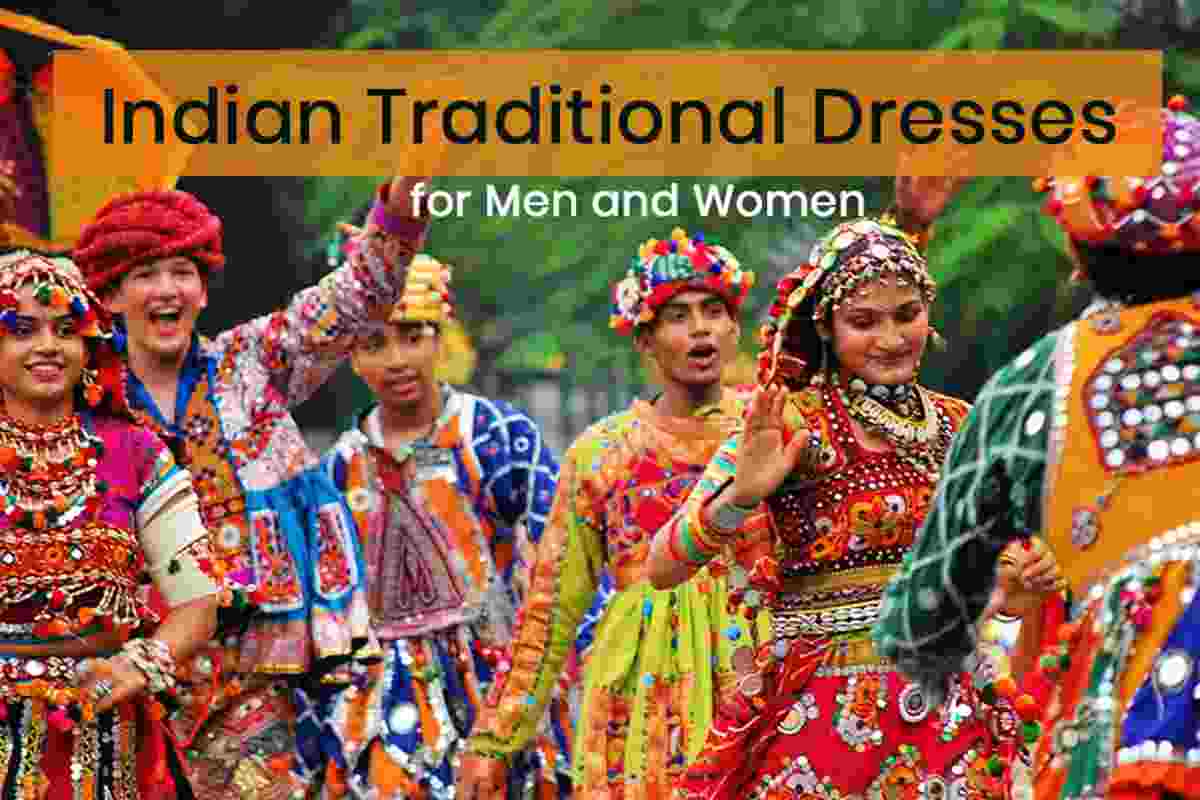
Traditional Dresses of Union Territories of India

Traditional Dresses of Union Territories of India

Explore the unique and colourful traditional dresses of India’s Union Territories, including Dadra and Nagar Haveli, Chandigarh, Puducherry, Delhi, Andaman and Nicobar Islands, Lakshadweep Islands, and Daman and Diu. Learn about their cultural attire and modern influences.

Traditional Dresses of Union Territories of India

Dive into the vibrant traditional costumes of India’s Union Territories. Discover their unique cultural attire and modern influences.

1. Traditional dresses of Dadra and Nagar Haveli

The lifestyle and attire in Dadra and Nagar Haveli are heavily influenced by Portuguese culture. The major tribes here are Dodhia, Kokna, and Varli, each with distinct dressing styles. Men typically wear a waistcoat and a long Dhoti, complemented by a Varli headgear. Tribal women wear different attires: Varli women don a Padar, while Dodhia and Kokna prefer sarees in blue and various other colours. Tribal tattoos are also a common feature among the women here.

Traditional dresses of Dadra and Nagar Haveli

Dadra and Nagar Haveli Cultural Influence: Portuguese Heritage

Men’s Attire:

  • Waistcoat and shirt
  • Long Dhoti
  • Varli headgear

Women’s Attire:

  • Varli Tribe: Padar (cloth to cover the body)
  • Dodhia and Kokna Tribes: Blue sarees and other colors
  • Tribal tattoos are common

Traditional dresses of Chandigarh

In Chandigarh, the vibrant and colourful clothing reflects the blend of Haryanavi and Punjabi cultures. Men and women commonly wear loose Kurta pajamas. Women also frequently wear salwar-kameez, while men opt for dhoti Kurta or Kurta pajamas, often paired with a turban or pagdi to complete their traditional look.

Chandigarh Cultural Blend: Haryanavi and Punjabi traditions

Men’s Attire:

  • Loose Kurta pajamas
  • Dhoti Kurta or Kurta pajamas
  • Turban or pagdi

Women’s Attire:

  • Baggy trousers and Kurta (Salwar-Kameez)
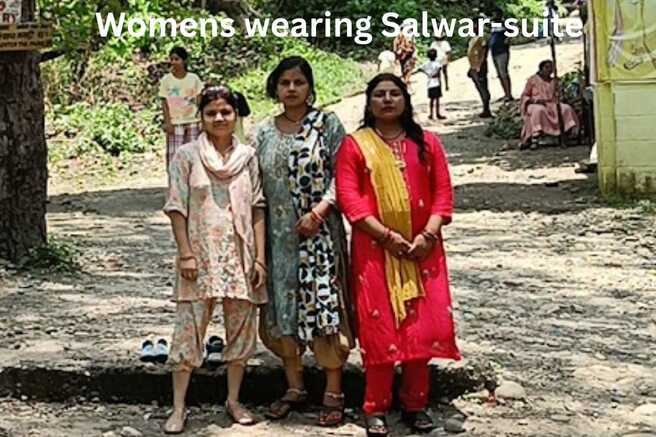
salwar kameez
Ladies wearing Salwar-Kameez

Traditional dresses of Puducherry

The dressing style in Puducherry shows a strong Western influence. Men typically wear shirts and pants or jeans, while women prefer long skirts paired with blouses. Despite their modern outlook, women tend to avoid overly short dresses to maintain a conservative image.

Puducherry Western Influence: Modern and open-minded dressing

Men’s Attire:

  • Shirts and pants or jeans

Women’s Attire:

  • Long skirts with blouses
  • Modern but conservative

Delhi

Delhi, being a melting pot of cultures, showcases a mix of traditional and modern attire. While daily wear often includes Western outfits like jeans, tops, and skirts, traditional dresses such as salwar-kameez with dupattas for women and dhoti-Kurta or Kurta-pajamas for men are reserved for festivals and special occasions. The diverse population brings a variety of cultural influences to the city’s fashion scene.

Delhi Cultural Melting Pot: Diverse influences

Daily Wear:

  • Western outfits (jeans, tops, skirts)

Traditional Attire for Festivals:

  • Women: Salwar-Kameez with dupatta, Saree
  • Men: Dhoti-Kurta, Kurta-pajamas, Churidar-Sherwani
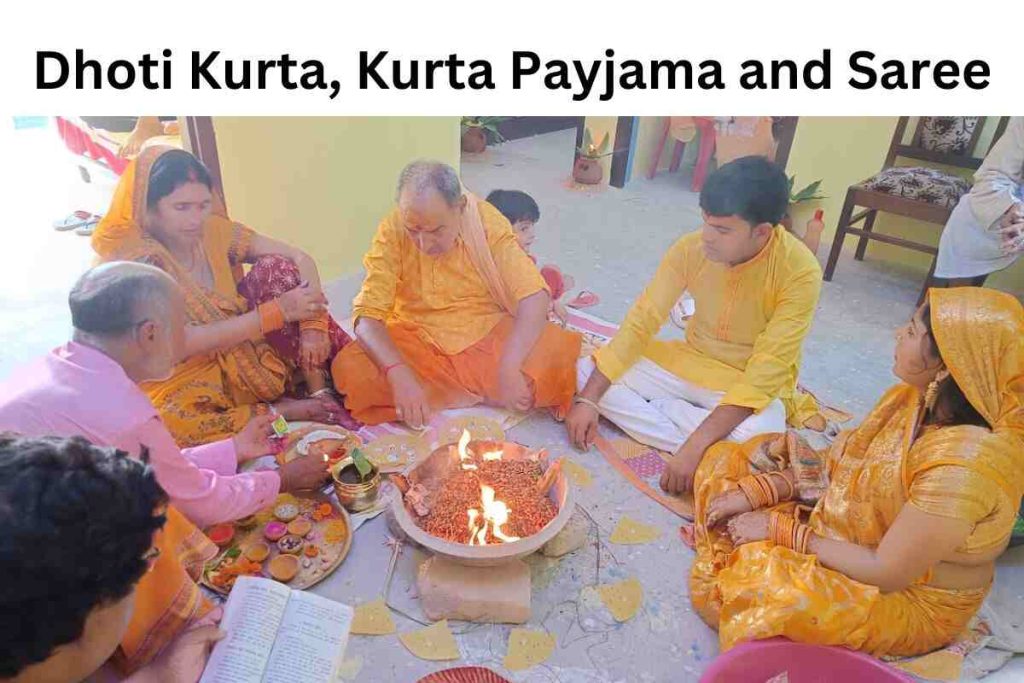
dhoti kurta, kurta payjama and saree
Men wearing dhoti-kurta and women wearing saree

Traditional dresses of Andaman and Nicobar Islands

The traditional attire of the tribes in the Andaman and Nicobar Islands has evolved significantly. While some tribes like the Sentinelese still maintain minimal clothing, others have adopted more modern styles. Presently, residents from various religions wear traditional outfits like salwar-kurta, dhoti, and shirts-pants. Unique ornaments inspired by sea creatures, such as seashells, are commonly worn by women.
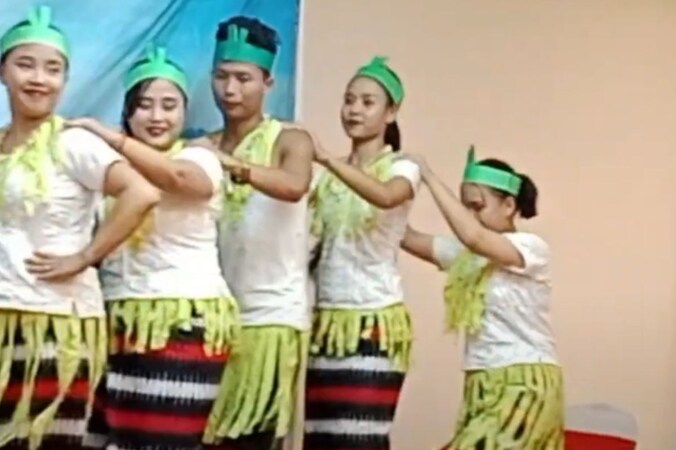
Traditional dresses of Andaman and Nicobar Islands

Historical Influence: Tribal traditions and modern lifestyle

Traditional Attire:

  • Minimal clothing inspired by forests for some tribes
  • Modern wear: Salwar-Kurta, dhoti, shirts-pants

Unique Ornaments:

  • Sea-inspired jewelry, especially seashells

Traditional dresses of Lakshadweep Islands

Lakshadweep’s traditional attire is vibrant and colourful. Women wear a Kanchi, a rectangular cloth worn from the waist, usually in white or black with black borders. Men typically wear a coloured Lungi, sometimes fixed with a silver thread at the front. On special occasions, they might dress in silk or cotton garments.
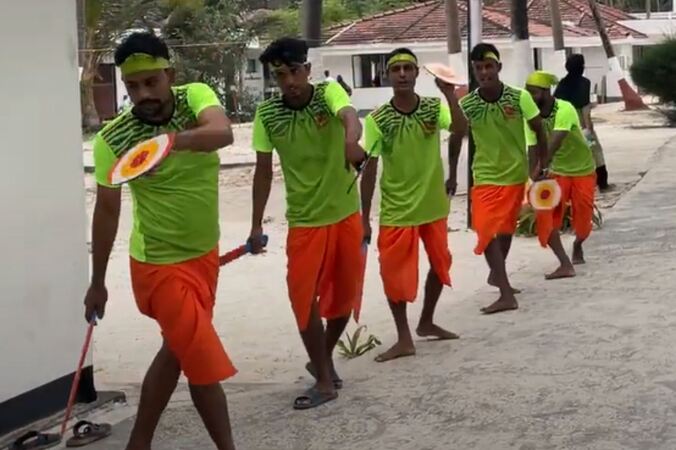
Traditional dresses of Lakshadweep Islands

Lakshadweep Colourful Traditions: Vibrant cultural attire

Women’s Attire:

  • Kanchi (rectangular cloth, usually white or black with black borders)

Men’s Attire:

  • Coloured Lungi fixed with a silver thread
  • Special occasions: Silk or cotton garments

Traditional dresses of Daman and Diu

Situated near Goa, Daman and Diu have a rich cultural attire. Men wear Pathani suits, Kurta-pajamas, and dhotis, while the younger generation opts for modern outfits like trousers, blazers, T-shirts, jackets, and jeans. Women wear traditional outfits such as Nav-Vari (a nine-inch long sari), regular sarees, Kashti, and PanoBhaju. The vibrant colours and traditional designs reflect the region’s lively culture.

Dadra and Nagar Haveli Cultural Dress
Daman and Diu Cultural Dress | image source: daman.nic.in

Vibrant Clothing: Blend of traditional and modern styles

Men’s Attire:

  • Pathani suits, Kurta pyjamas, dhotis
  • Modern wear: Trousers, blazers, T-shirts, jackets, jeans

Women’s Attire:

  • Traditional: Nav-Vari (nine-inch long sari), regular sarees, Kashti, PanoBhaju
  • Modern: Tops, jeans, long and short skirts, Capri’s

Conclusion

By understanding the traditional dresses of India’s Union Territories, we gain insight into their rich cultural heritage. Historical and cultural factors influence each region’s unique style, yet they all contribute to the diverse tapestry of Indian culture. Explore these traditions and see how they continue to shape contemporary fashion.

Related Articles:
Food, Clothes, Dance and Languages of Indian States

Interesting Facts about India

National Identity Elements And National Symbols

National Calendar of India – History and Uses


Sikkim – A valley of Mountains and Lakes

Introduction

Bounded by Tibet, Bhutan and Nepal, Sikkim is a place that is a dream place for many. It has a beautiful landscape with vast stretches of trees, fascinating sights and amazing weather. Away from the daily hustle and bustle, Sikkim is a state where deities are worshipped. It has got the third highest peak in the world, Mount Kanchenjunga.

Capital

Beautiful city of Gangtok is the capital of Sikkim. The town has very less population and features mild temperature throughout the year. It is a place of aesthetic origin and has many Buddhist pilgrimage sites.

Culture

Sikkim is a very clean and unpolluted state which has a rich cultural heritage. A place of spiritual origin, people here are Buddhists. Handicrafts like printed carpets, Tibetan designs, Chokers, exquisite patterns of dragons and intricate designs of gold and silver are famous in the region.

Weather

Sikkim is located in the eastern part where the weather remains pleasant in the rainy and winter season. Summers are hot and the temperature rises to even 38 degrees.

Lifestyle

People in Sikkim are heard speaking Nepali and live in peace and harmony with each other. Hinduism is followed as the religion, but Buddhism is stretched in almost the whole of the state. These people indulge in the craftwork and their clothing is very simple and attractive.

Major Crops Grown

Sikkim though isn’t much developed to grow much of the crop, but the efforts are made by the government to make it stand among other industrial states. Crops like potato, maize, wheat, rice, ginger and large cardamom are grown.

Costume & Ornaments

Men in Sikkim are seen in ‘pagi’ and the women wear a dress that is in two pieces. These were the Lepcha people, the other men who are Bhutias, wear ‘Bakhu’ while women wear a loose type of blouse. Among the ornaments, women are seen wearing heavy gold jewellery.

Major Festivals

Along with the harvest festivals and Buddhist New Year, people in Sikkim celebrate the birth anniversaries, nirvana and enlightenment of Buddha.

Tourist Attractions

Sikkim being a mountainous terrain is always a spot for tourist attraction. Singba Rhododendron Sanctuary, Changthang, Kanchenjunga National Park and Yumthang are places to visit. Other famous places in the capital city are Tashi view point, Hanuman Tok, Ridge Garden, White Hall and Ganesh Tok.

Famous Personalities

Baichung Bhutia, famous football player.

Tamil Nadu – A Rich Cultural Heritage

Introduction

Tamil Nadu is one state which has a very rich cultural heritage, amazing beaches and hills, astonishing history and is full of vibrant colors. Tamil Nadu has the highest per capita income and foreign investment in various fronts like IT, automobiles, power, etc. The state is a store of unlimited natural resources which ultimately increases the overall productivity.

Capital

The capital city of Tamil Nadu is Chennai. The city is considered as the biggest economic and industrial center in south India. Because of its advancement in the automobile sector, Chennai is also known as the ‘Detroit of India’.

Culture

Tamil Nadu consists of people from all religions and there still exists a caste system. The temples reflect the rich culture of the state. The carvings of stone at Mamallapuram, bamboo made baskets, mats and paintings define the culture of Tamil Nadu.

Weather

The climate of Tamil Nadu basically remains hot throughout the year except during the monsoons. Summers are extremely hot while the winters are pleasant. The monsoons bring enough rainfall in the state to make them pleasant.

Lifestyle

Tamil Nadu has a majority of people following Hinduism as their religion and temples, caves and havelis are a fine example of that. People worship Tamil deities and many of the tribes can also be seen in the state.

Major Crops Grown

There are various minerals found in Tamil Nadu like quartz, mica, limestone, bauxite, gypsum and salt. People here are basically involved in the agricultural activities and the main crops grown are Bajra, jowar, Ragi, pulses, maize and rice. Other than this, the industries in the state are fertilizers, diesel engines, cotton textiles, sugar, cement, automobiles and parts.

Costume & Ornaments

Women in Tamil Nadu are seen in Kanjivaram saris that is basically a traditional wear for all small and big occasions. While on the other hand, men wear dhotis. Ladies do wear gold ornaments to complete their look.

Major Festivals

Undoubtedly Pongal is the most important festival celebrated in Tamil Nadu. It is celebrated with a lot of joy and gaiety. Other festivals include Chithirai festival, Natyanjali and Mahamaham festival.

Tourist Attractions

Chennai is the most famous spot for tourists all over the world. Mamallapuram beach is the best beach in the state. Kanchipuram is famous for its temples; Madurai, Ooty, Kanyakumari and Rameshwaram are other beautiful places.

Kinds of homes

Houses in Tamil Nadu are simple and spotted in an old fashion with looks of havelis and temples.

Famous personalities

Internationally renowned personalities of Tamil Nadu are Radhika Coomaraswamy, Navnethem Pillay and other famous people who led the freedom movement were Dheeran Chinnamalai, Jeevanandham, Subramanya Bharathi. Other than these, S. Radhakrishnan, A.P.J. Abdul Kalam, P. Subbarayan and P. Chidambaram was born in Tamil Nadu.

WORK IS REAL WORSHIP

It was a fine sunny day in winter. A cricket was basking in the warm sun. But he was very hungry as he had not eaten anything since the previous night.

The cricket looked about to find something to eat. All of sudden, he saw a few ants carrying grains into their hole.

The cricket went up to the ants and said in a humble tone, ‘Would you, please, spare a few grains for me. I haven’t eaten anything since yesterday. I am almost starving to death.”

The ants stopped for a moment though it was against their habit. One of them said to the cricket, “What were you doing all summer? Why didn’t you store up food for the cold inter season?”

“Truly speaking, I spent all the summer singing songs. So I couldn’t store anything.”

“Then dance the winter away,” remarked the ant chuck- ling a smile. The cricket pulled a long face and went away.

Telangana – The Canvas of Art

Introduction

Telangana is a newly formed state in the southern part of India. It is the 12th largest state of the country with an area of about 114,840 km. Telangana was separated from Andhra Pradesh on June 2, 2014 and is now the 29th state of India. The state is surrounded by Karnataka in the west, Maharashtra in the north and Andhra Pradesh in the east and south. The state has beautiful monuments and temples which are of historical importance.

Capital

Hyderabad is the capital of the state which serves as a capital to both Telangana and Andhra Pradesh. The city is crowded with many temples and monuments and is home to travellers from across the globe.

Weather

Telangana basically has a hot and humid climate because of its semi-arid area. The summers are very hot and reach temperatures up to 42 degrees. Monsoons lower the temperatures between June and September. Winters are not much cooler with temperatures ranging from 22-23 degrees.

Major crops grown

Cotton, tobacco, rice, sugarcane and mango are the main crops grown in the state.

Costumes and ornaments

The traditional attire of the people in Telangana include kurta and lungi, sari, churidar and salwar-kameez. Due to the increasing western influence, trousers, shirts and jeans are catching pace now.

Major festivals

The festivals in Telangana are same as that of Andhra Pradesh which are Eid, Diwali, janmashtami, Mahashivratri, Ganesh chaturthi, Christmas and Easter. Sankranti and Ugadi have some extra importance in their history and lives. Bathukamma is a festival where the idol of goddess Bathakamma is left in the rivers.

Tourist attractions

Famous tourist destinations are located in the cities of Warangal and Hyderabad. Charminar, Falaknuma Palace, Golconda Fort, Chowmahalla Palace, Kakatiya Kala Thoranam, Bhadrachalam Temple, Thousand Pillar Temple, Kuntala Waterfall and Bhongir Fort attract visitors from all over the world.

Haryana – A well known state for Milk and Milk Products

Introduction

Haryana was formed on 1st November 1966 after the division of the Punjab. The population of Haryana comprises Hindi speaking people. The state is both modern and oldest of places. Haryana has seen the success of movements like the green revolution.

Capital

Chandigarh serves as the capital of Haryana and also Punjab. The city is also a union territory which is why it is directly administered by the union government. Chandigarh was the first planned city after independence.

Culture

Haryana inherits its culture and tradition from the oldest civilization, i.e. the Harappa civilization. Craftwork is not the thing for the people of Haryana but it has a great handloom tradition. Some of them include woven furniture, rugs and upholstery fabric, wood carving and artistic pottery.

Weather

The climate of Haryana is of extreme type. While the summer temperature reaches a maximum of 45⁰-50⁰ C and the winter temperature drops down to as low as 0⁰ C. Rainfall is maximum in the Shiwaliks region and the minimum near Arvalis.

Lifestyle

The people of Haryana live a simple life working on the fields and earning bread for their family. Women also do the field work along with men. The state is more of a rural area away from the hustle and bustle of the urban world.

Costumes and Ornaments

The people of Haryana wear bright colored clothes and jewellery. The traditional dress of the place includes ghagra, short kurta and chunri that cover their head. The male attire comprises bright colored dhoti and Kurta with sashes and turbans.

Major Crops Grown

Agriculture is the most important occupation of the people of Haryana. The main crops grown here are wheat, rice, maize, Bajra, jowar, cotton, sugarcane, oilseeds, pulses, barley and potato.

Festivals

Mostly all the major Indian festivals are celebrated in Haryana but Lohri has an important place. This festival is celebrated with great zeal and joy. Apart from this, Baisakhi or the harvest festival is another important festival celebrated in Haryana.

Tourist Attraction

Haryana has a lot of places for tourism. The most famous is the Kurukshetra, which has around 860 pilgrimage places dating back to Mahabharata times which exist till today. The Surajkund Craft Mela is the annual fair and the biggest craft fair in India held in the month of February. It also attracts many tourists.

Kinds of Homes

The rural population of the state lives in villages where they have well built houses with electricity supply and the urban areas like Gurgaon have very high tech infrastructure and residential areas.

Famous Personalities

The state of Haryana was the hometown of many famous personalities. Lala Lajpat Rai is also known as the ‘Lion of Punjab’ belonging to Haryana. He was a leading freedom fighter. He got injured during the lathi charge that took place during the non violent protest against the British and died a few weeks later.

Uttar Pradesh – Tourist Attraction of India

Introduction

The state of Uttar Pradesh was formed on 1st April, 1947 as United Provinces. It was named Uttar Pradesh in 1950. Later in 2000, the hilly area of the state was separated and a new state of Uttaranchal was formed.

Capital

Lucknow is the official capital of the state. Since Mughal era, Lucknow has been the seat of rich culture and architecture. The city has long been known as the city of Nawabs. Lucknow is famous for its cuisine, especially the kebabs and its chicken fabric. The place is full of beautiful monuments which are a great tourist attraction.

Culture

The state of Uttar Pradesh has a rich history of art and culture. Since the Mughal era, the state has been home to a number of craftwork. Aligarh in U.P. is famous for its locks all around the world. Other famous crafts of the state include zari work, bangles, jhumkas, glass artifacts etc.

Weather

The state of Uttar Pradesh experiences a subtropical climate with dry winters. The weather conditions are extreme with summers as hot as 45-50 degrees and winters as cold as 0 degrees. Dry dust storms known as ‘loo’ blow during the month of May and June throughout the state.

Lifestyle

The people of Uttar Pradesh belong to different religions, yet live together in harmony. They have a unique lifestyle which is found in no other state of the country. Music, art, dancing, fashion is all part of their lovely lifestyle. A cultured and gentle lifestyle is the essence of this state.

Major crops grown

The land of Uttar Pradesh is very fertile because of which a lot of crops are grown here and the state is a major contributor to the national food grain stock. Sugarcane is the most widely grown food crop as well as a cash crop in the state. Other important crops grown here are rice, pulses, wheat, millets, maize, lentils, peas and beans.

Costume & Ornaments

The people of Uttar Pradesh have a variety of traditional and western dressing styles. Traditional wear among women includes sari, tailored suits which consists of shalwar and kurta while men wear kurta, pajama and head gear. Sherwani is often worn by men on special occasions. Trousers and shirts are common western outfits amongst men.

Major Festivals

Diwali is the major festival celebrated by people of all religions which shows the height of religious tolerance in the state. Other festivals include KarwaChauth, Muharram, Holi, Eid, Vijayadashami etc.

Tourist Attractions

Uttar Pradesh is a treat for tourists. The state is full of historical monuments and tourist destinations. The most famous amongst them are TajMahal, FahetpurSikhri, Agra Fort, Bada Imambara etc. Places of religious importance include Varanasi, Allahabad, Kushinagar and Sarnath.

Kinds of homes

The rural population of the state resides in the village that are made up of mud, clay and the roofs are thatched. The villages are clustered and not scattered. The urban population lives in cement plastered homes having proper roads and electricity supply.

Famous personalities

Uttar Pradesh has been the hometown of many famous personalities. Begum Hazrat Mahal was one such great being. She actively participated against the British East India Company during 1857.

Gujarat – Home State of Mahatma Gandhi

Introduction

The home state of Mahatma Gandhi, Gujarat is amongst the most prosperous states of the country. It has a very rich history and has a fusion of many cultures and races. The state is the favorite place of many archaeologists and scholars from all over the world.

Capital

Gujarat is known as the Land of Legends. The capital of the state is a beautiful city of Gandhinagar. It has always been the birthplace of famous business personalities and apart from that the city is popular for its amazing ambience and landscape as a whole.

Culture

The Gujaratis are very traditional people. Everything there is pure and authentic. The people of Gujarat excel in handmade products. Their skill is such that they can make the most unwanted thing look beautiful. The craftwork practiced here includes wood carving, embroidery, making utensils, metal work etc.

Weather

Gujarat is known to be in a state of very hot climate which remains throughout the year. Temperatures usually fall during the night otherwise it reaches as high as the sky in the day. Temperatures during summers reach upto even 45 degrees and for winters they remain low to 15 degrees. Monsoons are pleasant.

Major crops grown

The rough weather and rocky terrain have made a large part of the state unproductive agriculturally. The land that is suitable for cultivation produces crops like groundnut, tobacco, bajra, cotton, pulses, wheat and gram. Cash crops grown here include bananas and mangoes.

Costume and Lifestyle

The Gujaratis are really sweet and gentle and they have a colorful lifestyle. People in Gujarat are basically known for their business ideas and simple dressing. They speak Gujarati and their cuisine is very famous all around the globe.

Major festivals

Dussehra is the most widely celebrated festival in the state. Other festivals of Gujarat include Diwali, Saputara Summer Festival, Desert Festival, Bhavnath Fair, and Madhavrai Fair.

Tourist attraction

Gujarat has a lot of places in store for the tourists. Gujarat is home to famous holy temples, ancient monuments of architectural importance, beaches, wildlife sanctuaries and resorts. Some of the famous places include Dwarka, Sun Temple, Porbandar, Sabarmati Ashram, Wild Ass Sanctuary etc.

Kinds of homes

Gujarat is a delightful place with a very pleasant aura and beautiful landscapes. The houses in Gujarat are very traditional because mainly of the weather conditions that are hot and dry for the most part of the year.

Famous personalities

Gujarat is the birthplace of some very famous and respectable people in history. Our beloved Mahatma Gandhi belonged to Gujarat. He was a man of high thinking and a sweet tongue and that is what helped him free India. Other than him the business tycoon, Dhirubhai Ambani was also a Gujarati.

Himachal Pradesh – Hub of Indian Tourism

Introduction

Himachal Pradesh is a hilly state. A part of the Himalayas lies in this state along with beautiful lakes, streams and rivers. Because of the presence of snow clad peaks and picturesque landscape, Himachal Pradesh is one of the most popular tourist destinations.

Capital

Shimla is the official capital of Himachal Pradesh. Shimla is the hub of Indian tourism. Because of its favorable terrain, Shimla hosts MTB Himalaya, a mountain biking race, which is considered as the biggest event of its kind in SouthAsia

Culture

The Himachal folks have great artistic skills. Their skills are applied everywhere, right from the objects of daily use. They master in making beautiful utensils, idols, vessels, jewellery, earthenware, weaving wool and making embroidered shawls.

Weather

The weather of Himachal Pradesh varies due to the difference in altitude. At lower altitude, the weather is hot and humid while at higher altitudes the climate becomes cool and further higher, the place is covered with snow.

Lifestyle

Himachal Pradesh comprises people of different cultures, following a different religion and speaking different languages. Despite so many differences, the people living here will have full peace and harmony. Their life is simple and revolves around agriculture and farming. People here are very hospitable and down to earth.

Major crops grown

Apple is the major crop grown here. Because of the undulating topography and hilly region, agriculture is not practiced here.

Costume and ornaments

Sari is the most common outfit worn by the Himachal women. Dresses like kurta and shalwar are also popular. During winters, coat or waistcoat is preferred by the people.

Festivals

Navratri is celebrated with much gaiety in Himachal Pradesh. Baisakhi is another festival that has much importance in the lives of Himachal people. Other significant festivals include Rakhi, Dussehra, Diwali and Lohri.

Tourist attraction

The state is full of beautiful places where people can relax and enjoy. Trekking is one thing that people come here for. The major tourist spots include Shimla, Kullu-Manali, Dalhousie, Chamunda Devi etc. The tourist resort of Khajjiar located at Chamba district is famous as the Switzerland of Himachal Pradesh.

Kinds of homes

The houses in Himachal Pradesh are built according to the altitude and terrain of the land. The houses built in Himachal are made using the Kath-Kuni technique according to the altitude of the place. 

Famous personalities

Himachal Pradesh is the birthplace of many famous personalities. Ruskin bond, the name that needs no introduction, was from Kasauli, Himachal Pradesh. His love for Himachal is distinctly visible in his writings and he has won many laurels and accolades for his outstanding work.

Graduation Courses Choosing the best one for you

After years of hard work and dedication when the students are blessed with the good fortune of receiving graduate admission into colleges, they tend to struggle a lot choosing the right kind of courses. Choosing the right graduate program is one the most important decisions that a student has to make since this is what’s going to shape their career as well as their whole lives. But the question still remains how to make the right choice? Well the answer may vary from person to person but there are certain steps that one can follow to get an idea of what’s best for them. Some of these steps are mentioned below.

Basics

Before planning for anything, be clear about your area of study and the desired degree. Once you are clear about this, the other most important needs to be considered are the cost and the location of the college you are applying for. Although many would not give much preference to this, they do demand attention since one has to spend several years in grad school and it requires economic management along with the considerations towards geographic location of that place.

Program Goals

First of all you consider your career goals and accordingly decide how well each of these programs meets your requirements. However since each of these programs are completely different from one another it’s quite uncommon that they offer similar opportunities. In case you do come across such a situation where you require considering programs that are quite similar, try thinking about the quality of life each of these programs offers you with. This would definitely help you filter the best suited program for yourself. Moreover it is also advisable to look out what all facilities are being offered under a particular program such as the quality of training, personal teaching, researches, the curriculum, faculty etc. All of these mentioned details could be found in the study program prospectus. In case you find yourself extremely confused, seek help from your parents and relatives or it is more advisable to consult a professional career consultant.

Faculty

Faculty plays the most important role in shaping your mind and your future. So while you are fighting your mind off to select the best of the programs suited for you, consider the colleges you are looking to opt for under each of these programs. Accordingly search for the faculties these intuitions have and what are their area of expertise along with how helpful they are. Having known these would help you to understand whether you will be able to work with them or not.

Although the above mentioned guides are time intensive, they are overwhelming too. This whole exercise is to make you know yourself better and to realize how you wish to lead your life. Putting in time to research for all these things will make your life easier and better in the near future and you would actually realize it later.