Jharkhand- A Historical Place

Jharkhand- A Historical Place

Jharkhand is a state which is one of the old civilizations. You won’t find the unmatchable history of Jharkhand anywhere. It is a prosperous, aging, and marvelous place full of traditions and customs and virtuous land where many kings and scholars were born. It also provided a prominent place to Hindus and Sikhs in ancient society. This nation was ruled by great kings like Chandra GuptMaurya, Khillji Dynasty, Shershah, and Ashoka. It covers a small area of India and has the main focal point for its ancient history all over the country. 

This state is surrounded by the most pious holy river – named Ganga. The people of Jharkhand are classified according to their religion and social Caste, as it is one of the biggest populated states in the country. Tourists recognize the state as their prevailing opinion because of its diversified nature, which provides visitors with a wide range of interests. Jharkhand has occupied a significant position in the prior history of India.

Country India
Formation 15 November 2000
Capital  Ranchi 
District 24
Government Body

Governor

Chief minister

Deputy chief minister

Legislature

Parliamentary constituency 

Government of Jharkhand

Ramesh Bias 

Hemant Soren

Uni cameral

Six seats of Rajya Sabha  and 14 seats of Lok Sabha

Mammal Indian elephant 
Bird Koel
Flower Palash

Capital of Jharkhand

Ranchi was the capital of Jharkhand, also called the summer capital of Bihar, until Jharkhand was separated from Bihar. The other name of Ranchi is the city of waterfalls and a renowned educational institution because it contains some prestigious institutes like NIFFT, NUSRL, CIP, RIMS, etc., and some essential governmental organizations like HEC, CCL, and SAIL. Moreover, this city contains many tourist locations, waterfalls, hills, and forests. 

Land of Jharkhand

Jharkhand covers around 79,716 km per sq. area of Indian geographical land. It is the 15th largest and 14th most comprehensive state of the country. Jharkhand is surrounded by the mountains and forests of Bihar, Bengal Chattisgarh, Odisha, and Uttar Pradesh. It occupies a specific position in the diversity of India as it is one of the most ancient places.   Jharkhand was obtained from southern Bihar as an individual state in 2000. After long struggles, the place can secure the rights of the Adivasis and tribal community. It is the silk hub. The most prominent feature of Jharkhand is the Chota Nagpur plateau, a broadDeccan plateau surrounded by hills and plateau regions such as Hazirabagh and Ranchi. The son river floats from the southern part of Jharkhand and provides ample sandy soil to this region. Jharkhand has an average chronic climate all through the year. May is considered the hottest month, while December is the coldest. The rainfall scale of Jharkhand is quite as compared to the other states due to the plateau region. Forest occupies around ¼ of the area of Jharkhand while it is also a hub of the animal as the Hazaribagh century is located which is famous for Bengal tigers. This place is rich in species of different trees such as sal, lac, mahua, etc. 

Ancient History of Jharkhand

The fight for rights led to a separate state known as Jharkhand today. It was a concerning issue regarding the rights of the backward classes, tribal community, and the Adivasis, and the movement against the separate reservation for these people. Its idea of a separate Jharkhand arose after the statement of the famous hockey player Jaipal Singh. The concept of a separate Jharkhand was still a dream until the Bihar government passed the reorganization bill for an independent state from Bihar consisting of districts. The Jharkhand was formed on 15 November 2000 after the recognition from the parliament. The place has had a specific position since the stone age, which the Maurya Dynasty first occupied. They ruled Jharkhand for an extended period after the decline. The great Mughal king, Akbar, conquered this state and worked on the infrastructure for a decade. Later it came into the hands of local rulers and the east India Company’s arrival in India. The campaign started by the leaders in the 20s led to the execution of Jharkhand. Right after the rule of the British government, the Britishers expanded their power to all the regions of Bihar, and they treated Jharkhand as the center of administration activities. Since the Britishers left India, the fight for the individual state lasted until 2000. 

Art and Culture

Jharkhand is a rich place full of tribal arts all over the state. The villages show the standard features concerning the Stone Age culture. Although different communities have similar characteristics, the joy of festivals remains the same. 

Jharkhand’s folk music, dance, and instrument have a diverse fan base throughout the country. Jharkhand is the center of festivities, and many festivals originated here, like Tybhaiya du, Diwali, chatt puja, and holi. It has the most simplistic feature, which makes it different from other states. It is where every festival is celebrated with joy and harmony; most festivals and rituals are obtained from here only. Fold dance and music have a different place in the life of the mandua people. How is it possible to celebrate an occasion without music and dance? Hence, the Jharkhand took it too seriously. India’s most spectacular dance forms are practiced here, like the Barao dance, hunt dance, danga dance, and chair dance are the prime part of every occasion.

Occupation of Jharkhand

 The state’s industries surround the people’s occupation and living. It is a new and growing place, and many people from rural areas are engaged in primary activities such as farming, poultry farming, mining, etc. The elite class of Jharkhand usually appears to be business people, traders, or government workers. The state consists of the most excellent steel industry of the whole county- the Bokarosteel Company and the tata steel company, which provide excellent employment to the people of Jharkhand. The steel industry of Jharkhand is paying a significant contribution to the growth of the state and the country. Despite this, Jharkhand is rich in soil and fertility, but the use of these resources is still the highest among the people of Jharkhand. 

Major Places and Tourist Attractions in Jharkhand

Jharkhand is always on top of the list of tourists as it is full of historical places and monuments, and watching these places are worth witnessing. The most famous places in Jharkhand are:

  • Tagore hills 
  • PahariMandir
  • Kanke dam
  • Jagannath temple 
  • NakshatraVan
  • Ranchi lake
  • Biodiversity park
  • Rock garden 
  • SidhuKanha park
  • Patratu valley 
  • Bokaro
  • Hazaribagh

There are still so many places that need to be mentioned which define the vast diversity of this place. Jharkhand is famous because of its cultural heritage, which is evidence of the excellent lens administration of its rulers. Bihar is the main center of attraction for tourists, and thousands of people come to Jharkhand every year to enjoy the immense and beautiful view of art and tradition.

Famous Food in Jharkhand

When we take a comprehensive look at the culture of India, the first thing which clicks our mind is food. Indian food is one of the most famous and favorable things worldwide. The spices, dishes, taste, and love of making food cannot be found easily. Every traditional word carries a different story. It is the center of ancient civilization and the land of varied crops. It has been famous for the most authentic texture of food for almost 2000 years, so the nutrition of Jharkhand has its divine history. Some of the most famous dishes of Jharkhandare as follows:

  • Chika roti– is made by using rice flour and besan. It is prepared during festivals and special occasions and served with elephant’s foot yam, mutton curry, and chana dal chutney.
  • Dhaka– it is the most common and favorite food of Jharkhand. It is mainly consumed for breakfast. It is prepared with rice and lentil batter and then fried, commonly served with a simple curry made of black chickpeas and tomato.
  • Handia– it is a drink commonly rice bear which local people make. It is made by ranu tablet, a combination of more than 25 herbs mixed with rice boiled and left to ferment for one week.
  • Til barfi is a sweet dish and is also called the pride of Jharkhand. It is prepared during the Makara Sankranti festival.

Climate of Jharkhand

It is a humid subtropic in the n north and dry in the southeast .summer winter, rainy, autumn, and spring is the primary season of Jharkhand. Summer occurs from May to June, and May is the hottest month of the year. The highest temperature is around 37 degrees Celcius, and the lowest is about 25 degrees Celcius. The monsoon starts in October and offers annual rainfall of about 1,000mm in every state. The winter begins in February, and the last spring offer is in e month of mid-February or April.

Major rivers of Jharkhand

  • Ganga river– Ganga is a holly river that passes through the northeastern district of shebang.
  • Son river originated from Amarkantak, and Sindhi is located on the shore of the son river. 
  • Damodar river- Damodar river originated from the Chota Nagpur plateau. Later, lohardaga, Ramgarh, gridih, Dhanbad, Bokaro, Asansolraniganj, and Durgapur are the cities located on the shore of the Damodar river.
  • Barakar River- Originates from Hazaribagh and covers the district of koderma, Giridhar,v Hazaribagh ETC.
  • Ajay river- originated from Munger. Chattisgarh, jaydevkenduli are cities located on the shore of the Ajay river. 
  • South koel river – originated from the Chota Nagpurplate.

Famous personalities of Jharkhand

  • Lance Naik Albert Ekka– He was a soldier in the Indian arm and a param veer chakra awarded chimera. He was born in Ranchi. He faced an injury suffered during the battle.
  • Mahendra Singh Dhoni– He was born in Ranchi, an Indian cricketer, and the recent captain of the Indian national cricket team. He is a right-hand middle-over batsman and wicketkeeper. He was the only captain in the world who won 3 ICC trophies.
  • Deepika Kumari– He was born in Ranchi, India, played at national and international levels, and showcased her extraordinary archery skills. In 2010, She won a gold medal in the commonwealth games. She was also awarded by Arjuna award by President of India Pranab Mukharjee.
  • R.Madhavan– He was born in Jamshedpur and was an Indian actor. His father is a management executive at TATA steel. He was one of the famous actors who achieved pan-Indian appeal and was awarded 2 Filmfare awards.

Festivals of Jharkhand

Every festival has a connection with nature and people. Since it is fragmented, every occasion is also related to nature. People worship nature and the substances of nature formed by god. As the large population is a tribal community and Adivasis, the people are bound by the natural ecosystem and think that only the heart and the creatures made by god are worth praying for. 

  • Sahul is celebrated during the spring when the Saal tree gets new flowers on its branches. The worship of the village deity is performed, who is considered the protector of the tribe. The people sing and dance. During this festival, the village fasting for a couple of days. In the morning, after taking a bath, he wears a dhoti, takes three pots, and fills it with water. Then, the following day, the priest observes the pot’s water level. If the water level decreases, it must be a sign of less rain or famine. If the water level is average, it is considered a good sign of rain.
  • Karam- in this festival, the worship of Karamdevta is performed. It is considered the god of youthfulness, youth, and power. The festival is performed on the 11 moons of Bhadra month. Young people of the village go to the forest and collect wood, fruit,t, and flower, and the small flower is distributed among all the villagers and represent the feeling of brotherhood and friendship. Chat puja- is the most famous festival in Bihar. It is an ancient Hindu festival dedicated to the sun and celebrated after 6 days of Diwali. In this festival, the people are fasting around 36 hours till the final day the puja starts before sunrise. The sun is called the god of energy and life –force. 
  • Rohini- it is the first festival of Jharkhand. In this festival, the villagers sow seeds in the field, but there is no song and dance like in other festivals. Only a few rituals were performed.
  • Hal punchy started with the fall of winter, the first month of Magh month, known as akhirJanta or halpunhiya, which means the beginning of plow.  

Flora and fauna

Jharkhand contains various flora and fauna and has many national parks, zoological gardens, and the Palamau tiger reserve. In every part of Jharkhand, type of species of  flora and fauna are found are:

Mammals 39 variety of mammals
Snakes Eight vaEightiety of snakes
Lizard 4
Fishes 6
Insects 21
Birds 170
Seed bearing Plants And Trees  97
Shrubs And Herbs 46

Demographics of Jharkhand

Jharkhand is encircled by the Indian state of west Bengal, UP, Chattisgarh, Bihar, and Odisha. The state covers a more than 30,778 sqm area, has a large population, and is one of the biggest cities for industrial purposes. 

According to the 2011 census, the state’s current population is about 32.96 million (males 16.93 million and females 16.03 million). The form contains 24 districts And 32,620 villages. Out of this, 12% of the population is scheduled Caste, and 28% consists of tribes. There are many tribal communities situated here, like mal Pahari, Kisan, Suriyapahariya, biracial, sabr, hill sharia, santal, Orion, and many more. Around the 64%population follow Hinduism, 13.4% follow Islam, 13% follow animistic saran, and 4.1% follow Christianity.

Statical data are given below:

Hinduism 64%
Islam 13.45%
Christianity 4.15%
Sikhism 0.22%
Sarna 12.52%
others 0.4%

Language

Hindi is the official language which is spoken by most of the population,n although different religion have their other languages like Nagpur, short, Bhojpuri, bhumi, mandarin, Odia, Santhal, Urdu, Angika, Bengali, ETC. the three most crucial language groups are Munda, indo-Aryan, and Davidian

Important Lakes and Centuries In Jharkhand

  1. Dimna lake, Jamshedpur
  2. Jubilee lake, Jamshedpur
  3. Hazaribagh lake, Hazaribagh
  4. Lutheran lake, chai base
  5. Ranchi lake, Ranchi
  6. Law along wild lake century
  7. Palkot wildlife century
  8. Palamau life century
  9. Koderma life century
  10.  Peasant wildlife century
  11.  Maithon dam
  12.  Panache dam
  13.  Konar dam
  14.  Hire fall 
  15.  Bhatinda fall
  16.  John fall
  17.  Diner summer fall

Government and administration

Governor is the constitutional head of Bihar and is appointed by the president of India. The chief minister and their cabinet will handle the executive powers. The political party has a majority in the legislative assembly form government. Chief Secretary is the head of the state bureaucracy, which include IAS, IPS, and IFS, and different wings of the state civil services. Bihar has a high court established in 1916, and the chief justice is the head of the judiciary. All the governmental branches are located in the state capital Ranchi.

Economy of Jharkhand

Jharkhand is India’s second-largest producer of mineral wealth, like iron ore, copper, uranium, bauxite mica, and limestone. This state’s per capita income increased yearly because of rich mineral resources. The state has many industrialized cities like Ranchi, Ramgarh, and Dhanbad. Jamshedpur has the first iron ore industry in Bokaro, Asia’s most significant plant.

Conclusion

Jharkhand is India’s oldest civilization, containing many different religions, traditions, and cultures, and always on top of the food district places and d most important festivals. It covers a small area of India but significantly impacts its prosperity worldwide. Looking closely, you will feel how beauty and harmony have covered themselves in these places. 

People are simplistic and nature lovers; they worship nature like a god as they think nature is the most worth praying thing in this universe. When you talk with the people, the mandua accent is still the power of this state. It is a small example to feel how diversifying India is. 

FAQs


  • Do we need a ration card to get the birth certificate in Jharkhand?


A sound card is not considered a binding document for forming a birth certificate. But, at the same time.

They need to provide the information and documentation related to the birth and the birthplace.


  •  Name the border state of Jharkhand.


Jharkhand is surrounded by many small states and plateaus, while some boundaries are Bihar, west Bengal, Odisha, Uttar Pradesh, and Chattisgarh.


  • Who established Jamshedpur city?


Jamshed Jetta established Jamshedpur city.


  • How many wildlife sanctuaries are there in Jharkhand?


There are around three wildlife sanctuaries in Jharkhand.
Lakshadweep

Lakshadweep

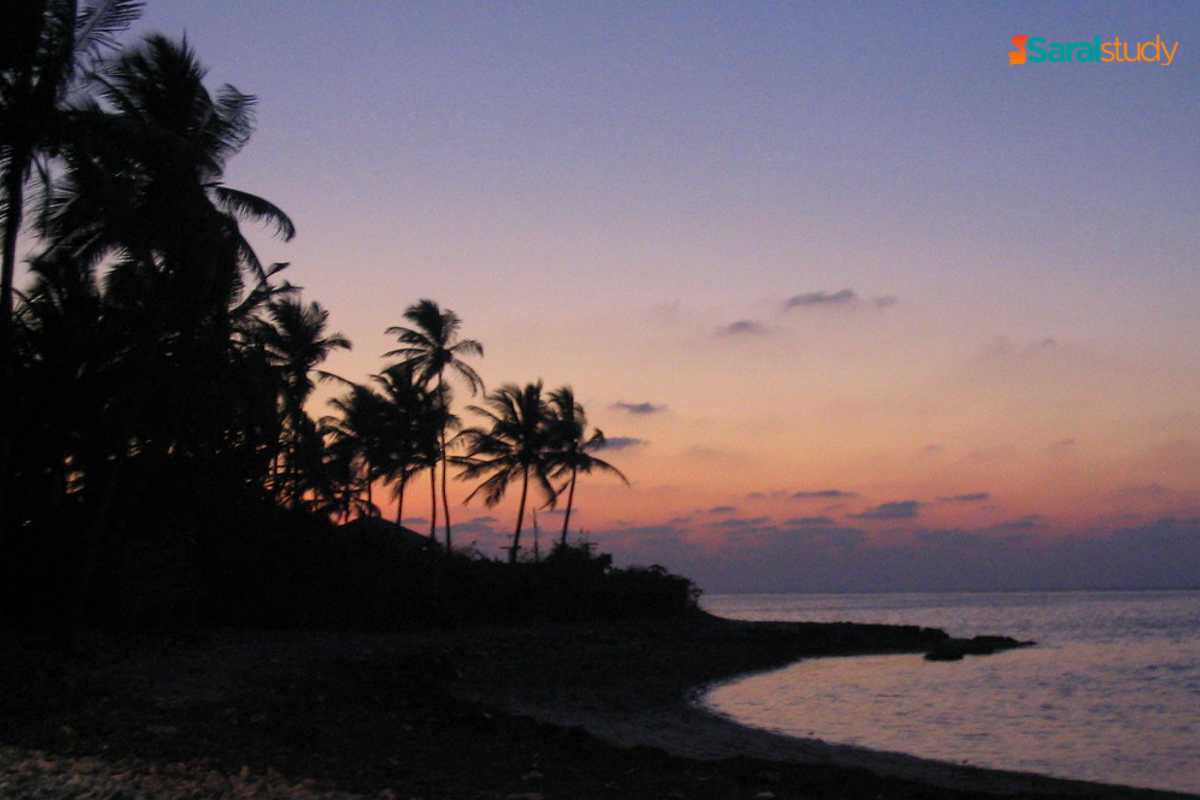
Lakshadweep is considered the smallest union territory of India, located at the end near the Arabian sea. It is comprised of 36 islands. It is a known place for its beauty of the lush green environment and is a famous tourist destination among the people of India. Lakshwadeep is a name given by Malayalis, and in Sanskrit, it means-‘a hundred thousand islands. The total area of islands covers almost 32 km per sq., which is considered a considerable distance. It is close to the southern region, whereas most of the population is south Indians. This place contains many relief features and island inhabitants in it. It is an area full of greenery with landscapes, sandy beaches, and plenty of species of flora and fauna. The lifestyle of people could be faster here due to less availability of modern articles. Lakshadweep has significant tourism due to its beautiful surrounding, which contributes to the economy of this place. The ideal time to visit and explore this place is October to March.   

Formed  1st November 1956
Capital Kavaratti
Country India
Literacy Rate 92.18%
Total Area 32 sq. km
Total Population 64,473
Official language Tamil, English, Malayalam, jersey

CAPITAL OF LAKSHADWEEP

Kavaratti is the capital of Lakshadweep. Kavaratti is closely related to the coast of karela, and it is one of the developing districts under the bright ci-intelligent by PM Narendra Modi. This place is located at a distance of 404 km from Kochi and is bounded by Agatti island and Oakland. This city is located in the center of Lakshadweep. The residents of Kavaratti moved from other states and later settled here. Kavaratti comprises beautiful islands with sandy dune nature with many fish and water species, which is worth watching experience. Lagoons are situated in the western part of the Island. They are famous for swimming, windsurfing, etc. tourists visit the western region to relish water sports such as scuba diving, underwater adventure, surfing, etc. 

People want the mesmerizing view of nature and marine lifestyle with the beautiful scenic environment. The living style of people here is quite fascinating. Some people prepare huts with beautiful interior work, which initiates the beauty of this place. Locals mostly prefer having seafood as this place is enriched and famous for its Malabar cuisine.

HISTORY OF LAKSHADWEEP

The ancient history of Lakshadweep was not mentioned in the books, it was known that many legends have a print of their rule on this place. It was believed that the king of Kerela, cheramanPerumal first ruled it. The land of Lakshadweep is earlier mentioned in the greek history. Most people converted to Islam due to Muslim missionary activity, then the whole kingdom transformed; later, the people were kerela worried about their existence, and they set up an area named Kannur. It was mentioned that Marco polo was the first visitor to visit the Island, an Italian explorer. While in 1498, the Portuguese arrived India and built new rules to control the trade, their government was continuously rising in 1545. After that, the power of bibis and their husbands was led over the Island for some time, and later, the rule was passed to the tipu sultan in amindivis. He was a young and brave ruler who ruled Mysore in the 1780s but passed away during the battle with the Britishers. He died in 1799, and Amin Davis came out of his hold, and the Britishers captured it and provided an annual island income to the bibi and her husband. And 1908, the whole trade and payment ended and India gained independence in 1947, and Lakshadweep was transformed into a union territory.

ART AND CULTURE OF LAKSHADWEEP

Lakshadweep is also known as the ‘hundred thousand islands. It is full of islands and yet provides so many treasures. It is not a well-known tourist destination among the people of India. People love to enjoy the existence of this beautiful place, and some of the islands need to allow visitors for national reasons. But still, people are excited to explore this place due to its beautiful environment. Lakshadweep has some glitches in Kerela tradition, including the language, customs, etc., and the people of Lakshadweep speak Malayalam. Lakshadweep is one of the most unique and worth-watching union territories of India. And when you talk about art, it is also awe-inspiring. Lakshadweep is located near the seashores, while art is also related to the products found around the beaches, like sea shells, coconut shells, and tortoiseshells. Tourists like handicrafts from local sellers, necklaces made of seashells, and other accessories. 

People are cheerful and vibrant, which is visible in their attire. The love towards their life is accessible and can also be shown in their art. Lakshadweep is quite famous for its traditional dance and music. The most famous dance form performed here is parichakali, which is done by men using swords and shields,s while another dance is ko kali, which is done with a beating stick. All the steps were done according to the beat.  

FAMOUS FOODS OF LAKSWADEEP

Lakshadweep is a prominent place for food; it is the wealthiest place for seafood and fishery. Their delicacy towards their food is seen in their dishes. Even the tribal and local people highlight dependent on seafood when it comes to hunger, while each Island has its specialty. Some of the most famous dishes of Lakshadweep are:

  1. Kanji – kanji is a thin-cooked dish made of rice and eggs and served with a sweet dish made of coconut milk, banana, and sugar. Rice paste and eggs are binned together and then shaped like a crepe. It is mainly prepared on special occasions. 
  2. Muskabab is a savory tuna curry made of many spices like chill, coriander, turmeric, etc., sauteed with onion and tomato cocked for a long time. It is a very spicy and flavored dish and is usually served with rice.
  3. Octopus fry– as its name tells, it is a famous cuisine of Lakshadweep. Mostly it is not consumed by the people in India, while Lakshadweep is the only place where octopus dishes are familiar.
  4. Batlaappam– it is a sweet dish and most famous as well. The people of Roth island highly consume it. It is made of eggs, flour, sugar, and coconut milk and steamed for some time. It is similar to idli and is served on special occasions. 
  5. Maas podichathu– is a side dish consumed by all the people of Lakshadweep. These are the chunks of dried tuna mixed with onion, tomato, chilies, and garlic. 

Famous tourist places of Lakshadweep

Lakshadweep is one of the most beautiful places for exploring, surrounded by greenery and beaches that provide peaceful vibes. There is a long list when you start visiting all the tourist spots. The most famous areas of Lakshadweep are as follows-

    1. Minicoy island is one of Lakshadweep’s most beautiful and highly visited islands. Many great attractions surround it. Tourists should try boat rides to take a scenic view of the Island. It has many white beaches.
    2. Kadmat island is one of the most relish islands with vibrant marine life. In addition, this Island is very famous for its local cocked food.
    3. Kavaratti island is well-known for witnessing beautiful sunset and sunrise views. A large amount of greenery and plantation increases the beauty of this place.
    4. The Marine museum is considered the best place to showcase the vibrant marine life of Lakshadweep. There are thousands of species of aquatic animals available in one place.


  • Pitti bird sanctuary– it is a sanctuary situated in the heart of Lakshadweep. It has many beautiful bird species and is one of the typical tourist attractions all over the place.


Language

The primary languages spoken in Lakshadweep are Malayalam, jersey, and mahl. The population of the northern islands speaks a twist of the Malayalam language, which is influenced by the Arabic rulers who ruled this place before and named this language Arabi Malayalam. The locals of Minicoy speak Mahl, an alternative to the Divehi language spoken in the MaldivesJesu, also known as Jeri or DweepBhasha, is the regional language of Lakshadweep. It is said on all the islands of Lakshadweep, such as KadmatAminiKavarattiAndrothAgatti, and Kalpeni, etc. each Island has its local language. Malayalam was introduced as the official language of Lakshadweep during colonial rule. Before Malayalam, Ponnani, and Arabi, Malayalam was used for writing speeches then. Malayalam is a link language on the islands, while Mahl is also used in the more significant parts of Minicoy island. Lakshadweep’s traditional dances include Lava Dance, Kolkali Dance, and Parichakli Dance.

FAMOUS FESTIVALS OF LAKSHADWEEP

Lakshadweep is a vibrant place, and its festivals also include the availability of traditions and customs. When we talk about festivals, the majority of the population of Lakshadweep is Muslim. Some festivals celebrated in Lakshadweep are as follows-

  1. Id-ul-azha– a festival of sacrifice celebrated widely in the Muslim community. It is celebrated to remember the holy sacrifice of the prophet Ibrahim in the way of god. On this day, prayers are offered all over the country.
  2. Id-ul- fitr– it is celebrated after the new moon appears. After fasting for one month, people celebrate this occasion. People prepare unique dishes and invite their neighbors, friends, and family to their homes. 
  3. Muharram is celebrated by the Shia community of Muslims, where people beat their chest and back with chains and knives by remembering the sacrifice of Hazrat imam Hasan and Hazrat imam Hussain. 
  4. Milad-ul-nabi– it is the birthday of the prophet Mohammad. The people of Lakshadweep celebrate it with their specialty and festivities.

Climate

Lakshadweep is located in the southwest part of India. It has a tropical climate all over the year. It has an average temperature of 27° C – 32° C.it is hot throughout the year, but April and May are considered the hottest months with an average temperature of 32° C. The islands have excellent connectivity with the state airport of Kochi. The facilities of air vehicles are available from Agatti to Kavaratti throughout the year. Generally, the climate is humid, warm, and pleasant. As the environment is impartial during monsoons, water-based tourism is closed. October to March is the ideal time to visit this lovely and peaceful place. While during the monsoon season-June to October, hailstorm is active with an average rainfall of 10-40 mm. The relative humidity is 70-75%, which increases during the summer. Annual rainfall decreases from the South region to the North region. On average, rainy days last up to 80-90. The wind starts to get middling from October to March.

Flora and faunas

Flora and fauna highly depend on the soil’s nature, and many fertile and infertile areas are covered with bushes and Cyprians all over the place. The most common flora in Lakshadweep’s regions is Shamu, banana, Gaza, colocasia, breadfruit, chakka, etc. In addition, plenty of shrub species like punna, cheering, coconut, things, etc., are accessible and can be seen here. Every beach consists of two types of grass: cymodoceaisoetifolia and achalasiahemp. The sea life of Lakshadweep is quite vast, and difficult to explain not only flora, but Lakshadweep is also rich in flora as there are many beautiful birds, tharathasi and karifetu, that can easily be seen here. August is a tree widely found in Laccadive Island, a  tropical rainforest with favorable soil and fresh water. Coconut plantations and crops enhance the plantation of the area. Most islands here are the least populated areas which include some plant communities. 

Costume of Lakshadweep

Lakshadweep is a beautiful place full of greenery and sprinted environment. Similar to this place, the people also love the vibrant looks. This region is close to Kerala, which resembles the southern dressing style. The fabric and the cloth are also chosen in a way that can readily be accepted on the mainland. The formation of clothes is highly unique and usually not easily seen anywhere. There are some differences and similarities in the costumes of men and women-

Men usually wear a lungi that can be of any color. It is a rectangular piece of cloth whose ends are stitched together. People prefer wearing threads around their necks to get a traditional look. The lungi is made of thin clothes. 

People do not even wear upper garments due to the hot and humid environment. In Rural areas, people usually do not cover their torso, while in urban areas, men wear a shirt to cover their upper part. During regular days, men wear cotton clothes, while on some occasions, they prefer clothes made of silk and muslin fabric.

When we talk about women, Kanchi is the traditional outfit worn in Lakshadweep. It is similar to lungi but without stitched edges. One end of the kachi is draped while the other is tucked inside. They wear light fabric during the regular days, while women prefer heavy silk fabric during the festive season as they are beautiful. The standard colors for women are black, white, or red. However, some women cover their heads and shoulders with the help of a scarf, commonly known as that.

Demographic of Lakshadweep

The total population of Lakshadweep is around 64,473 (2011). It has the 627th rank in 640 districts in India. The urban population of Lakshadweep Island is 14,141, and the population growth rate is about 6.23% over the decade of 2001-2011annd the sex ratio of Lakshwadeeopisland is 946 females for every 1000males, the literacy rate of this Island is 92.28%and the fertility rate is 1.4. The Muslim majority population Eid-ul-Adha Eid-ul-FitrMuharram a, and Miladulnabi are the main festivals of Lakshwadeep island 

Government of Lakshadweep

Lakshadweep is one of India’s union territories governor and the head of the Island, which the president of India appoints under article 239 of the Indian constitution. The territory has ten subdivisions that come under the control of the deputy collector. The district magistrate collects revenue, land settlement, and law and order. The DM is assisted by the additional district magistrate and ten executive magistrates.

Economy of Lakshadweep

There is a small economic inequality, and the poverty index of Lakshwadeepis also shallow. In Lakshadweep, there are two primary industries, coconut fiber and fiber production, five production demonstration centers, and seven fiber curling units, which the government controls. The primary source of Income is fisheries and tourism. A Lakshadweep contains territorial waters,r which cover an area of about 20,000kmsq, exclusive economic zones of about 400,000kmsq, and a coastal linhas 132 km arsiteTuna fishes and sharks are mostly found here. The Lakshadweep has been a tourist place for many Indians since 1974. This small region does not contain any industries, so the government promotes tourism as a primary source of Income. Bangaram is the principal tourist place for international tourism because of its excellent water activities like scuba diving, windsurfing, snorkeling, water skinning, sportfishing, Etc.    

Lakshadweep is considered the smallest union territory of India, located at the end near the Arabian sea. It is comprised of 36 islands. It is a known place for its beauty of the lush green environment and is a famous tourist destination among the people of India. Lakshwadeep is a name given by Malayalis, and in Sanskrit, it means-‘a hundred thousand islands. The total area of islands covers almost 32 km per sq., which is considered a considerable distance. It is close to the southern region, whereas most of the population is south Indians. This place contains many relief features and island inhabitants in it. It is an area full of greenery with landscapes, sandy beaches, and plenty of species of flora and fauna. The lifestyle of people could be faster here due to less availability of modern articles. Lakshadweep has significant tourism due to its beautiful surrounding, which contributes to the economy of this place. The ideal time to visit and explore this place is October to March.   

Formed  1st November 1956
Capital Kavaratti
Country India
Literacy Rate 92.18%
Total Area 32 sq. km
Total Population 64,473
Official language Tamil, English, Malayalam, jersey

CAPITAL OF LAKSHADWEEP

Kavaratti is the capital of Lakshadweep. Kavaratti is closely related to the coast of karela, and it is one of the developing districts under the bright ci-intelligent by PM Narendra Modi. This place is located at a distance of 404 km from Kochi and is bounded by Agatti island and Oakland. This city is located in the center of Lakshadweep. The residents of Kavaratti moved from other states and later settled here. Kavaratti comprises beautiful islands with sandy dune nature with many fish and water species, which is worth watching experience. Lagoons are situated in the western part of the Island. They are famous for swimming, windsurfing, etc. tourists visit the western region to relish water sports such as scuba diving, underwater adventure, surfing, etc. 

People want the mesmerizing view of nature and marine lifestyle with the beautiful scenic environment. The living style of people here is quite fascinating. Some people prepare huts with beautiful interior work, which initiates the beauty of this place. Locals mostly prefer having seafood as this place is enriched and famous for its Malabar cuisine.

HISTORY OF LAKSHWADEP

The ancient history of Lakshadweep was not mentioned in the books, it was known that many legends have a print of their rule on this place. It was believed that the king of Kerela, cheramanPerumal first ruled it. The land of Lakshadweep is earlier mentioned in the greek history. Most people converted to Islam due to Muslim missionary activity, then the whole kingdom transformed; later, the people were kerela worried about their existence, and they set up an area named Kannur. It was mentioned that Marco polo was the first visitor to visit the Island, an Italian explorer. While in 1498, the Portuguese arrived India and built new rules to control the trade, their government was continuously rising in 1545. After that, the power of bibis and their husbands was led over the Island for some time, and later, the rule was passed to the tipu sultan in amindivis. He was a young and brave ruler who ruled Mysore in the 1780s but passed away during the battle with the Britishers. He died in 1799, and Amin Davis came out of his hold, and the Britishers captured it and provided an annual island income to the bibi and her husband. And 1908, the whole trade and payment ended and India gained independence in 1947, and Lakshadweep was transformed into a union territory.

ART AND CULTURE OF LAKSHADWEEP

Lakshadweep is also known as the ‘hundred thousand islands. It is full of islands and yet provides so many treasures. It is not a well-known tourist destination among the people of India. People love to enjoy the existence of this beautiful place, and some of the islands need to allow visitors for national reasons. But still, people are excited to explore this place due to its beautiful environment. Lakshadweep has some glitches in Kerela tradition, including the language, customs, etc., and the people of Lakshadweep speak Malayalam. Lakshadweep is one of the most unique and worth-watching union territories of India. And when you talk about art, it is also awe-inspiring. Lakshadweep is located near the seashores, while art is also related to the products found around the beaches, like sea shells, coconut shells, and tortoiseshells. Tourists like handicrafts from local sellers, necklaces made of seashells, and other accessories. 

People are cheerful and vibrant, which is visible in their attire. The love towards their life is accessible and can also be shown in their art. Lakshadweep is quite famous for its traditional dance and music. The most famous dance form performed here is parichakali, which is done by men using swords and shields,s while another dance is ko kali, which is done with a beating stick. All the steps were done according to the beat.  

FAMOUS FOODS OF LAKSWADEEP

Lakshadweep is a prominent place for food; it is the wealthiest place for seafood and fishery. Their delicacy towards their food is seen in their dishes. Even the tribal and local people highlight dependent on seafood when it comes to hunger, while each Island has its specialty. Some of the most famous dishes of Lakshadweep are:

  1. Kanji – kanji is a thin-cooked dish made of rice and eggs and served with a sweet dish made of coconut milk, banana, and sugar. Rice paste and eggs are binned together and then shaped like a crepe. It is mainly prepared on special occasions. 
  2. Muskabab is a savory tuna curry made of many spices like chill, coriander, turmeric, etc., sauteed with onion and tomato cocked for a long time. It is a very spicy and flavored dish and is usually served with rice.
  3. Octopus fry– as its name tells, it is a famous cuisine of Lakshadweep. Mostly it is not consumed by the people in India, while Lakshadweep is the only place where octopus dishes are familiar.
  4. Batlaappam– it is a sweet dish and most famous as well. The people of Roth island highly consume it. It is made of eggs, flour, sugar, and coconut milk and steamed for some time. It is similar to idli and is served on special occasions. 
  5. Maas podichathu– is a side dish consumed by all the people of Lakshadweep. These are the chunks of dried tuna mixed with onion, tomato, chilies, and garlic. 

Famous tourist places of Lakshadweep

Lakshadweep is one of the most beautiful places for exploring, surrounded by greenery and beaches that provide peaceful vibes. There is a long list when you start visiting all the tourist spots. The most famous areas of Lakshadweep are as follows-

    1. Minicoy island is one of Lakshadweep’s most beautiful and highly visited islands. Many great attractions surround it. Tourists should try boat rides to take a scenic view of the Island. It has many white beaches.
    2. Kadmat island is one of the most relish islands with vibrant marine life. In addition, this Island is very famous for its local cocked food.
    3. Kavaratti island is well-known for witnessing beautiful sunset and sunrise views. A large amount of greenery and plantation increases the beauty of this place.
    4. The Marine museum is considered the best place to showcase the vibrant marine life of Lakshadweep. There are thousands of species of aquatic animals available in one place.


  • Pitti bird sanctuary– it is a sanctuary situated in the heart of Lakshadweep. It has many beautiful bird species and is one of the typical tourist attractions all over the place.


Language

The primary languages spoken in Lakshadweep are Malayalam, jersey, and mahl. The population of the northern islands speaks a twist of the Malayalam language, which is influenced by the Arabic rulers who ruled this place before and named this language Arabi Malayalam. The locals of Minicoy speak Mahl, an alternative to the Divehi language spoken in the MaldivesJesu, also known as Jeri or DweepBhasha, is the regional language of Lakshadweep. It is said on all the islands of Lakshadweep, such as KadmatAminiKavarattiAndrothAgatti, and Kalpeni, etc. each Island has its local language. Malayalam was introduced as the official language of Lakshadweep during colonial rule. Before Malayalam, Ponnani, and Arabi, Malayalam was used for writing speeches then. Malayalam is a link language on the islands, while Mahl is also used in the more significant parts of Minicoy island. Lakshadweep’s traditional dances include Lava Dance, Kolkali Dance, and Parichakli Dance.

FAMOUS FESTIVALS OF LAKSHADWEEP

Lakshadweep is a vibrant place, and its festivals also include the availability of traditions and customs. When we talk about festivals, the majority of the population of Lakshadweep is Muslim. Some festivals celebrated in Lakshadweep are as follows-

  1. Id-ul-azha– a festival of sacrifice celebrated widely in the Muslim community. It is celebrated to remember the holy sacrifice of the prophet Ibrahim in the way of god. On this day, prayers are offered all over the country.
  2. Id-ul- fitr– it is celebrated after the new moon appears. After fasting for one month, people celebrate this occasion. People prepare unique dishes and invite their neighbors, friends, and family to their homes. 
  3. Muharram is celebrated by the Shia community of Muslims, where people beat their chest and back with chains and knives by remembering the sacrifice of Hazrat imam Hasan and Hazrat imam Hussain. 
  4. Milad-ul-nabi– it is the birthday of the prophet Mohammad. The people of Lakshadweep celebrate it with their specialty and festivities.

Climate

Lakshadweep is located in the southwest part of India. It has a tropical climate all over the year. It has an average temperature of 27° C – 32° C.it is hot throughout the year, but April and May are considered the hottest months with an average temperature of 32° C. The islands have excellent connectivity with the state airport of Kochi. The facilities of air vehicles are available from Agatti to Kavaratti throughout the year. Generally, the climate is humid, warm, and pleasant. As the environment is impartial during monsoons, water-based tourism is closed. October to March is the ideal time to visit this lovely and peaceful place. While during the monsoon season-June to October, hailstorm is active with an average rainfall of 10-40 mm. The relative humidity is 70-75%, which increases during the summer. Annual rainfall decreases from the South region to the North region. On average, rainy days last up to 80-90. The wind starts to get middling from October to March.

Flora and faunas

Flora and fauna highly depend on the soil’s nature, and many fertile and infertile areas are covered with bushes and Cyprians all over the place. The most common flora in Lakshadweep’s regions is Shamu, banana, Gaza, colocasia, breadfruit, chakka, etc. In addition, plenty of shrub species like punna, cheering, coconut, things, etc., are accessible and can be seen here. Every beach consists of two types of grass: cymodoceaisoetifolia and achalasiahemp. The sea life of Lakshadweep is quite vast, and difficult to explain not only flora, but Lakshadweep is also rich in flora as there are many beautiful birds, tharathasi and karifetu, that can easily be seen here. August is a tree widely found in Laccadive Island, a  tropical rainforest with favorable soil and fresh water. Coconut plantations and crops enhance the plantation of the area. Most islands here are the least populated areas which include some plant communities. 

Costume of Lakshadweep

Lakshadweep is a beautiful place full of greenery and sprinted environment. Similar to this place, the people also love the vibrant looks. This region is close to Kerala, which resembles the southern dressing style. The fabric and the cloth are also chosen in a way that can readily be accepted on the mainland. The formation of clothes is highly unique and usually not easily seen anywhere. There are some differences and similarities in the costumes of men and women-

Men usually wear a lungi that can be of any color. It is a rectangular piece of cloth whose ends are stitched together. People prefer wearing threads around their necks to get a traditional look. The lungi is made of thin clothes. 

People do not even wear upper garments due to the hot and humid environment. In Rural areas, people usually do not cover their torso, while in urban areas, men wear a shirt to cover their upper part. During regular days, men wear cotton clothes, while on some occasions, they prefer clothes made of silk and muslin fabric.

When we talk about women, Kanchi is the traditional outfit worn in Lakshadweep. It is similar to lungi but without stitched edges. One end of the kachi is draped while the other is tucked inside. They wear light fabric during the regular days, while women prefer heavy silk fabric during the festive season as they are beautiful. The standard colors for women are black, white, or red. However, some women cover their heads and shoulders with the help of a scarf, commonly known as that.

Demographic of Lakshadweep

The total population of Lakshadweep is around 64,473 (2011). It has the 627th rank in 640 districts in India. The urban population of Lakshadweep Island is 14,141, and the population growth rate is about 6.23% over the decade of 2001-2011annd the sex ratio of Lakshwadeeopisland is 946 females for every 1000males, the literacy rate of this Island is 92.28%and the fertility rate is 1.4. The Muslim majority population Eid-ul-Adha Eid-ul-FitrMuharram a, and Miladulnabi are the main festivals of Lakshwadeep island 

Government of Lakshadweep

Lakshadweep is one of India’s union territories governor and the head of the Island, which the president of India appoints under article 239 of the Indian constitution. The territory has ten subdivisions that come under the control of the deputy collector. The district magistrate collects revenue, land settlement, and law and order. The DM is assisted by the additional district magistrate and ten executive magistrates.

Economy of Lakshadweep

There is a small economic inequality, and the poverty index of Lakshwadeepis also shallow. In Lakshadweep, there are two primary industries, coconut fiber and fiber production, five production demonstration centers, and seven fiber curling units, which the government controls. The primary source of Income is fisheries and tourism. A Lakshadweep contains territorial waters,r which cover an area of about 20,000kmsq, exclusive economic zones of about 400,000kmsq, and a coastal linhas 132 km arsiteTuna fishes and sharks are mostly found here. The Lakshadweep has been a tourist place for many Indians since 1974. This small region does not contain any industries, so the government promotes tourism as a primary source of Income. Bangaram is the principal tourist place for international tourism because of its excellent water activities like scuba diving, windsurfing, snorkeling, water skinning, sportfishing, Etc.    

Conclusion

Lakshwadeep island is separated from madras and established as a union territory for administrative purposes. It is a tiny island, and all the inhabited islands are coral atolls. For humans living on the higher, eastern side is the most suitable. The low-lying lagoons are primarily found on the western side, protecting the human inhabitants.

Faqs


  • Which is the most popular dance on MinicoyIsland? 


The famous dance of Minicoy island is Lava.


  • Lakshadweep comes under which jurisdiction? 


The Lakshadweep comes under the Kerala jurisdiction 


  • Who is the first member of the parliament of Lakshadweep?


K.NallaKoyaThangal is the first member of the parliament of Lakshadweep

4 – which language is used in Minicoy Island?

Mahl is the primary language that is officially used.

Lakshwadeep island is separated from madras and established as a union territory for administrative purposes. It is a tiny island, and all the inhabited islands are coral atolls. For humans living on the higher, eastern side is the most suitable. The low-lying lagoons are primarily found on the western side, protecting the human inhabitants.

Faqs


  • Which is the most popular dance on MinicoyIsland? 


The famous dance of Minicoy island is Lava.


  • Lakshadweep comes under which jurisdiction? 


The Lakshadweep comes under the Kerala jurisdiction 


  • Who is the first member of the parliament of Lakshadweep?


K.NallaKoyaThangal is the first member of the parliament of Lakshadweep

4 – which language is used in Minicoy Island?

Mahl is the primary language that is officially used.

Madhya Pradesh – History, Capital, and Significance

Madhya Pradesh

Madhya Pradesh covers around 308,252 km per sq. area of the country and is considered the second largest State. It is bounded by Uttar Pradesh, Chattisgarh, Maharashtra, Gujarat, and Rajasthan. The capital of Madhya Pradesh is Bhopal, and also a famous place. It is situated in the centre of India and named the heart of India. It is a vast state and the country’s hub of diamonds and copper, and formed in 1956. It is placed in 5th place in the context of population.

There are 52 districts in Madhya Pradesh consisting of 92% Hindus and the rest 8% of other communities such as Muslim, Sikh, Jain, and Buddhist. It is a state with the availability of rich minerals. Madhya Pradesh has many topographic and geographical features. It is one of the most prosperous lands with a long and ancient existence covering a large part of Indian history. It is situated in the surrounding plateau region. It is a religious place consisting of many pilgrimage centers, increasing its popularity among India’s people.  

Madhya Pradesh – A Glimpse

Formed  1st November 1956
Capital Bhopal
Country India
Largest city Indore
Government body Government of Madhya Pradesh
Total Area 308,245 km sq.
Total Population 72,626,809
Official language Hindi

Capital land of Madhya Pradesh

The capital of Madhya Pradesh is Bhopal, the administrative headquarters of the Bhopal district and the Bhopal division; it is named the ‘city of Lakes’ because of its beautiful natural and artificial lakes. 

The famous palace of this city are Taj-Ul- masjid Taj Mahal Palace. The name of Bhopal is derived from the word ‘Bhojpal’ Or ‘Bhoj’s dam,’ which maintains the water flow of Bhopal lakes, which the former ruler, Raja Bhoj, formed. It was a princely state that Nawabs of Bhopal ruled for a long time. Later, the Britishers conquered it. Bhopal is also known for the disastrous incident that happened in 1984 due to the industrial explosions. The city gets its name from a headquarters town which is also part of Madhya Pradesh at that time.

History of Madhya Pradesh

Madhya Pradesh started during the middle Pleistocene era and came forward till the end of Malwa culture. It is identified from the arts and paintings that this State was a significant part of Indian history from 1500 BCE- 2100 BCE. It was believed that it is the 9th most populated State of the country. During the 6th century, Ujjain became the centre of Indian urbanization. In 320 BCE, when Chandragupta Maurya arrived in India to establish The Mauryan empire, he included Madhya Pradesh with northern India. It was believed that Ujjain was also the capital of the Avanti kingdom and was the central region among all the parts of Madhya Pradesh.

After the decline of the Mayan empire, it was ruled by the Sakas, Satavahanas, and KushanasAfter the independence of India, Madhya Pradesh was formed in 1950 by the former British provincial agency and the Makrai and Chhattisgarh which are the princely States, and Nagpur was the capital of the State at that time. The Central India Agency formed the entire states of Madhya BharatVindhya Pradesh, and Bhopal. Then in 1956, all the newly formed states were merged into Madhya Pradesh, and the rest of the Marathi-speaking southern region, which included Nagpur, emerged into Bombay estate.

At the last moment, Jabalpur was considered the newly administered capital, while Bhopal was made the state capital due to political pressure. In November 2000, due to the Madhya Pradesh Reorganization Act, the southeastern part split up to form the new State named Chattisgarh. Ashoka was the last Mauryan ruler who ruled Madhya Pradesh.  

Art and culture

Every carving work done in the temples of Madhya Pradesh shows the prosperous history of Madhya Pradesh. Paintings of almost decades are shown on the foothill of the Vidhya range, and the Bhimbetka rock shelter is the art pieces done during the prehistoric period still have a great significance on the art and culture of Madhya Pradesh. This State speaks about its diversity by itself. Once you start exploring this place, you will get many different and precious arts worth watching. Some parts are:

Bagh painting

Bagh painting is also called block painting. It is done on clothes as a print and is often used for doing henna. These blocks are made of wood with the help of carving. It is considered one the most hassle-free and very comfortable art as you have to dip it into ink, paste it on the cloth piece, and then remove it. Hence, it is most liked among the people of Madhya Pradesh.

Chanderi art

Chanderi art came from a beautiful place surrounded by forest hills and lakes, and to earn their livelihood, people of this region made fabric and named it Chanderi. It is one of the most liked fabrics among women in Madhya Pradesh and all over India. They prefer wearing a Chanderi sari during special and auspicious occasions. 

The complex art of Madhya Pradesh proves its rich culture and heritage. Madhya Pradesh is highly specialized in varied kinds of art and culture. And different art pieces include- folk painting, durries, jute works, woodcraft, Zari embroidery, etc. if you want to understand the limits of art and culture of a place, you should highly look upon the locals. In contrast, the locals of Madhya Pradesh are impressively notable with their handwork, like they create bamboo crafts for hunting, fish gathering, etc., during their free time. Tourists prefer visiting these locals to collect the antique material as a memorandum of their trip. 

Tourist places of Madhya Pradesh’s Capital – Indore

Madhya Pradesh is located in the central part of the country and is famous for its unique tourist places. Many tourists come from around the world to explore these beautiful places. In addition, the State is renowned for its vibrant culture and different heritage sites.

Rajwada shows

The royal splendour of the Maratha empire, and it is one of the most important sites of the Madhya Pradesh Holkars. It is a seven-story structure with gardens. It resembles the Indo-Saracenic style. The Timing of this tourist place is around 10 AM-5 PM (MONDAY closed ) 

  • Location – Rajwada circle, near Holkar cloth market Indore, MP 

Safar Bazar

It shows the culture of Indore Food Street. It is the best place for foodies and food bloggers. Many dishes are available here, like Dahi vadas, petha, paan, and kachori chaat. The time of this tourist place is around 8 AM- 12 PM. The location is Safar Bazar, Indore, MP 

Patalpani Falls

 is a popular tracking spot in Indore, and it is the best peaceful place for enjoying a picnic with your loved ones. The riming is around 11 AM – 8 PM location is Kekariay Dabri near Indore MP

Lotus lake

it is also called a Gulawat. Talabat is another site in Indore and an ideal place for photographers. It has calm water and a beautiful Lake, and a dense bamboo plantation ends with exotic birds, enhancing the Lake’s beauty. The Timing of this Lake is around 11 AM-8 PM, and the location is Gurda Khedi Gulawat Indore MP

Upper Lake

It is also called Bhopal. It is an eminent lake constructed by King Bhoj in the 11th century. Some people say that King Bhoj built this Lake to cure himself of skin disease. Upper lake is the most famous Lake in MP. The Timing of this Lake is sunrise to sunset. The location is Upper Lake Bhopal MP.

Famous food of Madhya Pradesh

Madhya Pradesh provides everything that satisfies tourists’ wants and takes inspiration from its neighbouring State, Rajasthan, UP, and Maharashtra. The historical importance f this place is food, businesses, and culture MP includes some tribal flavours in the cuisines. Here are some delicious dishes that you must try when you are exploring MP:

  1. Poha is a healthy and super light cuisine in different parts of the country. It is made with steamed, flattened rice with slightly cooked onion and tomatoes and served with green chilies, curry leaves, and lemon. It is one of the most refreshing dishes consumed as a snack or a meal. You can do it with plain yogurt and vegetable salad.  
  2. Dal Bafla– it is served in many parts of MP. It is a mouth-watering cuisine that is similar to the Rajasthani dal bati. It is a wheat ball cooked in ghee and served with Dal and coriander sauce. This dish is a source of vitamins, proteins, carbohydrates, and fats. 
  3. Seekh kabab–  in any part of the State, you will be served many non-veg cuisines, which are highly inspired by Mughal style Seekh Kabab is one of the favorite non-veg dishes of MP. It is a slice of well-wrapped meat that makes your taste buds go with its meat that melts in your mouth. 
  4. Bhopali gosht korma– it is another famous cuisine of MP. This nawabi cuisine offers a great taste of spices with mutton as the main ingredient.  

The climate of Madhya Pradesh

Madhya Pradesh has three seasons- winter, summer, and monsoon. In the summer season, the temperature of the State is around 34.6. The eastern part of Madhya Pradesh has high temperature than its western part. In May, the regions like Gwalior, Morena, and Datia experience a high temperature of over 42 °C. During the monsoon season, the entire State usually experiences rainfall from May- June. The northern part receives rainfall of m c m, and the western part receives less than 80 c of rain. The Winter season starts in November, and in n, the northern part, the temperature becomes very low compared to the southern region. The maximum temperature of the northern part is around 15 to 18 °C. The average rainfall is about 1,194mm, and the southern part has the highest rainfall while the north region receives 1,000 mm or less.

Famous personalities of Madhya Pradesh

Harishanker Parsai

he was a Hindi writer born on 2 August 1924. He was a very well-known Hindi literature humorist known for his direct way. He wrote Hindi articles on many topics which are social while some are imaginary. He was famous for satirical rewriting and even won the Athe Akademi award in 1982.

Lata Mangeshkar

Lata Mangeshkar is a well-known name in music. She is considered the best composer and singer in Bollywood. She started her career in 1942 and served around 70 decades in the Indian cinema. She has sung songs in thousands of movies and won many awards- 4filmfare awards, the Dada Sahib Phalke award, and Bharat Ratna. India is honoured to have a gem like her. 

DR. B.R. Ambedkar (14 April 1891- 6 December 1956)

He is one of the most known personalities not just of Madhya Pradesh but of India. He was famous for being a jurist, barrister, economist, and politician who supported the discrimination against Dalits. He also worked on the rights of women and backward classes. He is the constructor of the constitution of India.

Chandra Shekhar Azad

when you talk about the freedom of India, Chandra Shekhar Azad is the foremost name on the list. He was an Indian revolutionary who contributed his life against the Britishers for the independence of India. He belongs to Hithe Hindustan socialist republican army (HSRA).

JHALKARI BAI

She is a soldier woman who played a significant role in the rebellion of 1857. She has been an essential part of Rani Laxmi bai’s army. She fought against the east India company till her last breath and inspired many people to do so. She is a brave and kind woman.

Rivers of Madhya Pradesh

  1. NARMADA is the most important river flowing through Madhya Pradesh and is considered this State’s lifeline. It is one of the purest rivers and covers around 1.321 km. It starts from the west and ends at the Arabian sea.
  2. CHAMBAL– This river starts from the Dhar district of Madhya Pradesh. It is one of the seven sacred rivers of India. It flows towards the Malwa plateau and then meets the Chamba range. It is situated on the river bank of Ujjain. 
  3. SON– Son river is the second largest river channel after Yamuna, which merges with Ganga when it reaches Patna. It flows from Amarkantak and joins at Shahdol district. 
  4. SINDH– it flows from the Malwa plateau and meets at Uttar Pradesh and meets the Yamuna river. 

Festivals of Madhya Pradesh

Lokhrang festival

is a cultural festival of MP in which dancers give their best performance. At this festival, the people perform different folk dances, music, and ethnic dances, and the tribal community exhibits a beautiful collection of handicrafts. This festival was organized by the Adivasi Lok Kala Academy of Madhya Pradesh.

Akhil Bhartiya Kalidas Samaroh

This festival was performed in March, in which great poets and writers from around the world come together for seven days of poetry recitation, story reading, and cultural performances. This festival is celebrated due to the notable poetry work of Kalidas. In addition, several plays by Kalidas were performed at this event.

Khajuraho Festival

Dance and music is the main feature of Madhya Pradesh. It is performed in the open area under the sky opposite Chitrangpur and Vishwanath temple. According to mythology, the deity treats lovers of music, dance, vocal singing, and instrumental music.

Holi

It is celebrated just two days before the last full moon of the lunar eclipse. On this day, people say goodbye to winter and welcome the summer season by colouring each other with colours and sharing sweets.

National parks of Madhya Pradesh

Madhya Pradesh contains ten national parks, which are given below-

  • Bandhavgarh national park
  • Kanha national park
  • Satpura national park
  • Sanjay national park 
  • Madhav national park 
  • Van-vihar national park 
  • Mandla plant 
  • Fossils national park
  • Panna national park
  • Pench national park 
  • Dinosaur national park.

Flora and fauna

The Kanha, Bandhavgarh, Pench pannanadSatpura national park manages the project tiger areas. The Chambal sanctuary cares for the gharial and mugger, river dolphin, smooth-coated otter, and many turtle species conservation. Barasingha and the dudhraj are the state symbol of Madhya Pradesh. In addition, Madhya Pradesh has many teaks, sal forests, and bamboo trees. 

Demographics

  • Madhya Pradesh contains many tribal castes, communities, and scheduled tribes. The population of SC and ST are around 15.6% and 21.1%, respectively.
  • GondBhilBaigaKorkuand Bhadia are the leading tribal groups of Madhya Pradesh; according to the census of 2011.
  • Halba, KaulMariyaMalto, and SahariyaMandlaDharDindoriBarwaniJhabua, and Alirajpur contain more than 50% of the tribal popular, and Jhabua and Alirajpur contain 90% of the tribal population.
  • In Madhya Pradesh, there are 46 recognized scheduled tribes, three of which are “Special Primitive Tribal Groups” in the State.

Madhya Pradesh has 33rd rank in the human development index according to NITI AYOG. In addition, Madhya Pradesh has the 21st rank on sustainable development goals, and the state has the country’s 26th per-capital gross state domestic product.

According to the 2011 census, Hinduism is the main religion of the MP, while minorities are Muslim(6.6), Jain(0.8%), Buddhism (0.3%), Christians(0.3%), and Sikhs (0.2%) MP contain many pilgrims like Amarkantak, Rameshwar.

Government and administration

In the state legislative assembly, the MP has 230 seats. The State sends 40 members to form the parliament of Idia, 29 members are elected to the Lok Sabah, and 11 members are to the Rajya Sabah. The governor is the constitutional state head appointed by the president of India the chief minister is responsible for holding the executive powers the major political parties of MP are the Bhartiya Janta party and the Indian National Congress. MP has 52 districts divided into ten divisions. According to 2020 day, there are 52 jila, 376 tehsils, 313 janpad panchayats, 23043 villages, and 18 Nigam, 100 Nagar Palika, 264 Nagar panchayats.   

The economy of Madhya Pradesh

According to 2013-14, the State’s gross domestic product was 4,509 billion, and the per capita figure was US$871.45. Although the state growth rate was meager, around 3.5%the GDP growth has increased to 85 DURING THE YEAR 2011-12. Madhya Pradesh is famous for producing honey agriculture is the primary source of income. In addition, they cultivate wheat, soybean, gram, sugarcane, rice, maize, cotton, mustard, and arhar. The MP has five special economic zones: IT/ITeS, Mineral based, agro-base, good consumer companies, and commercial centers of the State. 

This State also provides a large reserver of diamond and copper and includes minerals like coal bed, methane, manganese, and dolomite. Madhya Pradeshcontainsn six ordnance factories located in Jaipur, a grey iron factory, a ga un carriage factory, Indian armed forces, and ordinance factories board. Madhya Pradesh was honored with the 10th national award for excellent work in the MGNREGA act 2005.

Conclusion

Madhya Pradesh is India’s oldest civilization, containing many different religions, traditions, and cultures and always on top of the food district places and d most important festivals. It covers a small area of India but significantly impacts its prosperity worldwide. Looking closely, you will feel how beauty and harmony have covered herself in these places. People are simplistic and nature lovers; they worship nature like a god as they think nature is the most worth praying thing in the universe. 

Faqs on Madhya Pradesh

What is the first capital of Madhya Pradesh?

Ans. Nagpur was the capital of Madhya Pradesh in 1956 and was initially the first as well.

Where is Kumh Mela celebrated?

Ans. Kumbh Mela is celebrated in Ujjain.

What is the largest river in Madhya Pradesh?

Ans. Narmada is the longest river in the State which arises from the Amarkantak range.

What is the highest waterfall in Madhya Pradesh?

Ans. Bahati Falls, the highest waterfall in Madhya Pradesh is located at Chichi Falls.

Also Read: Unveiling Ancient Secrets Of Indus Valley Civilization

Ladakh

Ladakh

Ladakh is the 8th union territory of India, located in the country’s northern region. It is the largest region of the north and the eastern parts of the Jammu and Kashmir regions. It is divided among India and Pakistan equally, and the Indian portion is considered Gilgit Baltistan, while the Pakistani area is called Ladakh Union territory.

Ladakh – A Glimpse

It was created on 31st October 2019, when Jammu and Kashmir were turned into union territory on the orders of the reorganization act. Ladakh is located in the highest part of the country and covers almost 59,146 km per sq. of the total area. Ladakh is surrounded by the Indus valley, Karakoram range, and Ladakh range.

Ladakh is a mountainous region surrounded by mountains, hills, and valleys. It is one of the most adventurous places among the people of India and is known for its immense beauty and peaceful nature. Most of the population situated in Ladakh are of Buddhism and Tibetan communities. Plenty of stupas, old museums, and monasteries are the people’s belief sources. It is one of the most sparsely populated regions of Kashmir, and People also call it little Tibet due to its resemblance to Tibetan culture. It was the main reason for the dispute between India, Pakistan, and China. 

Capital Leh & Kargil
Administration country India 
Government body Administration of Ladakh
Total Population (2019) 2,74,289
Total Land Area 59,146 km per sq.
Languages Hindi, English, Tibetian, Urdu, and Ladakhi

History of Ladakh

Ladakh is a union territory located near Jammu and Kashmir. It is an old place known by many unique names such as Maryul, Kha-chukka, and others. In the past, the immigrants moved from the Indus valley to the plain land and named it Sham; then, another group of immigrants documented- Mons who moved from Kulu and settled there. These people came as immigrants but extended their living area with time.

The tribe started living an everyday life here, and then they began to elect their leader as a king. The first elected king was the master of the whole tribe, which is known as Gyapacho. Ladakh is an ancient place that shows the footprints of many different communities bounded by many cultures and customs. Dards are the first tribal group who stayed in Ladakh for a more extended period and proceeded to develop the history. Ladakh is a delicacy of India and consists of many religions and traditions. 

In the 10th century, Ladakh was considered an independent country, but later many Tibetian leaders came in and distributed Ladakh into many parts and then conquered them one by one. Since then, Ladakh has been ruled by many kings of different religions. Ladakh’s history is interdependent on Tibet because when the Tibetan empire collapsed then, the royal families of Tibet started to divide the states and rule them independently. After the defeat of the Mughal empire, the Sikh king- Ranjit Singh, sent his disciple to Ladakh, and then the present king gave up his crown and left. Since then, general Zorawar Singh has ruled Ladakh.

But after some time, Dogra’s rule came, and they conquered Ladakh, which was integrated by the princely power of Jammu and Kashmir. On 31st October 2019, the central government of India passed the reorganization act to constitute Ladakh as a union territory by separating it from Jammu and Kashmir. It is one of the country’s largest and least populated union territories.

Art & Culture of Ladakh

The Tibet and Buddhist community primarily influence the art and culture of Ladakh. This resemblance can be seen in the food, art, clothing, and lifestyle of the people of Ladakh. It is a rich and glamorous culture filled with many customs. The influencing culture of Ladakh came from the monasteries and temples situated there. The monks and priests briefly describe the diversity of their religion and culture through books and other religious material. 

When we talk about the art of Ladakh, it is also quite fascinating to watch the creative art pieces. The local people are engaged in craftsmanship and create various articles of gold, silver, copper, etc. they even create religious reports for worshipping. People in Ladakh prefer creating all the things by themselves, and they avoid going to other regions to shop. The craftsman forms all the shrines for installation in the temples and monasteries. Even the people personally make the kitchen material, pots, bowls, spoons, and all the things. There is no such unique art of Ladakh, but all these small things are worth watching.

Famous foods of Ladakh

  1. THUKPA– It is the most loved dish among the people of Ladakh. It is a soup containing vegetables and spices served with noodles, and some people prefer meat chunks over vegetables. It is filled with spicy red chutney. People change its flavor according to their taste buds. It is the most consumed dish in Ladakh and is also considered in all regions of the Himalayan range. 
  2. SKU– It is a stew-based dish made of vegetables like potato, turnip, and radish and cooked with barley balls made with its dough. It is a mouthwatering dish due to the unbearable aroma and the taste of these ground veggies. It is mainly liked during winter because it is a good form of carbohydrates and is best while doing the tracking. 
  3. MOMO– Momos are the most liked dish in Ladakh. These dumplings, stuffed with meat, carrot, cabbage, onion, etc., are served with hot spicy chutney to enhance the flavor. These are cooked in a steamer for some time. It’s not just the famous dish of Ladakh but also Myanmar, Arunachal Pradesh, Nepal, and all over the country.
  4. TIKMO is a steamed Tibetan bread stuffed with dal, spices, vegetables, and meat. It is considered the staple food consumed by the people of Ladakh. It is a fluffy bun filled with all the stuffing and steamed inside the steamer for almost 15 minutes. It is readily available in the market, and locals made it themselves in their homes. It can be served as snacks or as a cuisine. 
  5. CHUTAGI– It is a dish made of vegetable sauce and looks identical to pasta. It is the most famous and considered the signature dish of Ladakh. The pasta strands are made of wheat dough, and barley served with condiments consisting of carrot, garlic, peas, and leafy vegetables. It is a very nutritious and tasty dish. 

Festivals of Ladakh

  1. Hemis festivals – Hemis Gompa, the largest monastery in Ladakh, hosts this festival in the 5th month of the Tibetan lunar calendar. This festival is celebrated for the birth of Guru Padmasambhava, the founder of tantric Buddhism in Tibet. At this festival, the Buddhist monks wear a traditional dress. This festival is celebrated from the 9th to the 11th of June. In this festival, the sacred masked dance is known as charm performed by lamas.
  2. The Losar festival is a new year celebrated two months before the original Tibetan new year. It was celebrated like this because, during the 17th century, king Jamyang Namgyal postponed his war due to the heavy winter and decided to fight the war after the whole season, so he suggested celebrating the new year before the original one. And then, it became a tradition among the people of Ladakh, and they celebrate it on the 11th month in remembrance of the king. 
  3. Sindhu darshan– Sindhu darshan is a three days festival started on the whole moon night of Guru Purnima near the Indus valley to signify unity and peace. It promotes people’s living as many people join this festival with great joy. People dress up in different costumes and perform various dances in the solemnity of all the past soldiers. It is celebrated in June.
  4. The Dosmoche festival– is a two-day occasion celebrated annually among the people of Ladakh. In the past, it was honored by the royal families to remove all the evil powers from their life; later, it became a tradition. Many locals take part in this festival by preparing performances of sacred characters. It starts in November and lasts till March.
  5. Saka Dawa festival is the most important and celebrated festival in Ladakh. It is celebrated during June, and it is believed that lord Buddha was born in this period, and many consider this festival the most vital. Many travelers reach Ladakh for this occasion. Lamas and all the monks chant mantras after remembering all the sacrifices lord Buddha has made for them.

Traditional costumes of Ladakh

Traditional clothing defines the culture of places. Most people wear jeans, t-shirts, maxi dresses, and shorts, but formal attire has its specific value in society. There are some conventional attires of Ladakh, which are given below-

  1. Goncha is a thick woolen robe used to wear this Goncha with accessories like a tipi, loop, bow, shawl, or Tsa-zar for men. Gonchar and Kos is the leading dress worn by all communities.
  2. Kos Kar- Ladakh is divided into different geographical areas, and these areas have their unique traditions and costumes. The Changpaclothing is the most famous outfit of Ladakh; it is worn with a whitish robe called Lawa Goncha or Kos Kar; it is warm and rugged. This outfit is made of sheep wool. 
  3. Yogar or Lokpa is another warm dress of Ladakh; women only wear it around their shoulders and cover the neck. It is a printed dress that is usually published in green fabric. Nowadays, it wore by women during festivals with accessories.

Flora and fauna in Ladakh

Ladakh has very sparse vegetation, including streambeds and wetlands. There are around 1250 plant species like crops. Ladakh has a freezing climate with low temperatures; because of these factors, there is a limited amount of vegetation. Ladakh has willow groves, wild roses, and herbs. There are many numbers of perennial and annual shrubs. These plants are only grown in the summer season and disappear in winter. Ladakh has a rich source of medicinal plants which are used for the preparation of traditional Asian medicines. The Ladakh has animals like leopards, Tibetan wolves, and Tibetan argali and contains exotic bird species.

Population of Ladakh

84% of Ladakh’s population lives in villages; according to the census of 1995, the sex ratio of the district is around 1011 females per 1000males. The percentage of males and females decreased in the Kargil district to approximately 970 females to 901 males; the total urban sex ratio for both sections was around 640. The annual population growth rate from 1981 to 2001 was 2.75% in Leh and 2.83% in Kargil. In Ladakh, there are many followers of Islam, while small minorities follow Hinduism and  Buddhism; the Muslim population of Leh and Kargil is around 76.87% the Buddhist population is around 14.29% as per the 2011 census. 

Occupation in Ladakh

If we talk about the occupation of people in Ladakh, then around 90% of the total population depends upon agriculture, while the rest relies on mining, pasturing, manufacturing, etc. Ladakh is very rich in the production of apricot, walnut, etc., and these are considered the delicacies of this place. Ladakh people are hard-working and try to produce everything with available resources. While except for agriculture, sheep-rearing is also a source of income among the people. They cut the wool of sheep and goats and prepare clothes, mats, etc., to bear the winter. Ladakh’s population also consists of the huntsman, who hunt animals for food, skin, and horns, and sells them at higher rates.

Languages in Ladakh

The Tibetan language is mainly spoken in the Ladakh district; more than 100.000 people speak the Ladakhi language, and another 12,000 speak Qiantang. The other name of the Ladakhi language is Bhoti. In the region, the Ladakhior Lehskat language is spoken. In the northwest, the Shamskat language is used, the Stotskat language is used in the Indus valley, and Nubra is expressed in the north side of Ladakh. Ladakhi language is defined in Tibetan script, and the romanized Ladakhi is written in the version of Wylie transliteration. 

Important Lakes and Sanctuaries of Ladakh

Lakes

  1. Pangong Tso is the highest salt lake in the world and the most famous lake in Ladakh; it is situated near Leh. India owns only 1/3rd of this lake, and the remaining amount belongs to Tibet. The altitude of this lake is around 13,861 feet, and the length of this lake is approximately 134km. This lake is also known as ‘Hollow Lake during winter. This lake gets frozen and hardened. This lake is famous for the gala festival for ice skating, attended by a large number of people from all around the world. The area of this lake comes under the Indian army.
  2.  Tso- Moriri- this lake is situated in the changthaang area and has an altitude of around 14,836 feet. It is one of the highest-altitude lakes in the trans-Himalayan region . in 2002, the Tso Moriri was declared a wetland under the Ramsar Convection. It was formed by the melting water of ice glaciers and contained a large variety of flora and fauna. This lake is completely frozen in the winter.
  3. Yarab Tso lake– is situated in the Diskit district of Nubra valley. It is one of the highest-altitude lakes in Numbra valley, and it is a crystal clear lake covered by a barren and rocky landscape. 

Sanctuaries

1. Hemis wildlife sanctuary is the highest altitude sanctuary of Ladakh, situated in the Leh district. This park contains many different types of species and medicinal plants. 

  • Popular birds are- Tufted Ducks, Booted Eagle, Golden Eagle, Gadwall, Grey Plover, and Boarded Vultures.
  • Popular wild animals Are -Tibetan Antelope, Shapo, Yak, Bharal, Leopards, Himalayan Mouse, Lynx, Ibex, Ladakhi Urial, and Bactrian Camels.

2. Changthang Cold Desert Wildlife Sanctuary– is located in the chang tang plateau of Ladakh. It is famous for some rare species and around 200 species of wild plants. 

  • The famous birds are- Dark-necked Crane.
  • Brown-headed Popular Animals are – Tibetan Wild Ass, Leopards, Gazelle, Wild Yak, Tibetan Argali, and Tibetan Wolf are the popular animals here.
  • Snow leopard sighting in Ladakh is famous for the highest population of vulnerable species of snow leopard. It is renowned for the 
  • Best Place for Snow Leopard Sighting: Hemis National Park has many snow leopards in Ladakh.
  • Best Time for Snow Leopard Sighting: The winter months from January to March are the best time for witnessing snow leopards

The Economy of Ladakh

The population depends on agriculture. The land is irrigated by a system of channels that funnel water from the ice. The main crops are wheat and barely. Rice was usually used in the luxury diet of Ladakh, but now because of government subsidies has become a cheap staple. Naked barley is the traditional crop of Ladakh, which grows at a high altitude; the minority people of Ladakh also involve in merchants, caravan trading, textile trading, carpet making, etc. 

The Indus river that flows in the region of Ladakh is responsible for its vast hydropower, wind, and solar power potential. In addition,  limestone is obtained in very high amounts from this area and is used in cement manufacturing. Tourism is also prevalent in Ladakh and a leading income source.

Government and Administration

According to the Jammu and Kashmir reorganization Act 6, Ladakh is a union territory without a legislative assembly or elected g government. The Lieutenant governor is the head of the government, appointed by the president of India. The district of Ladakh is administered by the autonomous district council, which is given below- 

  • Ladakh Autonomous Hill Development Council, Kargil
  • Ladakh Independent Hill Development Council, Leh

These councils work with village panchayat and make decisions on economic development, healthcare, education, land use, local governance, etc. The government of Jammu and Kashmir looks after law and order and the judicial system . the union territory of Ladakh has its police forces which the director general of police controls.

Conclusion

Ladakh is India’s oldest civilization, containing many different religions, traditions, and cultures. It is the most visited place on the list of all tourists due to its natural beauty and scenic view. The iconic hills, long passes, monasteries, lakes, and gardens make this place worth watching. It covers a large area of Jammu and Kashmir, India, and its simplicity has fished all over the country and even in people’s hearts. When you look, you can feel beauty and harmony spread across this place. 

People are simplistic and nature lovers; they worship nature. Most of the population is Buddhist, and all the monasteries available are the source of religious consent. It is the most remembered place due to the Kargil war. It joins the political and strategic relations of neighboring countries with each other. 

FAQs on Leh – Ladakh

Q1. Tell me the best time to visit Ladakh

Ans. It’s recommended to visit Ladakh in the summer, from March to august. And June is also a good month as all the snow melts and the whole area can be explored nicely. 

Q2. At what altitude is Ladakh situated?

Ans. Ladakh is located at 3000 meters or 9800 feet above sea level.

Q3. what is Leh famous for?

Ans. Leh is famous for its beautiful scenic view, Buddhist monasteries, temples, and natural beauty. 

Q4. What is the average travel duration each day?

Ans. The average travel duration is around 7-8 hours every day, and if you want to go to jip Leh or Leh tsomoriri, it will take approximately 8-9 hours.

Q5. Is Ladakh safe?

Ans. Ladakh is a very safe place to visit for both men and women; unlike Jammu and Kashmir, there are no such disputes against the safety of people. 

Central Bureau of Investigation

Central Bureau of Investigation

CBI, or the Central bureau of investigation, is India’s premier investigation police agency. It functions under the administration of the Department Of Personnel, Ministry Of Personnel, Pension and Public Grievances, Government of India, while assisting the Central Vigilance Commission and Lokpal. Its superintendence lies with the Central Vigilance Commission investigating offenses under the Prevention Of Corruption Act. Established on 1st April 1963, CBI gets its power from the Special Police Force. CBI coordinates investigations on behalf of Interpol member countries. CBI, being a specialized agency, primarily investigates crimes that relate to corruption by public officials and economic offenses like fraud and scandals. It protects national security by acting as a watchdog of the nation. CBI’s headquarters are located in New Delhi. Rishi Kumar Shukla is the current director of CBI.

History of CBI

During World War 2, offenses relating to bribery and corruption rose. The law enforcement agencies present at the time or the police were not enough to deal with all the situations. The British Indian Government realized they needed a new agency to deal with these evil offenses. The British Indian Government, thus, created the Special Police establishment in 1941 to investigate bribery and corruption cases. The special police force was established by ordnance of the Government in 1943. However, the ordinance lapsed on 30th September 1946. The Delhi Special Police Establishment Act 1946 was passed to replace it. The Government needed a central police agency to handle the increasing cases of corruption and other malpractices and fraudulent crimes committed by professional criminals. The Government of India drafted a resolution and set up The Central bureau of investigation on 1st April 1963. Later CBI also started investigating conventional crimes like hijackings, kidnappings, assassinations, crimes committed by extremists, etc. 

Organization and Composition of CBI

CBI used to have six divisions, including-

  1. 1 Investigation and Anti-Corruption Division
  2. 2 Technical Division 
  3. 3 Crime Records And Statistics Division 
  4. 4 Research Division 
  5. 5 Legal And General Division 
  6. 6 Administration Division

The existing legal division was later reconstituted in July 2001. At present, there are seven divisions of CBI.

  1. 1 Anti-corruption division 
  2. 2 Economic Offences Division 
  3. 3 Special Crimes Division 
  4. 4 Directorate Of Prosecution 
  5. 5 Administration Division 
  6. 6 Policy And Coordination 
  7. 7 Central Forensic Science Laboratory.

The CBI, in total, has about 5000 staff members, 250 law officers, and 125 forensic scientists. It comprises superintendents of police, deputy inspector generals, joint directors, and all other ranks of police personnel. In addition, a Special Director assists a Director in heading the CBI. 

Functions of CBI

Acting as the National Central Bureau of Interpol in India, CBI investigates significant crimes around the country. The functions of CBI are as follows:-

  1. Investigation of cases related to the misbehavior of Central government officials and corruption scams– Any misconduct of a Central government official that leads to crime is investigated by the CBI. Similarly, the CBI analyzes any high-profile case related to corruption.
  2.  Investigation of crimes that have National and international consequences- Crimes like terrorism and human trafficking cause global or national ramifications. Thus these crimes commander the vigil of the CBI.
  3. Expanding criminal information and maintaining statistics on crime etc.- One of the CBI’s most critical functions is keeping a record of criminals and crimes.

Provision of prior information

If an offense is committed by officers of the rank of joint secretary and higher rank officers in the central Government, prior approval of the Central Government is required before CBI can conduct an investigation. However, on 6th May 2014, the supreme court held this provision invalid under the Prevention Of Corruption Act. 

How is the Director of CBI appointed?

The appointment of the CBI Director was made based on the DSPE act, 1946, until 2014. The supreme court, in 2003, recommended that the DSPE act be revised in the Vineet Narayan case. Under the Lokpal act 2014, a committee appoints the CBI director. The Prime Minister heads the committee. At the same time, other members are the Opposition leader, the Chief Justice Of India, or a Supreme Court Judge. Home ministry sense list of eligible candidates to the DOPT. The DOPT then prepares the final list and sends it to the committee. The president promoted two ordinances that allowed the center to extend the CBI’s directors’ tenure in 2021. 

The Conviction Rate of CBI

Although the CBI boosts an overall conviction rate of 69.2%, 65.1%, and 66.8% in 2014, 2015, and 2016 respectively, studies show that the conviction rate for corruption cases stands at a tiny 3%. Moreover, Jitendra Singh admitted in writing to the Lok Sabha in December 2017 that the 3260 people booked by the CBI for various corruption cases in the past four years had been acquitted.

Controversies about CBI

The CBI is supposed to be impartial and has excellent investigating skills. However, despite this, the CBI has been called partial and considered not very efficient regarding politicians and high-ranked officers. Here are some controversies that hit the CBI in the past few years:-

  1. The allegation against the special director and director of CBI – Because of his links with controversial meat exporter Moin Qureshi, the former CBI director P. Singh was accused of corruption and bribery. Rakesh Asthana, the former special director, was also charged with corruption in 2017.
  2. Bansal family suicide case- The former director general of foreign affairs, BK Bansal, and his family accused some CBI officials of threatening them in their suicide letters.
  3. Ranjeet Sinha’s case- Ranjeet Sinha, the den CBI chief, was accused of being involved in a corruption case. The supreme court asked CBI special director ML Sharma to investigate the issue. Still, the investigation against Sinha is yet to be completed.

Central Vigilance Committee to oversee the Central Bureau of Investigation

To ensure the efficient functioning of the CBI, the central Vigilance committee shall overseas functioning. The Government will also be responsible for overseeing the CBI while being respectful of its mechanism to ensure impartial working. The CBI needs to inform and report to the CVC on matters related to its investigation. The CVC must know what kinds of cases are being taken by the CBI for investigation. The central Government must ensure that the CBI functions effectively and efficiently. Therefore, a separate section on CBI’s functioning must be in CVC’s annual report.

Conclusion

The Central Bureau of Investigation only deals with cases related to national security matters. Even though it is an Elite force of the nation, it still needs to undergo structural reforms. The most important reason behind this is its way of dealing with politically sensitive issues. CBI needs to have a financial economy to regain the public’s confidence. Therefore, as provided to the comptroller and auditor General and Election Commission of India, it too should have statutory status through legislation.

FAQ

Q1. What crimes can CBI investigate?

 Ans. CBI investigates high-profile cases related to fraud, corruption, misbehavior by government officials, and scams.

Q2. Can I directly complain to CBI?

Ans. Through CBI’S online portal, anyone can lodge complaints and also reports cyber crimes.

Q3. Can the CVC investigate a case against anybody?       

Ans. According to the CVC Act 2003, the commission can cause an inquiry against only specific categories of public servants.

Q4. Who controls the CVC?

Ans. The CVC, or Central Vigilance Commission, is an autonomous body. The Central Vigilance Commissioner heads it.

What is SEBI

What is SEBI

To keep a close eye on market activities, stock markets worldwide have a watchdog that ensures that participants are not affected by the frivolous activities of another participant. SEBI has been created to ensure that market activities are free and fair. SEBI, being a market regulator, aims to create a balance in the day today’s stock market activities through regulatory frameworks established by it. Of the 17 exchanges currently operating in India, all, including NSE and BSE, are regulated by SEBI guidelines. Before SEBI, the control of capital issues was the authority. It derived power from the Capital Issues (Control Act) 1947. Due to the amendment of 1999, collective investment schemes for brought under SEBI except for Nidhis, chit funds, and cooperatives.

About SEBI

The SEBI has headquarters in Mumbai and regional offices in Chennai, New Delhi, Ahmedabad, and Kolkata. The SEBI local offices are in Jaipur, Bangalore, Guwahati, Bhubaneswar, Patna, Kochi, and Chandigarh. Under the securities contract regulation Act 1956, with effect from September 28, 2015, and the regulation of the forward contract Act 1952 got replaced with the product from September 29, 2015, SEBI commenced regulating the commodity derivatives market. SEBI was established in 1988, and later it was given constitutional validity on January 30, 1992, by the government of India by passing the SEBI Act 1992 in the Parliament. However, SEBI, or the security and exchange board of India and its existence, means that the occurrence of any unwanted market activities won’t be so easy. Therefore, on January 10, 2017, Ajay Tyagi was appointed as the chairman and took over as the head by replacing UK Sinha on March 1, 2017. 

The SEBI only has seven board members who are structured as follows:

  • The union government of India nominates the chairman.
  • Two members are appointed from the union finance ministry.
  • One member comes from the reserve Bank of India.
  • The union government of India appoints the remaining members them.

The security exchange board of India has to be responsive to three groups that make up the market:

  • The issuer of securities.
  • The market intermediaries.
  • The investor

Powers of SEBI

SEBI has been a statutory body since January 30, 1992, which means it can implement its laws and bylaws on behalf of the country. Hence, SEBI has been vested with the following powers to work efficiently.

  • Regulating and approving by laws of stock exchanges- To protect the interests of investors, SEBI has the power to formulate pertinent rules and regulations.
  • Inspecting the books of accounts of recognized stock exchanges and asking for periodical returns- To maintain transparency, accountability, and fairness, SEBI can check the books of accounts of stock exchanges.
  • Inspect the books of financial intermediaries- To maintain transparency, accountability, and fairness, SEBI can inspect the books of accounts of financial intermediaries.
  • Compulsory listing – For some companies to get listed on one or more stock exchanges, SEBI can compel some companies to enlist on the stock exchange.
  • Registering the brokers – SEBI is also responsible for registering the brokers to avoid fraud in the market.

Role and functions of SEBI

SEBI has rules and functions that make it an effective and efficient regulatory body. SEBI has to respond to the needs of the groups which constitute the market.

Primary markets: SEBI regulates the primary market through :

  1. The regulation of issuers’ access to 
  2. the market.
  3. Regulation procedures relating to the insurance of securities.
  • Disclosure– The disclosure standards are not only limited to accounting information but are extended to other issues related to communications, such as advertisements.
  • Corporate governance: SEBI is responsible for improving the standards of corporate governance in India.
  • Settlement systems: Trading members settle the running account of clients’ funds after considering the end-of-the-day obligation of funds as of the payment date across all the exchanges.
  • Dematerialization of securities: SEBI introduced Demat accounts in 1996 to dematerialize securities and convert all physical share certificates into electronic form.
  • Institutionalization of trading and ownership of securities: Financial institutions can hold shares on behalf of their clients.
  • Market integrity and insider trading: SEBI works to maintain the market’s integrity and prevent insider trading to ensure safe and secure trading and avoid fraudulent activity. 
  • The smooth functioning of the market: They are helping in developing the capital market so that business activities don’t get hampered.
  • Stop unethical trading and insider trading: SEBI can pass judgment on unethical trading and insider trading and punish the accused accordingly.
  • Imparting training to market participants regularly: SEBI imparts training to market participants to enable them to function in the market efficiently.

Protective function : SEBI protects the interests of investors and also that of other financial participants.

  • Prohibits insider trading- The act of buying or selling security by the insiders of a company, like the employees, is known as insider trading. SEBI prohibits companies from buying their shares to prevent this.
  • Check price rigging: The unnatural fluctuations in a security price by either increasing or decreasing the market price of the stocks is known as price ragging, and it leaves unexpected losses for the investors. SEBI maintains strict watch to prevent such malpractices.
  • Promoting fair practices: SEBI supports reasonable trade practices.
  • Financial education provider: SEBI educates investors by conducting online and offline sessions that provide market insights and money management information.

Regulatory Function

  • SEBI has formed guidelines and defined the rules, regulations, and code of conduct that financial intermediaries and corporates should follow.
  • It is responsible for regulating the process of taking over a company.
  • SEBI Conducts inquiries in an audit of stock exchanges.
  • It Regulates the working of stock brokers and merchant brokers.

Developmental Functions

  • They are training the intermediate that is part of the security market. 
  • They introduce trading through electronic means or the internet with the help of registered stock brokers.
  • It underwrites an optional system to reduce the cost of the issue.

Objectives of SEBI

The main objective of SEBI is to promote the development of the stock exchange, protection of the interest of investors, and regulation of stock market activities. Accordingly, the objectives of SEBI are as follows:

  1. One of the most critical objectives of SEBI is investor protection. It includes protecting the interest of investors by guiding them and providing insurance to secure the investment.
  2. Preventing fraudulent practices and Malpractices is related to trading and regulation of the activities of the stock exchange.
  3. SEBI creates a code of conduct for financial intermediaries such as brokers, underwriters, etc.
  4. To maintain a balance between self-regulation and statutory regulation.

FAQ

  • Does SEBI handle customer complaints?

While the entity is directly responsible for the redressal of your complaint, SEBI initiates action against recalcitrant entities because of the failure to redress many investor complaints.

  • How do I ask SEBI a question?
  •  SEBI’s address, telephone number, fax number, email, and toll-free investor helpline are available online.
  • Is SEBI applicable to private companies?
  •   The private company having dead security listed on the stock exchange is considered a listed company for the act.

Defense Intelligence Agency

The Defense intelligence agency (DIA) is an organization that provides confidential data to the militants engaged with Defense and the policymakers. DIA was established in March 2002. This agency simultaneously concludes all the militant’s army, including the army, navy, and air force. The members of the intelligence Defense agency are the prime components who handle various operations in the country and control long-standing demands of militant forces. DIA plays a notable role in fulfilling the needs associated with war, country peace, etc. 

DIA’s excellent work is tracing unusual gestures all over the country. The DIA also observe terrorist movement within the different parts of the country. DIA has also fabricated many spy rings that look after the citizens’ internal security and safety. The DIA’s prime tasks are growing successfully due to the satellite, and high altitude lives Ariel surveillance.

The creation of the DIA has reduced the dependence of the Indian forces on civilian intelligence agencies such as NCTS, NIA, and RAW for information gathering and terrorist tract evolution. While during different wars in the country, this intelligence agency played a vital role. Before the Defense intelligence agency was formed, it restricted the capability of militant forces in the country to field intelligence units (FIUs). 

The head of the agency was the director general, and the first general head was Lt.Gen. Kamal Devar. The post of director general rotates between the head of all three armed forces. The deputy director general assigns the director general of the agency. The first general to detain this position was Air Marshal SC Malhan.

History of Defense Intelligence Agency

The senior military officer concluded the formation of the military services in March 2002 by harmonizing all three forces (army, navy, and air force). The creation of an intelligence agency was a mutual decision of all ministers due to the heavy failure of the Kargil war. The united stated military played a huge role in decision-making related to DIA. The head of the department during the Kargil war was Lal Krishna Advani, the group minister and a vital policymaker.

Organization of Defense Intelligence Agency

  1. Defense Clandestine Services(Dcs):  DCS is the rarest source of confidential information related to various national and international matters, such as terrorism, international development weapons, community destruction, and other issues. It further provides a range of human intelligence operations throughout the country. It appoints special teams of officers, interrogation experts, field analysts, technical specialists, and special operations forces.
  2. Defense Attache System (Das)- DAS initiates the Defense relations of the United States with foreign governments and helps collect human intelligence. Defense attaché serves in other foreign nations.
  3. Defence Cover Office- DCO is an element responsible for the execution of covering programs by the agency’s intelligence officers and the whole department of Defence.
  4. Directorate for Science And Technology– The Directorate for science and technology manages technical benefits and the workforce of Defence intelligence agencies. These benefits are preserved for the detection and identification of personnel. It includes intelligence work of radar, acoustic intelligence, nuclear intelligence, and chemical and biological intelligence. DIA is currently working as a joint worldwide intelligence communication.
  5. Directorate for Mission Services– The Directorate for mission services provides brace for administrative, technical, and programmatic operations. In addition, the Directorate for mission services works as the executive agent of the department of Defence.

Director General

The director general is the whole bureau’s leader, the prime Defence member, and the chief of all the assistants. It works in convolution from all three armed forces. Lt. Gen. kamal Davar was the director general of the DIA and the former Director of the army force.

Nodal Agency

DIA plays the role of nodal agency for all intelligence departments. DIA handles all the technical benefits of Indian army forces. It works as a middleman for converting the decrypted language of terrorists into encryption. The DIA helps to integrate information related to welfare, war, sound waves, etc.

Functions and roles of the Defense Intelligence Agency

Before the introduction of the Defense intelligence agency, the intelligence of the Indian military was only applicable to the field intelligence units (FIU). The service of intelligence agencies was not able to cope with the field operations. It was not able to effectively coordinate intelligence-related operations. India’s forces heavily depended on civilian intelligence agencies such as the intelligence bureau.

To accomplish the missions of Defence, the agency depends upon these four main aspects:

  1. Support to Operations– Defence intelligence plays an essential role in the execution forces at all stages of military-related operations. It provides analytical facts which allow the collection of process and strategic data.
  2. Support to Contingency Planning For Operation– DIA provides data and information related to military operations and prepares proper drafts for the different analytical situations. In addition, this draft includes information associated with the development of culture, political growth, and integrated safety of the nation.
  3. Provision of Early Warning– The primary power of Defence intelligence is to stay alert towards crises and provide information to the minister, chief of staff, senior officials, and Defence planner in the first place. Defence Intelligence plays its leadership by focusing on concerning and violent topics.
  4. Provision of Long-Term Threats analysis Of Emerging– Defence intelligence estimates violent figures that can cause destruction. It supports the evolution of upcoming military equipment and the measures against the enemy system.

DIA Police

The Defense Intelligence Agency has a police force of its own established in 1963, which was formed to protect the people and property related to dia. Defense intelligence agency police provide strength against police services, emergencies, and physical reliability. The Defense intelligence agency police consist of 26 special agents who carry out security investigations in the department. The training of police officers in the Defense intelligence authority is done for three months at a federal law enforcement training center before certification as police officers. The Defense Intelligence authority of police work under the District of Columbia. It has signed a contract with the metropolitan police department of the District of Columbia.

Rank Structure and Organization of DIA Police

DIA police rank structure consists of the following:

  1. Officer
  2. Special agents ( investigator)
  3. Captain
  4. Sergent

Conclusion

The creation of the Defence intelligence agency was done t  coordinate with all three military fields. The formation was recommended by the group of cabinet ministers headed by Lal Krishna Advani, deputy prime minister at that time. The cabinet minister investigated the drawbacks of an intelligence agency in the Kargil war and prepared a conclusion for creating reforms related to an Indian intelligence agency.

FAQs

Q1. Who is the agency executive?

Ans. Lt. gen. GAV Reddy is the agency executive of DIA.

Q2. What is the aim of the DEFENCE INTELLIGENCE AGENCY?

Ans. The DIA is responsible for providing intelligence for the warfighter, force planner, and Defence policymakers.

Q3. What do you mean by intelligence?

Ans. It is essential for protecting the country from threats and guiding the military services about organizing force during potential crises.

Q4. What are the different types of military intelligence?

Ans. There are three types of military intelligence:

  • Communication Intelligence
  • Electro intelligence
  • Foreign instrumentation intelligence

CDSL central depository service limited

CSDL central depository service limited

CDSL is India’s secondary depository institution, established in 1999. It is responsible for electronically possessing foreign securities and assets like shares, bonds, equities, debenture, bonds, exchange-traded funds, mutual funds, etc. CDsL is  India’s most extensive depository system regarding the outset of Demat accounts. CSDL is promoted by the state bank of India, Axis bank, Bank of Baroda, HDFC Bank, Union bank of India, and chattered banks. Moreover, it is also working for the Bombay stock exchange. There are more than 600 stockholder joints with CDSL. The focal point of CDSL is to provide security and reliable depository services. 

History

  • On February 1999, the Exchange Board OF India permitted the commencement of a business certificate to CDSL. Thenceforth on June 30, 2017, CSDL was registered on the national stock exchange by the initial public offer (IPO). 
  • Firstly BSE Ltd promoted CDSL, and now it is an uppermost stakeholder with BSE LTD, PPFAS mutual fund, HDFC bank, LIC, and Standard chartered bank.
  • CDSL has also become a robust infrastructure system with different backup levels. As a result, CDSL is an essential part of India’s Financial System, which provides convenient and secure depository services at reasonable costs for all market participants.

Working of CDSL

A depository institution performs the same function as a bank except for one thing. The bank provides money, whereas CDSL holds stocks, shares, and bonds. In addition, it is a governmental body that provides security to the investors and stakeholders registered through the depository participants (DP). 

The vital purpose of CDSL is to provide safe and reliable services to secure investors’ deposits. The CDSL started its work after acquiring permission from the SEBI in February 1999. The CDSL provides services like holding security, bonds, commercial papers and government services ETC.

What is a depository participant?

It is an intermediary that works as a link between you and the investors .according to SEB, the securities and exchange board of India, financial institution, and stockbrokers, act as the depository participants. CDSL allows DPs to assist investors in managing securities in electronic format.

What is the Demat account in CDSL?

For opening a Demat account, you have to visit depository participants. Once you select a depository participant, you need to register with CDSL. Some documents, like a PAN card and address proof with bank account details, are required. Aftersuccessful verification, you will be provided with your Demat account number. 

Subsidiaries in CDSL

There are 3 subsidiaries in CSDL, namely: 

CDSL Ventures Limited (CVL)

CDSL is the subsidiary that works under central depository service (India) Limited. It is the country’s first and leading depository, consisting of market expertise.

CDSL Commodity Repository Limited (CCRL)

CCRL is an Indian non-government company that helps in creating and managing electronic negotiable warehousing receipts(e-NWRs)

CDSL Insurance Repository Limited (CIRL)

CIRL is the official repository of the Indian government, which maintains all records of policies in electronic form.

SERVICES OFFERED BY CDSL

Depository services: Depository services are the public services provided to the people, like account maintenance, margin pledge, dematerialization, corporate actions, and rematerialization.

There are many other services CSDL provides, which are given below:

  • EIS(electronic access to securities information)- It is an online facility that helps investors monitor their Demat account’s activities periodically. It provides complete information on activities in one place and makes the process hassle free.
  •  E-Voting” – e-voting is an online system that provides an option to the investors and stakeholders to make their vote in the recognized company in the first place. It helps in creating the voting process less cumbersome.
  • “smart” (SMS Alerts Related to Transactions) – this online facility provides investors with all the alert messages when credit and debit transactions are done through the Demat account. 
  • EASIEST, or the electronic access to securities information & execution of secure transactions, is an online-based facility that helps stakeholders to submit, freeze, and early pay off their debts through their Demat account. 
  • “eKYC”( know your client) is an institution that provides the complete description of the person, theirDemat account, birth, gender, and personal details.

CDSL Functions

CDSL offers the below Depository services to investors through its DP’s:

  • The Address helps to reframe changes in the person’s information if needed
  • Dematerialization of securities refers to turning the physical and non-physical certificates into electronic balances.
  • Rematerialisation of protection refers to converting the electronic deposits into physical and non-physical services
  • Change in information can be availed by submitting the form of pledge creation
  • Transmission of securities helps transfer the deposits from one account to another during the death, insolvency, etc. 
  • Nomination helps transfer the protection from the deceased account to its nominee account.
  • The Demat account allows the trading of securities in the joint market.

CDSL Charges

CDSL charges are the charges which are liable whenever you buy or sell securities through a Demataccount. These charges apply to everyone and are the primary source of revenue for the depositories of India. 

List of CDSL Charges

  • Account Statement Charges
  • Dematerialization Charges
  • Pledge Creation Fees
  • Debit transaction charges
  • Account Maintenance Charges
  • Delivery Instruction Slip Charges
  • Account Statement Charges
  • Rematerialization Charges
  • Pledge Invocation Fees
  • Account Opening Charges

Advantages of CDSL

CDSL provides plenty of advantages to its depositors. Some are as follows:

  1. Single-point login: It gives an option for the depositors to log in to the Demat account in the first place. You can even log in to many Demat accounts simultaneously.
  2. Utmost security: The CDSL provides complete protection to the information investors provide to the institution as all the confidential documents are encrypted. 
  3. Electronic-based transfer: There is less paperwork in the process, and all the documents are kept in an electronic form, reducing the chances of risk and theft.
  4. No stamp work: There is no need to do stamp duty as all the work is done electronically through the Demat account.
  5. Real-time management: The investors can get the latest information about the company and its stock rates.

Disadvantages OF CDSL

As there are many advantages to the CDSL, but there are still some drawbacks which are given below:
  1. The whole trade process is based on the electronic form. However, more people in rural areas are unaware of electronic-based trading as they still carry physical and non-physical certificates.
  2. All the institutions need Demat accounts for buying and selling shares and bonds, while some still carry certificates, making the depository process impossible.
  3. There are chances of delay, which leads to duplicacy of the settlement.
  4. There is less control over securities trading due to the dematerialized accounts.
  5. CSDL restricts the trading of multiple bids at the same time by the same person. 

Conclusion

As per globalization and awareness towards the stock market, numerous people are interested in engaging highly in gettinglinked with an institution like CDSL for buying and selling shares and bonds by opening a Demat account. Many stakeholders work in this field to increase their income through trading, while others make it their source of income. While before jumping into this field, one has to gain knowledge about the Demat accounts from any reliable broker.
FAQs
Q1. When was CDSL established?
Ans. The CDSL was established in February 1999
Q2. What is the official website of CDSL?
Ans. The official website of CDSL is www.csdlindia.com
Q3. What is dematerialization?
Ans. Dematerialization is a process of converting physical certificates into electronic balances.
Q4. Who is an issuer?
Ans. Issuers are the institutions that keep their securities in electronic form.
Q5. Who is a DP?
Ans. A DP is an agent who provides depository services to investors.

IB (Intelligence Bureau)

IB (Intelligence Bureau)

The intelligence bureau is an agency that works under the ministry of home affairs concerning the country’s internal security and intelligence. It primarily works for national and international affairs, but after the analytical research in India, the Intelligence Bureau is now mainly responsible for national matters related to domestic threats. It is one of the ancient institutions of the country.

The intelligence bureau agency is responsible for terrorism, intelligence matters, and protection related to infrastructure and safety around the border lines. To maintain sovereignty in the country, the IB works with agencies like RAW(research and analysis wing), defense agencies, and foreign agencies. It is considered the internal security agency that monitors all unusual activities. The prime workload of the intelligence bureau is handled by the particular inquiry and surveillance unit(SES). 

History of IB

Britishers are responsible for forming Intelligence Bureau during the colonial period to monitor different parts and rulers of countries. It was initially created by major general sir Charles Metcalfe Macgregor who was the headquarters general and the head of the intelligence agency in 1887 in London. Later after the execution of the Indian government, this agency started working in 1935 on the country’s domestic affairs. 

The primary idea behind the formation of the intelligence bureau is to keep track of all the unique political, social, economic, and terrorist-related matters. It looks after social security and the safety of the people and the country. Many police branches were formed for the fast track of issues, and this police department provided information to this intelligence bureau, and later, this agency worked on the matters. 

It made many efforts in the execution and expansion of the intelligence bureau. After the independence of India in 1947, all the intelligence agencies were concluded together and named subsidiary intelligence bureaus. The Intelligence Bureau was working for both national and international. Still, due to many lapses in the wars against different countries, it was recommended that the IB would work for internal matters only. The Indian government formed a global agency named raw (research and analysis wing) to handle all international safety-related issues.

  1. Formed- 1887
  2. Motive- to provide safety to the people and the nation
  3. Headquarters- Delhi, India
  4. Official website- www.mha.gov.in
  5. Ministry responsible- Ministry of home affairs
  6. Minister responsible- Amit shah 

Functions of The Intelligence Bureau

The general function of the Intelligence Bureau is to encounter intelligence and terrorism-related tasks. The ib also marks the border areas with higher and more concerning areas of the country. The team Intelligence Bureau is filled with specialized officers such as the Indian police service(IPS), the Indian revenue service(IRS), the director of the intelligence agency(dia), the army, and the military. 

The team of intelligence bureau works conducts activities within the spheres or border lines of the country by jamming with special secret agencies inside and outside the country. Before the formation of the research and analysis wing) the intelligence bureau also handled all external matters.

Importance Of The Intelligence Bureau

 The Intelligence Bureau holds great importance in the security of the country. Here we will discuss the importance of IB in detail: 

  1. They are accomplishing security-related tasks assigned by their superiors.
  2. Tackle unusual and emergent situations in an orderly manner.
  3. To gather information from the people concerning matters.
  4. Transferring data to the officials.
  5. Working on the paperwork related to security.
  6. They are providing training and assigning tasks to the newbies.
  7. Therefore, maintain a diverse and clear record.

Responsibilities Of The Intelligence Bureau

In India, IB fulfills various responsibilities to ensure the nation’s security. The duties of the IB are listed below: 

  1. The subordinates of the intelligence bureau are members of special service departments who work as a tier to accomplish the task and goals concerning the safety and security of the country.
  2. The intelligence bureau is responsible for gathering confidential information from the agents circulating inside and outside the country.
  3. The intelligence bureau pays more attention to the border lines with the particular task forces.
  4. All the extents of intelligence bureaus have good communication with external forces and always keep an eye on the human activities occurring within and outside the boundaries.

Working Of Intelligence Bureau

There is a particular working criterion of the IB in India. All the officials are provided with responsibilities and play significant roles. The working of IB is explained below: 

  1. The higher officers and officials play the leading role in the mission fulfillment of the Intelligence Bureau. They assign tasks concerning matters to the members, and the whole job is done.
  2. The particular inquiry and surveillance units are usually headed by the higher officers, such as joint officers, and sometimes are led by the deputy or significant director.
  3. Every district has an intelligence bureau headquarters, usually headed by the assistant director(AD) or the deputy central intelligence officer(DCIO). 
  4. The Intelligence Bureau works as a link between the police department agencies and the supervisors. In addition, the Intelligence Bureau manages many headquarters within the country’s different states.
  5. The intelligence bureau has many agencies that keep track of terrorism, security, and intelligence-related issues in the country.   
  6. The intelligence bureau is a national institution. Along with social work, it provides affiliation to its employees, such as paid leaves, remuneration, maternity leaves, and other health and leisure facilities, along with timely promotions and appraisers.
  7. All the members of the intelligence bureau are usually directly recruited, while in some cases, these are indirectly appointed through special forces.

Ranks In The Intelligence Bureau Of India

There are several members of IB that are divided into ranks. The ranks are: 

  1. Joint deputy director
  2. Assistant central intelligence officer
  3. Director of the intelligence bureau
  4. Joint director
  5. Special director
  6. Deputy director
  7. Assistant central intelligence officer I
  8. Assistant central intelligence officer II
  9. Security Assistant
  10. Junior intelligence officer I
  11. Junior intelligence officer II

Interesting Facts about The Intelligence Bureau Of India

There are some interesting facts about IB that every Indian must know. So let’s learn about these facts: 

  1. The staff and employees of the intelligence bureau work to a secretive extent. It is an official department with significantly less information about its work.
  2. The intelligence agency has recruited many spies who work to collect information related to terrorism and social, political, and economic threats.
  3. It is one of the ancient institutions established by the Britishers during the colonial period.
  4. The intelligence bureau provides complete training to their officials for becoming a spy under their superiors. They are also fully trained to work with secrecy and intelligence during special missions.
  5. The employees of the intelligence department are now paid highly, including the officers, officials, and spies.

Conclusion

It plays a vital role in the country’s national security. The parliament has no position in the establishment of an intelligence bureau. It works under the ministry of home affairs and is concerned with the nation’s security. They collect information related to terrorism and social, political, and economic and protect the country from threats. 

FAQs

Q1. Which is the most secretive agency in India?

Ans. The intelligence bureau of India is the most secretive agency in India, which established in 1887

Q2. What is the main work of the intelligence bureau of India?

Ans. The intelligence bureau of India gathers information about all the terrorist and intelligence-based tasks in the country.

Q3. Is an intelligence bureau officer can become a raw agent?

Ans. The applicant needs to qualify for the service exam, such as UPSC, through which they can be qualified to become a raw agent.

Q4. How does the intelligence bureau of India collect information?

Ans. Intelligence bureau collects their information through articles, magazines, newspapers, interacting with the local people, journals, publi8cationsand other different types of networking areas.

Q5. What is the most vital intelligence agency?

Ans. The most vital intelligence agency at the moment is the united state central intelligence agency, established in 1947. 

WORLD TEACHERS’ DAY – OCTOBER 5

WORLD TEACHERS' DAY

World teacher’s day is an international day celebrated on 5th October yearly. It is celebrated annually to honor the teachers and the educational institutions which played the most crucial role in the development and growth of the students. During the days when you were a growing teenager and went to school, there was always an extraordinary teacher who made you feel distinctive for being their student. The special bond never changes even if you don’t meet them often though the respect, love, and affection towards them remain the same. 

There is always a person who motivates you to grow higher and try new things by moving out of your comfort zone. A teacher sometimes even becomes as essential as your parents in someone’s life because they are the persons who understand them, help them, and always stand with them in certain situations. Teachers are ordinary people in student life; however, to some, they are mentors, guardians, and friendsEEducationis the prime tool for the success of the country and the students, and so are teachers. Teachers are the angels who provide us with knowledge, path, and excess stream. That’s the main reason that teachers should be awarded and admired. A day in which the teachers are appreciated for their determination and love towards their students. 

Teachers are essential for setting the respected measures for society and the people inside it. It is celebrated annually to encourage teachers all over the world. Teachers spend a significant span of their life making their student’s life better and more meaningful. Educating and providing knowledge to the newbies and turning them into adults is a challenging duty. That’s why teachers need recognition on this crucial day.

History Of Worlds Teachers Day

UNESCO signifies 5 October as world teachers day because, on this day, many alterations were made regarding the rights and status of the teachers in society. Varied decisions were made on the education system, teaching methods, learning opportunities, etc. worlds teachers day was celebrated since 1994 concerning students’ higher education. It is an important day related to the position and importance of teachers in society. Today we need to readdress the status of teachers for their support in this profession worldwide. It is recognized for the integrity of teachers all around the globe by focusing on teacher and student-related issues. International organizations such as UNICEF, UNESCO, and International Labor Day (ILO) contribute to the celebration.

 The role of the teachers is highly trivial as they need to work for people, the planet, and themselves. Teachers are the mediator between education and people; they give knowledge to everyone. This day was launched with the motive to speak up about the issues regarding education and the teaching profession. The main reason behind the float of this day is to promote awareness of the value and importance of teachers in education.

What Is The Significance Of World Teacher’s Day

World Teachers day is an important day in which the students look upon the teachers and tries to make them feel special about their status in the student’s life. Therefore, this day is recognized as the students get a chance to understand the efforts of their teachers towards their future and education and put whack to make them feel prestigious. 

On this occasion, meetings and seminars are organized worldwide to discuss the teachers’ issues and try to solve them with the most satisfactory solution. In addition, many international schools and colleges organize programs for teachers.

Theme Of World Teachers Day This Year

The theme of world teachers day this year was ‘transformation of education begins with teachers. Every year, the theme of the world teachers is mutually decided by UNICEF, UNESCO, and ILO(international labor organization). On this occasion, we celebra6te the vital role of teachers in society and the life of learners. Indeed teachers are the ray of hope in the darkened life of a student. When you look upon the efforts our teachers made every day to provide us with knowledge about everything; ever, everyone is mesmerized by their actions. Therefore, we should always thank our teacher for her essential role in our lives. 

World Teachers Day Celebration

On the occasion of world teachers day, we acknowledge the role and contribution of teachers in the sty and the lives of students’ it gives an excellent opportunity for everyone to look upon the challenges concerning the teaching profession. This day grants a superb chance to recognize the efforts and contribution of teachers in the education system and focus on issues concerning the rights and responsibilities of the teachers. It is a curious Russian occasion, so as the celebration is, many schools and colleges celebrate this day by organizing cultural pro programs vents. Furthermore, students become a helping hand for the teachers by giving them a relaxing day. International organizations also manage important meetings to discuss problems faced in the teaching profession and determine the best solution.

Conclusion

World teachers day is an international day celebrated on 5 October every year to thank our teachers for playing an essential role in the development of our country and the students. Therefore, we should give remembrance to our teachers at least one day as a thankful gesture towards them. World teachers day grant, assess, and enhance the role of teachers. Therefore, Thank all the teachers for contributing to your success and inspiring you to overcome your fears. They helped us to succeed in our lives by admitting the dedication of our teachers toward our education.

FAQs

Q1. When is world teacher’s day celebrated?

Ans. World teachers day is celebrated on 5 October every year.

Q2. explain the significance of world teachers day.

Ans. World teacher’s day is celebrated to appreciate the teachers for their significant contribution to the education system and society. Different programs and functions are held in schools and colleges worldwide for teachers.

Q3. What is the reason behind the World Teachers Day celebration on 5 October?

Ans. UNESCO declared it world teachers day because, on this day, many rights were amended regarding the position and status of teachers in society, and a pact of “teaching in freedom” was signed on this day as approval.

Q4. What was the theme of world teachers day 2022?

Ans. The theme of the world teachers 2022 was ‘ the transformation of education begins with teachers”.