IBPS and Other Bank PO Exams: Tricks & Techniques

IBPS and Other Bank PO Exams: Tricks & Techniques

Cracking bank PO exams aren’t that easy which some people think. There is a systematic syllabus along with sensibility which should be perfected by the candidate in order to clear such exams. IBPS or Institute of Banking Personnel Selection, is projected as a self-governed academic and research oriented institute, which follows a mission to enhance human-resource development done with the weapon of personnel assessment. IBPS bank exam is seen as important for candidates who wish to enter the banking sector. Let us check out some of the beneficial ways through which one can clear the IBPS PO exam. 

Strategies to Crack the Bank PO Exam

I would say the best ways to crack the Bank PO exam are:

  1. Solving at a very good speed.
  2. Solve questions with a maximum count.
  3. Attempt easier questions first.
  4. Complete all the sections first that require less time to solve.
  5. Do not get stuck in any section which takes more time. 

Candidates must also focus on another critical factor, which is good control over English. Being polished in English makes a big difference. For example: Sections like Reasoning and Mathematics take a little extra time to think, however, if a student’s reading speed is higher, then he/she can try out more questions. Also, candidates who score marks in the range of 125-140 are blessed with the final interview calls.

Time to Prepare for IBPS PO Exam

Preparing for Bank PO differs from aspirant to aspirant and stresses a lot on an individual’s level of preparation. Ideally, it should take between 6-12 weeks for a candidate who is fairly good. Aspirants who are preparing for this exam with a completely fresh outlook might take 12-14 weeks. Moreover, students who are good at English, hold a better chance of passing the exam. Apart from this, someone who had already started his/her practice might take 6-8 weeks.

In Bank PO, there are a lot of practice elements. Moreover, speed is something which is quite critical. For a candidate securing about 130-140 marks (60-65%) is rated as good. To score in the range of 60-65% range, the aspirants should figure out their areas of weakness and move forward to polish them. Note down the sections which aren’t well performed and refer the previous year test papers in order to analyze the different questions which are frequently asked. 

[lasso rel=”amazon-5″ id=”5525″]

Tips to Work on the Different Sections

  • The candidates should pay enough attention on each of the sections offered in the IBPS Bank PO Exam. Under the Awareness section, aspirants need to keep themselves updated about the current happenings and possessing information of static General Knowledge would be quite enough for scoring good. 
  • Focusing on the Mathematics section, candidates must remember that the questions asked would be primarily 10th standard level. Aspirants should try to find out shortcut methods and develop a skill to identify the answers swiftly from the provided answer options. Moreover, keep a note that never grow a habit of solving a problem by writing the whole equation.
  • In the English Section, focus on vocabulary is indeed crucial. Candidate possessing poor vocabulary can be dropped into the pit of failure. One needs to be at least average or above average in the language to increase their chances of clearing the exam. 
  • The Reasoning Section consists of certain questions which do not take much of your time. In order to quickly solve reasoning questions, one can schedule two days for each of the topics in this segment and start practicing it. Since the pattern of the exam doesn’t transform much, this planning will prove beneficial. But always be alert that the level of difficulty may differ year to year. Still there is not too much of surprise students can expect or get.

Capabilities in Aspirants to Pass Bank PO Exam

  • Aspirants need to be fast at calculations, average to moderate in English and up-to-date current awareness. One must possess good knowledge about current happenings of the world, if they go clueless it can lead to a big struggle in the exam. However, Mathematics and Reasoning can still be systematically learnt. 
  • The candidates should remember there are several Specialist Officers’ roles, for example- Agricultural Officer, in which the candidates can acquire a job with minimum skills or preparation. Since, sometimes the vacancy is evidently large and there are occasions where the cut-off marks reached as low as 40-45 marks (out of 200 total marks). Always remember that, Normal Bank PO is indeed more tough and competitive.

 Type of Questions Asked in the Interview Round

  • Once you have cleared the written exam, then comes the interview round. One needs to be quite alert and active while answering questions which are framed by the expert interviewers. Interview questions might vary from topics like ‘Why do you want to join as a Bank PO?’ to any of the key financial policy reforms. Under the case of a Specialist Officers’ role, in-depth questions are quite common from a specific subject. On a broader canvas, the PO interview is similar to an MBA interview where current awareness and goal orientated questions are frequently asked.
  • Bank PO exam can be tagged as a speed test. Practicing is the key to make yourself efficient in clearing these exams with satisfactory marks. The reasoning section of bank exam is found to be tough as compared to the SSC and several other exams. However, Mathematics can be covered and worked upon without much hassle. 

IBPS and other bank exams do require serious preparation time & technique. The above mentioned tips and strategies are counted as the stepping stones to enter the world of banking. If you are seeking an employment source, then clearing these exams are quite important. Make a time table for yourself and abide by the above mentioned measures so as to increase your chances of clearing the IBPS as well as other banking exams which are conducted in India. 

Frequently Asked Questions On Bank PO Exams

Q1. What is the full form of IBPS?
Ans. The full form of IBPS is The Institute of Banking and Personnel Selection.

Q2. What is the salary of Bank PO?
Ans. The average basic salary for an IBPS PO is around INR 41,000 per month to INR 50,000 per month to start with.

Also Read: General Awareness Syllabus For Banking Exams

Coconuts – How Does It Help Fight Deficiencies

Coconuts: A Natural Remedy to Fight Nutritional Deficiencies

Coconuts have slowly become a very famous and versatile food commodity and are being used in everything from our daily cuisine to our beauty regimens. Coconuts are highly nutritious, rich in fiber, and packed with essential vitamins and minerals.

Nutritional Profile of Coconuts

Before diving into the benefits, let’s understand the key nutrients found in coconuts:

  • Electrolytes (Potassium, Sodium, Magnesium) – Vital for hydration.
  • Healthy Fats (Medium-Chain Triglycerides – MCTs) – Support brain function and metabolism.
  • Fiber & Antioxidants – Aid digestion and prevent oxidative stress.
  • Vitamin C & B-complex – Boost immunity and energy production.

How Coconuts Help Fight Nutritional Deficiencies?

Coconut Water for Hydration and Electrolyte Balance

Rich in potassium, sodium, and magnesium, making it an excellent natural rehydration drink. Coconut water has always been used as a refreshing drink and a health enhancer in most tropical countries with long coastlines where coconut palms grow in abundance. They have the ability to rehydrate you very quickly because it is readily absorbed into the body.

May reduce inflammation

Coconut water works in a variety of ways to soothe the stomach lining during an upset stomach. They contain tannins, which are known to reduce inflammation and have antibacterial properties. Coconut water can even handle mild infections. It contains lauric acid which is abundant in human breast milk. The body converts lauric acid into monolaurin, a compound with proven antimicrobial properties.

Highest sources of electrolytes

Coconut water is also one of the highest sources of electrolytes. Electrolytes are responsible for keeping the body properly hydrated so the muscles and nerves can function appropriately. Blood pressure and blood pH are also regulated by electrolytes. Sodium, Potassium, Magnesium, Calcium, Chloride, Phosphate and Bicarbonate are the seven major electrolytes in the body.

In the possibility of an electrolyte imbalance, coconut water should be consumed as a glass of coconut water has more than 600 mg of potassium, over 250 mg sodium, about 60 mg magnesium, 58 mg calcium and 48 mg phosphorus.

May prevent Kidney Stones

Potassium acts as a diuretic and helps the kidneys flush out water. A single glass of coconut water can provide enough potassium to keep the kidneys in good health. Its diuretic effect is beneficial in preventing kidney stones.

May improve blood circulation

Coconut water also contains arginine which is known to relax blood vessels and improve blood circulation to all organs. Every cup of coconut water contains about 0.283 mg of arginine. It is not a lot, but still sufficient for an appreciable reduction in blood pressure when you regularly drink one or two glasses.

May help prevent obesity

Coconut helps prevent obesity by speeding up metabolism, providing an immediate source of energy with fewer calories than other fats.  People, who consistently use coconut products, generally have a stronger ability to go without eating for several hours with no effects of hypoglycemia. 

Rich in Fiber

It is high in dietary fiber and supplies an impressive 61% dietary fiber.  Since the body cannot digest the dietary fiber in coconut, no calories are derived from it and it has no effect on blood sugar. 

Healthy Fats

Coconut water is also low in calories, carbohydrates, and sugars, and almost completely fat-free. In addition, it is high in ascorbic acid, B vitamins, and proteins. Furthermore, the soft meat, or flesh, inside the coconut helps to restore oxidative tissue damage and contains a source of healthy fats, proteins, and various vitamins and minerals.

Coconut Oil for Immunity and Metabolism

Coconut oil is one of the most stable oils when cooking with high heat, and does not form harmful by- products when heated to normal cooking temperatures like the other vegetable oils do.

  • Contains lauric acid, which has antibacterial and antiviral properties.
  • Helps in maintaining a healthy weight by boosting metabolism.
  • Supports brain health and memory function, especially in aging individuals.
Boost immunity

Coconut contains no trans-fats, is gluten-free, non-toxic, hypoallergenic, and also contains antibacterial, antiviral, antifungal, and anti-parasitic healing properties.  Coconut helps to aid and support overall Immune System functions.

Supports diabetic health

It also improves insulin secretion and symptoms associated with diabetes. Coconut fiber slows down the release of glucose, therefore requiring less insulin to utilize the glucose and transport it into the cell where it is converted into energy.  Coconut also assists in relieving stress on the pancreas and enzyme systems of the body, in turn, reducing the risks associated with diabetes.

Rich source of nutrition

Coconut water is an excellent general health tonic. Young children suffering from malnutrition, pregnant and lactating mothers who require extra nutritional inputs and elderly people who cannot derive sufficient nutrition from food can benefit by drinking coconut water.

Conclusion

Even if one doesn’t have a specific condition, one should consider adding pure coconut water to the daily diet for improved overall health and energy. It is truly a gift from nature that should be respected.

Also Read: Healthy Eating Slogans For Kids

What is Gluten Free Diet? Benefits, Food List & Tips to Follow

What is Gluten Free Diet? Benefits, Food List & Tips to Follow

The gluten-free diet has gained immense popularity in recent years. While it is essential for those with celiac disease and gluten sensitivity, many others follow it for health and digestive benefits. But what exactly is a gluten free diet? Which foods should you eat or avoid? And does it really offer health benefits? Let’s explore everything you need to know about this diet.

What is Gluten?

Gluten is a protein complex found in Wheat, Barley, Rye and Triticale (a hybrid of wheat and rye). It acts as a binding agent, giving elasticity to bread and other baked goods.

Who Should Follow a Gluten-Free Diet?

A gluten-free diet is not just a trend; it is a medical necessity for certain individuals:

  • People with Celiac Disease – An autoimmune disorder where consuming gluten damages the small intestine. Even a tiny amount of gluten can cause severe harm.
  • Individuals with Gluten Sensitivity – Some people experience bloating, fatigue, and digestive discomfort after consuming gluten, despite not having celiac disease.
  • Those with Wheat Allergy – Involves an allergic reaction to proteins found in wheat, including gluten.
  • People with Certain Neurological Disorders – Some research suggests gluten may contribute to conditions like autism and epilepsy in sensitive individuals.

Hidden Sources of Gluten

If you’re following a gluten-free diet, beware of these foods:

❌ Grains & Breads

  • Wheat (atta, maida, semolina, daliya)
  • Barley and rye
  • Most breads, pasta, pizza, and baked goods

❌ Processed & Packaged Foods

  • Instant soups, sauces, and gravies
  • Beer and malt beverages
  • Soy sauce (contains wheat)

❌ Snacks & Fast Foods

  • Fried foods (often coated in flour)
  • Packaged chips and crackers

Gluten-Free Foods: What You Can Eat

A gluten-free diet includes natural and wholesome foods such as:

✅ Grains & Flours (Naturally Gluten-Free)

  • Rice (white, brown, red, black)
  • Corn
  • Quinoa
  • Millet
  • Buckwheat
  • Amaranth
  • Sorghum
  • Almond flour, coconut flour, chickpea flour

✅ Fruits & Vegetables

  • Apples, bananas, oranges
  • Spinach, carrots, cucumbers
  • Sweet potatoes, pumpkin

✅ Protein Sources

  • Eggs
  • Fresh meat, poultry, fish
  • Lentils, chickpeas, beans

✅ Dairy Products

  • Milk, cheese, yogurt
  • Butter, ghee

✅ Healthy Fats

  • Olive oil, coconut oil, avocado oil
  • Nuts and seeds

Tips For Gluten-free Foods: Do’s and Don’ts

Here’s a checklist of do’s and don’ts for people who are looking for a gluten free diet.

  • Red Flag Ingredients: While buying groceries from the general store, go through the ingredients section. Avoid products that include ingredients such as ‘malt’ and ‘hydrolyzed vegetable protein’.
  • Avoid breads: Avoid white, wheat, marble and rye breads. Say goodbye to bagel, croissants, muffins, pizzas, buns and scones. However, you can find gluten free substitutes for these items these days at the general store. The products are usually made of rice or potato flour and can be eaten by celiac disease patients.
  • Choose your cereal carefully: Most cereals are made of wheat and hence are not suitable for people on a gluten free diet. Check the ingredients panel and avoid cereals that contain wheat or its derivatives. You can substitute your morning meal with corn and rice cereal which are filling as well as nutritious.
  • Say no to Pasta: Whichever form or shape it is in, pasta cannot be consumed by people on a gluten-free diet. Switch to a diet of rice and potato instead as it is filling and nutritious.
  • Quit Beer: Most beers are prepared from barley malt. This can be harmful for those on a gluten free diet. Switch to wine to still celebrate with a toast when you have to.

Final Thoughts

A gluten-free diet is essential for people with celiac disease and gluten intolerance, but others may also benefit from it. By focusing on whole, natural foods and avoiding gluten-containing products, you can improve digestion, reduce inflammation, and maintain overall well-being.

Would you like more personalized gluten-free meal plans and recipes? Let us know in the comments!

Also Read: Healthy Eating Slogans For Kids

RAW: Research & Analysis Wing of India

Research and Analysis Wing of India (RAW)

The RAW is defined as the research and analysis wings (RAW full form: Research and Analysis Wing). It plays a vital role in the country’s foreign affairs. It is also called India’s most important foreign intelligence body, which collects all confidential information or data to secure the nation from foreign attacks. This agency guides our policymakers on the right track, and RAW headquarters is in New Delhi.

What Is RAW Full Form

The Raw full form is research and analysis wings.

What is RAW Agency?

It is India’s most vital agency and it works secretly established. They spread their agents to worldwide collect all critical information. RAW was established in 1968 on the recommendation of Rameshwar Nath Kao. The need for RAW is felt after the Indo-China war and Indo-Pak war, and also, the RAW is not answerable for any of its activities to the PM office.

History Of Research and Analysis Wing

RAW was established in 1968 under Rameshwar Nath Kao‘s influence. He was a deputy chairman of the Intelligence Bureau When the Intelligence Bureau failed to collect foreign information during the Indo-China and Indo–Pakistan wars, the pressure on the intelligence bureau increased, resulting in the development of Raw.RAW is also known as the first wing of the Intelligence Bureau. In 1970 two unique bodies were added under Raw 1st one was a radio research center, and 2nd one was electronic and tech services.

The Joint Intelligence Committee is a link between the RAW, the Intelligence Agency, and the Defence Intelligence Agency and is also responsible for evaluating and reviewing intelligence activities. In 2004 government of India added another agency in Raw’s name as a national; technical facilities Organization ( NTFO), which has now been renamed National Technical Research Organisation (NTRO).

[lasso rel=”amazon-4″ id=”5519″]

Main Objectives Of the Research & Analysis Wing of India

  • Raw is responsible for monitoring the country’s overall development without harming India’s national security.
  • Secure the country’s national interest
  • Work against anti-terror operations and deal with threat elements of India.
  • It helps to guide India’s decision-makers.

How do Raw agents work?

The raw agent works secretly in disguise and gathers all secret and necessary information. The Research & Analysis Wing of India provides information before time laps and tries to live in a typical environment like other citizens, so they do not get caught for their suspicious profession. During an emergent situation, if a raw agent gets caught, the nation denies the citizenship of that RAW agent. 

Importance of RAW

For the country’s security Raw performs immense importance. They perform many secret operations, and we live peacefully because of their endless efforts. The member of the RAW collects all critical information about the plans of undercover operations by enemy agents.

Why do RAW agents hide their occupation?

To maintain secrecy, they need to hide their occupation. If their job is revealed, that can be dangerous, and the enemies start spying on them. Every step of Raw agents is essential for national security, so agents must hide their Identities.

Organisational Structure of Raw

Structure of Raw

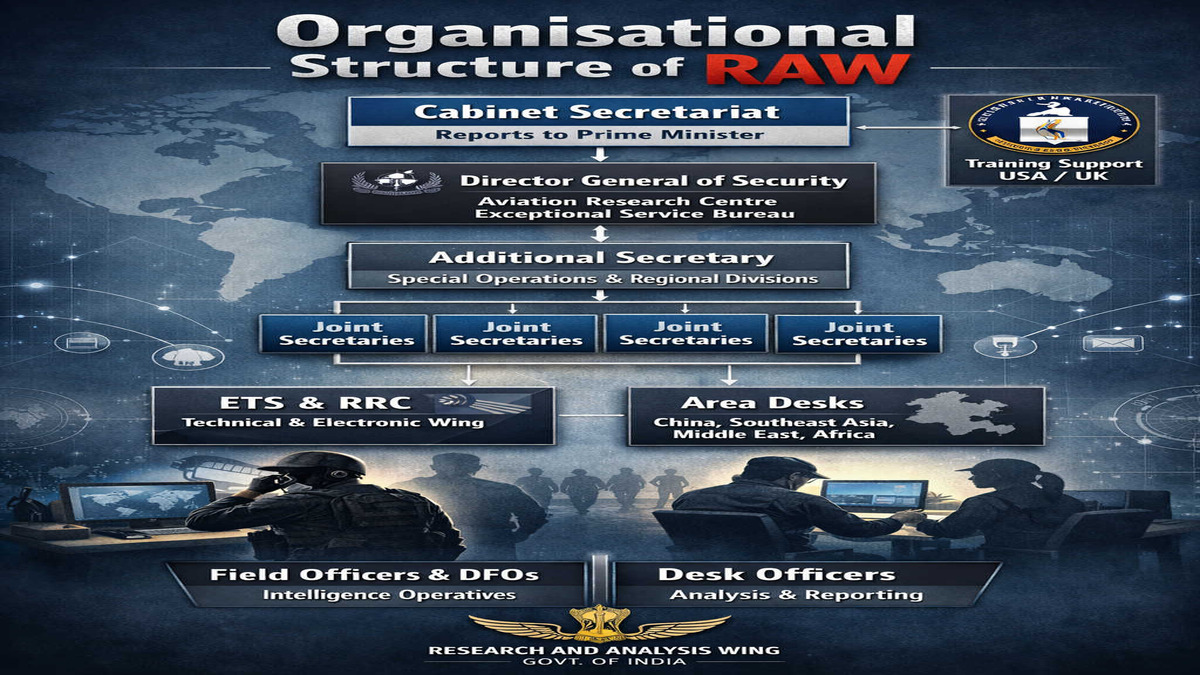
CIA is responsible for the organization of the Research & Analysis Wing the head of Raw is drawn from the cabinet secretariat They have the benefit of training in either USA or the UK. The administration works under the prime minister’s instruction and makes a report on an administrative basis to the cabinet secretariat. The secretary regularly informs the national security advisor, and the secretaries are:

  • Additional secretary – the additional secretary is responsible for special operations and collects a large number of information from different countries with the help of many joint secretaries. In addition, he acts as the head of various regional departments, which include the area of China, Southeast Asia, and Middle East Africa; ETC., the head of the electronic and technical department, also called a nodal agency for ETS and RRC. Both submit their report to the additional secretary.
  • Director General – the director general of security has two critical sections the Aviation Research Center and the Exceptional Service Bureau. 

The internal security of Raw is a matter of speculation. New Delhi has many headquarters with direct links from abroad and is headed by officers who keep records of projects posted overseas. The deputy and deputy field officers collected the necessary information and checked or processed it with the senior or desk officers. Then the desk officers passed this information to the joint secretary, which was given to the additional secretary and circulated to the end users. Many female agents are working in RAW, even at the operational level.

Now the RAW shifted its focus from Pakistan to China and made a separate desk for this purpose. The JIC Joint Secretariat committee comes under the cabinet secretariat and is responsible for maintaining the intelligence agency between RAW and the DIA intelligence bureau of the Defence Intelligence Agency. The JIC was established in 1999 after the approval of the National Security Council. Raw is a wing of the cabinet secretariat, not answerable to the PM of India on any issue.

Training of Raw

Training of Raw

The training was divided into two stages:  

Basic training of RAW

The basic training, the trainers use inspirational talks to boost the moral values of the newcomer. It takes ten days to familiarize the recruit with the new world and learn about trade crafts techniques and how to classify the information and thoughts. In addition, the trainer provides trainees with information about financial and economic analysis, space technology, security information, energy security, and scientific knowledge.

They are also familiar with geostrategic research and learn some specific foreign languages. The case study of agencies like the CIA, KGB, and ISI Mossad  MI6  is also critical. In this training, trainers taught about Intelligence organizations and how to identify who is a friend and enemy.   

Advanced training

The student attacked the field intelligence bureau in this training. It takes approx. 1-2 years, they are given experience in the field. They conduct undercover operations and night exercises under realistic conditions. They learn about infiltration and exfiltration and are also taught if they are caught ho to face interrogation. In addition, they will learn the art of reconnoitre, making contacts, and different skills, which are essential for operating the intelligence mission.

Before their development, exhausting training is given to recruits to polish their skills and the art of defence and how to use technical espionage devices.   

Recruitment Process Of RAW

In the earlier time, RAW primarily trained officers who were appointed directly. These belong to the external wings of the intelligence bureau, and the candidates are selected from IPS, civil servants, and the armed forces of India, but later, they directly post graduates from universities. In 1938 RAW had its service cadre known as research and analysis services (RAS).

In this, there is direct recruitment of class 1st officers. They trained under the foundation of the National Academy of Administration or LalbahadurShastri, and at the end, there is an interview based on a psychological test.

How to contact RAW

To contact the RAW first, you need to get the NIA known as a national investigation agency, and the address is given below :

  • 7th floor, Umbrella Hills MTNL telephone exchange, Pedder road, Mumbai, Maharashtra- 400026
  • Mobile number – 022-23550650 fax -022-23542525
  • The RAW email address is – info.mum.nia@gov.in

Amazing facts about RAW

Amazing facts of Raw

  • The motto of RAW धर्मोरक्षतिरक्षित, based on he who does not observe dharma is destroyed, while the whole follows is protected. Dharma, in the context, stands for the nation. 
  • Raw is an external agency that existed after the Indo-China War and the Pakistan-India War. After this war, we felt the need for an external agency; before this, the intelligence bureau is responsible for internal and external intelligence.
  • Raw successfully kept India’s first nuclear test secret, named Operation Smiling Buddha. 
  • The extraordinary artist Ravindra Kaushik played a spy role in Pakistan. He joined the Pakistan army and served at the rank of major and saved thousands of Indian lives by sending essential information or data.
  • Kargil war RAW successfully trapped the conversation between the Pakistan general Parvez Musharraf and Lt.Gen. Mohd Aziz.
  • RAW successfully trapped the conversation of terrorists about 2-6 months before the Mumbai attack.

Conclusion

The person serving under RAW as an undercover agent must get full government support and security. Even after their death, they do not get the love of their motherland. They are trained intelligence officers responsible for collecting essential information for securing the nation’s interest.

Faqs on RAW

Q1. Who is responsible for the analytical research wing?

Ans:- The head of Raw in the cabinet secretariat, under the authority of the Indian Prime Minister, is responsible for the RAW.

Q2. How do you apply for RAW?

Ans:- You join RAW through the UPSC exam. 

Q3. Can RAW agents tell about their personal information?

Ans:- Those eligible to join Raw should not tell about their family, friends, or other important information. Instead, they work in disguise form.

Q4. Is raw a permanent job?

Ans:- No, it is not a permanent job, but the person can earn 0.8-1.3 lakh per month in this job.

Q5. What is the RAW full form?

Ans:- The RAW full form is Research and Analysis Wing, which is India’s external intelligence agency responsible for gathering foreign intelligence.

Q6. What does RAW do in India?

Ans:- RAW collects intelligence from other countries, monitors threats, and helps the government make decisions related to national security and foreign affairs.

Q7. When was RAW established?

Ans:- RAW was established in the year 1968 after the Indo-China and Indo-Pak wars to strengthen India’s intelligence system.

Q8. Who controls RAW in India?

Ans:- RAW operates under the Prime Minister’s Office (PMO) and is supervised by the Cabinet Secretariat of India.

Q9. What is the salary of a RAW agent in India?

Ans:- The salary of a RAW agent varies based on position and experience, but it generally ranges between ₹80,000 to ₹1.5 lakh per month along with additional benefits.

Q10. Is RAW India’s secret agency?

Ans:- Yes, RAW is considered a secret intelligence agency because its operations, missions, and agent identities are highly confidential.

Also Read: Top Intelligence Agency in the World – RAW, ISI, CIA, KGB, MOSAAD

Related Articles:

The Olympic Games: History, Significance, Achievements, and Disputes

National Pension Scheme – Benefit, Features, Pros & cons


Career Options for Ex-Servicemen Post Defence Tenure

Career Options for Ex-Servicemen Post Defence Tenure

Career Options for Ex-Servicemen: Every nation manages a huge workforce which is assigned the task of protecting & safeguarding the public.  As we send men and women to guard the values that we believe in, these men & women carry the nation’s flag in pride and even let go of all their freedom back home to endeavour into sometimes violent territories. However, after serving the country faithfully, sadly, such individuals come home to an economy which does not greet them. The economy considers them as burdens because they are anxious to find jobs; some of them even suffer from the effects of staying on battlefields such as post-traumatic stress disorder. A nation should change its attitudes towards military veterans/ex-servicemen by ensuring enough careers for their survival.

Job Requirement for Ex-Servicement / Military Veterans

  • Many people usually have the misconception that the only job that a military veteran can take up has to do with security. Though a career in security is an option, there are several other careers which military veterans can successfully accept. It is important to note that, the military has some of the best brains from the nation. One of the strong proofs for this fact is that the internet was first developed by the American military. The military connects in all kinds of expert undertakings which require professionals such as engineers, project managers, IT professionals, administrators, doctors, pilots, nurses and even lawyers. The military ensures that it successfully trains servicemen to be professionals in specific fields depending on their respective talents. In spirit of this fact, after these people leave the military they would hold onto a lot of options by taking advantage of their experience.
  • Life of a defence professional is something interesting and due to the level of risk involved, only a few people gather the courage to join the sector. Also, these individuals take pleasure in serving the nation for several years. After having served the nation for many years, ex-servicemen look for jobs to keep themselves going on to continue their service for the nation in some form or another.
  • Presently, in India, special importance is given to ex-servicemen candidates in different private and government job openings. This is a wonderful initiative to help out the nation’s servants to proceed with a decent life after the completion of their Defence service. Currently, there are many employment opportunities available in India for such professionals.
  • Earlier, people hardly thought about working after retirement, but in today’s world, most of people desire to earn something even after their official service age is completed. Ex-servicemen look for some ways to keep themselves linked to the nation and that is the primary reason they look for employment opportunities post their defence tenure.

Career Options for Ex-Servicemen

Are you confused about what to do when you are done with your service period? There are many career options for Ex-servicemen post you are retired from your service. We are exploring few of them here.

Facility/ HR Manager in the Private Sector

It is interesting to know that several managerial positions in the corporate sector are tailor-made for ex-servicemen. The leadership qualities and expertise in handling military troops, when the individuals were serving for the nation can be utilized in these positions offered in the corporate sector. Generally, the corporate world is highly aware that leadership qualities or team-leading ability comes easily for ex-servicemen and as a reason for such positions these professionals are given an upper hand.

Moreover, it is believed that the element of respect that an ex-serviceman can bring to the table is hard for an individual with years of experience in the field of HR to manage. However, some people argue that Ex-servicemen should not enter the corporate sector as the army and IT are two varied fields, so ex-servicemen will find it tough to cope with the fresh training sessions. So, it completely depends on the individual to decide before applying for a managerial position available in the corporate sector.

Security Officers/Supervisors

Surely, these professionals after having served the nation and the people by offering them security from foreign threats can very well pursue their retired life as Security officers or supervisors. The fundamental skills needed for this position involve guiding the security guards in situations covering emergencies, the ability to coordinate security training, work delegation and good communication ability. Several organizations operating in different sectors are quite particular about employing ex-servicemen for these posts.

Government Service 

Generally, when it comes to government service or ‘Sarkari Naukri’ in India, it is specified that a certain percentage of positions are booked for ex-servicemen. So, after retiring from the nation’s defence, these professionals can try out their future in government service, either central or state. The central government offers a reservation of 10% for group C and 20% for group D positions during the government job notifications. Considering the state government, the reservation is primarily decided depending on the number of ex-servicemen living in the country. 

Resident Medical Doctors

Generally, institutions consider ex-servicemen for the residential medical doctor position to ensure that their members can be in constant medical examination. On this position, ex-servicemen will have to carry out medical tests on individuals during admission and should offer counselling from time to time to supervise the condition of the patients. 

Hostel Warden

It is important to know that, ex-servicemen have carried most of their life in a disciplined routine. And with this fact, they can be easily appointed as hostel wardens. It is believed that these professionals can keep strict supervision on the students staying at the hostel and can very well ensure a disciplined environment. This is a primary reason why special importance is given to these professionals for such posts.

Clerical Jobs

The defense has several job segments which also involve clerical jobs. Those individuals who have taken care of clerical jobs in the defence can search for a similar profession in the government and even private organizations. Nowadays, there are numerous job notifications for ex-servicemen in the newspapers and on online websites which can prove quite beneficial. 

Final Say

Hopefully all you ex-servicemen know what to do when you are done with your period of service.

Also Read: 10 Career Decisions That Make More Sense Than an MBA

How Many Weeks In A Year

How many weeks in a year

Time management is essential in today’s fast-paced world, and understanding the number of weeks in a year is a helpful way to plan and manage our time. While the answer to how many weeks in a year seems straightforward, there’s more to it than meets the eye.

How Many Weeks in a Year?

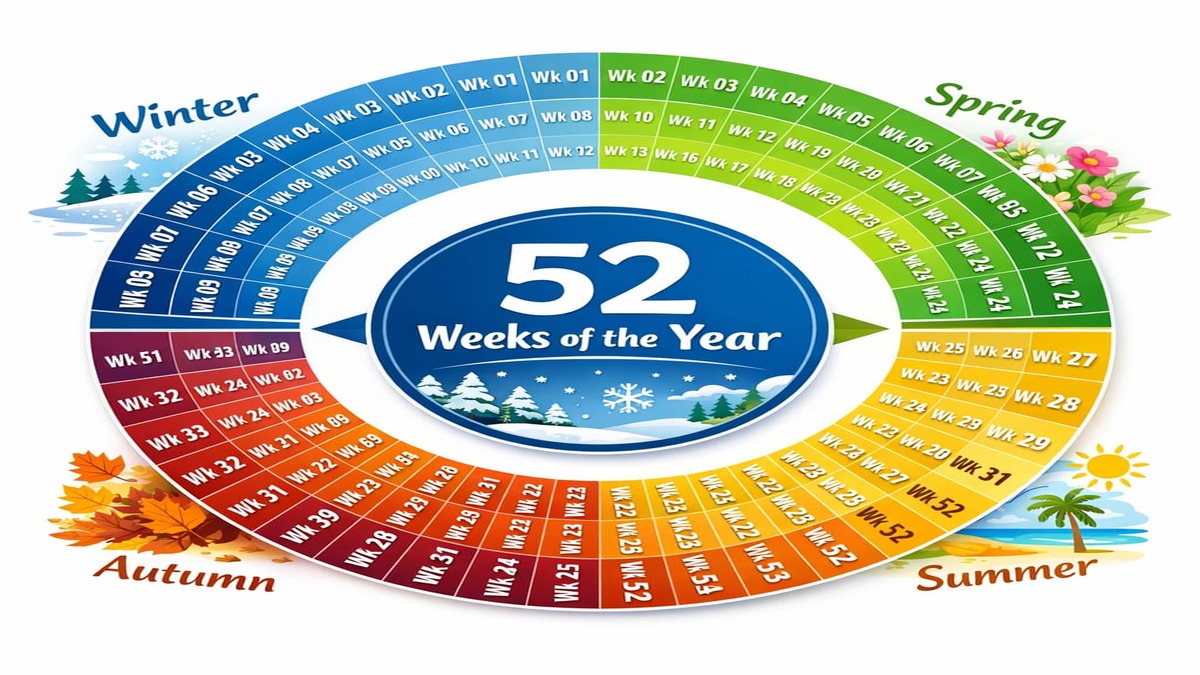
There are many exciting questions about weeks in a year. It looks like it’s just a tiny question, while its solution has a considerable history behind it. A typical year has 52 weeks. However, because most years consist of 365 days, there’s also one extra day (52 weeks x 7 days = 364 days, leaving us with 1 extra day).

A leap year, on the other hand, has 366 days. This means there’s an additional extra day (52 weeks and 2 extra days) in a leap year.

Concept of calculating weeks in a year

The concept of calculating weeks came from the Gregorian calendarIt was introduced in Georgia in 1582. After every 4 years, there is a leap year which includes 366 days and 52 weeks. In a contrasting calculation, 366 divided by 7, which is approximately 52.288, eventually leading to 52 weeks. 

A week includes 7 days. The concept came from the revolution of the moon. The moon completes its cycle in 29.4 days which can barely be calculated, so the philosophers rounded the figure and took it as 28 days. Later divided these 28 into four, eventually calculated into a week of 7 days.

 It can be the prime reason for the four weeks in a month. Various organizations define that the week starts on Monday, while some still think that the first day of the week is Sunday, which is still a matter of discussion. 

If you want to get more accurate detail, we can define it as there are :

  • 1 year includes 52 weeks
  • The year comprises 12 months
  • One year consists of 0.1 decades
  • My year contains 8. 760 hours
  • The year includes 525. 600 minutes

2024: A Leap Year

In 2024, we will experience a leap year. Leap years occur every four years when an extra day (February 29) is added to the calendar to keep our system aligned with the Earth’s orbit around the Sun. The additional day brings the total to 366 days, giving us 52 weeks and 2 extra days.

Here’s how the number of weeks and days are calculated in both normal and leap years:

  • Normal Year: 365 days = 52 weeks + 1 day
  • Leap Year: 366 days = 52 weeks + 2 days

Does Every Year Have Exactly 52 Weeks?

Not necessarily. As seen, both normal and leap years have slightly more than 52 full weeks. The extra 1 or 2 days can cause the total week count to vary. Some years may appear to have 53 weeks, but these are simply years where the extra days result in an additional week spilling over into the next year.

Calculating Weeks in Any Year

To calculate the number of weeks in any year, divide the total number of days by 7:

  • Normal Year: 365 ÷ 7 = 52 weeks and 1 extra day
  • Leap Year: 366 ÷ 7 = 52 weeks and 2 extra days

The remaining extra days explain why calendar years sometimes feel longer or shorter, with holidays shifting slightly each year.

Interesting Facts About Weeks and Calendars

  • The 7-day week is an ancient tradition observed across many cultures and religions, dating back to ancient Mesopotamia.
  • Leap years were introduced by Julius Caesar in 46 B.C. to keep the calendar year synchronized with the solar year.
  • Even though leap years add an extra day, the Earth’s orbit around the Sun takes slightly more than 365 days, which is why we need the leap year system to stay accurate.

52 Weeks in 2025 with Start and End Dates (Including Days of the Week)

Week Number Start Date Start Day End Date End Day
1 Jan 1, 2025 Wednesday Jan 5, 2025 Sunday
2 Jan 6, 2025 Monday Jan 12, 2025 Sunday
3 Jan 13, 2025 Monday Jan 19, 2025 Sunday
4 Jan 20, 2025 Monday Jan 26, 2025 Sunday
5 Jan 27, 2025 Monday Feb 2, 2025 Sunday
6 Feb 3, 2025 Monday Feb 9, 2025 Sunday
7 Feb 10, 2025 Monday Feb 16, 2025 Sunday
8 Feb 17, 2025 Monday Feb 23, 2025 Sunday
9 Feb 24, 2025 Monday Mar 2, 2025 Sunday
10 Mar 3, 2025 Monday Mar 9, 2025 Sunday
11 Mar 10, 2025 Monday Mar 16, 2025 Sunday
12 Mar 17, 2025 Monday Mar 23, 2025 Sunday
13 Mar 24, 2025 Monday Mar 30, 2025 Sunday
14 Mar 31, 2025 Monday Apr 6, 2025 Sunday
15 Apr 7, 2025 Monday Apr 13, 2025 Sunday
16 Apr 14, 2025 Monday Apr 20, 2025 Sunday
17 Apr 21, 2025 Monday Apr 27, 2025 Sunday
18 Apr 28, 2025 Monday May 4, 2025 Sunday
19 May 5, 2025 Monday May 11, 2025 Sunday
20 May 12, 2025 Monday May 18, 2025 Sunday
21 May 19, 2025 Monday May 25, 2025 Sunday
22 May 26, 2025 Monday Jun 1, 2025 Sunday
23 Jun 2, 2025 Monday Jun 8, 2025 Sunday
24 Jun 9, 2025 Monday Jun 15, 2025 Sunday
25 Jun 16, 2025 Monday Jun 22, 2025 Sunday
26 Jun 23, 2025 Monday Jun 29, 2025 Sunday
27 Jun 30, 2025 Monday Jul 6, 2025 Sunday
28 Jul 7, 2025 Monday Jul 13, 2025 Sunday
29 Jul 14, 2025 Monday Jul 20, 2025 Sunday
30 Jul 21, 2025 Monday Jul 27, 2025 Sunday
31 Jul 28, 2025 Monday Aug 3, 2025 Sunday
32 Aug 4, 2025 Monday Aug 10, 2025 Sunday
33 Aug 11, 2025 Monday Aug 17, 2025 Sunday
34 Aug 18, 2025 Monday Aug 24, 2025 Sunday
35 Aug 25, 2025 Monday Aug 31, 2025 Sunday
36 Sep 1, 2025 Monday Sep 7, 2025 Sunday
37 Sep 8, 2025 Monday Sep 14, 2025 Sunday
38 Sep 15, 2025 Monday Sep 21, 2025 Sunday
39 Sep 22, 2025 Monday Sep 28, 2025 Sunday
40 Sep 29, 2025 Monday Oct 5, 2025 Sunday
41 Oct 6, 2025 Monday Oct 12, 2025 Sunday
42 Oct 13, 2025 Monday Oct 19, 2025 Sunday
43 Oct 20, 2025 Monday Oct 26, 2025 Sunday
44 Oct 27, 2025 Monday Nov 2, 2025 Sunday
45 Nov 3, 2025 Monday Nov 9, 2025 Sunday
46 Nov 10, 2025 Monday Nov 16, 2025 Sunday
47 Nov 17, 2025 Monday Nov 23, 2025 Sunday
48 Nov 24, 2025 Monday Nov 30, 2025 Sunday
49 Dec 1, 2025 Monday Dec 7, 2025 Sunday
50 Dec 8, 2025 Monday Dec 14, 2025 Sunday
51 Dec 15, 2025 Monday Dec 21, 2025 Sunday
52 Dec 22, 2025 Monday Dec 28, 2025 Sunday

52 Weeks in 2024 with Start and End Dates (Including Days of the Week)

Week Number Start Date Start Day End Date End Day
1 Jan 1, 2024 Monday Jan 7, 2024 Sunday
2 Jan 8, 2024 Monday Jan 14, 2024 Sunday
3 Jan 15, 2024 Monday Jan 21, 2024 Sunday
4 Jan 22, 2024 Monday Jan 28, 2024 Sunday
5 Jan 29, 2024 Monday Feb 4, 2024 Sunday
6 Feb 5, 2024 Monday Feb 11, 2024 Sunday
7 Feb 12, 2024 Monday Feb 18, 2024 Sunday
8 Feb 19, 2024 Monday Feb 25, 2024 Sunday
9 Feb 26, 2024 Monday Mar 3, 2024 Sunday
10 Mar 4, 2024 Monday Mar 10, 2024 Sunday
11 Mar 11, 2024 Monday Mar 17, 2024 Sunday
12 Mar 18, 2024 Monday Mar 24, 2024 Sunday
13 Mar 25, 2024 Monday Mar 31, 2024 Sunday
14 Apr 1, 2024 Monday Apr 7, 2024 Sunday
15 Apr 8, 2024 Monday Apr 14, 2024 Sunday
16 Apr 15, 2024 Monday Apr 21, 2024 Sunday
17 Apr 22, 2024 Monday Apr 28, 2024 Sunday
18 Apr 29, 2024 Monday May 5, 2024 Sunday
19 May 6, 2024 Monday May 12, 2024 Sunday
20 May 13, 2024 Monday May 19, 2024 Sunday
21 May 20, 2024 Monday May 26, 2024 Sunday
22 May 27, 2024 Monday Jun 2, 2024 Sunday
23 Jun 3, 2024 Monday Jun 9, 2024 Sunday
24 Jun 10, 2024 Monday Jun 16, 2024 Sunday
25 Jun 17, 2024 Monday Jun 23, 2024 Sunday
26 Jun 24, 2024 Monday Jun 30, 2024 Sunday
27 Jul 1, 2024 Monday Jul 7, 2024 Sunday
28 Jul 8, 2024 Monday Jul 14, 2024 Sunday
29 Jul 15, 2024 Monday Jul 21, 2024 Sunday
30 Jul 22, 2024 Monday Jul 28, 2024 Sunday
31 Jul 29, 2024 Monday Aug 4, 2024 Sunday
32 Aug 5, 2024 Monday Aug 11, 2024 Sunday
33 Aug 12, 2024 Monday Aug 18, 2024 Sunday
34 Aug 19, 2024 Monday Aug 25, 2024 Sunday
35 Aug 26, 2024 Monday Sep 1, 2024 Sunday
36 Sep 2, 2024 Monday Sep 8, 2024 Sunday
37 Sep 9, 2024 Monday Sep 15, 2024 Sunday
38 Sep 16, 2024 Monday Sep 22, 2024 Sunday
39 Sep 23, 2024 Monday Sep 29, 2024 Sunday
40 Sep 30, 2024 Monday Oct 6, 2024 Sunday
41 Oct 7, 2024 Monday Oct 13, 2024 Sunday
42 Oct 14, 2024 Monday Oct 20, 2024 Sunday
43 Oct 21, 2024 Monday Oct 27, 2024 Sunday
44 Oct 28, 2024 Monday Nov 3, 2024 Sunday
45 Nov 4, 2024 Monday Nov 10, 2024 Sunday
46 Nov 11, 2024 Monday Nov 17, 2024 Sunday
47 Nov 18, 2024 Monday Nov 24, 2024 Sunday
48 Nov 25, 2024 Monday Dec 1, 2024 Sunday
49 Dec 2, 2024 Monday Dec 8, 2024 Sunday
50 Dec 9, 2024 Monday Dec 15, 2024 Sunday
51 Dec 16, 2024 Monday Dec 22, 2024 Sunday
52 Dec 23, 2024 Monday Dec 29, 2024 Sunday

Additional Info:

  • Week 1 starts on January 1, 2024, which is a Monday, and the year ends on December 31, 2024, which is a Tuesday.
  • The extra day from the leap year does not change the 52-week format but adds 2 extra days at the end of the year.

Holidays in 2024

Occasion

No. of holidays

Weekends

52

Saturdays

52

Sundays

51

Federal holidays

9

Total working days

250

Also Read: State and Union Territory Holiday Calendar 2024

Total number of weeks in 2023

Here is the complete detail of the weeks of the year 2023:

Weeks of the Year

  • Week 00: December 26, 2022, to January 1, 2023
  • Week 01: January 2, 2023, to January 8, 2023
  • Week 02: January 9, 2023, to January 15, 2023
  • Week 03: January 16, 2023, to January 22, 2023
  • Week 04: January 24, 2023, to January 29, 2023
  • Week 05: January 30, 2023, to February 5, 2023
  • Week 06: February 6, 2023, to February 12, 2023
  • Week 07: February 13, 2023, to February 19, 2023
  • Week 08: February 20, 2023, to February 26, 2023
  • Week 09: February 27, 2023, to March 5, 2023
  • Week 10: March 7, 2023, to March 12, 2023
  • Week 11: March 13, 2023, to March 20, 2023
  • Week 12: March 20, 2023, to March 26, 2023
  • Week 13: March 27, 2023, to April 2, 2023
  • Week 14: April 3, 2023, to April 9, 2023
  • Week 15: April 10, 2023, to April 16, 2023
  • Week 16: April 17, 2023, to April 23, 2023
  • Week 17: April 24, 2023, to April 30, 2023
  • Week 18: May 1, 2023, to May 7, 2023
  • Week 19: May 8, 2023, to May 14, 2023
  • Week 20: May 15, 2023, to May 20, 2023
  • Week 21: May 22, 2023, to May 28, 2023
  • Week 22: May 29, 2023, to June 4, 2023
  • Week 23: June 5, 2023, to June 11, 2023
  • Week 24: June 12, 2023, to June 18, 2023
  • Week 25: June 19, 2023, to June 26, 2023
  • Week 26: June 26, 2023, to July 2, 2023
  • Week 27: July 3, 2023, to July 9, 2023
  • Week 28: July 10, 2023, to July 16, 2023
  • Week 29: July 17, 2023, to July 23, 2023
  • Week 30: July 24, 2023, to July 30, 2023
  • Week 31: July 31, 2023, to August 6, 2023
  • Week 32: August 7, 2023, to August 13, 2023
  • Week 33: August 14, 2023, to August 20, 2023
  • Week 34: August 21, 2023, to August 27, 2023
  • Week 35: August 28, 2023, to September 3, 2023
  • Week 36: September 4, 2023, to September 10, 2023
  • Week 37: September 11, 2023, to September 17, 2023
  • Week 38: September 18, 2023, to September 24, 2023
  • Week 39: September 25, 2023, to October 1, 2023
  • Week 40: October 2, 2023, to October 8, 2023
  • Week 41: October 9, 2023, to October 15, 2023
  • Week 42: October 16, 2023, to October 22, 2023
  • Week 43: October 23, 2023, to October 20, 2023
  • Week 44: October 30, 2023, to November 5, 2023
  • Week 45: November 6, 2023, to November 12, 2023
  • Week 46: November 13, 2023, to November 19, 2023
  • Week 47: November 20, 2023, to November 26, 2023
  • Week 48: November 27, 2023, to December 3, 2023
  • Week 49: December 4, 2023, to December 10, 2022
  • Week 50: December 11, 2023, to December 17, 2023
  • Week 51: December 18, 2023, to December 24, 2023
  • Week 52: December 25, 2023, to December 31, 2023 

Numbers of weeks in years

The Gregorian calendar has defined a particular year’s weeks and days. The following table will provide information regarding the number of weeks, and days included in it, which is given below :

Year

Number of weeks

Number of days

2016

52 weeks and two day

366

2017

52 weeks and one day

365

2018

52 weeks and one day

365

2019

52 weeks and one day

365

2020

52 weeks and two days

366

2021

52 weeks and one day

365

2022

52 weeks and one day

365

2023

52 weeks and one day

365

2024

52 weeks and two days

366

2025

52 weeks and one day

365

Conclusion

In conclusion, a year usually has 52 weeks, but there’s always an extra day (or two in leap years). Understanding this concept can help with better planning and time management. Whether it’s for work schedules, academic planning, or personal growth, knowing how many weeks in a year can help you keep track of time effectively.

FAQs on weeks in a year

Q1. Which year has 53 weeks?

Ans: The year 53 weeks did not occur often. It happens after approximately six years which are 2006, 2012, 2017, and 2023.

Q2. How many weeks are there in a year?

Ans: A Year has 52 weeks and 1 day. This is based on 365 days divided by 7 days per week.

Q3. How many weeks are in a leap year?

Ans: A leap year has 52 weeks and 2 days because it contains 366 days.

Q4. Can a year have 53 weeks?

Ans: Yes, some years have 53 weeks depending on how the calendar days fall at the beginning and end of the year.

Q5. Why does a year have 52 weeks?

Ans: A year has 365 days, and when divided by 7 days in a week, it equals 52 full weeks plus 1 extra day.

Q6. How many working weeks are in a year?

Ans: There are typically 48 to 50 working weeks in a year after excluding holidays and vacation time.

Q7. How many weekends are in a year?

Ans: There are 52 weekends in a year, which means 104 weekend days (Saturday and Sunday).

Q8. How many weeks are in 12 months?

Ans: Twelve months together make 52 weeks and 1 day in a normal year.

Q9. How many weeks are in 365 days?

Ans: 365 days equal 52 weeks and 1 day.

Q10. How many weeks are in 366 days?

Ans: 366 days equal 52 weeks and 2 days.

Q11. How many weeks are there in 2026?

Ans: The year 2026 has 52 weeks and 1 day because it is not a leap year.

Q12. How many weeks are in a month?

Ans: Most months have 4 weeks, but some months have 4 weeks and 2–3 days.

Q13. Do all years have the same number of weeks?

Ans: Most years have 52 weeks, but occasionally a year can contain 53 weeks.

Reference Video: How many weeks in a year?

Reference Video: Why there are 52 weeks in a year?
Why there are 52 weeks in a year?

Also Read: State and Union Territory Holiday Calendar

Related Article:

12 Months of the Year: All Month Name in Hindi & English (Hindu Calendar)

National Calendar of India – History and Uses

The Gregorian Calendar – History and Facts

IOQJS – Indian Olympiad Qualifier in Junior Science

IOQJS (Indian Olympiad qualifier in junior science )

Indian Olympiad qualifier in junior science (IOQJS) is the first level for the international science Olympiad. It is a single-level test with a time limit of three hours. The examination is usually held in January and consists of two papers. This examination is conducted by the IAPT and  HBCSE mutually. The primary purpose of this examination is to provide basic knowledge about science to the students. In addition, it gives a platform for the students to multiply their abilities and skills in the field of science. 

IOQJS Overview

Conducting Body

IAPT and HBCSE

Conducted during

January

Total timing

3 hours

No. of papers

2

Medium of language

English

Applicable for

Students of classes 11th and 12th

IOQJS Exam pattern

The Indian Olympiad qualifier in junior science is for secondary school students, and this Olympiad covers all the important topics from physics, mathematics, and biology. The detailed exam pattern of the IOQJS Olympiad is given below :

Exam pattern

Detail

Exam duration

There are two paper Paper 1- 1 hour Paper2 – 2 hour Total time- 3 hour

Exam mode

Pen and paper-based

Type of question

Pa[er 1 contains multiple choice questions, and paper two has subjective type question

Negative marking

-1 mark for every wrong answer

IOQJS Eligibility Criteria

The Indian Olympiad qualifier in junior science is a local-level examination conducted to select participants for national and international. Therefore, before appearing for the test, the students should be aware of all the requirement need to be filled. Important criteria that students need to remember are as follows :

  1. The students who are interested in the examination of IOQJS can not appear in the other international test such as IOQ S, IOQB, IOQA, and IOQP. 
  2. The student must have been born between 1st January 2006 and 31st  December 2007.
  3. The candidate must be an Indian native and only acquire an education in India. 
  4. A candidate still needs to complete their studies and start their higher education in college or any institution.
  5. The candidate must have a passport with them.
  6. The students from India or NRI are not eligible to appear in the examination.
  7. The candidate should be studying at any of the affiliated boards, such as CBSE,  ICSE, or any state board that can partition into this examination.
  8. Only those candidates can appear into the examination who have studied since 30th November 2018 or before 30th November 2018.
  9. Any student who was a school student till November  2018 is also eligible to give this examination.

Syllabus for IOQJS examination

Indian Olympiad qualifier in junior science is a national-level examination conducted by the Indian association of physics teachers. The detailed syllabus of the IOQJS exam is given below:

Unit

Syllabus

Matter nature and behavior

Matter Definition Volume, density, shape, and other characteristics of solids, liquids, & gases. Absorption of heat & change of state Sublimation, Freezing, Melting, Evaporation, Condensation Elements, Mixtures & Compounds Homogenous & Heterogeneous mixtures Separation of the components of a mixture Solutions, & concentration of solutions Colloids & suspensions Atoms & molecules Atomic & molecular masses Law of constant proportions Relationship of mole to mass of particles Mole concept Protons, Neutrons, and Electrons Valency Isotopes Chemical formula and symbols of common compounds Isobars

Chemical substances

Types of chemical reactions Balanced chemical equations Definition and general properties of acids, bases, and salts Concept and importance of pH scale Preparation & Uses of: Bleaching powder Plaster of Paris Sodium hydroxide Washing and baking soda Metals & Non-metals Formation & properties of ionic compounds Reactivity series Corrosion and prevention of corrosion Properties of ionic compounds Metallurgical processes Nature & nomenclature of Carbon compounds with functional groups Homologous series Saturated & unsaturated carbon compounds Covalent bonding of carbon compounds, & their chemical properties Soaps & detergents Ethanol Ethanoic Acid Modern periodic table Atomic number Metallic & non-metallic properties Valency Early examples of periodic tables

Organization in the living world

Prokaryotic and Eukaryotic Cells Structure & functions of cells Cell organelles Structure & functions of plant tissues and animal tissues Biological Diversity Health & Diseases

Life Process

Control & coordination in plants and animals Heredity & Evolution Reproduction in animals and plants

Force motion and work

Force definition and types Newton’s laws Distance and displacement Velocity, acceleration, related graphs Uniform circular motion Gravitation Floatation Sound Work, Energy, & Power

Effect of electric current

electric current Potential difference Ohm’s law Resistance Series and parallel combination of resistors Heating effect of electric current Light Relation between P, R, I, and V. Magnetic effects of electric current

Light

Reflection Refraction Refractive index Magnification Functioning of the lens in a human eye Dispersion and scattering of light through a prism

Our environment

Physical Resources Biogeochemical cycles in nature Natural Resources

Food production

Use of fertilizers Organic farming Plant and animal breeding Selection for quality improvement and management Protection of crops from pests and disease

IOQJS Registration Process

  • Registration for the junior science Olympiad starts in October. 
  • Students who want to participate in this exam can register themselves through the official website that is iaptexam. in 
  • The application fees for the IOQJS exam will be the same as last year. 
  • The student is recommended to keep an eye on the official website of IAPT for information and current updates.

IOQJS Results

  • The exam result will be released online and notified on the official website of IAPT.
  • The result of paper one decides whether the student is eligible for the paper two exams.
  • Only those students can participate in the paper two who acquired over the cut-off in paper 1 
  • The Indian association of physics teachers and HBCSE has the authority the set the cut-off for every state and post it on their official website. 

Steps for checking the IOQJS result

  1. Go to the official website www,iapt.org.in.
  2. Next, enter your roll number and DOB. 
  3. Click on the submit button, check your result, take a screenshot, download fit, or future. 

FAQS on IOQJS

  • How can the student verify the exam result? 

Ans: The result is available on the official website of HBCSE and IAPT. You can check it using your password and account details. 

  • Are IOQJS and NSEJS similar exam 

Ans: Yes, these both are the same IOQJS is the combination of the NSEJS exam, and also, these both have the same syllabus from the secondary school level syllabus up to class 10.

  • How to enroll for the IOQJS exam  

Ans: Students can enroll on their official website and fill out the application form. The application window is enabled from November to December.

Also Read: All About Olympiads: Eligibility, Schedules, and Preparation Tips

NSEP (National Standard Examination In Physics)

NSEP (National Standard Examination In Physics)

The national standard examination in physics is organized by the Indian association of physics Teachers ( ISPT ). It is held all over the country for the students of classes 11th and 12th. This examination aims to select the participants for the international-level Olympiad. It is a single-level test. Before the national level, the regional level examination is conducted. The officials provide the answer key to the students after a week. It provides a platform for students who want to enhance their abilities in the field of physics.

Overview

Complete the form of the examination

NSEP (National standard examination in physics)

Conducting Body

Indian association of physics Teachers (IAPT)

Eligible classes

9th – 12th

Official website

https://www.Iapt.org.in

Exam pattern for NSEP

The question paper consists of 2 parts which are as follows:

Part 1 – This section consists of 50 multiple choice and 6 short answer-based questions. The marks are the same for all the questions. The question paper is both in Hindi and English.

Part 2- This section consists of reasoning-based questions. The second stage is challenging as it contains reasoning and skills questions.

Exam timing

8:30 am – 10:30 am

levels

2

Conducted for

11th and 12th students

Total no. of questions

70 multiple-choice-based questions

Total marks

240 marks

Eligibility criteria for NSEP

The students need to meet the eligibility criteria before applying for the examination.

  1.  The student must be a citizen of India. 
  2. Usually, age is the biggest concern in all the Olympiads, while in this, the candidate must be 15 – 20 years old. 
  3. Candidates can not appear in the examination if they have passed 12th grade.
  4.  It is compulsory to pay the registration fees to all the students.
  5. Candidates who have appeared in the prior international examination can not give this exam.
  6. The students must wait for the official declaration of results until they cannot enroll in any college.
  7. Candidates should be aware of all the rules and regulations that the officials provide.

Syllabus for NSEP

The students have to study the whole syllabus of 9th, 10th, 11th, and 12th grade before appearing for the examination. The most important topics are as follows:

Chapters

Important topics

Wave optics

YDSE with a monochrome light

Surface tension

Excess pressure in drops and bubbles

Rotation

Movement of inertia

Gravitation

The universal law of gravitation

Sound wave

Doppler effect, organ pipes, and resonance

Rectilinear motion

Equation of motion and motion under gravity

fluid

Archimedes' principle and force of buoyance

Newton’s law of motion

Calculation of power and acceleration

miscellaneous

miscellaneous

Modern physics - 1

Electronic transition in the hh like atomspecies, photoelectronic effect, x-ray

Heat transfer

Thermal conduction in the linear conductor

thermodynamics

The first law of thermodynamics, root mean square velocity, kinetic energy

Simple harmonic motion

Equation of SHM, spring-mass system

Work, power, energy

Work done by a variable force, work energy theorem

Semiconductor

Diode, logic gate, transistor

electrostatics

Coulomb's law, electric potential and potential difference, flux calculation and gauss's law, conductor and its properties, electric pressure

Electromagnetic induction

Self-inductance EMF and magnetic energy density

Electromagnetic field

Magnetic field due to a magnet and earth, magnetic fields due to a straight wire, magnetic field due to ring, magnetic force and torque on a current carrying loop, dipole moment, the magnetic force on a charge

Current electricity

The instrument, power, energy, battery, EMF, terminal voltage, and Kirchhoff's law

Circular motion

Kinematics of circular motion, circular motion in a vertical plane

Center of mass, momentum, and collision

Head–on collision, the motion of com

capacitor

A capacitor of a dielectric, combination of capacitors

Alternating current

Power consumed in AC circuit, resonance

Geometrical optics

Lens, reflection by spherical surface, refraction by the prism, spherical mirror, reflection in general, refraction at the plane surface and TIR

Registration Process For NSEP

The students can quickly fill out the registration form as the process is relatively easy and hassle-free. Students can register by themselves or through the educational centers. First, the students can fill out the registration form with all the essential details needed for registration. After that, they have to pay the fees to confirm the process. The registration fee for a student is 200. After registration, officials provide the students with the admit card and center information.

Result of NSEP

Once the whole conduction of the examination is completed, students are provided with the result. The examination result is usually declared after 4- 6 weeks of the examination. After that, students can check it on the official website.

FAQs

  • How many students are selected for the NSEP?

Ans: Approximately 20000 – 60000 students are selected for the examination.

  • What are the total marks in NSEP?

Ans: The total marks for the NSEP are 240, while each question has three marks.

  • What are the benefits of qualifying for NSEP?

Ans: The NSEP provides a platform for students to improve and challenge their abilities in the field of physics.

  • What comes after NSEP?

Ans: After completing the NSEP successfully, students are qualified for the international Olympiad.

Indian NSEJS (national standard examination in junior scientific)

Indian NSEJS (national standard examination in junior scientific)

The national standard examination in junior science is a national-level examination. It is a science Olympiad organized by the IAPT ( Indian association of physics Teachers). The NSEJS was first held in 1987; since then, it has been growing. Many students participate in this examination, and once you qualify, you will get a chance to appear in the international examination. This examination provides an opportunity for those students who want to enhance their ability and intelligence in science.

Stages of NSEJS 

Stage 1- Every year, more than 80000 students participate in this examination with the dream of qualifying for the merit list. However, only 300 lucky students are selected from 8000 students based on merit, and these 300 are eligible to participate in stage 2 of this examination. 

Stage 2 – It is a tricky part of this examination. Only those students are eligible to perform in this stage who scored more than 50%. The top 35 students get the invitation to the 2-week program. After that, only six students get the selection to represent India at an international junior science Olympiad.

Exam pattern of NSEJS

  1. The NSEJS exam contains multiple-choice type questions and focuses on the science topics such as biology,  mathematics, physics, chemistry,
  2. The time duration for this exam is 2 hours. 
  3. The total number of questions will be 80, covering all topics from physics, chemistry, biology, and mathematics. 
  4. There is also a concept of negative marking; 1 mark is deducted for every wrong answer.  

Subject

No of question

Marks

Biology

20

60

Chemistry

20

60

Mathematics

20

60

Physics

20

60

Total

80

240

Eligibility of NSEJS exam 

  1. Class 10th students are eligible for this exam.
  2. The student should verify their eligibility. Otherwise, the student disqualifies from the exam. 
  3. The candidate must b a citizen of India and currently studying in India.
  4. While giving this examination, the candidate can not appear in any alternative examination such as NSEP, NSEC, NSEB, or NSEA.
  5. The candidate should fill in their age carefully because if the details are wrong or above the age limits, the student will be excluded from the examination right away.
  6. The candidate must be born between 1st January 2007 and 31st December 2008.

Syllabus of NSEJS

Subjects

Topics

Physics

Light – concave mirror, deviation through two plane mirrors, T.I.R., shadow, Sound – echo, node, and antinode Electricity Work, energy efficiency, power and Magnetism and gravitation Simple harmonic motion – simple pendulum Fluid – flotation Force Heat radiation, anomalous behavior of water, thermal expansion Rectilinear motion – velocity motion, newton's law of motion Unit dimension Electrostatics – ohm’s law, coulomb's law, a combination of resistance, potential

Mathematics

Permutation and combination Arithmetic progression Area of parallelogram and triangle, similar triangles Geometric progression Linear equation in two variables Number system Quadratic equations Quadrilaterals Ratio and proportion Trigonometry

Chemistry

Acid, base, and salts Analytical Chemistry Metals and nonmetals Mole concept Carbon Study of gas laws Equivalent concept Periodic table and periodicity

biology

Biodiversity – chordates, monera, non-chordates Biotech-GMC Control and coordination Cell Biology Human health and disease immunity Reproduction – asexual reproduction Heredity and evolution -D.N.A., fingerprinting, D.N.A. Microbes in human welfare

NSEJS Registration Process

  • Interested students should register for this examination at the nearest exam center before the deadline. 
  • At the time of registration, the students can also choose the language they are comfortable with. The students can choose any language, Hindi or English. 

The step-by-step structure for the registration process Is given below :

  • Firstly you should visit the nearest exam center in your city or area. 
  • After visiting the center, the center coordinator will provide you with the application form for the NSEJS exam.
  • You must fill in all the necessary details on the form and submit them to the center before the deadline.

How to check the NSEJS exam result?

  • The result is published on the official website of IAPT.
  • You need to visit the website.
  • Enter your necessary details like roll number and date of birth. 
  • After verifying all the information, check your scores and download the result for future 

Important details required for checking the result are: 

  • Roll number 
  • Name of the student  
  • Total points 
  • Name and location of the schools 

FAQS 

  • When will the merit list of the NSEJS exam be released?

Ans: The merit list of NSEJS was released on the official website of IAPT through online mode. 

  • What do you mean by the merit list of the NSEJS exam? 

Ans: The merit list contains the names of selected students or the students who qualify for the NSEJS exam with their scores. The list is published on the official website. 

  • What is the next stage after preparing for the NSEJS exam? 

Ans: After passing the NSEJS exam, the student will be eligible to participate in the INJSO exam.

STEM Education

STEM Education

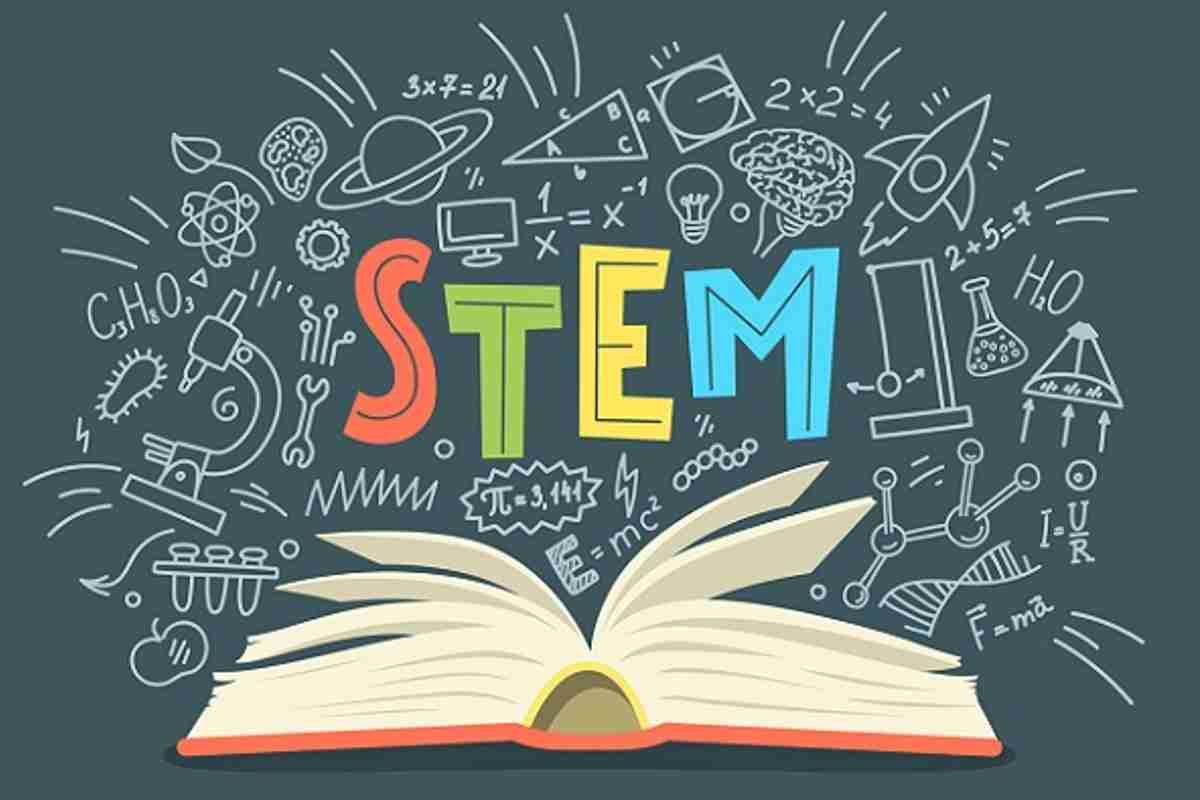
Education is one of the firmest pillars which is helpful for an individual’s growth and success, and in this article, we will briefly discuss STEM education. The STEM word stands for science, technology, engineering, and mathematics. All these subjects are fascinating and taught so students can learn and apply them. In addition, it promotes skill development and education, which is helpful for children to make their life successful.

What is STEM education? 

It is a transversal education in which science, technology, engineering, and mathematics are taught to develop students’ skills, logical thinking, and creativity. STEM provides project-based learning by which students can search for solutions from classroom learning. Technical vocational education and training is the extension of STEM by which the students can develop their skills and create self-employment by learning.

The objective of STEM education

The STEM education concept is essential for students to develop skills and critical thinking. So here we provide some crucial objectives to understand the primary goal of STEM.

1. Utilization of information and insight 

 STEM is a fundamental concept for the student, which allows students to explore the scientific field, Technological area, engineering, and mathematics area by utilizing the information and solving concept-based projects.

2. Best practices

STEM helps students choose the best practices to help them in the future and develop a solid aptitude for achieving the best career.

3. Knowledge acquisition and creativity 

 In STEM, the student can acquire knowledge and develop the skill to become capable of thinking of new ideas.

 Researching + thinking + applying = creating the main formula for success. 

Benefits of STEM education 

There are five benefits of STEM education which are discussed below:

  • Skill development 

 The primary benefit of STEM education is to provide basic knowledge to the student by developing their creativity, logical thinking, critical thinking, and analyzing power and making their innovative mindset.

  • Meeting global workplace demand.

 STEM education is provided in all parts of India and is globally accepted. Therefore, if any student graduates with STEM, They will get international recognization and can apply for a job anywhere in the world.

  • Edge over traditional students 

STEM focuses on the four primary disciplines science, technology, engineering, and mathematics. STEM contains a traditional approach, teaching our children everything but extra focus on primary subjects because they are essential in their skill development. Traditional education doesn’t focus on the practical part or implementation. It is only focused on books.  

  • Innovation in the stem area 

STEM develops the student’s critical thinking and skills, enhancing their imagination and creating an innovative mindset. According to the survey, innovation is a very abstract and essential component of economic growth. Creative minds have the power to change the world.

  • Encourage experimentation 

Experiments are the main factor of technological advancement. There are many innovations that many people make. STEM education promotes experiments and a creative mindset, allowing students to take risks while learning. 

Components of STEM education 

1. Problem-based learning 

In this learning, the students collect the data and analyze it. This helps them understand the scientific explanation and overcome the problems while conducting research. They also developed the prototype to solve the problem quickly and find its best solution. This activity encourages the students and creates an innovative mindset.

2. Career technology and life skills 

Innovation is a subject that needs a lot of learning and experiments. Learning through projects and internships significantly impacts the student’s career. It develops the student’s critical thinking, innovation, and communication skills.

3. The school community and belonging 

In this learning, the student is taught about respecting every individual and providing opportunities for the students to share their feelings with other students. It promotes an idea of harmony and brotherhood. This activity helps them develop communication skills and trust, which are essential for teamwork.

4. Rigorous learning 

Rigorous learning means the way the lesson can encourage the students and develop their thinking ability. In addition, this activity can help the student to memorize and recall the information.

Why is STEM education essential in India?

Five significant facts that determine the importance of STEM education in the Indian education sector are: 

  • It provides a better mindset among the students 
  • Promote the students for logical thinking 
  • It helps the students to make better leaders and decision maker in future 
  • Student can develop their skills and professionalism by learning in the early stage of education 
  • It promotes the idea of communication skill which promote the concept of brotherhood

STEM V/S traditional schooling 

Stem

Traditional

STEM provides education by using real-life concepts with lots of experiments.

Traditional education only focuses on theoretical education and concentrates only on books.

STEM education focuses on skill development and provides a free space for students to think of innovative ideas. That's why discoveries like 3D printers and water machines contribute to STEM.

Traditional education has stringent rules and a very clear-cut definition of what is right and what is wrong.

The STEM education system can excite students because it contains many innovative ideas and experiments. .

Traditional pencil and paper education has become dull.

Conclusion 

This article helps you understand STEM education and its necessity. Stem education is gaining popularity nowadays. It can encourage the students to learn through practical experiences and develop innovative skills. STEM education has become famous among early-age students because they can tap into their activity and create implementation to a single idea.

FAQS 

1-What is STEM?

Ans: The complete form of STEM is science, technology, engineering, and mathematics, and it is an academic discipline that is essential for the overall development of students.

2-Why is stem education important?

Ans: STEM education is essential for skill development and human prosperity. Scientists’ innovative ideas can make people’s lives better and very easy. Stem education is an excellent idea because it can help the students to encourage their hidden skills through experiments and practice.

3-How does stem education help the student?

Ans: STEM education helps to create innovative thinking among students. It makes them responsible citizens and encourages them to serve the country with their creative ideas.