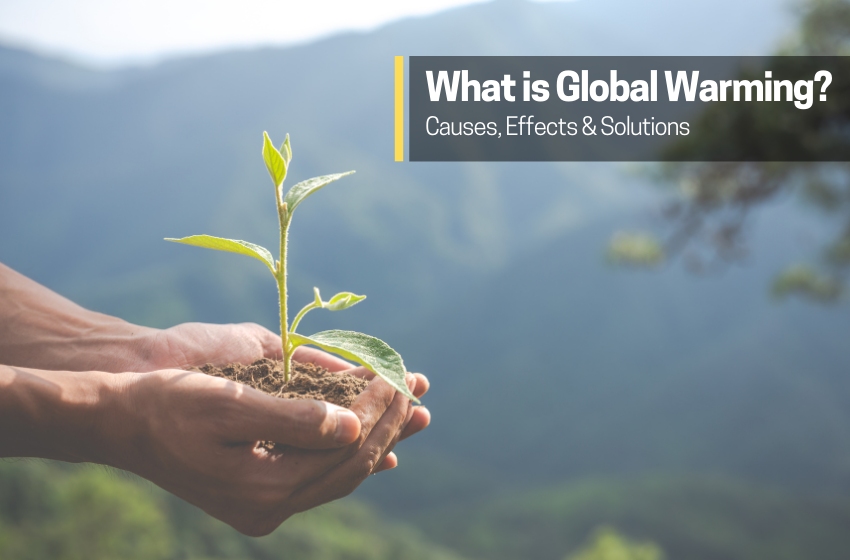
Modern climate changes include global warming and its effects on Earth’s weather patterns. Previously there were periods of climate change, but today’s change was considerably more rapid and was hardly caused by natural causes. Instead, they result in emissions of greenhouse gases, particularly CO2 or methane. Most fuel used as an energy source generates emissions. Besides agricultural practices, certain industries have also been involved in forestry. The greenhouse gas reaches the surface by being opaque to the sun and heats it up
What is Global Warming?
The common temperature enlarged at the quickest rate in recorded history and experts see the trend is fast changing. Global climate change deniers have argued that there has been a pause or a lag in rising international temperature.
Global Warming is the phenomenon of increased average air temperature close to the surface of the earth over the past one or 2 centuries. Climate scientists, since the middle twentieth century, gathered careful observation of assorted weather phenomena (such as temperature, precipitation, and storms ) and connected influences on climate (such as current and therefore the part chemical composition ). This information indicates the earth’s climate has increased over nearly every conceivable duration since the start of time with the influence of human activities. The start of the commercial revolution has been deeply plain-woven into the material of global climate change.
Causes and solutions of Global Warming
Global Warming happens when greenhouse gases increase in the atmosphere and along with air pollutants absorb daylight and radiation from the sunlight that is supposed to bounce off the earth’s atmosphere. These pollutants which may last for years to centuries within the atmosphere, trap the warmth and cause the earth to urge hotter that’s referred to as the greenhouse impact.
The major causes of Global warming are human activities like burning fossil fuels, deforestation, and farming. Let’s have a closer look:
1. Burning fossil fuels
When fossil fuels like coal, oil, and gas are burned to produce electricity or power, they release Carbon dioxide gas into the atmosphere. Australia is a big producer of carbon dioxide as compared to the rest of the world.
Electricity generation is the main cause of producing Carbon dioxide Australia produces 73% of electricity by burning coal and the remaining 13 % by gases.
Solution
- We should reduce the amount of electricity produced from coal and gases.
- We should increase the quantity of electricity from clean and renewable resources like solar energy.
2. Deforestation and Tree Clearing
Plants and trees play a very virtual role in our lives because they absorb carbon dioxide from the environment and release oxygen which is very important for all living organisms. But the humans destroyed a large area of vegetation around the world for farming, urbanization, and infrastructure. When vegetation is removed or burned, the released Carbon dioxide comes back into the atmosphere and leads to global warming.
Solution
- We should prevent deforestation and tree cleaning. Afforestation should be encouraged.
- Call our leaders to produce stronger laws against deforestation.
3. Fertilizers
Fertilizers produce greenhouse gases in the atmosphere but it also a great source of remediation. Nitrogen and carbon are affected by the fertilizers in the atmosphere. It originated from terrestrial and aquatic sources from crops, livestock, and forestry.
4. Oil Drilling
Crude oil is used to make petroleum products. The same fuel is used in aeroplanes, cars, and trucks and to make products such as medicines and plastics. Petroleum is very important for us but it also affects the environment. Exploring and drilling of land may disturb land and aquatic species it also affects vegetation.
5. Agriculture and Farming
Animals particularly livestock like sheep and cattle produce methane which is a greenhouse gas. With the increase In the grazing of livestock like in Australia. The methane produced leads to an increase in global warming.
6. Radiative Forcing
The temperature of the earth’s surface and lower atmosphere may be modified in 3 ways- A net increase in the solar radiation entering the top of the earth’s atmosphere, a Change in the fraction of the radiation reaching the surface, and a Change in the concentration of the greenhouse gases.
In all cases, change is in terms of radiative forcing which is a measure of the influence of a particular climate factor.
7. The influence of human activity on climate
Human activity has influenced global surface temperature by changing the radiative balance governing the earth on various timescales and at varying spatial scales. Human activities also lead the climate damage by changing and increasing the number of aerosols and ozone in the atmosphere.
Natural Causes of Global Warming
The main natural causes of global warming are:
1. Volcanoes
Volcanoes are one of the Largest natural contributors to global warming. The ash and smoke emitted during volcanic encryption go into the atmosphere and effects the environment.
2. Water Vapour
It is also a kind of greenhouse gas. Due to increases in the earth’s temperature, more water gets evaporated from the water bodies and stays in the atmosphere adding to global warming.
3. Forest Blazes
Forest fires emit a large amount of carbon dioxide and other harmful gases. These gases are released into the atmosphere and increase the earth’s temperature.
Effects of Global Warming
Global warming affects our physical environment and human societies. It conjointly includes the social and economic changes that stem from living in a hotter world. Several physical impacts of global climate change are already visible, along with extreme weather events like ice mass retreats (glaciers are large masses of ice that flow slowly downhills).
In seasonal events, the water level rise and it is very harmful to human beings. Because of climate variability, food insecurity takes place in several places and puts pressure on the water.
Global warming affects our environment, land, food, feed, fiber, timber, and energy. Rising temperature and dynamic precipitation pattern leads to an increase in extreme events which threaten development as a result of a negative impact on the economic process in developing countries.
1. Effect on weather
Global Warming results in a rise in weather events like heat waves, drought, cyclones, blizzards, and rainstorms. Such events can still occur gradually and at a dangerous level.
Higher temperatures end up in an increase in evaporation and surface drying. As the air warms, its water-holding capability increases.
2. Effect of temperature
Hot temperatures become worse and leads to several kinds of disasters, including storms, heatwaves, floods, and drought. A hotter climate creates an environment that may collect, retain, and drop a lot of water dynamic patterns and land become wet and dry.
3. Heatwaves
Heatwaves with high wetness happen gradually and severely. Extreme hot nights have doubled in frequency within which extreme hot summers are happening. These changes aren’t explained by natural variability and therefore the attributed by climate sciences to the influence of global climate change.
Heatwaves pose a huge risk to human health whereas heat waves with low wetness end up in dry conditions that increase wildfires.
4. Flooding
Hotter air holds a lot of vapour, and when this turns to rain it comes to serious downpours doubtless resulting in a lot of floods. According to a study in 2017, the height of precipitation will increase five and ten times within the United state and different places around the globe. There has been a marked increase in intense precipitation events that have resulted in increased flooding.
There’s no important dynamic within the atmosphere during a flood. The only change is increased probabilities of wetness within the atmosphere and therefore the evaporation of water into the atmosphere in abundant higher.
5. Drought
Global climate is impacted by multiple factors related to drought, like the quantity of precipitation and the way quickly the rain evaporates. It extends the severity and frequency of drought around the globe. Their impact is aggravated as a result of increased water demand, pollution growth, urban growth, and environmental protection efforts in several areas.
6. Wildfires
The long duration of hotter temperatures usually causes soil and small trees and shrubs to catch wildfires. The hot dry conditions will increase the chances that wildfires are more intense and burn a large area once they begin. In summer air temperature increases severely. The carbon gets stored in trees and releases carbon dioxide and other harmful greenhouse gases such as methane and nitrogenous gases into the atmosphere. Smoke and wildfires cause air pollution which is very bad for human health.
7. Effects on Oceans
The ocean absorbs the heat from greenhouse gases leading to increased ocean temperature. Increasing ocean temperature also affects marine species and the ecosystem. Rising ocean temperature also affects humans while increasing the prevalence of diseases. The ocean absorbs a large quantity of heat as a result of the increased concentration of greenhouse gases in the atmosphere.
8. Effect on wildlife and nature
Global warming has powerfully affected natural biological systems. Species worldwide are moving toward the colder ocean. On land, species move to the higher elevation, whereas marine species get colder water at depth.
Other Effects of Global Warming
- Melting glaciers, early snow softening and severe droughts can cause a lot of dramatic water storage and increase the danger of flooding.
- Forests and farmers and cities can face difficult new pests, heat waves, heavy downpours, and augmented flooding. All those factors can harm or destroy agriculture and fisheries.
- Allergies, asthma, and infectious disease occurrence can become a lot of common because of the augmented growth of spore manufacturing ragweed, the higher level of pollution, and also the unfold of conditions favourable to pathogens and mosquitoes.
Solutions for Global Warming
- Power your home with renewable energy
Choose a utility company that generates a minimum of its power from wind or star and has been certified by greenhouse energy.
- Reduce water usage
It takes tons of energy to pump, heat, and treat your water. so take shorter showers, turn off the faucet while brushing your teeth, and switch to water sense–labelled fixtures and appliances.
- LED light bulbs
They are cheaper: a ten-watt diode that replaces your ancient 60-watt bulb can save $125 over the light bulb life.
- Eat the food you buy and don’t waste it
Approximately 10 per cent of U.S. energy uses goes into growing, processing, packing and shipping food, and about 40% of which just winds up in landfills. if you are wasting your food you are likely cutting down on energy consumption.
- Pull the plugs
The outlets in your home are likely powering about 65 % of different devices. An average load for a home in the U.S audio and video devices, cordless vacuum and power tools, and other electronic devices use energy even when there are not charging. This load across all U.S households adds up to 50% to a large power plant in the U.S. It’s better not to leave fully charged devices plugged in.
- Encourage Afforestation
Afforestation is the best way to reduce global warming as trees absorb a large amount of Carbon dioxide from the atmosphere.
- Increase the use of CNG
The smoke from vehicles is the major contributor to global warming. The use of CNG will lead to a reduction in vehicular smoke and a reduction in global warming too.
Frequently Asked Questions on Global warming
Q1. Which gases cause global warming?
Ans. Carbon dioxide, Methane, nitrous oxide, and fluorinated gases lead to global warming majorly.
Q2. What is the greenhouse effect?
Ans. The greenhouse effect is a phenomenon of warming the earth’s surface. When the sunlight enters the earth’s atmosphere, some of it reflects while some part gets trapped in the atmosphere due to harmful gases like carbon dioxide, methane, etc. This trapped sunlight warms the earth’s atmosphere and leads to global warming.
Q3. What steps does the Indian Government take to reduce global warming?
Ans. Indian Government has taken many initiatives to reduce global warming like- Atal Mission on Rejuvenation and Urban Transformation (AMRUT), Smart Cities Mission and Urban Transport Programme, and the Swachh Bharat Mission.
Q4. What are the steps we can take personally to reduce global warming?
Ans. Even a single step taken to reduce global warming holds great importance. You can adopt reduce, Reuse and recycle habits, Reduce the use of Air conditions, switch to LED bulbs, buy energy-efficient products, etc.
Also Read: Pollution Due To Urbanization: Causes & Impacts on Environment
What Is Magnetism? Concepts And Uses
Go Online, Go Green
Best Invention of the 21st Century
How Honey Benefits Your Health During Winter