Study Of History

study of history

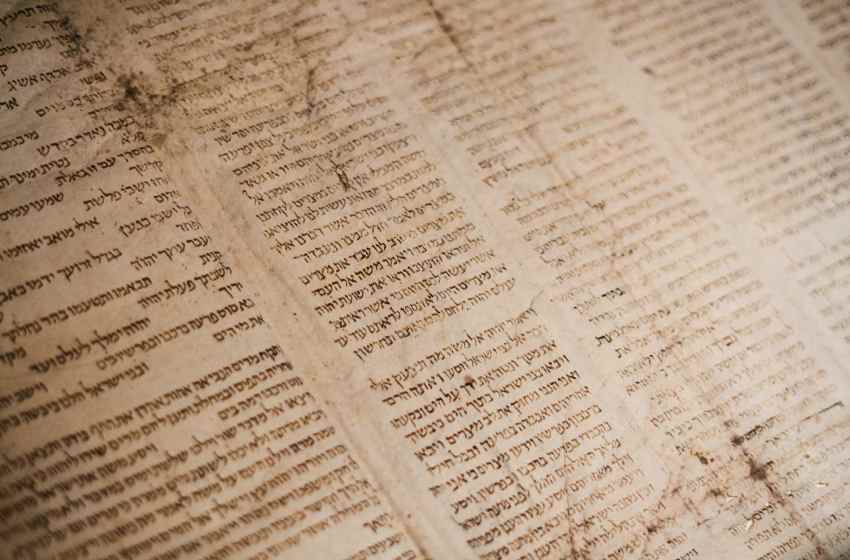
History is beyond the defining power. History is the presentation of facts about human past interpreted by historians. There is no right and wrong fact in history. The only certainty is the existence of artefacts. But what they represent and prove is also subject to interpretation. It is the written document available to us. History tells us about our past, the culture and tradition of ages gone by, and the rules that have governed human existence. 

Historians are the observers and participants of that which occurs. They are the storytellers of time. They witness all and then document, based on their perspective and the belief of the time they are living in. History is the opinionated presentation of events thus. Benedetto Croce had rightly said – “All history is contemporary history.” That which is past is also recounted in perspective. There are several archival records available to us, each by a different historian or School of Thought. Thus it is not quite possible to discern facts from views. 

History thus has various Schools of Thought. Each of them is distinguished on the basis of their ideology and perspective. There is a liberal school in contradiction to the school of orthodox thinking. In India, the Nationalist School of Thought occupies a significant position among historian schools. Marxist School of Thought is another important one. The ideas and views of the members of various schools do not match; they contradict. A fact is thus at their disposal, to be twisted, modified and then served to us. 

Today, history is not considered as the factual word of the past. We do not know if what we are being taught today will be the same tomorrow. It is subject to change faster that in any other discipline of study. Yet, it is essential. It educates us about the life before us, how humans evolved from apes, the follies of the ages. Study of history provides us a scope to contribute to human development by studying it through ages. It is vast and never ending, all pervasive, all inclusive study of humankind. It has no boundaries. History allows us to explore, research, think and deduce. 

Because of the liberty granted by history to have an independent point of view, it has come into conflict. We are an intolerant generation and do not respect nor accept a thinking process different from ours. The emphasis on what the syllabus should be in schools, and which School of Thought should be the basis of study, proves this point. Every other day history comes into conflict. There doesn’t exist a censor board, but we regard ourselves as honorary members of the virtual censorship board for study of history. A subject cannot exploit its scope of study if it is bound by the narrow outlook of the society. We need to provide history with the independence of function.

History is not a lone field of study. Every subject, be it science or commerce, geography or literature, they all have a history of birth and development. When an educational institute teaches a subject to its students, the first teaching is on the history of the subject. This is proof enough of its validity to exist. Thus those who do not like the study of Humanities, should wake up to the need of history, its benefits and usefulness. History is the foremost field of study and life.
History Colleges In India

History Colleges In India

The History Colleges in India aim at dispersing the popular belief that history is the study of past, for those who do not want to live in present, and is of no significance as compared to science and commerce. History is the study of time – past and present, that aims at educating us about what went by and what is to come can be made better; how to minimize the follies of humankind. It is the story of evolution form apes to homo sapiens sapiens; from hunters to industrialists; from four legged beings living in caves to two legged humans dwelling in mansions. 

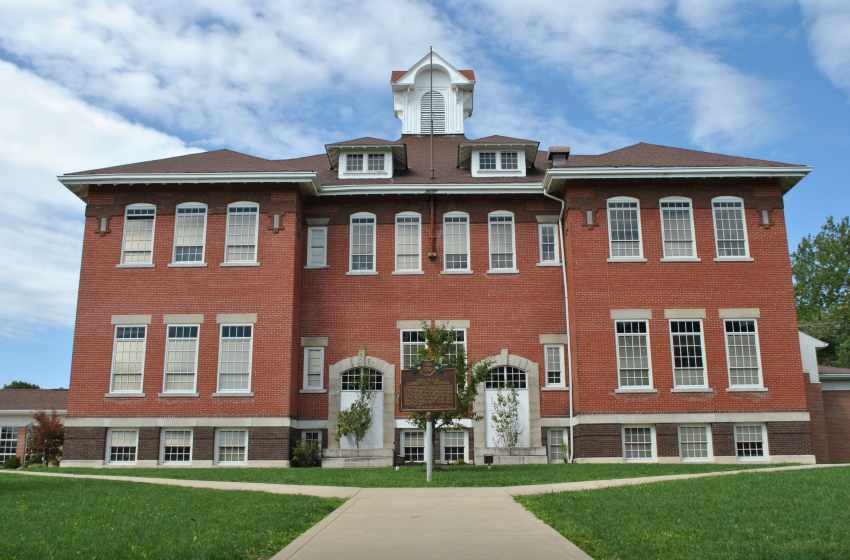
For pagans mocking history, it should be noted that in India there are innumerable colleges dedicated to teaching history. It is interesting to note by this that history is a much sought after course by students. Students opting for humanities want to do their graduation in history; and many science and commerce students also end up taking up history because it interests them and is a significant subject. Delhi has ten history colleges, West Bengal around 100, Andhra Pradesh has 45 while Karnataka has 75. Tamil Nadu has approximately 47, Kerala sixteen, Maharashtra 30, Punjab fifteen, Gujrat six and Uttar Pradesh four. The rest of the states each have a couple of colleges for history studies. 

St. Stephen’s College in Delhi, affiliated to Delhi University, has the best faculty and method of study for history. The cut off percentage is not quite high, but the interview is difficult. The annual history festival is an informative and interactive event which enriches the course of study. It follows the syllabus set by the university but what sets it apart is the way it is taught. So it is ranked the best.

Lady Shri Ram College for Women. New Delhi, is a component college of the University of Delhi. Admission is on the basis of marks. The number of students for history is quite large in this college. And so are the number of reference books in the library. The faculty is an eminent one. Presentations all round the year, talks on history and regular classes with importance to attendance, makes it a coveted institute for history interested students.

The Jawahar Lal Nehru University (JNU), offers post graduate and doctorate degree in history. Admission is tough here. There are a number of optional subjects to choose from for the course. The scope of study is immense. 

Presidency College, Kolkata, is a dedicated history college. It has a history department that includes eminent professors. There are student activities, seminars and sessions on history apart from the regular classes.

St. Xavier’s College of Mumbai is one of the top ranking Arts colleges in India. The history department contributes to this status. The hard working students and research in history are an asset. 

Benares Hindu University (BHU), conducts an all India entrance test for admission. The course has been structured to provide students with the opportunity to study other subjects as well and then graduate in history. Students opt for history in their final year. BHU is a university that promotes all round development and student interaction. 

Delhi College of Arts and Commerce, is a good option for the dedicated humanity students. The college has a history department that is very deeply involved in its study. 

Stella Maris College in Chennai is a viable option for those living in South India and wanting to study near home. It is a good college for pursuing history. 

Sophia College in Mumbai is a known college for humanities. It is a women college and a pioneer in its field of education. 

Jadavpur University in Kolkata is a premier educational institution in the country. It is an autonomous university offering varied courses. The syllabus for history is also varied and designed in a way trying to encompass the vastness of it.

The study of history has no end. It provides its followers a scope much larger than that provided by any other discipline of study. After a degree in history, you can pursue studies in any desired filed of study. And the research topics are never ending. Those interested in doing a PhD in history will always have an original topic. Such is the significance and gamut of history which the History Colleges in India try to capture and present.

Careers In History Field

Careers In History

Researcher / Historian


History is all about continued research. It is the study of the past and writing about the findings of the past related to the human race. Different theories are formulated, and new things, facts, artifacts are discovered every other day, that has to be studied, and conclusions drawn. To be a researcher or historian, you should have an extremely strong grasp of the subject, must have at least a master’s degree, and a Ph.D. helps. Historians started being considered a profession only in the late 19th century. It is the most magnetic and fulfilling career option for those passionate about history.

Educationist

To teach at the school level, a bachelor’s degree in history and a B Ed is sufficient. For college-level education, you should have at least completed your master’s, most preferably also Ph.D. To apply for government colleges, you will have to appear for the NET.

Archaeologist

Archaeologists study the past through the recovery of artifacts, evidence, environment data, and material culture of past ages, and then analyzing the excavated treasures. It is thus the study of the human past through commodities of those times. it is more factual than theoretical. From the stone age to the recent past, all is covered in archaeology. To be an archaeologist you need a background in history, and can then join the Archaeological Survey of India, which is the primary organization concerned with such activities in India.

Curator

A curator is a keeper of a historical or cultural institution (museum, library, gallery, archive, etc), where he is responsible for the collection or acquisition, care, documentation, and research about historical objects. Such research is conducted in cooperation with historians and scholarly groups. Also responsible for the organization of seminars, exhibitions, and bringing out publications. Thus a viable career for history lovers as you can deal with the past quite personally and have a great responsibility. Also, you will not have to burn it out in the Sun nor be only engrossed in research.

Archivist

As an archivist, you are responsible for the assessment, collection, organizations, preservation and maintenance, and control of records of history. Archival material can be in the form of printed documents, pictures, photos, paintings, scripts, tablets, artifacts, etc, that are used over a period o time for the purpose of study, restudy, and maintaining of records and data. This is a long-term responsibility as such material may not be found again, some of it dating back several decades or centuries. Because of knowledge of history, such an individual is better as an archivist as he knows the importance and value of each piece of the archive.

Writer

As a writer of history, you can write for history textbooks for schools and colleges, be a columnist, write history-related books. If you are a historian, you can write books on your area of specialization, like Romila Thapar.

Civil Services

History is a major subject in civil service exams, one that is most selected by aspirants and essential. A background in history gives you an edge, you can score well.