Thinking about life after completing school education is quite overwhelming but you need a plan to help you choose a career path. It is quite a difficult task to make decisions about your career after school especially when you are not sure what you want to do. There are many choices including starting a business, starting an apprenticeship, finding work, continuing with further education, or taking a gap year for sorting out dilemmas. Many people continue to study to upgrade their qualifications. You can choose any one of these options to make a rewarding career:
Vocational education and training
Vocational education and training provide opportunities to young people while studying at school. VETs are given through partnerships between industry, school, and instructors and the students get the opportunities to take part in real-time implementations.
School-based apprenticeships
These apprenticeships make it easy for students to unite employment and study while they still devote their time to studies. In this program, students earn wages as they also work along with studying. This means that the students spend some time in the workplace and some at school.
University
A major number of students go to some University from school for getting higher education. While selecting a university and a course, young people should consider the cost of living and the cost of University study. The most important thing that should be considered is to explore the opportunities for work after completing graduation.
Employment
Some young people who do not want to continue their education can go for employment. A paid job brings earnings, freedom, and a chance to do new things but getting the first job is really very difficult. There are chances that you may not succeed initially but do not panic and remain positive. Practice interview techniques.
Employers see employability skills in young people. These skills allow people to do their jobs well. Some of the essential employability skills include communication, self-management, initiative and enterprise, planning and organization, problem-solving, teamwork, technology, and learning.
Schools conduct a large number of career programs that help the students to learn skills needed for searching a job such as writing resumes, applying for jobs, presentation skills, and interview skills. These days, various services are available in the market to assist the students in finding a suitable job.
Starting your own business
Starting your own business is a good option. Although educational qualifications and experience can help you in starting a business they are not essential. A large number of programs are available that help young people to develop innovative skills and build entrepreneur skills. Some of these programs are offered to the students at school and some are available outside of school.
Certified programs
Many private career schools offer certified programs of six-month to one year that provide specialization in a specific field. Some of the careers that require a certified program are pharmacy technician, medical assistant, dental assistant, and computer equipment repair.
Associate degree program
Some colleges offer two-year associate degree programs. Careers that require an associate degree are interior designer, forestry technician, respiratory therapist, office manager, and nurse. A young person having an associate degree can use his/her credits to transfer to a four-year college if he/she wants to pursue a bachelor’s degree.
Volunteer work
Volunteer work is a great way to experience new challenges and to find out the world of work. You can add information about your volunteer work to your resume. This will help you in finding paid employment.
Saral Study
Japanese – Preferred Foreign Language For Students Of Today
Japan is a country that needs no introduction. Its story of destruction and construction is written in golden words in history. Japanese is the national language of this country. This language is spoken by around 130 million people in South East Asia.
History of the Language
There is no clear script about the origination of the language but in the Chinese language, there were some Japanese words that were discovered. Today, the language used by the people is a new language. There was also an old Japanese language that was discovered at the arising of Buddhism. An important thing to note is that the old Japanese text was written in Classical Chinese. Japanese is not a part of Chinese but their roots are somewhere common.
Places where Japanese is spoken
It is true that Japanese is the language of Japan but it is also spoken in other countries like Taiwan, Korea, the Philippines and various small islands of the Pacific Ocean. Although Japanese is not their mother tongue, the old people in these areas can speak the language. This is so because at the time of the 2nd world war Japan attacked on the above countries, this language was imposed on the people of slave counties.
The popularity of the Japanese Language
As we all know that Japan is among the most developed countries on the globe and advanced too. There are numerous technologies that are invented by this country. There are a lot of technical companies like Toyota, Panasonic, Honda, etc. whose products are very common and are used by almost everyone in the world. In fact, no one can imagine a life without all these electronic products.
As the sales of these products increase all over the world, so does the company’s popularity and size. Now, these companies want well-trained employees from different parts of the world to deliver support to customers all across. This is one major reason one needs to learn Japanese.
All the Japanese companies are doing their business in the international market with global exposure. So, the need of the Japanese is arising day by day. It is said about Japan that they respect their mother tongue and like to talk only in their mother tongue. Although they also know English, they usually talk in Japanese. Japanese seems to have set its benchmark to meet the level of popularity of the English language. In order to make successful business deals with them, one needs to know this language well.
Japanese: Student’s interest and its scope
Owing to the benefits of the Japanese language, many countries have introduced it as a part of their early learning that is school education. Many schools in various countries are teaching Japanese since early childhood so that the students can hold a fluency in the language. It is said to be the language of the modern world.
There are various institutions that provide certification in this language. In fact, there are good career opportunities regarding the subject because it is not easy to learn. People proficient with the reading and writing of this language can become Japanese tutors and even can get into various MNC’s as translators. Students of today who are looking forward to bright career opportunities nowadays consider Japanese as the road to success. The earlier they learn this language, the more successful they can be in the rat race for a better career.
Options To Continue Studying After PhD
The study is one such thing that has no end. Despite the fact that we all think that getting a Masters degree or a PHD is good enough and is the end of studies, this does not hold true all the time. Gaining knowledge is a never-ending process. What is the proper way of gaining good knowledge? It is not just the basic schooling and colleges. In fact, it is about gaining knowledge to the maximum.
It is a misconception that PHD is the last step of one’s career. People believe that if anyone has done a PHD, then no further studies are required but that is not correct to some extent because there are some different courses that can be pursued even after this degree. Here are some good career options after a PhD:
Further research studies
Further research can be undertaken after the completion of a PhD. It is true that PhD is the highest level of research work but there is also one year advanced research program in specific areas where candidates can dig even deeper into a certain subject and come out with something really valuable. This course is the best choice for candidates who feel like they can find something distinctive in their field of excellence if they have more time to devote to their research.
Postdoctoral Program
This is quite a common and a popular program after PHD because earning a Doctorate degree is a big thing. Some exclusive features of this program are as mentioned below:
A postdoctoral program is quite an effective career option after a PhD because it is the one thing that is likely to make your research more lucid. It is a step ahead of my PhD. After completion of the program, one will feel more independent in taking up a project as he or she will be able to take the whole responsibility of the project.
The responsibilities are increased and even the workload increases at this level but your position will also upgrade and a number of students will work under you. Managerial skills are developed because managing a whole team and the entire project requires a lot of skills. This also involves handling of quite a prestigious work i.e. representing the University’s research or various research papers at the National and International committees.
Professional Training
Another option for studying after PHD is to opt for some professional training that can give you a chance to go for some other career option like any postgraduate degree in any subject or the subject that is related to your PhD as it will increase your knowledge. This option is however suitable when a change in the career stream is desired.
One can also take a degree in Law because knowledge of Law will make you aware of your rights and can be helpful in taking various part-time job opportunities. It is the only field that does not require a specific subject in school and is also a good career option. Accounts or finance are other options that can be taken up at this stage as these are essential requirements for a good business. If you are a master of finances along with strong knowledge and practical experience in your domain, you can also start your own business.
Other options
You can also go for some vocational training in social work or can join an NGO or any social work organization along with their work. This is an amazing option because you will learn new things daily and can also continue with your PhD career option. This is will give an opportunity to learn about the people of various cultures and how social problems can be tackled.
Effects of internet on children
We live in the information age, where knowledge is power. Internet is a good source of gaining information on any subject. The Internet has become an inseparable part of life. People cannot imagine life without the internet. On the internet, we can read books, search for news and various articles, book railway or airline tickets, etc. The whole concept of the internet is changing. Lifestyles have changed. Entertainment concepts are changing. We can watch movies, listen to music just by connecting to these sites sitting at home. There are sites on every subject in the world. Because of the internet, the whole world is available on a computer.
The Internet has significantly altered our lives in several ways. Through it, you can wander about the whole world sitting in front of the computer. The Internet has various sites on jobs, books, travel, movies, shopping, etc. You can get great benefits from these sites. It is an easy and hassle-free procedure to get services from these sites. Banks have also changed their ways like the introduction of internet banking and electronic fund transfer. We can register our complaints in banks through the internet. Really amazing is the amount of information that is available online, through which one can access the information in the best and least expensive ways.
Apart from these advantages internet is also beneficial in the education field. Internet helps in the enhancement of the development of children. It is a powerful tool that is revolutionizing our children’s learning, communication and play. Children who use the internet show gains in cognitive abilities such as memory, spatial and logical problem solving, critical thinking, concentration, abstraction and comprehension. The internet improves their quality of learning that they can transform into knowledge. Through the internet children’s language and literacy development is often promoted, improving their verbal and non-verbal skills.
The Internet cannot and should not replace human interaction or relations. However if properly used, it allows children to socialize with others in different parts of the world through email, chat room, Facebook, etc. When they connect with different people of different regions and countries they share different traditions and cultures. Often the use of the internet in classrooms allows the children to work together, encouraging the sharing of ideas and cooperative learning. Students that find conventional methods of learning difficulties will find learning via the internet to be fun. It also allows children to actively participate in an independent learning environment.
Besides being used as an educational tool, the internet also provides entertainment. Children can use it to get inspiration, stimulate their imagination, explore the world, meet people and gain new experiences. It also offers great alternatives to those who are physically disabled and unable to engage in physical play.
However, too much time spent on the computer can have a negative effect. Children are becoming accustomed to the internet culture. When it comes to children, the internet soon becomes an addiction. It hampers their overall development because they skip playing outdoors. When a child spends all his free time on the computer, he loses personal interaction time with friends and family. This reduced personal interaction hiders their social development. Children can accidentally stumble on adult materials while surfing. Installing parental control can limit this kind of exposure. With the growing use of the internet by children, more online games are introduced every day. These games are mostly very violent and expose children to explicit content and violent situations thus desensitizing the children and making them more prone to inflicting self-harm, as well as harm to others. Internet is making children less interested in reading and education and more interested in killing brain cells sitting on the couch watching trash.
We as a parent should pay more attention to our children and spend more time with them. We should try to inculcate other constructive habits like reading and sports in our children. In fact, it is our responsibility to keep watch on what our children watch and how often they play video games and access the internet. Children should be controlled regarding their online activities because there are no limits and boundaries for the children online. It is important for parents to know how it affects the children. The government should also regulate laws to reduce inappropriate TV, internet and video game content. There should be an access control device in every inappropriate TV or internet content for children.
The conclusion is that if the internet is used properly as a tool of education and entertainment then it is a good source of learning and gaining knowledge. But if children use it to kill all their free time then it can hamper their social and physical development. We all know excess of anything is harmful, the same thing applies to the use of the internet. It should be used within a limit and under the constant watch of parents. We as parents should keep a tab on what our children watch and how much time they spend on the internet. With the absence of wise use, this boon can definitely take no time in turning into a curse on children. Use it wisely and see how it helps children with their education and gaining pure entertainment. We live in an information age, where knowledge is power. Internet is a good source of gaining information on any subject. The Internet has become an inseparable part of life. People cannot imagine life without the internet. On the internet, we can read books, search for news and various articles, book railway or airline tickets, etc. The whole concept of the internet is changing. Lifestyles have changed. Entertainment concepts are changing. We can watch movies, listen to music just by connecting to these sites sitting at home. There are sites on every subject in the world. Because of the internet, the whole world is available on a computer.
PM Scholarship Scheme 2021 – Dates, Eligibility, Selection Criteria, Application Process
PM scholarship 2020-21: The prime minister scholarship scheme run by the Rehabilitation and Welfare Board, Government of India, Ministry of Home Affairs is a scholarship scheme that targets technical education for the dependent wards, encouraging higher professionals and widows of central armed Assam rifles and Police forces. PM scholarship scheme established in the year 2006-07, many students completed their studies with this scheme and helped them to pursue those dream careers.
PM Scholarship – Key Eligibility
The key eligibility features that you need to fill for this scholarship are –
- Students who have minimum educational qualifications to apply for these courses should be diploma/ graduation or class 12.
- Applicant must be a dependent widow/ward of deceased AR and CAPF serving and retiring state police personnel.
- Students must have obtained at least 60% marks or above marks in the minimum education qualification.
- Applicants must be pursuing professional courses like Medical Courses, Engineering/ Architecture, Management Courses, and Other professional courses.
This is the list of professional degree courses for which the PM scholarship is applicable is given in the list below:
1. Management Courses
| Sr. No. | Courses Name and Duration |
| 1 | BCA (3 years) |
| 2 | MCA (3 years) |
| 3 | B.Plan (4 years) |
| 4 | MBA (2 years) |
| 5 | BBA (3 years) |
2. Engineering/ Architecture
| Sr. no. | Course Name and Duration |
| 1 | B.Tech (4 years) |
| 2 | BArch (4 to 5 years) |
| 3 | BE (4years) |
3. Medical Courses
| Sr. No. | Courses Name and Duration |
| 1 | MBBS (4.5 years) |
| 2 | B.Pharma (4 years) |
| 3 | BSc Nursing (4 years) |
| 4 | BUMS (5 years) |
| 5 | BHMS (4.5 years) |
| 6 | Doctor of Pharmacy ( 4 years) |
| 7 | BNYS (5 years) |
| 8 | BSC, BPT (4 years) |
| 9 | BDS (5 years) |
| 10 | BVSc & AH (5 years) |
4. Other Professional Courses
| Sr. No. | Courses Name and duration |
| 1 | BSC Horticulture (4 years ) |
| 2 | BSC Agriculture (4 years) |
| 3 | B.ED. (1 year) |
| 4 | BMC (3 years) |
| 5 | BFT (3 years) |
| 6 | LLB (2 to 3 years) |
| 7 | BFA (4 years) |
| 8 | BA LLB (5 years) |
| 9 | BSc HHA (3 years) |
| 10 | BSc Microbiology (3 years) |
PM Scholarship – Application Process
The applications for PM scholarships are made online for applicants, for the previous year 2020 the government made a national scholarship portal to fill admission applications by students. Here we guide you step by step procedure to fill the application for scholarship-
Step 1: Registering on NSP
- Firstly visit the official website of the National Scholarship Portal (NSP).
- Click on the “New Registration” tab.
- Read the application forms guideline carefully.
- And continue to proceed.
- Fill in all the required details which they want.
- And after all this process click on “Register”.
Step 2: Complete the Application
- After clicking on “Register” Log in to the National Scholarship Portal using the id and password of the application.
- And after this, the OTP no. was received on your registered number. And you successfully login into the official website.
- Verify the OTP number and create your password.
- Once you log into the official website then fill the scholarship application form.
- And the last step is to upload the scanned copy of your all required documents.
- After submitting the documents click on “Submit” and your application is successfully submitted.
PM Scholarship – Documents Required
Once you fill all the procedures of filling the application process, applicants must be anteriorly willing to know about the required documents that applicants need to submit for applying to the PM Scholarship Scheme. Since when you start to fill the admission form of the PM Scholarship application then the applicants are prepared with scanned copies of required documents. Here is the list of required documents that applicants must provide during the PM Scholarship application –
- Certificate issued by the state government indicating which the state police personnel was killed by Terror attacks and Naxal.
- Certificate of minimum educational qualification is inappropriate – class 12th mark sheet, diploma mark sheet, and graduation mark sheet.
- Death Certificate (This is applicable for Deceased personnel).
- Certificate of Gallantry Award (if the applicant wins the gallantry awards).
- Disabled certificate (applicable for disabled person).
PM Scholarship – Selection Criteria
While an end to end disbursement and implementation of the Scholarship scheme is taken care of by the Ministry of Home Affairs, the preference is given to the applicants in the following order-
- Category A: The first relish is given to the widows and wards of AR & CAPFs who were killed in the attack or war.
- Category B: The second relish is given to the wards of EX- AR & CAPFs who got disabled in war and attacks.
- Category C: The third relish is given to the widows and wards of deceased AR & CAPFs, who are died during their service for causing ascribable to government service.
- Category D: The fourth relish is given to the wards of Ex AR and Ex CAPFs, who got disabled during the period of their service with disability ascribable to government service.
- Category E: The fifth relish is given to the wards of EX AR and EX CAPFs, who win the gallantry awards.
- Category F: The sixth relish is given to the wards of EX AR and Ex CAPFs personnel (PBOR only).
- Category G: And the seventh relish is given to the wards of serving AR and CAPFs personnel (PBOR) subject to the availability of the scheme of PM Scholarship.
PM Scholarship Scheme – Important dates
The list given below has all the important dates related to the PM Scholarship scheme. While the new applications are admittable within a limited time period, the renewal of applications can be formed all through the years.
This list contains all the details of the PM Scholarship:
| Sr. No. | Particulars | Important Date |
| 1 | Online Registration of Application form status | 16 August 2020 |
| 2 | Last date for verification of defective applications | 15 November 2020 extended till 30th April 2021 |
| 3 | Last date to submit an online application | 31 October 2020 extended till 25 April 2021 |
| 4 | Last date for institution verification | 15 November 2020 extended till 30th April 2021 |
| 5 | Preparation of Merit list and lot generation phase. | To be continued |
| 6 | Verification of the application by the AR & CAPFs | To be continued |
| 7 | Sanctioning of the scholarship by MHA and R&W directorate. | To be continued |
| 8 | Payment file generation | To be continued |
| 9 | Disbursement of scholarship amount | To be continued |
| 10 | Dispatch of the personal letter from the hon’ble PM | To be continued |
PM Scholarship – Renewal
While the selected applicants get the first installment of the Prime minister scholarship instantly after the announcing of the merit list, the subsequent payment is created only if the applicants apply for the renewal after the ending of each academic year. Just like the new applicants, old students can also apply for renewal application, students must fulfill certain conditions that include-
- Applicants should obtain at least 55% marks in each academic year or semester exam.
- Applicants need to pass all the subjects in each semester/year in one attempt.
The best thing about the PM Scholarship renewal is that the applicant can apply for it within one year of the announcement of the result and the application can be made every year except for the months between January to April.
PM Scholarship – Rewards
New students have only one question that how much amount they will get under the prime minister scheme? Is there any reservation for girls? How many scholarships are given to the students every year?
As we all know this scheme is for those students who are capable to do professional courses and bright in their studies, the government of India started this scheme for student benefits. 2,000 eligible students get benefits under this PM scholarship scheme every year. The government of India issued the reservation for girls as equal to boy candidates. And the third thing is the Government of India also offers some amount to the students, for boys they paid INR 2,500 per month and for girls they paid 3,000 per month. The duration of the scholarship is started from 1 year to 5 years depending on your professional course duration. And they also include 500 more scholarships to give to the wards of CAPFs or AR, who are martyred during a terrorist attack or Naxal attack, this scheme started from 2019-20.
PM Scholarship Scheme – FAQs
Q1. Can Applicant apply offline for the PM Scholarship Scheme?
Ans. No, Applicant should be filled their registration form online through the official website of Kendriya Sainik Board (KSB).
Q2. Is Prime Minister Scholarship scheme applicable for diploma courses?
Ans. No, Prime Minister Scholarship scheme is only applicable for professional degree courses like UGC, AICTE, and MCI, etc.
Q3. What are the eligibility criteria to be fulfilled to get the Prime minister Scholarship for the subsequent years?
Ans. The applicants have to secure a minimum of 50% marks in each semester/academic year to the scholarship for subsequent years failing then the scheme will be closed for them.
Q4. What documents are required to apply for Prime Minister Scholarship Scheme?
Ans. While registering for the Prime Minister Scholarship scheme, the applicants need to support their registration form with the required documents like Service certificate, Academic certificate, Disability certificate, gallantry award certificate, death certificate, deceased certificate.
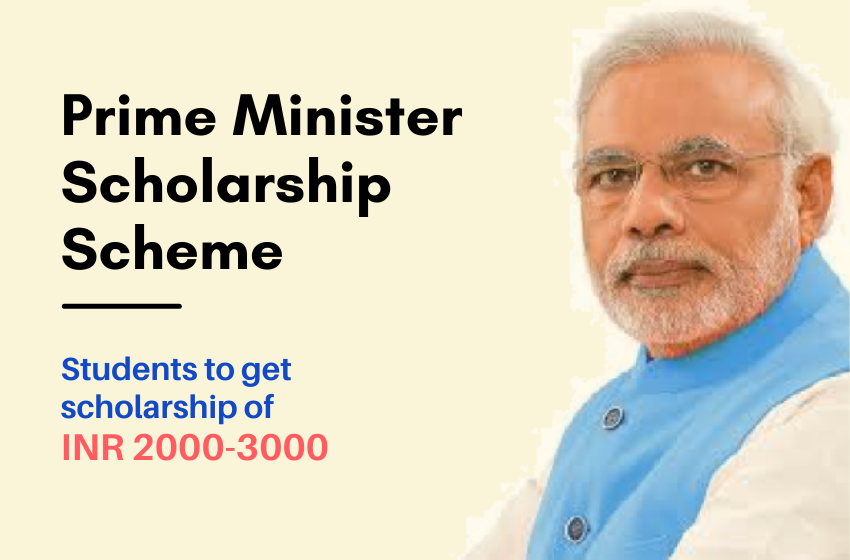
PM Scholarship Scheme (PMSS) 2021: Students to get a scholarship of INR 2000-3000, know more here
Under the Prime Minister Scholarship, the students can apply for this scheme in September and October. The last date for this year’s application process was on 15 October. The scholarship will be offered to the selected students by the end of December this year.
Getting an education is the fundamental right of every Indian citizen. Central Government and the state government have launched many scholarship schemes to encourage poor students to continue their education.
One of such schemes is the Prime Minister Scholarship Scheme (PMSS), in which a scholarship on monthly basis is offered to the widows and children of the martyred ex-servicemen/Coast Guard/Police personnel and railway Personnel.
The PM scholarship scheme also covers the children of disabled ex-servicemen of Police, RPF, Assam Rifles, RPSF. The scholarship amount ranges from INR 2000-3000. The scholarship is offered to only those students who gain 60% marks in class 12th. Students studying outside India are not eligible for the PM scholarship scheme.
When to apply for the scholarship
Government releases the scholarship application each year in September and October. The application process for this year’s scholarship program has been closed on 15 October. Those who get selected under this scheme will get the benefit of the scheme by the end of December 31 this year.
Who is eligible?
Those students who are pursuing the course certified by the All India Council for technical education, University grants commission, medical council of India, National Council for teacher education are eligible to apply under this scheme. For example-MBBS,BE,B.Tech, BBA, BCA, MCA, etc.
Scholarship Period
The PM scholarship scheme is offered to the students for 5 years. However, if the courses have a more than 5 years degree program then the students are offered the scholarship for that additional course period. You can visit the official website of the PM Scholarship scheme to apply for the scholarship next year.
Selection Process
If the applications exceed the number, then the services are offered based on the grade of the Martyred personnel on duty or during War.
CBSE has decided to conduct the board Exams in two terms- Let’s see how the Exam pattern and Syllabus have changed under this decision
The Term- exams for the CBSE Board are going to be conducted from 15 November 2021. The Central Board Of secondary education has released a notification regarding the Board exam information. Due to the Covid-19 pandemic, the Central Board of secondary education has decided to conduct the CBSE Board exams in two terms.
The notification for the first term for the CBSE Board exam is already notified by the CBSE on its official website. The date for the first term is decided from 15 November 2021. The exams for the students in the second term are expected to be held in 2022 next year in March and April. The exam schedule will be announced by CBSE on its official website.
Let us have a look at what will change in the CBSE Board exams including the syllabus, practical exams, the marking system, and the opening of schools under CBSE during the Covid-19 Pandemic, we will answer every question regarding these questions.
First thing first, let’s have a look at what has changed in CBSE board exam Pattern?
With the release of the CBSE Board exam notification, the exam pattern has been changed a lot. These term exams will be held like the semester exams in college. The syllabus will be divided for these two terms equally.
The exam date for the first term is notified to be held from November 15 2021 to December 15, 2021, whereas the exams for the second term are expected to be conducted from March next year. The marks of both terms will be added to declare the final result of a student.
Under the new exam pattern, what changes are made to the CBSE syllabus?
Like the exam pattern, the syllabus has been divided equally. The change in the syllabus was declared by the CBSE while declaring the change in the exam pattern. The syllabus has been reduced under the new exam pattern. You can visit the official website of CBSE to know more about the Exam Pattern and Syllabus details.
How the marks will be allotted in the second term exam in case of school re-opening of the schools under CBSE?
In case the schools reopen, then the marks gained in the second term will be given more importance than that of the first term. The weightage of the marks gained in the first term will be reduced.
How marks will be allotted in case the schools under CBSE don’t open?
If the schools remain closed due to Covid- 19 pandemic then the Marks will be awarded based on Internals, project works, and marks gained in theory. The exam in such case will be held offline or in online mode from home.
Few important questions regarding the new exam pattern in CBSE Board Exams
What to use on the OMR sheet? Pen or Pencil?
In the first term under the new exam pattern, students will be provided an OMR sheet. Students will be required to fill the circle in the OMR sheet with Pen.
What will happen if a student marks the wrong circle on the OMR sheet?
In case you mark a wrong circle mistakenly, you can write the correct answer over the extra blank space provided on the OMR Sheet. You can cut the wrong answer and select the right one. You will have to write the correct option in that given blank space.
For instance, if the correct answer for a question was B but mistakenly you marked A. to correct it, all you have to do is, cut the wrong marked option A and mark B and write B in the given blank space next to the four circles.
How the practical exams will be conducted under CBSE’s new exam pattern?
The practical exams for the first term will be organized by the schools. In case the pandemic situation improves, then CBSE will conduct all the practical exams for students in the second term.
Will the students have to answer all the questions?
CBSE can provide options for the questions. For example, if the Paper has a total of 50 questions then the students can solve any 45 questions accordingly.
CBSE has made the sample papers available on its official website.
How the exam centers for CBSE Board exams will be allotted?
The decision regarding the allocation of exam centers has not been made yet. Seeing the pandemic situation, it is expected that the students can give their exams from their schools or nearby exam centers.
CBSE is preparing the allocation of exam centers, keeping in view the Covid-19 pandemic and necessary safety protocols.
This news is based on the official information provided by CBSE and other media reports. For more information, students are advised to contact their respective schools.
National Education Day – A Hope for Young India
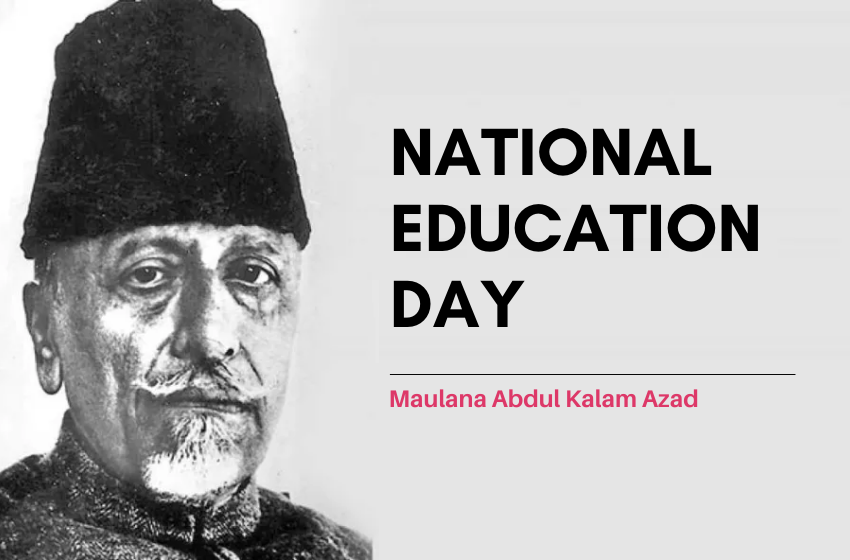
The National Education Day is an homage to Maulana Abdul Kalam Azad, a great freedom fighter and an advocate of education. The National Education Day reminds us that as Indians we should honor the legacy of Kalam and remember how much he emphasized and contributed to the field of education, before and after he became the first education Minister of independent India.
“Education imparted by heart can bring revolution in the society”- Maulana Abdul Kalam Azad
He established many educational institutions after independence. Some of the educational institutions/ Universities he established have become a source of pride for India.
Maulana Abdul Kalam ‘Azad’ – The harbinger of Indian Education
“Educationists should build the capacities of the spirit of inquiry, creativity, entrepreneurial and moral leadership among students and become their role model.” – Maulana Abdul Kalam Azad
Maulana Abdul Kalam Azad hoped for India to strive for quality education and that as a nation, it should never compromise on the educational front.
Maulana Abdul Kalam Azad was moved to India at a very young age. He was home-schooled by his father to receive traditional education at home. Azad was very interested in learning and knew many languages like Persian, Urdu, and English.
An Educationist, journalist, freedom fighter, and politician, Maulana Abdul Kalam Azad paved the way for nationalistic Ideas while advocating the importance of Education. After he became the First Education Minister he established many prestigious universities and institutions which are striving for excellence to date.
Maulana Abdul Kalam Azad was a ferocious journalist; he used to publish Al-Hilal, a Weekly Publication, where he exposed the actions of The British. He also became the Youngest Party leader of Congress at the age of 35.
Maulana Abdul Kalam Azad was inspired by Mahatma Gandhi. He took the lead in the Non-Khilafat movement and raised his voice against the actions of the British Government regarding the bad treatment of the Ottoman Sultan. Soon he was arrested for his activities against British Government and was sentenced to prison imprisonment of four years.
But nothing could stop the zeal of Maulana Abdul Kalam Azad to advocate the importance of education, He proved himself right as the institutions established by him manufactures’ the most talented youth of our country.
National Education Day: History
The National Education Day was announced on 11th November 2008 by the Ministry of Human Resource Development (Now renamed as Ministry of Education) to commemorate the Birth Anniversary of The first Education Minister of independent India, Maulana Abdul Kalam Azad, also remembered as Maulana Azad.
The First National Education Day was inaugurated by the then President Pratibha Patil. It is a day celebrated to pay tribute to the man who built the foundation of quality and scientific education in India.
National Education Day: Significance
“We must not for a moment forget, it is a birthright of every individual to receive at least the basic education without which he cannot fully discharge his duties as a citizen.”- Maulana Abdul Kalam Azad.
On The National Education day, every year schools conduct various educational activities which encourage the spirit of the younger generation of our country. The national education day is a way to motivate the young generation to strive for excellence in the field of science and education.
National education Day not only inspires Students but also the educationists, Teachers, and Leaders across the nation. This day holds significance in the terms of our goal to provide education to all sections of the society without any age or class discrimination.
It is a reminder for all the education activists to keep working towards the awareness drive on the importance of education.
It is also a realization of the value of education and a reminder for us to remember and practice the values of Maulana Abdul Kalam Azad. The national education day is to remember his continuous efforts to provide India with quality education.
National Education Day is the way to keep the ideologies and beliefs of Maulana Abdul Kalam Azad alive. As he was the main visionary and chief architect who guided the Indian education system in the right direction and built India stronger with the help of education.
National Education Day: Facts
The main facts about National Education Day are:
- It was first celebrated on 11th November 2008 on the Birth Anniversary of Maulana Abdul Kalam Azad.
- National Education Day was inaugurated by the first woman President of India, Pratibha Patil.
- The inauguration ceremony took place at the Vigyan Bhawan, New Delhi.
- National Education Day is celebrated Nationwide.
- There is no Holiday on National Education Day.
- Many educational activities like essay-writing, symposia, rallies are organized on this Day.
- It also focuses on the awareness drive on education and its importance.
National Education Day: FAQs
Q1. Who was Maulana Abdul Kalam Azad?
Ans Maulana Abdul Kalam Azad was a freedom fighter, an advocate of Quality Education in India, a fearless journalist, and a charismatic politician, who paved the way for the common Indians to get quality education.
Q2. When was the first National Education Day celebrated?
Ans The first National Education Day was celebrated on 14th November 2008, the birth anniversary of Maulana Abdul Kalam Azad to commemorate the efforts of Maulana Abdul Kalam Azad in the field of Education.
Q3.Who decided to celebrate National Education Day?
Ans Ministry of Human Resource and Development announced for the first time, National Education Day on the Birth Anniversary of Maulana Abdul Kalam Azad.
Q4. Who was the first Education Minister of India?
Ans Maulana Abdul Kalam Azad is also known as Maulana Azad was the first Education Minister of Free India. He was the pioneer in the education field of India. He advocated education for all without any reservation. He advocated education for all without any reservation.
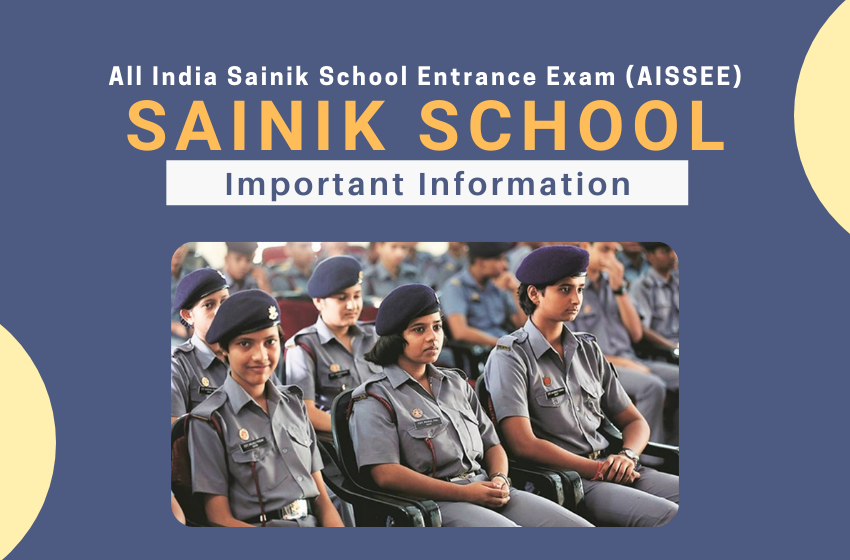
Sainik School Admission 2022-23: AISSEE 2022 – Important Information
National Testing Agency (NTA) has released the official notification of Sainik School 2022 admission test in Sept 27th, 2021. The admission of Sainik School 2022 started with the online submission at aissee.nta.nic.in 2022 or www.nta.ac.in. Eligible candidates are able to apply for AISSEE 2021 (All India Sainik School Entrance Exam) from Sept 27th, 2021. The last date to apply for Sainik school admission 2022-23 is Oct 26th, 2021. Girl’s candidate are eligible to apply for class 6 admission in Sainik School.
NTA will conduct the AISSEE 2022 or Sainik school entrance examination 2022 on January 9th, 2022 for admission in class 6 and class 9 in Sainik School for 2022 session. The communicating authorities will only settle for the Sainik School Admission on-line application of ineligible candidates. Hence, browse the whole article to understand all about Sainik School admission 2022-23.
Sainik School Admission Form 2022-23 Dates
Students should submit the AISSEE form 2022 on or before the last date. Sainik School Society won’t receive any admission form (Sainik School 2022) after cross the last date. Check the necessary dates of AISSEE Admission Form 2022 dates below:
NTA AISSEE 2022 Registration Dates
| Events | Sainik School Admission Tentative Dates |
| Release of Sainik School admission form 2022 | 27th September 2021 |
| AISSEE 2021 application form last date | 26th October 2021 (till 5 PM) |
| Last date to Pay Registration Fees | 26th October 2021 (till 11:50 PM) |
| Form Correction Window Opening date | 28th October 2021 |
| Form Correction Window Closing date | 2nd November 2021 |
| Sainik School Admit Card Release Date | Last week od December 2021 |
| AISSEE 2022 Date | 9th January 2022 |
| AISSEE 2022 Result | February 2022 |
| Medical Exam | March 2022 |
| Final Merit List Date | April 2022 |
Fee Details – Sainik School
| Category | Fee Payable |
| General/Wards of Defence personnel and ex-servicemen/OBC (NCL)* as per central list |
Rs 550/- (Rupees five hundred and fifty only) |
| Scheduled castes/Scheduled tribes | Rs 400/- (Rupees four hundred only) |
*OBC-NCL List (other backward classes-non creamy layer) as per the Central List of other backward classes available on the website of National Commission for Backward Classes(NCBC), www.ncbc.nic.in, as on the first day of the month in which the process of Online Admission Form for AISSEE commences. Candidates falling within this list may mention OBC-NCL in the Category column. State/ UT list OBC(NCL) who are not in the Central List of OBC(NCL) must not choose the category “OBC-NCL”.
Download Sainik School Important Information and Dates PDF: Click here
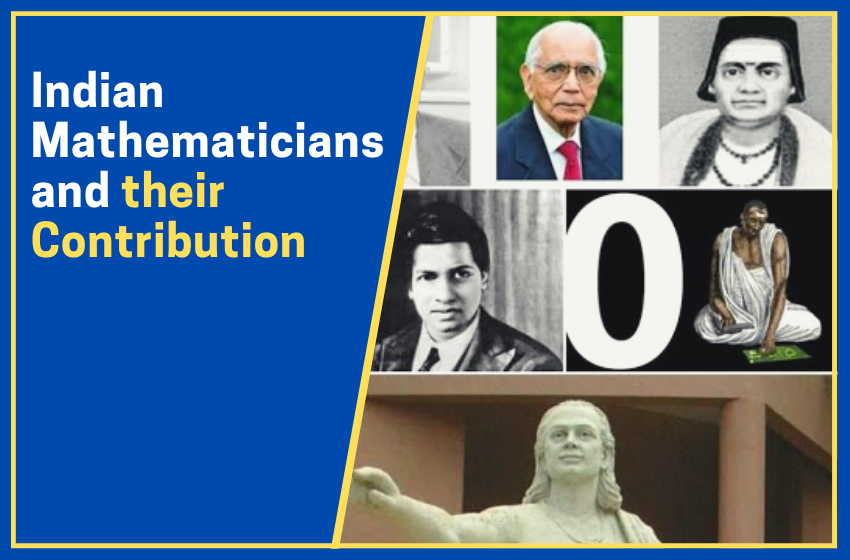
Indian Mathematicians and Contribution
Many famous Indian Mathematicians who changed the perspective of the world with the help of Mathematics keep inspiring the whole world with their discoveries and Inventions. They not only inspired the world to remain curious but helped the entire human race.
Indian Mathematicians and their contributions
Some of the notable Mathematicians and their contributions are mentioned in this article.
1. Aryabhatta
Aryabhatta was born in CE 476, in Kusumapura. He is a famous figure in Indian mathematical history and is also known as Aryabhatta I. A distinguished Indian Mathematician who is known all around the world for his remarkable discoveries and concepts in Mathematics. Aryabhatta died in CE 550.
His Noteworthy Contributions
- Aryabhatta discovered the spherical shape of Earth.
- He notified that one year consists of 365 Days
- Aryabhatta gave mathematical formula (a + b) 2 = a2 + b2 + 2ab
- His two books related to mathematical concepts are very famous namely Aryabhatiya and Aryabhatta Siddhanta.
- Aryabhatta used the decimal number system to solve square and cubic roots.
- His contribution includes the field of trigonometry, geometry, astronomy, etc.
[irp posts=”2529″ name=”National Mathematics Day 2021: History and Significance”]
2. Brahmagupta
Brahmagupta was a remarkable Astronomer and Indian Mathematician. He was born in CE 598.
Noteworthy contributions of Brahmagupta
- He introduced zero in mathematics and stated that zero means “nothing”. Zero was a revolutionary invention in the field of Mathematics.
- Bhaskara,- Stated that if we divide any number with Zero the answer will be infinity.
- He wrote “Siddhanta Siromani”, a famous book on mathematical concepts.
- Brahmagupta was the first mathematician who provided a mathematical formula for Cyclic Quadrilateral.
3. Srinivasa Ramanujan
One of the most famous mathematicians of all time, Srinivasa Ramanujan was born in 1887 in Tamil Nadu. Ramanujan completely transformed mathematics with his theories and concepts in the early 20th century. He is famously known as “The man who knew Infinity”
Noteworthy contributions of Srinivasa Ramanujan
- Landau–Ramanujan constant
- Ramanujan conjecture
- Ramanujan theta function
- Ramanujan–Sato series
- Ramanujan prime
- Ramanujan theta function
- Ramanujan–Soldner constant
- Ramanujan’s sum
- Ramanujan conjecture
4. Satyendra Nath Bose
Satyendra Nath Bose was born in the year 1894; He was awarded the second most prestigious award Padma Vibhushan. He was also a fellow of the Royal Society. He laid the foundation for modern theoretical physics in India. He is known worldwide for the following scientific and mathematical contributions.
Noteworthy contributions of Satyendra Nath Bose
- Bose-Einstein condensate
- Bose gas
- Boson
- Single field theory
- Diffraction of X-ray
- Research in the field of Electromagnetic waves
[irp posts=”893″ name=”Best Business Courses After 12th for Mathematics lover”]
5. P.C. Mahalanobis
Prasanta Chandra Mahalanobis was born on 29 June 1893 and was died on 28 June 1972. He was an Indian Scientist and Statistician from erstwhile Bengal. P.C. Mahalanobis is the best remembered for Mahalanobis distance, a statistical measure and for being one of the members of the first Planning Commission of free India. For his contributions, Mahalanobis has been considered the father of modern statistics in India.
Noteworthy contributions of P.C. Mahalanobis
- Mahalanobis distance
- Feldman–Mahalanobis model
The Father of Mathematics
Archimedes is known as the father of Mathematics, he was an extraordinary Greek mathematician. Not much information is available on the personal life of Archimedes but he is said to be born into an astronomer family. Later to get higher education, he joined the School of Mathematics, Egypt.
Facts about Archimedes
- A Medal named “The fields Medal” is awarded to the most extraordinary mathematicians. This medal has the face of Archimedes engraved on it.
- Archimedes invented a pulley system to help sailors.
- One of the few mathematicians who studied the Prime Numbers
- Archimedes is best known for Archimedes Screw.
Archimedes paved the way for modern mathematics. His inventions and mathematical theories provided the basis for mathematics as a subject to flourish.
Indian Mathematicians – FAQs
Q1. Who is the most famous Indian Mathematician?
Ans. Srinivasa Ramanujan is the most famous Indian Mathematician.
Q2. Who invented zero (0) in India?
Ans. Mathematician Brahmagupta invented the zero.
Q3. What is the greatest contribution of Indian mathematics?
Ans. The most necessary mathematical contribution of ancient India is the invention of the decimal system of numeration, as well as the number zero. The distinctive feature of this technique is that the use of 9 digits and a symbol zero to represent all the integral numbers by assignment an area value to the digits.