National Mathematics Day 2021: History and Significance

National Mathematics Day

The National Mathematics Day is dedicated to Srinivasa Ramanujan, A legendary Indian mathematician. It is celebrated on 22nd December on the birth anniversary of Srinivasa Ramanujan. Ramanujan has made great contributions in the field of mathematics and is known for his brilliant mathematical formulae which are yet to be proved by mathematicians.

His contribution to Mathematician History is unsurpassed to date. The National Mathematician Day celebrates and commemorates the contribution of genius Indian mathematician Ramanujan alongside great Indian Mathematicians like Aryabhatta and Bhaskara.

Mathematics is involved in our day-to-day life. Mathematics has been involved with humans since time immemorial. From philosophy to modern science, mathematics has been evolved alongside the curiosity and necessity of human beings. To know the importance of Mathematics and to honor the famous Indian mathematicians, in India we celebrate National Mathematics Day.

National Mathematics Day: History

National Mathematics Day is celebrated on the birth anniversary of Srinivasa Ramanujan. The first National Mathematics Day was announced by the then Prime Minister Dr. Manmohan Singh on 22 December 2012, the 125th birth anniversary of Srinivasa Ramanujan. The year 2012 was also celebrated as National Mathematics Year to pay a tribute to the contribution of Ramanujan. 

Since then, we celebrate National Mathematics Day every year to mark and commemorate the birth Anniversary of Ramanujan, a Famous Mathematician.

National Mathematics Day: Significance

The National Mathematics Day is celebrated across the nation to acknowledge the contributions and excellence of Ramanujan in the field of Mathematics. It is also an awareness drive where the young generation can get inspired by the prominent Indian Mathematicians and their contribution.

The contribution of Ramanujan can guide and inspire people to pursue mathematics as a subject and its application to the world so it can become a better place. We see that people are not much interested in mathematics as they find it too hard to understand but with the help of National Mathematics Day, we can emphasize the importance of mathematics.

National Mathematics Day will inspire inquisitive minds to pursue mathematics as an interesting field.

On National Mathematics Day there are different activities related to mathematics. There are many camps and training sessions for the students and teachers. This will help in the development, propagation, and inclusion of fresh talent in the field of mathematics. 

The History of Mathematician Ramanujan and his work will help many brilliant young minds to add significance in the field of Mathematics.

About Srinivasa Ramanujan and his Contributions

Srinivasa Ramanujan was an autodidact in mathematics; he was a genius who taught himself trigonometry at a very young age. Ramanujan was born on 22 December 1887 in a Tamil Family in Tamil Nadu, India.

He has given more than 3500 mathematical equations/ Formulae which are yet to be proved by the present time scientists and mathematicians. He offered new ideas and created a new path for contemporary mathematicians. 

He contributed to many mathematical theories and concepts like number theory, mathematical analysis of infinite series, continued fractions, so on. A few of his noteworthy contributions are the Riemann series, Divergent Series Theory, elliptic integrals, Hypergeometric series. 

With his extraordinary talent in mathematics, Ramanujan became one of the most prominent mathematicians in the history of Mathematicians. His research and founding still influence and direct the field of Mathematician. 

Ramanujan had an innate talent for mathematics. His talent for mathematics was discovered by his colleague. With the help of his co-worker, Ramanujan came in contact with Professor Godfrey Harold Hardy, who was a professor at Trinity College, Cambridge University.

G. H. Hardy was very impressed with Ramanujan. With the help of Hardy, Ramanujan pursued his B.Sc. Degree from Trinity College. 

His research in the Theory of Numbers and Elliptic Functions gave him a fellowship of Royal Society in 1918. Ramanujan also became the first Indian to become a fellow of Trinity College.

At the age of 32, Ramanujan succumbed to tuberculosis. In his short life span, Ramanujan gained much recognition and applause for his extraordinary talent in Mathematics. 

National Mathematics Day: FAQs

Q1. Why is National Mathematics Day celebrated?
Ans. The National Mathematics Day is celebrated on 22 December every year to mark the birth anniversary of the prominent Indian mathematician Srinivasa Ramanujan. 

Q2. Who is known as the father of mathematics?
Ans. Archimedes is known as the father of Mathematics. His innovation and mathematical concepts paved the way for the development of mathematics as a subject.

Q3. Who was Srinivasa Ramanujan?
Ans. Srinivasa Ramanujan was an Indian Mathematician who is a famous Indian mathematician. He is well-known for his work in number theory, mathematical analysis, continued fractions, and infinite series.

Q4. How did Srinivasa Ramanujan Die?
Ans. He died at the age of 32 in India while battling tuberculosis. 

Q5. Who inaugurated the National Mathematics Day?
Ans. The former Prime Minister of India inaugurated the National Mathematics Day on the 125th birth anniversary of Srinivasa Ramanujan.

Best Career Options for Commerce Students

Career options for commerce students

Students of all education institutions study all the required subjects that would help them to gain a general understanding of the most common career options in which academics play a vital role. After the period is over, the students are required to choose whichever course the students are good at and feel that a career in that particular course grants them happiness and success.

As stated above, the commerce stream includes courses that majorly deal with business and trade. Let us look into the potential courses that the commerce stream has to offer. 

Career Options for Commerce Students

Below are the best career options for commerce students after 12th class.

1. Bachelor of Commerce (B.Com)

Bachelor of Commerce or B. Com is the most commonly pursued course by the students. This course is of three years on an undergraduate level that the students can pursue both by taking regular classes or in the form of long-distance education. 

In this course, the students are taught core subjects which are related to both commercial and financial sector. The students are also provided with elective courses that they can choose from throughout three years. This course is spread through three years in the form of 6 month semester. Students are taught topics like economics, company law, accounting, business management et cetera.

Opting for a Bachelor of Commerce course is a smart decision by the students who desire to establish a career in commerce, accounting, banking, and insurance. The starting salary of a B.Com graduate is Rs.3 lakhs p.a.

Shri Ram College of Commerce and Hansraj College of Delhi University are the best colleges to pursue the course of Bachelor of Commerce from.

Post Graduate Courses/ Career Opportunities after B. Com

  • Master of Business Administration (MBA) – After post graduating from an MBA course, a student can pursue the career of manager or in business.
  • Bank/ Insurance/ PO/ DO
  • Bachelor of Laws (LLB) – After post graduating from an LLB course, a can further go for a Master of Laws or LLM.
  • Chartered Accountant (CA)
  • Bachelor of Education (B.Ed) – After post graduating from a B.Ed course, a student can further pursue a course of Master of Education, after which they can become a teacher.
  • Institute of Cost and Works Accountants (ICWA)
  • Bachelor in Library Science – After graduating from this course students can become a librarian.
  • Company Secretary
  • Import Export Diploma
  • Masters of Computer Management (MCM) / Master of Computer Applications (MCA) – After graduating from one of these two courses a student can pursue a career in software.
  • Tally
  • Indian Military Academy

2. Chartered Accountant (CA)

Chartered accountants are personnel who are employed in both the private and public sectors. A chartered accountant can even set up their practices. Chartered accountants’ career domain particularly lies within the financial sector. Along with dealing with their private clients, chartered accountants mainly work in the department of corporate finance, insurance, asset, and investment management. 

Responsibilities of Chartered Accountants

  1. They have to review and then certify the book of accounts, balance sheets et cetera of their clients.
  2. They provide business advice to their clients which is both of strategic and operational value.
  3. They have to prepare the budget and the report of an institution they work in or the client they work for.
  4. They have to inform their clients beforehand about all the accounting issues they may face in the future and also look into those issues.

Salary

The salary of a chartered accountant is determined by a lot of factors like the type of institution they work in or the amount of experience they have. But on average the starting salary of a chartered accountant is Rs.7 lacs and it can rise to even Rs.50 to Rs.70 lakhs with over 20 years of experience. 

Chartered accountants work in several institutions like:

  • Biggest firm networks (KPMG, pwc, EY, Deloitte.)
  • Chartered Accountant firms
  • IT Industry
  • Public Sector Undertakings
  • Marico/ RB/ HUL/ P&G

3. Business Administration (B.B.A)

Business Administration or BBA is a three-year program that is further divided into 6 semesters. In these semesters the students are taught the basic and advanced level of business administration with each succeeding semester. The students can pursue this course both by taking regular classes or in the form of long-distance education. 

This course helps to broaden the knowledge about business for students. Through this course, students acquire management skills at a lower level. The students learn all about the business industry and what it takes to be a great leader. The course is designed in such a way that the students acquire all the knowledge required to embark on a career in business work along with the opportunity for students to specialize in a particular area.

Students who have completed their intermediate level in commerce and have passed are eligible to take up this course where they will be taught the business and administration skills which a person requires to run a company successfully.

If students want to keep going on the same path of business Administration academically, then they can further join the Master of Business Administration or MBA. There are several colleges where students are allowed to participate in workshops set up by the colleges. This helps the students to gain the skills required to pursue a career in business administration, like communication skills and active decision-making skills.

Job Opportunities for BBA Graduates

  • Human Resource Manager
  • Business Administration Researcher
  • Finance Manager
  • Marketing Manager
  • Business Consultant
  • Information System Manager
  • Research and Development Manager

Students who pursue the course of BBA become skilled in marketing sales, human resources, business models et cetera. Individuals working in Business Administration should have leadership skills. With this in mind, the BBA course implements leadership skills in the students. BBA course develops a student’s leadership skills, communications skills, active decision-making, and management skills.

4. Computer Secretary (CS)

Students who desire a job in the corporate world can opt for the course of Company Secretary. This is very popular among commerce students and is a course that can be pursued from any stream regardless.

The company Secretary course is carried out under the Institute of Company Secretaries of India, also known as ICSI. The company Secretary course offers great academic opportunities and practical knowledge to carry out the requirements of a Company Secretary in the corporate sector. 

Course Structure

There are different programs for students who join the course. The programs are:

  1. Foundation Program
  2. Executive Program
  3. Professional Program
  4. Management Training

Along with the program the students also have to go through 15 months of practical training. Apart from establishing successful careers after this course, if students want to carry on with their education, they can even pursue a Ph.D. after this.

Salary

Company secretaries are a very important part of the corporate world. Because of this, company secretaries enjoy excellent earnings. On average, the starting salary of a company secretary lies between Rs.3 to Rs.5 lacs per annum. With years of experience, the salary can even rise to Rs.20 lacs. 

Job Opportunities for Company Secretaries

  • Assistance to the Board of Directors
  • Company Registrar
  • Legal Advisor
  • Corporate Policymaker
  • Chief Administrative Officer
  • Corporate Policymaker
  • Chief Administrative Officer
  • Principal Secretary
  • Corporate Planner
  • Chairman
  • Managing Director
  • Administrative Assistant
  • Administrative Secretary
  • Investor Capital Marketing Relations

Company Secretaries work in companies like:

  • ONGC
  • Deloitte
  • KPMG
  • PWC
  • Oil India Limited
  • Jaypee Group
  • Punjab National Bank Ltd
  • Bestech India Pvt Ltd
  • HCL Technologies Ltd

5. Bachelor in Computer Application (B.C.A)

Bachelor in Computer Application is an undergraduate course of 3 years for students who wish to establish a career in the field of computers. The course provides the students with detailed knowledge about computers and their applications.

Job Opportunities for B.C.A. Graduates

  • System Engineer
  • Software Tester
  • Junior Programmer
  • Web Developer
  • System Administrator
  • Software Developer

Salary

On average, the starting salary of a B.C.A. graduate lies between Rs.25 thousand to Rs.40 thousand per month. Great IT companies like Microsoft and Google even offer a six-figure salary as a starting package. 

In this course, the students are taught programming skills so that they have good knowledge about computers and the IT sector. With workshops and group projects, the students learn to develop applications along with skills like teamwork and communication skills.

6. Bachelor of Architecture (B. Arch)

Bachelor of Architecture is an undergraduate course program of five years. Students who pursue this program gain both theoretical and practical knowledge through this course. Students learn how to plan, design, and construct various kinds of models. 

Before applying for this program the students must hone their creative and artistic skills. This program focuses on educating the students about architecture and not about creation and art on a basic level.

As the construction sector is flourishing with the high demand from both the private and public sectors, pursuing a career in architecture is a great idea.

Salary

Architects first start as consultants who receive a regular pay of Rs.2 to Rs.4 lacs in a year. 

Best Companies for B. Arch Graduates

  • Architect Hafeez Contractor
  • Dar Al Handasah
  • RSP Architects Ltd
  • Arcop
  • Shapoorji Pallonji & Co. Ltd.
  • PLF

7. Diploma in Education (D.Ed)

Diploma in Education or D. Ed is a training program through which students can pursue the career of teaching elementary school. In this course, the students are taught all the required things that are important for an elementary school teacher needs to know.

The duration of the course varies from college to college from 1 year to 3 years. It is solely up to the student where they want to apply. Students can pursue this course both full-time and part-time. Students have to pass an entrance test to be applicable for joining this course. Private institutions can admit students based on merit too.

To be applicable for teaching elementary school children, aspiring students should possess qualities like patience, enthusiasm, creativity, and flexibility. They should also possess skills like communication skills, instructional skills, management skills, imaginative skills, and lastly, people skills.

Job Opportunities after D. Ed 

  • Teacher
  • Writer
  • Teacher Assistant
  • Home Tutor
  • Education Coordinator

Frequently Asked Questions

Q1. What are some of the job requirements of a Chartered Accountant?
Ans. Some of the job requirements of a chartered accountant are:

  1. They have to review and then certify the book of accounts, balance sheets et cetera of their clients.
  2. They provide business advice to their clients which is both of strategic and operational value.
  3. They have to prepare the budget and the report of an institution they work in or the client they work for.

Q2. What job opportunities do BBA graduates have?
Ans. BBA graduates have several job opportunities like:

  • Human Resource Manager
  • Business Administration Researcher
  • Finance Manager
  • Marketing Manager
  • Business Consultant
  • Information System Manager
  • Research and Development Manager

Statue of Equality – Paving the Way for Equality

Statue of Equality

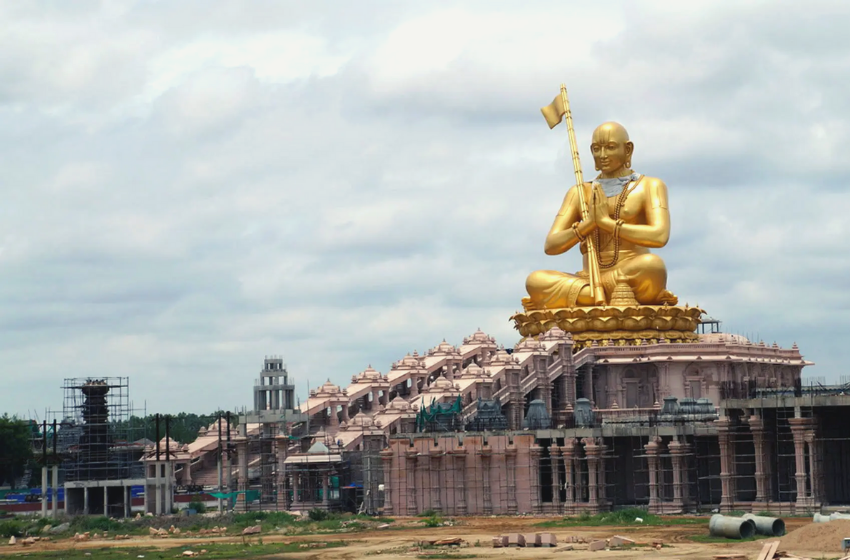
A golden saint sitting with folded hands and a soft smile on his face is located in Muchintal, Hyderabad, India. This grand statue is Ramanujacharya, a Hindu theologian, a pioneer of spiritual movements in India. It is the second tallest statue in sitting pose after the great Buddha statue in Thailand.

This statue is to be unveiled by the Prime Minister of India, Shri Narendra Modi in February 2022 in remembrance of Ramanujacharya. The statue of Ramanujacharya is dedicated to the world to profess the beliefs and ideology of Ramanujacharya.

The height of this beautiful sculpture is 216 feet; a golden hue covers the statue under the bright blue sky. The foundation for this noble purpose was laid by Chinna Jeeyar. The construction of the statue of equality is funded by the donation collected across the world.

This sculpture commemorates the teaching of Ramanujacharya on his 1000 birth Anniversary.

Saint Bhagavad Ramanujacharya

Bhagavad Ramanujacharya was a spiritual leader, who uplifted the lower strata of society and professed Equality. He believed that God does not discriminate between his creations and loves each of them equally. Earlier, the lower strata of society were not allowed any entry or to pray inside temples, Acharya Ramanuja shunned these practices completely and paved the way for a new way of worship.

Saint Ramanujacharya was the contemporary of Shankaracharya. He is one of the great reformers of India who influenced the Bhakti Movement and many saints like Meera, Tulsidas, and Kabir. He believed in universal brotherhood and inspired people to lead a life incorporated with Vedic teachings.

Ramanujacharya helped the untouchables who were discarded by the caste system and embraced them. His compassion towards the oppressed won him the title of “Emperumanar”. This title was given to him by his Guru, it means “you are ahead of us”.

Shri Ramanujacharya called the subjugated people Thirukkulathar that means divine born. He revolted against the inhumane behavior of the high classes and allowed the untouchables to enter the temples and to pray.

Saint Ramanujacharya was a great visionary of India who was not restricted by the class distinction, to him every human being was a creation of God. He provided every privilege to the less privileged and loved them wholeheartedly.

He believed in Spiritual growth. He believed that superiority is not decided by class but by the spiritual realization and pure mind.

He said that the world is not illusionary, it is real, and this world is a divine form of God itself. Ramanujacharya also encouraged people to safeguard natural resources like rivers, air, water because he believed that everything that is created by God is Sacred. 

Bhagavad Ramanujacharya was a great philosopher, social reformer, a believer of Vishishtadvaita school, related to Vedanta. 

Throughout his life, he fought against the discriminatory nature of society, he raised his voice against the corrupt practices in temples. His philosophy of Vishishtadvaita became the foundation for many other Bhakti Movements.

He was not only a theologian but also a literary genius; he was respected by both classes of society. He wrote Nine scriptures and Brahma Sutras. He is an icon of equality, even at the present times, for the world. 

Statue of Equality – Information

“All are equal in the eyes of God”, Ramanujacharya lived his whole life following this belief. The statue teaches us to value every human being and love them regardless of their caste, religion, and status in society.

The statue of Equality is purely dedicated to the teachings of Ramanujacharya. It is to remember his noble ideas that made society more humane. He acted as the bridge between the literate and illiterates.

The statue of Equality inspires the world to follow the teachings of Ramanujacharya which are based on humanity and compassion.

The statue of Equality is located in Hyderabad, India. It covers approximately 334 acres of land. It has a giant statue of Shri Ramanujacharya.  The statue has 108 Divyadesams replicas surrounding it. A fountain of Chinese color with a mini statue of Ramanujacharya is also constructed here.

The budget of this project is around INR 1000 crore. The idea to build a statue of equality was given by Sri Chinna Jeeyar, an Indian ascetic, who laid the foundation in 2014. The total cost of the statue of Ramanujacharya is 100 crore.

The statue is built by Aerosun Corporation, China. It was shipped to India after completion. The statue of equality is made of Panchaloha- A mixture of Gold, silver, copper, brass, and titanium. The statue was built by a team of 60 professionals. The chief sculptor of the project is DNV Prasad Sthapati.

The statue is built on a huge lotus that will be built on a three-storied structure called Bhadravedi. 

This lotus has a diameter of 27 feet.  These dimensions are significant as they represent the twenty-four tattvas (elements), the 25th representing soul, 26th representing  God, and the 27th signifying Guru.

The statue is constructed on a base building that has a meditation hall. The base building is 16.5 meters tall. The meditation hall under the statue will have a 120 kg gold statue of Ramanuja. The ground floor of the base building is around 6000 square meters, it will have an electric vehicle that will show the life and philosophy of Shri Ramanuja.

The temple of Shri Ramanuja, established on the second floor that has a dimension of 27,870 square meters, is built to worship. The third floor includes a Vedic digital library and a research center. There will be a parking lot that can accommodate 1500 vehicles at once.

The building will also have a Museum of Equality, where the Statues of Nelson Mandela, Martin Luther King Jr., Dr, Bheemrao Ambedkar and many other advocates of world equality and peace. This place will have an inbuilt library that will provide information about Human Equality.

Conclusion

The statute of equality delivers the message of world equality that would be free of Caste, Religion, color, and race. The world will become a better place with the practical beliefs of Ramanujacharya. The religious trust of Sri Chinna Jeeyar asked the countries to support this project and started “Equality Campus”. 

In this project, Jeeyar requested countries to hoist their flag on the premises of the Statue of Equality. With the inauguration of the statue of equality, India will become a global messenger of peace and equality. This is not about safeguarding humanity only but securing the natural resources that are under stress due to extreme human exploitation.

Frequently Asked Questions

Q1. Where is the Statue of Equality located?
Ans. The statue of Equality is located in Hyderabad, India. It is dedicated to an Indian saint Shri Ramanujacharya, who advocated the importance of equality and helped the subjugated class of society.

Q2. Who will inaugurate the Statue of Equality?
Ans. The Statue of Equality is to be inaugurated by the Prime minister of India, Shri  Narendra Modi.

Q3. Who was Ramanujacharya?
Ans. Ramanujacharya was an Indian Philosopher, Reformer, pioneer of Vaishnavism. He was a great visionary who helped people who were ostracized by society.

Q5. What is the name of the second-highest statue built-in sitting pose?
Ans. Statue of Equality is the second highest statue dedicated to an Indian ascetic, Shri Ramanujacharya. The height of this statue is 216 feet. It is the second-highest statue in the world after the sitting Buddha statue in Thailand.

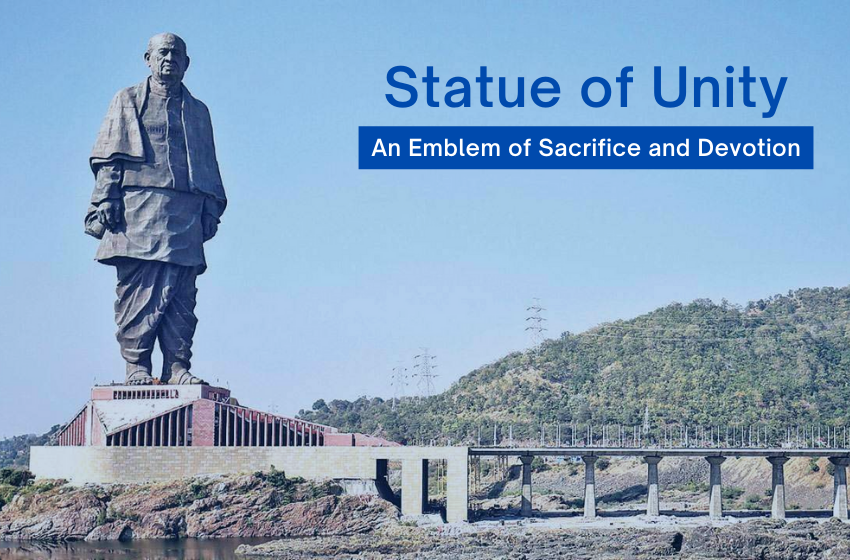
Statue of Unity – An Emblem of Sacrifice and Devotion

Statue of Unity

In the year 2013, Prime Minister Narendra Modi, the then Chief Minister of Gujarat laid the foundation of the Statue of Unity. This statue was dedicated to Sardar Vallabh Bhai Patel, Known as the Iron Man of India.

The Statue of Unity is the world’s tallest statue with a height of 182 meters, pride of India, and one of the major tourist sites in India at present. This monument holds historical and national value. 

Sardar Vallabh Bhai Patel’s role in unifying India is unarguably the most significant event in Indian History. The Statue of Unity is dedicated to Sardar Vallabh bhai’s devotion and sacrifice to make India what it is today and mark his contribution as an unforgettable persona who shaped India as a nation.

A man, with a strong conviction and a sense of nationalism, who unified India within two years of independence, stands humbly over Narmada River in Gujarat.  The statue of unity is a mark of respect to Sardar Vallabh Bhai Patel.

Introduction to The Iron Man of India

Manpower without unity is not a strength unless it is harmonized and united properly, then it becomes a spiritual power –  Sardar Vallabh Bhai Patel.

 “Sardar” is what Mahatma Gandhi called an ambitious hard-working man from Gujarat, who will later go down in history with the title of “Lauh Purush of India” (Iron Man of India).

The ambition of this young man was not about gaining luxury or popularity in life but to witness a free and united India, which he achieved later In life.

Vallabh Bhai Patel, who is also called “Bismarck of India”, hailed from a small village. Born into a lower-middle-class family, he passed his matriculation exam at the age of twenty-two, but the leadership qualities he is famous for were ingrained in him since birth.

Even though there was financial hardship in his family, it never wavered Vallabh Bhai Patel’s passion to pursue law and work as a lawyer. With his extraordinary abilities, he became a famous criminal lawyer in a short period.

Vallabh Bhai Patel always wanted to study law in England but he gave up this opportunity for his elder brother. Later, at the age of 35, he went to study law in England and became one of the top students.

The exemplary journey of Sardar  Vallabh Bhai Patel as a freedom fighter started when Mahatma Gandhi asked him to take command of Kheda Satyagraha in 1918. From this point on, Vallabh Bhai Patel never looked back and fought for a free nation and its rights.

After India gained Independence, Sardar Vallabh Bhai Patel was a strong contender for the role of prime minister but Gandhi Ji wished Jawaharlal Nehru to become the Prime Minister, Patel followed Gandhi Ji’s wishes and became Deputy Prime Minister.

It almost seemed impossible to unite 565 different states and bind them in a nation called India but Sardar Vallabh Bhai Patel negotiated with more than 500 states ruled by different monarchs and built a nation within almost two years.

Statue of Unity – Symbolism

The statue of unity symbolizes integrated nationalism, to generate a feeling of oneness, to remember the efforts of Sardar Vallabh Bhai Patel in building a nation out of fragmented Indian territories. The statue is to commemorate the determination and unwavering conviction of Sardar Vallabh Bhai Patel to weave India into one nation.

The statue of unity also teaches us to be thankful towards the forgotten Indian freedom fighters who fought hard to free this country. Freedom fighters like Vallabh Bhai Patel show the spirit of the Indian nation. 

But we cannot express the significance of the Statue of Unity in a sentence or few words because every Indian holds a different meaning for a statue of unity.

Statue of Unity – Where the Iron Man of India Stands Tall

The Statue of Unity is 600 hundred feet tall (182 meters) that makes it the tallest statue in the world leaving Spring Temple Buddha in China behind. This sculptor is around 2 times taller than the Statue of Liberty in New York.  It took almost 4 years to be complete this memorial site. This gigantic monument is a tribute to Sardar Vallabh Bhai Patel. 

The foundation of this monumental site was laid on October 31, 2013, on the birth anniversary.  It was inaugurated by Prime Minister Narendra Modi on the birth anniversary of Sardar Patel. This marvelous architectural monument is built with the design and guidance provided by Ram V. Sutar, a distinguished sculptor of India, who has designed more than 50 monuments.

In this monument, Sardar Patel is wearing a traditional dhoti and a shawl, a humble but fierce presence. The complete difficult structure of this humongous monument is a noteworthy feat accomplished by over three thousand workers and engineers as it is the tallest statue in the world.

The monument is in the walking position to represent the nation treading forward Minute details are provided by the Ram V. Sutar to make the statue life-like.

The project was completed with the collaboration of Larsen and Toubro and Narmada Nigam Limited, the detailed bronze cladding of the statue is done by Jiangxi Toqine Company, China. 

This statue is built with 25000 tonnes of steel, 70,000 tonnes of cement, and bronze panels weighing around 1700 which cover the statue. The budget of this historical monument is around USD 450 million.

Statue of Unity is three-layered. The structure is resistant to natural calamities like earthquakes up to 6.5 magnitudes and wind velocity up to 60 meters /second. The statue of Unity will turn green with time due to the corrosion of bronze.

The significant height of the statue of unity represents the number of assembly constituencies in the state of Gujarat.

The Iron Donation Drive 

Sardar Vallabh Bhai Patel was the one of prominent freedom fighters of India, an iron donation drive was launched by Prime Minister Narendra Modi in 2013, to pay a tribute to Vallabh Bhai Patel.  

Vallabh Bhai Patel was born in a farmer family and was also known as Iron Man of India so this donation drive held great significance. Almost 100 million farmers across India, donated their used iron tools to honor Vallabh Bhai Patel and the project.

Statue of Unity – A place for explorers

With the title of the world’s tallest statue, the Statue of Unity has become a point of attraction for explorers and tourists, all around the world. Over 5 million tourists were recorded by the government who visited the Statue of Unity in recent years.

You can reach the Statue of Unity by the major airports like Mumbai, Bangalore, Chennai, Kolkata, and Surat, railway stations, and bus transport facilities. You can contact Gujarat State Road Transport Corporation (GSRTC) in order to find a mode of transportation.

Statue of Unity is around, 25 kilometers from Rajpipla City and around 90 kilometers from Vadodara, 200 Kilometer from Ahmadabad.

This monumental site is located on Sadhu Bet Island, Narmada River, Kevadiya district in Gujarat, where it is built is in harmony with nature, you can find the right balance between natural and artificial structures.

There is a boat ride poof approx 15 kilometers to reach the statue of Unity. A bridge of 300 meters in length connects this monument with the mainland. There are nine piers that are beautifully designed on the bridge, with a width of 26 meters; it has an airport-style moving walkway.

The scenery of Satpura and Vindhya Ranges which surrounds the Statue of Unity will spellbind you. The Narmada River encircling the statue gives you a peaceful and calm frame of mind.

  • Observation Deck- After reaching the statue of unity, you can also observe the monument site through an observation deck, this is located at a height of 500 feet. Maximum 200 people can observe the site at a time, you can use elevators to reach the observation deck. The ticket price for the observation deck is INR 350 and INR 200 for adults and children respectively. The entry fee does not apply to the toddlers.
  • Museum- Inside the Statue of unity there is a Museum where you can enjoy the laser light show that informs you about the brief history of the unification o India as a nation. it is built at the chest of the statue providing an adventurous thrill to you. It is a major point of attraction,
    At the Site, you can find a selfie point, where you can click the beautiful pictures of the surroundings. Inside the Sardar Patel Statue Complex, you will find a research center, three-star hotels, and Shopping centers. 
  • Bharat Van (Valley of  Flower)-  Bharat Van also called as Valley of flowers is an artificial site that has more than 300 species of flowers, this valley is extended over 24-acre land. This valley resembles an artificial rainbow of flowers.
  • Sardar Sarovar Dam- This is the third-highest dam in India with a 163-meter height, this dam is ranked second after Grand Coulee Dam in the USA in terms of volume.
  • Nauka Vihar- You can enjoy a boat ride in Panchmuli Lake under Eco-tourism activity. You can ride a boat for 45 minutes and enjoy the aesthetic view of nature.
  • Cactus Garden- It is a Botanical Garden that exhibits a large variety of cacti, you will experience the desert ecosystem in this botanical garden. 

Dino Trail, jungle safari, children nutrition park provide few other activities that you can enjoy while visiting the statue of unity.

Conclusion – Time to look back

Although there was much criticism over the construction of the Statue of Unity, it has proved the concerning voices wrong. We must realize that our roots are connected to the past and we cannot deny the significance of history that shaped our political, economical, and social values.

The Statue of Unity is not only a monument but is a symbol of Unity for Indians.  This monument sends us a message to remember the past and cherish the freedom that we owe to many nameless freedom fighters. This statue represents our National spirit and brotherhood. 

Sardar Vallabh Bhai Patel was a man who did not aspire much for himself and dedicated his whole self to the nation. He is an inspirational figure who helped us to realize the meaning and importance of Unity.

We live in a beautiful nation where people live in peace and harmony, this versatility is our strength and we should always remember it while adoring the Statue of Unity. 

The statue of Sardar Vallabh Bhai Patel is a symbol of brotherhood, unity, and strength for us. It gives a message to stand tall in the face of adversity.

Statue of Unity – FAQs

Q1. Can we bring outside food inside the Statue of Unity?
Ans. No, you cannot bring outside food inside the Statue of Unity. However, you can buy food inside the Statue of Unity.

Q2. What is the time of the opening of the Statue of Unity?
Ans.  The Statue of Unity is open from 8 AM – 6 PM. 

Q3. Is the statue of Unity closed on Monday?
Ans. Yes, the Statue of Unity remains closed on  Monday, on Sunday statue of Unity is crowded.

Q4. What is the ticket price to enter the Statue of Unity?
Ans. The ticket Price for adults is 350 Indian rupees and for the children, it is 200 Indian rupees.

Q5. How much time did it take to the built statue of Unity?
Ans. It took around 3.5 years to built the statue of Unity.

Q6. The Statue of Unity is dedicated to which Indian freedom fighter?
Ans. The Statue of Unity is dedicated to Sardar Vallabhbhai Patel, who is also known as the Iron Man of India.

Q7. Where is the Statue of Unity Located?
Ans. It is located in Kevadia Gujarat, India. It is the world’s tallest statue.

PCMB Career Options After 12th

PCMB Career Options After 12th

As per the education system of our country, a student is supposed to choose a stream after it passes high school and to study further classes. Now talking about streams are these streams that a student has to choose from, these streams are Science stream, Arts Stream and Commerce Stream. After choosing one of these streams in intermediate, student not only chooses some subjects but a whole carrier path for themselves because these subjects let the student study further to get establish financially and become a valuable asset for the nation. 

Let’s see what these streams have to offer to students after high school:

  • Science Stream: Include subjects that deal with Medical Science and Technology. 
  • Art Stream: Also known as humanities includes a very wide range of subjects like History, Political Science, Geography, Psychology, etc. 
  • Commerce Stream: Include subjects that deal in trade and business. 

Here we will focus on the Science stream and will discuss some of the best career options after 12th in PCMB subjects.

Best PCMB Career Options After 12th

In the science stream, we have two divisions these are, PCM (Physics, Chemistry, Maths) and PCB (Physics, Chemistry, Biology). If a student is willing to study medicine in the future or willing to do engineering in any specific area, he\she can go for choosing the science stream. 

There is another option for science stream students which is to study PCMB (Physics, Chemistry, Maths, and Biology). Let us see the career options after passing our intermediate with PCMB. 

1. B.Sc. in Dairy Technology

It is part of food technology and the processing industry that deals with the engineering of processing milk and milk products. The duration of this course is 3 years, subjects that you study under this course are; production, consumption, processing, packaging, storage, transport, to prevent spoilage, improve quality, shelf life and safe for human consumption.

Employment Areas

After doing B.Sc. In Dairy Technology the area in which you get employment are; Educational Institutes, Production\ Manufacturing Companies, Logistics Departments, Milk Plants, Livestock Farms, Dairies, Cattle breeding Centers, etc.

Types of Jobs

Jobs that you can get after doing this specific course are; 

  • Market Development Manager
  • Area Sales Manager
  • Product Development Manager
  • Commodity Trading Manager
  • Project Manager
  • Quality Assurance \ Quality Control Manager
  • Head of Control Quality
  • Regional Procurement Manager
  • Junior Research Associate, etc.

MBA after B.Sc. in Dairy Technology

If any student feels like graduation is not enough for him as an education, in that case, the student can go for MBA which is a master’s degree.

2. B.Pharma (Bachelor in Pharmacy)

Bachelors of Pharmacy is a four-year undergraduate program in which students study the dispensing of medicine and drugs and methods and process of preparing drugs.

Job opportunities

A student after it’s B.Pharma degree can have a job such as; 

  • Chemical\ Drug Technician, 
  • Drug Therapist, 
  • Hospital Drug Coordinator in Bio-Technology Industries, 
  • Drug Inspector,
  • Health Inspector,
  • Making Prescription to patients,
  • Pharmacist,
  • Research Officer in Pathological Lab, 
  • As a Scientist in Research and Development Department

Salary expected

An average salary in a Pharmacy career in India; can start from Rs. 10,000 to Rs. 18,000 per month. With proper experience and developed skillset, Pharmacist expects an annual salary of Rs. 4,50,000 up to Rs. 7,00,000.

M. Pharma (Master in Pharmacy)

Although there are good job opportunities available after pursuing B.Pharma if students want to go for some higher degree, they can opt for M.Pharma, which can also get to work with international companies. 

MBA in Pharmaceutical Management

Another option to make you’re future brighter is to do MBA in Pharmaceutical Management, which can help in improving more skills and can offer jobs like Production Manager, Medical Representative, etc. 

3. B.Tech in Agriculture

B.Tech in Agriculture is an undergraduate program of 4 years duration and is divided into 8 semesters. This engineering course includes food processing, technology in food production, agricultural process, machinery, etc.

Job opportunities

This course includes several job opportunities both in the government and private sectors. The various job options for a candidate pursuing a degree in B.Tech Agriculture include:

  • Agricultural Engineering
  • Microbiologist
  • Project Manager
  • Head Green Keepers
  • Agricultural Managers
  • Research Analysts
  • Agronomist, etc. 

Salary expected

The starting salary for a B. Tech Agriculture candidate can range from somewhere Rs.5,00,000 to Rs.7,00,000 per year. 

Master’s degree in Agriculture

If the candidate feels interested in going for a master’s degree M. Tech in Agricultural Engineering and MBA both are great options to improve your skillset and get more reputed and high-paying jobs. 

4. B.Sc. in Biotechnology

It a branch of applied biology in which we study living organisms or biological systems and advance technology to study the same. It is a 3-year course divided into 6 semesters, course includes subjects like human biology, cell biology, biological system, chemistry, structural biochemistry, etc. 

Job opportunities

There are several job opportunities across the country for Biotechnology graduated students in various sectors such as:

  • Drug and pharmaceutical research 
  • Waste management
  • Chemicals
  • Energy
  • Food processing
  • Bio-processing industries
  • Animal husbandry
  • Environmental conservation
  • Genetic engineering, etc. 

Employment areas

The employment roles which a Biotechnology graduate can have are marketing Manager, Medical Coder, Quality control analyst, Data Analyst, Research Analyst, Research Scientist, Business Development Manager, Clinical Research Associate, etc. 

Salary expected

Starting salary for a biotechnology graduate can be estimated to Rs.4,00, 000 per year. 

Master’s degree in Biotechnology

Regarding future studies, a student can go for either M. Sc. Biotechnology or MBA for improving the skillset and also getting better job opportunities across the country and also outside the country to get a better package. 

5. B.Sc. Agriculture

B.Sc. Agriculture is a four-year undergraduate course that focuses on research in agricultural science and practice in agricultural science. This course involves dealing with disciplines like genetics and plant breeding, Agricultural Microbiology, Soil science, Plant Pathology, etc.

This course curriculum involves not only class lessons but field trips, lab sessions, practical training, cattle training, etc., B.Sc. Agriculture and farming include subjects like Agricultural Economics, Agronomy, Plant Pathology, Soil Microbiology, Plant Breeding and Genetics, Post-Harvest Technology, etc. 

Job opportunities

After completing this course candidates can find a job in both private and government sectors, as the importance of agriculture is increasing rapidly so the projects related to agricultural fields are increasing. There are several research projects and teaching works nowadays related to agriculture in many areas such as:

  • Agricultural departments
  • Extension Services
  • Research organizations
  • Commercial farming, etc. 

Salary expected

The average starting salary estimated for these professionals is from Rs.2, 00,000 up to Rs.8, 00,000. This salary range can be higher in the government sector. 

Government jobs in this sector are Agricultural Officer, Assistant Plantation Manager, Agricultural Research Scientist, Business Development Executive, Marketing Executive, etc. The salary for these posts starts from 3.25 lakhs up to 9.60 lakhs. 

This is some of the information for the students willing to chose PCMB in their intermediate school.

Master’s degree after Bsc. Agriculture

After B.Sc. Agriculture, you can pursue M.Sc. Animal husbandry dairy technology or MBA. These two will open international job opportunities for you.

Conclusion

After getting the information about all the carrier opportunities a student can have after taking PCMB as main studying subjects he/she can have a very bright future in both technical and non-technical (medicine) field if a student wants to study both Biology and Mathematics at the same time he/she make that wish true without thinking about future opportunities. Whatever you study, just put your heart and brain into that and success will automatically follow you.

Frequently Asked Questions

Q1. After taking PCMB, do we have to study two extra subjects also, as there are five subjects in total in the 12th master’s?
Ans. No, PCMB in itself is a combination of four subjects and for completing five subject schools add just one more subject to your syllabus, preferably a language. 

Q2. Is it important to go for a master’s degree after any graduation degree?
Ans. It is not necessary to have a master’s degree after graduation, it depends on the choice of the candidate. 

Q3. Can I study Math with the Arts stream?
Ans. It is not possible to study Maths with Art stream as per the education system, but if you are interested in Math you surely can study it on your level. 

Q4. Is there a scope of B. Tech Agriculture in India?
Ans. Yes, there is a very vast scope of job opportunities after B. Tech Agriculture in India.

A Strong Desire Is All You Need To Succeed

Strong Desire to Succeed

Powerful things happen after you begin putting in place the work to attain your goals. You become dependent on the progress and fall in love with the process.

Success means living a full life filled with ambition and drive to conquer it all. Your life is too short for you to be chasing unfruitful outcomes that don’t add up to your success. You need to have a strong desire, a clear mindset, and discipline to succeed.

The start of success is desire. A desire so strong, that it makes you get up and get out of bed each morning to seize the day. When you have a strong sense of desire, nothing in the world can shake you. We have numbered days on this planet so why not make them worth celebrating. Success in life only comes from great decisions and great decisions come from the desire to achieve it all. 

A much-needed Wake-up Call

It is a very true fact that some people are perceived to have it easy. They happen to have their whole life laid out in front of them. From the perfect education to the perfect career, everything is a cakewalk for them. 

Maybe that’s not real. Maybe it is. But it is neither a lie nor speculation that most people don’t have it easy. You see all around yourself, each face you see, every person you meet, everyone has a story. One look at them and you know that struggle is written all over them. If everyone is struggling then how are so many beautiful humans so accomplished and thriving? It is because of one and only one thing. Desire.

You see, it may be a generic thing to say but what does wake you up in the morning? A strong desire to attend to nature’s call, a need to reach your workplace in time or to attend to your family’s needs. Doesn’t it all boil down to your desire to do all these chores? You did them because you wanted to. 

The same way the larger the goal is, the stronger you desire should be. Desire to visit your boss on the weekend, eh. But the desire to go away on a weekend is pure happiness in a travel bag. 

Most of us have a desire to accomplish a whole lot of things in life. Some people have the desire to be rich, some have to be successful in their respective fields, while some have the desire to learn new things and travel. I for one have a desire to learn pottery for a few years. But did I accomplish it? No.

These kinds of desires don’t require much time and energy but we still don’t manage to accomplish them. The kind of desires that we have for our success need a far greater push than these. We need to realize what we want in our lives and how much we want it. The moment we realize our true desires, that is our wake-up call to do something and everything about it.

Learn to Unlearn

We are not proud of it but most of us deep down are lazy. We want everything at our feet and we consider sloth as our spirit animal. But success needs the sacrifice of unhealthy habits and an introduction of the discipline into our lives. We desire a lot of things but the major hurdle between our desire and actualizing it into success is the discipline that needs to be kept in check because when we don’t, we keep falling back into our habits that do not and will not lead to success in any way. 

Your desire needs to be strong because only that way you can stay on the track of discipline because we can never succeed if we don’t change something that we do daily.

It is rightfully said, “To succeed, your desire for success should be greater than your fear of failure.” If you don’t decide to step out of your bubble and make up your mind to conquer the day you are not going to make it. Every single individual with a strong desire for success is hustling and succeeding in conquering the day. 

Know What You Want

What sets successful people apart from those who are not is just their mere ability or knowledge but their strong desire. Successful people know how capable they are and what they want. Nothing can stop them from achieving their true desire. They get back on their feet after failure, accept their mistakes and learn from them. This is the one true way successful people turn their desires into reality. 

You need to stay disciplined and have a strong game plan to achieve success. The desire for something is important for your success because it gives meaning to your journey towards achieving them, otherwise, they are nothing short of wishful thinking. You should steer clear of instant gratification because that will only result in you procrastinating a lot. Toil through the rigorous journey of turning your desires into success so that you feel proud of all that you have achieved.

The desire for something is like fuel that ignites your mind, body, and soul. The insatiable urge you feel when you wish to do nothing but keep working on your goal and go through any hurdles and do whatever it takes to achieve it. The desire for success should be so strong in you that you feel strong enough to dive into the sea of unfathomable risk even when you have no cushion to fall back to. 

A strong desire takes you on the harshly beautiful road of success where you are confident enough to commit yourself to achieve success no matter how long or how much it takes for you to achieve it. Success is created from the very moment you develop and desire for something and work on it to make it so strong that you become unstoppable until you achieve it.

Frequently Asked Questions

Q1. What sets successful people apart from those who are not?
Ans. What sets successful people apart from those who are not is just their mere ability or knowledge but their strong desire. Successful people know how capable they are and what they want. Nothing can stop them from achieving their true desire. They get back on their feet after failure, accept their mistakes and learn from them. This is the one true way successful people turn their desires into reality. 

Q2. What is a strong saying about being successful?
Ans. “A new start is always scary. The future will always be uncertain. You just have to take the leap of faith and the universe will work its magic. Be strong enough to keep going because the life you envisioned will always be in your hands.”

Also Read: Success is Yours As Long As You Try

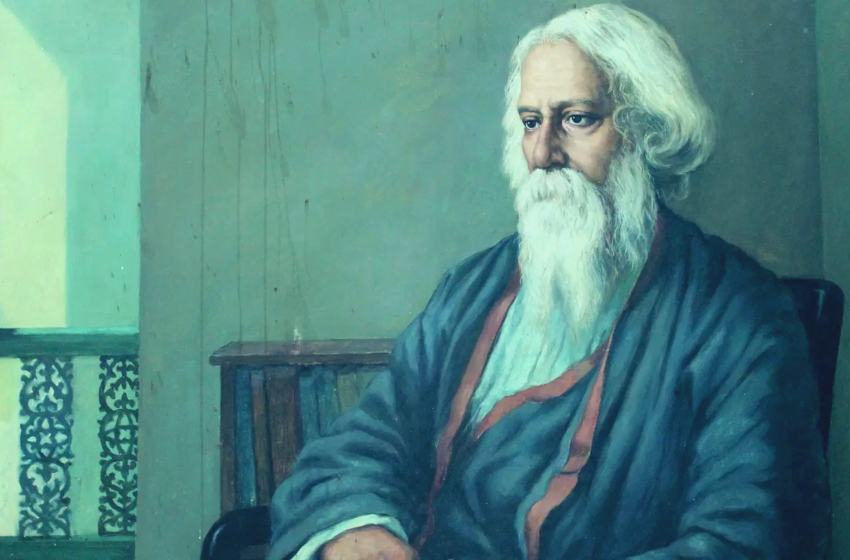
Rabindranath Tagore – An Indian Polymath

Rabindranath Tagore

Rabindranath Tagore was born on 7th May 1861. He was a great Indian polymath-poet, painter, philosopher, social reformer, playwright as well as composer. Tagore mostly avoided classroom schooling in childhood and preferred to roam on the family visited in Bolpur and Panihati. He used to take tuitions of swimming in the Ganges or trekking through the hills, gymnastics, and practicing wrestling and judo from his brother Hemendranath, he had also learned his favorite subject which was English, mathematics, history and geography, drawing, literature, Sanskrit and anatomy. At the age of eleven, he and his father left Calcutta for several months for an India tour. In this traveling period, Tagore used to study astronomy, modern science, Sanskrit, and history and also read biographies and examined the Kalidasa which was the classical poetry. 

Family background of Rabindranath Tagore

His family belongs to Rathi Brahmins and basically, they belonged to a village named Kush which is in West Bengal (Burdwan). Khushari was the original name of the Tagores. The name of the father of Rabindranath Tagore was Debendranath Tagore and his mother was Sarada Devi. He was the youngest child among the 13 surviving siblings and his nickname was Rabi. His father was almost on the work tours widely and his mother died early in his childhood and he was raised mostly by servants. The eldest brother of the Tagore was Dwijendranath Tagore who was a poet and philosopher, another brother was Satyendranath who was the first Indian to be appointed as the elite and formerly all-European Indian Civil Service and the third brother was Jyotindranath who was a musician, copyright, and composer as well and on the other hand, his sister became the great novelist. Besides this, the wife of Jyotindranath, Kadambari Devi who was slightly younger than Rabindranath was such a powerful influence, and the dear friend of the Tagore and his wife’s name was Mrinalini Devi, and belong to Phultala village in Jessor District OF Bengal. She was a Translator. She gave birth to her first girl child on 25th October 1886 and named her Madhurilata and later nicknamed Bela. Then in the year 1888, she gave birth to a son named Rathindranath, and later in the year 1891 she again gave birth to a daughter and named her Renuka, and after three years she gave birth to another daughter, Mira. The youngest child of Rabindranath was born in the year 1896 who was named Samindranath. The Rabindranath married off her daughter Bela on 15th June 1901 and married off her another daughter Renuka on 9th August 1901. However, in the year 1902, the wife of Tagore was fell seriously ill as the doctors were failed to diagnose her disease and on the night of the 23rd November, she was died and left Tagore profoundly in distress for years.

List of Rabindranath Tagore Works

Rabindranath was mostly known for his poetry as he had written many novels, short stories, dramas, essays, travelogues, and thousands of songs. The rhythmic, optimistic, and lyrical nature which was mostly borrowed from the real-life of the people was frequently noted. He had written many autobiographies. When he was just twenty, he wrote his first drama named Valmiki Pratibha and in 1877 he began his career in short stories when he was only sixteen years old. He had also written eight novels and four novellas and was awarded the Nobel prize in the year 1913 in literature internationally for the best collection of poetry, Gitanjali. His work was almost done in the Bengali language but later on, the translation is found by the project of Gutenberg and some other sources. He was also a composer of about 2,230 songs and at the age of sixty, he grew his interest in painting and held many successful exhibitions. In Paris, he made a debut appearance by the artists met in South of France for his encouragement. He had an artist’s eye and there are 102 collections of his masterpieces in India’s National Gallery of Modern Art.

On the other hand, he had played a crucial role in Politics as well he had supported Indian Nationalists as opposing Imperilialism at the age of twenty. He also lampooned the Swadeshi Movement. He also rebelled against the nationalist forms of Independence and also wanted India’s right to Independence. He had also written songs to lionize the movement of India’s Independence. He had also played a massive role in resolving the dispute between Gandhi and Ambedkar for the issue of separate electorates for the untouchables. Moreover, in the year 1919 in response to the Jallianwala Bagh Massacre, he renounced his knighthood by writing the repudiation letter to the Viceroy, Lord Chelmsford. 

The list of original poetry in Bengali from Tagore is as follows:

Year  Poetry  Translated Title
1884 Bhanusimha Thakurer Padavali Bhanusimha Thakur
1890 Manasi The Ideal One
1894 Sonar Tari The Golden Boat
1910 Gitanjali Song Offerings
1916 Balaka The Flight of Cranes

The list of original dramas in Bengali of Tagore is shown below in the table:

Year Dramas Translated Title
1881 Valmiki- Pratibha The Genius of Valmiki
1882 Kal-Marigaya The Fatal Hunt
1888  Mayar Khela The Play of Illusion
1890 Visarjan The Sacrifice
1892 Chitrangada Chitrangada
1910 Raja  The King of the Dark Chamber
1912 Dak Ghar  The Post Office
1912 Achalyatan  The Immovable
1922 Muktadhara The Waterfall
1926 Raktakarabi Red Oleanders
1933 Chandalika The Untouchable Girl

The list of some famous translated work of Tagore is as under:

  • 1914 – Chitra.
  • 1913 – The Cresent Moon.
  • 1913 – The Gardener.
  • 1922 – Creativity Unit.
  • 1917 – The Cycle of spring.
  • 1928 – Fireflies.
  • 1916 – Fruit Gathering.
  • 1916 – The Fugitive.
  • 1920 – Glimpses of Bengal.
  • 1921 – The Home & the World.
  • 1916 – The Hungry Stone.
  • 1991 – I Won’t Let You Go.
  • 1914 – The King of the Dark Chamber.
  • 2003 – The Lover of God.
  • 1943 – The Boyhood Days.
  • 1917 – Nationalism.
  • 1915 – Song of Kabir.
  • 1916 – The Spirit of Japan.
  • 1916 – Stray Birds.
  • 1913 – Vocation.
  • 1918 – Stories from Tagore.
  • 1921 – The Wreck.

Nobel Prize was Awarded to Rabindranath Tagore

Rabindranath Tagore was awarded the Nobel Prize in the year 1913 because of his beautiful and profound communication skills which expressed his poetic thoughts in his own words and for the literature of the West. 

However, on 25th March 2004, his prize was somehow stolen from the Visva-Bharti University along with other belongings but on 7th December 2004, two replicas Nobel Prize was made to present Tagore. One was made of gold from the Swadesi Academy and the other was made of bronze from the Visva-Bharti University.

Best 10 quotes of Rabindranath Tagore

  1. Clouds come floating into my life, no longer to carry rain or usher storms but to add color to my sunset sky.
  2. I slept and dream that life was a joy. I awoke and saw that life was service. I acted and behold, service was a joy.
  3. Faith is the bird that feels the light when the dawn is still dark.
  4. You can’t cross the sea merely by standing and staring at the water.
  5. The butterfly counts not months but moments and has time enough.
  6. Let your life lightly dance on the edges of Time like dew on the tip of a leaf.
  7. Death is not extinguishing the light, it is only putting out the lamp because the dawn has come.
  8. Every child comes with the message that God is not yet discouraged of men.
  9. Beauty is the truth’s smile when she beholds her face in a perfect mirror.
  10. Trees are the earth’s endless support to the listening heaven.

Frequently Asked Questions

Q1. Who wrote the National Anthem of India?
Ans. Rabindranath Tagore had written the National Anthem of India “Jana Gana Mana” with the length of approximately 52 seconds after India got independence at the year 1947.

Q2. List some historical museum which was made in the memory of Rabindranath Tagore.
Ans. There are 8 historical museums made in the memory of Rabindranath Tagore from which 5 are in Bangladesh and the other 3 are in India. The list of these museums is listed under.

  • Rabindra Museum – Mungpoo, India.
  • Rabindra Bhavan Museum – Shantiniketan, India.
  • Rabindra Bharti Museum – Joransanko Thakur Bari, India.
  • Tagore Memorial Museum – Shilaidaha kuthibadi, Bangladesh.
  • Rabindra Memorial Museum – Shahzadpur Kachharibari, Bangladesh.
  • Patisar Rabindra Kacharibari – Patisar, Atrai, Naogaon, Bangladesh.
  • Pithavoge Rabindra Memorial Complex – Pithavoge, Rupsha, Khulna, Bangladesh.
  • Rabindra Complex – Phultala, Upazila, Khulna, Bangladesh.

Q3. Which novels and short stories of Rabindranath Tagore were adopted in Cinema and Television?
Ans. The list of some novels and short stories of Rabindranath Tagore which was adopted in Cinema and Television are:

  1. In the year 1932, the only film directed by Tagore was Natir Putra.
  2. In 1932, the novel inspired by Tagore, Gora was filmed and directed by Naresh Mitra.
  3. In 1957, Kabuli Wala was directed by Tapan Sinha.
  4. In 1961, Teen Kanya was directed by Satyajit Ray.
  5. In 2015, the Television serial was released by Anurag Basu as Stories by Rabindranath Tagore.

Q4. In which poem Rabindranath Tagore wins the Nobel Prize?
Ans. Rabindranath wins the Nobel Prize from the Gitanjali, Tagore’s best-known collection of poetry.

Q5. In which year the Rabindranath Tagore died?
Ans. Rabindranath Tagore died on 7th August 1941 at Jorasanko Thakurbari, Kolkata.

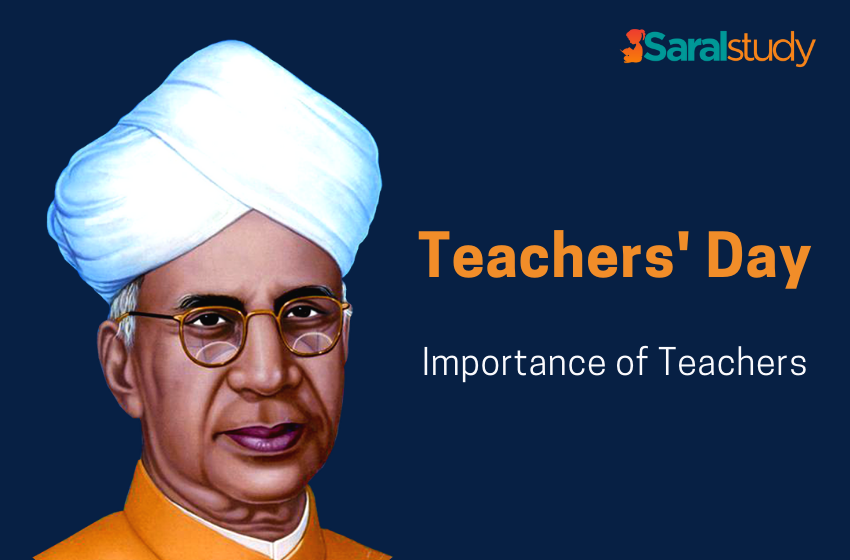
Teachers’ Day: Importance of Teachers

Happy Teachers Day

Teachers’ Day is celebrated on 5th September in India to honor the birth anniversary of Dr. Sarvepalli Radhakrishnan. On 5 September 1888, Dr. Sarvepalli Radhakrishnan was born. He was a well-known teacher, philosopher, receiver of Bharat Ratna, first Vice-President, and second President of independent India. Dr. Sarvepalli Radhakrishnan’s dedicated work towards education made his birthday a remarkable day in the history of India. 

A teacher is a friend, and a guide who holds our hand opens our minds and touches our hearts. The importance of a teacher should not be ignored at all. Teacher’s day is a special day where teachers of schools and colleges are honored for their work. The date varies from country to country. On 5 October, World Teacher’s Day is celebrated across the world. But in India, Teacher’s Day is celebrated on 5th September and this tradition started in 1962. This is when Dr. Sarvepalli Radhakrishnan was born. We remember him for his great work as an exemplary person on this day.

Who was Dr. Sarvepalli Radhakrishnan

World Teachers’ Day is celebrated on October 5, but every country across the world celebrates this day on different dates. But in India, Teachers’ Day is celebrated on 5th September as it’s the birthday of a highly respected educator, philosopher, and prolific statesman that is Dr. Sarvepalli Radhakrishnan. 

Dr. Sarvepalli Radhakrishnan was the first Vice President of India of independent India. Later on, he becomes the second President of India. Dr. S Radhakrishnan was born in the erstwhile Madras Presidency. Being a bright scholar, he completed his education by winning scholarships, despite a lack of finances. He completed his MA in Philosophy in 1908. Later on, Dr. Radhakrishnan taught at Madras Presidency College. In 1931, he was awarded the Bharat Ratna, the highest civilian award in India in 1954.

Why are Teachers Important? 

Teachers truly are the backbone of society. Teachers are role models to children. They offer guidance and dedication and give power of education to the young people. Because of teachers, countries can develop socially and economically. If we or our society is achieving something good, then take a moment to think of and be thankful for the teachers who made it possible.

Why we celebrated Dr. Sarvepalli Radhakrishnan’s birthday on September 5?

Dr. Sarvepalli Radhakrishnan’s friends and former students requested him to celebrate his birthday as Teacher’s Day, which befalls on 5th September. Dr. S. Radhakrishnan said that it would be his honor if 5th September would rather be celebrated as Teachers’ Day. From that day, Teachers’ Day is celebrated on 5th September every year in India. He also was a believer in teachers being the best minds in the country.

Importance of Teachers’ Day

Teacher’s Day is important for the children because it proffers them a chance to understand the hard work put in by their teachers to ensure that they get a proper education. And, teachers are also expecting the Teachers’ Day celebration as their efforts get acknowledged and honored by students and others as well.

Teachers have the ability to form leaders for the nation in the best way. So the truth is, teachers have the most important job in the world. Teachers influence the students to have the power to change lives. It is not only for children but for the lives of all.

Teachers’ Day Significance

The truth is the future of a country lies in the hands of its children. Teachers, as mentors, can form students into future leaders who then form the destiny of the nation. Teachers play a significant role in our lives to help us become successful in our life. They gently push us to become good human beings, better members of our society, and even ideal citizens of the country. Teachers’ Day is a celebration to acknowledge the responsibility, challenges, and unique role that the teachers play in our lives.

Teachers’ Day Celebration

On Teachers’ Day, students in schools and colleges organize various activities to entertain their teachers. Some of the activities are mimicry of teachers, singing competitions, dancing competitions, games, and recitation of poems. Some students even shower teachers with gifts, flowers, and handmade cards. And it is a way for students to express their love and respect for their teachers.

Conclusion

Teachers’ Day is a pleasant occasion and in that, we enjoy the beautiful bond between children and teachers. We should wish our teachers on this special day. Students should try to make their teachers feel special on this day.

Happy Teachers’ Day!

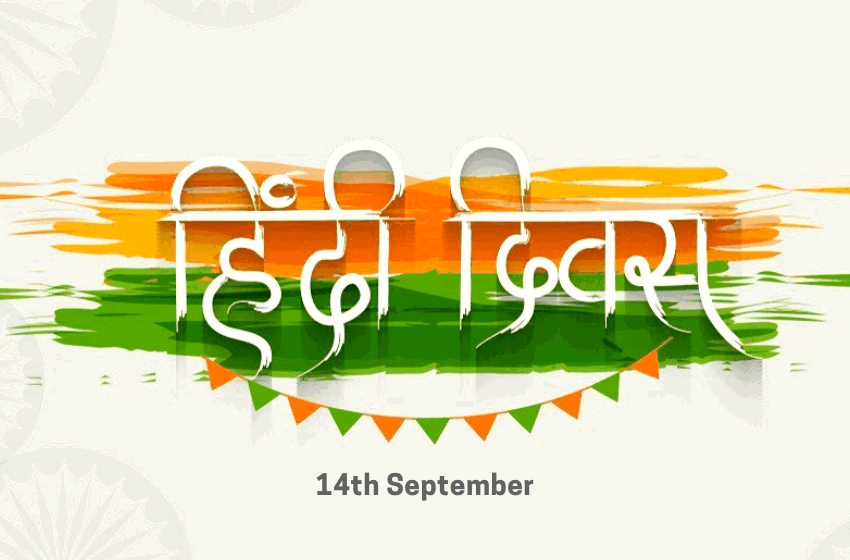
Hindi Diwas: Why Hindi Diwas is celebrated on 14th September, know history

Hindi Diwas

National Hindi Diwas or Hindi Day is commemorated on 14th September every year in India. 14th September 1949 onwards, it is celebrated to mark the adaptation of Hindi as the official language by the Constituent Assembly. On 26 January 1950, it became a part of the Indian constitution. In India, the first National Hindi Diwas was celebrated in the year 1953. Jawaharlal Nehru, the first Prime Minister of India decided to celebrate Hindi Diwas on September 14.

The Hindi Language is an Indo-Aryan language that is written in the Devanagari script. Hindi is the fourth most spoken language around the world after English, Spanish, and Mandarin. The Hindi language is one of the most extensively spoken languages in India, that why most Indians celebrating the language as their mother tongue. 

Why is Hindi Diwas Celebrated?

Now, both Hindi and English have been declared as the official languages of India. Though, the inclination towards English is much higher among the Indians. A person who is fluent in English is given more respect while someone who doesn’t know it and uses the Hindi language to communicate is looked down upon. Disparaging our mother tongue and the people who use it is a matter of shame for us.

Hindi Diwas reminds us that Hindi is our main language. Hindi is our mother tongue and it is our official language also. It is rooted in our culture and thus it defines us. The importance of the Hindi language is emphasized through the several events organized to celebrate Hindi Diwas.

The Significance of Hindi Diwas

The Hindi language is an essential part of our culture that connects us to our roots. Now, when the young generation is fascinated by western culture and acknowledges English as a status symbol, Hindi Diwas is a way to remind them as to where they belong. It doesn’t mean that they should not learn or use English. It is practically not possible because English is also our official language and is used globally. Without the knowledge of the English language, it is difficult to survive nowadays. But, it is very sad that we Indians have started giving more importance to English and often tend to lower or disrespect our mother tongue, Hindi.

Importance of Celebrating Hindi Diwas

Hindi Diwas is celebrated to show the beauty of the Hindi language. And it also reminds us of its rich past. The younger generations must be reminded of the importance of the Hindi language. This is the reason why most schools and educational institutes in India organize special events to celebrate this day. Various activities are organized on the occasion of Hindi Diwas to emphasize the importance and richness of Hindi.

The Richness of Hindi Language

It is observed that Hindi is the fourth widely used language around the world. Hindi is not only used in India but is also used by people belonging to many other Asian countries including Mauritius, Nepal, Guyana, Fiji, Suriname, and Pakistan. Many Hindi words are used worldwide are mistaken to be from the English language. Some of these include karma, jungle, and guru. Hindi is one of the languages that have the ability to write every sound in the world.

How is it celebrated?

Like other festivals in our country, Hindi Diwas is also celebrated with a whole lot of zeal and enthusiasm by the people of India. Hindi Diwas is celebrated first and foremost in Delhi and witnesses several literary activities well as celebrations to commemorate this important day.

Conclusion

Hindi Diwas celebration encourages us to value the Hindi language and inspires a love for it. The Hindi Language is rooted in our culture and every Indian must respect it. One who does not respect their culture and roots that cannot succeed in life. Hindi Diwas celebration is a great way to bring the citizens of India closer to the Hindi language as well as the rich Indian culture.

Career Options after 12th PCM Students

career option after 12th

All education requires students to study all the required subjects up to a certain level which would help them to achieve a basic understanding of the general career options in which academics play an important role. Students are allowed to choose any particular stream consisting of all the subjects, which the students have the most interest.

The required streams that the students are supposed to choose from are:

  1. Science Stream – This stream includes all the courses that will help the students gain knowledge of science and technology.
  2. Art Stream – This stream includes all the courses that will help the students gain the knowledge of human condition and behavior. 
  3. Commerce Stream – This stream includes all the courses that will help the students gain knowledge of business and trade.

As stated above, the science stream includes courses that will help the students gain knowledge of science and technology. Let us look into the potential courses that the science stream has to offer.

Career Options for 12th PCM Students

Check the list of career options for Class 12th PCM students and career options after the completion of the course:

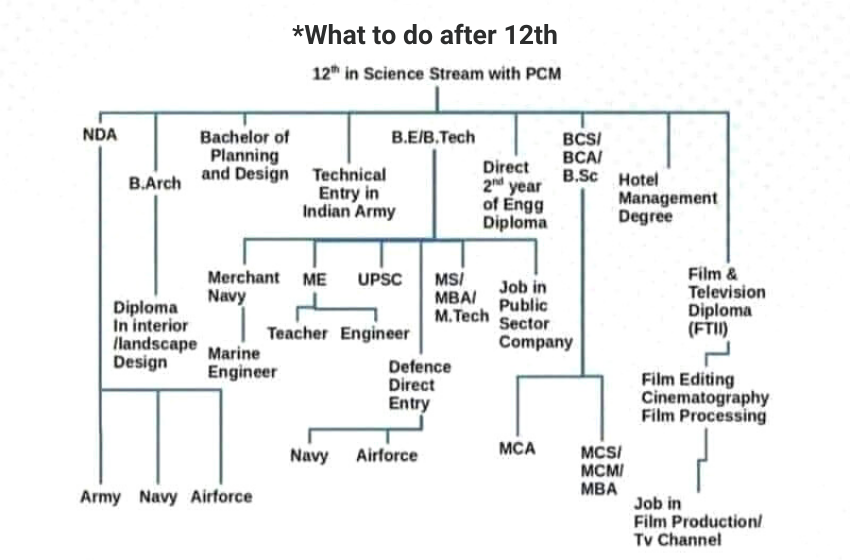
1. National Defense Academy (NDA)

National Defense Academy or NDA offers a training program for any students who wish to serve the nation. The cadets of the Indian Army, the Indian Navy, and the Indian Air Force have to train together before moving on to the next level of their respective fields.

National Defense Academy is set up in Khadakwasla, which is in Pune, Maharashtra. 

Academic Speculations

Students who train in the National Defense Academy, go through a three-year undergraduate program which requires them to stay in the residential area of the academy until the training ends. The NDA training program provides a choice of the stream to their trainees. The two streams are:

Science, which has the following subjects:

  • Physics
  • Chemistry
  • Mathematics
  • Computer Science

Humanities (Liberal Arts), which has the following subjects:

  • History
  • Economics
  • Political Science
  • Geography

Languages (Arabic, Chinese, French, Russian)

The courses provided to the students in both the streams are split into three groups:

Compulsory Course – In this course, the students are required to study the English language, foreign languages, and the core subjects of their respective streams.

Foundation Course – All students must take up this course. Military studies and General studies are the subjects taught in this course.

Optional Course – This course comprises subjects according to the chosen service of the students.

2. Bachelor in Architecture (B. Arch)

Bachelor of Architecture is an undergraduate course program of five years. Students who wish to pursue this program have the opportunity of acquiring both theoretical and practical knowledge during the length of this course. Students learn how to plan, design, and construct various kinds of models in this course. 

Honing their creative skills should be an important task for the students before applying for this course. This program majorly focuses on educating the students about architecture and not about creation and art on a basic level and if you are not trained well in the basics then you will feel left out.

The construction sector is flourishing with the high demand for a skilled architect or a counselor from both the private and public sectors so pursuing a career in architecture is a great idea for the students.

Salary

Architects first start as consultants who receive a regular pay of Rs.2 to Rs.4 lacs in a year. 

Best Companies for B. Arch Graduates

  • Architect Hafeez Contractor
  • Dar Al Handasah
  • RSP Architects Ltd
  • Arcop
  • Shapoorji Pallonji & Co. Ltd.
  • DLF

After completing this course, students can also go for a Diploma in Interior/Landscape.

what to do after 12th

3. Bachelor of Planning and Design

Bachelor of Planning and Design or B. Plan is 4 years in which students are given the basic knowledge and are trained on how to professionally plan. This course helps students to learn theoretical and practical aspects of how to plan, design, and engineer city-based areas. This course teaches students how to plan and develop a structure that is supportive, useful, and contemporary environment plan.

Best Colleges for B. Plan Students

  • Lovely Professional University, Phagwara
  • College of Engineering, Pune
  • Ansal University, Gurgaon
  • Amity University, Raipur Chhattisgarh
  • Aurora’s Design Institute
  • GD Goenka University, Gurgaon
  • School of Planning and Architecture, Vijayawada
  • College of Engineering and Technology, Bhubaneswar
  • Integral University, Lucknow
  • Manipal University- School of Planning and Design, Jaipur

Job Opportunities after B. Plan

  • Urban Planner
  • Project Planner
  • Design Architect
  • Regional Planner
  • Interior Designer
  • Government Housing Schemes
  • Transportation Projects
  • PWD Employment Projects

Job Requirements of a B. Plan Professional

  • Design
  • Survey
  • Plan
  • Model Creation
  • Project Management etc.

Salary

The starting salary of a B. Plan professional falls anywhere between Rs.3 lacs to Rs. 5 lacs per annum.

4. Technical Entry in Indian Army

Students who have the dream of working in the Indian Army in the field of education can apply for this course. Indian Army does so two times a year through the Indian Army Technical Scheme. 

Any student who has completed class 12th in the PCM stream can apply for this course. The appointed candidates are appointed directly to the post of Lieutenant after completing this course. It should be noted that only male candidates are applicable for this. The duration of this course is five years.

5. Bachelor of Engineering (B.E)/ Bachelor of Technology (B. Tech)

Below are the list of bachelor courses:

Bachelor of Engineering (B.E)

Bachelor of Engineering or B.E is an undergraduate course in Engineering Sciences. This course is for 3 to 4 years.

Students who apply for this course learn how to solve problems in engineering with the help of mathematics, scientific principles, new methods, and technologies. 

Through excellent academic systems and workshops, students develop problem-solving skills, analytical research which helps them to create and conduct proper research. Students of B.E have to write up a research paper in their last year before graduating.

Bachelor of Technology (B. Tech)

Bachelor of technology or B. Tech is an undergraduate course of 4 years. At the end of this course, students become skilled engineers.

Tech Specializations

  • Computer Science Engineering
  • Mechanical Engineering
  • Chemical Engineering
  • Civil Engineering
  • Electrical Engineering
  • Electronics & Communication Engineering
  • Aerospace Engineering
  • Ceramic Engineering
  • Instrumentation Engineering
  • Metallurgical Engineering
  • Petroleum Engineering
  • Electronics and Electrical Engineering

To apply to the engineering profession there is a requirement of skills that should be in an individual.

  1. The student should be able to communicate freely with others and have the knowledge of the core subject they specialize in.
  2. The student should be creative but should know how to apply the knowledge they have acquired through knowledge and training.
  3. The student should have leadership qualities but should know how to work in a team.
  4. The students should be familiar with the workings of computers and IT and the industry standards.

After completing these courses students can also pursue:

  • Merchant Navy
  • Mechanical Engineering (ME) – After completing this course students can apply to be a teacher or an engineer.
  • UPSC
  • Defense Direct Entry in Navy and Air Force
  • Medical Science (MS), Master of Business Administration/ Master of Technology
  • Job in Public Sector Company.

6. Direct Second Year of Engineering Diploma

Students who have completed their intermediate graduation in PCM can apply for the Direct Second Year of Engineering Diploma.

After the completion of this course, students will be applicable for the post of Junior Engineer.

7. Bachelor of Computer Science (BCS)/ Bachelor in Computer Application (BCA)/ Bachelor of Science (BSC)

Bachelor in Computer Application

Bachelor in Computer Application is an undergraduate course of 3 years for students who wish to establish a career in the field of computers. The course provides the students with detailed knowledge about computers and their applications.

Job Opportunities for B.C.A. Graduates

  • System Engineer
  • Software Tester
  • Junior Programmer
  • Web Developer
  • System Administrator
  • Software Developer

Salary

On average, the starting salary of a B.C.A. graduate lies between Rs.25 thousand to Rs.40 thousand per month. Great IT companies like Microsoft and Google even offer a six-figure salary as a starting package. 

In this course, the students are taught programming skills so that they have good knowledge about computers and the IT sector. With workshops and group projects, the students learn to develop applications along with skills like teamwork and communication skills. 

Bachelor of Science

A Bachelor of Science degree is academically equivalent to a Bachelor of Engineering Degree.

Bachelor of Computer Science

Students who have completed their intermediate graduation in the stream of PCM can apply for this course in Computer Science.

Frequently Asked Questions

Q1. What are the courses offered by the National Defense Academy?
Ans. The courses provided to the students in both the streams are split into three groups:

  • Compulsory Course – In this course, the students are required to study the English language, foreign languages, and the core subjects of their respective streams.
  • Foundation Course – all students must take up this course. Military studies and General studies are the subjects taught in this course.
  • Optional Course – This course comprises subjects according to the chosen service of the students.

Q2. What are the job requirements of a B. Plan professional?
Ans. Job Requirements of a B. Plan Professional

  • Design
  • Survey
  • Plan
  • Model Creation
  • Project Management etc.

Q3. Are there any job opportunities for B.C.A graduates?
Ans. Job Opportunities for B.C.A. Graduates

  • System Engineer
  • Software Tester
  • Junior Programmer
  • Web Developer
  • System Administrator
  • Software Developer