Internal Flaws In The Indian Education System

Internal Flaws In The Indian Education System

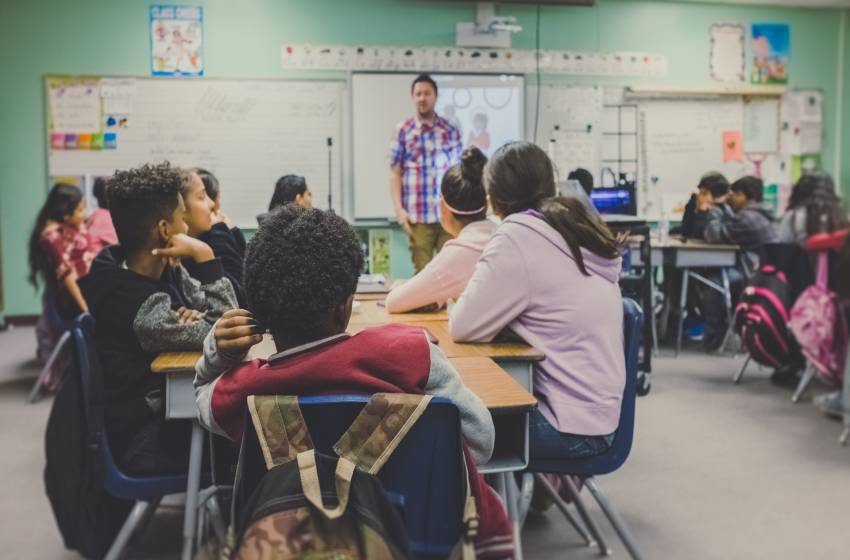
Education is the right of every individual. The Indian government proclaims to be in search of this perpetually. New laws are drafted and measures undertaken. But in this mad rush to guarantee education, the inherent flaws get unnoticed and neglected. Our policy makers fail to realise that an effective education system in not only determined by the number of schools, colleges and enrolment, but also by the credibility, transparency and honesty of the system. 

1. Lust for money:

Unfortunately, most of the educational institutions in our country suffer from a serious lust for their monetary welfare than that of providing quality education to students. The exorbitant fee is hardly spent on developing or equipping the institute. On the contrary, it is utilized to fill the pockets of the owners. If this greed for money would equal that of knowledge dissemination, ours would be a nation of a qualitative education system. 

2. Money duping:

In continuation with the previous flaw, students are not only made to pay much more than the course requirement, but are also duped of money. Many times, false payment receipts are made or the course does not begin. Also students end up paying to an institute that does not even exist. Even recognized institutes are into duping but subtly. 

3. Refund-ability:

We need a system where there is accountability. A definite source of information should exist along with a definite timeline for refund and collection of fees. Students should not be cheated of money or be served wrong information. The purpose of education and the desire for it dies in students under such an exploitative and corrupt system.

4. Huge number of Diploma providers:

In India today, there is an infinite number of institutes granting a diploma in every conceivable subject of study. These are not recognized and do not possess an approval from the government. They still exist without permit and have students enrolling in them. The quality of education has deteriorated in India because of this. This does not necessarily mean that all such diploma givers are fake and below par, but the number is significantly large. An ISO certification does not mean that it is of the highest quality. The Ministry should thus conduct an analysis of such institutes, keep a check on them, and frame such laws that the norms of education are not flouted. And these laws should not only be strict but also should be implemented.

5. High cost of forms:

The course may demand a big amount. But what is more gruelling and extracting, is the price that an applicant has to pay for the prospectus, the application form, the entrance test and other formalities even before the admission is certain. In our poor country, where we can hardly afford the fee, paying such huge amounts just for the formalities that provide no guarantee of admission, is preposterous and unjust. It is the first step towards denying education to a certain bunch of students. 

6. Curriculum:

The curriculum in some institutions especially that of central boards and universities, is outdated. Not only so, the course structure and syllabus is too much theory oriented with negligible emphasis on practical usage and application of education. It does not train a student to face the real life challenges. A usable flexible curriculum is the demand of the day.

7. Placement:

Educational institutions advertise quite boldly that they guarantee placement to all students. But generally such promises restrict themselves to papers and brochures. What students want is an authentic system that will have actual and true data of the jobs in the market, which companies actually approach the particular institutes, and the eligibility criteria. Students are also entitled to know if the college’s responsibility is measurable and does it expire as soon as a student passes out. Proper placement cells, training and orientation should become an integral part of the education system of our country. 

8. Distance Learning:

Today every course and level of study can be completed through distance learning. Universities have mushroomed all over the country providing a degree or diploma to students sitting thousands of kilometres away. Most of these do not even conduct proper examinations and are merely concerned with their fee instalments and posting of course material. There is no grading and marking of students on an individual level. Has the student actually learnt anything and is the marks given his/her marks, can only be speculated. There is a dire need to review this system thus to grant credibility to such distance learning courses and institutes, and to make them fair.

9. Collaborations:

Institutes are seeking foreign collaborations. This is a great drawing power. When a student sees that a particular institution has collaboration with any foreign university, he/she immediately applies to it without checking the details. More often they are blinded by this and do not realise that the collaborator may not be a good quality institute. And they do not ask if it is only a paper and pen collaboration where no actual sharing of knowledge takes place. Collaboration is a scope galore. Exchange programs, classes by guest professors, seminars, etc should also take place and be mentioned in the prospectus. Only then the true essence and utility of collaboration can be realised.

10. Transparency:

Lastly, the educational system of India has to be made transparent – its functioning and operating presented in the open for all to see. Only then can accountability be guaranteed. Proper laws, checks and balances have to be levied. Correct information about course, faculty, placement and infrastructure has to be made mandatory. The honest functioning of the system is essential as this is a determinant of not only the future of an individual or a group of students, but of the nation and the world as of large.

Reading – The Best Education

Reading – The Best Education

When I was in college, my teacher had said something that I shall remember for the rest of my days on earth. He said that knowledge is something that the more one gets, the more one realises how little one knows. Knowledge is limitless, not bound, not fenced; overflowing and all pervasive. It has no end. Knowledge has to be striven for all life. And those who understand the value of knowledge do not restrict it to classrooms, but seek to achieve it by self education. And the best form of self education is voracious reading.

Reading should not be restricted to being a hobby to be mentioned in ones curriculum vitae. It has more significance than that. As a common saying goes ‘ Readers are leaders’, so one should make it a habit rather than a compulsion. The best way to read is to always have a pencil and paper at hand. Marking lines that seem interesting or useful, jotting down points, and anything that may be of use or interesting, is an exercise that proves its usefulness later on. It will be of great help. 

Reading improves ones vocabulary. It is the gateway to a broader perspective and huge knowledge base. An expanding mind is acquired by reading. Reading is making true use of ones literacy. It is always a better option to be an educated human being than a literate. And reading educates. 

It is interesting how ones life can be improved only if one dedicates just half an hour a day to reading. The quality of mind, personal and professional life, and soul will only improve. It is rejuvenating, and it recharges one. 

When one reads, one drifts into another world where no one exists around. One has a virtual conversation with the author. And gets to learn from his experience. The more one reads, the more one learns from the experiences and inspirations of authors world over. It is like the best brains on earth coalesce to provide an insight into their world. Reading provokes to dream- be is fantasizing or realistic dreaming. Dreaming is a part of education – to dream of ideas for projects, to dream of new methods, dream of future. We all dream. 

Books never betray. And one will never regret having spent the hard earned money on them. Books enrich life intellectually, morally and at times spiritually. It is an investment; monetary expenditure for intellectual enhancement. The most successful among us, are readers. The ones who reach the top of the ladder, are readers. The ones we talk about and look up to, are readers. Is this not proof enough how powerful a tool is reading. Books inspire one to take the big leap forward. 

Time spent uselessly chatting over the phone or watching some soapy serial on television, can be well spent on the fruitful activity of reading. At the end of the chat or serial, the feeling of having wasted some precious nonrecoverable moments of life, is felt quite often. But reading a book instead, will never let such feelings emerge. Akbar did not know how to read; he was an illiterate. But more knowledgeable and educated that all of us. The reason – he loved the company of books and made sure that they were read out to him by the so-called literates on a regular basis.

History Colleges In India

History Colleges In India

The History Colleges in India aim at dispersing the popular belief that history is the study of past, for those who do not want to live in present, and is of no significance as compared to science and commerce. History is the study of time – past and present, that aims at educating us about what went by and what is to come can be made better; how to minimize the follies of humankind. It is the story of evolution form apes to homo sapiens sapiens; from hunters to industrialists; from four legged beings living in caves to two legged humans dwelling in mansions. 

For pagans mocking history, it should be noted that in India there are innumerable colleges dedicated to teaching history. It is interesting to note by this that history is a much sought after course by students. Students opting for humanities want to do their graduation in history; and many science and commerce students also end up taking up history because it interests them and is a significant subject. Delhi has ten history colleges, West Bengal around 100, Andhra Pradesh has 45 while Karnataka has 75. Tamil Nadu has approximately 47, Kerala sixteen, Maharashtra 30, Punjab fifteen, Gujrat six and Uttar Pradesh four. The rest of the states each have a couple of colleges for history studies. 

St. Stephen’s College in Delhi, affiliated to Delhi University, has the best faculty and method of study for history. The cut off percentage is not quite high, but the interview is difficult. The annual history festival is an informative and interactive event which enriches the course of study. It follows the syllabus set by the university but what sets it apart is the way it is taught. So it is ranked the best.

Lady Shri Ram College for Women. New Delhi, is a component college of the University of Delhi. Admission is on the basis of marks. The number of students for history is quite large in this college. And so are the number of reference books in the library. The faculty is an eminent one. Presentations all round the year, talks on history and regular classes with importance to attendance, makes it a coveted institute for history interested students.

The Jawahar Lal Nehru University (JNU), offers post graduate and doctorate degree in history. Admission is tough here. There are a number of optional subjects to choose from for the course. The scope of study is immense. 

Presidency College, Kolkata, is a dedicated history college. It has a history department that includes eminent professors. There are student activities, seminars and sessions on history apart from the regular classes.

St. Xavier’s College of Mumbai is one of the top ranking Arts colleges in India. The history department contributes to this status. The hard working students and research in history are an asset. 

Benares Hindu University (BHU), conducts an all India entrance test for admission. The course has been structured to provide students with the opportunity to study other subjects as well and then graduate in history. Students opt for history in their final year. BHU is a university that promotes all round development and student interaction. 

Delhi College of Arts and Commerce, is a good option for the dedicated humanity students. The college has a history department that is very deeply involved in its study. 

Stella Maris College in Chennai is a viable option for those living in South India and wanting to study near home. It is a good college for pursuing history. 

Sophia College in Mumbai is a known college for humanities. It is a women college and a pioneer in its field of education. 

Jadavpur University in Kolkata is a premier educational institution in the country. It is an autonomous university offering varied courses. The syllabus for history is also varied and designed in a way trying to encompass the vastness of it.

The study of history has no end. It provides its followers a scope much larger than that provided by any other discipline of study. After a degree in history, you can pursue studies in any desired filed of study. And the research topics are never ending. Those interested in doing a PhD in history will always have an original topic. Such is the significance and gamut of history which the History Colleges in India try to capture and present.

M.U.R.D.E.R. – A Specialized System Of Study

m.u.r.d.e.r. a specialized system of study

The M.U.R.D.E.R. System of Study has been designed by expert educationists to help students world over who struggle day in day out with their huge pile of books and course material. It aims to lighten the heavy burden on their shoulders and make education a simplified process, less toiling, and more enjoyable and burdensome. The steps suggested are simple to follow and have proven to be quite effective. So here we list the ingredients of the perfect M.U.R.D.E.R.

M for Mood :

The mood has to be right an apt to be able to study. You cannot study when you are either upset, or irritated or want to do something else. Only when you get the feeling of wanting to study, can the books and the black letters register in your brain. So the exercise is to develop a positive mood for study – which is a result of your mood, appropriate ambiance and timing, and your willingness to study.

U for Understand :

The key to learning is to understand every word that you read and write. The tip here is to not mug up anything. Learn only that which you can completely understand and interpret. If you cannot, then note it down and have it cleared. 

R for Recall :

Recall value of what has been studied should be determined always, before jumping to the next chapter or subject. After you read through a chapter, learn the facts and memorize definitions, close the books and try to recall all that you have just studied. Interpreting in your own words, as is mentioned in the previous point, is the most effective way of improving recall and maximizing the time of it. 

D for Digest :

Education can best be related to food. As digesting food is essential to get the nutrients out of it to benefit ourselves, so is digesting the written word significant for intellectual well being. Reconsider what has not been understood or imbibed. 

E for Expand :

Studying should be a process of self enlightenment and not mere for the sake of some instant goal. Your learning should be such that it satisfies three vital criteria – what you have learnt should apply to what you are interested in and you should wonder every time if it can be applied; if you ever meet the one who has penned the material you should be able to question him, have doubts to be addressed by him, and you should be able to offer positive criticism; finally if you were to teach the same to a group of students, it should be understandable and intelligible. 

R for Review :

The final step is to review the studied material. You should go over it, so that a clear perspective and understanding is developed. You should thus try out methods to retain it, and be able to apply it in future.

How To Choose An Institute For Higher Education

The M.U.R.D.E.R. System of Study has been designed by expert educationists to help students world over who struggle day in day out with their huge pile of books and course material. It aims to lighten the heavy burden on their shoulders and make education a simplified process, less toiling, and more enjoyable and burdensome. The steps suggested are simple to follow and have proven to be quite effective. So here we list the ingredients of the perfect M.U.R.D.E.R. M for Mood : The mood has to be right an apt to be able to study. You cannot study when you are either upset, or irritated or want to do something else. Only when you get the feeling of wanting to study, can the books and the black letters register in your brain. So the exercise is to develop a positive mood for study – which is a result of your mood, appropriate ambiance and timing, and your willingness to study. U for Understand : The key to learning is to understand every word that you read and write. The tip here is to not mug up anything. Learn only that which you can completely understand and interpret. If you cannot, then note it down and have it cleared. R for Recall : Recall value of what has been studied should be determined always, before jumping to the next chapter or subject. After you read through a chapter, learn the facts and memorize definitions, close the books and try to recall all that you have just studied. Interpreting in your own words, as is mentioned in the previous point, is the most effective way of improving recall and maximizing the time of it. D for Digest : Education can best be related to food. As digesting food is essential to get the nutrients out of it to benefit ourselves, so is digesting the written word significant for intellectual well being. Reconsider what has not been understood or imbibed. E for Expand : Studying should be a process of self enlightenment and not mere for the sake of some instant goal. Your learning should be such that it satisfies three vital criteria – what you have learnt should apply to what you are interested in and you should wonder every time if it can be applied; if you ever meet the one who has penned the material you should be able to question him, have doubts to be addressed by him, and you should be able to offer positive criticism; finally if you were to teach the same to a group of students, it should be understandable and intelligible. R for Review : The final step is to review the studied material. You should go over it, so that a clear perspective and understanding is developed. You should thus try out methods to retain it, and be able to apply it in future.

After school, when you venture on to higher education, there are a few requisites that should be borne in mind in choosing an educational institution that will give the best to you. This is a crucial decision that shapes your future in a decisive way. Here are a few things that you should take care of while choosing a college. 

1. Recognized Institute:

The college that you choose should be recognized. It should be affiliated to a university or be accredited to one. A degree offering institute is always better that a diploma giving one. Also, it will help in future in getting admission to a good university for further education, and also when you apply for a job. Especially if you plan to go abroad, make sure you pursue graduation form a recognized college.

2. Skill Development:

The college should concentrate not only in imparting knowledge but also in the development of skills. These skills are the ones that will be of use in future and all life through. Some basic skills are communication skills, writing skills, presentation skills, research skills. Also the development of the right attitude and aptitude, and human skills. 

3. Practical vs Theory:

Practicals should be given equal importance as the theory classes. The course structure should be designed in a way so as to have practicals as an integral and compulsory part of the curriculum. They should take place regularly, on routine basis, and be given the significant weight-age.

4. Up to Date Syllabus:

It is extremely essential that the course and syllabus should be up to date with the changing times. And it should also be updated on a regular basis. The latest additions and subtractions from any subject should be taken care of. An outdated syllabus is of little significance to students. 

5. Faculty:

The faculty of the college should be educated as well as experienced. Some colleges employ ex-students without discretion. This should not be the case with your preferred college. Professors should be experienced and also knowledgeable. The faculty should be driven to education and not be followers of the system. The teaching methodology adopted by them should be to benefit students substantially. Only such members of the faculty are able to develop an interest and understanding among students on the course. 

6. Classroom Teaching along with Out of Class Activities:

Out of class activities like excursions, tours, field trips should also be a part of the curriculum. This promotes interest and better understanding.

7. Examinations:

The examination process should also be a determining factor. There should be internal assessments along with the final exams. And term exams, regular assessments of progress, projects etc, should be considered by the college while marking a student.

8. Importance of Attendance:

Colleges where students can only show up on the day of exams, and there is no percentage of attendance required, are colleges that should be avoided at all costs. Such colleges only give you a degree and are not the least concerned about the education of the students. Students do not recognize teachers and vise versa. Being part of such a system is a waste. 

9. Class Strength:

Not more than twenty five students should comprise a class in a college. If the particular institute does not offer this, then there is no use studying in a herd where teachers do not recognize half the students, and the backbenchers can sleep through the lectures and tutorials. 

10. Library, Reference Material, Reading Section:

A good college will have a library stocked with books on all subjects and reference material. The library and reading room, with books, magazines, and journals is a sign of how much importance is given to knowledge. Choose a college that is known for its collection of books. 

11. Extra Curricular Activities:

All round development of students is essential. A college that gives ample importance and has specific ECA departments like dramatics, dance, music, social service, sports etc, should be among your top choices. This is the time of life when you will get the opportunity to develop talent. So ECA is extremely important while enrolling in a college.

12. Placement Department:

An active placement department that attracts good companies and provides a chance to all students to get a job, falls under the category of good colleges. And this department should be accountable and active, and work towards the benefit of all students. Apart from drawing companies, it should also hold placement based seminars, talks, fairs, training programs and workshops to enhance skills. 

13. Records, History, Ranking, Alumna:

A scan through theses will tell you how renowned, credible, and sorted after any college is. Though not the top priority, but you should try finding this out about a college before applying. 

14. Fee Structure:

Colleges where the fees is exorbitant and unreasonable, should be unmarked from your list of colleges. Be sure that the fees in such colleges, where it seems to be more than what is reasonable, is for the welfare of the authorities and not students. 

15. Creation of Better Human Beings:

Any educational institution should concentrate on the development of the personality of the students. It should make them confident and fearless, to be able to meet the challenges of the world. Also it should grant them a clear perspective and understanding so that students know for sure what is it that they want to do in future. A college that provides this insight and personality to its students, is the definite choice of students.

How Parents Can Help In The Education Of Their Children

How Parents Can Help In The Education Of Their Children

The role of parents in the education of their tots is as significant as the effort put in by the latter. A positive role makes the learning process not an exercise but an activity of interest. The future, attitude towards education, and selection of a career option, bends towards optimism. A nagging, over demanding parent, hinders the education and develops a fear of it. 

1.Support

Children perform better if they know that they command the support of their parents. During the initial years and the crucial years later on, this support becomes even more essential. So parents should take care to always make them feel that their decision is supported. 

2. Motivate

Motivation acts as a medicine that boosts confidence. It relaxes and recharges children. A simple word of encouragement makes them feel loved and willing to work harder. Children who receive motivational talks from parents, have been proven to be better performers, more willing to study, and dedicated towards everything that they do.

3. No to Pressure

Motivation however should not cross the line to be pressure. Too much and regular dosage of motivational speeches and comparisons, stresses the child. And sometimes makes him/her nervous, bogged down and tensed. This can at times lead to depression and negative thought process. Do not pressurize your child to study beyond capacity and for as long as he/she is awake. Even during exams, unnecessary pressure will only make children get worked up, forget what they have studied, and thus perform badly at the test.

4. All Round Development

Concentrate on all round development of children rather than educational. Sports, extra curricular activities, hobbies, etc should be given significance. Only then are skills developed that will help in future development and a positive personality and attitude towards life.

5. Homework and Projects

Help with homework and projects, but never do it. Parents should provide material, guidance and support, but not take it upon themselves to complete them. Parents usually o that to save time and so that the child gets a better grade in school, forgetting that this will only lead to the latter’s not learning anything and being dependent. 

6. Discipline/Routine/Time Table

Set a time table for study. Everyday allot time to study play, for hobbies and other activities. And be strict with it. Children should be disciplined so that they do not take either studies or hobbies for granted. Again, discipline should not amount to exerting pressure.

7. Study Pattern

Parents have themselves gone through the ritual of study. They thus know which pattern and method of study is the most effective. Schools suggest one that is meant for all. Only parents can take care of the individual needs, capacity and design the best pattern of study that will reap the maximum benefits. And this method will stay with your child all life and help in all endeavors.

8. Share Experience

Share your experiences with your children. Formulas, easy techniques to remember facts, learning tools, etc should be educational gems to be transferred to kids. Not only will children feel connected to you, the implementation of these will make studies a simpler process. Also they will learn from your mistakes. Thus sharing is important for positive results and to curb negatives. 

9. Give Time

Not all children have similar learning abilities, or speed, or capacity to grasp. Parents are the only ones who can and should understand their specific needs, difficulties and disabilities if any. Sometimes parents fail to realize that the child may have a learning defect, or may be undergoing some kind of depression, mood swings, or emotional turmoil. Devote time to understand these and give ample time to let your child perform. 

10. Top Rank

Top rankers are not always the most successful and satisfied in future. Even those who once came last in class become the most successful. Education system judges students on various parameters but not on the individual capacities and capabilities. If the grading of students would be on an individual basis brought to scale, then all would be top rankers. This is to make parents understand that every child has unique traits, interests and abilities. Not everyone can be good at maths or English. So the demand and lust for the top position in class should be given up not by students but parents. 

11. Discuss

Have healthy discussions on studies, the courses, the school activities, classroom teaching, projects, books, future objectives, interests. You should know what takes place in school, coaching centers and playgrounds. Children should not fear telling parents about their day, even punishments and mistakes committed by them. They should be able to discuss problem areas, what they cannot understand and pressures if any. Only such healthy discussion will ease the mind and let a child concentrate on studies with a refreshed and tension free mind. Discussions can take place at any time during the day though the best time is either during meals or bedtime. One or both parents can be involved in this, but doing it cannot be ignored. 

12. Develop Skills/Traits/Abilities

Schools may force students to perform well only in class and score high in exams. So the development of other traits, skills and aptitude is dependent solely on parents. Have a concerned approach and futuristic bent of mind.

13. Indifference

The worst is when parents are too busy to take time out for their children. And not care about the education, well being and concerns. Today many parents are too busy with their careers, engagements and personal life that they tend to neglect the growing process of their kids. Such an attitude only will make children detached and least interested with in their lives, as they can do anything without rebuke and have no one to take care of them or discipline them.

Upcoming Career Option – Cloud Computing

Upcoming Career Option – Cloud Computing

The Computer geeks have found another reason to rejoice. The upcoming and increasing popularity of this new process has become the venture. Cloud Computing has made the Internet a more integral part of the lives of individuals, companies and society at large. Cloud is used as a synonym of the internet. Broadly speaking Cloud Computing is a system which utilizes computer technology to extract details from users, by subscribing to it, for use by others, that is the clients. It provides resources and information related to the Internet for the clients. 

The various services made available under this system can be categorized. This includes Software as a Service (SaaS), Utility Computing, Platform as a Service (PaaS), Service Commerce, Web Services, Managed Service Provider (MSP), and Internet Integration. 

Cloud Computing is a technique through which the owners of data, information and knowledge on the net, offer these reliable services to clients. It is delivered through setting up data centres online and is constructed on servers. This is an opportunity for those proficient in computer knowledge. 

The benefit of such a system is that there is no actual setting up of a factory for manufacturing of data. There is no waste on infrastructure. The client only pays for the information and resource material used and required. Thus there is no capital expenditure. Only subscribing to a service provider does the job, and you get the requisites against payment. 

Cloud Computing has several features that make it a viable, beneficial and upcoming field of work. It is a highly agile technique. Service providers as well as clients enjoy an independence of location and device, as it can be operated from anywhere, from any computer. There is the sharing of information amongst multiple users which improves the knowledge base and enhances the quality of service provided. Though it is said to be a secure system that cannot be hacked and misused by subscribers and non-subscribers, this is still a topic of debate. Nothing can be said for certain as of now about the security of information and non-leakage of it. The maintenance is also convenient as it does not require installation on every computer and is flexible in operation. It is thus an efficient sustainable system. 

Cloud Computing has become the latest career option because of its growing demand and the variety of functions and specializations related to it. Hardware and software is designed and developed by cloud architects. This is a highly specialized field of work. And requires great computer knowledge. Then this designed product has to be delivered to the client. The cloud components are combined to create web services that are demanded by the client.

Also Read: Career: Top Career Options In India

Study Of Numerology

study of numerology

Numerology is the study of numbers and its effect on events, issues and the human life. It is a from of conveying the relationship between numbers and objects and human beings. The determination of the appropriate number to be designated to a person, is a science acquired through extensive study of the determining factors. And the relationship thus worked out can be mystical, traditional, or esoteric, based on a definite mode of calculation and deduction. 

The study of numerology is a combination of various traditions, beliefs and processes that have come down the ages to exhibit the form it has today. It has a long history dating back to pre-history. It draws from the pre-Christianity ages, the times of the Egyptian civilization and Babylonian age. The Vedas form an integral part of numerological sciences. So does the study and conclusions of the famous Pythagoras. It has references from the Chinese ‘circle of the dead’ and from Hellenism. Also are seen traces of the Kabbalistic theories and of Gnosticism. It is this long past of numerology that enhances its form and presents formulas that have been experimented and experienced since ages.  

Numbers have been attached to various determinants to draw conclusions to make predictions. One such association is between numbers and the alphabet. Different numbers have been associated to different alphabets which are then studied on the basis of set formulas. This is generally used for predictions on a person’s name. The number of the alphabets is calculated and on its basis, foretelling takes place.

Numerology also seeks to assign meaning of the numbers. A list has been constructed that assigns a definite meaning to each number. Zero stands for absolute, one signifies individualism, two is for union and balance, three for communication, four stands for creation, five denotes action and six reaction. Seven stands for thought, eight signifies power, nine means charge and ten symbolizes rebirth. 

Numerology is essentially related to astrology. It will not be wrong to say that it is one of the branches of study of astrology. In astrology it is believed that each number is associated with a celestial body, and every such body has defined features and characteristics, which every person born under that number automatically acquires. Like for example, the number zero is associated with Pluto which lends intensity. One is governed by the Sun, and symbolizes a loner. Thee number two, under the influence of the Moon is associated with emotions; three by Jupiter, lending it wisdom; four by the Sun and Uranus, giving an eccentric characteristic; five is governed by Mercury, and is for communication. Venus is associated with the number six, symbolizing beauty and harmony; seven associated with the Moon and Neptune, and denotes spiritualism; eight is ruled by Saturn meaning stability; and nine is ruled by Mars imparting the characteristic of dominance. 

Zodiac signs are also assigned numbers, which adds to their value and analysis. Every sun sign has a number between one to twelve, in relation to the twelve sun signs. 

Study of Numerology is gaining momentum and never ceases to be a significant fore-teller. Numerology is not restricted by predicting the future. it is as much concerned with the individual, the present status of humans, as it is with the future. thus it has more significance and additional value. It defines personality traits. It educates as to how the day a person is born and his/her name can be necessary determinants of the characteristics of the individual and the future. no wonder, today many people consult professional numerologists to study their names and birth dates, and its effects on their life and personality. Some even change their name to a more suited one to reap benefits and do away with the adverse effects.

The Specialized Teachers

the specialized teachers

Teacher is no more a generic term. And a teacher educating kindergarten students cannot teach university level ones. As we require the services of a specialized doctor to treat the eyes or the limbs, so we need specialized teachers suited for different children categories. The training and learning of the teacher is dependent on the field of specialization, offered by the teaching institutes. 

Kindergarten Teachers:

They have to be specially trained to deal with young kids below the age of five. They have to be highly sensitive, sympathetic and kind and have an understanding of child psyche. It is not an easy job dealing with small children as they can be highly unpredictable, throw tantrums, be very shy or introvert, or may miss their parents and not communicate or mix with other students. An able teacher is able to shed the child’s apprehensions, fears and shyness, and make them learn the lessons. 

School Teachers:

Children between the age group of 6 – 17, and are full time students of an educational institution, require a school teacher. There may be divisions in this as well, with a specific teacher for each subject. A mathematics teacher cannot teach history. The skills required are the ability to explain concepts, to discipline, to improve the quality and value of education, and make it an enriching experience. 

Professor/Lecturer:

A higher level of study, that is after high school, beginning at the undergraduate level, to PhD, feels the need of a Professor. This group I highly qualified and specialized, with immense knowledge base. They are able to move on from the basic concepts learnt at school, and concentrate on the depths of knowledge, the more grave topics and the vast ambit. 

Teachers for Differently Abled:

Differently abled can mean visually challenged, or hearing impaired, or physically handicapped, etc. The need for a teacher is different for each disability. And such teachers have to learn the art of imparting knowledge in the mode that is understood by the particular group of students. Like for example the knowledge of Braille for visually challenged or sign language for the hearing impaired. 

Teachers for Mentally Challenged:

A highly sensitive field of work is that of a teacher for the mentally challenged children. Communication has to be in the mode they understand, and what it requires is special training, knowledge about mental illness, lots of patience, empathy, and a will to better the condition of the students. The upliftment of such children so that their talents can be brought out and they can occupy a niche in the social setup, is the aim of the teachers. 

Personal Tutor:

A personal tutor is to either train students in subjects they are weak at and do not completely understand in school, or to teach students who pursue education from home. Though quite a tradition in the West earlier, the latter has lost significance and popularity today, as against the concept of regular schooling. 

Spiritual/ Religious Teachers:

Spiritual teachers impart knowledge of the religions and spirituality. Every religion has its teachers, for example the guru is Hinduism, maulvi in Islam, etc. The spiritual teacher can also be one who does not educate on religion, but the deeper meaning of life, the philosophy of living or way to lead a fulfilling life. Such teachers seek all round growth and well being of the shishya (student). 

Sports Teachers:

They impart education and practical training in sports. Most of them are sports persons, but even otherwise, they know everything about the game they teach. And it is not only theory but the skill to gain expertise in that sports is taught. It also includes exercise, practice, competitions, etc. 

ECA Teachers:

Like sports teachers, extra curricular teachers, are meant for the specific arts, talents or skill development. It can be craft, painting, singing, dancing, elocution, dramatics etc. and they have to be trained in the specific art themselves to be eligible to teach. Today, every school has a skill development as part of the curriculum, and so the demand for ECA teachers is only increasing. 

Substitute Teachers:

Substitute teachers, as the name suggests are only to fill up the gap created when a permanent teacher is on leave or during the initial years of work.

How To Motivate Yourself

how to motivate yourself

Motivation is an essential requirement for success in life. Success in studies, career, relationships, sports, and every other activity. A self motivated human being always finds himself striving for better prospects and life, does not get unsettled because of small losses, and aims for bigger, more significant feats. To be a motivated person, there are a few things that one needs to bear in mind and practice, and can thus witness the assured power of motivation. 

Be an Optimist

A pessimistic attitude brings with it a sense of negativity in your virtual vicinity. An optimistic person is able to foresee and dream of better results. And also see through all failures. It has been proven bu research that an optimist has more chances to succeed in life and be more happy than a pessimistic person. The positive energy that you inherit and the vibes that you shall generate because of this trait, is visible. It also helps one believe in one’s potential, power and capability, the key ingredients of success. A cheerful personality automatically and invariably attracts the best things of life, and makes them deserving and achievable. 

Ready to face any uncertainty

Uncertainty is an unavoidable truth. There is no sure shot way to succeed in every endeavor. But to not get bogged down by any such occurrence, and to be motivated, one needs to be willing and ready to face any uncertainty. It is only a speed breaker in the path, and should never be considered as the dead end. Motivated individuals believe in this philosophy, no matter how hypothetical it seems. 

Not be a victim of circumstances

A winner is the one who refuses to be a servant to circumstances, and instead commands it. It requires a lot of courage and confidence, that is difficult to attain, but with endurance and constant drive towards it, nothing is non reachable. One just has to stop believing that situations can disintegrate us and one can do nothing to overcome it. If circumstances and every challenge is faced, instead of turning away, success is achievable. 

Learn to stand up after failure

At times, it can be a tough blow and one may not find it easy to recuperate, but motivating oneself enough to stand up again, is the actual test. This cannot be taught, one has to learn to be able to do it and push oneself to the extreme to get it. Having the urge to succeed is the key to it.

Accept success with humility, and failure without excuses

The sole factor that can help motivate you and not be complacent, is humility. Only a humble person does not boast in the face of victory and sulk at times of upheaval. Both are a part of life and every living being has to be able to face both with the similar attitude. They have to be treated as normal occurrences, not get into the head, and digress one from the actual motive of life. To motivate oneself on this front is quite difficult, as success very easily becomes the bad master, and failure very swiftly becomes the deterrent.