
How To Improve Your English Language Skills

How To Improve Your English Language Skills

With English fast becoming the medium of communication, conversation, and instruction all over the globe, there is an increasing need to imbibe the language skills. Such an immensely important language, that is also the bridge between nations and people, and is the universal mode of communication, demands proficiency and knowledge of it. We all need to learn it and to an extent, also master it. We can do so by following some basic steps. 

Read

Read as much as you can, and make it a habit. Read books, novels, poetry, magazines, newspapers in English. Also browse through the dictionary and encyclopedias. All of this will show a marked improvement in your English.

Write

Writing is a good practice. You can maintain a journal or a diary. Write regularly, anything. Even jotting down events, that occur during the day, can improve your grasp over the language, and soon you will find yourself not fumbling for words. And there will be an automatic and cascade of words to express your feelings. Thus will thus improve your English to a great extent. This practice should start ideally in childhood, but if it did not take place, then beginning at the earliest, that is today, is necessary. 

Listen

There are people who have an excellent command over the language. You should listen to them converse, and not just that, also take part in it. Initially you may be apprehensive and shy, but only if you speak in the presence of experts will you know your flaws and also be able to correct them. The learning is definitely better through this, as listening is learning. 

Speak

Speak up! Speak to people in English. You may stammer at the beginning, but it is a part of the learning process. It will take time to acquire fluency. Speak to yourself in the mirror. Another good idea is to record what you are speaking and then listen to it. You will get to know your mistakes, which you will not know while conversing without recording, as you do not pay attention when speaking. And then you can work on your mistakes. Most of us make grammatical errors while speaking as it is spontaneous. Only practice will minimize it. 

Watch

Watch good English movies, television series, news and other programs on television. Listen to English radio programs. It helps. 

Training

And if you are unsure of yourself, or are wise enough to evaluate your incapability, then you should enroll for an English language course. There are innumerable training institutes that have opened up recently. Enroll into a reputed and good one and within a very short time you will be a fluent communicator in the English language. But also remember tat no course helps without practice. 

So the secret of learning English is to practice, and more practice.

Guidance You Should Avoid While Making Your Career Decision

Guidance You Should Avoid While Making Your Career Decision

Most often your decision about the future is determined and influenced by factors around you. These factors may prove beneficial. But can also have a disastrous effect on your future. Even brilliant students can suffer from the ill effects of such influence. And it can be a career threatening blow that may cause a permanent dent, of which you may not be able to recuperate. 

Probably the first of such influences is parents. Parents are definitely more experienced and knowledgeable. Their suggestions help in taking the right decision. But when this suggestion turns to an autocratic dictate, and forces you to do something that you do not wish to, it is harmful. Parents who support the career choice of their children and guide them accordingly, have a favorable effect. But if they instead force their kids to take up a profession that they do not like or are not apt for, then it can lead to a life long negativity in their career. So before you decide to embark on the road shown by parents, thinking, considering and researching, and a bit of adamant streak is essential. 

Another influence is your Peer Group. As adolescents, students very easily get carried away by what their friends and elders, seniors, cousins and brothers are doing. And if they can prove the lucrative benefits of a particular career, most youngsters go for the same. It is important to realize that it may be good for the peers because they are sculpted for it or it interests them. It may be the same for you only if you are made for it. A crude example would be of a student with a bent of mind for Literature taking up Engineering. It is evident that such an individual will tend to lose in the long run. 

Same hold true for the sparkling influence of successful professionals, relatives, and individuals around you, who have gained materialistically and otherwise by a certain career choice. You should understand that it is hard work that leads to fame and money, and not a profession that sounds dazzling. An actor can be successful only if he knows to cat, and Bill Gates is rich only because he knows the art of what he is doing. If you have the quality and aptitude for anything, it will definitely prove remunerative for you. 

Advertising was not a significant factor in decision making till a few years back, especially in small cities and towns. But today students are faced with the adverse effects of advertising wherever they reside. The evils of it can be seen all around. Instant admissions, guaranteed placements, great future promises and other attractive benefits lure students to choose a course, college or stream of study. The false promises most often are harmful for you in the long run. Advertisements should thus be a mere informer, but never the guide. Attractions should not deter you from your path. The blind reliance on ads is seen increasing at an alarming rate. 

Guidance should be sought from parents who are supportive and understanding. From elders who can guide you. And from education counselors, who are experienced and aware of the job and career scenario.

Design Journalist

Design Journalist

There is an unprecedented expansion in the field of communication, and especially journalism, with the news channels and publications being introduced every other day. There is stiff competition in the market. They all provide us with news and information, but some tend to be more popular and sought after, some catch the eye , while others we detest. What attracts to one among the rest, is determined by a number of factors. And an essential determinant is the design of it. And this is where the Design Journalists become an integral essential part of the process of news production. 

A designer working in this industry is known as a design journalist or visual journalist. The work involves reading a story, understanding its focus and primary message, and then trying to say it through pictures, caricatures, images, photographs, graphs, charts etc. These should supplement and aid in clarity creation of the piece of information. In short, these images should be able to tell the story without words, and it is the job of a design journalist to make such illustrations. A visual journalist has to be able to ideate and create pleasing arrangements. Every arrangement or presentation should be unique and appealing to the masses. And definitely not offensive. 

Those with a degree or background in visual design stand a better chance to be successful design journalists. Also those with a flair for designing with a journalism background. Thus, you can opt for a program in fine arts, or visual communication, designing or visual journalism. The skill improves with experience and hard work. 

Design journalists should be able to decipher the core meaning of any news piece or article. And then assimilate the facts to create a visually appealing format. General awareness in important, and a sense of news, and ability to comprehend to present a final product. You should be able to work under tight schedules and deadlines. And know what to highlight and what to hide in a story. You should also be able to draw and illustrate. Sound knowledge in computer is essential. There is also the need to work as a team and in cooperation with other departments within the organization. You should be able to handle stress of working long hours and meeting targets. And most essential requirement is excellent creative skills. 

Considerable amount of investment is made on designing today. A dedicated team of designers is hired, and substantial time and resources spent on it. It is becoming even more necessary with the ever expanding market and struggle to survive. Because the populace or target audience has a very short attention span, so instant attractive designs has become all the more significant. Employment opportunity is increasing, but for those who are dedicated, committed and willing to work hard. 

It is a highly competitive field of operation. There will be constant comparisons with rival channels or publications. The fittest will survive and succeed. Design journalism is a great career option and provides ample scope to those passionate about designing, and with an eye for detail and information, and with a quick understanding capability.

Knowledge and Education: What is Relation?

Knowledge and education

Knowledge and Education: The English language dictionary defines knowledge as the association with facts, truths, and principles, that is derived through study, research and investigation. The process of acquiring knowledge involves numerous steps and methodologies, that includes observation, learning, reading and researching, developing a perception and view point, learning the art of communication and thus communicating, reasoning and creation of association. 

How To Gain Knowledge?

Knowledge is said to be gained only when one understands any concept or event in depth, with a profound desire to acquire information and expertise in it. Typically, the acquisition of specific knowledge is for a specified purpose and seeks to resolve.  

Effective communication is intrinsic to knowledge. Only with the help of it can one derive information from learned knowledgeable people. Through communication, doubts are addressed, learning is disseminated and misconceptions clarified. 

Another significant technique is said to be writing. Experts say that through writing knowledge is transferred and thus it also crosses boundaries to have a world wide applicability. But certain schools of thought and scholars have rejected the importance of the written word. They claim that knowledge was dispensed even when the alphabet was not invented. And that our ancestors could do so effectively just by verbally communicating with the tribe. 

Relation Between Knowledge and Education

Education is aimed at gaining knowledge. Institutions are aimed at dispensing quality learning to students and thus fulfill the objective of making students gain insight. Knowledge is not temporary or destructive. It is all pervasive and permanent. Once acquired, it stays with an individual. However, misuse and lack of interest can nullify its value and render it useless. Appropriate use of knowledge is thus as essential as is acquiring it.

It can be forgotten, but is not dependent on this for its survival. The depth of knowledge increases as one goes on to higher levels. Therefore, the knowledge of things at the school level is very basic. At the under graduate level, it is more in detail. Post graduation means more specific knowledge and further studies, at the research level, is even more specific and in depth. Research involves constant trials and efforts to gain more and more information. It even involves at times, discovering new dimensions, experimentation, and innovating. It is an adventure for the intellectually inclined amongst humans. 

Thus it will not be wrong to say that knowledge and education are Siamese twins, one is not possible without the other. A knowledge free education does not exist and is valueless. And education is the path to gain knowledge.

Also Read: Knowledge and Work: How Knowledge Impacts Your Ability To Dominate Your Workplace

What Is Home Science

What Is Home Science

Home Science is perhaps the only field of study that has two-fold benefits for its patrons – it prepares them for their personal as well as professional life. The study of Home Science teaches you the apt use of your resources, and manage your home, and turn your education into a viable career option. 

The study of home science includes gaining insight into the functioning of a home, be it yours or the client’s. As long as you can handle your resources efficiently, you are successful in this field. The maximum satisfaction derived is thus calculated on the basis of your performance in managing the affairs of the home, which includes not only the kitchen and laundry, but all aspects of it. 

You can take up the study of home science at plus in school. At the college level, you can continue with it. But this is not a prerequisite. You can be from any branch of study, but still enroll to a home science institute at graduate or post graduate level, or both. At the UG level, you will acquire practical training in various concerned fields like printing, tailoring, interior decoration, designing, cooking, health, etc. You can choose to specialize in any of these fields. At higher levels of study, more grave issues and topics are covered, that include, community development, health and nutrition, child care, family relations, fashion design, textile design, etc. For master’s degree in home science, however, you will need a bachelor’s in the same. 

Home science is a very good choice for those with a deep interest in home issues. And for those who are good managers, and can handle finance, resources, and issues of concern. Also you should be a planner. Creative and innovative individuals have an edge in this field. 

With a home science degree, the career options are many. You can start up your own business venture. You can also opt for a sales job, where you may be involved in promotions. Another field can be production jobs – cooking, food preservation, dress-making, etc. There is demand in the hospitality industry also. Those with a bent for education, can teach in schools, colleges or institutes, or can even be involved in research. The service sector would need professionals in house keeping, kitchen, etc. the manufacturing industries also need home science specialists in areas like research and food analysis. 

Home science is not only about cooking as is the conception of many in India. It is a managerial and creative field of work, that includes almost everything that helps in successful functioning of any home.

Vocational Training

Vocational Training

Vocational Training prepares you for a specific field of work; practical work that is specific to the trade or occupation. It makes you a skilled worker. The study includes manual and practical training in the particular art. It is a highly specialized form of education. In short, it is hands-on-training. Vocational Training has long been considered to be the vital bridge between formal learning and working world. 

Training in a specific vocation deals with gaining practical experience, which seeks to ensure that the student is employable in the field of study. Such a training program is different from formal education, and is career oriented. 

Ideally, you should enroll into such a training program after bachelor’s degree program, or master’s education. This provides you with the scope to have theories and basics clear, which may prove essential at any stage of your career. You can also opt for an apprenticeship program instead. This is particularly useful for professions like designing, beauty industry, crafts training. 

With industries like design and fashion, retail, IT, travel and tourism, hospitality, beauty and cosmetics, crafts and cottage industries growing in popularity, the need for highly skilled and expert professionals has only increased manifold. These industries require vocationally trained individuals. Thus the future of such education seems quite good in India. It is hoped that in the near future, vocational training will diversify and expand to cover other sectors as well. 

In our country, vocational education is offered on either a full time or part time basis. Vocational training has succeeded in India only in the industrial training sector as of now. There are private institutes providing courses in finishing, but unfortunately, most of them are not yet recognized by the Government. 

There is also a dearth of skilled labor in India. The fault lies in the education system, which pays little importance to professional training. Therefore, though demand exists, supply is meagre. If such training is recognized, taken seriously and imparted to students, definitely the unemployment level can go down. But the authorities and also general populace is unaware and negligent towards its significance. Even if not a separate system of education, it should be integrated within the existing system. Companies will not even have to waste quality time training their employees, and resources can be utilized optimally. 

In a country like India, which has a huge employable population, it is time the authorities take it up on a serious note, and imitate the West, where such a system has long existed and succeeded in social and economic welfare.

Types Of College Degrees And The Right One For You

College Degrees

College degrees generally fall into five categories: doctoral, master’s, bachelor`s, diploma and certificates programs. Each degree varies in length, requirements, and outcomes. 

Let’s discuss these degrees in detail.

Doctoral Degree

This is the highest educational degree that can be acquired by any student. It is suited and of use to such students who want to know any subject in great depths – all about its concepts and are interested in research and gaining insight into the specifications of the subject. You can opt for the doctorate program only after completing your master’s education. And this is the only education program that has no definite duration. At the end of it, you are required to submit a thesis paper on the research conducted by you, under the guidance of a tutor or mentor, and only when it is approved, do you get the degree. And the knowledge that is precise and accurate.

You do not require to be an intellectually excellent individual, but a keen interest to study, learn, and research is definitely a requisite.

Master’s Degree

This is a two-year program typically. It is quite common as students generally with keenness towards their field of study pursue masters after basic graduation. Thus it makes having a bachelor’s degree essential. This is the time of specialization. You get to choose your specific field of study according to your interest and aptitude. It is detailed, minute and micro in approach.

Bachelor’s Degree

Just out of school, this is the basic and necessary degree as it paves way for the future. It is quite generic and at the macro level. It thus covers a wide range of topics and subjects, and you get a look and feel, know the basic concepts. After this, you will be more clear on what is it that you want to specialize in or opt for a higher level of education or in the job market.

The normal duration is three years.

Diploma Programs

Most technical and professional courses, like mass communication, hotel management, business studies, etc are Diploma programs. Such are available at undergraduate and post-graduate levels. After graduation in any discipline, you can opt for a PG Diploma in any field which may be an interest you have developed or a career you have decided upon. They are thus career makers and highly specific. Those who desire a change in their field of study can go for diploma courses. Thus new opportunities and venues can be explored. It is not time-bound and can be pursued with ease. A program that suits your requirement of duration can be chosen. Usually, they take a year or two to complete.

Certificate Programs

These are complementary programs that can be undertaken after a bachelor’s degree program, to add to your knowledge and skill base. Such courses are short-term and a direct link between your field of study on one hand and your career on the other. Such niche learning is to improve your excellence in the subject. You may already possess the necessary qualification and aptitude, but a certificate course will be an add-on to the existing list of qualifications and expertise, thus granting scope that your contemporaries may not get.

Special Tuitions – Does It Help Students?

Special Tuitions

Special tuitions in today’s times are as much a part of a student’s life as his school attendance. Kids would not mind missing school for a day or two but skipping a tuition class, is taboo. The parents too, encourage their wards to show more sincerity towards tuitions.
Why is it so that school lessons have become unimportant and the overly expensive tuitions or coaching classes are gaining popularity? It is a phenomenon and needs to be examined carefully. Even more important is figuring out whether these classes are of some real help to students or not.
At the inception, it was school teachers themselves who encouraged students to come for extra classes after school. The motive was to make extra money. Unscrupulously, the teachers compromised on class lectures, caused students to flunk and, ridiculed them for scoring less. The only way out of this vicious cycle was to attend the special tuitions the same teacher provided at home. Same subject, same topic, same teacher, and the same student, but the sincerity and hard work were for real intuitions. Such classes were bound to help the student.
Presently, running tuition centers are a full-fledged business. Education has been commoditized successfully. Schooling without special tuitions is incomplete. Ranging from pre-primary to higher secondary, tuition teachers for each and every subject and level are available. They charge heavily and work hard on students. One wonders what the schools are left for!
Special tuitions definitely help the students. With the extra attention towards their subject, they understand better, revise more often, and get a better grip on the scores. With the aid of tuition, kids manage to stay ahead of the school syllabus. The subjects of lesser interest are also covered well. Tuitions bring about regularity in studies, a more disciplined approach, and an increasing sense of competitiveness. Yes, all of this does help.
What helps, even more, are direct or indirect hints to probable questions in exams. Students are primed about what is more likely to be a part of their question paper. Once they know what is to be focused upon, there is no room left for lesser scores. One sees school toppers with a score of 99 percent. Is it really possible to score as much? But it happens. There is cut-throat competition. No one wants to be left behind hence, the special tuitions. Skyrocketed scores because of the tuitions and then increased pressure on parents and students to go for special tuitions.
Yes, such classes help, but only by creating a trap that is hard to break.
For students who are genuinely in need of extra time and attention, such classes could be a boon. By teaching every kid keeping in mind his/her intelligence and grasping level, the teachers/tutors could really give a remarkable shape to weak students too.
But my argument is that why is it not possible in schools? School teachers are better qualified and more experienced. If only they would be slightly more dedicated to the nobility of their profession!

Indian Education System – Is Improvisation Required?

Indian Education System

The Indian education system is inflicted with a large number of weak points which need immediate attention. We have established institutions of excellence like IITs, IIMs, and law schools but students gaining even 90% or more in their 12th standard face difficulty in getting into these colleges. The main drawback of the Indian education system is that students study only to score good marks in exams and crack some competitive exams such as IIT JEE, CLAT, or AIIMS.
Creating hundreds of colleges is not going to solve the problem of Indian education. In our country, students are spending their parents’ savings and borrowed money on education but even then, they are unable to receive standard education. No matter what field they choose, seeking employment seems challenging.
In India, thousands of students become victims of the mindless rat race. The rote learning is crushing the creativity of the students. It is also driving many brilliant students to commit suicide. In our country, people think that education is a great way of climbing the economic ladder. The Indian education system is failing and thus needs timely improvement. Some of the changes that can make a great difference in the system are:
The focus should be laid on skill-based education
India’s education system is based on teaching and testing knowledge rather than teaching skills. If you teach a skill to a man, it is like instigating a certain useful activity. On the other hand, students forget knowledge after the semester exam is over because students focus on cramming information. In this education system, the best crammers are rewarded. This is one of the basic flaws in our educational setup. Cramming is in no sense learning and thus, it should not be incentivized above creativity, research, and innovation.

Need of expert teachers
Our education system craves expert teachers. Teaching jobs in India are considered well-paying, low-pressured, and risk-free. Thousands of unskilled teachers in India are wasting valuable time of young children because they do not have intensive knowledge about the concerned subject. Now, it is the time to encourage the breed of expert and skilled teachers. The performance of a skilled teacher should not be restricted to a classroom but it should be opened up for the world through the internet. Our education system needs expert entrepreneurs’ contribution more than that of salaried teachers.
Creativity, research, and innovation should be rewarded
Our education system rewards high academic achievements which is one very disappointing aspect of education. Our testing and marking system should be based on creativity, original research, problem-solving, and innovation. If this happens, our education system can be changed overnight.
Requirement of huge technology infrastructure for education
India’s education system needs to hold internet and technology for teaching the huge population because a considerable part of the Indian population is located in remote villages. Since we have internet and computers, we should invest in technological infrastructure to make access to knowledge easier than ever. Tablets, smartphones, and computers with high-speed internet connections should be used as tools for spreading knowledge among people living in remote locations.

Need of re-defining the functionality of education system
The purpose of our education system should be redefined. Our country has a maximum number of engineers but has not contributed enough to technological innovations. India is just running the call-centers of the other countries – this is where the skills of our engineering graduates end.
In a nutshell, the purpose of our education system should be to create scientists, entrepreneurs, innovators, and expert teachers who can lay the foundation of a knowledge-based economy rather than a service provider nation that we are gradually turning into.

Studying MBBS Abroad: Opportunities, Benefits, and Top Universities

MBBS Abroad

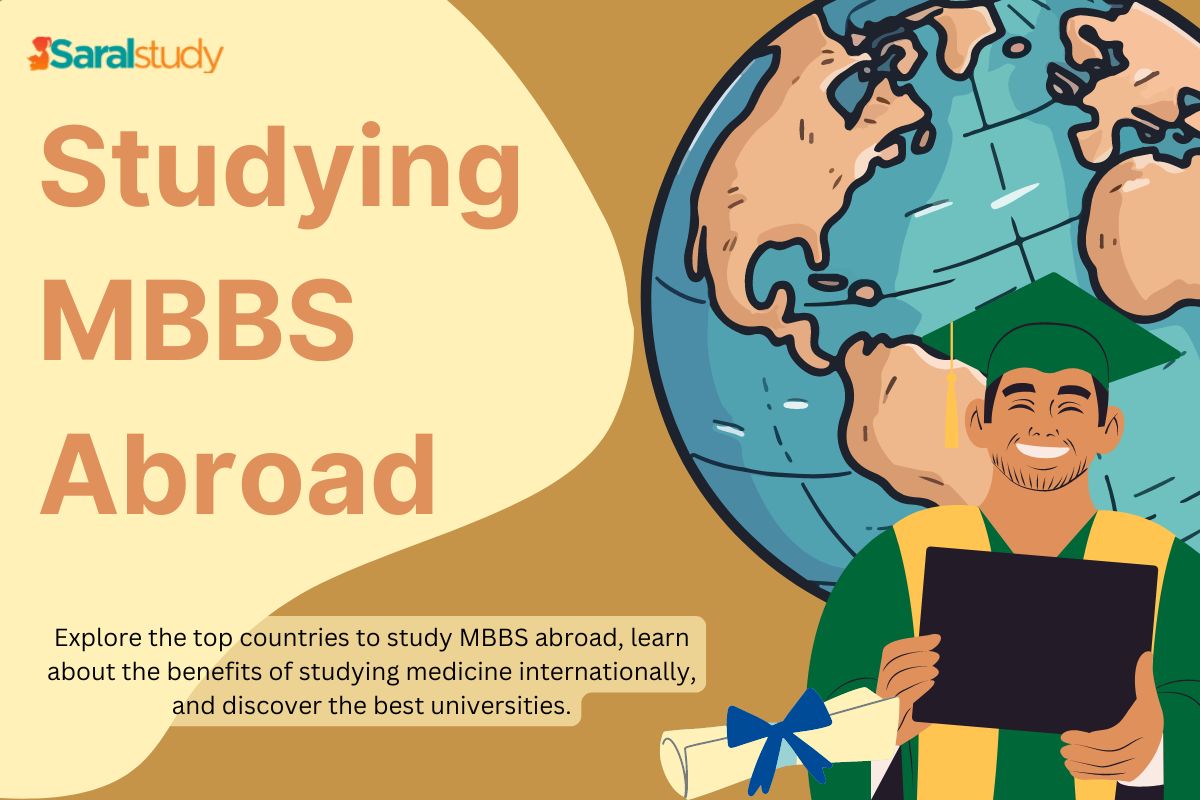
Pursuing an MBBS degree has become increasingly popular, with the promise of lucrative salaries, global demand, and the fulfillment of saving lives. While studying medicine in your home country has its merits, seeking an MBBS degree abroad offers additional advantages in terms of affordability, exposure, and quality education. For students with a desire to help others and embark on a prestigious career, studying MBBS abroad can be a life-changing decision.

Advantages of Studying MBBS Abroad

1. Affordable Fees

Many countries offer medical education at a lower cost compared to India, making it accessible to students from various financial backgrounds.

2. High-Quality Education

The education system abroad emphasizes practical, hands-on experience rather than being strictly theoretical. This approach helps students quickly adapt to real-world medical settings.

3. Global Exposure

Studying abroad exposes students to diverse healthcare systems, different medical approaches, and international cultures, enhancing their global perspective on medicine.

4. Personal Growth

Immersing oneself in a new environment fosters personal development, resilience, and adaptability. Students gain independence while building strong interpersonal skills.

5. Advanced Infrastructure

Many foreign universities are equipped with state-of-the-art medical infrastructure, providing students with advanced facilities, research opportunities, and competitive environments.

Top Destinations to Study MBBS Abroad

Below is a detailed look at some of the best countries for pursuing an MBBS degree, along with their top universities and fee structures.

1. Australia

Australia is well-known for its high-quality medical education and research opportunities. Students benefit from interactive learning, shorter hospital hours, and collaborative study environments. The universities in Australia are equipped with advanced facilities and offer globally recognized medical degrees.

Top Universities in Australia for MBBS Links
University of Sydney University of Sydney
Monash University Monash University
The University of Notre Dame Notre Dame
Flinders University Flinders University

2. Russia

Russia is a popular choice for Indian students because of its affordable fees and high-quality education. There are over 50 medical colleges in Russia, many of which offer English-taught programs. The cost of a six-year MBBS program ranges from $15,000 to $25,000, which includes tuition, accommodation, and study materials.

Top Universities in Russia for MBBS Links
Lomonosov Moscow State University Lomonosov MSU
Russian State Medical University Russian State University
Yaroslavl State Medical Academy Yaroslavl Academy
Volgograd State Medical University Volgograd State University

3. Ireland

Ireland offers world-class medical education with a focus on patient care and research. While the cost of MBBS education is higher compared to Russia, ranging from $60,000 to $75,000, the quality of education, practical exposure, and opportunities for internships make it worthwhile.

Top Universities in Ireland for MBBS Links
University of Limerick University of Limerick
Royal College of Surgeons in Ireland (RCSI) RCSI
Trinity College Dublin Trinity College Dublin
University College Cork University College Cork

4. United Kingdom

The UK is home to some of the most prestigious medical institutions in the world, including Cambridge and Oxford. Known for its state-of-the-art research facilities and historical significance, medical education in the UK is recognized globally. Students benefit from comprehensive medical programs with excellent clinical training.

Top Universities in the UK for MBBS Links
University of Edinburgh University of Edinburgh
University College London (UCL) UCL
University of Newcastle Newcastle University
University of Cambridge Cambridge University
University of Oxford Oxford University

5. Belize

While Belize is not as well-known as other countries, it is an excellent and affordable destination for students pursuing MBBS. The country offers high-quality education at an average cost of $750 to $1,000 per trimester. This affordable option is attracting students from around the world seeking cost-effective medical education.

Top Universities in Belize for MBBS Links
Central America Health Sciences University (CAHSU) CAHSU
Columbus Central University School of Medicine CCU School of Medicine

Conclusion

Studying MBBS abroad offers numerous advantages, from affordable tuition fees to world-class education and global exposure. Countries like Australia, Russia, Ireland, the UK, and Belize are becoming increasingly popular among students seeking quality medical education. Whether you are drawn to the advanced infrastructure of Australia or the affordability of Russia and Belize, each destination provides unique benefits to help you achieve your career goals in medicine.

Also Read: Career in Hospital Management