Branches Of Study In Geography

Branches Of Study In Geography

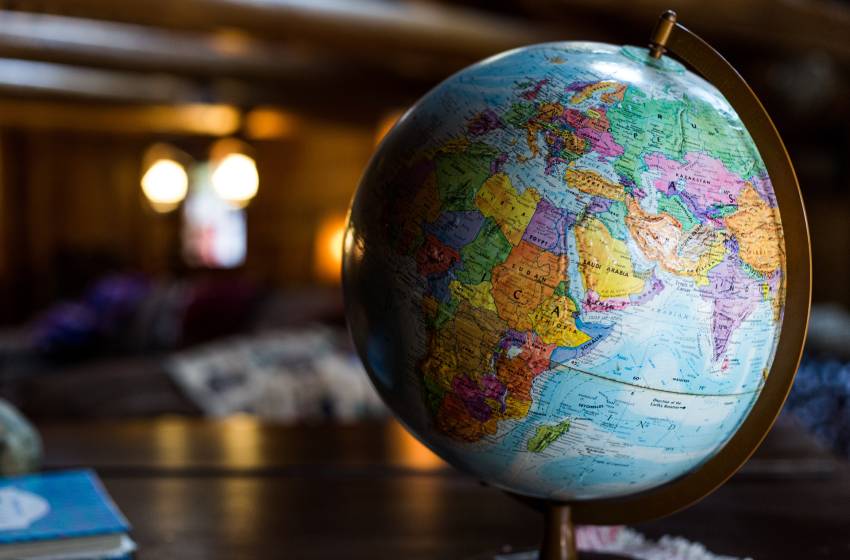
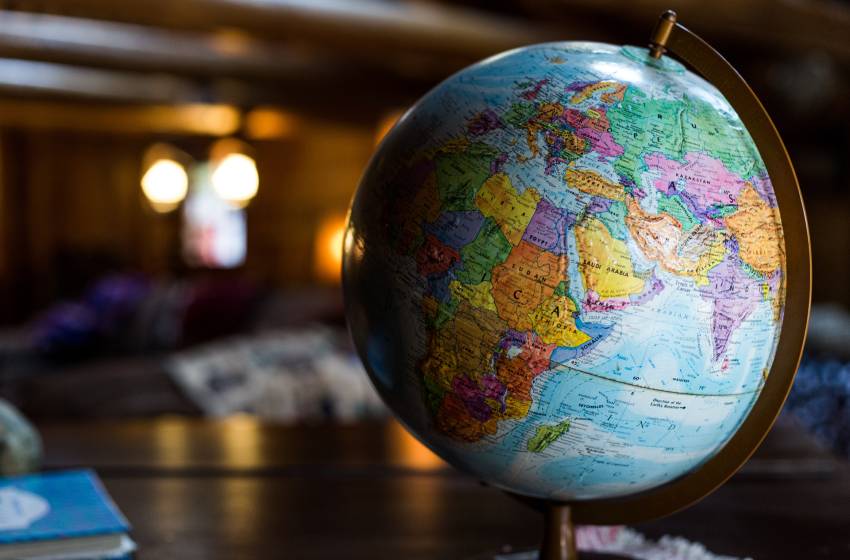
The study of geography involves knowing about the earth in detail. About the landscape, climate and environment, people and places, the physical features and the political world. Geography if taken literally means ‘ to write about the Earth’. It is a combination of natural sciences with physical science. It studies phenomenons and processes of the earth. 

Geography encompasses a wide range of divisions that can be studied separately and form a whole segment of learning. 

Physical Geography: Includes study of the atmosphere, lithosphere, hydrosphere, photosphere, and the various flora and fauna on earth.

Human Geography: The study of people and their relation with the earth.

Economic Geography: Study to explore the production and distribution of wealth, commodities, and the spatial distribution of economic conditions. 

Population Geography: Study of birth and death, and marriage patterns, the distribution, migration, as well as the growth of population in specific areas.

Geography of Religions: Study of the distribution (geographic) of religious groups. 

Medical Geography: Studying the geographic distribution of diseases, their effects, causes, casualties and treatment. 

Military Geography: Study of geographic distribution of the military groups, and deals with the application of geographic knowledge in the solving of military problems. 

Political Geography: Study of the boundaries of countries, states, and of national development, international organizations and relations. 

Agricultural and Rural Geography: Study of agriculture and its geographic distribution, rural areas and their development. 

Urban Geography: Studies the location, formation and structure, development and growth of cities – from village to metropolis. 

Transportation Geography: Study of modes of transport, routes and networks, and how they are made accessible. 

Bio-geography: Study of geographic distribution of animals and plants. 

Geography of Water Resources: Exploring the source of water on earth, its origin and source, distribution, storage and usage. 

Climate Geography: Study of climate and factors that affect it. 

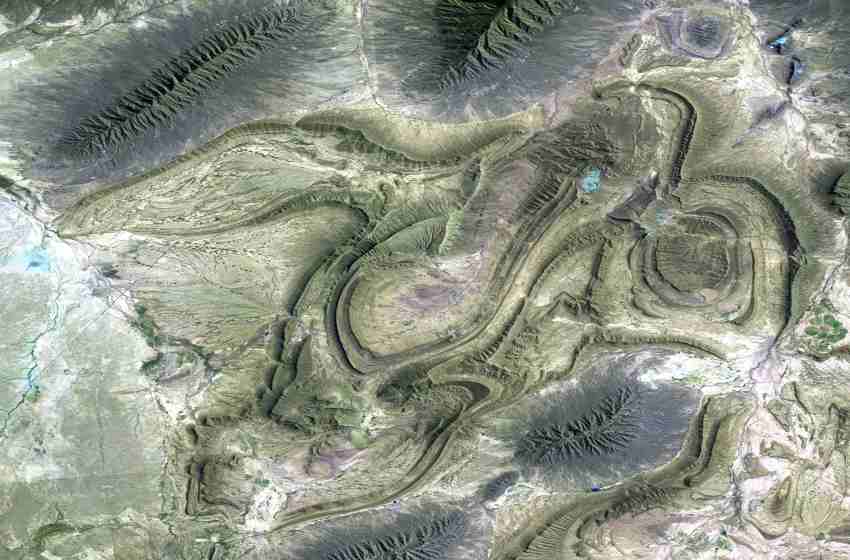
Geo-morphology: Study of the landforms on earth – their development to disappearance. 

Hazards Geography: The study of the natural disasters and their effects on life on earth. 

Mountain Geography: Study of mountain ranges, formation, erosion and composition, and effects on environment, weather etc. . 

Cryo-sphere Geography: Study of the presence of ice on earth in the form of glaciers and continents, and ice sheets. 

Arid Regions Geography: Study of arid regions. And life there and its effects on life.

Coastal and Marine Geography: Study of the coastal and marine areas and life. 

Soils Geography: Study of the soil – composition, distribution, formation, erosion. 

Applied Geography: Application of geography in daily life activities and to solve problems.

Cartography: Deals with mapping

Historical Geography: Study of the history of geography – natural and physical.

Remote Sensing: The use of satellites to study the physical features of earth. And such information is utilized. 

Quantitative Methods: The application of mathematical tools to study of geography, and various branches of it.
Top Careers In Geography

Geography

Geography has many options of career choice. The core sectors of work include – Environment Studies, Physical Systems, development, and global issues, travel and tourism, etc.

Writer / Researcher

If you are interested in higher studies, then research is a great option. There is so much in the field of geography that it will take an infinite amount of time to exhaust it. You can choose your research field and work with the respective research organization.

Research also provides knowledge that helps in writing. You can utilize the acquired learning and pen books.

Teaching

Being a college or university geography instructor pr teacher will require additional education, but is the best choice for those who do not want to venture into the field and are passionate about teaching. The higher the qualification you possess, the more the scope.

Geologist

Geologists are involved in the study and exploration of matter – solid and liquid, that make up the Earth and its components. As a geologist, you will have to work in research labs, be involved in explorations and mining. And study earthquakes, volcanoes, tsunamis, storms, etc, to know the cause of occurrence and activity.

Urban Planning / Community Development

This branch involves the planning of cities and dwelling places of humans, taking into consideration and knowledge of zoning and land use, physical features of the land, water bodies, weather, and climatic conditions. Your work deal with association with property and landowners, developers, etc.

Cartographer

This is the construction of Maps for various purposes and studies. You can work for the government agencies, the geological departments, in media, for publishers like that of the atlas, etc.

Climatologist

Study and forecast of climatic conditions, the causes that govern the climate, climatic hazards, etc. The Weather Services, media industries, the government require climatologists.

Environmental Management

Deals with an assessment of the environmental, environmental cleanup, and management. And the preparation of environmental impact reports.

Emergency Management

This is an upcoming field of work for geographers. You are needed to understand the relation and interaction between the environment and human beings, about environmental hazards, earth processes, and also about maps. A course in geography or geology is ideal to get into this profession.

Demographer

The collection, study, and evaluation of demographic data keeping in view population patterns, mode of livelihood, and other factors of the human population, for the creation of population charts and estimates, is the work of a demographer basically.


Geography – Does It Help Improve Sense Of Direction?

Geography

Geography as a subject may not be as popular, but when it comes to developing a sense of direction and being aware of your surroundings, the details geography deals with may come in handy. Geographic knowledge about any place is not considered as essential as details like the culture or traditions. However, paying attention to the demographics can give useful insights into various other aspects. Such observations enable us to understand the things we do on a daily or another occasional basis, and how everyday actions (like traveling to work) affect the world around us (e.g. toxic waste contributing to global warming).
This emphasis expands our horizons and we are able to look at everyday activities in a larger context. This in turn contributes to increasing our awareness of our personal lives and activities and their socio-spatial milieus at measures ranging from regional to global.
We often tend to assume we know all about the physical attributes of a place and hence learning geographical details is not necessary. Some even term it as part of our common sense. Many people refuse to accept that they need to be aware of the basic geographic concepts such as location, distance assessment, place recognition, distribution membership, and regional setting.
We need geographic understanding in every activity we carry out. A person looking for a new apartment often analyses it on the basis of its location in terms of surroundings, proximity to the transport system, locality, prevailing weather conditions in the vicinity, etc. All these are driven by geographical factors prevalent at the location. The same goes with a developer finding a site for a new building. In such cases, people use a personalized Geographic Information System, by combining mental or real maps with physical attributes – like slope, drainage, soil type, vegetation – with mental maps of socio-economic-cultural features – mental maps of (sale prices of different items, demographics of age, children, society, ethnic origins), environmental features (air pollution and noise levels), etc. – to choose optimal locations.

People who live in hazardous areas are aware of the dangers but believe that any natural calamity won’t happen during their lifetime and hence pay less attention to the sensitive geography around them. Those living in metropolitan cities learn the location of shopping malls and use this information to plan their trips for the daily needs of goods and services. While on driving holidays, we determine in advance how far we can travel in a day and when to expect a gas station. Anticipating seasons or weather conditions has a major role to play in our preference for suitable clothes. Climatic conditions and physical environments are also analyzed before planning a holiday to any place far or near.

Hence geographic information is utilized and processed every day. Some are good at it. Some are not. The aim of geography as an instructing science is to give the training to improve the way people can use their spatial abilities. We are all geographers today, just as early beings have been from the dawn of human civilization.