
Top UK Colleges & Universities

Top UK Colleges & Universities

United Kingdom is one of the most preferred locales for study abroad. The picturesque landscape, Gothic structure of colleges, the Victorian feel and the cold winter, are just some of the reasons. What actually attracts students is the high quality of education imparted in the top UK Colleges and Universities, that is beyond par. 

The University of Cambridge is the most renowned institute in UK. It dates back to 1209 A.D. Located in Cambridge, this comprises of 31 self governing and independent colleges. And has 150 departments. The departments are contained in the six schools – Arts and Humanities, Biological Sciences, Clinical Medicine, Humanities and Social Sciences, Physical Sciences and Technology. Research activities find a lot of importance here. Admission is on the basis of high performance in school (for UG students) and undergrad (for PG students) and interview. Great value is given to merit. In some subjects, students have to appear for the STEP test. Cambridge is accredited by EFMD-EQUIS. You may be spending an approximate amount of 17,5000-20,000$ for graduation, and 15,000-17,5000$ for post graduation. 

University of Oxford is a prestigious institution worldwide and much coveted. It was established in 1096 and is the oldest surviving university of the world. It is known for its library and the museum. The university comprises of various colleges, admission taking place separately for each. It is dependent on your exam results, written work, recommendations, an interview ans an entrance test for some courses. Oxford provides great financial aid to deserving and to those in need. Some of the well known colleges are – Christ College, Kellogg College, Lincoln College, Mansfield College, The Queen’s College, Somerville College, Trinity College, University College, Worcester College. You will be spending an around 20,000$ for study here. 

Founded in 1582, University of Edinburg, is one of the top choices of students. It provides education in all branches of study, namely, arts and humanities, business and social sciences, engineering, language and cultural studies, medicine and health, and science and technology. The university has three colleges – College of Humanities and Social Sciences, College of Medicine and Veterinary Medicine, College of Sciences and Engineering. The cost of study is 15,000- 17,5000$.

University College London, set up in 1826, conducts an entrance test for admission. School marks are also considered and admission is under the UCAS system. The various schools within the university are concerned with Law, Clinical Medicine, Neuroscience and Behavior, Psychiatry/Psychology, Immunology, Pharmacy and Toxicology, and Social Sciences. Average cost of study is between 17,500-20,000$.

University of Manchester started functioning in 1824. The university is credited for the various establishments it houses – the library, observatory, museum, art gallery, press and contact theatre. You will be spending between 15,000-20,000 for studies here if you get admitted, which is on the basis of your marks and performance in studies. The university has five faculties to choose from – Faculty of Medical and Human Sciences, Faculty of Engineering and Physical Sciences, Faculty of Humanities, Faculty of Life Sciences, and Manchester Business School. 

The University of Warwick is situated in Coventry and commenced in 1965. Admission is on your marks. The various sought after options provided by the university are Biological Sciences, Computer Science, Economics, English, Engineering, History, Law, Mathematics and Statistics, Philosophy, Sociology, Ethnic Relations. Cost of study ranges between 15,000-17,500$. 

University of Leeds was established in 1884. It is a premier institution of UK. The faculties under this university are the Faculty of Arts, Faculty of Biological Sciences, Faculty of Business, Faculty of Education, Social Sciences and Law, Faculty of Engineering, faculty of Environment, Faculty of Mathematics and Physical Sciences, Faculty of medicine and health, and Faculty of Performance, Visual Arts and Communications. Average expenditure is 12,5000- 15,000$. It provides facilities like the library, computer centre, research and sports.

The University of Nottingham, campus in Nottingham and other places in UK, started in 1881. Admission is on marks basis. And you spend 15,000- 17,500$. It has international campus as well. The various departments include – Faculty of Arts and Commerce, Faculty of Engineering, faculty of Medicine and Health Sciences, Faculty of Science, Faculty of Social Sciences, Law and Education. 

The London School of Economics and Political Science, popularly known as LSE, was founded in 1895. Competition is very tough to get through to this school. You require to have very high grades. It concentrates solely on the study and research in the field of social sciences. It has 140 M Sc programs, 4 MPA Programs, 1 LLM, 30 B Sc Program, 1 LLB, 4 B.A. It is the only university offering B Sc in Economic History. It is known for its studies in anthropology, criminology, international relations, social psychology, sociology, social policy. LSE has 30 research centres, 19 departments and also a language centre. And you can also do PhD here. 

University of Birmingham started operating in 1900. The component colleges are – College of Arts and Law, College of Engineering and Physical Sciences, College of Life and Environmental Sciences, College of Medical and Dental Sciences, College of Social Sciences and Birmingham Business School. Other institutes not within the campus are the School of Dentistry, Shakespeare Institute, Ivon bridge Institute and Raymond Priestley Center. The study expenditure is 12,5000- 15,000$. 

A few other very good ranking educational institutes are the university of Glasgow, University of Southampton, Cardiff University, Newcastle University, University of Bristol, Imperial college London, King’s College London, university of Liverpool, London Metropolitan University, University of Strathclyde, University of Aberdeen, Queen Mary University of London, University of Portsmouth, Middlesex University, London Business School,, Birmingham City University and Oxford Brookes University. 

Studying in one of the top UK colleges will open doors for you that will guarantee lucrative opportunity in the future and a promising life.

All About The SAT Test

all about the sat test

The Scholastic Aptitude Test (SAT) is a specifically designed test that examines students on whether they are prepared to go to college or not. The SAT Reasoning Test has been developed and is owned by the College Board of USA, and on it admissions are based for the graduate colleges in the country. SAT was initiated in the year 1901 and since then has undergone a number of changes to create the form it has today. It is essential as it tells the institutes whether a school pass out is actually learned enough to attend college in USA. 

The SAT is accepted by almost all graduate level colleges in US. Any student who has appeared for the final year of high school is eligible to apply for it. It costs an approximate amount of 45$. SAT Reasoning Test takes place seven times in a year, in the months of October, November, December, January, March (or April in alternate years), May and June. It usually happens on the first Saturday of the month. 

The SAT Reasoning Test is a three hour and forty five minute long examination. It marks a student on his/her literacy and writing skills, skill to analyze, and problem solving skills. 

SAT Reasoning Test is divided into three broad categories. The Critical Writing Section, the Mathematics Section, and the Writing Section. Each of these sections are subdivided into three parts and ten sub-sections. Questions in SAT range in difficulty from being easy, medium and hard. Generally the easy ones appear at the top of the segment and the hard ones in the end.

The Critical Writing Section (60 minute section) consists of three parts. Two of them are of 25 minutes each, and one of 20 minutes. It will test the candidates’ knowledge of grammar, usage and diction. Also vocabulary and understanding of the English language. The three segments comprise of sentence completion and correction, and comprehension. The latter occupies most part of this paper. There can be a passage in any subject. The number of questions and difficulty level, of them, depends on the length and comprehensibility of the passage given. 

The Mathematics Section (70 minute section) is commonly known as the Quantitative or Calculation Section. It also has three divisions – two of 25 minutes each, and one of 20 minutes. The first sub section consists of 20 multiple choice questions. The second has 8 multiple choice questions and 10 grid-in questions. And the third segment includes 16 multiple choice questions. The latest subjects added to the Mathematical Section is algebra II and scatter plots. The common and most significant topics include numbers and operations, algebra and functions, geometry, statistics, probability, and data analysis. 

The Writing Section (70 minute section) comprises of multiple choice questions, that form 70% of the paper, and a brief essay forming 30% of the paper. The MCQ consists of questions on error identification, sentence improvement, paragraph improvement and grammar. The essay is a 25 minute section and the topic is provided on-prompt. It judges students on their critical reading ability and sentence reading skill. 

Score in SAT is between 200-800. Most of the questions are multiple choice with five choices provided for each. All the questions are given equal weight-age. A correct answer fetches one raw point and an incorrect answer deducts one fourth of the marks. However there is no negative marking for the maths grid-in questions. The average score of the Critical Section is 493, of the Mathematical Segment is 515, and of the Writing Segment is 501.

The score of a candidate reaches him/her in around three weeks. The score card contains the score obtained between 200-800, the percentile score, and the raw score which is the detail of how many positive and negative marks have made up the final score. Admission to any college is based on the SAT score in addition to the grades in school. 

The SAT provides special accommodating facilities for the differently-abled students. Also for those who may not be able to appear for the test on the specified date and day. 

Recently the College Board has allowed the use of calculator during the test. This is a provision that has made the Mathematics Section simpler for the students. 

Preparation material is available in bulk for students to acquire. Though preparation has to be intensive, dedicated and individual based, the material provided in books, course materials, classrooms, coaching centers, is definitely helpful, as they make the basics clear and aid in solving the paper effectively. 

SAT also has a Subject Test. The Subject Test is different form the Reasoning Test. While the latter is compulsory and the same for everybody, the former has a wide range of subjects to choose from. A student chooses the subject for the test according to his preference and decision of pursuing whichever subject he wants in college. So if a candidate desires to take up history in college, he will give the subject test meant for history. 

SAT Subject Test consists of 20 Multiple Choice Questions. It is a Standardized Test for individual subjects respectively. Score is again in a scale of 200-800. the Subject Test is a one hour examination irrespective of the subject chosen. 

Though enough care has been taken to make SAT an authentic, widely and popularly acceptable test for US colleges, it does face allegations of bias – cultural and written. Many times it has been said that students with legible neat cursive writing score more than the rest. The allegations have however failed to prevent students from taking the test.

SAT is a highly acclaimed and recognized test in the United States of America. It is kind of compulsory for admission to the good universities. It is not difficult per say, but needs extensive and intensive study by the students, both at the macro and micro level to get a high score.

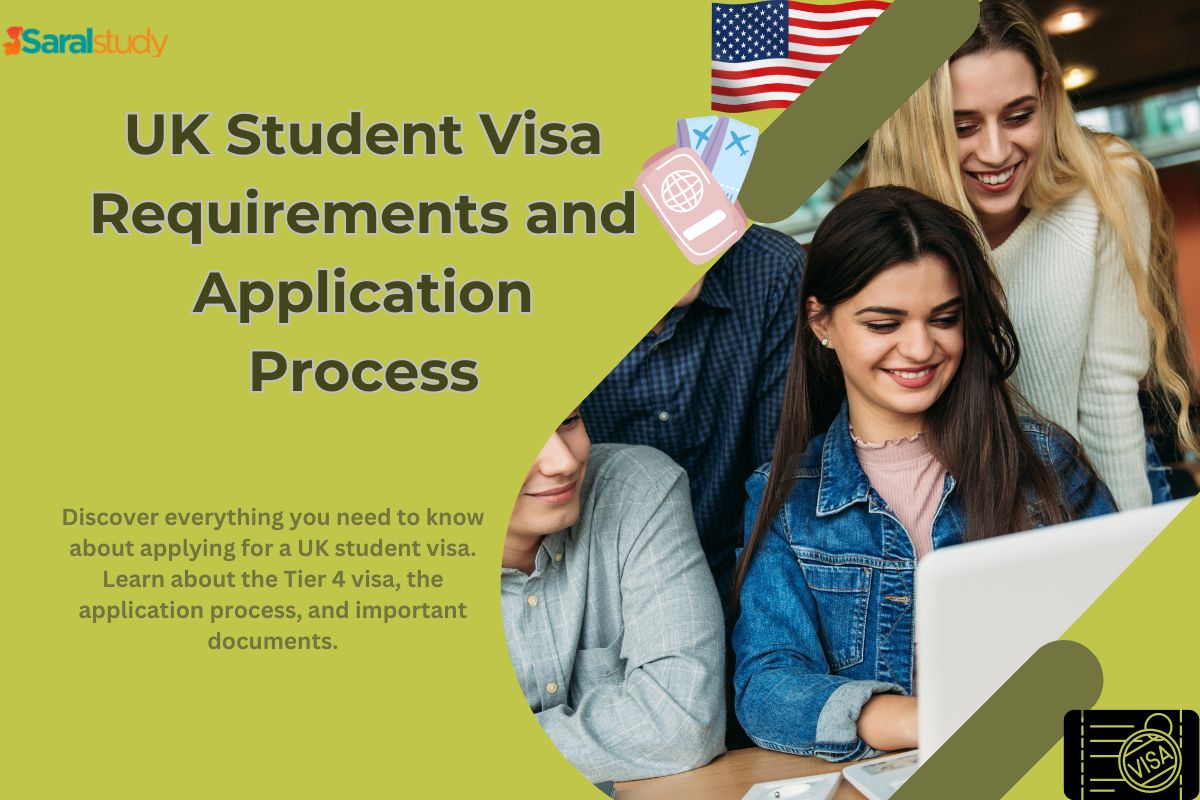
UK Student Visa Requirements and Application Process

UK student visa

In this article we will learn everything you need to know about applying for a UK student visa. Learn about the Tier 4 visa, the application process, and important documents required for studying in the UK.

The United Kingdom is one of the most popular study destinations in the world. Its educational institutions rank among the best globally, attracting students from all corners of the globe. With a wide variety of courses and programs at varying levels, the UK offers a diverse and rich academic environment suitable for all kinds of students.

UK Student Visa Overview

If you wish to study in the UK, obtaining a valid student visa is crucial. The UK operates under a Tier System, and student visas fall under Tier 4 Visa. Initially, students are given a one-year visa, which can be extended based on the course length. Once the education period concludes, students may apply for a work permit extension.

Types of UK Student Visas:

  1. Student Visitor Visa: For courses lasting less than six months.
  2. Tier 4 (General) Student Visa: For longer courses (more than six months) that may allow part-time work.

UK Student Visa Requirements

To apply for a Tier 4 visa, students must accumulate 40 points:

  • 30 points: A confirmation of acceptance from an accredited institution.
  • 10 points: Proof of sufficient funds to cover tuition and living expenses.

Application Process

Here’s a step-by-step guide to applying for a UK student visa:

  1. Get the IM2A form: Available from the British Embassy or online.
  2. Prepare your documents: Gather your letter of acceptance, proof of funds, passport, recent photographs, and educational certificates.
  3. Submit your application: Apply online, by post, or in person along with the visa fees.
  4. Attend an interview: A brief interview confirms the details of your application and checks your study intentions.

Conditions of the Student Visa

Once granted, you’ll be expected to:

  • Attend classes: At least 15 hours of study per week.
  • Work limits: Work up to 20 hours per week during term time and full-time during holidays.
  • Adhere to visa rules: Failure to follow visa conditions can result in penalties, including visa cancellation.

Growing Demand for UK Student Visas

The demand for UK student visas has surged in recent years. A staggering 11.2 million student visas have been issued over the past eight years, making the UK a global hub for education. Despite the growing numbers, there are concerns about visa misuse, with some students using visas as a route to work illegally in the UK.

Learn more about VISA and VISA full form.

Key Takeaways

  • The UK remains a top destination for international students due to its globally respected institutions.
  • A valid student visa (Tier 4) is necessary for studying in the UK, which comes with strict conditions and regulations.
  • The application process is thorough but ensures only eligible students gain entry, making the UK a competitive and reputable destination for higher education.

Also Read: The Global Impact of Student Exchange Programs: An Overview

How To Prepare For The TOEFL

how to prepare for the toefl

TOEFL – Test Of English as a Foreign Language, has been formulated by the US based ETS, to test a candidate’s proficiency in English, so as to enable application to a university in an English speaking nation. The TOEFL is compulsory to apply to a university, but it does not guarantee admission, which is based on other equally important factors. 

The TOEFL score is accepted by more than 2000 universities in more than 130 countries worldwide. Anyone is eligible to appear for the test. It has two formats – Internet Based Test (iBT) and Paper Based Test (PBT). The test can be taken anytime during the year. It is the most flexible test regarding when it can be given, how often it can be taken, and where. 

Registration for TOEFL is open 24×7, but you should try getting registered at least three months prior to the preferred test date as seats get filled up. The registration closes officially three business days before the test. In case you wish to reschedule or cancel the test, it has to be done three business days in advance. Online registration is the best option, though you can also register on phone, by mail or fax. 

The TOEFL paper is made up of four segments – Reading, Listening, Speaking, and Writing. The total time taken for the test is roughly four and a half hours. You cannot skip a question in the iBT format as the next question will appear only when the previous has been answered. There are different sets and difficulty levels of the exam. When you have answered a question, the next question will be on the basis of the level of difficulty of that question and your ability to handle difficult questions. Thus different candidates attempt different questions based on their proficiency level. 

The Reading Section is a 60-100 minute long section. It has between 36-70 questions, which include 3-5 passages from academic texts that are approximately 200 words long each. Each passage will have 12-14 questions. The score for this section ranges from 0-30. 

The Listening Section is 60-9- minute long, with 34-51 questions. It comprises of two parts. The first part comprises of 4-6 lectures each of 3-5 minutes, with 6 questions each. Some of these lectures may be classroom discussions. The second part consists of 2-3 conversations, each around 3 minutes long, and having 5 questions each. This segment has a score range of 0-30.

Speaking Section, which is a 20 minute segment, includes 6 tasks. Two tasks will ask you to express your opinion on a familiar topic. The rest four tasks are based on what has been read and listened to. The score is between 0-4, which is later brought to scale. 

Writing Section having 2 tasks, is a 50 minute section. The first task is to write an essay on what has been read and listened to; the second is to write in support of an opinion on a given topic. Score range is 0-5, brought to scale later on. 

The total score of TOEFL is out of 120. You will be sent four scores – the total score, the score of Listening Section, score of Reading Section, and the score of Speaking and Writing Section. Ideally the score sheet reaches you within a period of 2-4 weeks. 

Your scores will be sent to four universities by ETS, which should be specified before the test. And the test score is valid up to a period of two years after the test has been attempted. 

There are a huge number of training institutes and courses available to help in preparation for TOEFL. You can get enrolled in one of them. Also the ETS specifically provides test preparation material. This includes free sample question papers, practices tests, interactive skill building programs, detailed information and tips to crack the TOEFL, information to understand the test, its format and how to answer effectively, time management. This official material form the official source is the best for preparation. It is essential to understand the format wholly to avoid confusion on the test day and maximize scores. 

TOEFL is an exam format that grants opportunity to students to study in an English speaking nation which include the much sort after destinations like USA, Canada, UK. Because it is flexible and open to all, and is accepted by the best universities across the globe, it has a huge enrollment.

Student Visa For New Zealand

student visa for new zealand

New Zealand is slowly but steadily gaining momentum and popularity as a student destination. Complemented by many other factors, the education provided in the country is also qualitative and of superior value. 

To study in New Zealand, you will need a Student Visa. It is however required if the duration of course is more than 3 months. It is always helpful to know the visa requirements and the requirements of the institute where you have enrolled. 

A student visa is not compulsory is you fulfill certain conditions. You should be a citizen of New Zealand or Australia, or have a NZ residence permit, or you are a holder of a current Australian permanent residence visa. You also do not need the visa if the course is a single short term one of less than 3 months, and the institute is approved or exempted by the New Zealand Qualifications Authority (NZQA). However if you are going for more than one short term course, you need a student visa. 

In case you are going for an exchange program, then you need one, and you also have to meet the health and character requirements. The institute of exchange should confirm that you are a bonafide exchange student, and provide you with a letter of acceptance as proof. You should also possess a proof of onward travel arrangement, so as to affirm that you shall leave as soon as the program ends. 

To be eligible for a student visa in New Zealand, you have to confirm admission to an education institute in the country. Also the total fees of the course, and a mention whether it is a part time or full time course. The letter of acceptance from the institute should clearly mention the name of the course and its duration. The course and course provider should meet the New Zealand requirements for foreign students. 

There are certain health and character requirements set down by the government of New Zealand that you have to fulfill. Also you have to be able to prove to the authorities that you have genuine intent and you shall leave as soon as the course gets over. New Zealand does not allow a visa to a person with a criminal background. 

You have to be able to prove that you can meet the course and living expenses. This can be done by either proving that you have enough money held in the country by you or on your behalf, or by furnishing an undertaking by another person to bear your expenses or by a sponsor in New Zealand. You can also bear the expenses with the help of financial assistance by any aid program under any of the agencies of the government of New Zealand. For a course less than 9 months, you need to have NZ $ 1000 per month, and for a course of more than 9 months, you should have NZ $ 10,000 per year. Evidence of the expenses can either be in cash, or bank draft, recognized credit card or traveler’s cheque. 

To apply for the Student Visa you first need to fill the ‘application for student visa’ form. You have to submit the form along with the requisite documents and visa fees. Depending on the duration of the course, you need to fulfill the minimum health requirements. And you should get the application approved before submitting. 

The documents that need to be submitted along with the application form are – the letter of acceptance form the institute where you have taken admission; the receipt of payment of fees for the course, or a proof that you have been exempted from the fees; passport size photos; a guarantee of accommodation in New Zealand, which can either be provided by the educational institution or by a person; your valid passport, which does not expire within three months from the date of return; evidence of funds to meet expenses. If you are going to stay in the country for more than 24 months (dependent on the duration of the course), then you need a New Zealand immigration service medical and chest X-ray certificate and character clearance. 

The condition for the student visa is that you have to enroll as a full time student, for a set and definite duration. The maximum period of the duration (after which it expires and needs re-application) of the visa is four years. You are allowed to work only part time if the course needs practical experience, or only on holidays (if course duration is more than a year), or if you agree to work only 20 hours a week (if course duration is at least two academic years). If the course is for a maximum period of 9 months, and you want to work part time, then the course should meet the NZ foreign student policy requirements, and you should have paid the full fees. 

You are allowed to take dependents along with you on a student visa. However, they will require a visitor’s visa, or if they too are enrolling for a course there, need a student visa. And the dependents should possess current medical and travel insurance.

Canada Student Visa

Canada Student Visa

All those who wish to pursue studies in Canada, at any level, require a student visa. A Student Visa for Canada is a student authorization. 

To get a student visa, one must fulfill the requirements of the Canadian Immigration Act and Regulations. 

Application for the student visa has to be made to the Immigration Department of the Canadian High Commission. The first step is to fill up the student visa application form, and submit it to the concerned authorities at the Canada High Commission, along with the required documents. 

The documents that need to be submitted along with the completed student visa application form, are necessary requisites and should be authentic. A supplementary questionnaire for students will also need to be filled by students and those going to Canada for post doctoral research programs. The official letter of acceptance from the college, university, or technical institute, where one has taken admission, should be attached. If the said institute is in the province of Quebec, then an applicant also needs to get a certificate of acceptance from the Province of Quebec, in regard to the rules and regulations there. One needs to submit the TOEFL or IELTS score is it is applicable. Apart from these, the valid passport, that does not expire within one year of entry to Canada, is essential. And passport size photographs and a bank draft for the visa fees.

One has to ascertain the authorities that he/she is capable to bear the cost of study in Canada, without having to work in Canada. This will include the tuition fees, accommodation charges, living expenses, other monthly expenses, travel and conveyance charges and return ticket. The authorities thus want to know whether a candidate is financially secure enough to afford all expenditure without having to get employed in Canada. 

After submission, one is typically called for an interview with the Canadian Visa Officer. It is not grueling, but face to face to know the details, motives and extract information that may be significant in granting a visa. 

An applicant may also have to undergo a medical examination, to be declared fit to go to Canada. 

If the authorities are satisfied by the information provided and the documents submitted, the ideal time for visa processing is two months at the minimum. 

Canadian authorities have set certain conditions on grant of student visa. An applicant should be of reputable character and not have a criminal background. Also he/she will be asked to make a declaration to leave Canada on the completion of the course. Only a full time student, enrolled with an educational institution of Canada is allowed to work. To work on campus, there is no specific requirement, but to work off campus, one may need work permit. 

There are certain categories of students who have been exempted from student visa. If the duration of the course or program is up to six months and not more, one does not require a student visa. But should ensure that the aforesaid course does get over in 6 months only. Also a member of the Foreign Armed Forces, or dependents, is excluded from this visa requisite. So is a foreign representative, or dependent of the same. 

If a student is to be accompanied by dependents, then the latter also needs to have a valid passport and visa. Also the former needs to ascertain that the expenses of the same can and will be met without need for employment in Canada.

Finally, a student visa to Canada is only granted on the precondition that the applicant is eligible for a temporary resident status in Canada. And if need be, the temporary resident visa can be granted to him/her without any complication.

Student Visa For Germany

Student Visa For Germany

To study in Germany, a student requires a Residence Permit, that is issued in the form of Student Visa. A Student Visa is an absolute necessity to enter the country for the purpose of study, and should be procured before a student crosses the boundary to the nation. 

Germany has provided for some exception categories, that is those who do not require a student visa to study here. The citizens of the European Union countries can do without one. So can the students from any of the countries that have signed a special agreement with Germany, the Special Agreement States, that include the USA, Honduras, Iceland, Monaco, San Marino, Switzerland, and Liechtenstein. 

Application for the Student Visa to Germany has to be made to the German Embassy or the Consulate General. The basic documents that a student needs to submit are – the valid passport, that does not expire during or before the end of course; proof of financial means to cover the cost of study and stay in Germany during the period of stay without the need to work in Germany; letter of acceptance from the college, university or course; and the visa fees. 

The first step to acquiring the visa is completing the application form and submitting it to the concerned authorities. In some cases, if need be, an applicant can be called for an interview to discuss the proposal and other details. Then the processing of the visa takes place and confirmation procedure. Only after this, is the visa issued. Typically it takes around 8 weeks to get the visa. So a student should apply well in advance to get the student visa on time, much before the scheduled departure. 

Student visa in Germany is categorized into three types. These are – the Student Visa, the Student Application Visa, and the Visa for participation in a language course. 

The Student Visa is applicable for a period of one year. It is for those who have already got admission to an educational institution in Germany, and possess a letter of confirmation. The documents required to apply for this are – valid passport; passport size photographs; confirmation letter or letter of acceptance from the institution; proof and documents of previous studies – all degrees and diplomas, and school certificates; proof of German language skills, or proof that one intends to attend an intensive language course, , in Germany, devoting at least 20 hours in a week; and proof of funds to finance the stay, that is the fee, accommodation, travel expenses, living expenses etc, without the need to work in Germany. The funds can be in the form of self finance, or may be through a sponsor, or nominator, or can be a scholarship. 

The Student Application Visa is applicable for those who have not yet got admission, who want to go to Germany to find out about the suitable educational institutions, appear for an exam, or interview, or complete the process of admission. In short, it is a prospective student visa. The validity of this is only three months. If one gets admission in the meanwhile, then it can be readily converted to the Student Visa for study purposes. The documents needed are the same, except that in place of the confirmation letter, one has to submit the school leaving certificate. Any other document that may help in proving that application has been made to a German school, or about a test, is helpful as it proves authenticity. But this is not compulsory, as even those who are going on a lookout for institutes are entitled to the student application visa. 

Many students go to Germany for a short term language course. For this purpose, one does not need a full fledged student visa, but the Visa for participation in a language course. This is valid for the entire period or duration of the course. The essential documents needed to be submitted are – the valid passport, passport size photos, proof of health insurance valid for entire period of stay, and proof of funds to cover the entire expense of stay. If one is going to Germany for the aforesaid language course, then according to the rules laid down, one cannot take up any kind of employment in the country during the stay. Also this kind of visa is non convertible, that is it cannot be converted into any other form of visa. So if one plans to get enrolled into a course or college, or has got a confirmed admission, it is better to re-apply for the student visa much before the language course gets over. This will enable procuring the student visa on time for the course. 

Getting a Student Visa for Germany should not be a difficult procedure as long as one fulfills the requisites, but it is also important to mention that submitting all necessary documents is not confirming the getting of the visa that also depends on the autonomous power of the German authorities.

Top Study Abroad Courses

Study Abroad

Studying abroad opens doors to world-class education, offering students an opportunity to acquire a global perspective while enhancing their skills in their respective fields. Whether you’re looking for a specialized degree or aiming to pursue a broad area of study, international universities provide a wealth of opportunities.

Top Study Abroad Courses

In this article, we’ll explore some of the most sought-after study abroad courses, highlighting the best universities for each program.

Here’s a table listing the course-wise top universities along with the respective links:

Course Top Universities Links
MBA Harvard Business School Harvard Business School
Stanford Graduate School of Business Stanford Business School
London Business School London Business School
University of Cambridge (Judge Business School) Cambridge Judge Business School
University of Oxford (Saïd Business School) Oxford Saïd Business School
Engineering Massachusetts Institute of Technology (MIT) MIT
Stanford University Stanford
University of Cambridge University of Cambridge
Imperial College London Imperial College London
University of California, Berkeley UC Berkeley
Social Sciences Harvard University Harvard University
University of Oxford University of Oxford
Australian National University Australian National University
Princeton University Princeton University
University of Toronto University of Toronto
Fashion Studies London College of Fashion London College of Fashion
Parsons School of Design Parsons School of Design
Fashion Institute of Design & Merchandising FIDM
Instituto Marangoni Instituto Marangoni
Drexel University’s Antoinette Westphal College of Media Arts & Design Drexel University
Law Harvard Law School Harvard Law School
Yale Law School Yale Law School
Columbia University Columbia Law School
University of Oxford University of Oxford
New York University (NYU) NYU Law
Journalism New York University NYU
University of Sheffield University of Sheffield
Northwestern University Northwestern University
London College of Communication London College of Communication
Kingston University Kingston University
Film Making London Film School London Film School
National Film and Television School National Film and Television School
New York Film Academy New York Film Academy
London Film Academy London Film Academy
Healthcare Harvard Medical School Harvard Medical School
University of Washington University of Washington
King’s College London King’s College London
Oregon Health & Science University OHSU
Research Stanford University Stanford University
University of Oxford University of Oxford
University of Melbourne University of Melbourne
University of California, Berkeley UC Berkeley


This table summarizes the universities for each course, along with links for easy access.

1. MBA (Master of Business Administration)

An MBA is one of the most popular programs pursued by students abroad due to the global exposure it offers. Studying MBA internationally provides an edge that opens doors to lucrative job opportunities and leadership roles across industries.

Top Universities for MBA:

  • Harvard Business School
  • Stanford Graduate School of Business
  • London Business School
  • University of Cambridge (Judge Business School)
  • University of Oxford (Saïd Business School)

2. Engineering (MS in Engineering)

Students often pursue an MS in Engineering abroad to access advanced research facilities, specialized programs, and better career prospects. Countries like the USA, UK, and Germany offer a wide range of engineering specializations.

Top Universities for Engineering:

  • Massachusetts Institute of Technology (MIT)
  • Stanford University
  • University of Cambridge
  • Imperial College London
  • University of California, Berkeley

3. Social Sciences

International degrees in Social Sciences offer a broad array of specializations, from sociology and psychology to anthropology and economics. These programs provide students with a deeper understanding of global social dynamics.

Top Universities for Social Sciences:

  • Harvard University
  • University of Oxford
  • Australian National University
  • Princeton University
  • University of Toronto

4. Fashion Studies

The fashion industry thrives globally, and studying abroad gives students the chance to immerse themselves in the heart of the fashion capitals. From design to fashion marketing, these programs are highly practical and industry-specific.

Top Universities for Fashion Studies:

  • London College of Fashion
  • Parsons School of Design
  • Fashion Institute of Design and Merchandising (FIDM)
  • Instituto Marangoni
  • Drexel University’s Antoinette Westphal College of Media Arts & Design

5. Law

International law degrees are highly prestigious and enable students to gain an understanding of both domestic and international legal systems. Pursuing law abroad offers comprehensive training, and networking opportunities with top legal professionals.

Top Universities for Law:

  • Harvard Law School
  • Yale Law School
  • Columbia University
  • University of Oxford
  • New York University (NYU)

6. International Journalism

For those passionate about storytelling and media, studying international journalism can open doors to reporting on global issues. The curriculum often includes practical experience, internships, and networking with renowned journalists.

Top Universities for Journalism:

  • New York University
  • University of Sheffield
  • Northwestern University
  • London College of Communication
  • Kingston University

7. Advertising and Communication

The UK and the USA are renowned for offering world-class degrees in advertising and communication. Students gain hands-on experience and learn to craft compelling ad campaigns while developing a strong understanding of consumer behavior.

Top Universities for Advertising:

  • The London College
  • Cambridge University
  • Canterbury Christ Church University

8. Film Making

Film studies programs abroad offer unparalleled opportunities for budding filmmakers to hone their craft. The courses cover all aspects of filmmaking, from screenwriting to editing, and students often work on real-world projects with industry experts.

Top Universities for Film Making:

  • London Film School
  • National Film and Television School
  • New York Film Academy
  • London Film Academy

9. Healthcare (Medical and Healthcare Management)

Studying healthcare abroad gives students access to cutting-edge research and medical advancements. Programs in healthcare management, pharmacy, psychiatry, and other medical specializations are highly regarded.

Top Universities for Healthcare:

  • Harvard Medical School
  • University of Washington
  • King’s College London
  • Oregon Health & Science University

10. Research (Across Various Disciplines)

Research-based courses attract students looking to deepen their expertise in their chosen fields. Whether it’s in medicine, engineering, or the social sciences, international universities offer world-class research opportunities and infrastructure.

Top Universities for Research:

  • Stanford University
  • University of Oxford
  • University of Melbourne
  • University of California, Berkeley

Conclusion:

Studying abroad not only enhances your knowledge but also provides you with a competitive advantage in the global job market. From MBA to Fashion Studies and Engineering, the range of study options is vast and diversified. The institutions mentioned above are some of the top-ranked in their respective fields, offering world-class education to students. No matter which course you choose, studying abroad will certainly be a transformative experience for both your personal and professional development.

Also Read: IELTS or TOEFL: US Universities’ Top Choice?