NSEP (National Standard Examination In Physics)

NSEP (National Standard Examination In Physics)

The national standard examination in physics is organized by the Indian association of physics Teachers ( ISPT ). It is held all over the country for the students of classes 11th and 12th. This examination aims to select the participants for the international-level Olympiad. It is a single-level test. Before the national level, the regional level examination is conducted. The officials provide the answer key to the students after a week. It provides a platform for students who want to enhance their abilities in the field of physics.

Overview

Complete the form of the examination

NSEP (National standard examination in physics)

Conducting Body

Indian association of physics Teachers (IAPT)

Eligible classes

9th – 12th

Official website

https://www.Iapt.org.in

Exam pattern for NSEP

The question paper consists of 2 parts which are as follows:

Part 1 – This section consists of 50 multiple choice and 6 short answer-based questions. The marks are the same for all the questions. The question paper is both in Hindi and English.

Part 2- This section consists of reasoning-based questions. The second stage is challenging as it contains reasoning and skills questions.

Exam timing

8:30 am – 10:30 am

levels

2

Conducted for

11th and 12th students

Total no. of questions

70 multiple-choice-based questions

Total marks

240 marks

Eligibility criteria for NSEP

The students need to meet the eligibility criteria before applying for the examination.

  1.  The student must be a citizen of India. 
  2. Usually, age is the biggest concern in all the Olympiads, while in this, the candidate must be 15 – 20 years old. 
  3. Candidates can not appear in the examination if they have passed 12th grade.
  4.  It is compulsory to pay the registration fees to all the students.
  5. Candidates who have appeared in the prior international examination can not give this exam.
  6. The students must wait for the official declaration of results until they cannot enroll in any college.
  7. Candidates should be aware of all the rules and regulations that the officials provide.

Syllabus for NSEP

The students have to study the whole syllabus of 9th, 10th, 11th, and 12th grade before appearing for the examination. The most important topics are as follows:

Chapters

Important topics

Wave optics

YDSE with a monochrome light

Surface tension

Excess pressure in drops and bubbles

Rotation

Movement of inertia

Gravitation

The universal law of gravitation

Sound wave

Doppler effect, organ pipes, and resonance

Rectilinear motion

Equation of motion and motion under gravity

fluid

Archimedes' principle and force of buoyance

Newton’s law of motion

Calculation of power and acceleration

miscellaneous

miscellaneous

Modern physics - 1

Electronic transition in the hh like atomspecies, photoelectronic effect, x-ray

Heat transfer

Thermal conduction in the linear conductor

thermodynamics

The first law of thermodynamics, root mean square velocity, kinetic energy

Simple harmonic motion

Equation of SHM, spring-mass system

Work, power, energy

Work done by a variable force, work energy theorem

Semiconductor

Diode, logic gate, transistor

electrostatics

Coulomb's law, electric potential and potential difference, flux calculation and gauss's law, conductor and its properties, electric pressure

Electromagnetic induction

Self-inductance EMF and magnetic energy density

Electromagnetic field

Magnetic field due to a magnet and earth, magnetic fields due to a straight wire, magnetic field due to ring, magnetic force and torque on a current carrying loop, dipole moment, the magnetic force on a charge

Current electricity

The instrument, power, energy, battery, EMF, terminal voltage, and Kirchhoff's law

Circular motion

Kinematics of circular motion, circular motion in a vertical plane

Center of mass, momentum, and collision

Head–on collision, the motion of com

capacitor

A capacitor of a dielectric, combination of capacitors

Alternating current

Power consumed in AC circuit, resonance

Geometrical optics

Lens, reflection by spherical surface, refraction by the prism, spherical mirror, reflection in general, refraction at the plane surface and TIR

Registration Process For NSEP

The students can quickly fill out the registration form as the process is relatively easy and hassle-free. Students can register by themselves or through the educational centers. First, the students can fill out the registration form with all the essential details needed for registration. After that, they have to pay the fees to confirm the process. The registration fee for a student is 200. After registration, officials provide the students with the admit card and center information.

Result of NSEP

Once the whole conduction of the examination is completed, students are provided with the result. The examination result is usually declared after 4- 6 weeks of the examination. After that, students can check it on the official website.

FAQs

  • How many students are selected for the NSEP?

Ans: Approximately 20000 – 60000 students are selected for the examination.

  • What are the total marks in NSEP?

Ans: The total marks for the NSEP are 240, while each question has three marks.

  • What are the benefits of qualifying for NSEP?

Ans: The NSEP provides a platform for students to improve and challenge their abilities in the field of physics.

  • What comes after NSEP?

Ans: After completing the NSEP successfully, students are qualified for the international Olympiad.

How To Prepare For The TOEFL

how to prepare for the toefl

TOEFL – Test Of English as a Foreign Language, has been formulated by the US based ETS, to test a candidate’s proficiency in English, so as to enable application to a university in an English speaking nation. The TOEFL is compulsory to apply to a university, but it does not guarantee admission, which is based on other equally important factors. 

The TOEFL score is accepted by more than 2000 universities in more than 130 countries worldwide. Anyone is eligible to appear for the test. It has two formats – Internet Based Test (iBT) and Paper Based Test (PBT). The test can be taken anytime during the year. It is the most flexible test regarding when it can be given, how often it can be taken, and where. 

Registration for TOEFL is open 24×7, but you should try getting registered at least three months prior to the preferred test date as seats get filled up. The registration closes officially three business days before the test. In case you wish to reschedule or cancel the test, it has to be done three business days in advance. Online registration is the best option, though you can also register on phone, by mail or fax. 

The TOEFL paper is made up of four segments – Reading, Listening, Speaking, and Writing. The total time taken for the test is roughly four and a half hours. You cannot skip a question in the iBT format as the next question will appear only when the previous has been answered. There are different sets and difficulty levels of the exam. When you have answered a question, the next question will be on the basis of the level of difficulty of that question and your ability to handle difficult questions. Thus different candidates attempt different questions based on their proficiency level. 

The Reading Section is a 60-100 minute long section. It has between 36-70 questions, which include 3-5 passages from academic texts that are approximately 200 words long each. Each passage will have 12-14 questions. The score for this section ranges from 0-30. 

The Listening Section is 60-9- minute long, with 34-51 questions. It comprises of two parts. The first part comprises of 4-6 lectures each of 3-5 minutes, with 6 questions each. Some of these lectures may be classroom discussions. The second part consists of 2-3 conversations, each around 3 minutes long, and having 5 questions each. This segment has a score range of 0-30.

Speaking Section, which is a 20 minute segment, includes 6 tasks. Two tasks will ask you to express your opinion on a familiar topic. The rest four tasks are based on what has been read and listened to. The score is between 0-4, which is later brought to scale. 

Writing Section having 2 tasks, is a 50 minute section. The first task is to write an essay on what has been read and listened to; the second is to write in support of an opinion on a given topic. Score range is 0-5, brought to scale later on. 

The total score of TOEFL is out of 120. You will be sent four scores – the total score, the score of Listening Section, score of Reading Section, and the score of Speaking and Writing Section. Ideally the score sheet reaches you within a period of 2-4 weeks. 

Your scores will be sent to four universities by ETS, which should be specified before the test. And the test score is valid up to a period of two years after the test has been attempted. 

There are a huge number of training institutes and courses available to help in preparation for TOEFL. You can get enrolled in one of them. Also the ETS specifically provides test preparation material. This includes free sample question papers, practices tests, interactive skill building programs, detailed information and tips to crack the TOEFL, information to understand the test, its format and how to answer effectively, time management. This official material form the official source is the best for preparation. It is essential to understand the format wholly to avoid confusion on the test day and maximize scores. 

TOEFL is an exam format that grants opportunity to students to study in an English speaking nation which include the much sort after destinations like USA, Canada, UK. Because it is flexible and open to all, and is accepted by the best universities across the globe, it has a huge enrollment.

What Is The NET Exam All About

What Is The NET Exam All About

The National Eligibility Test (NET) is conducted by the National Educational Testing Bureau of University Grants Commission (UGC), which is to determine the suitability of candidates for lectureship. It is also the basis for the Junior Research Fellowship (JRF), which determines the eligibility of applicants for teaching research. The subjects of the test include Humanities, and Social Sciences, Environmental Science, Electronic Science, Computer Science and Application, and Forensic Science. The UGC-CSIR NET is held by the Council of Scientific and Industrial Research (CSIR) for the other Science subjects.

The NET takes place in the months of June and December every year, to enable suitable and eligible candidates to teach as lecturers in UGC sponsored colleges, institutions and universities. 

Those who have completed their Master’s degree course are eligible to apply. A candidate of the general category and OBC category should have a minimum of 55%, and Scheduled Caste, Scheduled Tribe and Physically challenged (visually challenged and hearing impaired only), should have minimum 50% in Master’s. Those who are going to appear for the final year test can also apply. Also only those who have done or are pursuing a UGC recognized degree, can apply. The subject of the test should be the subject of post graduation. 

The application form should be completed and sent to the respective test center specified by UGC. And the form should follow the prescribed format to be accepted. 

The NET format comprises of three papers, to be attempted on the same day. Only those who give the first are eligible for the other two. 

The first is the General Paper on Teaching & Research Aptitude, a compulsory paper. It is 100 marks paper, to be completed in one hour and fifteen minutes. It is to test the basic teaching and research skills of the candidates, which include reasoning ability, general awareness and divergent thinking. The paper consists of 10 sections, 5 questions in each section, with 2 marks allotted for each question. The segments are – teaching aptitude, research aptitude, reading comprehension, communication, reasoning, logical reasoning, data interpretation, information and communication technology, people and environment, and higher educational system. 

The second paper – Subject Specific, has an objective type format, on any one of the subjects chosen from the list of approximately 90 subjects, in which the candidate has completed Master’s. If the list does not feature the subject of PG, then another subject can be chosen. It has 50 multiple choice questions. The total marks is 100, and the allotted time is one hour fifteen minutes. 

Third paper – Subject specific, is subjective or descriptive. It has 200 marks, and the given time is two and a half hours. The paper consists of 4 sections, and 26 questions in all. 

The first section is a critique of a given passage by a known writer, and questions are based on it. There are 5 questions, each of 5 marks, totaling to 25 marks. Answers to the questions should be within 30 words. If the subject is a science one, then a theoretical problem is given to be analyzed. 

The second section is based on definitions, facts and particular information seeking questions. Answer to each question should be of 30 words only. There are 15 questions, 5 marks for each, and thus a total of 75 marks.  

Third segment comprises of analytical and evaluative questions, 5 of them, to be attempted in 200 words each. Marks for each question is 12, and the total is 60 marks. 

The fourth and last section is an essay, to be written on a relevant subject related topic. The marks for it is 40. 

UGC has set definite marks to qualify in the NET. In Paper 1, it is 40 marks for the general and OBC category, 35 for the SC and ST, and 35 for the physically challenged. 

For Paper 2, the passing marks is 40 for general and OBC, 35 for SC and ST category, and 35 for the physically challenged.

In Paper 3, it is 100 marks for the general and OBC categories, 90 for the SC and ST categories, and 80 for the physically challenged. 

Preparation for the NET exam has to be intensive. Practice has to be thorough and the papers in post graduation should be studied in detail. Solving previous year papers and sample test papers, available online and in the market, helps in preparation. So does the test preparation material that is made available.

Semester Exams: Ways To Prepare Them

Semester Exams

Many students shudder at the thought of semester exams. Semester exams are especially difficult for those who haven’t done well in smaller tests that cover a smaller portion of the syllabus. By not preparing on time, you lose out on the information and pile up work right before the examinations. If you haven’t studied so far and are worried about how to pass the examinations, do not panic. Here are a few simple steps to help you prepare for the semester exam without having to sit late at night. But it is important to understand that these techniques work only when you are consistent and sincere in your efforts. Through effective time management and a methodical study routine, you will be able to prepare for the examinations in a very short time. Here’s how:

Do not panic: Before starting out you need to calm yourself and not panic. Because panicking doesn’t allow you to work efficiently and think clearly. So first calm your mind and then start strategizing to prepare for the examinations.

Prepare a chart: Prepare a chart on the subjects you need to study. Break down these subjects into the topics and chapters that need to be studied. Prepare bullets on what are the most important topics that can be asked in the question.

Time Management: You will have to think realistically about how much time you can dedicate to each subject and each topic or chapter. Cut down on the time that your spend watching TV or playing cricket and invest that time in studying an extra chapter. Take out enough time for having your meals and sleep. Do not compromise on your food and sleep as you need to have all the energy to study and complete the syllabus.

Find old test papers: Old test papers will help you focus on the important topics, learn and revise them faster. You can take the help of a friend in this. Ask him to find out common questions in old question papers and compare your findings. You can share your findings with him. You can also discuss and share answers with your friend to these questions.
Go through your notes and other handouts: Your notes and handouts are the best material to learn from when you are short of time. If you do not have all the notes then you can ask one of your friends for his to copy them

.
Make Academics Your Priority: As you have very little time at hand, you will have to sacrifice little joys such as watching TV, playing games, playing cricket for long, etc. Focus more on your studies. Of course, do not give up on recreation totally, but refrain from indulging in anything that hooks you to it. Go for a stroll near your house in between studies or read a book to refresh your mind.

Do not get anxious: Do not get overly anxious. Since you are racing against time to complete your syllabus, it may seem difficult in the beginning. But keep your cool and continue studying without worrying.
Prepare a final exam study schedule: Prepare a timetable on when and how you intend to complete the syllabus, mark up a section for revision, and practice old test papers. With a solid plan in place, all you need to do is execute. Keep your study table clutter-free, keep your study materials handy and make sure you have enough food and rest. This way you will be able to prepare well for your semester exams

Matching The Right Books To The Right Exams

Right books to exam

Choosing the right book for an exam is a skill for which students need to become smart readers. Students who are able to find the right book for exams can score well without being mired by difficult words or concepts. If you need to appear in an exam, choosing the right one from a series of different books might be confusing due to the vast amount of preparatory material out there. This article shares some tips that will help you to choose the right book for the right exam. Before you come to ‘Which one’, you should try getting the answer to how many types of books are there are what the differences among them are.

Textbooks (Self-Study): These are the books that help in providing learning and technical material for the examination. Well-structured books are closely aligned with the prescribed syllabus and updated regularly as per the changing examination patterns. These textbooks are mainly written by qualified and experienced authors. Furthermore, these books possess high-quality material which is bound to help readers in cracking the examination.

Exam-Cram Books: Once you are finished with self-study books, start looking for the exam cram books for better results. These exam cram books can help you with the last minute revision which facilitates memorizing the essential concepts that are required to clear the exam. These exam cram books play an important role in boosting your ability to recall the facts.

Practice books: Once you have acquired all the necessary knowledge and facts as well as a good understanding of the subject, you should try out practice books that will help you in answering test questions in a simulated test environment. Generally, these books come in the form of test papers to cover all the sections of the prescribed syllabus. Apart from these practice books, there are also several computerized test programs these days through which you can simulate a real test. You will surely have a good feel for the exam if you go through these practice books.

Make use of the Internet: Try to make the best possible use of the internet while selecting the right book for the exam. Just search Google for the prescribed syllabus for the exam and follow the links that are shown by it. You can even purchase online books at pocket-friendly prices. The Internet can even help you find the posts and blogs of different writers containing quality material. By making use of the Internet, you can get in touch with the latest exam patterns and styles which is perhaps an effective approach to achieve success in exams.

Guess papers and sure shots: With the increasing competition in the field of academics, nowadays, books containing guess papers are widely available in the market. These books are designed as per the latest syllabus and exam style. Guess papers contain a list of questions in a prepared format that helps students to get through the exam with the best possible scores.

Exams give you an opportunity to demonstrate your knowledge, your speaking and writing skills. Exams are held in almost every field of knowledge and have a set of guidelines that each of the students must strictly adhere to. Students must be very conscious and alert while making the selection of the right book for the right exam. Carelessness in choosing books can take a big toll, affect your future and most of the individuals would surely not appreciate that.

What is NEET? Full-Form, Syllabus and Eligibility

Neet Exam

NEET (National Eligibility Cum Entrance Examination) is the entrance exam for the students who want to study MBBS, BDS in India from government-aided or private colleges/ institutions. The host of this exam is currently ITA in India. Before 2019 it was hosted by CBSE with Prometric Testing Pvt Ltd having headquarter in the US.

Eligibility for NEET

For appearing in NEET a candidate must be

  • A citizen of India or
  • Non- residential Indians or
  • Persons of Indian origin or
  • Overseas citizens of India
  • Foreign nationals are also eligible to appear in NEET 2021 exam

Eligibility Criteria in Detail

Requirements

About

Qualifying Exam for NEET

* Candidates must have passed 10+2 or equivalent with Physics, Chemistry, Biology/Biotechnology, and English as core subjects from a recognized board.
* Class 12 or equivalent appearing aspirants are also eligible to apply for NEET.

Minimum Age Requirement for NEET

The age of the candidate should be more than 17 years.

Maximum Age Limit*

No maximum age limit

Qualifying Marks

The class 12 percentage required for NEET exam is separate for each category are listed under:

* UR - 50%,
* OBC/SC/ST - 40%,
* PWD - 45%

Maximum Attempts

No restrictions on maximum attempts, a candidate can attempt as many times as he/ she wants.

Eligible People

Indian Nationals, NRIs, OCIs, PIOs & Foreign Nationals aspirants are eligible to apply.

There are seven qualifying codes in the NEET exam. These are

  • Code 1
  • Code 2
  • Code 3
  • Code 4
  • Code 5
  • Code 6
  • Code 7

Code 1- Candidates who are appearing for the class 12 board exams this year have to select this code. But at the time of the exam, a candidate must have completed the 12th class. Failing the class makes him ineligible to apply.

Code 2- Candidates who are studying from ICSE or higher/senior secondary examination, this is equivalent to class 12th examination have to choose this code. As per the NCERT, the final two years must comprise subjects (physics, chemistry, biology/biotechnology, and mathematics or any other elective subjects with English as a base subject.)

Code 3- Candidates who have done their Intermediate/Pre-degree Examination from Science of an Indian University/Board or the other recognized boards with physics, chemistry, biology/biotechnology, and mathematics or any other elective subjects with English as a base subject.

Code 4- Candidates completed Pre-professional/Pre-medical Examination after successfully passing Higher Secondary Examination or the Pre-University or other courses which are equivalent to it with subjects physics, chemistry, biology/biotechnology, and mathematics.

Code 5- Candidates having physics, chemistry, biology/biotechnology, and mathematics as compulsory subject candidates who are pursuing the three years’ degree course from a recognized University and have qualified the first year can go with this code.

Code 6- With at least two of these subjects those are Physics, Chemistry, Biology (Botany, Zoology)/Biotechnology, candidates who have passed BSc Examination from an Indian recognized University have to choose this code. But, they must have passed the earlier qualifying examination (10+2) with English, Physics, Chemistry, and Biology.

Code 7- Aspirants who have qualified for any other examination equivalent to (Last 10+2 Study comprising of Physics, Chemistry, and Biology/Biotechnology) can choose this code. Aspirants who have completed the qualifying examination from a foreign country are also required to fill in this code.

NEET Syllabus

PHYSICS

Class 11th Syllabus

Class 12th Syllabus

Physical-world and measurement

Electro statistics

Kinematics

Current Electricity

Laws of Motion

Magnetic effects of Current and Magnetism

Work, Energy and Power

Electromagnetic induction and alternating currents

The motion of systems of particles and rigid body

Electromagnetic waves

Gravitation

Optics

Properties of Bulk Matter

Dual Nature of Matter and Radiation

Thermodynamics

Atoms and Nuclei

The behavior of Perfect Gas and Kinetic theory

Electronic Devices

Oscillations and wave

CHEMISTRY

Class 11th Syllabus

Class 12th Syllabus

Some basic concepts of Chemistry

Solid State

Structure of atom

Solutions

Classification of Elements and Periodicity in Properties

Electrochemistry

Chemical Bonding and Molecular structure

Chemical Kinetics

States of Matter: Gases and Liquids

Surface Chemistry

Thermodynamics

General principles and Processes of Isolation of Elements

Equilibrium

p-Block Elements

Redox Reactions

d and f Block Elements

Hydrogen

Coordination Compounds

s-Block Elements (Alkali and Alkaline earth metals)

Haloalkanes and Haloarenes

Some p-Block Elements

Alcohols, Phenols and Ethers

Organic Chemistry - Some basic principles and techniques

Aldehydes, Ketones and Carboxylic Acids

Hydrocarbons

Organic compounds containing Nitrogen

Environmental Chemistry

Biomolecules, Polymers and Chemistry in everyday life

BIOLOGY

Class 11th Syllabus

Class 12th Syllabus

Diversity in the Living World

Reproduction

Structural organization – Plants and Animals

Genetics and Evolution

Cell Structure and Function

Biology and Human welfare

Plant Physiology

Biotechnology and its applications

Human Physiology

Ecology and Environment

Subject wise marks distribution

Physics Class 11th

Topics

Marks in %

Physical-world and measurement

2%

Kinematics

3%

Laws of Motion

3%

Work, Energy and Power

4%

The motion of systems of particles and rigid body

5%

Gravitation

2%

Properties of Bulk Matter

3%

Thermodynamics

9%

The behavior of Perfect Gas and Kinetic theory

3%

Oscillations and wave

3%

Physics Class 12th

Topics

Marks in %

Electro statistics

9%

Current Electricity

8%

Magnetic effects of Current and Magnetism

5%

Electromagnetic induction and alternating currents

8%

Electromagnetic waves

5%

Optics

10%

Dual Nature of Matter and Radiation

6%

Atoms and Nuclei

3%

Electronic Devices

9%

Chemistry Class 11th

Topics

Marks in %

Some basic concepts of Chemistry

1%

Structure of atom

2%

Classification of Elements and Periodicity in Properties

2%

Chemical Bonding and Molecular structure

5%

States of Matter: Gases and Liquids

2%

Thermodynamics

8%

Equilibrium

6%

Redox Reactions

3%

Hydrogen

3%

s-Block Elements

2%

Some p-Block Elements

2%

Organic Chemistry - Some basic principles and techniques

4%

Hydrocarbons

3%

Environmental Chemistry

2%

Chemistry Class 12th

Topics

Marks in %

Solid State

2%

Solutions

5%

Electrochemistry

2%

Chemical Kinetics

3%

Surface Chemistry

2%

Isolation of Elements

2%

p-Block Elements

5%

d and f Block Elements

4%

Coordination Compounds

9%

Haloalkanes and Haloarenes

3%

Alcohols, Phenols and Ethers

4%

Aldehydes, Ketones and Carboxylic Acids

4%

Organic compounds containing Nitrogen

2%

Biomolecules

3%

Polymers

3%

Chemistry in Everyday Life

2%

Biology Class 11th

Topics

Marks in %

Diversity in the Living World

14%

Structural organization – Plants and Animals

5%

Cell Structure and Function

9%

Plant Physiology

6%

Human Physiology

20%

Biology Class 12th

Class 12th Syllabus

Marks in %

Reproduction

9%

Genetics and Evolution

18%

Biology and Human welfare

9%

Biotechnology and its applications

4%

Ecology and Environment

6%


Frequently Asked Questions (FAQs) regarding NEET Exam

Q1. What is the mode of the NEET exam?

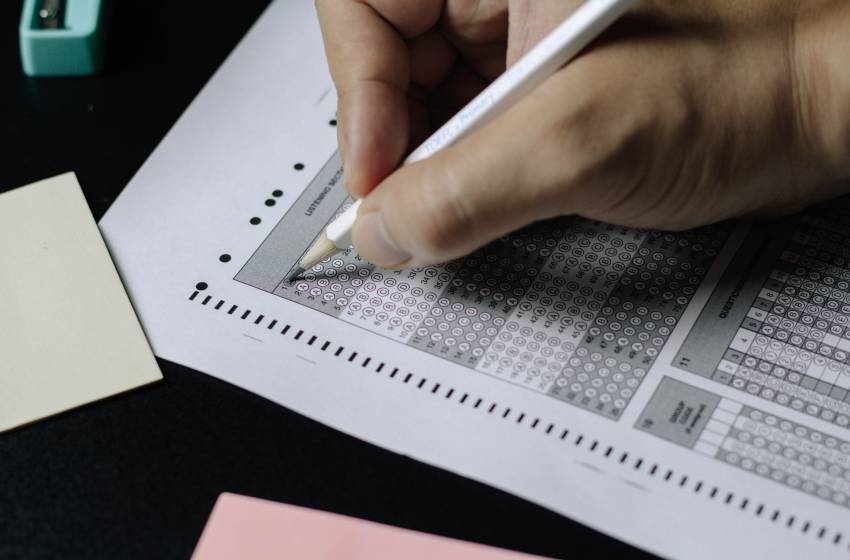
And. Mode of NEET exam is offline with OMR sheets to be filled.

Q2. Is there any restriction on the number of attempts?

Ans. No, as per NEET 2020 guidelines you can apply for the NEET exam as many times you want.

Q3. Who conducts the NEET exam?

Ans. The NTA (National Testing Agency) conducts the NEET exam.

Q4. Will NEET 2020 be conducted twice?

Ans. No, NEET 2020 will not be conducted twice. It will take place on 13th September 2020.

CBSE Board Exam 2020: Supreme Court Gives Deadline To Decide On Pending Board Examination For Class 10 & 12 By June 23

The Supreme Court solicited the CBSE to consider the predominant COVID-19 pandemic circumstance today; June 16 and have asked to take a decision on the schedule of Class 10 and 12 pending board examination by June 23, 2020. A bench comprising Justices A.M. Khanwilkar, Dinesh Maheshwari and Sanjeev Khanna directed the CBSE to think about the circumstance and revert by one week (by 23rd June 2020) from now. 

In the first week of June a group of 4 parents, whose children have to appear in Class 12 Board examination, approached the Supreme Court against the CBSE decision to conduct the remaining board examination from July 1 to July 15. Referring to the AIIMS data where it is said that COVID-19 pandemic would be at pick in July, in a petition filed by Advocate Rishi Malhotra, parents argued to cancel the board exams in the wake of the coronavirus disease.

Guardians have additionally contended that the CBSE has cancelled the examinations of Class 10 and 12 for its around 250 abroad schools and has embraced the standards of granting marks based on either practical exams conducted or the inner assessment marks, at that point why comparative methodology can’t be followed for students in India.

Parents Approach Supreme Court for Cancellation of CBSE Examinations, Petition Filed

CBSE has announced that the pending CBSE exams for Classes 10 and 12 will be held between July 1 to July 15. These exams were postponed due to the nationwide lockdown caused by the coronavirus. But, now the group of 4 parents of the students have approached the Supreme Court against this decision of CBSE. In their petition filed against this, they have appealed not to hold the board examinations in July.

In the petition filed by Advocate Rishi Malhotra, parents are demanding cancellation of examinations citing coronavirus. They say that the corona virus infection will be at its peak in July. They are referring to the AIIMS data, where it is said COVID-19 pandemic would be at its peak in the month of July. In view of the increasing transition of Corona, there is a high chance that their children will get exposed to the pandemic. Therefore, the board should cancel the examination and declare the result of children on the basis of internal assessment.

CBSE Exams Result 2020: CBSE 12th result will come before 10th

The 12th board results will be released before the 10th of the Central Board of Secondary Education (CBSE). Board’s Controller of Examinations Sanyam Bhardwaj said that the 12th result will be released first. Due to a time limit for admission in higher education after the 12th pass, the board is trying to relate the result within that time limit. Results will be given in the last week of July or the first week of August. JEE Main will be taken in July and JEE Advanced on 23 August. At the same time, the medical entrance examination will also be held in July.

The results of the first 12th will be released before the JEE Advanced exam. This will facilitate the enrolment of successful students. The board has started preparing for it loudly. The teachers whose duty is in the assessment will not do online classes until evaluation. The assessment of the examination so far (before lockdown due to COVID-19 impact) will be finished in June. Its result will also be prepared.

Due to the lockdown, the examination of the remaining subjects will be taken from July 1st to 15th, 2020. The exam will start from July 1st, 2020. At the same time, its evaluation will start from July 5. The evaluation of the examination to be held on 15 July will be finished by 25 July.

Pending CBSE Exams for Classes 10 and 12 will be held from July 1 – CBSE latest announcement

As you are aware, the Central Board of Secondary Education (CBSE) class 10 and 12 board examinations were postponed due to the nationwide lockdown caused by the coronavirus. Now the remaining subject’s exam of 10th and 12th will be held between July 1 and July 15. This was announced by Union Human Resource Minister Ramesh Pokhriyal on Friday; 8 May 2020.

A detailed schedule of examination will be announced on Friday late evening.