
Architect

Architect

Architect

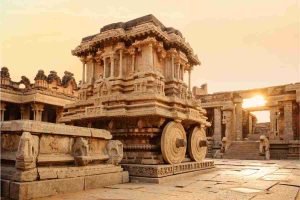
An architect is someone whose job includes designing building construction. To practise architecture means providing services relating to the design of buildings and the space within the site surrounding the buildings, whose main purpose is for humans. Etymically, the terms architects derive from Latin architects [3], which derives from the Greek [4], Arkhis – the chief + tekton. [4] Architectural professionals have different responsibilities in every city.

Contents

  1. Do you have it?
  2. Commitment as a Student & Job Commitment
  3. Basic Qualification
  4. Attitude Aptitude & Skills
  5. Finances
  6. Future Prospects
  7. Other Professions

Do you have in you?

An architect is trained and licensed in planning and designing of buildings and investigating sites, working on restoration of historical buildings and participates in supervising the construction of a building. Architecture is the right blend of art in the form of designing with aesthetic principles and science in the form of calculations involved, physics of the structural designs and physical characteristics of the building materials coupled with a vision of creating the perfect structure. If you have a technical bent of mind with a hint of creativity and the power to visualize the future creation then this is the profession for you.

Commitment as a Student & Job Commitment

Commitment as a student starts when you start preparing for the entrance exam. The real rigor starts once you are through an architecture college. You need to understand the basics of materials, construction and planning. Once on the job the challenge of an architect is to produce an artistically pleasing design within a given budget to fulfill the client�s need. As an architect you also need to spend long hours at the drawing table to prepare sketches, scheme of the floor plans, the elevations, and the perspective drawings, which may have to be reworked multiple times before being finally approved by the client. After the design approval and contractual agreement and final estimates of costs, the architect needs to supervise the construction of the building, which requires long hours at the construction site to supervise the work in progress and issue instructions to the contractor.

Basic Qualification

The minimum educational qualification to appear for the entrance test is completion of 10+2 level of education with a minimum of 50% in Science with physics, chemistry and mathematics. Admission to the architecture courses is on the basis of an admission test to evaluate a your aptitude in the above subjects and proficiency in drawing. Further specialization in the field of architecture requires a B. Arch degree and is through an entrance test.

Attitude Aptitude & Skills

To be an architect you not only need creativity but also highly developed technical drawing skills. You need to have spatial sense and should be able to visualize the outcome at the designing stage. Technical skills in geometrical modeling along with analytical and negotiating skills are required while dealing with clients coupled with interpersonal skills with ration,al and pragmatic approach to fulfill a clients requirement. You should be a great team player with an ability to issue clear instructions and explanations to team-mates, clients and contractors. As an architect you can be successful only if you have a keen desire to learn from surroundings and update your knowledge of latest development in structural technique,s and materials

Finances

Getting a finance to pursue architecture is easy once you have secured an admission in a college. It`s easy from get an educational loan if the college you are admitted to is a reputed one. As the course is of 4 year duration you need to plan your finances carefully.

Future Prospects

With increasing urbanization, industrialization and the increased need for accommodation, architects are in great demand. You can either freelance or work in the town planning departments of local authorities like municipalities, corporations or housing boards. You can also work in government departments like public works, railways, defen,se, and insurance companies. There are private firm of architects or builders with a continuous programs of buildings or maintenance work which employ architects at all levels.


Animation

animation

Animation is a method of manipulating images to produce motion images. Traditional animation involves drawings or paintings made from transparent celluloid and then printed onto films and displayed. Animation is usually created using computer graphics or animation software (cGI). Computer animation is often 3D and 2d. 2D computer animated movies are often used primarily to improve stylistic quality or to provide faster real-time rendering. Another common animation method uses stopmotion techniques to two- or threedimensional objects such as puppeteers and clay figurines.

Animation

Contents

  1. Do you have it you?
  2. Commitment as a Student & Job Commitment
  3. Basic Qualification
  4. Attitude Aptitude & Skills
  5. Finances
  6. Future Prospects
  7. Other Professions

Do you have in you?

An animator is an artist who creates multiple images called frames, when rapidly displayed form an illusion of movement called animation. Animators can work in a variety of fields involve creating characters in animated films, television commercials, video games, and the internet by creating animated graphics for web sites. Animation is a swiftly growing field that attracts many creative and skilled people to work in collaboration. Animation means giving life to your imagination, applying your creativity to make a still object walk and talk. So if you are full of imagination and want to give life to your thoughts, then becoming an animator will conjure up a whole new world that has no boundaries.

Commitment as a Student & Job Commitment

While you are in school you should master two-dimensional figures (2D) and three-dimensional figures (3D), as drawing is the base of animation. You should try working on a variety of software and not restrict yourself to one or two as technology keeps changing very fast and you should be able to adapt and master accordingly. You should try and get internship in a company which deals type of animation you’re interested in and want to work in eventually. It can also provide critical on-the-job training to complement your academic work and it’s a great opportunity to build your portfolio. Along with the basics of animation you’ll learn about story telling and developing characters and hone your illustration skills. To develop mastery in computer generated imagery you need to devote a lot to learning computer animation hardware and software. On the job you should be prepared to work for long hours and have the patience to work on one single frame for hours together.

Basic Qualification

More than education you need to have a creative bent of mind, then learning new skills has no age restrictions. You can start right after 10+2 or after graduation by taking up certificate and diploma courses to hone your skills and existing knowledge. As the industry is broadly technology-based, certain aspects of the animation discipline are more technical. Some sub-sectors in animation require knowledge of Mathematics, Physics, Computer operating systems, (notably Linux/Unix as well as Windows and Mac OS), Software-specific computer scripting languages (e.g. MEL scripting for Maya), Digital asset management and many more with ever changing technology. You might even take classes on producing and directing, skills that can be useful for animators overseeing the production of a television commercial, video game, or film. Certificate or Diploma courses are available to master all the basic tools required in the industry. Choose a school that will give you a well-rounded education and guide you in putting together a portfolio of your work, the most valuable asset in finding your first job.

Attitude Aptitude & Skills

Drawing is the number one skill required if you want to do computer animation. Animator needs a solid art foundation with fundamentals of drawing and color principle along with two and three dimensional illustration and technical designing. Animation demands long tedious work so you will need patience and perseverance along with creativity. Sound interpersonal skills are required for preproduction that takes place, requiring you to interface with clients and coworkers in order to determine the structure of the project. Along with intangible attributes like creative flair, a good visual eye and talent, tangible skills like drawing, storytelling, a good sense of timing and composition and an understanding of motion, size, ratios, and perspective are crucial to succeeding as an animator. Combinations of both creative and technical skills are important while working in teams, where creative specialists must know how to communicate with technical specialists and vice versa. Animator are also expected to have skills such as teamwork, an ability to take direction, an ability to work with time frames to meet deadlines while retaining a high standard, Interpersonal communication with clients, Management of self, others, work, time and projects.

Finances

Computer animation is ideally mastered in an academic environment though it’s possible to get the technical training on software packages at home, but that require a lot of time and money and you’ll miss out on opportunity of learning other skills required in the industry. Having the tools is very different to knowing how best to use them, so taking a formal training is a must if you are thinking of entering this field. You can take up short courses while working this can take financial burden off your shoulders. If you are thinking of investing a long duration to pursue graduation then taking up an educational loan is possible.

Future Prospects

For a fresher, getting a job abroad is difficult. Few years in the industry will open multiple doors for you. Many animation companies like Walt Disney, Blue Sky, Dream Works are coming to India. Animation in India is currently riding on two key factors a large base of skilled labour, and low cost of production.

Although some people work on their own, there is a whole network of professionals required. A large team is required in the various stages of production from raising the finance for the original idea, to script development, the creation of animated characters and backgrounds, casting the voices, recording the soundtrack, checking the design, editing and sound mixing and experts are in demand at every stage. The world of animation requires scriptwriters, story boarders, and layout artists along with Producers / Project Managers, Directors, Technical Directors, Storyboard Artists, Cameramen, CG Riggers etc.

Air Hostess

Air Hostess

Being an “Air hostess” will make girls dream of becoming a Hostess! Flying was an ideal idea for everyone. You can choose a professional dream. Tell me the feeling? It is awesome. A new study program was developed by the International Aircraft Industry to train the pilot and hostess. A hostess in air travel can be the main career path for airlines. These careers involve a friendly and pleasant attitude and surroundings. The courses for air hosts or flying stewards fall into ‘aviation management’ courses.

In this article, we will cover the below points,

  1. Do you have ii you?
  2. Commitment as a Student & Job Commitment
  3. Basic Qualification
  4. Attitude Aptitude & Skills
  5. Finances
  6. Future Prospects
  7. Other Professions
  8. Air Hostess Salary in India

Do you have in you?

Is geography your favorite subject and do you wish to travel across the length and breadth of the globe? With the aviation industry flourishing like never before, all it takes to enjoy and explore the planet is a promising and lucrative job as an air hostess or a flight steward. If you have a pleasing personality and can smile in spite of long hours of standing and demanding passengers, then buckle up your seat belt and take off, as this option is sure to take you places to experience the finest cultures and cuisines of the world

Commitment as a Student & Job Commitment

During your training at the institute, you will go through different levels to enhance your confidence and communication skills. In-flight training will take you through the rigor of a career ahead. Long working hours at odd times and staying away from home is something that you should be prepared for

Basic Qualification For Air Hostess

You can enroll to become an Air Hostess or a Steward after 10+2, Graduation or Post Graduation. However, you need to be between 17 to 24 years and have a Height between 157-175 centimetres. Your weight must be proportional to your height and knowledge of a foreign language other than English will be an added benefit.

Attitude Aptitude & Skills

A pleasing personality, a warm welcoming smile, good communication skills, crisis management, patience, dedication and a nurturing attitude, which doesn’t fade with hard work, irregular times and some cranky passengers. If you can stand for long hours and still manage to serve and hide your tiredness with a smile then a great life awaits you

Finances

You`ll be able to finance your training as some of the banks do give out loans for training. Depending on which airline you join, you`ll be able to pay out loans quickly as most airlines offer attractive packages as soon as you join.

Future Prospects

An air steward/ stewardess can be promoted to the post of a senior flight attendant and then head attendant. Flight duties continue for about 8-10 years, after which there is an option of moving to ground duties, working as a ground hostess or training air hostesses. With an experience in the aviation sector, you can apply for jobs in hospitality. This will help you apply to a vast range of national and international chains of hotels, making it a good stepping stone to a successful carrier in the service industry. You can also take up duties at the management level in the aviation sector itself.

Air Hostess Salary in India

At the start of a career, a candidate can get an offer/package of Rs 4 lacs to Rs 8 lacs per annum. With experience one can earn up to 20 lacs per annum in future.

MBA Specializations

MBA Specializations

As MBA as a career option increasingly gains popularity amongst Indian students, this articles aims to explore the various specializations that students can opt for, when pursuing an MBA. A specialization in an MBA helps equip the students with focused skills alongwith the generic business skills that come with an MBA

Management education has come a long way from developing general management skills in managers to splitting into various specialisations to cater to different sectors of the industry. All general management graduates hold certain core attributes that are valued by employers like thinking strategically and analytically. With changing economic scenario adding a specialisation that matches with future career goals will fast track a candidate’s career. The standard MBA specialisations are: Marketing, Finance, Human Resources, IT/Systems, Operations, Hospitality Management, Sports Management, Communication Management, Insurance and Risk Management, Hospital Management with many more being added.

Marketing Management

Marketing management is focused on the practical application of marketing techniques and the management of a firm’s marketing resources and activities. This specialisation can help accelerate your entry and progress in some of the most competitive fields like advertising, brand management and public relations.

Human Resources Management

Human resource management is a people centric specialisation of management and is focused on employing people, developing their resources through training and compensating their services in tune with the job and organisational requirement. 

Financial Management

Financial Management as a specialisation concerns itself with the managerial significance of financial techniques and focuses on areas including investment and portfolio management, corporate finance analysis and decision making on mergers and acquisitions as well as international financial management.

Information Technology Management

Information Technology Management is concerned with exploring and understanding systems and technology as a corporate resource which determines both the strategic and operational capabilities of the company.

Hospitality Management 

Specialisation in hospitality management focuses on managing multiple roles in hotels, restaurants and in the tourism sector and equips MBA graduate with management techniques needed to rise to a senior position in the hospitality sector.

Communication Management

Communication management is the systematic planning, implementing, monitoring, and revision of corporate communication strategies, designing internal and external communications directives, and managing the flow of information, including online communication within the organisation, between organisations and to media.

Summary: MBA specialisations are giving a kick start to the managers and helping them climb the corporate ladder faster. The basic specialisations include Financial Management, Marketing Management, Information technology/System Management, Human Resource Management. There are other specialisations that are becoming popular like Hospitality Management, Sports Management, Communication Management, Insurance and Risk Management and Hospital Management.

History Of Education

History Of Education

Everything around us is a product of invention. And evolution is the fact of humankind. The only thing probably that was not invented but evolved through the ages, is education. Born before apes became humans and will perish only with the latter’s extinction. 

Education started with being a process of acculturation. When humans walked on four legs and were learning to stand erect, since then it has been a significant part of life. It was a method of transferring cultural norms, social values and traditions, moral codes, religious ethics, knowledge and skills to the next generation. This Oral Tradition based itself on observation and imitation. Children incorporated what they saw and became experts. Education was a personal experience. The Hunter- Gatherer society was simple and had a social set up with no divisions or hierarchies. Families were small and lived in close groups, protecting each other and collecting food. Thus the education system was also simple. Ancient cave paintings with crude drawings of a hunt, houses, tools used, etc, tell us what was imparted to kids. Education centered around legends, folklore, rituals and songs delivered usually in poetic form. 

Advent of agriculture graduated humans to the next level of development. With agriculture, settled or sedentary lifestyle became the norm. In the previous stage, there was no requirement of specialization. But agriculture brought in special skills. People gained expertise in one or the other craft. Contrary to the common knowledge base of hunters, agriculturists had varied skills. Thus education apart from consisting of tradition and culture, also included learning of a special art. Education became formal and with it started being restricted. 

As the agriculture society grew, it saw the introduction of various professions. Knowledge became even more specialized. Society gave birth to the system of complex hierarchy. There was need for protection and with this the requirement of a king to reign over his subjects. Thus the political institution led to social stratification. By this time god had also been invented and so a priest class existed too. Division in the society compartmentalized education. Informal transferring of family heritage continued but formal education got restricted to the upper classes. Th kings and priests were entitled to it alone. Women were kept out of its purview. So were slaves. Formal education consisted of learning of literature, hymns, epics. 

Writing was introduced much later to augment education. Initially it was a means of keeping accounts. It was short and numeric. Alphabet was invented at a later stage. Signs and symbols were incorporated to create meaningful letters. With the invention of writing, stories, poetry, knowledge, customs could be recorded. A definite and accurate data base was created that could be easily transferred across generations without alteration and deletion of essential facts. 

In India, the break up of society led to the emergence of the caste system. Initially a professional divide, this soon turned into a rigid exploitative barrier that demarcated the society. The caste system comprised of the Brahmin (priest), the Kshatriya (ruler), Vaisya (businessman) and the Sudra (lowly job) classes. Formal education was confined to the upper three castes. The Sudras were deprived of it. So were women (except some). The Indian educational system revolved around the Gurukul system. Gurukul meant a teaching institute run by a Brahman. It was open for Brahman children and sons of Kshatriyas. The syllabus consisted of learning the Vedas and other religious scriptures. Martial arts training, ethics, philosophy, literature and science was part of the course. 

The introduction of formal education lent it a narrow base. Society got classified into the literate and illiterate. Informal training and imparting of cultural and traditional knowledge did not become non-existent, but insignificant as far as a person’s qualification was concerned. Even today, formal training defines education. It is unfortunate that because of this trend the age old tradition of passing on values and knowledge to the future generation is dying out.  

Education was born when life itself took form. It includes more than we can perceive. It is not a requirement but a necessity. If food, clothing and shelter are the requisites of living, then education is the unseen component that binds itself to us with or without our consent. To detach ourselves would mean extracting a part of us without which we can never be complete human beings.

The Global Impact of Student Exchange Programs: An Overview

The Global Impact of Student Exchange Programs

Student Exchange Programs have gained significant popularity as more colleges and universities collaborate to provide students with opportunities to study abroad. These programs allow students to experience education in a foreign institution while fostering cultural exchange, academic enrichment, and personal growth. Initially focused on an exchange between two institutions, modern programs have expanded to offer individual placements across the globe.

Purpose of Student Exchange Programs

The main objective of these programs is to promote cross-cultural interaction and mutual understanding between nations. Students are considered the future torchbearers of any society, and giving them exposure to diverse cultures contributes to creating a more tolerant and informed global citizenry. Upon returning, exchange students often carry newfound knowledge and insights from their host countries, which help bridge gaps between cultures.

Key Benefits of Student Exchange Programs

  1. Cultural Immersion:
    Students learn not only the academic curriculum but also engage with the cultural practices, traditions, and social norms of the host country. This helps develop a deeper understanding of cultural diversity.
  2. Holistic Education:
    The exchange student is fully integrated into the host institution, attending regular classes, participating in seminars, and appearing for exams just like other local students. This hands-on learning provides a realistic experience of international education systems.
  3. Global Exposure:
    Students get the opportunity to live in a new country, either within the campus or with local families. This allows for a more immersive experience, offering a first-hand understanding of local traditions, food, and everyday life. Countries like the USA have a tradition of families hosting exchange students, providing them with a homely experience while abroad.
  4. Personal Development:
    Living away from home, adapting to a new environment, and engaging with diverse communities foster independence and enhance interpersonal skills. Exchange students develop a broader worldview and become more adaptable.

Financial Support and Scholarships

Many universities, especially those involved in student exchange programs, offer scholarships or grants to help cover the costs of the exchange, including tuition fees, accommodation, and travel expenses. For instance, students from Indian universities like Delhi University often receive scholarships at the postgraduate level, helping them access top global institutions.

Countries Offering Student Exchange Programs Top Universities Offering Exchange Opportunities
USA Harvard University, Stanford University
United Kingdom University of Oxford, University of Cambridge
Germany University of Munich, Humboldt University of Berlin
Australia University of Sydney, University of Melbourne
Canada University of Toronto, McGill University

Academic and Cultural Experiences

During the exchange period, students are expected to fully participate in all academic activities. Apart from attending regular lectures and submitting assignments, students may also have the chance to explore cultural excursions organized by the host university. These trips help students discover the history and geography of the host country, further broadening their horizons beyond the classroom.

Challenges and Selection Process

While the rewards of student exchange programs are plentiful, the selection process is stringent. Universities select only the most deserving students to represent them abroad, ensuring that these individuals will positively reflect the institution and their home nation. Misbehavior or failure to comply with academic and social norms can tarnish the reputation of the institution, making the selection process highly competitive.

The selected students must possess a high degree of academic excellence, adaptability, and responsibility. They serve as ambassadors of their home country, and any misdeeds abroad could affect future exchange relationships between institutions.

Historical Perspective: Post-War Initiatives

The concept of student exchange programs gained momentum after the World Wars when international organizations and governments sought ways to foster peace and cooperation among nations. The exchange of students was viewed as a means to bridge divides, promote understanding, and create lasting international friendships. Today, student exchange programs continue to play an essential role in strengthening global ties.

Conclusion: A Gateway to Global Education

Student Exchange Programs offer a unique opportunity for students to experience global education while immersing themselves in a different culture. These programs not only provide academic enrichment but also promote personal growth, global understanding, and international goodwill. With the world becoming increasingly interconnected, such experiences are vital for creating a tolerant, knowledgeable, and compassionate global society.

Also Read: IELTS or TOEFL: Universities’ Top Choice?

How To Crack An MBA Interview

How To Crack An MBA Interview

A Business School invites a qualified candidate for an interview to gauge academic excellence vis-a-vis one’s managerial ability and leadership skills. In the half an hour session, the interviewee should be able to create a lasting positive impression that should guarantee a seat in the premier MBA college. 

A candidate who has passed the exam stage and has been called for the interview round, should be well versed in the basics. One should have accurate answers to questions about education, work experience and family background. The interviewee should grasp open ended questions as an opportunity to present skills and abilities. There are certain questions that form an important part of an MBA interview. To the question as to why one requires an MBA degree, one must be confident about future goals and how the degree will help in achieving them. Other integral questions are about one’s strengths, general awareness, hobbies and why should one be chosen above the rest. The interviewer seeks to judge the candidates professional clarity through these. With tact, the latter can steer the interview to highlight achievements and experience. 

It is essential for a candidate to be natural, confident but humble, to the point and grounded. And not be nervous or clumsy. One should not make tall claims and should not be vague. If an answer is not known, saying so to the interviewer is better than sounding fake. One should take care of the tone and the words chosen. It is essential to listen carefully, to understand and then respond. Answers should be short but informative. Practicing mock interviews and preparing answers to frequently asked questions makes the actual interview comfortable.

One should dress formally for the interview, avoid being flashy, and take special care to be courteous and to not look stressed. Making eye contact, not fidgeting and a confident body language creates a good impression. So does knowing about the institute and the interviewers’ profile.  

Keeping these points in mind, cracking any MBA interview can be easier for the candidate.

English – The Medium Of Instruction

English – The Medium Of Instruction

The latest education survey has reported that today English has become the second medium of instruction in educational institutions. Hindi still occupies the first position but English has surpassed the other regional languages. We may oppose and march against English, but this survey has proved that the binding common language in the country is English, and it is the language that will only knit the world together.

English augments effective communication. We are not caught in an awkward position if we know the language. This is of greater significance if we are met wit a foreigner or are in a different nation. Many times most of us are left fumbling and trying to find out the way in a foreign locale due to not being able to understand English.

Students who want to pursue studies abroad should specifically take care to know the medium. The course would otherwise be useless and our stay valueless. Same holds true for those wanting a job abroad. How will we be able to work surrounded by English speaking people and not knowing how to communicate. To ensure that our ambitions are not curbed by this defect on our part we should learn English.

The internet has come up in a big way recently. Every information is available on the net. And the medium? It is English in maximum cases. If we are progressive and want to walk hand in hand with the rest of the crowd, internet is a necessity. But without knowing to read and write in English, we cannot command the cyber world. 

Books worldwide have been written in native regional languages. They could be accessed by the rest of us. Bestsellers and good books were thus out of reach for a very long time. Today they are available to all. The reason is because they are being translated. Not only to English but other languages as well. But mostly in the former. We cannot read a book in Spanish that has been translated to french. We can but definitely read the English translation of it. Rabindranath Tagore, the Nobel laureate of India and one of the best author to ever live, wrote in Bengali. His works form a part of the syllabus in schools thanks to their English translation.

The benefits of English can be achieved by us only if the education imparting institutions make English the medium of instruction. Only then we will students of today be prepared to face the world of tomorrow. Denis Waitley had rightly said ‘Knowledge is the frontier of tomorrow’. And this is knowledge that will enable us to command the future.

Intelligence Quotient

Intelligence Quotient

‘the true sign of intelligence in not knowledge but imagination’

– anonymous

Those days are history when our intelligence would be judged on the basis of the ‘Intelligence Quotient’ alone. How good we are at solving mathematics sums and logic would determine how we fare in life. Fortunately, today we are not grilled in the oven over our IQ scores. The parameters to assess intelligence has changed and includes inherent individualistic skills unique to every human being.

Intelligence is dependent on a varied number of reasons. Evolution plays a major role in this. So does genetics. We usually inherit our parents and forefather’s intelligence and traits that define us. Effort on our part also contributes to this. With constant struggle we may not be the best, but acquire a skill that we may not have been born with. Study on intelligence circumferences all these factors while deducing a person’s intelligence.  

Multiple Intelligence is being worked upon by scientists today. So is Emotional Quotient, in the study of intelligence. We have a long list of defining factors thanks to the ongoing research by evolutionists and scientists all over the world. 

One of the much talked about form of intelligence is Logical or Mathematical Intelligence. Those possessing it are very good in tackling numbers, reasoning, logic and abstract concepts. Effort plays a significant role in this and we can better ourselves with practice.

Linguistic Intelligence is the ability of a being to grasp and command language. It includes the ability to read and write, and to learn different languages. Those with this form of intelligence are able to learn languages quite easily. It also is the knack for story telling and art of syntax and grammar.

Those with Spatial Intelligence are good at imagination. They are very creative. They can remember directions better than the rest of us. They also have a strong visual memory and understanding of spaces. 

People with Musical Intelligence are inclined towards music and musical notes. Again practicing musical instruments and listening to songs betters this intelligence. 

Similarly, those gifted with Kin-esthetic Intelligence have an affection for athletics, dance, body-building, acting and other performing arts. Also they can become successful surgeons. As is the case with musical intelligence, Kin-esthetic Intelligence is dependent on personal effort. 

Interpersonal Intelligence enables us to be an effective communicator and event organizer. The possessors are empathetic and sensitive towards others. Intra-personal Intelligence on the other hand, promotes deeper understanding of ourselves, our emotions, needs and ambition. If we wield this intelligence, we can become writers, philosophers, theologists or psychologists. Writing and meditating helps in commanding this field. 

We see many among us with a love for nature. This is because they exhibit Naturalistic Intelligence. 

The curious people around us who constantly strive to understand life, death, virtual realities and mysteries of the world. This is Existential or Spiritual Intelligence.

The circle of intelligence is so big that nobody is left out of it. The traditional and restricting factors of Intelligence have been done away with. Intelligence Quotient thus is the totality of existence.

Top Ten Mistakes By Students In Entrance Examinations

Top Ten Mistakes By Students In Entrance Examinations

Entrance Examinations have become the norm of admission to any course or institution. Marks are not the sole determinants of entry. Though a lengthy and tedious process for the organisers as well as the applicants, this has become the necessary way today. The more the number of tests, greater the candidate number. And larger the mistakes committed by the students.

Mistake 1:

The biggest wrong is no time management. Students fail to realise the importance of planning out on time and are left feeling guilty at the end of the exam. Effective time management guarantees that you devote time to each section and then stick to it. This will ensure that you answer all sections and don’t leave out anything. 

Mistake 2:

Also this will give you time for revision, something that candidates regard a wasteful activity. You should realise the importance of a revision after the test which allows you to correct wrong answers and sometimes see questions that you may have overlooked.

Mistake 3:

A grave mistake is not scanning the paper. Scanning and reading the pare will help in deciding and marking the easy and known questions. And aid time management. This is a simple trick if followed grants favourable returns.

Mistake 4:

The aim of most students is to answer the maximum number of questions. They forget that in their chase to do so, they end up making blunders and silly mistakes. 

Mistake 5:

Another mistake that is very often committed by students is attempting questions they do not know or are unsure of. They make guesses. Most of these exams have negative marking. When you guess an answer or just tick an option just to maximise the number of attempted questions, you usually end up fetching hoards of negative marks that bring down your result marks and keep you out of the selection process. 

Mistake 6:

You should also not answer the question paper serially. Do the easiest and the ones you are sure of first. Then if you have time and want to try the difficult and unknown questions, attempt them.

Mistake 7:

Students also many times answer the paper section wise. You should know the fact that generally the sections have equal weight-age and to qualify, you have to answer a certain percentage of questions from each segment. So not get stuck on one, and answer across sections. 

Mistake 8:

It also means that you do not over focus on one section or subject. And while preparing for an entrance test you should definitely study all subjects and important6 topics. It is essential to crack any exam. Selective study and leaving out important contents, will lend you a disadvantage that cannot be altered at the test centre.

Mistake 9:

Do not get stuck with one question at any point of time during the test. If you have not answered the easy questions and are fiddling with one, it is felony. If you have ample time and think you can afford to do so, you are still wrong. Utilise that time for answering other non attempted questions, or revision. At the test, usually spending too much time on a particular question does not help.

Mistake 10:

The last but the most serious wrong while writing a test is to get nervous. Even intelligent and well prepared students tend to get nervous on the exam day. You have to learn to stay calm and composed. If you have a tendency to get nervous, seek help from elders and counsellors, and take all measures to guarantee that this does not hamper your chance of getting through the best institute.

Mistakes abound. Even a master cannot be all right. You may commit a wrong. The aim however of every appearing student should be to minimise and nullify the blow of wrong. If you take these most committed mistakes seriously and work towards avoiding them, you stand a chance to crack any entrance examination, no matter how difficult.