Union Budget of India: History, Importance & Types of Budgets

Union Budget of India

The budget, which is offered using the Finance bill and the Appropriation bill has to be passed by Lok Sabha before. It can get into effect on 1st April, the start of India’s financial year. Beginning from 1st April of one year to 31st March of the following year, the Union Budget is the blueprint of the Government’s revenue and expenditure for a financial year. It is offered during the month of February so that it can be formed before the start of a new financial year. According to Article 112 of the Indian Constitution, it is an extended financial statement that presents the Government’s estimation of revenue sources and estimated expenses for the year. It is classified into two parts – the revenue budget and the capital budget. The revenue budget contains the government’s revenue receipts and expenditure, while the Capital Budget comprises the government’s capital receipts and payments.

The Union Budget for 2017-18 showed a remarkable shift in more ways than one. The date of its show was moved to the first working day of February from the last working day of the month. In addition to this, the Railway Budget also enhanced a fundamental part of the Union Budget, a break from the 92-year old tradition of managing the Railway Budget as a separate entity.

As of September 2017, Morarji Desai was given Ten budgets that are the highest count followed by P Chidambaram’s 9 and Pranab Mukherjee’s 8. Yashwantrao Chavan, Yashwant Sinha, and C.D. Deshmukh has given 7 budgets each while Manmohan Singh and T.T. Krishnamachari has presented 6 budgets. Until 2018, as a part of the tradition, Finance ministers took the budget in a leather briefcase. The tradition was founded by the first Finance minister of India, Mr. RK Shanmukham Chetty. Nirmala Sitharaman broke this tradition by providing the budget in red cloth, on 5th July 2019.

Union Budget of India: A Brief History

On 7th April 1860, the first Union Budget of India, a concept that started when the country was still under British colonial rule, was introduced by the then Finance Minister of India, James Wilson. On November 26, 1947, the first Union Budget of Independent India was given by Sir R.K. Shanmugham Chetty (the first Finance Minister of India).

The first Union Budget was given amidst public riots that followed the partition. This budget was planned for 7 and a half months, after which the next budget was supposed to be implemented from 1st April 1948. It was also determined that India and Pakistan would both share the same currency till September 1948.

Following the resignation of Sir R.K. Shanmugham Chetty, the baton was passed on to his heir, John Mathai, who gave the 1949-50 and 1950-51 Union Budgets. The Union Budget of 1949-50 carries the record of being the first budget for a United India, which covered all the princely states.

Who prepares the Budget?

The Budget Department formulates and implements Annual State Budget with a macroeconomics framework under the guidance of the Ministry of Finance and Revenue for a given period.

Behind the scenes of formulating union budget:

  • Budget implementation starts with the Budget classification of the Ministry of Economic Affairs in the Ministry of Finance, and Niti Aayog is also invited as a consultant.
  • Now in the month of September, the budget division issues a circular proposal to all Ministries, states, armed forces to determine their fiscal status.
  • When the finance ministry gets the status from all the Ministries then the Department of Revenue, Department of Expenditure, and Department of Economics come into action.
  • Consultation with Niti Aayog and other Ministries is done to formulate the budget.
  • Once the whole picture is formed in the last week of January, the Finance Minister makes the final decision.
  • Once the decision is made, the Finance Minister discusses the proposal with the Prime Minister, and the proposal freezes when the Prime Minister confirms.
  • Printing of the Budget document starts.
  • The day before the Budget presentation Finance minister addresses the cabinet on a summary of the Union Budget and the morning of the budget presentation Govt seeks President’s permission.
  • Now, The Finance minister gives the budget in the Lok Sabha.
  • The Finance Minister gives the budget into two parts.
  • General Economic survey
  • Tax proposals
  • Once the speech is completed, the Budget proposal is placed on the table.
  • After some debates which last for 2–3 days, “Vote an Account” is held.
  • Budget proposal is then passed in Lok Sabha and Rajya Sabha as well as approval by the president, all within 75 days.
  • Now finally Budget proposal implementation starts.
  • The Budget is introduced through the tabling of the Economic Survey in the Budget Session of the Parliament by the Finance Minister. 

This year on 31 January 2020, the Finance Minister Ms.Nirmala Sitharaman presented the Economic Survey 2019-20. The Survey is also given by the Chief Economic Advisor (CEA) during a press meet after it is tabled in the Parliament.

Importance of Union Budget

India has a parliamentary democracy where the government cannot arbitrarily spend, tax, or borrow money. Therefore, for the government to function effectively and assist enhance the economic and the social framework of the country, budgeting and planning are a necessity.

Some of the reasons that explain the importance of union budget are as follows-

1. Resource Allocation

As the resources are restricted, it is with the help of a union budget that the government tries to employ them efficiently so that the profits can be maximized.

2. Control Prices

One of the most significant duties of the union budget is to manage and predict inflation and deflation. Surplus policies and deficit policies are concentrated upon during inflation and deflation, respectively, to keep the economy steady.

3. Reducing Economic Inequality

No society is free from economic inequalities. It is with the aid of budgetary policies that the government seeks to bridge the gap between the rich and the poor.

The reason behind the Government works out a budget every year

The Government plays two important functions by making a budget every year-

  • The Government expects the expected expenditures for developmental works in different sectors of the economy e.g. Industry, Manufacturing, Education, Health, Transport, etc.
  • To meet the expenditures for the coming financial year, the Government seeks to work out the sources of revenue. (i.e. by requiring new taxes or raising or reducing the previous rates of taxes, or removing or imposing subsidies on any commodity).

In other words, the Governments decide about the expenditure to be provoked on which products primarily and how the money is going to be provided for these expenditures. The aspects of such income and expenditures statements are known as ‘Budget’. Each budget is made for a specified duration.

Types of Union Budgets

The Union Budget can be classified into two parts mention below:

  • Revenue budget
  • Capital budget

Revenue Budget: The revenue budget comprises the government’s revenue receipts and revenue expenditure. Revenue receipts can be further divided into tax revenue (income tax, excise duty, corporate tax, etc.) and non-tax revenue (interest, profit, fees, fines, etc.). Revenue expenditure relates to the regular expenses acquired from the daily functioning of the government as well as for the range of services given to the public. If the revenue expenditure is greater than the revenue receipts, the government is supposed to acquire a revenue deficit.

Capital Budget: Capital budget, its components are of a long-term nature, consisting of capital expenditure and capital receipts. Some of the primary sources of government receipts include loans from citizens, the Reserve Bank of India (RBI), and foreign governments. Capital expenditure, on the other hand, comprises costs incurred on the development and maintenance of equipment, machinery, health facilities, building, education, etc. When the government’s expenditure is more than the total revenue collected, a state of fiscal deficit happens.

An Overview of the Union Budget 2020-21

On February 1st, 2020, while giving the union budget in the parliament Finance Minister Nirmala Sitharaman said that In May 2019, Prime Minister Narendra Modi received a massive mandate to form the government again. The people of India have unequivocally provided their Janaadesh for not just political stability, but have also relaxed their trust in our economic policy. This is a budget to expand their income and improve their purchasing power.

The second budget of the Modi government’s second term in power is centered on three things – Aspirational India, Economic development, and a Caring Society. The central government is to provide Rs. 99,300 crores for the educational sector in FY21. New education policy will be revealed soon, said Sitharaman. The budget concentrated on expanding the rural income and raising the purchasing power of the people by decreasing the income tax rates.

Major highlights of the Full Union Budget 2020 from Finance Minister Nirmala Sitharaman speech :

1. DEFENSE

  • The defense budget was raised to Rs. 3.37 lakh crore for 2020-2021 against last year’s Rs. 3.18 lakh crore.
  • Rs 1.13 lakh crore has been set down out of the total allocation for capital expenditure to purchase new weapons, aircraft, warships, and other military hardware.
  • The revenue expenditure has been pegged at Rs 2.09 lakh crore which includes expenses on payment of salaries and maintenance of establishments.

2. INCOME TAX

Up to Rs 5 lakh

No tax

Rs 5 lakh - 7.5 lakh income

reduced to 10 from 20 percent

Rs 7.5 lakh - 10 lakhs

reduced to 15 from 20 percent

Rs 10 lakh - 12.5 lakhs

reduced to 20 percent from 30 percent

Rs 12.5 lakh - 15 lakhs

reduced to 25 percent from 30 percent

Rs 15 lakhs

30 percent (No change)

  • Dividend distribution tax abolished.
  • Around 70 of more than 100 income tax deductions and exemptions have been removed, to simplify the tax system and lower tax rates
  • To boost start-ups, the tax burden on employees due to tax on Employee Stock Options to be deferred by five years or till they leave the company or when they sell, whichever is earliest.
  • Option to be given to cooperative societies to be taxed at 22% plus 10% surcharge and 4% cess, with no exemptions or deductions. To also be exempted from Minimum Alternative Tax.
  • Under Vivad Se Vishwas Scheme, taxpayers to pay the amount of disputed tax will get a total rejection on interest and fine, if the scheme is availed by March 31, 2020.
  • Aadhaar based verification of taxpayers is being introduced. A system to be launched soon, for instant online allotment of PAN-based on Aadhaar, without the need for filing an application form.
  • Total allocation for Swachh Bharat is around Rs. 12,300 crores for this year.
  • Central government’s debt has dropped to 48.7% in March 2019 from 52.2% in March 2014.

3. GDP

  • For the year 2020-21 GDP is estimated at a nominal 10%.
  • Receipts For 2020-21 the government receipts are estimated at Rs 22.46 lakh crores.
  • Expenditure is Rs. 30.42 lakh crores.
  • For Financial Year 2021 revised expenditure estimates at Rs. 26.99 lakh crores.
  • Approximate Fiscal deficit is at 3.8% vs target of 3.3% of GDP
  • In the world corporate tax is lowest at 15%.
  • Increment to Rs. 5 crores from Rs. 1 crore in the Turnover threshold for audit.

4. SPORTS BUDGET

  • Rs. 2826.92 crores to be allocated by the government for the sports budget for the next financial year to the sports budget for the next financial year.
  • For the development of sports at the grassroots and youth level the government has given a substantial hike of Rs. 291.42 crores to its flagship Khelo India Programme.
  • Rs. 245 crores to be allocated for the National Sports Federation (highest reduction has been made under it).
  • Incentives for sportsperson have been suggested to be cut from Rs. 111 crores to Rs. 70 crores. And the budget for the National Sports Development Fund will also be decreased to Rs. 50.00 from the earlier Rs. 77.15 crore.
  • There has been a reduction in the allocation to the sports authority from the revised Rs. 615 crores to Rs. 500 crores.
  • No changes were made in the allocation for the improvement of sports facilities in Jammu & Kashmir and sportsperson will continue to get the same amount of Rs. 2 crores as earlier under National Welfare Fund.
  • Rs. 55 crores (5 crores more than the last budget) will be granted to Laxmi Bai National Institute of Physical Education.

5. AGRICULTURE

  • 16-point action plan has been listed by the Finance Minister for farmers, towards the goal of multiplying farmers income by 2022
  • Rs. 15 lakh crores have been fixed as a target for Agricultural credit. Further NABARD Refinancing Scheme to be expanded.
  • Installing standalone solar pumps for 20 lakh farmers under Pradhan Mantri Kisan Urja Suraksha Evam Utthan Mahabhiyan (PM KUSUM).
  • For agriculture and allied activities, irrigation, and rural development 2.83 lakh crores rupees have been granted.
  • SHGs will provide holding capacity for farmers under the Village Storage scheme and women in villages can retrieve their status as Dhaanya Lakshmi.
  • The Ministry of Civil Aviation on international and national routes will launch Krishi Udan, which will help in improving the value realization in North East and tribal districts.
  • By 2025 milk processing capacity will be multiplied.
  • For transportation of perishable goods, Indian railways will set up Kisan Rail through PPP arrangement.
  • By 2022-23, fish production will be increased to 200 lakh tonnes.

6. EDUCATION

  • A medical college to be connected to a district hospital in PPP mode, for setting up such medical colleges viability gap funding to be structured.
  • Rs. 3,000 crores allocated for skill development in the budget 2020-21.
  • For bench-marking foreign candidates who wish to study in India IND-SAT exam to be held in Asian and African countries.
  • Full-fledged degree-level online education program to be offered by institutes in the top 100 in the National Institutional Ranking Framework.
  • For the education sector in 2020-21, the government announces Rs. 99,300 crores expenditures.
  • New Education Policy to be announced soon. (which now has been announced)
  • Across the country, urban local bodies give internships for young engineers for a period of up to 1 year.
  • Over five years 8,000 crores rupees will be provided for quantum technologies and applications.
  • In 2021, Rs. 99,300 crores have been granted for the education sector and about Rs. 3,000 crores for skill development.
  • A national forensic science university and a national police university is suggested to be set up.

7. G-20 PRESIDENCY

  • Rs. 100 crores will be granted for making preparations for the G-20 presidency as India will be the host for the G-20 summit in 2022. As during this summit, India would be prepared to drive the global economic and development agenda.

8. HEALTH

  • An additional Rs. 69,000 crores have been granted for the health sector which intends to expand Jan Aushadhi Kendras in all districts of the country to provide medicines at reasonable rates.
  • To promote domestic industry and generate resources for health services nominal health cess to be introduced on the import of medical equipment.

9. FINANCE

  • Deposit Insurance Coverage to be increased from 1 lakh to 5 lakh rupees.
  • To obtain higher export credit which gives higher insurance cover, a reduced premium for small exporters, and a simplified procedure for claim settlements a new scheme will be launched for it.
  • For the progress of industry and commerce Rs. 27,300 crores will be granted.
  • To decriminalize civil offenses the government plans to revise the companies act.
  • Investment Clearance Cell to set up through a portal that will provide end-to-end facilitation, assistance, and information on land banks.
  • Amendments to be prepared to allow NBFCs to increase invoice financing to MSMEs.
  • The government intends to sell a part of its holding in LIC by the initial public offer.
  • To decriminalize civil offenses the government plans to amend the companies act.

10. ENERGY

  • Rs. 22,000 crores to be granted to the power and renewable energy sector according to the current budget.

Infrastructure

  • Budget 2020 aims to provide Rs. 1.7 lakh crores for the infrastructure of transport in 2021.
  • Plan to reach electrification of 27,000 km of lines.
  • ₹18,600 crores proposed by the government for the Bengaluru Suburban rail project.
  • 12 lots of national highways to be monetized by the Government by 2024.
  • By 2024, to support UDAN 100 more airports will be developed.
  • Iconic destinations to be connected through more Tejas-types trains.
  • Stimulated development of highways will be initiated. As of 2023 Delhi-Mumbai expressway and two other projects are to be finished. And before 2024, monetization of 12 lots of highway bundles of over 6,000 km.
  • For creating a single-window e-logistics market, a national logistics policy will be released soon.
  • Project Preparation Facility to be set up For development of infrastructure projects, Project preparation facility to be set up for actively involving young engineers and management graduates.
  • Fibre to Home connections Under Bharat Net Fibre to home connections will be provided to 1 lakh gram panchayats and 6,000 crore rupees have been granted for Bharat Net.
  • National Gas Grid to be expanded from 16,200 km to 27,000 km under the union budget 2020-21.

11. WOMEN & NUTRITION

  • Under the ‘Beti Bachao Beti Padhao’ scheme, the Gross Enrolment Ratio is now higher for girls than for boys at all levels.
  • Rs. 28,600 crores have been granted for the particular programs for women·
  • For 2020-21, Rs. 35,600 crores for nutrition-related programs have been granted.
  • To upload the nutrition status of 10 crore households over 6 lakh Anganwadi workers have been provided with smartphones.

12. OTHER SECTORS

  • For Scheduled Castes and Other Backward Classes 85,000 crores rupees have been allotted in budget 2020-21.
  • For Scheduled Tribes 53,700 crore rupees.
  • For Senior citizens and Divyangs there would be an enhanced allocation of 9,500 crores.
  • As an iconic site five archaeological sites to be developed.
  • In 2020-21 budget Rs. 2,500 crores to be granted for tourism promotion.
  • Rs. In 2020-21 for the culture ministry Rs. 3,150 crore rupees to be granted.
  • Rs. 4,400 crores to be granted for the parameters and incentives to the states who take measures for cleaner air in cities above 1 million populations.

Conclusion

A union budget reflects all the different sectors of the Indian society which is considered an important part of economic growth as it aims to become a $5 trillion economy in the coming years. We hope that after the pandemic phase the continued momentum for Indian reality to attract new investments into different sectors and wish that the steps were taken by the government for reducing tax exemptions and National Infrastructure Pipeline (NIP) brings positive changes for the holistic growth of the Indian real estate sector. In simple terms, it can also be said that the budget 2020 initiated a stage for the betterment of the economy.


Frequently Asked Questions (FAQs) on Union Budget of India

Q1. What is the Union Budget?

Ans. The union budget is a country’s annual financial statement. As per Article 112 of the Indian Constitution, the budget display is necessary before a new fiscal year begins.

Q2. Who presents the budget in Lok Sabha?

Ans. The Finance minister of India presents the Union Budget in Lok Sabha.

Q3. What’s Direct Tax?

Ans. Direct taxes are those taxes which an individual or organization pays directly to the imposing entities as it cannot be passed onto a different person or organization. A taxpayer, for example, pays these direct taxes to the government for different purposes such as income tax, property tax, corporation tax, gift tax, etc.

Q4. What’s Indirect Tax?

Ans. Indirect taxes are those taxes which are collected by one entity in a supply chain and are paid to the government but it is passed on to the consumer as a part of a good or services purchase price. Hence, the consumer is ultimately paying the tax by paying more for the product. Examples of indirect taxes are central excise tax, customs duty, service tax, etc.

Q5. Why the Appropriation Bill?

Ans. The appropriation bill is presented in the parliament to get the grants offered through the budget withdrawn from the CFI. This bill has to be passed to get Parliament’s authorization to withdraw money from the Consolidated Fund of India (CFI).
Indian Education System – Indian Teachers Need Urgent Upskilling

Indian Education System

The history of Indian Education has its sources in the ancient ages where they followed the Gurukul system – a system where the students lived in the house of their teacher until the teacher felt that he had given all that he could. The subjects taught were modified from Sanskrit to Scriptures to Mathematics to Metaphysics and the knowledge attained would be passed on to the future generations. All learning was closely associated with nature and life, and not confined to memorizing some information. But, this system was altered during the Colonial era when the British set up schools. The modern school system was taken to India, including the English language, formerly by Lord Thomas Babington Macaulay in the 1830s. The close link between the teacher and the student was broken after the introduction of schools.

The Uttar Pradesh Board of High School and Intermediate Education was the first Board introduced in India in the year 1921 with jurisdiction over Rajputana, Central India, and Gwalior. The Board of High School and Intermediate Education, Rajputana, was established, in 1929. After that, boards were placed in some of the states. But finally, in 1952, the constitution of the board was amended and it was renamed Central Board of Secondary Education (CBSE). According to the constitution of India, school education was originally a state subject —that is, the states had entire authority on deciding policies and implementing them. The role of the GOI (Government of India) was confined to coordination and deciding on the standards of higher education. That was modified with a constitutional amendment in 1976 so that education now comes in the so-called concurrent list. This is, school education policies and programs are proposed at the national level by the Government of India through the state governments have a lot of freedom in executing programs. Policies are stated at the national level periodically. The Central Advisory Board of Education (CABE), set up in 1935, resumes playing a lead role in the evolution and monitoring of educational policies and programs.

Reason behind the change required in Indian Education System

India’s global education ranking slipped to 93, in the year 2014. That, together with a series of scams covered by the Indian education sector calls for an urgent need to bring changes in our education system. Indian Education System has been called as examinations’, ‘Board Exams’, ‘Entrance Exams’, ‘Marks’, etc. A student in India is left with the option of choosing from Science, Art, or Commerce. After he/she completes his tenth grade. Still, the trend shows that more and more students are opting to go abroad for besides studies after finishing their post-graduation in India. According to the statistics of The U.S. Council of Graduate Schools’ offers of admission to Indian post-graduate students, the admissions are up 25% for 2013-14 from the previous year, compared to a 9% raise for all countries.

Reasons for the soaring number of students not opting India to continue their further education are:

  • Lack of top-quality programs given by Indian colleges.
  • Poor quality of teachers. Teaching is not regarded as a productive career option in India.
  • Most of them finish up in this career as they couldn’t get jobs elsewhere.
  • Outdated syllabus taught in most of the schools/colleges.
  • Lack of state-of-art infrastructure in the schools/colleges.

Need of Indian teachers upskilling

Teaching as a profession in India is deeply rooted in the ancient scriptures that determine that a relationship between a ‘guru’ and a ‘Shishya’ is sacred. And that the end must always pay gratitude towards the rich knowledge that the former holds.

In the 21st century, teachers have become a catalyst in guiding social changes in our society. It is their wisdom and understanding that shapes every child’s future, thus, changing the fate of the country.

Part of these exceptional teaching skills is expanded by training in academics and achieving various degrees, while a significant portion of it comes with experience and training.

One of the best recent examples of why it is important to focus on enhancing teacher’s education is the impact of the Covid-19 situation on the teaching industry.

Impacted of Digitization Teaching

Digitization in the education industry has made technology more accessible to students. As a result, they have become more conscious of the data available on the internet, even more than what is necessary.

The expanding openness of change additionally allows students to take more than what is allowed in school.

Consequently, teachers should consistently keep themselves one step forward of their students, given schools enlist, and constantly train their teachers to be up-to-date and give more to their students than simply textbook knowledge.

While teachers realize the requirement for this and continuously upskill themselves. It is the responsibility of schools and instructive organizations to routinely give direct learning exercises for educators to learn new techniques.

Teacher training programs are required to give teachers life-long education support and allow them to follow this support after graduation in all areas of their lives. In that way, teachers can undergo adequate pre-service training by the concept of life-long learning will shape the education system as their practices will renew themselves, and they will train future generations accordingly. But, at the point at which these expectations are performed, the extent to which these teacher training programs are effective in upskilling life-long learning competence is unclear. The aspects of the members of the Faculty of Education on this topic, for, are necessary, as they are the programs’ practitioners. 

  • The objective of the Study: This study was carried to prepare faculty members’ views on the effectiveness of teacher training programs (TTP) to upskill life-long learning competence.
  • Method: The study was taken out with phenomenological design qualitative analysis methods. The study’s working group consists of seven faculty members defined by the sampling method. The data were assembled through in- depth interviews using semi-structured interview methods developed by the researchers. In examining the data, the content analysis method was adopted.
  • Findings: The faculty members’ opinions on the effectiveness of teacher training programs to upskill life-long learning support were obtained under four themes. The themes consist of ‘pre-service teachers’ hold of the features of life-long learners, how TTP reflects the Bologna Process, whether life-long learning competence is upskilled via TTP, the expectations that TTP will upskill life-long learning competence, and suggestions for those programs.
  • Conclusions and References: The faculty members’ aspects show that the Bologna Process is in practice partly reflected in the academic activities of faculties of education. The study also assumes that teacher training programs are insufficient to upskill life-long learning competence, to improve pre-service teachers self-improvement; the study also assumes that the faculties of education neglect the need to upskill life-long learning competence in the current programs. To equip pre-service teachers with life-long learning provision, the faculty members suggest that the programs be updated, be equipped with more basic skills, and prioritize practicing during the learning process. To accomplish all these purposes, they recommend reducing the programs’ quota and establishing quality standards by assessing faculty members competencies.

What can be done about it?

There are many educational institutions for teachers around the world and many in India also. However, most teacher training programs are adapted towards K-12 education covering a range of areas from educational psychology, curriculum development to policy making.

There is a need for the way the teacher teaches. So, the traditional roles of teachers need to change drastically to adjust to the modern education system because we are still the old methods of teaching and that’s why we are lagging behind other developing countries. If they made some changes in the teaching method then we can see changes in a student’s ability to learn and understand. If in the following 3 sections we concentrate then we can develop the skills in teaching for teachers.

  • Compassion: A student-centric approach is required in teaching as there are a variety of students in a class. It means that teachers should be more compassionate about the student’s situation, and should be active in students’ involvement in-class activities.
  • Communication: The ability to clear and abridge thoughts into consumable bits is a key skill that will help the teachers effectively to support a diverse set of students.
  • Digital comfort: With the help of technology tools such as anti-plagiarism software, use of whiteboards like solutions which can be delivered via LMSs, etc. Will help teachers to teach them properly and innovatively and can also prevent the misuse of online resources.

Higher education institutions and regulators need to distinguish the importance of hiring for and providing prescribed training for their teachers. As a great work of research doesn’t make one a teacher and vice-versa.

However, institutions hire or appoint teachers/professors according to their academic qualifications but not according to the ability to teach the students. So, to change this system there should be the establishment of recognized training programs that would focus on specific skills that will help teachers to adapt and ease into today’s classroom or education system.

New Education Policy

Some significant Highlights of the New National Education Policy are given below:

  • According to the revised policy, the existing 10 + 2 structure of the school curriculum will be replaced by a 5 + 3 + 3 + 4 curricular structure matching the ages of 3 – 8, 8 – 11, 11 – 14, 14 -18 years respectively. With the new curricular structure, there will also be an expansion in the age group of mandatory schooling from 6-14 years to 3-18 years (new). It will also include 12 years of schooling with three years of Anganwadi / Pre-Schooling which will be a must.
  • The new policy indicates that wherever the medium of instruction may be in the mother tongue/local or regional language till at least grade 5, but optionally till class 8 and beyond in both private and public schools and both types of school has to follow this norm. Further, no language should be imposed on anyone whether it is teachers or students.
  • A single overarching umbrella body will be set up by The Higher Education Commission of India (HECI) for entire higher education, excluding medical and legal education. Both public and private higher secondary institutions have to follow. A stage-wise mechanism is to be established for granting graded independence to colleges as the Government aims to stage out the affiliation of colleges in 15 years.
  • As per New education Policy 2020, the unyielding separations between subjects’ the stream will be done away with. Thus, students will have the freedom to pick subjects they would like to study across streams. Additionally, vocational education will also be introduced from class 6 in schools which will also include internship programs as well.
  • The undergraduate degree duration will be either 3 or 4 years. Within this period the student will be given several exit options whichever they prefer. For example, if a college student would like to leave after 1 year or after 2 years of study, or after completing a 3-year program, the college will have to grant them a certificate in a discipline or field including vocational and professional, diploma or a bachelor’s degree respectively. The government will establish an Academic Bank of Credit for digitally storing academic credits received from different Higher Educational Institutions so that these can be relocated and calculated towards the final degree received.
  • National education policy has succeeded to touch the intact part of the education system in India. One of the bold proposals of this policy, states that either stand-alone institutions should change themselves into a multidisciplinary mode or they will have to close. Under this policy comprehensive freedom has been granted to the state in numerous domains.
  • There has always been a bone of disagreement between the state and center over the dominion. Thus, the National Education Policy has taken measures to have a general outlook in this respect. It is important to note that education is a constant process, and that is why it is essential to put more importance on connecting education to the environment. But now, the NEP has given more attention to developing life skills in the educational process as the acknowledgment of the importance of life skills was long unsettled.
  • Students belonging to socio-economically disadvantaged backgrounds will be provided with free boarding facilities and it will be built according to the standard of Jawahar Navodaya Vidyalayas.
  • A new and inclusive National Curriculum Outline for Teacher Education, NCFTE 2021, will be formulated by the NCTE in consultation with NCERT. The minimum degree qualification for teaching will be a 4-year cohesive B.Ed. degree and will be implemented by 2030. Strict action will be taken against inferior stand-alone Teacher Education Institutions (TEIs).
  • Throughout the year various types of enrichment activities involving arts, quizzes, sports, and vocational crafts will be included to encourage the bagless days.
  • Children with disabilities will be allowed to fully participate in regular schooling from the initial stage to higher education. And every state/district will be encouraged to set up ‘Bal Bhavans’ as a special daytime boarding school, to participate in art, or play-related activities.
  • Lastly, the policy will provide a lot of flexibility in the Indian education system. This is an important step even for the institutions to place them at balance with the International Higher Education Institutions.

Conclusion

The Indian Education system follows the old education system which was earlier set up by the British. Although we can brag about having a large number of the IITs, IIMs, and some of the best law and medical colleges, but still India’s contribution to the world of change is close to none. Therefore, our education system’s main focus should be on bringing out not just engineers, but also entrepreneurs, artists, scientists, writers, etc. as all of them are important for the development of an economy. Hence, with the new educational system, we all are looking forward to the changes made in the new education policy. Thus, the National Education Policy 2020, is an attempt to address most of the objections of the education system, which have been pending for decades. This is certainly a historic moment for all the stakeholders included, be it the teachers, students, or parents. It is interesting to see how the patterns of this policy will be executed, but we can be sure that this is a new age for the Indian Education aspect.


Frequently Asked Questions (FAQs) regarding Indian Education System 

Q1. What are the reasons for poor education in India?

Ans. The reasons for the poor quality include the absence of around 25% of teachers every day. The states of India have introduced tests and education assessment systems to identify and improve such schools.

Q2. Why is the change required?

Ans. Reason behind the changes required in the Indian education system.

  • Lack of top-quality programs given by Indian colleges.
  • Poor quality of teachers. Teaching is not regarded as a productive career option in India.
  • Most of them finish up in this career as they couldn’t get jobs elsewhere.
  • Outdated syllabus taught in most of the schools/colleges.
  • Lack of state-of-art infrastructure in the schools/colleges.

Q3. Why Indian teachers need upskilling?

Ans. Exceptional teaching skills are expanded by training in academics and achieving various degrees, while a significant portion of it comes with experience and training.

CBSE Single Girl Child Scholarship 2020-21

CBSE Scholarship

CBSE Single Girl Child Scholarship Scheme

This is a scholarship given by CBSE to the girl child who is a single daughter of their parents and is not having any siblings. A single girl child can get this scholarship by passing out class 10th making and her percentage should be above 60%. It is a very popular post metric scholarship scheme which provides financial assistance to the single girl student of a family who is financially weak. It helps Girl students to continue their studies without any financial hindrance.

Details of CBSE Single Girl Child Scholarship

Name

Provider Name

Application Period

CBSE Merit Scholarship Scheme for Single Girl Child

CBSE

NA

CBSE Single Girl Child Scholarship Eligibility

  • The girl student must have secured 60% or above marks in class 10th and wanted to complete class 11th and 12th with the CBSE affiliated school. The fees of the school should not be more than 1,500 per month. Only a 10% increase in fees is permitted in class 11th and 12th.
    (The NRI applicants of the board can also apply for this scholarship. The maximum tuition fees are selected to 6,000 per month.)
  • The students applying for this scholarship scheme should be the Citizens of India.
  • The age of the applicant must be less than 15 years old during the application.
  • The Applicant must be the single girl child of the family.

Documents Required

  • Income and Caste Certificate
  • Proof of Admission
  • The bank account of the institution and student
  • Fee Structure of the school
  • Self-Attested Passport size photo of the student
  • ID card of the student
  • An affidavit on Rs. 50 stamp paper from the parents duly assisted by the SDM/ first class magistrate/ gazette officer (not below tehsildar) declaring that she is the individual child of the family.

CBSE Single Girl Child Scholarship Benefits

The scholarship is providing financial assistance of Rs. 6,000 per year for two years. No other charges will be payable like hostel charge, medical charge, etc.

Renewal

  • The scholarship will be renewed for next year on the renewal receipt.
  • The renewal will be implemented and monitored by the CBSE.
  • The student must score more than 50% marks in class 11th to get it renewed for next year.
  • In case if the student wants to change the subject or the school in mid of the scheme, she should seek proper permission from the CBSE and The decision of the board will be final.
  • To maintain the regularity for the scholarship, the student must have regular attendance in the school. CBSE is free to keep a check on the student’s attendance and conduct at school.
  • The canceled scholarship cannot be renewed under any circumstances.

Important Dates

Dates

Events

Last Date to Apply (online) Fresh and Renewal

October

Last date to submit a hard copy of the application for renewal

November

How to Apply

  • Go to the official website of CBSE https://cbse.nic.in/ and click on “New User” if you are applying for the first time or click “Renewal” if you want to renew the same.
  • Read all the guidelines carefully and click continue.
  • Fill the form as per the required details and click “Submit”.
  • Print the undertaking given in the ‘guidelines’ fill it and paste the photograph and get it attested from the school.
  • Make an affidavit as listed in the guidelines.
  • Scan the attested copy and the affidavit in the form of pdf not more than a size of 1 Mb.
  • Click upload and upload the documents.
  • A confirmation page is generated, print it.

Contact Information

Phone number- 01122509257, 1800-11-8002

Email- info.cbse@gov.in

Website- https://cbse.nic.in


Frequently Asked Questions (FAQs) on CBSE Single Girl Child Scholarship

Q1. Can the awardee take any other scholarship before the tenure of this scholarship gets over?

Ans. Yes, the awardee can take any other scholarship before the tenure of this scholarship gets over

Q2. Can I renew the scholarship online?

Ans. Yes, you can renew your scholarship online. However, an applicant has to go to the CBSE office to submit the application.

Q3. Whether a candidate has to choose ‘scholarship’ or ‘incentive’ at the time of filling the form?

Ans. The candidate has to choose “incentive” at the time of filling the form.

Q4. Can NRI candidates apply for this scholarship?

Ans. Yes, NRI candidates can apply for this scholarship.

Q5. Can a Girl child with a brother in the family apply?

Ans. No, the Girl child should be the only child in the family.

What is NEET? Full-Form, Syllabus and Eligibility

Neet Exam

NEET (National Eligibility Cum Entrance Examination) is the entrance exam for the students who want to study MBBS, BDS in India from government-aided or private colleges/ institutions. The host of this exam is currently ITA in India. Before 2019 it was hosted by CBSE with Prometric Testing Pvt Ltd having headquarter in the US.

Eligibility for NEET

For appearing in NEET a candidate must be

  • A citizen of India or
  • Non- residential Indians or
  • Persons of Indian origin or
  • Overseas citizens of India
  • Foreign nationals are also eligible to appear in NEET 2021 exam

Eligibility Criteria in Detail

Requirements

About

Qualifying Exam for NEET

* Candidates must have passed 10+2 or equivalent with Physics, Chemistry, Biology/Biotechnology, and English as core subjects from a recognized board.
* Class 12 or equivalent appearing aspirants are also eligible to apply for NEET.

Minimum Age Requirement for NEET

The age of the candidate should be more than 17 years.

Maximum Age Limit*

No maximum age limit

Qualifying Marks

The class 12 percentage required for NEET exam is separate for each category are listed under:

* UR - 50%,
* OBC/SC/ST - 40%,
* PWD - 45%

Maximum Attempts

No restrictions on maximum attempts, a candidate can attempt as many times as he/ she wants.

Eligible People

Indian Nationals, NRIs, OCIs, PIOs & Foreign Nationals aspirants are eligible to apply.

There are seven qualifying codes in the NEET exam. These are

  • Code 1
  • Code 2
  • Code 3
  • Code 4
  • Code 5
  • Code 6
  • Code 7

Code 1- Candidates who are appearing for the class 12 board exams this year have to select this code. But at the time of the exam, a candidate must have completed the 12th class. Failing the class makes him ineligible to apply.

Code 2- Candidates who are studying from ICSE or higher/senior secondary examination, this is equivalent to class 12th examination have to choose this code. As per the NCERT, the final two years must comprise subjects (physics, chemistry, biology/biotechnology, and mathematics or any other elective subjects with English as a base subject.)

Code 3- Candidates who have done their Intermediate/Pre-degree Examination from Science of an Indian University/Board or the other recognized boards with physics, chemistry, biology/biotechnology, and mathematics or any other elective subjects with English as a base subject.

Code 4- Candidates completed Pre-professional/Pre-medical Examination after successfully passing Higher Secondary Examination or the Pre-University or other courses which are equivalent to it with subjects physics, chemistry, biology/biotechnology, and mathematics.

Code 5- Candidates having physics, chemistry, biology/biotechnology, and mathematics as compulsory subject candidates who are pursuing the three years’ degree course from a recognized University and have qualified the first year can go with this code.

Code 6- With at least two of these subjects those are Physics, Chemistry, Biology (Botany, Zoology)/Biotechnology, candidates who have passed BSc Examination from an Indian recognized University have to choose this code. But, they must have passed the earlier qualifying examination (10+2) with English, Physics, Chemistry, and Biology.

Code 7- Aspirants who have qualified for any other examination equivalent to (Last 10+2 Study comprising of Physics, Chemistry, and Biology/Biotechnology) can choose this code. Aspirants who have completed the qualifying examination from a foreign country are also required to fill in this code.

NEET Syllabus

PHYSICS

Class 11th Syllabus

Class 12th Syllabus

Physical-world and measurement

Electro statistics

Kinematics

Current Electricity

Laws of Motion

Magnetic effects of Current and Magnetism

Work, Energy and Power

Electromagnetic induction and alternating currents

The motion of systems of particles and rigid body

Electromagnetic waves

Gravitation

Optics

Properties of Bulk Matter

Dual Nature of Matter and Radiation

Thermodynamics

Atoms and Nuclei

The behavior of Perfect Gas and Kinetic theory

Electronic Devices

Oscillations and wave

CHEMISTRY

Class 11th Syllabus

Class 12th Syllabus

Some basic concepts of Chemistry

Solid State

Structure of atom

Solutions

Classification of Elements and Periodicity in Properties

Electrochemistry

Chemical Bonding and Molecular structure

Chemical Kinetics

States of Matter: Gases and Liquids

Surface Chemistry

Thermodynamics

General principles and Processes of Isolation of Elements

Equilibrium

p-Block Elements

Redox Reactions

d and f Block Elements

Hydrogen

Coordination Compounds

s-Block Elements (Alkali and Alkaline earth metals)

Haloalkanes and Haloarenes

Some p-Block Elements

Alcohols, Phenols and Ethers

Organic Chemistry - Some basic principles and techniques

Aldehydes, Ketones and Carboxylic Acids

Hydrocarbons

Organic compounds containing Nitrogen

Environmental Chemistry

Biomolecules, Polymers and Chemistry in everyday life

BIOLOGY

Class 11th Syllabus

Class 12th Syllabus

Diversity in the Living World

Reproduction

Structural organization – Plants and Animals

Genetics and Evolution

Cell Structure and Function

Biology and Human welfare

Plant Physiology

Biotechnology and its applications

Human Physiology

Ecology and Environment

Subject wise marks distribution

Physics Class 11th

Topics

Marks in %

Physical-world and measurement

2%

Kinematics

3%

Laws of Motion

3%

Work, Energy and Power

4%

The motion of systems of particles and rigid body

5%

Gravitation

2%

Properties of Bulk Matter

3%

Thermodynamics

9%

The behavior of Perfect Gas and Kinetic theory

3%

Oscillations and wave

3%

Physics Class 12th

Topics

Marks in %

Electro statistics

9%

Current Electricity

8%

Magnetic effects of Current and Magnetism

5%

Electromagnetic induction and alternating currents

8%

Electromagnetic waves

5%

Optics

10%

Dual Nature of Matter and Radiation

6%

Atoms and Nuclei

3%

Electronic Devices

9%

Chemistry Class 11th

Topics

Marks in %

Some basic concepts of Chemistry

1%

Structure of atom

2%

Classification of Elements and Periodicity in Properties

2%

Chemical Bonding and Molecular structure

5%

States of Matter: Gases and Liquids

2%

Thermodynamics

8%

Equilibrium

6%

Redox Reactions

3%

Hydrogen

3%

s-Block Elements

2%

Some p-Block Elements

2%

Organic Chemistry - Some basic principles and techniques

4%

Hydrocarbons

3%

Environmental Chemistry

2%

Chemistry Class 12th

Topics

Marks in %

Solid State

2%

Solutions

5%

Electrochemistry

2%

Chemical Kinetics

3%

Surface Chemistry

2%

Isolation of Elements

2%

p-Block Elements

5%

d and f Block Elements

4%

Coordination Compounds

9%

Haloalkanes and Haloarenes

3%

Alcohols, Phenols and Ethers

4%

Aldehydes, Ketones and Carboxylic Acids

4%

Organic compounds containing Nitrogen

2%

Biomolecules

3%

Polymers

3%

Chemistry in Everyday Life

2%

Biology Class 11th

Topics

Marks in %

Diversity in the Living World

14%

Structural organization – Plants and Animals

5%

Cell Structure and Function

9%

Plant Physiology

6%

Human Physiology

20%

Biology Class 12th

Class 12th Syllabus

Marks in %

Reproduction

9%

Genetics and Evolution

18%

Biology and Human welfare

9%

Biotechnology and its applications

4%

Ecology and Environment

6%


Frequently Asked Questions (FAQs) regarding NEET Exam

Q1. What is the mode of the NEET exam?

And. Mode of NEET exam is offline with OMR sheets to be filled.

Q2. Is there any restriction on the number of attempts?

Ans. No, as per NEET 2020 guidelines you can apply for the NEET exam as many times you want.

Q3. Who conducts the NEET exam?

Ans. The NTA (National Testing Agency) conducts the NEET exam.

Q4. Will NEET 2020 be conducted twice?

Ans. No, NEET 2020 will not be conducted twice. It will take place on 13th September 2020.

Teachers’ Day – History, Importance, Celebration and Facts

Teachers Day

Teacher’s Day is celebrated every year on 5th September in India to commemorate the birth anniversary of the great educationist – Dr Sarvepalli Radhakrishnan. He was the second president of India. This day is celebrated on 5th September worldwide. As said that the future of a country is in the hands of teachers and mentors who can provide the country with brilliant students. These students can be potential citizens of the country. The teachers are the friends, philosophers, and guides who hold the hands of their students and open their minds. We cannot ignore the contribution of the teacher to the lives of the students. Teacher’s day is a special day across the world in which the teachers of schools, universities, and colleges are honoured. Teacher’s day is celebrated to appreciate the struggles and the roles of teachers in turning children into responsible educated citizens.

About Dr Sarvepalli Radhakrishnan

Dr Sarvepalli Radhakrishnan, born on 5th September 1888 was India’s most distinguished 20th-century scholar of comparative religions and philosophers. He was awarded Bharat Ratna and was the first Vice president of India and second president. He completed his education at Madras Christian colleges in 1911, Radhakrishnan was awarded several prestigious awards during his life including a knighthood in1931. He was against the secular vision of the Indian state. The chamber of Rajya Sabha is adorning the Portrait of the great Dr Sarvepalli  Radhakrishnan. He was nominated 5 times for the Nobel prize in literature in 1938.

Awards & Achievements of Dr Sarvepalli Radhakrishnan

  1. Knighthood in 1931.
  2. Bharat Ratna Award in 1954.
  3. Harmony membership of the British royal order of merit in 1963.
  4. He was also a founder of HelpAge India, a non-profit organ for elderly underprivileged citizens in India.

History of Teacher’s Day in India

In the year 1965, Students of Dr Sarvepalli Radhakrishnan asked for his permission to celebrate his birthday and held a gathering. During the speech at that gathering, Dr Sarvepalli asked students to celebrate his birthday as the national Teacher’s day. He expressed the wish that his birthday should be a special day for teachers all over India and Bangladesh. From that day, 5th September is celebrated as Teacher’s Day in India and students pay homage to great teachers.

Significance of Teacher’s Day

The country is in the hand of the future generation, the teachers can nourish their future with good guidance. They shape the destiny of India and play an important role in students’ lives to become successful in their careers and businesses. They help them to become good human beings in life and also the ideal citizens of the country. Teacher’s day is celebrated to acknowledge the challenges, hardship, and the special role that teachers play in students’ lives and in the country.

In India, Teachers are always treated next to God who helps us to develop mentally and physically. Our knowledge providers, Our future shapers, Our career mentors, etc. there are endless words that can explain the importance of teachers. Teachers deserve heartily respect every single day. On 5th September, Students all over India show their gratitude and thanks to them for making their lives worth it.

Celebration of Teacher’s Day in India

Teacher’s day is always the most awaited day for students and teachers. It is celebrated with high zeal all over the country. Students decorate the schools and send greetings to the teachers. Students dress up like the teachers and take lectures and teachers act as the students and relive their student lives. Students also organize parties, Games, and fun activities for teachers where they can enjoy the fullest. Students also arrange lunch and many gifts for the teachers and thank them for their great support.

On this day the national teacher’s awards are given to the meritorious teachers by the president of India. This award is given to the teachers who are working in primary school, middle school, and secondary school.

According to Indian Prime Minister Narendra Modi, Teaching is not only a profession but it is a Jeewan Dharma. The teachers can have the ability to change our world which is full of negativity. They can prepare a new generation to face difficulties in life. He also said that India should regain the status of Vishwaguru (leader of education) by giving high respect to teachers. They encourage the students to think about critical issues in the nation. He said that “Determination and Sincerity of the Indian teachers will result in a better future of the nation and teachers are laying the foundation and the building block of the society”.

Facts about Teacher’s Day

  1. Teacher’s Day is celebrated throughout the world to show respect to the teachers and acknowledge their contribution to society.
  2. World Teacher’s Day is celebrated on 5th October.
  3. UNESCO declared Teacher’s day on 5th October 1994.
  4. Some countries have their own dates on which they celebrate teacher’s day.

Dates of Teacher’s Day Celebration Country Wise

Country

Dates

Country

Dates

Albania

07 March

Peru

6 July

Argentina

11 September

Portugal

5 October

Algeria

28 February

Poland

14 October

Armenia

5 October

Puerto Rico

20 May

Australia

October usually the last Friday

Qatar

5 October

Bangladesh

5 October

Saudi Arabia

5 October

Bhutan

2 May

Serbia

5 October

Bulgaria

5 October

South Korea

15 May

Bolivia

6 June

Singapore

First Friday of September

Brazil

15 October

Slovakia

28 March

Brunei

23 September

Somalia

21 November

Chile

16 October

Taiwan

28 September

Cameroon

5 October

South Sudan

1 December

Costa Rica

22 December

Turkey

24 November

Canada

5 October

Sri Lanka

5 October

Columbia

15 May

Tunisia

28 February

Czech republics

28 March

United Kingdom

5 October

Croatia

5 October

Ukraine

October usually the First Sunday

Cuba

22 December

United Arab Emirates

5 October

China

10 September

Thailand

16 January

Dominican Republic

30 June

United State

Usually the First Full week of May

Estonia

5 October

Vietnam

20 November

Egypt

28 February

Uzbekistan

1 October

Ecuador

13 April

Uruguay

22 September

El Salvador

22 June

Venezuela

15 January

Greece

30 January

Indonesia

25 November

Georgia

5 October

Yemen

28 February

Guatemala

25 June

Iraq

1 March

Germany

5 October

India

5 September

Hungary

First Sunday of June

Kazakhstan

October usually the first Sunday

Hong Kong

10 September

Jordan

28 February

Honduras

17 September

Jamaica

6 May

Morocco

28 February

Libya

28 February

Maldives

5 October

Kosovo

7 March

Myanmar

5 October

Lithuania

5 October

Moldova

5 October

Lebanon

9 March

Mexico

15 May

Laos

7 October

Mauritius

5 October

Kuwait

5 October

North Macedonia

5 October

Palestine

5 October

New Zealand

29 October

Malaysia

16 May

Nigeria

5 October

Pakistan

5 October

Paraguay

30 April

Papua New Guinea

5 October

Oman

24 February

Panama

1 December

Top Intelligence Agency in the World – RAW, ISI, CIA, KGB, MOSAAD

Top Intelligence Agency in World

Intelligence agencies are run by the government and are responsible for the collection, analysis, and exploitation of information to maintain law and order, national security, military as well as foreign policies.

What is the Intelligence Agency?

The Intelligence agencies can aware government about most of the upcoming threats in advance, can help the government to keep sensitive information, can help the government in the crisis by recognizing or finding out the intentions of the opponents, etc. The information gathered by overt and covert agents can be in the form of espionage, communication interceptions, Cryptanalysis, Cooperation with other institutions, and evaluation of public resources. The analysis of this information is called intelligence analysis or Intelligence Assessment.

What are the roles of the Intelligence Agency?

Although there are several activities which the Intelligence agency does but here are some most important activities which the Intelligence of every country in this world does for their nation.

  1. Collection
  2. Analysis
  3. Covert action
  4. Counterintelligence

Let’s discuss these roles in detail

  • Collection- As the name suggests, an intelligence agency collects the information which is needed by the government. These agencies collect information from various sources about foreign activities, foreign people, places, events, and many more.
  • Analysis- After the collection of the information the agency analyses this information to check whether the collected information is true or not.
  • Covert action- these are used to influence political, military, or economic conditions or situations abroad, where it is intended that the role of the Government will not be apparent or acknowledged publicly. These can be the propagandas made to help the government deal with the problems within their countries.
  • Counterintelligence- protecting the country from the activities of foreign countries.

Works of Intelligence Agency

  1. Intelligence agencies can give information about the upcoming happenings to the government before the actual happening time.
  2. Can serve in national crises by recognizing or finding out the intentions of the opponents and doing this same in international crises also.
  3. Inform national defense planning and military operations.
  4. Protect sensitive information as well as secrets of the country as well as their secrets.
  5. Covertly influence the outcome of events in favor of national interests or influence international security.
  6. Defence against the efforts of other national intelligence agencies.

The work culture of the Intelligence Agency

The officer’s works in these intelligence agencies always work in-

  • Teams- Teamwork is a very important work culture of officers in intelligence agencies. They ensure to maintain high work standards.
  • Integrity- They treat everyone with full respect and always honour their promises.
  • Total participation- All the members of the agencies are into the investigation process. Every agent remains highly committed to their work.
  • Innovation- They always empower others and themselves to get the assigned job done and respect the innovation and risk takings.
  • Adaptations- Agents need to go to different places for investigating therefore they have the power to adapt to the lifestyle and other things of the area.
  • Accountability- They take care of their actions and do the actions after thinking very deeply about it.
  • Continuous Improvements- Agents always want improvements in them or on the case in which they are working.

Some Popular Intelligence Agencies

Intelligence Agency

Full Name

Country Name

RAW

Research and Analysis Wing

India

ISI

Inter-Services Intelligence

Pakistan

MOSSAD

Merkazi le-Modiin ule-Tafkidim Meyuhadim

Israel

CIA

Central Intelligence Agency

United States

FSS

Federal Security Service

Russia

MSS

Ministry of State Security

China

ASIS

The Australian Secret Intelligence Service

Australia

CSIS

The Canadian Security Intelligence Service

Canada

DGSE

Direction Générale De La Sécurité Extérieure

France

BND

Bundesnachrichtendienst

West Germany

MI6

Military Intelligence, Section 6

United Kingdom

KGB

Komitet Gosudarstvennoy Bezopasnosti

Russia

FBI

Federal Bureau of Investigation

United States

Narendra Modi – The Most Exciting Political Figure Among India’s Youth

Shri Narendra Modi

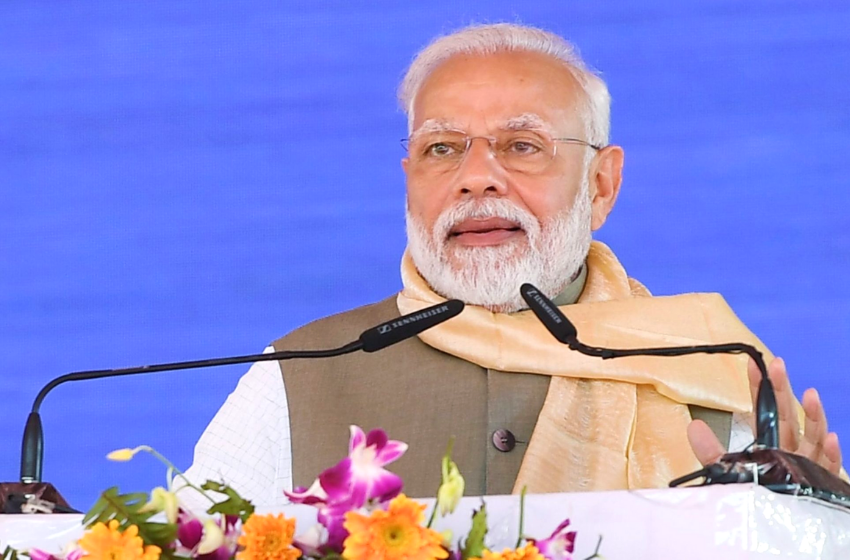
Narendra Damodardas Modi is an Indian politician. Since 2014, And Modi is the current Prime Minister of India. From 2001 to 2014, Narendra Modi was the Chief Minister of Gujarat and is the Member of Parliament for Varanasi. Modi is a member of the BJP (Bharatiya Janata Party) and the RSS (Rashtriya Swayamsevak Sangh), a Hindu nationalist volunteer organization. He is the first prime minister chosen outside of the Indian National Congress to win two following terms with a full majority. And the second to finish more than five years in office after Atal Bihari Vajpayee.

Narendra Damodardas Modi was raised to a Gujarati family in Vadnagar. Modi assisted his father sell tea as a child and has said he later ran his own stall. He was joined the RSS at the age of eight, beginning a long connection with the organization. Narendra Modi left home after completing high-school in part because of child marriage to Jashodaben Chimanlal Modi. Modi traveled around India for two years and visited many religious centers before returning to Gujarat. In the year 1971, Modi became a full-time worker for the RSS. The RSS elected him to the BJP in 1985. Modi took several positions in the party till 2001, extending to the rank of general secretary.

Narendra Modi was elected as Chief Minister of Gujarat in 2001. Modi was elected to the legislative assembly soon. His administration has been estimated complicit in the 2002 Gujarat protests, or otherwise examined for its handling of it. A Supreme Court-appointed Special Investigation Team got no evidence to begin prosecution proceedings against Modi personally. His policies as chief minister, credited with promoting economic growth, have got praise. His administration has been reprimanded for failing to significantly improve health, poverty, and education indices in the state.

Modi led the BJP in the 2014 general election that delivered the party a majority in the Indian lower house of parliament, the Lok Sabha, the first time for any single party since 1984. Modi’s administration has decided to raise foreign direct investment in the Indian economy and diminished spending on healthcare and social welfare programs. Modi has tried to improve performance in the administration. He has centralized power by eliminating the Planning Commission. He commenced a high-profile sanitation campaign, launched a controversial demonetization of high-denomination banknotes, and weakened or abolished environmental and labor laws.

Following his party’s victory in the 2019 general election, his administration denied the special status of Jammu and Kashmir. Modi’s administration also began the Citizenship Amendment Act, which resulted in public protests across the country.

Narendra Modi – Personal Details

Name

Narendra Damodardas Modi

Birth Place

Vadnagar, Gujarat

Date of Birth

17th September 1950

Father's Name

Damodardas Mulchand Modi

Mother's Name

Hiraba "Heeraben" Damodardas Modi

Spouse Name

Jashodaben Chimanlal Modi (Seperated)

Siblings
Amrut Modi, Soma Modi, Pankaj Modi, Prahlad Modi, Vasantiben Hasmukhlal Modi
Education
B.A Delhi University (1978) and M.A Gujarat University (1983)

Religion

Hindu

Profession

Politician

Politicial Party

Bharatiya Janta Party (BJP)

Favourite Leaders

Mohandas Karamchand Gandhi, Swami Vivekananda

Narendra Modi – Timeline

Dates

Events

On 3rd October 1972

He joins the Hindu nationalist organization Rashtriya Swayamsevak Sangh.

In June 1975

Prime Minister Indira Gandhi requires a period of emergency as she faces a political crisis. Civil liberties are restricted, media is controlled, and protesters are arrested. Modi becomes included in the movement to restore those rights.

In 1987

Joins mainstream politics and associates the Bharatiya Janata Party (BJP) as organization secretary of the Gujarat unit in western India.

On 3 October 1995

He becomes the national secretary of the BJP.

January 5, 1998

He becomes the national general secretary of BJP.

October 2001

Prime Minister Atal Bihari Vajpayee entitles him chief minister of Gujarat.

In 2005

The United States refuses to issue a diplomatic visa to Modi for his suspected role in the 2002 protests.

June 2013

Modi is chosen as the BJP party leader and campaign for the 2014 general elections.

On May 20, 2014

The BJP wins the general election, and Narendra Modi is designated as prime minister.

May 26, 2014

Takes the pledge of office as prime minister.

In September 2014

Modi makes his first visit to the United States as prime minister and meets with President Barack Obama.

On December 8, 2014

Modi gains a Time magazine reader's poll person of the year.

In January 2015

Obama becomes the first sitting US president to visit India twice. The three-day visit of Obama and Modi contract a civil nuclear agreement, a ten-year defense cooperation deal between the two countries.

On December 25, 2015
Modi visits Pakistan and meets with Prime Minister Nawaz Sharif. It is the first time an Indian prime minister has visited Pakistan in 12 years.
On June 8, 2016
Addressing a joint session of the US CongressModi speaks about the continuing growth of US India relations.
On June 26, 2017
Meets with US President Donald Trump for the first time at the White House.
On July 4, 2017
Modi becomes the first Indian Prime Minister to visit Israel. Arriving in Tel Aviv as part of a 3-day visit to mark 25 years of diplomatic relations between India and Israel.
August 15, 2018
In his Independence Day speech to the nation, Modi states India will begin its first manned mission to space by 2022.
On May 23, 2019
The BJP wins 303 seats in the general election.
On May 30, 2019
He declared in for a second term as India's Prime Minister.
On August 5, 2019
Tensions between India and Pakistan rise after Modi states that India will revoke a constitutional provision giving the state of Jammu and Kashmir autonomy to set its own laws. In the wake of the announcement, public communications blackouts are reported in the Muslim-majority region.
December 11, 2019
Parliament delivers a controversial bill that will fast-track citizenship for religious minorities including, Jains, Parsis, Christians, Sikhs, Buddhists, and Hindus from Afghanistan, Bangladesh, and Pakistan. Opposition parties say the bill is illegal as it bases citizenship on a person's religion and would further marginalize India's Muslim community.
On December 19, 2019
Deadly protests were erupted in around 15 cities against the citizenship law, despite bans on public gatherings in several areas.

On December 22, 2019

Modi gives a speech railing against the protests.

Narendra Modi – Life and Political Career Early

Narendra Modi was raised in a small town in northern Gujarat. And Modi finished an M.A. in political science from Gujarat University in Ahmedabad. Modi linked with the pro-Hindu Rashtriya Swayamsevak Sangh (RSS) organization in the early 1970s. There he established a unit of the RSS’s students’ wing, the Akhil Bharatiya Vidyarthi Parishad, in his area. Modi grew firmly in the RSS hierarchy. And his association with the organization significantly served his subsequent political career.

Narendra Modi associated with the BJP in 1987, and a year later he was assigned as the general secretary of the Gujarat branch of the party. He was instrumental in very strengthening the party’s presence in the state in succeeding years. In 1990, Modi was one of the BJP members who joined an alliance government in the state. And Modi served the BJP to gain success in 1995, state legislative assembly elections that in March gave the party to form the first-ever BJP-controlled government in India. Though at the end of September 1996, the BJP’s control of the state govt. was relatively short-lived.

Political Rise and Term as Chief Minister of Gujarat

In 1995, Narendra Modi has appointed as the secretary of the BJP’s national organization in New Delhi. And after three years he was appointed its general secretary. Modi continued in that office for another three years. However, in October 2001, Narendra Modi replaced the necessary Gujarat chief minister, fellow BJP member Keshubhai Patel. And later Patel had been held responsible for the state government’s poor response as a result of the massive Bhuj Earthquake in Gujarat earlier that year that killed more than 20,000 people. Modi began his first-ever electoral contest in a February 2002 by-election that won him a seat in the Gujarat state assembly.

Narendra Modi got political success again in Gujarat. Which made him a vital leader within the BJP and led to his reintegration into the political mainstream. Beneath his leadership, the BJP achieved a significant victory in the December 2002 legislative assembly elections, winning 127 of the 182 seats in the chamber (including a seat for Modi). Throwing a declaration for growth and development in Gujarat, the BJP was again victorious in the 2007 state assembly elections, with a seat total of 117, and the party controlled again in the 2012 polls, garnering 115 seats. He won his contests again and returned as chief minister.

Throughout his time as head of the Gujarat government, Modi built an impressive reputation as an effective administrator, and he was given credit for the rapid growth of the state’s economy.

Also, his party’s elective accomplishments helped Modi’s position as not only the most-influential leader within the party but also a potential competitor for the prime minister of India. In June 2013, Narendra Modi was chosen as the leader of the BJP for the 2014 elections to the Lok Sabha.

Premiership

Modi was declared as Prime Minister on May 26, 2014. Shortly, he took office, his government began several reforms, including campaigns to improve India’s transportation infrastructure and to liberalize rules on direct foreign investment in the country. Modi secured two significant diplomatic achievements early in his term. In mid-September, a visit of Xi Jinping President of China, the first time a Chinese leader had been to India in 8 years, hosted by Modi. At the end of that month, having been given a U.S. visa. Modi did a visit to New York City, which included a meeting with U.S. Pres. Barack Obama.

As prime minister, Modi managed the promotion of Hindu culture and the implementation of economic changes. The government offered proposals that would broadly appeal to Hindus, such as its attempt to ban the sale of cows for slaughter. The economic changes were sweeping, proposing structural changes—and temporary disruptions—that could be felt nationwide. With the most far-reaching was the demonetization and replacement of 500 and 1,000 rupee banknotes with only a few hours’ notifications. The idea was to stop “black money” cash used for illegal activities by making it difficult to exchange large sums of cash. The following year the govt. Centralized the consumption tax system by launching the Goods and Services Tax (GST), which superseded a confusing system of local consumption taxes and eliminated the problem of cascading tax. GDP growth decreased from these changes, though growth had already been high (8.2 percent in 2015), and the reforms succeeded in expanding the government’s tax base.

The BJP lost in all five states, including the BJP strongholds of Rajasthan, Madhya Pradesh, and Chattisgarh. The competitive Indian National Congress (Congress Party) won more state assembly seats than the BJP in all five elections. Many observers believed that this predicted bad news for Modi and the BJP in the national elections set for the spring of 2019, but others believed that Modi’s charisma would excite the voters. Furthermore, a security crisis in Jammu and Kashmir in February 2019, which increased tensions with Pakistan to the highest point in decades, boosted Modi’s image just months before the election. With the BJP ruling the airwaves throughout the campaign – in contradiction to the lackluster campaign of Congress – The BJP was returned to power, and Modi became India’s first prime minister outside of the Congress Party to be again after a full term.

Breaking Some Myths

Traditionally labeled as a party of Hindu upper-caste the BJP now has recognition among the young voters of different castes. From the last election, a 14 percent rise has been seen among the lower OBCs in support of BJP by the youth for Modi. Although, a skew is still apparent as young voters amongst upper OBCs and Dalits have not backed the party in such large numbers. Thus, the BJP could not find approval between young voters from non-Hindu communities. So its address among the youth remains limited to Hindu youth in particular. Another myth that burst in this election was that the BJP is an urban party. As in this election, the vote share of BJP was higher among the young voters of town and rural areas.

For first-time voters, Prime Minister Narendra Modi was a pull factor. As for these voters, the Prime Ministerial candidate was an important factor more than the party or local candidates. While voting one-third of young BJP voters saw the prime ministerial candidate as the most important factor. This was approximately double the national norm. This can also be insisted by the fact that the same proportion (33%) of young BJP voters affirmed that they would have voted for some other party had Mr. Modi not been the prime ministerial candidate. Mr. Modi’s popularity among the youth in the States like Haryana, Rajasthan, Uttarakhand, Maharashtra, Madhya Pradesh, and Karnataka, was higher than the state average. Interestingly, in two southern states Telangana and Andhra Pradesh which have strong State-based parties, The Balakot airstrikes also gave a push to the BJP’s campaign. This can be learned by the fact that young voters who viewed joblessness as an issue voted for the BJP after hearing about the airstrikes. It can also be seen in the last 2019 election that the youth was clearly with Mr. Modi.

The Ideal Model

Not so long ago, the words that were used to describe Modi were strict, megalomaniac, and collective. But now the scenario has changed.

Preferably, because of Modi’s image as self-made, strong, efficient, inspiring, and incorruptible. According to Ramdhar Singh who is a Social Scientist at IIM-Bangalore says that “Modi created an impression of being a sincere, credible and committed leader. He assured people that he could improve their lot”. This is the leitmotif the marketing magazine of the BJP worked to expand.

The veteran adman Kakkar adds further that “No media can help create that kind of consistency”.

Automatically, as if by source, the Congress-led United Progressive Alliance started to look more and more doubtful and corrupt. “Today, India blames weakness and failure to Congress,” says Adam and lobbyist Suhel Seth. “Modi stands for good governance.”

All stories about the life of Modi have consistently fed into the new image in the public domain. Although questions linger about Modi’s capability to function at the national level and his Gujarat model of governance, his branding and marketing policy appears to have worked on voters across the country. Modi’s message has drawn even those aloof towards politics.

Work Front

  • Born in one of India’s most disadvantaged social groups. Mr. Modi represents an aspirational working-class and identifies himself with the country’s poorest citizens in a way that no one can who has led India for most of 72 years since independence.
  • By socially progressive policies, he has led many Indians, both Hindus, and religious minorities, out of poverty at a faster rate than in any earlier generation.
  • Modi vowed to change the country’s sanitation in his campaigns and he has more than fulfilled; from fewer than 40% of households holding access to a toilet, now almost 95% have access to it. Now, most Indian villages have access to electricity when less than 40% did when he took office.
  • India has now become the fifth-largest and fastest-growing economy in the world from the decisions taken by Modi. As by sustaining the changeable economy that he inherited from the Congress government in 2014.
  • His embrace of technology has driven transformative programs in universal healthcare, affordable housing, financial embodiment, and climate alleviation. Intuitively he has understood how much-admired tech skills of Indians can be used to transform our society which no other predecessor has thought of.
  • In November 2016 his drastic decision to wipe out high-value notes overnight (termed as Demonetization) has led to a long-term gain. Due to which the tax base in India has almost doubled but with a lower tax burden on individual citizens.
  • Because of exceeding tax revenue more funding for welfare programs has brought sanitation and electricity to so many. Meanwhile, an unusual 200 million-plus new bank accounts opened due to the move away from cash. Bringing India’s so-called “unbankable” nearer to full assimilation within India’s formal economy.
  • Eliminating corrupt representatives and allowing direct deposits of state benefits, social security, and pension payments into the hands of the poor. Through digitization has empowered the poors. He has also ensured the bringing the whole of India into one tax union, through the implementation of the Goods and Services Tax, and thereby making India, a truly single market.
  • His reformations have helped in bringing inflation under control, from a record high of more than 12% at the tail end of the previous government, to below 3% in April 2019; and has reduced the deficit down to 3.42%, when a decade ago it was wavering 6.46%.

10 Amazing Facts about Narendra Modi

  1. During the 1965 Indo-Pak War Narendra Modi as a teenager assisted and helped soldiers. By rushing with hot glasses of masala tea and thanking them when the train would arrive at the station.
  2. In his teenage years, he became a solo traveler. By visiting several places on his own and including meeting ancient sadhus on the Himalayas.
  3. Modi has accumulated millions of people around the world that look up to him.
  4. The Prime Minister of Japan Shinzo Abe tweeted for the first time in English. Congratulating Modi and asking for better friendship than discretion.
  5. Modi used to write poetry and enjoyed photography in his early 20’s. To showcase his photography skills he also held an exhibition.
  6. During his school days, he also participated in several plays.
  7. He was very brave in his school days as once he brought home a baby crocodile.
  8. Narendra Modi is amongst the four people who are followed by the Japanese Prime Minister Shinzo Abe on Twitter.
  9. In the United States Narendra Modi also undertook a three months course. Where he studied image management and public relations.
  10. He didn’t take any leave throughout his service as a Chief Minister of Gujarat. A similar Philosophy he propagates to all his subordinates till date.

Conclusion

No Prime minister has united the Indian Electorate as much to close of five decades like Modi. He may have been criticised for enduring silence during incidents of social unrest. But his work has been given the thumbs up at the ballot box by the Indian voters for directly speaking to the root causes of some of India’s divisions. For them, the Modi dream of a New India remains very much sound. Economically, he must carry on his commitment to building the world’s largest start-up eco-system, thereby further unleashing India’s fabled entrepreneurial gene.

All the actions of Narendra Modi’s government are still works-in-progress. But with efforts appreciated by practically every single global institute of any standing, including the World Bank, the IMF, and the U.N., Modi’s India is finally progressing at a rate worthy of its size and potential.

UNESCO – World heritage Sites in India

UNESCO World heritage Sites in India

UNESCO (United Nations Educational, Scientific, and Cultural Organization) endeavors to create peace into international assistance in Education, the Sciences, and Culture. UNESCO’s programs provide the fulfillment of the Sustainable Development Goals marked in Agenda 2030, ratified by the UN General Assembly in 2015.

Administrative and economic organizations of states are not quite to secure the constant and sincere support of the masses. Peace must be established against dialogue and common understanding. Peace must be made against the intellectual and ethical solidarity of humankind.

UNESCO produces institutional tools to assist people to live as global residents free of hatred and bigotry. UNESCO works so that every child and citizen should have access to quality education.

By supporting the cultural system and the corresponding dignity of all cultures, UNESCO encourages bonds between nations.

UNESCO promotes scientific programs and procedures as platforms for improvement and cooperation. UNESCO attains up for freedom of expression, as a fundamental right and an essential condition for equality and development. Serving as a workroom of thoughts, UNESCO supports countries use international standards and maintains programs that promote the open stream of ideas and education distribution.

Key Facts

  • UNESCO conserves 1073 world heritage places in 167 countries.
  • UNESCO coordinates tsunami advanced alarm systems all over the earth.
  • UNESCO protects global attempts to reach quality education for all.
  • UNESCO began the repair of the mausoleums in Timbuktu.
  • UNESCO started the sesame world-class analysis laboratory in the middle east.
  • UNESCO reaches up for the freedom of interpretation and condemns the slaying of journalists.
  • 193 member countries, 11 associate members, 11000 associated schools.
  • 177 nation parties to the impalpable heritage convention.

UNESCO History

As old as 1942, in wartime, the rules of the European nations, which implied facing Nazi Germany and its collaborators, assembled in the United Kingdom for the CAME (Conference of Allied Ministers of Education).

Against the proposal of CAME, a United Nations Conference for the corporation of an educational and cultural foundation was secured in London. In their centers, the new system must ascertain this to prevent the eruption of another world war.

The countries that have signed the World Heritage Convention and are willing to protect their natural and cultural heritages are eligible to submit their proposals for nomination of their properties under the UNESCO World Heritage List.

Nomination Process

Tentative list

The nation willing to submit its proposal must create a Table containing the information of its natural and artistic heritage sites. This ‘table’ is identified as the TL and proffers a forecast of the attributes that a State Party may choose to submit for inscription in the next five to ten years and which may be refreshed at any time.

The Nomination File

By making a Tentative List and picking sites from it, a State Party can plan when to perform a nomination file. The World Heritage store allows direction and helps the State Party in serving this file, which wants to work as exhaustively as feasible, producing sure the basic documentation and maps are incorporated. The nomination is offered to the World Heritage Centre for study and to tell it is complete. Already a nomination file is finished the World Heritage Centre sends it to the proper Deliberative Bodies for evaluation.

The Advisory Bodies

A proposed property is separately evaluated by two Deliberative Bodies mandated by the World Heritage Convention ICOMOS and the International Union for Conservation of Nature (IUCN), which sequentially give the Committee with evaluations of the artistic and essential sites nominated. The third Deliberative Body is the ICCROM, an intergovernmental group that provides the Committee with expert guidance on the preservation of cultural positions, as well as on practice exercises.

The World Heritage Committee

Once a site becomes nominated and assessed, it is timely for the inter-governmental Committee to obtain the final judgment on its writing. Once a year, the Committee meets to select which sites will be recorded on the List. It can also delay its determination and request further knowledge on sites of the Events Parties.

The Criteria For Selection

To be carried on the List, sites must be of excellent common value and appear at the smallest one out of ten selection criteria. These criteria are described in the Operational Guidelines for the Implementation of the Convention which, besides the text of the Convention, is the main performance tool on World Heritage. The rules are constantly examined by the Committee to reflect the growth of the World Heritage concept itself.

Until the end of 2004, sites remained chosen on the basis of six cultural and four simple criteria.

Cultural Sites in India

1. Ajanta Caves

Ajanta caves were in two phases, the first phase was to build Ashoka Emperor and the second phase in Gupta’s period. These caves were built in the 2nd century BCE and after that, the second phase was built around 400–650 CE. These caves are located in Maharashtra. The caves contain Fresco paintings, Sigiriya paintings, and Sculptures in Sri Lanka. The 31 rock-cut cave monuments represent Buddhism religion.

2. Ellora Caves

It was also built in two phases, the first phase was built by Krishna 1 who was the uncle of Dantidurga and the second phase was built in the Rashtrakuta period. It was built from 600-1000 AD. It is situated in Maharashtra. Ellora caves depict Buddhism, Hinduism, and Jainism that is why it is known as the Ellora complex. There are 34 monasteries and temples

3. Agra Fort

It was built by Mughal emperor Akbar and further by his grandson Shah Jahan in the 16th century. It is situated in Agra. It is a Fortress of red sandstone. It contains the Jahangir Palace and the Khas Mahal, constructed by Shah Jahan.

4. Taj Mahal

One of the seven wonders of the world, the Taj Mahal is the most beautiful monument in India. It is situated in Agra, Built by Emperor Shahjahan in the memory of his wife. It was built from 1631 to 1648. It was declared as UNESCO world heritage in 1983. The monument is made up of white marble and is a mausoleum. It is situated on the banks of the river Yamuna and covers almost 17 hectares of land.

5. Sun Temple

It was built by King Narasimhadeva I in the 13th century and is situated in Konark. It is also known as “Black Pagoda”. This temple is visited by the Hindu devotees who believe in God Surya. It was declared as UNESCO in 1984.

6. Kaziranga National Park

It was established by the Government of India as a forest reserve in 1908. It is situated in the district of Assam. It was declared as a national park in 1974 and was put under the UNESCO list in 1985.

7. Sundarbans National Park

In 1984, the Sundarban tiger reserve was declared as a national park by the Government of India. It is situated in the Sundarbans basin in west Bengal. It got its space under the UNESCO world heritage sites in 1987. This region where this park is located has a thick forest cover of mangrove forest.

8. Nanda Devi and Valley of Flowers National Park

It was declared as a reserve park by Eric Shipton and H. W. Tilman in 1939. It is situated in Uttarakhand and has a rich variety of both flora and fauna. It has a total landmass of 87.5 Km. It got its space under the UNESCO world’s heritage list in 1988.

9. Archaeological Site of Nalanda Mahavihara at Nalanda, BIHAR

Remains of a religious and academic custom beginning from the 3rd century BCE to the 13th hundred CE. Admits stupas, memorials, viharas (residential and educational buildings), and relevant artworks in stucco, stone, and metal are found here. Studied to be the various old universities of the Indian Subcontinent. It got space in the UNESCO world heritage site’s list in 2016.

10. Buddhist Monuments at Sanchi

It was built under the Mauryan empire in the 2nd and 1st centuries BC to the 12th century AD. It is the most beloved Buddhist shrine and a major Buddhist center in India. Consists of consistent pillars, palaces, temples, and cloisters all in different categories of conservation most of which date back to the 2nd and 1st hundreds B.C. it was discovered by archaeologists in 1818. It is situated in Madhya Pradesh and got listed under the UNESCO world heritage sites in 1989.

11. Champaner-Pavagadh Archaeological Park

This Park consists of the old (chalcolithic) places, a hill citadel of the early Hindu capital, and remains of the 16th-century Gujarat. Also covers, amongst other remains, villas, palaces, religious buildings, suburban precincts, rustic structures, and water investments, from the 8th to 14th centuries. The Kalika Mata Temple on top of Pavagadh Hill is estimated to be an extraordinary shrine, bringing large quantities of travelers during the year.

12. Chhatrapati Shivaji Terminus (formerly Victoria Terminus)

Illustration of Victorian Medieval Revival structure in India blended with themes deriving from Indian traditional construction. It was opened in the year 1887. It is situated in Mumbai and got listed under the UNESCO world heritage sites in 2004.

13. Churches and Convents of Goa

It was built by the Portuguese colonial rulers between the 16th to 18th centuries in Goa. The churches and retreats of Goa, individually the Basilica of Bom Jesus indicate the origin of evangelization in Asia. Jesus also houses the divine tomb of St. Francis Xavier. It was put under the UNESCO list in 1986.

14. Elephanta Caves

Placed at Elephanta island or bar of Gharapuri in the Sea of Oman, near to Mumbai was excavated between near about 8 th century by rashtrakuta kings. Includes a collection of rock art compared to the Shaivite band. It was listed under the UNESCO world heritage sites in 1987.

15. Fatehpur Sikri

Created during the next half of the 16th century by Emperor Akbar, Fatehpur Sikri, or ‘The City of Victory,’ also worked as the capital of the Mughal empire for a quick time period. It comprises an arrangement of columns and temples, including one of the greatest mosques in India- the Jama Masjid.

16. Great Living Chola Temples

Created by kings of the Chola empire, certain temples exhibit the exactness and completeness of the Cholas in architecture, carving, painting, and bronze casting. This section includes three 11th and 12th- century temples: Brihadisvara Temple at Thanjavur, Brihadisvara Temple near Gangaikondacholisvaram, and Airavatesvara Temple near Darasuram. It was listed under UNESCO world heritage sites in 1987.

17. Group of Monuments at Hampi

This section was the last initial of the kingdom of Vijaynagar. Those Dravidian temples and mansions were built by administrators of Vijaynagar within the 14th and 16th hundreds. In 1565, the city that remained captured by the Deccan Muslim Confederacy and destroyed for a period of 6 months, is being discarded. It was listed under the UNESCO world heritage sites in 1986.

18. Group of Monuments at Mahabalipuram

This order of monuments was established by Pallava kings in the 7th and 8th hundreds on the Coromandel shoreline of the Bay of Bengal. Certain temples triumph over difficult and individual architectural styles in the form of- rathas (temples in the design of chariots), mandapas (cave sanctums), and giant open-air releases such as – ‘Descent of the Ganges.’

19. Group of Monuments at Pattadakal

It was built under the Chalukyas Dynasty between the 6th to 8th centuries at Aihole, Badami, and Pattadak. Pattadakal in Karnataka showcases an unprecedented mixture of design forms from northern and austral India, completed under the Chalukya dynasty through the 7th and 8th hundreds. It comprises nine Hindu topes as well as a Jain sanctum including some Temple of Virupaksha, a gem built in C.740 by Queen Lokamahadevi to memorialize her husband’s supremacy. It was listed under the UNESCO world heritage sites in 1987.

20. Hill Forts of Rajasthan

This site contains six majestic forts situated in Chittorgarh, Kumbhalgarh, Sawai Madhopur, Jaisalmer, Jaipur, and Jhalawar, by the Rajputs all located in the Aravali mountain range of Rajasthan. It got space in the UNESCO world heritage site’s list in 2013.

21. Rani ki VAV

Also known as the queen’s stepwell was built in the 11th century by the widow of a kind in his memory. It shows the great work of architecture. It is 64 m (210 ft) long, 20 m (66 ft) wide and 27 m (89 ft) deep and there are more than 500 sculptures of god. It got space in the UNESCO world heritage site’s list in 2014.

22. Historic City of Ahmedabad

Founded by Sultan Ahmed Shah 1 in the 15 th century on the eastern shore of the Sabarmati river. It was additionally labored as the metropolis of the state of Gujarat for ages. The urban fabric consists of densely-packed established organizations (pols) in gated traditional streets (puras). It got space in the UNESCO world heritage site’s list in 2017.

23. Humayun’s Tomb, Delhi

Built-in 1570 by Bega Begum (Humayun’s eldest widow) and situated in Delhi..it has long- standing aesthetic importance because it survived the initial garden-tomb to be assembled in India. Here, the tomb was influenced following several developmental variations including the Taj Mahal. The architecture of this tomb was made by Mirza Ghiyath. It got listed under the UNESCO world heritage list in 1993.

24. Khajuraho Group of Monuments

It was built under the Chandela dynasty between 950 AD to 1050 AD. It is situated in Madhya Pradesh. Only 20 temples remain, referring to two separate denominations namely-Hinduism and Jainism, including the famed Temple of Kandariya, finished with intricately and elegantly chiseled statues. It was included under UNESCO world heritage sites in 1982.

25. Mahabodhi Temple Complex at Bodh Gaya

This temple stood first built by Emperor Asoka in the 3rd century B.C. Nevertheless, the existing house dates following the 5th or 6th hundreds. It is situated in Bodh Gaya. This temple means a lot to the Buddhist people. Buddhist believe that Siddhartha Gautama Buddha got great knowledge in this temple. It got space under the UNESCO world heritage sites in 2002.

26. Mountain Railways of India

Darjeeling Himalayan Railway- The credit goes to Ashley Aden for bringing up the toy train rail network. It was built between 1879 and 1881. The total distance the toy train covers is 88 km. It got space under the UNESCO world heritage sites in 1999.

Nilgiri Mountain Railway- A meter gauge railway in Tamil Nadu was built by the British in 1908. It is operated by the southern railway between Coonoor and Udhagamandalam. It got space under the UNESCO world heritage sites in 2005.

Kalka Shimla Railway- A narrow-gauge train in north India and runs between Kalka to Shimla was built by the Britishers between 1898 and 1903 under the direction of Herbert Septimus Harington. It got space under the UNESCO world heritage sites in 2008.

27. Qutub Minar and its Monuments, Delhi

Qutub Minar abode was built in red sandstone in the old 13th centenary, in Delhi by Qutab-ud-din Aibak situated in Delhi. The pillar is enclosed by several aesthetically-pleasing wealth, for case the Alai built-in 1311 as well as two mosques including the Quwwatu’l-Islam, the most luxurious mosque in northerly India. It got space in the UNESCO world heritage sites list in 1993.

28. Red Fort Complex

Mughal Emperor Shah Jahan built this red fort complex in the 17th century as a part of his city Shahjahanabad. The Red Fort or Lal Quila is situated in Delhi. The architecture shows up the Persian, Taimuri, and Indian style architecture. It is made up of red stone. It got space in the UNESCO world heritage site’s list in 2007.

29. Rock Shelters of Bhimbetka

These screens are located inside the foothills of the Vindhya Range, in Madhya Pradesh. Discovered in the form of five clusters of natural rock shelters exhibiting paintings in 1957, with 21 villages surrounding it. It got space in the UNESCO world heritage site’s list in 2003.

30. The Architectural Work of Le Corbusier

This transnational serial property includes 17 sites spread across 7 countries stands as a testimony of a new form of architectural expression weaved with modern traditions which were architecture by Le Corbusier of the 20 th century in Chandigarh. It got space in the UNESCO world heritage site’s list in 2016.

31. The Jantar Mantar, Jaipur

It was built in the early 18th century by Maharaja Jai Singh 2 in Jaipur. The main idea behind its design is to observe astronomical positions with the normal eye. It got space in the UNESCO world heritage site’s list in 2010.

32. Victorian Gothic and Art Deco Ensembles of Mumbai

This site includes a collection of public buildings designed in Victorian Neo-Gothic style in the 19th century and Art Deco style in the 20th century. These buildings include Bombay High Court, Rajabai Clock Tower, Eros Cinema and Convocation Hall, University of Mumbai, University Library, Mumbai. It got space in the UNESCO world heritage site’s list in 2018.

33. Great Himalayan National Park-Conservation Area

This park is located in the western part of the Himalayan Mountains in Himachal Pradesh. It is well known for its high alpine peaks, alpine meadows, and riverine forests. It also encloses glacial and snow meltwater sources of several rivers as well as the catchment area. It consists of 25 types of forest and a huge variety of fauna. . It got space in the UNESCO world heritage site’s list in 2014.

34. Keoladeo National Park

It was established in the 20th century by the government of India. This wetland is located in the state of Rajasthan and served as a duck shooting reserve till the end of the 19th century.

However, soon enough the hunting ceased and the area was declared a national park in 1982. It covers almost 1,000 hectares of land. It was put under the UNESCO list in 1985.

35. Manas Wildlife Sanctuary

It was established by the Government of India in the 20th century. It is a biodiversity hotspot in Assam. It was declared as the tiger reserve in 1973. It was put under the UNESCO list in 1985.

36. Western Ghats

The Western Ghats consists of a chain of mountains running parallel to India’s Western Coast and passing from the states of Kerala, Maharashtra, Goa, Gujarat, Tamil Nadu, and Karnataka. Stretches along the area of 1600 km, interrupted by a 30 km Palghat gap. It got space in the UNESCO world heritage site’s list in 2012.

37. Khangchendzonga National Park

Located in Sikkim, this National Park is dominated by the world’s third-highest peak, Mount Khangchendzonga. The Park comprises steep-sided valleys, snow-clad mountains, and various lakes and glaciers including the 26km long Zemu glacier, located around the base of Mount Khangchendzonga. It got space in the UNESCO world heritage site’s list in 2016.

38. Jaipur

Founded in 1727 by Sawai Jai Singh 2, Jaipur is a part of the Rajasthan state of India. This state shows the combination of the ideas of both the ancient Hindus and the modern Mughals. It got space in the UNESCO world heritage site’s list in 2019.

Tentative UNESCO World Heritage Sites in India

38 sites from India have already been listed in the UNESCO world heritage sites and there are 43 sites in India which are submitted to UNESCO and are waiting for evaluation and acceptance. Here is the tentative list:

  1. Temples at Bishnupur, West Bengal (1998)
  2. Neora Valley National Park (2009)
  3. Santiniketan (2010)
  4. Mattancherry Palace, Ernakulam, Kerala (1998)
  5. Padmanabhapuram Palace (2014)
  6. Ancient Buddhist Site, Sarnath, Varanasi, Uttar Pradesh (1998)
  7. Sri Harimandir Sahib, Amritsar, Punjab (2004)
  8. River Island of Majuli in midstream of Brahmaputra River in Assam (2004)
  9. Moidams – the Mound-Burial system of the Ahom Dynasty (2014)
  10. Namdapha National Park (2006)
  11. Thembang Fortified Village (2014)
  12. Wild Ass Sanctuary, Little Rann of Kutch (2006)
  13. Wild Ass Sanctuary, Little Rann of Kutch (2006)
  14. Dholavira: A Harappan City (2014)
  15. Archaeological remains of a Harappan Port-Town, Lothal (2014)
  16. Desert National Park (2009)
  17. The Qutb Shahi Monuments of Hyderabad Golconda Fort, Qutb Shahi Tombs, Charminar (2010)
  18. Monuments and Forts of the Deccan Sultanate (2014)
  19. Qutb Shahi Monuments at Hyderabad
  20. The Glorious Kakatiya Temples and Gateways (2014)
  21. Remnants of Swayambhu temple and Keerthi Thoranas, Warangal fort
  22. Rudreswara Temple, Hanumakonda
  23. Rudreswara (Ramappa) Temple, Palampet
  24. Mughal Gardens in Kashmir (2010)
  25. Cold Desert Cultural Landscape of India (2015)
  26. The Leh-Kargil areas of Ladakh
  27. Delhi – A Heritage City (2012)
  28. Bahá’í House of Worship, New Delhi (2014)
  29. Monuments and Forts of the Deccan Sultanate (2014)
  30. Bahmani Monuments at Gulbarga
  31. Bahmani and Barid Shahi Monuments at Bidar
  32. Adil Shahi Monuments at Bijapur
  33. Monuments of Srirangapatna Island Town (2014)
  34. Sacred Ensembles of the Hoysala (2014)
  35. Cellular Jail, Andaman Islands (2014)
  36. Narcondam Island (2014)
  37. Group of Monuments at Mandu, Madhya Pradesh (1998)
  38. The historic ensemble of Orchha (2019)
  39. Sri Ranganathaswamy Temple, Srirangam (2014)
  40. Chilika Lake (2014)
  41. Ekamra Kshetra – The Temple City, Bhubaneswar (2014)
  42. Cold Desert Cultural Landscape of India (2015)
  43. Spiti Valley
  44. Garo Hills Conservation Area (GHCA) (2018)
  45. Keibul Lamjao Conservation Area (2016)

Number of UNESCO World Heritage Sites- State-wise List

S.No.

States

Exclusive Sites

Shared Sites

Total

1

Assam

2

-

2

2

Bihar

2

-

2

3

Chandigarh

1

-

1

4

Delhi

3

-

3

5

Goa

1

-

1

6

Gujarat

3

1

4

7

Himachal Pradesh

1

1

2

8

Karnataka

2

1

3

9

Kerala

0

1

1

10

Madhya Pradesh

3

-

3

11

Maharashtra

5

1

6

12

Odisha

1

-

1

13

Rajasthan

4

-

4

14

Tamil Nadu

2

2

4

15

Uttarakhand

1

-

1

16

Uttar Pradesh

3

-

3

17

West Bengal

1

1

2

18

Sikkim

1

-

1

Election System in India – Features and Process

Election System in India

India is a sovereign, socialist, secular, democratic republic. Democracy works like a golden thread in the economic, social, and political fabric woven by the Constitution provided by ‘We, the People of India’ to ourselves. The idea of democracy as reflected by the Constitution assumes the representation of the people in Parliament and State legislatures by the method of election. The Supreme Court has operated that democracy is one of the basic features of the Constitution of India and forms part of its basic structure. The Constitution of India used a parliamentary form of government. Parliament of India consists of the President of India and the two Houses — Rajya Sabha and Lok Sabha. India, holding a Union of states, has separate state legislatures for each state. State legislatures contain the Governor and two Houses i.e. Legislative Council and Legislative Assembly in seven states, i.e, Andhra Pradesh, Bihar, Maharashtra, Jammu & Kashmir, Karnataka, Telangana, and Uttar Pradesh, and of the Governor and the state Legislative Assembly in the spare 22 states. Apart from the above, two out of the seven Union Territories, specifically, the National Capital Territory of Delhi and Puducherry, also have their Legislative Assemblies.

Governance level in India

There are three levels of government in India- the central government, the state government, and the local bodies (Municipal corporations and panchayats). The powers are allocated among these three levels of the government to efficiently manage the administration of the country.

Central government- Central government is responsible for national environmental policy led to providing sustainable economic development and the health and safety of people by maintaining and enhancing the quality of the environment.

State Government- State governments in India are the governments controlling over 28 states and 8 union territories of India. The state government is responsible for internal security (through state police) and other state issues. There is a legislative Assembly in every state (Vidhan Sabha). It is unicameral.

Local Government- Local government deals with the range of vital services for people and businesses in defined areas. Among them are familiar functions such as schools, housing, social care, and planning, and waste collection, but also lesser-known ones such as licensing, registrar services, business support, and pest control

Description about all three government types

1. Legislative Branch

The federal legislative branch has a bicameral Parliament. It is divided into two houses:

  • The Council of States
  • The House of the People

The Council of States, recognized as the Rajya Sabha, has a constitutional limit of 250 members. The President may appoint 12 members for their expertise in science, art, social sciences, or literature. The remaining members are selected by the legislative bodies at the state and territory levels of government. The Council of States may work for multiple, yet non-consecutive, 6-year terms, and every two years, 33% of the members retire.

The House of the People, known as the Lok Sabha, is recognized as the lower house of Parliament and has a constitutional limit of 552 members. The President may elect two of these members from the Anglo-Indian community if it is determined that this population is not represented in this legislative body. Other reserved seats hold: 84 for representatives of the Scheduled Castes and 47 for representatives of the Scheduled Tribes, both are groups of historically disadvantaged indigenous populations. Representation in the House of the People is further defined by state and territory population size and general election results.

Although the legislative branch is liable for passing new laws and regulations, its work must be reviewed and approved by the judicial branch before it may become law. The legislative branch has some authority over the executive branch of government.

2. Executive Branch

The executive branch is liable for the daily management of government activities. This branch is made up of the Council of Ministers, who are elected by Parliament, the President of the country, and the Prime Minister.

The President leads the Council with guidance from the Prime Minister and appoints several seats, including state Governors, Attorney General, Chief Justice of the Supreme Court, Chief Election Commissioner, and the Cabinet Secretary. Legally, the President also serves as Commander-in-Chief over the military.

The Prime Minister works as the Chief of Government, leader of the political party with majority representation in Parliament, an advisor to the President, and the head of the Council of Ministers. This position also has the power to remove Ministers and propose new legislation to Parliament.

3. Judicial Branch

The judicial branch of government is related to that found in other European countries as it has retained many features from the British colonial era. This branch operates independently of the executive and legislative branches. It holds the Supreme Court of India, the High Courts at the state level, and the District and Sessions Courts at the local level. The leaders of the Supreme Court are elected by the President, these positions include the Chief Justice and 30 associate judges, who are suggested by the Chief Justice of India.

Election Process

The election process begins with the issue of notification for the Parliamentary Constituencies and Assembly Constituencies. As per legal requirements, a period of seven days is given for the filing of nominations after the notification is announced. The analysis of the nominations is carried out on the day following the last date for nominations. Thereafter, two days are given for the withdrawal of nominations and the final list of candidates is prepared after the withdrawal. The campaign period is normally 14 days or more, and the campaign comes to an end 48 hours before the close of the polls in the respective constituencies.

A. When do elections take place?

Elections for the Lok Sabha and every State Legislative Assembly have to conduct every five years unless called earlier. The President can run Lok Sabha and call a general election before five years are up, if the government can no longer control the confidence of the Lok Sabha, and if there is no alternative government ready to take over. General elections to the Lok Sabha took place in 1952, 1957, 1962, 1967, 1971, 1977, 1984, 1989, 1991, 1996, 1997, 1998, 1999, 2004, 2009 and 2014. Holding of regular elections can only be deferred using a constitutional amendment and in consultation with the Election Commission, and it is recognized that interruptions of regular elections are acceptable only in extraordinary circumstances. When the five-year limit is up, or the legislature has been terminated and new elections have been called, the Election Commission puts into impact the process for holding an election.

B. Political Parties and Elections

Political parties are an entrenched part of modern democracy, and the conduct of elections in India is largely reliant on the performance of political parties. Although many candidates for Indian elections are independent, the winning candidates for Lok Sabha and Vidhan Sabha elections usually stand as members of political parties, and estimation polls imply that people tend to vote for a party rather than an individual candidate. Organizational assistance is offered to candidates by Parties. By giving a wider election campaign, looking at the record of government and putting forward alternative proposals for government, help voters choose how the government is run.

C. Nomination of Candidates

Candidates are given a week to put ahead of their nominations. These are examined by the Returning Officers and if not found to be in order can be expelled after a brief hearing. Validly nominated candidates can withdraw in two days after nominations have been examined.

Duration

In every five years- Election Commission of India organizes selection to form a new government in a nation (Central, State and Local).

Campaign

During elections, all recognized National and State parties have been given free access to the state-owned electronic media like AIR and Doordarshan for their campaigns by Election Commission. The total free time allotted stretches over 122 hours on the state-owned television and radio channels. This is allocated equitably by connecting a base limit and added time linked to poll performance of the party at the last general election to the House concerned.

The campaign is the period when the political parties and candidates put forward their thoughts with which they desire to convince people to vote for them.

The official campaign lasts for above two weeks from the illustration up of the list of nominated candidates and officially ends 48 hours before polling closes. Once an election has been called, parties issue declarations detailing the programs they wish to perform if elected to government, the powers of their leaders, and the failures of disputing parties and their leaders.

Slogans are used to generalize and identify parties and issues, and brochures and flyers circulated to the voters. Rallies and meetings where the candidates try to convince, influence and enthuse followers, and denigrate opponents, are held throughout the constituencies.

Personal appeals and promises of reformation are made, with candidates travelling the length and breadth of the constituency to try to influence as many inherent supporters as possible.

Voting System

Voting is done secretly. Usually, public institutions like schools and community halls are set up as polling stations. The Election Commission makes all endeavors to assure that a voter need not travel more than 2 km to reach the polling station. On the day of the election, each polling station is open for at least 8 hours. On entering the polling station, the elector is checked against the Electoral Roll and the ID proof is verified, and on the left forefinger lasting ink is applied after that a voter slip is issued to the voter to cast his or her vote by activating the ballot button in the control unit by the supervising officer.

A. Who can vote?

The democratic system in India is dependent upon the principle of the universal adult vote that any citizen over the age of 18 can vote in an election (before 1989 the age limit was 21). The right to vote is irrespective of religion, caste, creed, or gender. Those who are deemed unsound of mind and people convicted of certain criminal offenses are not allowed to vote. There has been a general increase in the number of people voting in the Indian election. In 1996, 57.4% of the electorate voted. This grew to 66 % in the General Election held in 2014. Women voted in good numbers and nearly in equal proportion as men.

B. Counting of votes

After the polling has completed, the votes cast in the EVM are counted under the surveillance of Returning Officers and Observers appointed by the Election Commission. After the counting of votes is over, the Returning Officer announces the name of the candidate to whom the largest number of votes have been given as the winner, and as having been rendered by the constituency to the concerned house.

Code of Conduct

Throughout the election campaign the political parties and contesting candidates are presumed to endure by a Code of Conduct developed by the Election Commission based on a consent among political parties. The Model Code lays down comprehensive guidelines as to how the political parties and candidates should manage themselves during the election campaign. It is expected to maintain the election campaign on fine lines, avoid arguments and conflicts between political parties or their supporters and to assure peace and order during the campaign period and following, until the results are declared. The Model Code also orders guidelines for the ruling party either at the Centre or in the State to assure that a level field is secured and that no cause is given for any objection that the ruling party has used its official status for its election campaign.

Result

Under the guidance of election officers, the counting of votes is held and the name of the candidate is revealed, who gains the highest number of votes, and is named as the winner. A certificate of winning is distributed to the winning candidate from the election commission.

Lal Bahadur Shastri – A Man of Great Integrity and Competence

Lal Bahadur Shastri

Lal Bahadur Shastri was the Indian freedom fighter who later on went on to become the second Prime Minister of Independent India after Jawaharlal Nehru and is recognized as a man of integrity and competence. Lal Bahadur Shastri devoted more than 30 years to the country. Shastri was a man of great inner strength, gentle and tolerant. He knew people’s language and was a man of vision towards the country’s development.

The early life of Lal Bahadur Shastri

  • On 2nd October 1904, Shastri was born at Mughalsarai in Varanasi, Uttar Pradesh. 
  • Sharada Prasad Srivastava and Ramdulari Devi, paternal ancestors of Shastri’s had been in service of the zamindar of Ramnagar, Varanasi, and Shastri spent the first year of his life living there.
  • When he was a year and a half, his father died of bubonic plague.
  • To attend school, Shastri used to swim through the Ganges twice a day and tied books on the top of his head because he didn’t have sufficient money to travel by boat.
  • In 1926, Shastri did his schooling at the East Central Railway Inter College in Mughalsarai and Varanasi. And then completed his graduation from the Kashi Vidyapeeth.
  • The title “Shastri” meaning “Scholar” was given by Vidyapeeth as a part of his bachelor’s degree award. Though this title became his name.
  • Shastri’s family had no links to the independence movement which was emerging then.
  • Nisha Kameshwar Prasad Mishra, one of his high school teachers gave Shastri financial support by allowing him to tutor his children. Inspired by Mishra’s loyalty, Shastri took a deep interest in the freedom struggle and started to study its history and the works of several of its famous personalities, like Swami Vivekananda, Gandhi, and Annie Besant.
  • In January 1921, When Lal Bahadur Shastri was in the 10th standard. Shastri attended a public meeting in Benares hosted by Gandhi and Pandit Madan Mohan Malviya three months before his final examinations.
  • Shastri was inspired by the Mahatma’s request for students to withdraw from government schools and join the non-cooperation movement. Shastri left Harish Chandra High School and joined the local branch of the Congress Party as a volunteer. And then joined in picketing and anti-government protests.
  • Shastri was soon arrested and jailed but was then let off since he was a minor.
  • During the 1920s, he joined the Indian Independence Movement and was involved in the non-cooperation movement. Shastri was sent to jail for some time by the Britishers.
  • Shastri joined the Salt Satyagraha in the year 1930, for which he was jailed for more than two years.
  • He joined as the Organising Secretary of the Parliamentary Board of UP, in 1937. Shastri was again sent to prison in 1942 after Mahatma Gandhi issued the Quit India speech in Mumbai.
  • He was jailed until 1946.
  • Shastri had spent nine years in jail. He utilized his stay in jail by reading books and familiarized himself with the works of western philosophers, revolutionaries, and social reformers.
  • On 16th May 1928, Shastri got married to Lalita Devi. The Servants of the People Society (Lok Sevak Mandal), which was established by Lala Lajpat Rai, Shastri became a life member of this society. There Shastri began to serve for the upliftment of backward classes, and then he became the President of that Society.

Political Career of Lal Bahadur Shastri

  • Lal Bahadur Shastri became the Parliamentary Secretary in Uttar Pradesh (U.P.).
  • Shastri also became the Minister of Police and Transport in 1947. As a Transport Minister, he had designated women, conductors, for the first time. Being the minister in charge of the Police Department, he passed the order that police should use jets of water and not lathis to scatter the agitated crowds.
  • In 1952, Shastri was elected to Rajya Sabha from U.P. being the Railway Minister. And he introduced the first machine at Integral Coach Factory in Chennai, in 1955.
  • In 1957, Lal Bahadur Shastri became the Minister for Transport and Communications again. And then he became the Minister of Commerce and Industry.
  • In 1961, Shastri was elected as Home Minister. And then he named the Committee on Prevention of Corruption. Shastri composed the famous “Shastri Formula” which consisted of the language confusions in Assam and Punjab.
  • On June 9th, 1964, Shastri became the Prime Minister of India. He supported the White Revolution, a national campaign to expand milk production. He also served the Green Revolution to increase food production in India.
  • Though Shastri remained Nehru’s policy of non-alignment, he also made a relationship with the Soviet Union. In 1964, he signed an agreement with the Sri Lankan Prime Minister Sirimavo Bandaranaike, infirm with the status of Indian Tamils in Ceylon. This agreement is recognized as the Srimavo-Shastri Pact.
  • In 1965, Shastri officially visited Rangoon, Burma. And established a good relationship with their Military government of General Ne Win again.
  • Throughout his time, India faced another aggression from Pakistan in 1965. Shastri gave permission to the Security Forces to retaliate and said “Force will be met with Force” and earned attention. Indo-Pak war ended on September 23rd, 1965.
  • On January 10th, 1966, the Russian Prime Minister, Kosygin, offered to negotiate Lal Bahadur Shastri and his Pakistan counterpart Ayub Khan approved the Tashkent Declaration.
  • Independence Activism of Lal Bahadur Shastri
  • In 1928, Shastri became an active and experienced member of the Indian National Congress at the call of Mahatma Gandhi. Lal Bahadur Shastri was imprisoned for two and a half years. Later, he served as the Organizing Secretary of the Parliamentary Board of U.P. in 1937. In 1940, Shastri was sent to jail for one year, forgiving individual Satyagraha’s aid to the independence movement.
  • On 8th August 1942, Mahatma Gandhi declared the Quit India speech at Gowalia Tank in Bombay, commanding that the British leave India. Shastri, who had just then come out after a year in jail, traveled to Allahabad. For a week, Shastri sent guidance to the independence activists from Jawaharlal Nehru’s home, Anand Bhavan. He worked as an elected representative for United Provinces in 1937 and 1946.

Prime Minister Lal Bahadur Shastri – Major achievements

1. Appeasement of Non-Hindi speaking States

Under the leadership of Gandhi During the freedom struggle, there was a mass mobilization for the replacement of the English language to Hindi and regional languages. The purpose behind this was to fill the gap between the elite class and the common folk, in an attempt to associate them with productive works in nation-building.

However, in a bid to encourage provincial languages the Nehru report supported the making of ‘Hindustani‘ as the official language of India. As English was used by all leaders in all official correspondences so it couldn’t be gotten rid of. Moreover, in terms of how the decision of national language would affect North-South states’ relations little attention was paid to the details of the vernacular language concept.

Though in different parts of the country voices and protests against Hindi were observed, it was Madras that ardently voiced its displeasure to the thought. On January 17th, 1965 an Anti-Hindi Conference was held which was attended by D.M.K. leaders and C. Rajagopalachari.

The Language Policy of the Union Government was criticized deeply during the Anti-Hindi Conference and expressed a firm resolution of the individual to resist the demand for Hindi. An extensive Anti-Hindi agitation was organized by Students in Madras and Madurai, where the agitations took a drastic flip and went on for two months.

With their proficiency in English Students in Madras were able to compete better in the All Indian Administrative Service and worried about losing their lead in the service as a result of the imposition.

Lal Bahadur Shastri, was at first hesitant to translate Nehru’s assurances to Non-Hindi states that ‘no switch over to Hindi would take place until they were ready for it’, following the agitations in Madras; gave assurances to these states that English would continue as the official language. Following this, the agitations died down.

2. White Revolution

With dependencies on agricultural produce and cattle milk production for their livelihoods, India’s vital section of the population is largely agrarian. According to Dr. Verghese Kurian, the milk industry is the only industry that allows a marginalized family to earn a small amount of cash every day.

In 1965 Dr. Kurien set up the National Dairy Development Board (NDDB) and the Gujarat Cooperative Milk Marketing Federation (GCMMF) or the Amul Dairy Co-operation under the leadership of Prime Minister Lal Bahadur Shastri.

‘Operation Flood’ a project by NDDB became the world’s largest dairy development program due to The White Revolution only. In 1998 India from being a milk deficient nation surpassed the USA by becoming the world’s largest producer of milk. In 30 years, the production of milk per person multiplied by making dairy farming India’s largest self-sustainable rural employment generator.

3. Jai Jawan, Jai Kisan – Green Revolution

Following the exit of colonial rulers, one of the biggest problems for India was a food shortage. Lal Bahadur Shastri’s tenure as PM was characterized by severe food shortages, with imports of food touching 10 million tonnes which eased to avoid scarcity. He requested a one-day fast every week to lessen the demand for food.

India was attacked by Pakistan when Shastri ascended the role of Prime Minister. As mentioned earlier this period saw a scarcity in food grain production in the country. He elevated the slogan ‘Jai Kisan, Jai Jawan’ (Hail the Soldier, Hail the Farmer) to boost the morale of the Indian Army and to boost the farmers to do their best to increase the production of grains for reducing imports.

Subramaniam was the elected Minister of Food and Agriculture at the time of Lal Bahadur Shastri Prime Ministership. They worked together to increase food production through increased government support. Taking the advice of the Foodgrains Prices Committee offers incentive prices for grains that are higher than acquirement and market costs. Subramaniam also supported expanding government reserves of grains by purchasing them in the open market on incentive prices.

In 1965 Subramaniam published the ‘Agricultural Production in the Fourth Five-Year Plan: Strategy and Plan’ which signified the government’s commitment towards the ensuing Green Revolution.

4. Sirima-Shastri Pact

On October 30th, 1964 the Sirima-Shastri Pact was signed between India and Ceylon (Sri Lanka) which concentrated on the citizenship of Indian workers in Ceylon. The pact was drafted after six days of negotiations.

The purposes of this pact were to identify all people of Indian-origin in Ceylon who weren’t citizens of either India or Ceylon; should become citizens of either India or Ceylon. The Indian government would accept the repatriations of persons within 15 days. Ceylon agreed to allow those people who were employed during the signing of this pact, to continue with their jobs until the date of their repatriation.

5. Repatriation of Indians from Burma

Burma (Myanmar) had a democratic Parliamentary government between 1948 and 1962. It was, however, bothered with extensive conflict and internal struggle. Following constitutional disputes, the federal and ethnic tensions weakened the Burmese government. To restore political order the Prime Minister of Burma, U Nu was compelled to accept the military rule under the interim rule of General Ne Win by 1958. After 18 months the military finally stepped down but there was a gaping crack in U Nu’s government which left it vulnerable for rivals to exploit its flaws.

On March 2nd, 1962, a military coup d’état was staged by General Ne Win, thereby opposing the constitutional and democratic government, and installing military rule.

Under military rule, many Indians who had been accustomed to the Burmese culture for centuries becomes targets for persecution and prejudice by the people and the government. General Ne Win ordered the large-scale purge of Indians from Burma.

The Central government observed all the processes of repatriation and arranged for the identification and transport of Indians from Burma. Local governments were asked to provide enough facilities to repatriates upon arriving on Indian soil.

Prime Minister Lal Bahadur Shastri made an official visit to Rangoon, Burma in December 1965 along with his family, and re-established warm relations with the military government of General Ne Win in Burma.

6. Indo-Pakistan War and Tashkent Agreement

One of Prime Minister Lal Bahadur Shastri’s greatest moments as the leader of the nation was the Indo-Pakistan War of 1965. The war was started when Pakistan laid claim to half of the Kutch Peninsular in a battle against the Indian Army.

Shastri said that, while India had no plans of causing trouble with its bordering neighbors, and that the country’s focus of using its limited resources was for economic progress; under the likelihood of an intrusion, the government would be quite clear in its objective of protecting the

nation, and its duty during this regard would be wilfully and uncompromisingly executed.

The war with Pakistan continued for 5 months, between April and September of 1965, and resulted in losses of about 3000 to 4000 people on both sides.

On September 23rd, 1965, the United Nations-mandated a ceasefire resulting in the war ending between India and Pakistan. In 1965 after the announcement of the ceasefire with Pakistan Prime Minister Shastri and the then President of Pakistan, Ayub Khan, entered an agreement in Tashkent (formerly of USSR, now part of Uzbekistan), arbitrated by Premier Alexei Kosygin.

India and Pakistan signed the Tashkent Declaration on January 10th, 1966 to give away the captured regions of each other by both parties and return to the 1949 ceasefire line in Kashmir.

Lal Bahadur Shastri – Death

Lal Bahadur Shastri died due to a heart attack on 11 January 1966. He was bestowed the Bharat Ratna India’s highest civilian award posthumously in 1966.

Lal Bahadur Shastri was referred to as a person of great integrity and competence. Shastri was humble, tolerant with great inner strength who knew the language of the common man. He was strongly influenced by the teachings of Gandhi and was also a person of vision who led countries towards growth.

Shri Shastri Memorials

  • Shastri was recognized for his loyalty and humility throughout his life. Lal Bahadur Shastri was the first person to be posthumously bestowed the Bharat Ratna, and a memorial “Vijay Ghat” was built for him in Delhi.
  • Numerous educational institutes, Lal Bahadur Shastri National Academy of Administration (Mussoorie, Uttarakhand) is entitled after him.
  • In 1995, Lal Bahadur Shastri Institute of Management was founded in Delhi by the Lal Bahadur Shastri Educational Trust’s is one of the top business schools in India.
  • The Shastri Indo-Canadian Institute was titled after Shastri due to his role in promoting scholarly activity between India and Canada.
  • Lal Bahadur Shastri Memorial operated by Lal Bahadur Shastri National Memorial Trust has situated next to 10 Janpath his residence as Prime Minister, at 1, Motilal Nehru Place, New Delhi.
  • In 2011, Shastri’s 45th death anniversary, Uttar Pradesh Government announced the renewal of Shastri’s family house at Ramnagar in Varanasi and announced plans to convert it into a biographical museum.
  • Varanasi International Airport is named after Lal Bahadur Shastri.
  • Lal Bahadur Shastri Centre for Indian Culture with a Monument and a street in the city of Tashkent, Uzbekistan is titled after him.
  • Some stadiums are named after him in the cities of Hyderabad, Andhra Pradesh Ahmadabad in Kollam, Kerala, Gujarat, and Bhawanipatna in Odisha.
  • The Almatti Dam is renamed Lal Bahadur Shastri Sagar in Northern Karnataka constructed across the River Krishna. The foundation stone was placed by him.
  • MV Lal Bahadur Shastri a Cargo Ship title is given after him.
  • RBI issued coins in the denomination of Rs.5 as his birth century celebrations.
  • The Left Bank Canal from the Nagarjuna Sagar Dam in AP is entitled Lal Bahadur Shastri Canal which is 295 km in length.
  • Life-size statues of Shastri are built at New Delhi(CGO Complex), Mumbai, Bangalore(Vidhana Soudha), Almatti Dam Site, Ramnagar-UP, Hisar, Visakhapatnam, Nagarjuna Dam site, Warangal.
  • Life size bust of Shastri is erected at Trivandrum, Pune, Varanasi (Airport), Ahmedabad (lakeside), Khrushetra, Shimla, Kasargod, Indore, Jalandhar, Mhow, Uran.
  • Some major roads in the cities of New Delhi, Mumbai, Pune, Puducherry, Lucknow, Warangal, and Allahabad bearing the name of the legend.
  • Lal Bahadur Shastri Medical College was founded in Mandi, Himachal Pradesh.
  • Shastri Bhavans was founded in New Delhi, Chennai, Lucknow
  • In 2005, the Govt. of India created a chair in his honor in the field of democracy and governance at Delhi University.

Some unknown facts about Lal Bahadur Shastri

  • India’s 2nd Lal Bahadur Shastri shares his birthday with Mahatma Gandhi that is on 2nd October.
  • In 1926, he got the name ‘Shastri’ in Kashi Vidyapeeth University as a mark of scholarly success.
  • Shastri swims the Ganga twice a day to attend school and ties books on the top of the head because he didn’t have enough money that time to take the boat.
  • When Lal Bahadur Shastri was the Minister of Uttar Pradesh, he was the first person who had used jets of water to disperse the crowd instead of the lathi charge.
  • He gave the slogan “Jai Jawan Jai Kisan” and played a crucial role in developing India’s future.
  • He went out of jail because he took part in the Non-Cooperation movement at the time of the Freedom Struggle with Gandhi Ji but he was let off as he was still a lesser of 17 years.
  • As a Transport Minister after independence, Shastri founded the provision of female drivers and conductors in public transportation.
  • At his wedding, he accepted a Khadi cloth and spinning wheel as a dowry.
  • He joined in the Salt March and went to jail for two years.
  • When Shastri was a Home Minister, he started the first committee on Prevention of Corruption.
  • Shastri had also integrated the idea of the Green Revolution to raise the demand for India’s food production.
  • In 1920, Shastri linked with the freedom movement and worked as a renowned leader of the Indian National Congress.
  • Not only this, but he had also supported the promotion of the White Revolution for increasing milk production in the country. He had founded the National Dairy Development Board and encouraged the Amul milk cooperative based at Anand, Gujarat.
  • On 10th January 1966, he signed Tashkent Declaration with the Pakistan President, Muhammad Ayub Khan to end the 1965 war.
  • Shastri lifted his voice against the caste system and the dowry system.
  • Shastri was an extremely disciplined person with high self-esteem and morals. Shastri did not even have a car after becoming a Prime Minister.

Conclusion

Lal Bahadur Shastri has a great history of being a freedom fighter, nationalist, and leader of the nation. He was primarily involved with the basic economic problems of the country then-food lack, poverty, and unemployment. Lal Bahadur Shastri’s death remains a secret, though officially reported as a heart attack, after signing the Tashkent Agreement on January 11th, 1966. He was the primary person to posthumously be awarded the Bharat Ratna, India’s most prestigious civilian award.