In today’s electronic world, where children are even used to mobile and TV, yoga for students be the most important things to grow your child healthy. In this article we will learn 5 easy but very important yoga, to keep the students healthy and fit.
The biggest problem is when the children are sick because many times they are unable to express themselves by saying or cannot bear the pain. And their parents are unable to see their problems. But if children are made to do yoga or exercise regularly, then their immunity power will be correct and they will fall sick less. So in today’s article, we are telling you some yoga asanas, which not only help children develop completely but also cause them to fall ill less. Just get the children to do this Yogasana daily for only 5 minutes and ensure their complete development.
5 Essential Yoga For Students
There must be at least 30 minutes of yoga practice and exercise for the children. Usually, children spend 14-16 hours studying, tuition, going to school, eating, drinking and sleeping. In the midst of this run-of-the-mill life and broken family, children have started living a mechanical life.
Benefits of Yoga For Students
Along with bringing health and awareness in children, yoga and asanas make them vigorous and bright and at the same time, they are helpful in bringing awareness towards the country and the society.
It is helpful in increasing the height.
Increases concentration.
Reduces mental stress.
Increases physical flexibility.
It is helpful in increasing memory.
Regular practice of Pranayama increases the health of the lungs and provides relief from respiratory diseases.
Regular practice of yoga brings mental strength and students can contribute to the society and country
Every child must do Pranayam daily for 5-10 minutes so that their memory and concentration can increase. Along with this, due to the supply of plenty of oxygen in the lungs, health also prevails. But only pranayama does not work, the practice of yoga asanas is also essential for physical and mental health.
So let us discuss the five best easy yoga poses for children which will make them fit and fit.
1. Shirsasana (Head stand pose or sirsasana)
Shirshasana is made up of two words, head and asana. Shirshasana is called the king of asanas. Children should do this asana for 1 to 2 minutes.
Sirsasana-Headstand | source: pixahive
Benefits: Shirshasana sharpens the mind of children and increases concentration. Those whose mind is not engaged in studies, start paying attention to studies. Since the flow of pure blood from this asana is towards the brain, then the eye, Ears, nose etc get healthy. This asana heals the pituitary and pineal gland, which activates the brain and improves memory, intelligence and concentration.
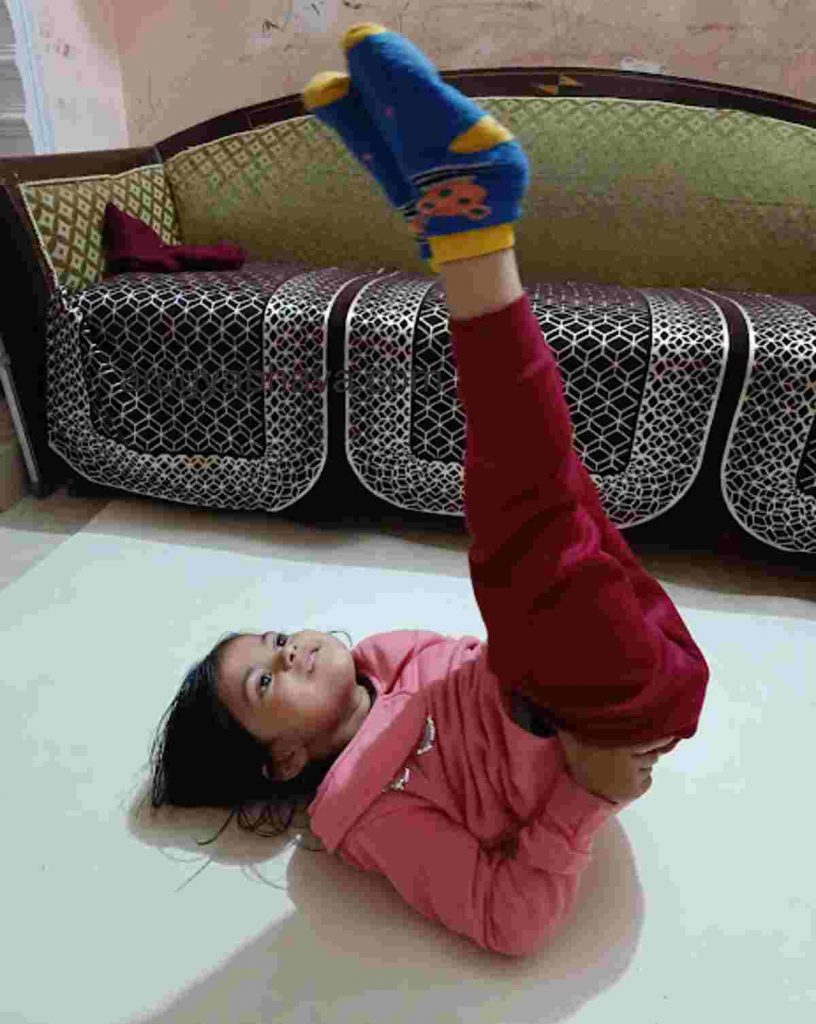
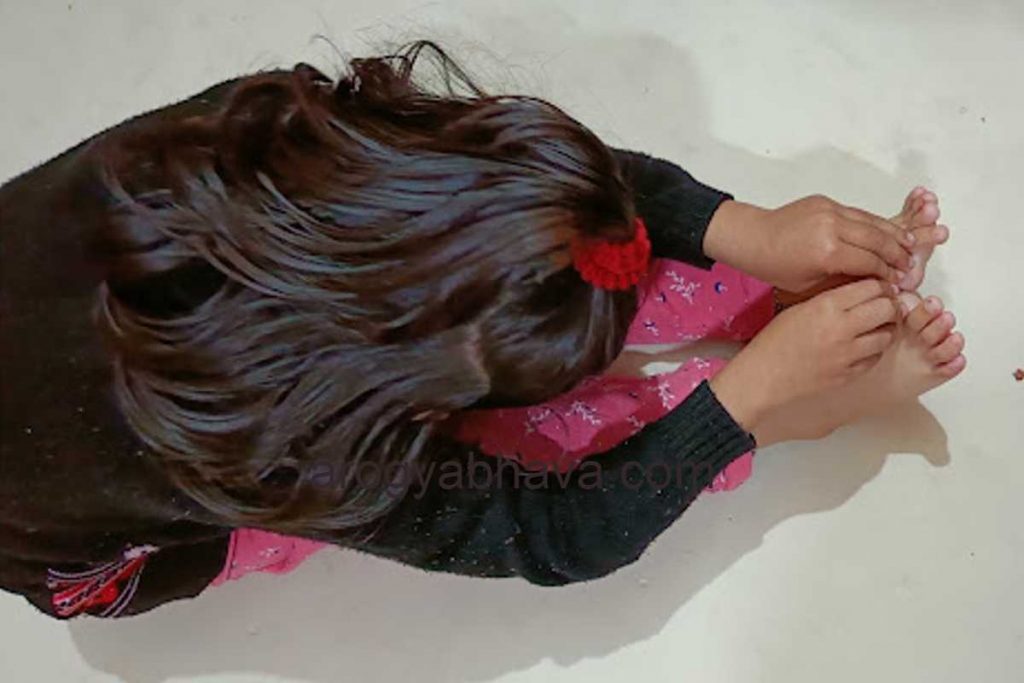
It comes second in the list of most beneficial asanas. Those who cannot do Shirshasana or those who are prohibited from doing Shirshasana can also do Sarvangasana. This asana can be done for 1-2 minutes.
sarvangasana |source: arogyabhava
Sarvangasana Benefits: Due to the activation of the thyroid and pituitary glands by this asana, it helps in increasing the height of the children. The rest of the benefits like an increase in brain power, and help in concentration, are similar to Shirshasan. This asana gives relief from tiredness and tension.
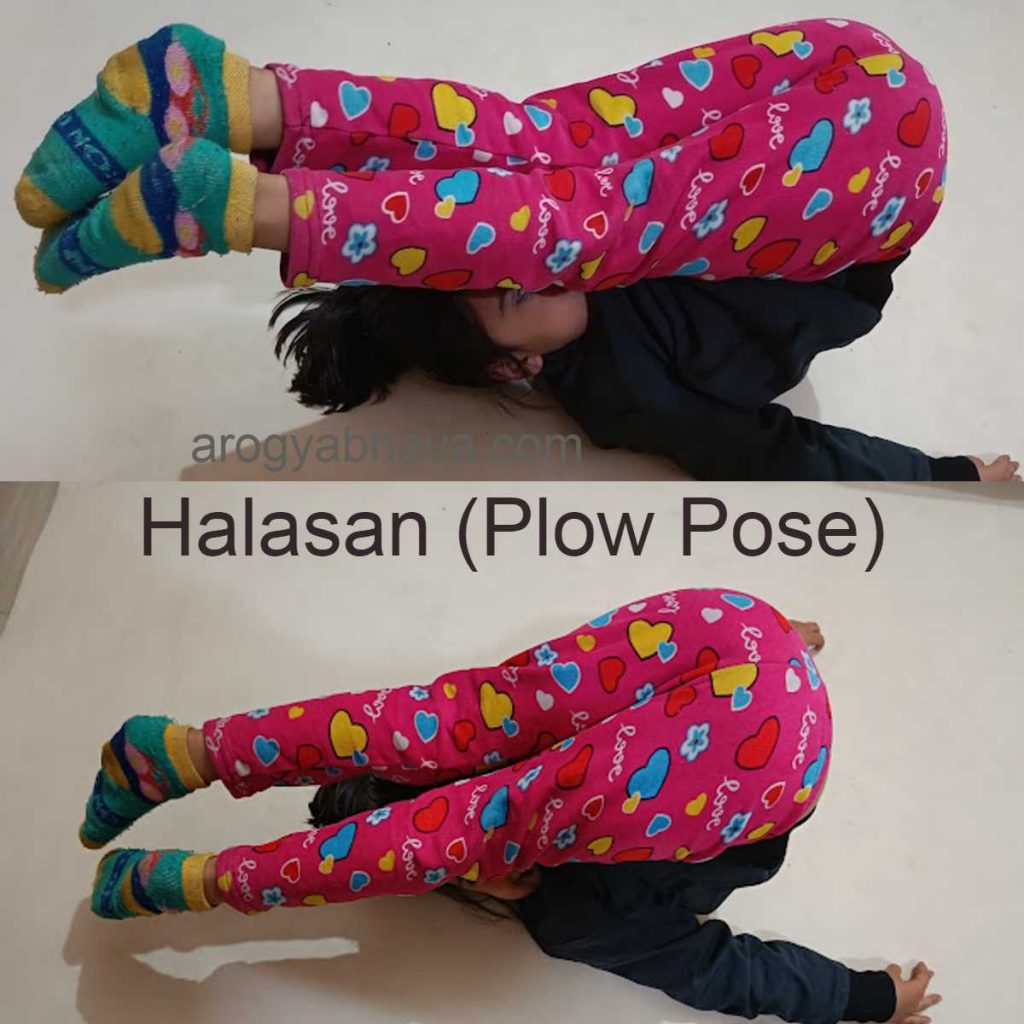
3. Halasana (Plow Pose) for students
Your children definitely learn this asana. The spine can be made healthy and flexible by this asana. Due to this children can be effective in sports, exercise, and athletics. This asana also removes the problem of obesity in children.
Children who cannot do Halasana should practice Mandukasana or Shasakasana.
halasana- plow pose| source: ArogyaBhava
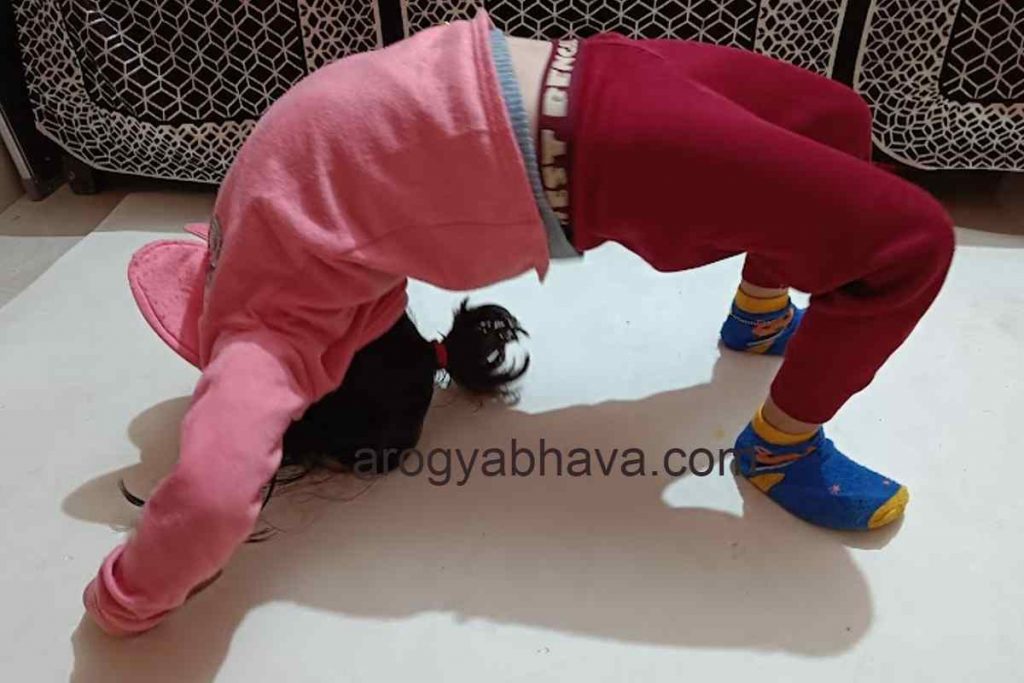
4. Chakrasana (Wheel pose or upward-facing bow)
Chakrasana is a beneficial asana for children. The spine becomes flexible through the practice of this asana. Appetite also feels good and intestines become active. As a result of the practice of this asana, the energy in the body, strength, and brightness of the face increases. It works like a panacea for children who have breathing problems, headaches, or eye disorders.
Lie on your back with your knees bent. The heels should be as near to the buttocks as possible. Maintain equilibrium by keeping both hands upside down behind the shoulders at a small distance. Inhale and raise your waist and chest. Slowly pull the hands and feet closer together, so that the body forms a circle.
Paschimottanasana is a very beneficial asana for school-going students. By practising this asana, the back muscles of children expand and become healthy. Due to the contraction of the muscles of the stomach, the health of the stomach improves. According to Yoga Shastras, this asana directs the Prana towards the Sushumna, which helps in the awakening of the Kundalini. Children’s concentration increases and their mind is also engaged in studies.
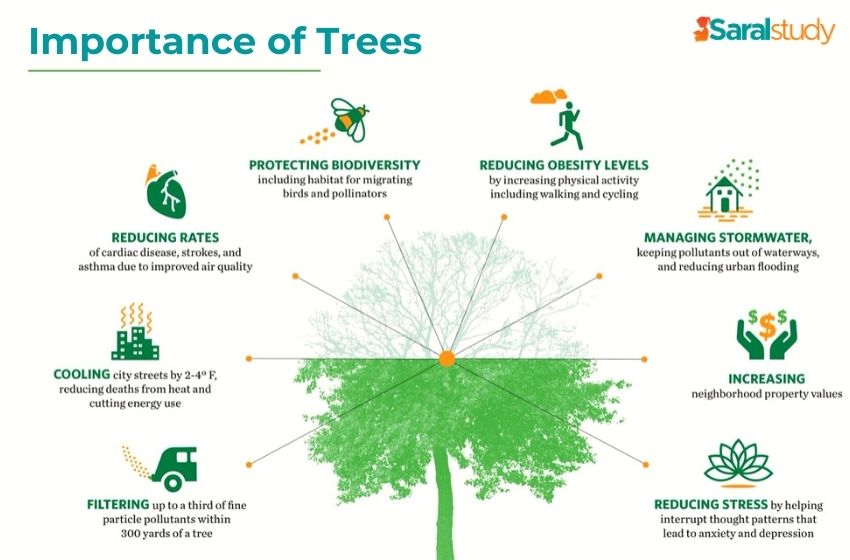
Importance of Trees: Trees play a significant importance in our environment and human well-being. Trees provide us with fresh water to drink, air to breathe, shade, and food for humans, animals, and plants. Trees give habitats for various species of fauna and flora, materials for construction, and places of spiritual, cultural, firewood for cooking, and heat and recreational importance. Trees are so essential for the global environment and the health of the species that live there. And they want our unconditional care and protection.
Why Trees Are Important?
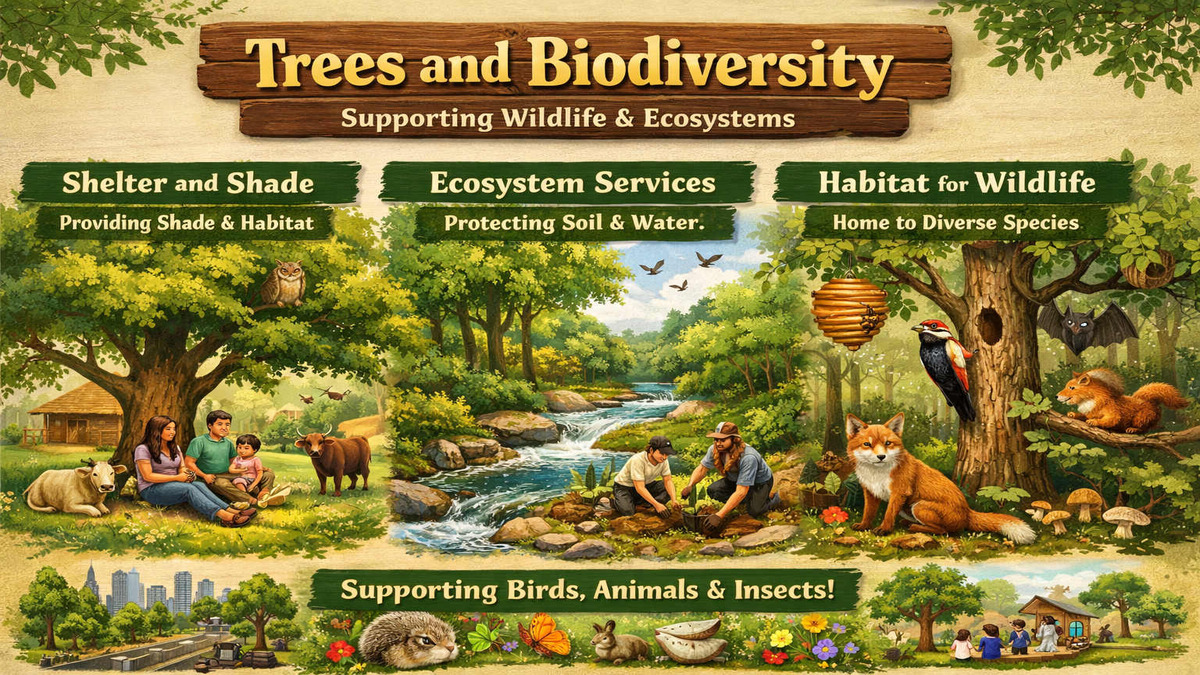
Trees also play an important part in every community. Streets, parks, playgrounds, and backyards are filled with trees that form a peaceful, aesthetically pleasing atmosphere. Trees enhance our quality of life by bringing natural elements and wildlife habitats into urban environments. We collect under the cool shade they provide during outdoor activities with family and friends. Several areas are also the home of quite old trees which serve as historic landmarks and a great reference of town pride.
Many birds, animals, and insects call trees home. The different levels and canopies of trees give habitat to a different array of wildlife from the lower levels up to the very high canopies. Forest Garden farmers usually also use trees as a place to build hives to bring bees to their land to help in pollination and to get honey. We are currently losing species at a dangerous measure so the space for biodiversity is critical as it helps keep our planet thriving.
1. Trees Provide Shelter and Shade
When it is hot, human beings and animals look for an old tree that can give shade. There are several trees that people grow to give a good canopy for them to hold meetings and also have wonderful places to relax.
Besides, people from various cultures choose to hold meetings under trees. And, trees also provide building materials for human shelter as well as their animals. Trees also decrease the rate of evaporation and make the ground a better place to stay.
2. Ecosystem Services
Trees offer essential ecosystem services such as water filtration, flood control, and pollination. They support the delicate balance of our natural ecosystems, which in turn supports human life.
Trees protect the earth from soil erosion, fires, flooding, etc. Forest Garden farmers use trees as fences, windbreaks, and restrictions. Farmers use a living fence technique that has proven especially helpful in providing by forming a green wall to enhance their soil, provide a boundary, keep livestock out, and absorb and redirect heavy rains.
3. Trees boost wildlife 🐦
Trees host complex microhabitats. When young, they give habitation and food to wondrous communities of birds, insects, lichen, and fungi. When ancient, their trunks also provide the hollow cover required by species such as bats, wood boring beetles, and woodpeckers, etc.
One mature oak can be home to as many as 500 various species. Richmond Park is full of such trees, which is one of the purposes it has been named a National Nature Reserve and Site of Special Scientific Interest.
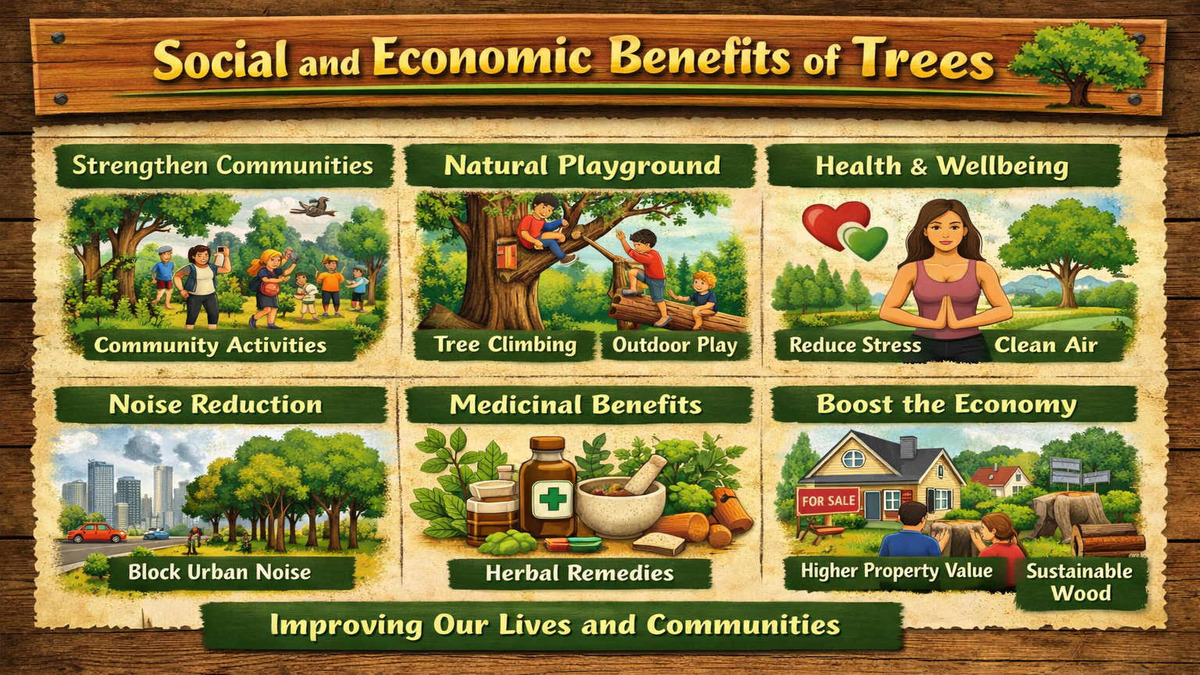
Social and Economic Benefits of Trees
4. Trees strengthen communities
Trees sustain the distinctive character of a place and promote local pride. Woodlands can serve as an educational source and drive groups together for activities like walking and bird-watching. Trees are also valuable for children to play in and explore their sense of adventure.
5. Trees are a natural playground
The tree gives a great place to climb and explore. This is especially exciting in a world where technology can consume people’s interest. Children can learn to take risks while climbing trees. Adults can climb for robustness and strength building. Felled trees can become scale beams and a tall tree can give a good shelter or lookout during playtime.
6. Mental and Physical Health
The canopies of trees serve as a physical filter, confining dust, and absorbing pollutants from the air. They also provide shade from solar radiation and lessen noise.
Above 20 species of British trees and shrubs are recognized to have medicinal properties. Research proves that within minutes of being enclosed by trees and green space, your blood pressure drops, your heart rate slows and your stress levels come down.
7. Trees Control Noise Pollution
Trees decrease urban noise almost as efficiently as stone walls. Trees, planted at strategic positions in a neighbourhood or around your house, can reduce major noises from freeways and airports.
8. Trees are an Essential Source of Medicine🌱
For many years people used trees to use various ailments both in humans as well as their animals. Some of them are used for preparing solutions to drink. Others are rubbed on parts that are hurt. With time people applied to modern medicine, most of which is formed from different trees.
Now even with technology, most people still depend on holistic trees for medication. Trees treat most ailments.
9. Trees grow the economy
People are want to live, work, and invest in green surroundings. Research reveals that average house prices are 5-20 % higher when properties are near to mature trees. Companies get profit from a healthier, happier workforce if there are parks and trees nearby.
10. Trees provide sustainable wood
While alternative energy is ideal, the truth is that much of the world depend on wood to cook meals and boil water for purification. Where we work in Africa, approximately 80% of households rely on fuel wood and charcoal. While it can be demonstrated that planting trees for fuel or wood compete with food production, in the Forest Garden model, the two can coincide and complement one another. This means farmers are not increasing deforestation by cutting in the ancient forests.
Environmental Benefits
11. Trees benefit the environment🌍
Trees absorb carbon dioxide while they grow and the carbon that they store in their wood aids reduces the rate of global warming.
Trees decrease wind speeds and cool the air as they lose moisture. And it reflects heat upwards from their leaves. It’s considered that trees can lessen the temperature in a city by up to 7°C. Trees also assist prevent flooding and soil erosion, etc.
12. Controls Climate 🌡️
As trees inhale Carbon dioxide in the atmosphere, tree plantation is the best organic way that could be efficiently practised to reverse global warming and prevent climate change. In recent days, the importance of tree plantation has gained significant ground in many countries.
And there is so much more!
Trees become a source of medicines, foods, and materials, improving our planet and lives in limitless ways. We are continually discovering new ways that trees can benefit us. Research is uncovering hidden and beneficial ways in which trees enrich our planet and our lives. Without trees, we should not have a future.
Benefits of Trees
Trees offer numerous benefits, including:
Providing oxygen
Increasing property values and business traffic
Preventing soil erosion and slowing water runoff
Reducing noise pollution and combating climate change
Offering habitats for wildlife and cooling urban areas
Protecting from UV rays and providing medicines
Offering food and creating economic opportunities
Giving us invaluable resources like vegetables, fruits, wood, and paper
Supporting good rainfall and controlling air pollution
Playing a crucial role in maintaining the ecosystem balance by inhaling carbon dioxide and exhaling oxygen.
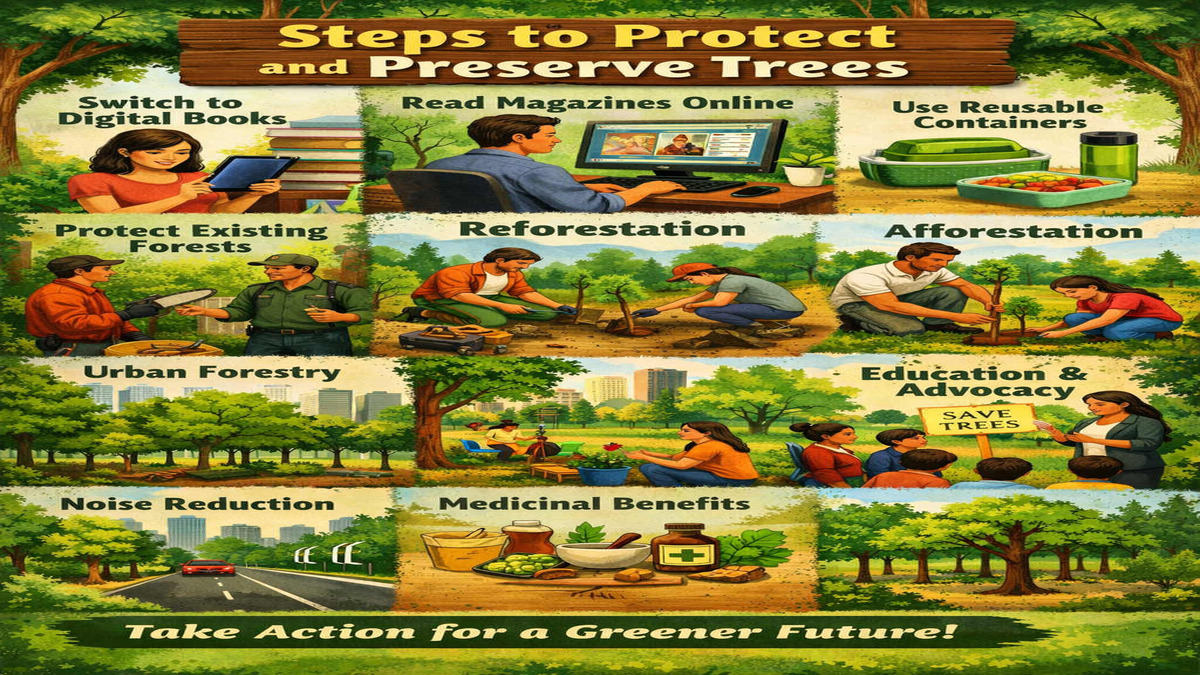
Steps to Protect and Preserve Trees
1. Switch to Digital Books
Digital Books create less of a demand for paper. Digital books are also more suitable as you have an infinite supply of books on a single device. You can also read from a digital device in the dark, unlike with a book published on paper.
2. Read Your Magazines Online
Most magazines offer the same content online if you sign up for a subscription with them. You will also get the content shortly after it is released instead of waiting.
3. Use Reusable Containers
Use containers that can be used several times for your food, gadgets, and just anything.
4. Protect Existing Forests
In addition to the threat that humans act for forests, they are also endangered by parasitic fungi, viruses, rusts, mistletoe, and nematodes. These all destroy the trees. An effort should be made to administer a chemical spray or some other treatment to destroy the parasites.
5. Reforestation
The sustainable yield system also needs that every tree that gets cut down must be replanted. So, any tree that gets burned down due to forest fires or mining activities must also get replanted. This can be done by natural or artificial methods. In the rough ground, aerial seeding is the method of choice.
6. Afforestation
Fresh afforestation programs should also be started. New plantations will enhance the forest cover and will also aid in making up the eco-balance. For afforestation, the range of trees should be made according to local geographical conditions. And then care must be taken during the initial growth of the trees.
7. Urban Forestry
Urban forestry involves the management and care of trees in urban settings. This includes planting trees in parks, streets, and residential areas, as well as maintaining existing trees to ensure their health and longevity.
8. Education and Advocacy
Raising awareness about the importance of trees and advocating for policies that protect forests are essential steps in conservation efforts. Engage with local communities, schools, and policymakers to promote tree planting and conservation initiatives.
Government Initiatives
Both central government and state governments can take some steps in this direction, such as:
Pass acts for the conservation of forests,
Survey of the forest resources,
Discover the areas where reforestation can be done,
Regulate the commercial use of forest products,
Preserve forest from fire, mining, and other natural disasters,
Develop national parks,
Boost forest developmental activities like social forestry, agroforestry, etc., and
Prepare master plans, both for long-term and short-term periods, etc.
Conclusion
Trees have a lot of importance in our lives, and it gives seamless service to the environment. We somehow have not protected them and that is why as of today we are being affected by global warming, severe pollution, and other ill effects of deforestation. Trees can be used and nurtured nicely so that human beings can survive on this planet. We should help others to plant more and more trees. It is for our own progress and the earlier we understand this the better it is for us.
We should realize that one of the severe issues in the present condition is the devaluation of trees. Henceforth the attention to planting trees must be broadly spread to make our world’s condition greener and better. One should start contributing at an individual level. We should stop cutting down trees and remember that if there will be no tree, there will be no life.
The tree plays a major role in our life. Everyone must be aware of the importance of tree plantation and also motivate and inspire others to plant more trees. It is not just for the present generation who can enjoy the benefits of having trees but also the future generation should also get the advantages of having trees around.
Frequently Asked Questions
Q1. Which is the largest tree in the world?
Ans. General Sherman, a giant sequoia, is the largest tree by volume in the world, standing 275 feet (83.8m) tall with 52,000 cubic feet (1,486.6m) of wood.
Q2. How much water can a large tree intake in a single day?
Ans. In one day, one large tree can lift 100 gallons of water out of the ground and release it into the air as oxygen and water vapour.
Q3. How are trees useful for us?
Ans. Trees are an integral part of the ecosystem. It assists to maintain balance and also acts as a valuable source of various resources
Q4. What is the importance of the tree?
Ans. Trees are one of the most valuable natural resources on earth. It is also an essential part of the ecosystem, as many organisms depend on trees for their food and shelter.
Q5: What are the main uses of trees?
Ans. Trees give many invaluable resources such as medicine, shelter, raw materials, and more.
Q6. How do forests help us?
Ans. Forests act as a shelter to various species of animals and plants. They also give humans several resources such as medicine and raw materials.
Q7. How do we save trees?
Ans. We can save trees by not cutting them down. We must plant more trees if trees are cut in other areas.
Q8. Why are trees important for the environment?
Ans. Trees play a vital role in maintaining environmental balance by reducing air pollution, controlling climate change, conserving water, and providing habitat for wildlife.
Q9. How do trees help in reducing pollution?
Ans. Trees absorb harmful gases like carbon dioxide and release oxygen, helping to purify the air and reduce pollution levels in the environment.
Q10. What will happen if trees are cut down?
Ans. If trees are cut down excessively, it can lead to problems like global warming, soil erosion, loss of biodiversity, and imbalance in the ecosystem.
Q11. Why should we plant more trees?
Ans. Planting more trees helps improve air quality, reduce global warming, conserve water, and create a healthier environment for humans and wildlife.
Q12. How do trees help humans in daily life?
Ans. Trees provide oxygen, food, medicine, wood, shade, and clean air, making them essential for human survival and everyday life.
Q13. What role do trees play in climate change?
Ans. Trees help fight climate change by absorbing carbon dioxide from the atmosphere and reducing the effects of global warming.
NEET (National Eligibility Cum Entrance Examination) is the entrance exam for the students who want to study MBBS, BDS in India from government-aided or private colleges/ institutions. The host of this exam is currently ITA in India. Before 2019 it was hosted by CBSE with Prometric Testing Pvt Ltd having headquarter in the US.
Eligibility for NEET
For appearing in NEET a candidate must be
A citizen of India or
Non- residential Indians or
Persons of Indian origin or
Overseas citizens of India
Foreign nationals are also eligible to appear in NEET 2021 exam
Eligibility Criteria in Detail
Requirements
About
Qualifying Exam for NEET
* Candidates must have passed 10+2 or equivalent with Physics, Chemistry, Biology/Biotechnology, and English as core subjects from a recognized board. * Class 12 or equivalent appearing aspirants are also eligible to apply for NEET.
Minimum Age Requirement for NEET
The age of the candidate should be more than 17 years.
Maximum Age Limit*
No maximum age limit
Qualifying Marks
The class 12 percentage required for NEET exam is separate for each category are listed under:
* UR - 50%, * OBC/SC/ST - 40%, * PWD - 45%
Maximum Attempts
No restrictions on maximum attempts, a candidate can attempt as many times as he/ she wants.
Eligible People
Indian Nationals, NRIs, OCIs, PIOs & Foreign Nationals aspirants are eligible to apply.
There are seven qualifying codes in the NEET exam. These are
Code 1
Code 2
Code 3
Code 4
Code 5
Code 6
Code 7
Code 1- Candidates who are appearing for the class 12 board exams this year have to select this code. But at the time of the exam, a candidate must have completed the 12th class. Failing the class makes him ineligible to apply.
Code 2- Candidates who are studying from ICSE or higher/senior secondary examination, this is equivalent to class 12th examination have to choose this code. As per the NCERT, the final two years must comprise subjects (physics, chemistry, biology/biotechnology, and mathematics or any other elective subjects with English as a base subject.)
Code 3- Candidates who have done their Intermediate/Pre-degree Examination from Science of an Indian University/Board or the other recognized boards with physics, chemistry, biology/biotechnology, and mathematics or any other elective subjects with English as a base subject.
Code 4- Candidates completed Pre-professional/Pre-medical Examination after successfully passing Higher Secondary Examination or the Pre-University or other courses which are equivalent to it with subjects physics, chemistry, biology/biotechnology, and mathematics.
Code 5- Candidates having physics, chemistry, biology/biotechnology, and mathematics as compulsory subject candidates who are pursuing the three years’ degree course from a recognized University and have qualified the first year can go with this code.
Code 6- With at least two of these subjects those are Physics, Chemistry, Biology (Botany, Zoology)/Biotechnology, candidates who have passed BSc Examination from an Indian recognized University have to choose this code. But, they must have passed the earlier qualifying examination (10+2) with English, Physics, Chemistry, and Biology.
Code 7- Aspirants who have qualified for any other examination equivalent to (Last 10+2 Study comprising of Physics, Chemistry, and Biology/Biotechnology) can choose this code. Aspirants who have completed the qualifying examination from a foreign country are also required to fill in this code.
NEET Syllabus
PHYSICS
Class 11th Syllabus
Class 12th Syllabus
Physical-world and measurement
Electro statistics
Kinematics
Current Electricity
Laws of Motion
Magnetic effects of Current and Magnetism
Work, Energy and Power
Electromagnetic induction and alternating currents
The motion of systems of particles and rigid body
Electromagnetic waves
Gravitation
Optics
Properties of Bulk Matter
Dual Nature of Matter and Radiation
Thermodynamics
Atoms and Nuclei
The behavior of Perfect Gas and Kinetic theory
Electronic Devices
Oscillations and wave
CHEMISTRY
Class 11th Syllabus
Class 12th Syllabus
Some basic concepts of Chemistry
Solid State
Structure of atom
Solutions
Classification of Elements and Periodicity in Properties
Electrochemistry
Chemical Bonding and Molecular structure
Chemical Kinetics
States of Matter: Gases and Liquids
Surface Chemistry
Thermodynamics
General principles and Processes of Isolation of Elements
Equilibrium
p-Block Elements
Redox Reactions
d and f Block Elements
Hydrogen
Coordination Compounds
s-Block Elements (Alkali and Alkaline earth metals)
Haloalkanes and Haloarenes
Some p-Block Elements
Alcohols, Phenols and Ethers
Organic Chemistry - Some basic principles and techniques
Aldehydes, Ketones and Carboxylic Acids
Hydrocarbons
Organic compounds containing Nitrogen
Environmental Chemistry
Biomolecules, Polymers and Chemistry in everyday life
BIOLOGY
Class 11th Syllabus
Class 12th Syllabus
Diversity in the Living World
Reproduction
Structural organization – Plants and Animals
Genetics and Evolution
Cell Structure and Function
Biology and Human welfare
Plant Physiology
Biotechnology and its applications
Human Physiology
Ecology and Environment
Subject wise marks distribution
Physics Class 11th
Topics
Marks in %
Physical-world and measurement
2%
Kinematics
3%
Laws of Motion
3%
Work, Energy and Power
4%
The motion of systems of particles and rigid body
5%
Gravitation
2%
Properties of Bulk Matter
3%
Thermodynamics
9%
The behavior of Perfect Gas and Kinetic theory
3%
Oscillations and wave
3%
Physics Class 12th
Topics
Marks in %
Electro statistics
9%
Current Electricity
8%
Magnetic effects of Current and Magnetism
5%
Electromagnetic induction and alternating currents
8%
Electromagnetic waves
5%
Optics
10%
Dual Nature of Matter and Radiation
6%
Atoms and Nuclei
3%
Electronic Devices
9%
Chemistry Class 11th
Topics
Marks in %
Some basic concepts of Chemistry
1%
Structure of atom
2%
Classification of Elements and Periodicity in Properties
2%
Chemical Bonding and Molecular structure
5%
States of Matter: Gases and Liquids
2%
Thermodynamics
8%
Equilibrium
6%
Redox Reactions
3%
Hydrogen
3%
s-Block Elements
2%
Some p-Block Elements
2%
Organic Chemistry - Some basic principles and techniques
CBSE Class 11 Revised Syllabus 2020-21: CBSE Class 11 is a very important phase in a student’s life. Building depth concepts on every subject and topic in class 11th will help students to understand the various topics from the CBSE Class 12th. Normally the CBSE Class 11 Syllabus and CBSE Class 11 Exam pattern doesn’t change every year. But some time boards change the syllabus & pattern, as they did this year due to COVID-19 pandemic.
The new revised CBSE Class 11 Syllabus 2020-21 contains complete information about the latest academic curriculum, structure of course, exam-pattern etc. The understanding of CBSE Class 11 Syllabus 2020-21 is important for the preparation of CBSE Class 11 annual exam. To gain maximum marks in CBSE Class 11 annual exams 2021, you need to know about the revised Syllabus. Students of Class 11th should also check other important resources for the preparation of upcoming Class 11 exams 2020-21.
The Syllabus for CBSE Class 11 is designed in a manner to help students to get a clear understanding of the course structure and its objectives. Board also provides the supply of the question paper design for the annual examination in order that students are ready to practice within the right direction to perform well within the exams.
The New CBSE Curriculum 2020-21 for Class 11 gives a total thought regarding course Structure, unit-wise weightage, reading material, question paper pattern, and other important details to prepare for CBSE Class 11 Exams 2020-21.
CBSE Class 11 Syllabus 2020-21 – FAQs
Q1. Is there any change in CBSE Class 11 Syllabus? Ans. Yes due to the Nationwide lockdown, most of the schools have switched online teaching. Keeping this in mind, the officials of CBSE in line with Union HRD Minister, have reduced CBSE 11th Class Syllabus up to 30%.
Q2. Does class 11th syllabus questions come in class 12th board also? Ans. No, Class 11th Syllabus questions will not be asked in CBSE 12th class exams.
Q3. Which chapters from the CBSE Class 11th biology do you think are important for NEET and AIIMS? Ans. All the biology chapters are important for NEET and AIIMS exams. However, chapters like, The living World, Biological Classification, Morphology and Anatomy of Flowering Plants, Cell and Chemical Coordination are most important of them. We suggest, students to go through the entire syllabus to crack the exam and not rely on the above-mentioned chapters only.
According to the new CBSE circular, CBSE art-integrated activities are compulsory from 2020-21 in each subject for class 9 and 10 which would be considered for interior appraisal. CBSE students of classes 1 to 8 need to make one project each year not restricted to any one subject.
CBSE students of Classes 1 to 8 need to make in any event one art-integrated project in every academic year which can be considered for Internal Assessment in the subjects concerned the task doesn’t need to focus on just one subject.
But, CBSE students of classes 9 and 10 need to take up an art-integrated task for each subject which will be considered for internal assessment.
CBSE explained in the circular that art-integrated learning was being presented as an instructing apparatus and not to help art skills in general. It was an approach to utilize art to both educate and comprehend different subjects better.
Given below are all guidelines that CBSE schools and CBSE students need to follow for art-integrated projects.
Guidelines for CBSE schools to present art integrated learning:
Classes I–VIII, Art Integrated Project should be of trans-disciplinary nature. The project work can include more than one subject and this can be considered for Internal Assessment in the subjects concerned.
Classes IX and X, the students will take up the art integrated project work as subject enrichment activity in all the subjects for internal assessment.
One of the objectives of art integrated education is to make the students aware of the vast and diverse cultural heritage of our country. Therefore, Students will take up integration with any form of Indian Art – visual or performing, as it will be helpful to students to easily understand the project that is culturally connected to them. Teachers need to facilitate learning of the chosen Indian art form and ensure that the students are able to creatively integrate the art form(s) being used in the project.
In minimum one project work of students from classes I –X, it is mandatory to integrate any art form of the paired State/UT, as defined under Ek Bharat Shreshtha Bharat Programme. For example, CBSE students of Delhi will need to integrate the art form of Sikkim. Click here to confirm the latest pairings
Subject teachers along with Arts teachers must plan and discuss the projects in advance at the beginning of the academic session so that students can be given proper guidance to undertake various projects.
The focus should be given on research of new topics that are not yet taken up in the classroom. Teachers must facilitate exploration of research on the topics to give students hands-on experience.
The project should be taken up in an eco-friendly manner, using readily available local resources without any financial burden on parents or guardians.
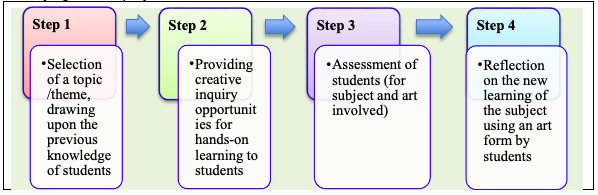
The teachers may follow the following process of embedding arts with other subjects for carrying out the project work:
The Project should be done by students in groups with 4-5 students in each group.
While creating projects, it may also be seen that it should not be too much pro art that it becomes difficult for the subject teacher to take it forward and guide the students. The projects should be simple and doable for the subject teachers and students without the assistance of art teachers/artists or others.
Assessment techniques should be relevant and age appropriate. Criteria along with rubrics for assessment can be devised collectively by teachers and students while planning the projects. Students must be informed about the criteria decided for assessment along with maximum marks before commencement of work on the project.
Schools and teachers may prepare their calendar by assigning dates and months for the execution of project work by the students and the records of assessment of these project works should be maintained at the schools.
The Art integrated project work shall also be an integral part of assessing the student’s participation in art related activities and attainment of learning outcomes for the subject/s.
The marks awarded for these projects, as part of subject-enrichment activities of class X, will be collected by the Board at the time of uploading marks of internal assessment.
Art-Integrated Learning (AIL) as a Pedagogical Tool from classes I to XII
AIL will continue as a pedagogical tool for classes I to XII, in addition to the Art Education under co-scholastic area as provided in the Secondary School Curriculum of the Board.
The objective of AIL is not to promote arts and skills of arts but to use art as a tool to teach other subjects. The focus here should be to accept arts as a medium of the learning process.
So the subject teachers may make use of simple art forms in the classrooms; and give opportunities to students to enjoy planned art activities and while they are experiencing beauty of arts, they also learn and articulate the core concept of different subjects and apply it in daily life.
Art activities which can be integrated with different subjects to aid learning are given in annexure. The activities given in the annexure are only suggestive. Correlation of AIL activities is to be seen broadly and should not restrict to one or the other kind of subjects. For example, what helps us in Agriculture as a subject can also connect to Mathematics and Science subjects. Therefore, the teachers and learners should not limit themselves in the rigid boundaries as suggested in the said annexure.
In AIL activities, teachers and students may go for integration of visual and performing arts too. Since skill of making art is not the criteria of evaluation, children can explore and might come out with very creative expressions that enable achievement of the learning outcomes.
Reporting of Implementation of Art-Education (AE) and Art-Integrated Learning (AIL)
The Board has prepared the Art Education (AE) and Art Integrated Learning (AIL) – AE & AIL portal for reporting of the implementation of Art-Education (AE) and Art-Integrated Learning (AIL). The schools are required to upload data of the Art-Education and ArtIntegrated Learning projects of students in the AE & AIL portal for enabling students of class X and XII to appear in Board exams.
Pairing of States and Union Territories for CBSE AE&AIL Project Work
The following engagement matrix has been adapted from EBSB programme:
Jammu & Kashmir: Tamil Nadu
West Bengal : Ladakh
Punjab : Andhra Pradesh
Himachal Pradesh : Kerala
Uttarakhand : Karnataka
Haryana : Telangana
Rajasthan : Assam
Gujarat : Chhattisgarh
Maharashtra : Odisha
Goa : Jharkhand
Delhi : Sikkim
Madhya Pradesh : Manipur & Nagaland
Uttar Pradesh : Arunachal Pradesh & Meghalaya
Bihar : Tripura & Mizoram
Chandigarh : Dadra & Nagar Haveli
Puducherry : Daman & Diu
Lakshadweep : Andaman & Nicobar
Check out the full CBSE circular
The CBSE circular was addressed to the heads of all CBSE schools. Look at the full CBSE circular here alongside all the annexures to get the details of what kind of CBSE art-integrated projects are normal for students of classes 1 to 10.
The Art-Integration guidelines of CBSE enrolls different suggestive exercises, projects, tasks and lesson designs and are accessible here.