

Who Is A Sports Medic

Who Is A Sports Medic

A Sports Medic is not a general doctor or surgeon who looks into the medical needs of a sportsperson. Its area of functioning is much larger and specialized. Sports medicine has unfortunately been misunderstood, underestimated and neglected in our country. There is a dire need to understand its scope, vastness of its functioning, and importance of its being classified under a separate head. 

Sports Medicine is a multi-faceted, inter-disciplinary branch of medicine. It requires academic excellence and clinical superiority to be a sports doctor. Such a professional focuses on the injuries sustained during a sports activity or strenuous exercise, and how to cure it. A doctor should have knowledge about the injuries that can occur, the vulnerable points in a sports person’s body, the most targeted areas of injury in a particular sports, and the ways of recuperation and recovery. He may not be an orthopedic or a surgeon, but should be able t diagnose the problem, and refer to the specialized doctor for the right treatment. Sports medicine is not only about treating injuries, as has been wrongly understood, but it also involves taking and suggesting preventive measures for injury, performance enhancement, and bringing the sports person back to the pavilion. At times, doctors also have to act as counselors and help emotionally suffering ones to get back the courage and determination to perform. Thus it is not about catering to mere physical ailments, but also emotional requirements. A sports medic also helps in the selection of the right players for an event, and evaluation of the players. 

To be a Sports Doctor, you first need an MBBS degree (preferably from a recognized institute). After that, you have to enroll for a two year post graduate diploma in Sports Medicine offered by the National Institute of Sports, recognized by the Medical Council of India (MCI). Also you have to undergo training program in rehabilitation, exercise physiology and orthopedics. In India, such facilities of education in sports medicine is quite restricted. For a truly interested student, going abroad for this course is beneficial and more helpful. 

A Sports Doctor should possess great expertise in medicine as well as human skills. You have to work very closely and in tandem with players, thus a complete and in depth knowledge of their physicality, requirements, weaknesses and vulnerabilities is a necessity. You should be an excellent diagnostic and be able to heal effectively. Communication and healing works together for a sports doc. 

Since the initial stages of your career, you get handsomely remunerated. Starting with a Rs 50,000 a month, your pay can be in lakhs with experience. It is also dependent on the sports and the player you are responsible for. Unfortunately, in India, the pay of a sports doctor is much less as compared to that in other countries. 

Sports Medicine is still a neglected filed of medicine in India. Neither is the Sports authority nor the medics aware of its true essence and importance, thus it is not only the players who have to bear the brunt, but the professional specialized doctors also have to face the sad situation. The scope is vast, especially with sports being so significant to the country. In India, there are negligible number of sports surgeons or physicians. And also most of them have a generalized knowledge base, which s not a particular sports specific. Every game has its requirement that is unique, so the skill of the doctor also has to be unique. Because of the inherent lack of awareness, there is a serious dearth of job opportunities for medics in India also, though the need and scope is enormous. 

There is a dire need to awaken to the medical needs of the game, any and all games, because the performance of a player is not only dependent on his skill and practice, but also on fitness, proper treatment and guidance, which only a well trained Sports Doctor can supply. It is high time that it be seen as a specialized field and given due credit and opportunity.
How To Be A Sports Broadcaster

How To Be A Sports Broadcaster

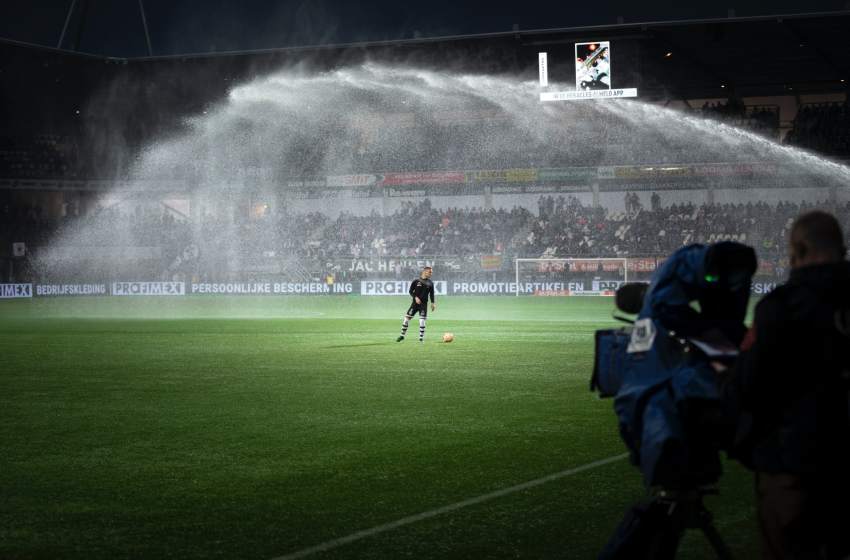
Sports Broadcasting is the coverage of sports events on any of the mediums of mass communication, be it television, radio, newspaper, etc, by a commentator, who witnesses the game either by being present on the scene or via some medium.  

To be a Sports Broadcaster, you should always bear in mind that this is a profession where your communication and writing skills, knowledge about sports, and networking ability will be of more value than a degree acquired from a journalism college. It does fall under the ambit of Journalism, and there are a number of good colleges all over the world, that specifically have courses and train students in sports broadcasting. It is different from other forms of broadcasting, in the sense that it involves being witness to a game, identifying its details and understanding deeply what is taking place. A person who is not apt in doing so, can hardly be a good broadcasting professional. 

There are several ways to be a sports broadcaster. You can teach yourself or get enrolled into a school. The former would mean that you have to make an effort to study and understand sports. You can read books, sports journals, sports magazines, watch sports channels, surf the internet, and be in constant consultation with experts. And it requires strategy analysis. 

Job opportunities galore. Sports interests all worldwide, and is a big business, passion and activity. There are dedicated newspapers and television channels. Sporting events, of all kinds, thus have to be captured to the pining fans. So the demand for expert sports broadcasters was present always, and is ever increasing. A job with a good channel or in print, sets the base for a successful career. And that ensures you are remunerated highly and can command fame. It only requires a lot of hard work and dedication. You should have the stamina to sit through a match, not only enjoying it, but exploiting every single shot of it for professional upliftment. The better you are at noting down the minutest of details that others may miss, and capture the crucial and best moments of a game, the more chances of your being in the coveted list of broadcasters. 

Sports, if your passion, then this is a career option that can turn it into your ideal professional choice.

Running And Exercise Required For All Sports

running and exercise

Running is a healthy exercise which is the base for all types of sporting activities. When you are doing brisk running, there are several muscles which are at continuous work. Running is not only about losing weight. It is all about keeping the body in tone and perfect unison. 

Running: What is it, health benefits, How to Get Started, and How to Get Better

No athlete is required to start running fitness programs, though running is sometimes utilized to improve cardiovascular endurance. In general, running is beneficial to improving cardiovascular health and reducing cholesterol, A fast metabolic process increases bone density, as well as increases self-confidence. Competing is the same as cycling because competitors must be first at the finish line. This racing is usually held on specially designed trails on the road. Running was an Olympic competition that began as an ancient Greek activity and was the first competition in its history. 

The Health Benefits of  Running

Running is associated with several benefits:

  • You will have a perfect and healthy body.
  • Your body system will work in a great way.
  • Your digestive system will remain active and therefore all that you eat will get easily digested.
  • You will have a fit body and there are very few chances of facing any aches or sprains.

When You Run, You Get Good Sleep

  • Brisk running will help you in getting stress free and healthy sleep.
  • When you do brisk running, fat is burnt. Fat burning is a complete catabolic process and this helps in inducing sleep.
  • Brisk running will help keep the muscles inactive state, without overstressing them. This would further help in sleeping.

Brisk Running Have No Risks

As far as potential physical risks are concerned with brisk running, they are almost negligible. Gym exercises do have potential risks associated with them, but when it comes to running, you just forget about any kind of risks. In fact, you are modulating your muscles and body system while running and this will help in keeping your body in an active and energetic state.

Brisk Running Make Your Bones and Muscles Strong 

  • Brisk running plays a critical role in increasing the strength of your muscles and bone density of the back, hips and legs.
  • Brisk running will not produce bulky muscle mass as it happens during weight exercises. On the contrary, the strength and lift power of your leg muscles will increase substantially.
  • If you follow a healthy diet, the bone density mass of your leg muscles will increase and you will feel the power to get going.

Running Increases Your Appetite!!!

Do you have a poor appetite? If yes, start with regular brisk running and you will feel the difference. Running is the focal centre of all exercises.

Also Read: Yoga For Students: 5 Best Yoga Poses For Children