Food, Dance and Language of States of India: Complete Guide

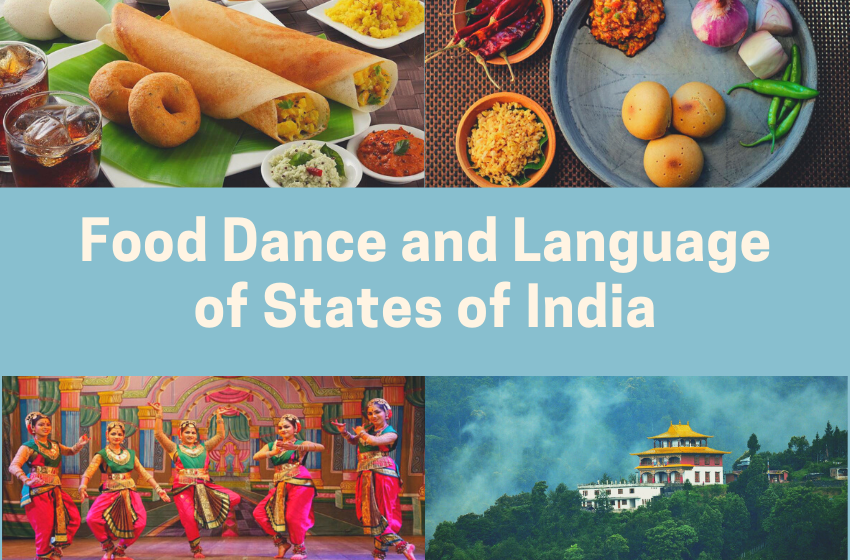
Food Dance and Language of States of India

The food, dance and language of states of India represent the true essence of our nation’s incredible diversity. From the aromatic spices of the north to the classical dance forms of the south, every region has a unique story to tell through its traditions. Understanding the food and clothing of India is essential for students and travelers who want to appreciate the “Unity in Diversity” that defines our 28 states and Union Territories.

In this guide, we help you name the language dress food, as well as the capital and festivals of 15 states of India. While we focus on the food, dance and language of states of India, we also provide a detailed look at the famous food of 28 states of India. Whether you are researching traditional food and dress of Indian states for a school project or cultural study, our comprehensive tables provide everything you need in one place.

Food, Dance and Language of States of India: 28 States and 8 Union Territories

The distinctively distinguishable customs and traditions of India give it a unique hue. From the Himalayas in the North to the waves of the Indian Ocean in the South, India has a million different colours. The Indian states dance, language, food and dress of its 29 States and 9 Union Territories; a total of 38 entities differ distinctly from each other.
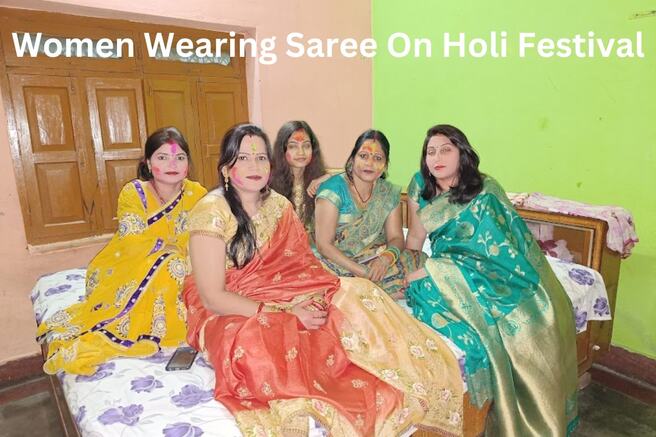
Traditional Dress - Saree
Traditional Dress – Saree


Food, Dress, Dance and Language of 29 States of India

Below is the comprehensive Guide to Food, Dance and Language of States of India

State

Capital Official Language Famous Food Traditional Dance

Dress

Andhra Pradesh Amaravati Telugu Pulihora, Pootharekulu Kuchipudi Saree / Dhoti
Arunachal Pradesh Itanagar English Thukpa, Pehak Bardo Chham Gale (Wrap)
Assam Dispur Assamese Masor Tenga Bihu Mekhela Chador
Bihar Patna Hindi Litti Chokha Jat-Jatin Dhoti-Kurta / Saree
Chhattisgarh Raipur Chhattisgarhi Muthia, Chila Panthi Lugda (Saree)
Goa Panaji Konkani Fish Curry, Bebinca Fugdi Pano Bhaju
Gujarat Gandhinagar Gujarati Dhokla, Thepla Garba, Dandiya Chaniya Choli
Haryana Chandigarh Hindi Bajra Khichdi Phag, Saang Daaman-Kurti
Himachal Pradesh Shimla Hindi Dham, Siddu Nati Pashmina Shawls
Jharkhand Ranchi Hindi Dhuska Chhau Bhagwan (Tussar)
Karnataka Bengaluru Kannada Bisi Bele Bath Yakshagana Ilkal Saree
Kerala Thiruvananthapuram Malayalam Sadhya, Appam Kathakali, Mohiniyattam Kasavu Mundu
Madhya Pradesh Bhopal Hindi Poha, Bhutte Ka Kees Matki Chanderi Saree
Maharashtra Mumbai Marathi Puran Poli, Misal Pav Lavani Nauvari Saree
Manipur Imphal Meitei Kangshoi Manipuri Phanek
Meghalaya Shillong English Jhadoh Laho Jainsem
Mizoram Aizawl Mizo Bai Cheraw (Bamboo Dance) Puan
Nagaland Kohima English Smoked Pork War Dance Alungstu (Shawl)
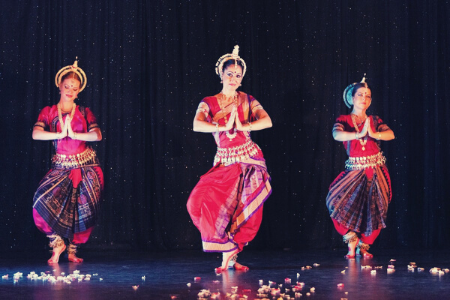
Odisha Bhubaneswar Odia Dalma, Pakhala Odissi Sambalpuri Saree
Punjab Chandigarh Punjabi Makki di Roti & Sarson da Saag Bhangra, Gidda Phulkari
Rajasthan Jaipur Hindi Dal Baati Churma Ghoomar Ghagra Kanchli
Sikkim Gangtok Nepali Momos, Phagshapa Singhi Chham Bakhu
Tamil Nadu Chennai Tamil Pongal, Dosa Bharatanatyam Kanchipuram Saree
Telangana Hyderabad Telugu Hyderabadi Biryani Perini Sivatandavam Gadwal Saree
Tripura Agartala Kokborok, Bengali Mui Borok Hojagiri Rignai
Uttar Pradesh Lucknow Hindi Galouti Kebab, Petha Kathak Chikankari Kurta
Uttarakhand Dehradun Hindi Kafuli Choliya Pichora
West Bengal Kolkata Bengali Kosha Mangsho, Rosogolla Chhau, Dhunuchi Tant Saree

Dance, Language, Food, Dress of 8 Union Territories of India

Union Territory Capital Language Famous Food Traditional Dress
Andaman & Nicobar Port Blair Bengali, Hindi Sea Food, Coconut Light Cotton / Tribal attire
Chandigarh Chandigarh Punjabi, Hindi Chole Bhature Kurta Pajama / Salwar Suit
Dadra & Nagar Haveli and Daman & Diu Daman Gujarati, Hindi Ubadiyu, Seafood Dhoti-Kurta / Ghagra
Delhi (NCT) New Delhi Hindi, Punjabi Chaat, Nihari Modern / Ethnic wear
Jammu & Kashmir Srinagar/Jammu Kashmiri, Dogri Rogan Josh, Dum Aloo Pheran
Ladakh Leh Ladakhi, Tibetan Thukpa, Skyu Goncha
Lakshadweep Kavaratti Malayalam Fish Curry, Rayerezh Mundu (Lungi)
Puducherry Pondicherry Tamil, French Kadugu Yerra Saree / Mundu

Language, Dress, Food, Capital, and Festivals Of States Of India

Here are the tables for Language, Dress, Food, Capital, and Festivals of all States and Union Territories of India in English and Hindi.

State/UT Capital Language Dress Food Festival
Andhra Pradesh Amaravati Telugu Dhoti, Saree Pulihora, Pesarattu Ugadi, Makar Sankranti
Arunachal Pradesh Itanagar English, Hindi Jacket, Chuba Thukpa, Momos Losar, Dree
Assam Dispur Assamese Mekhela Chador Assam Laksa, Khaar Bihu, Bohag Bihu
Bihar Patna Hindi Dhoti, Kurta, Saree Litti Chokha, Sattu Chhath Puja, Teej
Chhattisgarh Raipur Hindi Dhoti, Saree Chana Samosa, Fara Bastar Dussehra, Hareli
Goa Panaji Konkani Pano Bhaju Fish Curry, Bebinca Carnival, Shigmo
Gujarat Gandhinagar Gujarati Kediyu, Chaniya Choli Dhokla, Thepla Navratri, Uttarayan
Haryana Chandigarh Hindi, Punjabi Dhoti, Kurta Bajra Khichdi, Lassi Teej, Lohri
Himachal Pradesh Shimla Hindi, Pahari Dhoti, Kurta, Churidar Dham, Chana Madra Dussehra, Lohri
Jharkhand Ranchi Hindi Kurta, Saree Thekua, Rugra Sarhul, Karam
Karnataka Bengaluru Kannada Panche, Saree Bisi Bele Bath, Ragi Mudde Ugadi, Makar Sankranti
Kerala Thiruvananthapuram Malayalam Mundu, Kasavu Saree Appam, Sadya Onam, Vishu
Madhya Pradesh Bhopal Hindi Lehenga, Dhoti Bhutte Ka Kees, Poha Lokrang Festival, Diwali
Maharashtra Mumbai Marathi Nauvari Saree, Dhoti Puran Poli, Misal Pav Ganesh Chaturthi, Gudi Padwa
Manipur Imphal Manipuri, English Phanek, Innaphi Eromba, Chamthong Yaoshang, Ningol Chakouba
Meghalaya Shillong Khasi, English Jainsem, Dhara Jadoh, Dohneiiong Shad Suk Mynsiem, Nongkrem Dance
Mizoram Aizawl Mizo, English Puan, Pawndum Bamboo Shoot, Bai Chapchar Kut, Mim Kut
Nagaland Kohima Nagamese, English Angami, Shawls Bamboo Shoot, Fish Rice Hornbill Festival, Moatsu
Odisha Bhubaneswar Odia Sambalpuri Saree, Dhoti Dalma, Pakhala Bhata Raja Parba, Durga Puja
Punjab Chandigarh Punjabi Salwar Kameez, Kurta Pajama Makki Di Roti, Sarson Saag Baisakhi, Lohri
Rajasthan Jaipur Rajasthani Ghagra, Choli, Dhoti Dal Baati Churma, Ghevar Teej, Gangaur
Sikkim Gangtok Nepali, English Kho, Dumvam Phagshapa, Momos Losoong, Saga Dawa
Tamil Nadu Chennai Tamil Veshti, Saree Sambar, Idli Pongal, Thaipusam
Telangana Hyderabad Telugu Kurta, Dhoti, Saree Hyderabadi Biryani, Pesarattu Bonalu, Bathukamma
Tripura Agartala Bengali, English Rignai, Dhuti Mui Borok, Chakhwi Garia Puja, Durga Puja
Uttar Pradesh Lucknow Hindi Salwar Kameez, Kurta Pajama Tehri, Kachori Diwali, Holi
Uttarakhand Dehradun Hindi Angrakha, Ghagra Choli Aloo Ke Gutke, Kafuli Kumbh Mela, Basant Panchami
West Bengal Kolkata Bengali Tant Saree, Dhoti Macher Jhol, Mishti Doi Durga Puja, Poila Baisakh
Andaman and Nicobar Islands Port Blair Hindi, English Saree, Shirt Seafood Island Tourism Festival
Chandigarh Chandigarh Hindi, Punjabi Kurta, Salwar Chhole Bhature, Makki Roti Baisakhi, Lohri
Dadra and Nagar Haveli Silvassa Gujarati Lehenga, Dhoti Ubadiyu, Rotla Holi, Diwali
Lakshadweep Kavaratti Malayalam, English Mundu, Shirt Fish Curry Id-ul-Fitr, Bakrid
Delhi New Delhi Hindi, Punjabi Salwar Kameez, Dhoti Chhole Bhature Republic Day, Diwali
Puducherry Puducherry Tamil, French Veshti, Shirt Coconut Curry Pongal, Bastille Day

The language, dress, food, capital and festivals of states of india in hindi

राज्य/केंद्र शासित प्रदेश राजधानी भाषा वेशभूषा खाना त्यौहार
आंध्र प्रदेश अमरावती तेलुगु धोती,

  साड़ी

पुलिहोरा,

  पेसरट्टू

उगादी,

  मकर संक्रांति

अरुणाचल प्रदेश ईटानगर अंग्रेज़ी,

  हिंदी

जैकेट,

  चुबा

थुकपा,

  मोमोज़

लोसार,

  ड्री

असम दिसपुर असमिया मेखला

  चादर

असम

  लक्सा, खार

बिहू,

  बोहाग बिहू

बिहार पटना हिंदी धोती,

  कुर्ता, साड़ी

लिट्टी

  चोखा, सत्तू

छठ

  पूजा, तीज

छत्तीसगढ़ रायपुर हिंदी धोती,

  साड़ी

चना

  समोसा, फरा

बस्तर

  दशहरा, हरेली

गोवा पणजी कोंकणी पानो

  भज्जू

फिश

  करी, बेबिंका

कार्निवल,

  शिगमो

गुजरात गांधीनगर गुजराती केडीयू,

  चनिया चोली

ढोकला,

  थेपला

नवरात्रि,

  उत्तरायण

हरियाणा चंडीगढ़ हिंदी,

  पंजाबी

धोती,

  कुर्ता

बाजरा

  खिचड़ी, लस्सी

तीज,

  लोहड़ी

हिमाचल प्रदेश शिमला हिंदी,

  पहाड़ी

धोती,

  कुर्ता, चूड़ीदार

धाम,

  चना मडरा

दशहरा,

  लोहड़ी

झारखंड रांची हिंदी कुर्ता,

  साड़ी

ठेकुआ,

  रुगरा

सरहुल,

  करम

कर्नाटक बेंगलुरु कन्नड़ पंचे,

  साड़ी

बिसी

  बेले भात, रागी मड्डे

उगादी,

  मकर संक्रांति

केरल तिरुवनंतपुरम मलयालम मुंडू,

  कसवु साड़ी

अप्पम,

  साद्या

ओणम,

  विशु

मध्य प्रदेश भोपाल हिंदी लहंगा,

  धोती

भुट्टे

  का कीस, पोहा

लोक

  रंग उत्सव, दीवाली

महाराष्ट्र मुंबई मराठी नौवारी

  साड़ी, धोती

पुरन

  पोली, मिसल पाव

गणेश

  चतुर्थी, गुड़ी पड़वा

मणिपुर इंफाल मणिपुरी,

  अंग्रेजी

फनेक,

  इनाफ़ी

एरोम्बा,

  चमथोंग

याओशंग,

  निंगोल चकौबा

मेघालय शिलॉन्ग खासी,

  अंग्रेजी

जैनसेम,

  धारा

जादोह,

  डोहनेइओंग

शाद

  सुक मिनसिएम, नोंगक्रेम नृत्य

मिजोरम आइजॉल मिज़ो,

  अंग्रेजी

पुआन,

  पांडम

बांस

  की शूट, बाई

चापचार

  कुट, मिम कुट

नागालैंड कोहिमा नागामीज,

  अंग्रेजी

अंगामी,

  शॉल्स

बांस

  की शूट, मछली चावल

हॉर्नबिल

  महोत्सव, मोआत्सु

ओडिशा भुवनेश्वर ओड़िया सम्बलपुरी

  साड़ी, धोती

दालमा,

  पखाला भात

राजा

  पर्व, दुर्गा पूजा

पंजाब चंडीगढ़ पंजाबी सलवार

  कमीज, कुर्ता पजामा

मक्की

  की रोटी, सरसों का साग

बैसाखी,

  लोहड़ी

राजस्थान जयपुर राजस्थानी घाघरा

  चोली, धोती

दाल

  बाटी चूरमा, घेवर

तीज,

  गणगौर

सिक्किम गंगटोक नेपाली,

  अंग्रेजी

खो,

  दमवाम

फगशापा,

  मोमोज़

लोसोओंग,

  सगा दावा

तमिलनाडु चेन्नई तमिल वेश्टी,

  साड़ी

सांभर,

  इडली

पोंगल,

  थाईपूसम

तेलंगाना हैदराबाद तेलुगु कुर्ता,

  धोती, साड़ी

हैदराबादी

  बिरयानी, पेसरट्टू

बोनालु,

  बथुकम्मा

त्रिपुरा अगरतला बांग्ला,

  अंग्रेजी

रिगनाई,

  धूती

मुई

  बोरोक, चखवी

गरिया

  पूजा, दुर्गा पूजा

उत्तर प्रदेश लखनऊ हिंदी सलवार

  कमीज, कुर्ता पजामा

तेहरी,

  कचौरी

दीवाली,

  होली

उत्तराखंड देहरादून हिंदी अंगरखा,

  घाघरा चोली

आलू के

  गुटके, काफली

कुंभ

  मेला, बसंत पंचमी

पश्चिम बंगाल कोलकाता बांग्ला तांत

  साड़ी, धोती

माछेर

  झोल, मिष्टी दोई

दुर्गा

  पूजा, पोइला बोइसाख


Food, Capital, Dress, and Festivals of Union Territories (Table in Hindi):

केंद्र शासित प्रदेश राजधानी भाषा वेशभूषा खाना त्यौहार
अंडमान और निकोबार द्वीपसमूह पोर्ट

  ब्लेयर

हिंदी,

  अंग्रेज़ी

साड़ी,

  शर्ट

समुद्री

  भोजन

द्वीप पर्यटन उत्सव
चंडीगढ़ चंडीगढ़ हिंदी,

  पंजाबी

कुर्ता,

  सलवार

छोले

  भटूरे, मक्की रोटी

बैसाखी, लोहड़ी
दादरा और नगर हवेली सिलवासा गुजराती लहंगा,

  धोती

उबडियू,

  रोटला

होली, दीवाली
लक्षद्वीप कवरत्ती मलयालम,

  अंग्रेज़ी

मुंडू,

  शर्ट

फिश

  करी

ईद-उल-फितर, बकरीद
दिल्ली नई

  दिल्ली

हिंदी,

  पंजाबी

सलवार

  कमीज, धोती

छोले

  भटूरे

गणतंत्र दिवस, दीवाली
पुडुचेरी पुडुचेरी तमिल,

  फ़्रेंच

वेश्टी,

  शर्ट

नारियल

  करी

पोंगल, बैस्टील दिवस


1. Andhra Pradesh

Dance of Andhra Pradesh
Kuchipudi, Dance of Andhra Pradesh

Andhra Pradesh Food, Traditional Dresses, Dance, Language

Food of Andhra Pradesh

The Telugu cuisine is characterised by its spicy and tangy curries and pickles. Being the largest producer of chilies and rice in India, the food in the state is predominated by rice-based dishes with liberal use of chillies and other spices. Lentils find great use in the cuisine too.

Some of the traditional dishes of Andhra Pradesh include pesarattu, pulusu, karapoosa, ariselu, pappu charu, rasam, vepudu, Pootha Rekulu etc.

Traditional Dress of Andhra Pradesh

The traditional dresses of Andhra Pradesh is sarees are most famous among ladies and men prefer wearing Dhoti and Kurtas in Andhra Pradesh.

Dance of Andhra Pradesh

The dance forms of Andhra Pradesh reflect the cultural heritage of the state. They differ in costumes, types and musical instruments used.

Kuchipudi: Kuchipudi is one of the most famous traditional dance forms of Andhra Pradesh. It gets its name from the name of the village where resident Brahmins practised this art form. The dancers sway to the music and tune of a singer who is accompanied by musicians playing mridangam, violin, flute and tambura.

Language of Andhra Pradesh

Telugu is the official language of Andhra Pradesh. However, there are many local dialects that are also spoken in different parts of the state. Some of these dialects include Waddar, Chenchu, Savara, Golari, Kamanthi etc. Telugu has a strong reflection of Sanskrit’s influence as it has absorbed tatsamas from Sanskrit.

2. Arunachal Pradesh
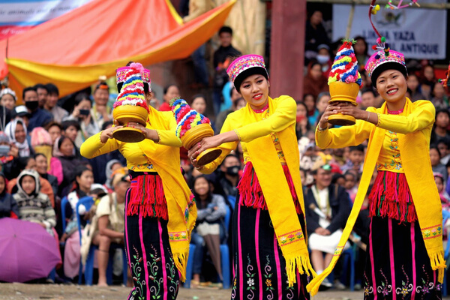
Dance of Arunachal Pradesh
Bardo Chamm, Dance of Arunachal Pradesh

Arunachal Pradesh Food, Traditional Dresses, Dance, Language

Food of Arunachal Pradesh

Momos are a common food item in Arunachal Pradesh. Rice along with fish or meat and a lot of green vegetables form the staple diet of people in Arunachal Pradesh. In addition, Thukpa is a common meal item among the Monpa tribe of the state. Rice beer is a common alcoholic beverage among the people of this hilly state. 

Dress of Arunachal Pradesh

Arunachal Pradesh’s traditional dresses for men are ‘Monapas’ and for women, it is ‘Chemise’ with an embroidered, full-sleeve jacket, along with a petticoat or skirt.

Dance of Arunachal Pradesh

The dance forms of Arunachal Pradesh are filled with energy and colours. While in some dance forms, men and women dance separately, in others they perform together. The most common traditional dance form in Arunachal Pradesh is:

  • Bardo Chamm: This dance form depicts the fight between good and evil. There is interesting folklore behind this dance form. Dancers wear masks and dress up as animals and dance to the tune of drums and cymbals. 
Language of Arunachal Pradesh

Arunachal Pradesh is believed to be one of the linguistically richest states in the country as it is home to possibly at least 30 distinct languages and innumerable dialects thereof. Some of the common languages spoken in the state are Tani, Bodic, Idu, Miju etc. Hindi and English are the official languages used in Arunachal Pradesh.

3. Assam
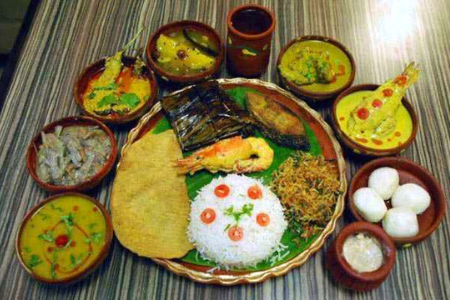
Food of Assam

Assam Food, Dance, Traditional Dresses, Language

Food of Assam: Assamese cuisine is a beautiful blend of the techniques used in cooking by people living in the hilly regions and those living in the plains. While fermenting is a standard while cooking food among people in the hills who do not have access to fresh ingredients, people in living in the plains spice up meals with fresh fish and vegetables. A traditional Assamese meal begins with a khar and ends with a spicy and tangy tenga dish. Betel Nut and paan conclude the meal. Some of the traditional dishes of Assam include pura maas mankho, dheakiyasak, pitika etc. 

Dress of Assam: The Assamese traditional dresses for men are ‘Dhoti and Kurta’ with Gamcha and for women the popular dress is ‘Muga’ which also called ‘Mekhela Chadar’

Dance of Assam: Some of the common dance forms of Assam are –

  • Bihu: This is related to the harvest festival called Bihu. Young men and women dress up in colourful clothes and dance to the tunes of dhol, pepa or gagana.
  • Jhumur Nach: This is performed by tea garden workers to the beat of a drum called ‘Madal’.
  • Bagurumba: Performed by the Bodo tribal community, this dance is performed by girls alone. 

Language of Assam: The people of Assam speak the language Assamese. It is an Eastern Indo-Aryan language and is also the official language of the state.

4. Bihar
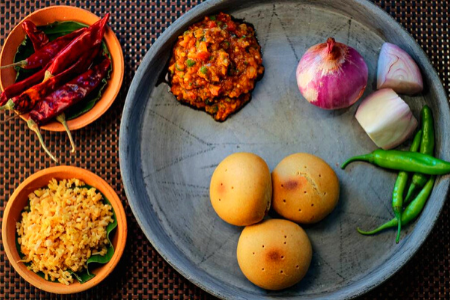
Famous Food of Bihar
Litti Chokha, Traditional food of Bihar

Bihar Food, Traditional Dresses, Language, Dance

Food of Bihar: Bihari cuisine lies somewhat between North and East India. The meals are predominantly vegetarian as there is a strong influence of Buddhism and Hindu values of non-violence on the region. However, due to the presence of many rivers abundant in freshwater fish, there are sections of the population that eat non-vegetarian food items. 

Some of the most popular Bihari dishes are Chokha, Sattu Paratha and Bihari Fish Curry.

Dress of Bihar: The traditional dresses of Bihar for men are Dhoti, Kurta and Gamchha, and for women, it is Saree and Choli tops.

Dance of Bihar: The common folk dances of Bihar include: 

  • Jhijian Dance: This is a form of folk dance in Bihar where women sing and dance to appease Lord Indra. 
  • Jat Jatin Dance: This is performed by a couple and the dance depicts the hardships and life experiences of an emigrant couple.
  • Kajari Dance: The dance is performed during the rainy season. Young girls dance like a peacocks in this form of folk dance.

Language of Bihar: Bihari is the collective name given to the different languages spoken in the region. Some of the common dialects spoken in Bihar include Maithili, Bhojpuri, Magahi, Angika etc. Hindi is the official language and also the medium of instruction in many schools in Bihar.

Read more about Bihar.

5. Chhattisgarh
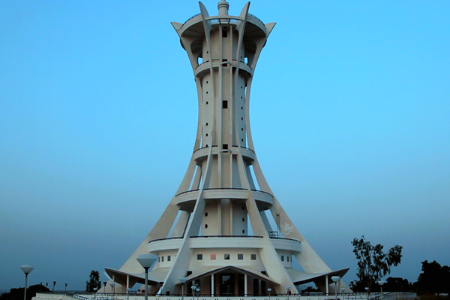
World Tallest Jait Khambh

Chhattisgarh Traditional Dresses, Food, Dance, Language

Food of Chhattisgarh

The cuisine of Chhattisgarh is mainly based of maize, wheat and jowar. The people in the state are fond of tangy meal items and sweet dishes. This makes jalebis, petha and rakhia badi popular food items in the state. The food can be categorized into two types –tribal and non-tribal.

Dress of Chhattisgarh

Saree is the most popular dress among Chhattisgarh women, and Dhoti, dhotis and headgears like cotton turbans is the most popular among men.

Dance of Chhattisgarh

The common folk dance of Chhattisgarh includes –

  • Panthi: The dance is performed on the birth anniversary of Guru Ghasi Das and has a lot of religious significance.
  • Raut Nacha: Performed by Yadavs or Yaduvanshis, this dances resembles the raas leela performed by Lord Krishna with his gopis.
Language of Chhattisgarh

Chhattisgarhi is the official language of the state. Language like Hindi is written in the Devanagari script and has a strong influence of the Munda and Dravidian languages. 

6. Goa
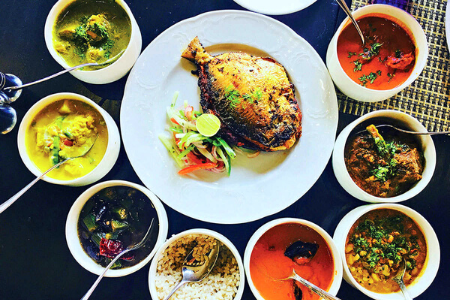
Food of Goa

Goa Food, Traditional Dresses, Language, Dance

Food of Goa: Goan cuisine is well known for its tangy and unique taste. Coconut milk, rice and seafood form the main parts of a Goa meal. The food still has a strong Hindu influence and shows many aspects of the impact that the Portuguese had on its food. Kokum is widely used in cooking Goan food. 

The Goan fish curry is a very popular dish in the state. 

Dress of Goa: In the traditional dresses of Goa, women wear a Saree, also called a Nav Vari and men wear a Dhoti and Shirt

Dance of Goa: The common folk dance of Goa includes –

  • Dekni: This is a traditional dance form which is performed by women. The music exhibits influences of both the East and West and so is traditional and contemporary at the same time. 
  • Kunbi: This dance form depicts the time before the Portuguese conquest of the region. It is mainly a social dance and is devoid of any religious connotation. 
  • Gofftoo: It is a form of peasant dance and is performed after the harvest season. 

Language of Goa: The official language of Goa and the Konkan region is Konkani. Portuguese is still spoken in these parts by the elderly population of Goa. Marathi is also spoken in some places.

7. Gujarat
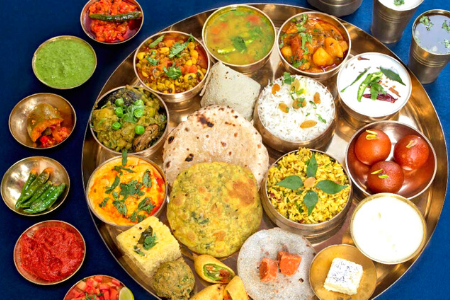
Food of Gujarat

Gujarat Traditional Dresses, Food, Dance, Language

Food of Gujarat: Gujarati cuisine is predominantly vegetarian due to the influence of Jainism and traditional Hindu values. There are four main regions in Gujarat- North Gujarat, Surti Gujarat, Kutch and Kathiawar- which have their own distinctive styles of cooking. A typical Gujarati thali consists of roti, dal, rice and vegetables. Some dishes are a beautiful blend of sweetness, saltiness and hotness.

Dress of Gujarat: The most popular Gujarati traditional dresses for women is Chaniya choli, salwar kameez, and sarees whereas men prefer wearing dhotis, kurtas, or bandis and Kedia along with a turban.

Dance of Gujarat: The common folk dance of Gujarat includes –

  • Garba: Garba is a popular form of dance that is performed during the nine-day festival of Navratri. A picture or idol of Goddess Shakti or a lamp is placed in the centre and dancers stand in concentric circles for the performance. 
  • Dandiya Raas: Dandiya Raas was traditionally performed by men to the tune of traditional instruments. However, these days the dance form has evolved and men and women are seen dancing to foot-tapping numbers during the Navratri festival. 

Language of Gujarat: Gujarati is the official language of the state. Gujarati is an Indo-Aryan language and according to studies it is the 26th most spoken native language in the world. The language owes its origin to Old Gujarati which gave birth to the modern day Gujarati and Rajasthani languages.

8. Haryana
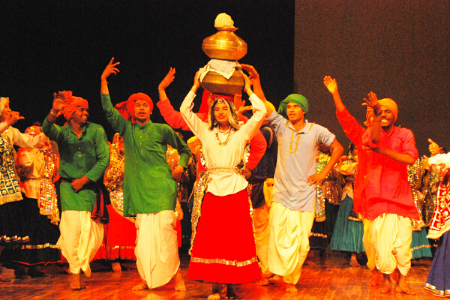
Folk Dance of Haryana

Haryana Traditional Dresses, Food, Dance, Language

Food of Haryana: The food of Haryana is true to its soil. The diet of the people of Haryana mostly consists of rotis and dairy products. Dairy products such as butter and ghee are prepared at home by women and are relished with every meal. Lassi is a commonly prepared beverage that people in Haryana drink. Some of the popular items of the Haryanvi cuisine are Pethe ki subji, teet ka achar, churma, kheer, malpuas etc. 

Dress of Haryana: Most popular traditional dresses of Haryana is Dhoti-Kurta paired with Juttis and Paghari (turban) for men and women prefer to wear Ghagra-Choli along with Odni (a headcover)

Dance of Haryana: The common folk dance of haryana include –

  • Saang Dance: This dance is performed in groups. Usually comprising of a group of 12, men dress up as women in this dance to play the roles of female characters. The dance is based on folk tales or religious stories.
  • Chhathi Dance: This is performed on the birth of a male child. Women perform this dance on the sixth day of the birth of the child. Usually performed at night, the dance depicts romantic stories.

Language of Haryana: The language commonly spoken in this region is Haryanvi. The language is an Indo-Aryan language and is quite similar to Braj Bhasha. It is also considered to be a dialect of Hindi.

9. Himachal Pradesh
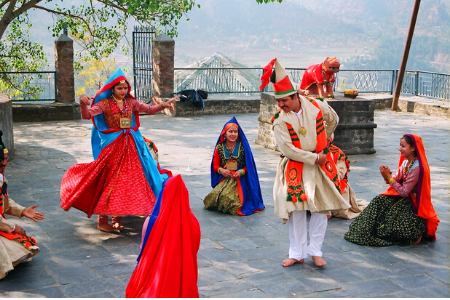
Folk Dance of Himachal Pradesh

Himachal Pradesh Food, Language, Traditional Dresses, Dance

Food of Himachal Pradesh: The cuisine of Himachal Pradesh is quite similar to the rest of North India. However, the preference of the people for non-vegetarian foods makes it a little different from the rest of North Indian foods. Red meat and wheat bread predominate the cuisine of Himachal Pradesh. Some of the popular dishes of Himachal Pradesh include Madira, Pateer, Til Chutney etc.

Dress of Himachal Pradesh: The traditional dresses of Himachal Pradesh, Men wear dhoti-kurta or pajama-kurta with Pagri (turban), whereas women wear Ghagra, Lehenga-choli, and Kurtis.

Dance of Himachal Pradesh: The common folk dance of himachal pradesh include –

  • Kinnauri Nati: A beautiful folk dance which is usually a mime and depicts the sowing of crops and the ensuing festivities. 
  • Namagen: This is usually performed to welcome the autumn season. The costumes of the dances of this folk dance is particularly interesting because of the variety of colours and women dancers were extremely beautiful silver jewellery.

Language of Himachal Pradesh: Hindi is the official language of Himachal Pradesh. However, in some parts of the state people still speak the Pahari language, which has many dialects and sub-dialects too. Punjabi is also widely spoken in the state.

10. Jammu and Kashmir

(Declared as an Union Territory on 31st Oct 2019)
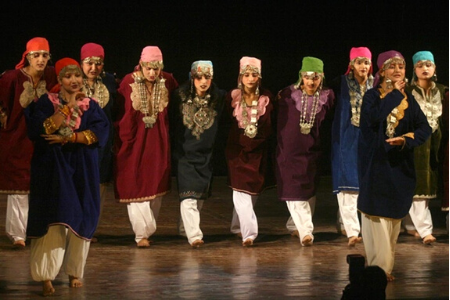
Traditional Dance of Jammu and Kashmir

Jammu and Kashmir Traditional Dresses, Food, Dance and Language

Food of Jammu and Kashmir: The Kashmiri cuisine places great emphasis on meats. Even early spiritual texts have mentioned that the people of this region were heavy meat eaters. The most popular non-vegetarian food item in this region is mutton and is cooked in as many as 30 different ways.

Dress of Jammu and Kashmir: The most traditional dresses among men and women is Kashmir. However, women wear Pheran with churidar salwar. Pathani Suit is also a traditional dress among men.

Dance of Jammu and Kashmir: The common folk dance of jammu and kashmir include –

  • Kud: It is basically a ritual dance which is performed to appease the gods. Usually performed at night, dancers sway to the tunes of instruments such as the Chhaina, flute and drums. 
  • Dumhal Dance: This is a popular form of folk dance. Only the men of the Wattal are allowed to perform this dance. The most interesting aspect of the dance is the colourful costume of the dancer. 

Language of Jammu and Kashmir: Kashmiri is the most popularly spoken language in the region. Hindi, Urdu and English are also widely used by people to communicate in J&K.


Regional Diversity in the Food, Dance and Language of States of India

It is fascinating to see how the food, dance and language of states of India change every few hundred kilometers. While the food, dance and language of states of India in the desert regions of Rajasthan focus on conservation, the food, dance and language of states of India in the lush greenery of West Bengal celebrate water and harvest.


11. Jharkhand
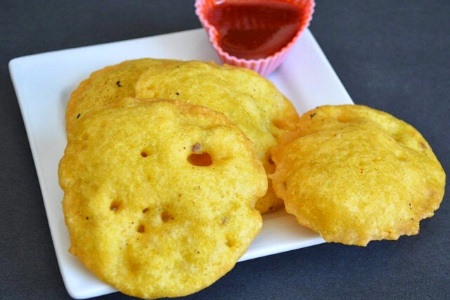
Food of Jharkhand

Jharkhand Traditional Dress, Food, Language, Dance

Food of Jharkhand: The authentic cuisine of Jharkhand is not readily available in restaurants. The original recipes can be enjoyed only on a visit to a village. The food consists of both vegetarian and non-vegetarian items. The food is prepared with minimum use of spices and vegetables. 

Dress of Jharkhand: The traditional dresses of Jharkhand is ‘Bhagwan’ (a one piece clothing), however, men also wear Dhoti-Kurta with turban, whereas women prefer to wear Saree.

Dance of Jharkhand: The common folk dance of jharkhand include – 

  • Chhou: The Chhou dance is a form of tribal dance. Dancers wear masks made of paper mache and perform on stories from mythology. The colourful costumes and jewellery are the special attraction of this dance form. 

Language of Jharkhand: Although Hindi is the official language of the state, many other languages and dialects are used by the people living in different parts of the state. Such languages include Santhali, Mundari, Kharia, Ho, Bhumiji etc. 

12. Karnataka
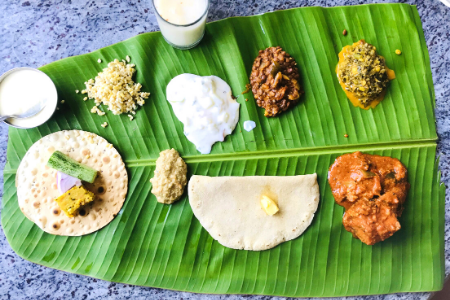
Food of Karnataka

Karnataka Traditional Dresses, Food, Dance, Language

Food of Karnataka: Karnataka cuisine is a wholesome mix of all the essential nutrients needed for the body. The carefully balanced meal consists of rice, lentils, vegetables and is, surprisingly, started with a dessert called Payasam. Some of the popular dishes of Karnataka include Bisibele bhath, Holige, Vangi Bath, Uppittu etc. 

Dress of Karnataka: Women prefer to wear Ilakal, silk sarees, and dhavani, whereas men prefer to wear shirt and Panche (a dhoti)

Dance of Karnataka: The common folk dance of karnataka include –

  • Kunitha: This is a ritualistic dance performed by the men of the shepherd community.
  • Komb-aat: The Komb-aat is also a ritualistic dance which is performed within the temple premises. The dance depicts stories from mythology. 

Language of Karnataka: Kannada is the official language of Karnataka. Other languages such as Tulu, Konkani, Kodava and Urdu are also spoken in the state.  

13. Kerala
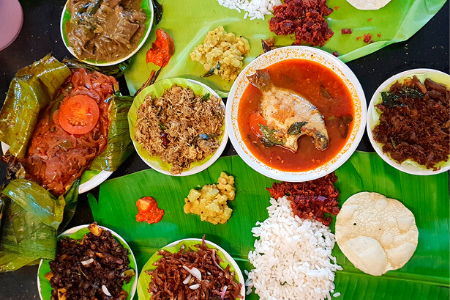
Food of Kerala

Kerala Food, Traditional Dress, Language, Dance

Food of Kerala: The cuisine of Kerala is distinctive in taste, aroma and flavour. The preparation techniques differ along the length of the state. Seafood is highly popular in the coastal regions of the state. Coconut and coconut oil form an important ingredient of Kerala cuisine.

Dress of Kerala: Kerala women traditional dresses known as Set saree with a golden border, whereas men adorn lungi or mundu with shirt as their traditional dress. 

Dance of Kerala: The common folk dance of kerala include –

  • Kathakali: A highly dramatised dance drama which depicts stories from mythology. This dance form is particularly important due to the make-up and costumes used by the artists.

Language of Kerala: Malayalam is the official language of the state. However, Hindi, English, Tamil are the other languages that are spoken in the region.

14. Madhya Pradesh
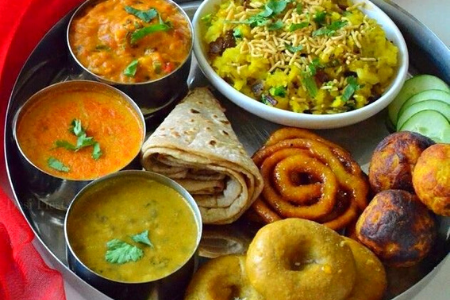
Famous Food of Madhya Pradesh

Madhya Pradesh Traditional Dress, Food, Dance, Language

Food of Madhya Pradesh: The cuisine of Madhya Pradesh includes both vegetarian and non-vegetarian items. While the people of Northern and Western Madhya Pradesh keep their food centred around wheat and meat, the people of Southern and Eastern MP keep their food centred around rice and fish. Some of the most popular dishes of Madhya Pradesh are rogan josh, biriyani, pilaf etc. 

Dress of Madhya Pradesh: Dhoti-Kurta with turban is the most traditional dresses among men and women prefer to wear saree, lehnga-choli.

Dance of Madhya Pradesh: The common folk dance of madhya pradesh include –

  • Tertali: This form of dance is usually performed by women of the Kamar tribe. Dancers cover their head with a veil, tie cymbals on different parts of their body and dance to the tune of a Manjira. 
  • Charkula: Performed on the third day after Holi, Charkula is presented by women who place lit lamps on their head and dance to appease Lord Krishna. 

Language of Madhya Pradesh: Hindi is the official language of Madhya Pradesh. Other languages such as Marathi, Malvi, Nimadi, Bundeli etc are spoken in different parts of the state.

15. Maharashtra
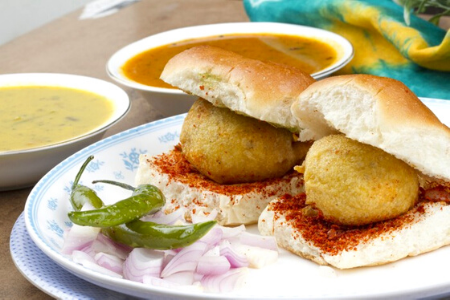
Food of Maharashtra

Maharashtra Traditional Dress, Food, Dance, Language

Food of Maharashtra: Marathi cuisine presents a mixed bag of flavours and tastes. The cuisine has dishes that range from mild to spicy dishes. Vegetables, rice, wheat, jowar etc form the main components of the Maharashtrian diet. Some of the popular dishes are bata vada, puran poli etc. 

Dress of Maharashtra: Women adorn choli with famous styled saree called Lugda and Nauwari saree. Men prefer to wear traditional dhoti called Dhotar and Pheta as their dress.

Dance of Maharashtra: The common folk dance of maharashtra include –

  • Lavani: Lavani is a very popular folk dance form that is performed by women wearing sarees. The beats are quick and the dance form is noted for its powerful rhythm. 

Language of Maharashtra: Marathi is the official language of Maharashtra. However, due to high levels of immigration other languages such as Hindi and English are also use widely.

16. Manipur
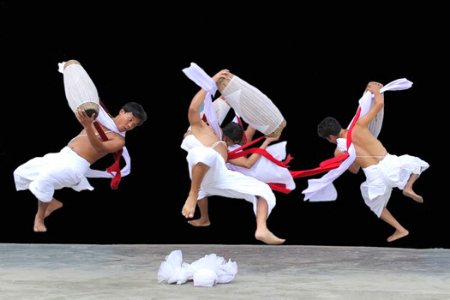
Dance of Manipur

Manipur Traditional Dresses, Food, Dance, Language

Food of Manipur: Manipuri cuisine is centred around rice, vegetables and fish. The cuisine is very seasonal and depends on the kind of vegetables available. However, Manipuri cuisine differs from the food of rest of India due to the use of various herbs and roots that are endemic to the region. Also, there are certain vegetables too that are found only in this region and cannot be found anywhere else. While most food items are cooked using spices and herbs, there are certain items such as fermented bamboo shoots that require an acquired taste.

Dress of Manipur: Traditional dresses among men is jackets styled with dhoti and white turban, whereas women adorn Innaphi and Phanek similar to a sarong.

Dance of Manipur: The common folk dance of manipur include –

  • Dhol Cholom: is a drum dance and is performed during Holi. Drums are an integral part of dances in Manipur.

Language of Manipur: Manipur or Meitei language is the state language of Manipur. However, other dialects are spoken in different parts of the state. English is widely used in Manipur.

17. Meghalaya
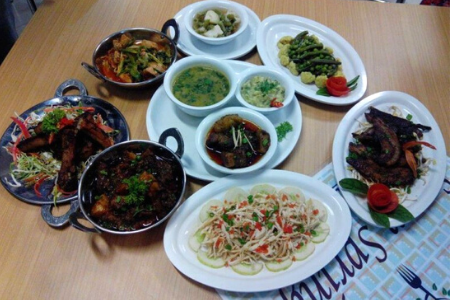
Food of Meghalaya

Meghalaya Food, Traditional Dresses, Dance, Language

Food of Meghalaya: The cuisine of Meghalaya is not only distinct from the rest of India but also stands apart from the cuisine of the rest of North Eastern states. The meal is centered on rice and spicy non-vegetarian dishes. People domesticate animals for food and commercial purposes. Some of the popular food items of Meghalaya include Ki Kpu, minil songa, sakin gata etc. 

Dress of Meghalaya: Meghalaya traditional cloth is called Jaisen, a single piece of clothing made from mulberry silk. Women style it as saree, whereas men wear it as dhoti. Men wear jackets and turban along with it also.

Dance of Meghalaya: The common folk dance of meghalaya include –

  • Laho Dance: is one of the most popular traditional dance forms of Meghalaya. This is performed by a young girl who dances with two young men , hand in hand, as a person recites beautiful couplets on love.

Language of Meghalaya: The main languages of Meghalaya are Garo and Khasi. English is the official language of the state. Nepali is also widely used by the people of Meghalaya.

18. Mizoram
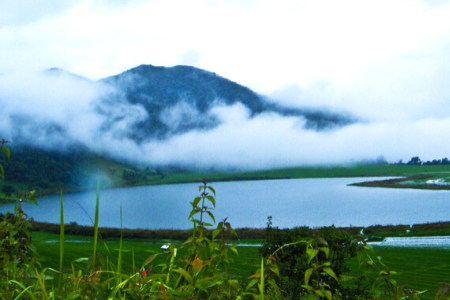
Weather of Mizoram

Mizoram Traditional Dresses, Food, Dance, Language

Food of Mizoram: The cuisine of Mizoram is quite distinct in terms of style of cooking and ingredients used. While the cuisine has both vegetarian and non-vegetarian dishes, Mizos use non-vegetarian ingredients even in their vegetarian dishes. The staple food item, like most regions in India, is rice. Fish is quite popular in this region. The Mizo cuisine is quite healthy as very little oil is used while cooking.

Dress of Mizoram: Traditional dresses for men in Mizoram is a single piece cloth just like saree, which is 7 feet long and 5 feet wide, often in red and white stripes along with a thick coat for winter. The traditional dress of women called Puan. Puanchei is the dress worn by most Mizo women during festival, which comes in black and white stripes.

Dance of Mizoram: The common folk dance of mizoram include –

  • Cheraw Dance: Cheraw dance is a very popular form of dance that is seen in Mizoram. Men hold bamboo poles to the ground and move them in a pattern according to the rhythm played on drums. Women jump through the gaps in these poles to the beat. 

Language of Mizoram: Mizo is the most widely spoken language in Mizoram. Mizo language is also called Lushai. Other languages prevalent in Mizoram are Pawi, Paite and Hmar.

19. Nagaland
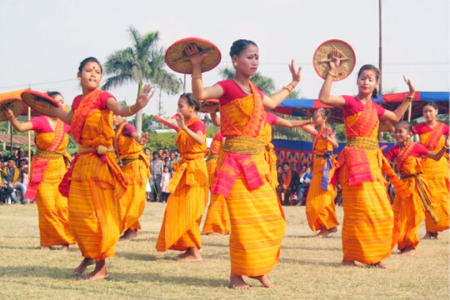
Nagaland Famous Folk Dance

Nagaland Food, Traditional Dresses, Dance, Language

Food of Nagaland: The people of Nagaland have the most unique way of cooking their food. Their food is dried, smoked or fermented. The meal in a Naga family consists of rice, boiled vegetables and a meat dish. The food dishes are generally boiled. Smoked meat is a preferred food dish. Different kinds of chillies are available in Nagaland and these are liberally used in the food items to make them spicy. 

Dress of Nagaland: Nagaland traditional dresses of women called Angami, consist of sleeveless top called Vatchi paired with a slip called Neikhro paired with Pfemhou (a white skirt), whereas Men adorn shawl, Ratapfe, and a lungi.

Dance of Nagaland: The common folk dance of nagaland include –

  • Chang Lo: Chang lo is a kind of a victory dance which is performed on special occasions and important festivals such as Poanglem, which is a three day harvest festival. 

Language of Nagaland: There are different languages in Nagaland which vary according to the tribes. There are about 20 different dialects, but these languages do not have a script of their own.

20. Odisha
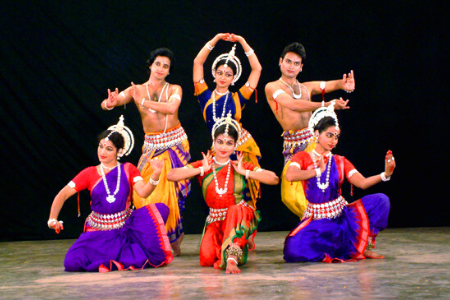
Odissi Dance of Odisha

Odisha Traditional Dresses, Food, Dance, and Language

Food of Odisha: The cuisine of Odisha is quite similar to that of West Bengal. The food is spicy and uses the quintessential ginger-garlic paste that is used in Bengali food. Often food is cooked in mustard oil. The sweets made of chenna are quite famous in Odisha.

Dress of Odisha: Most popular traditional dresses for women is Sambalpuri and Kataki saree, whereas the men wear gamcha, dhoti, and kurta.

Dance of Odisha: The common folk dance of odisha include –

  • Gotipua: This is a part of the rich cultural heritage of Odisha. This dance is performed by young boys below the age of 14. This dance was performed in the temples of Odisha to appease Lord Jagannath.
  • Odissi: This is a beautiful dance form which was practiced by the devadasis of the temples of Odisha. The dance form is characterised by the beautiful costumes, graceful movements and stunning jewellery used by the dancers. 

Language of Odisha: Odia is the state language of the state. However, languages such as Hindi, English, Bengali and Telugu are widely used languages in the state.

21. Punjab
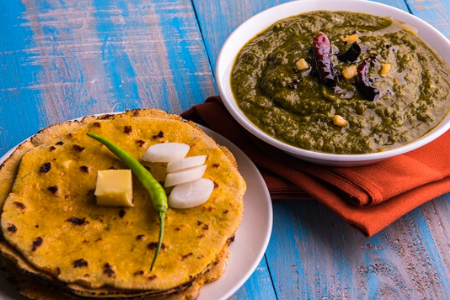
Famous Food of Punjab

Punjab Food, Traditional Dresses, Dance, Language

Food of Punjab: Punjabi cuisine is one of the most delicious cuisines in the country. The food is characterised by strong flavours and aroma. Although the cuisine includes both vegetarian and non-vegetarian dishes, the meat dishes are quite popular not just in Punjab but all throughout the country. Dairy products are also widely used in the Punjabi cuisine.

Dress of Punjab: Traditional dresses for Punjabi men is kurta along with Tehmat/pajama, or even a dhoti styled with different types of pagri or turban. Women wear salwar kameez suit, Patiala suit with Paranda (a hair ornament) as traditional dresses.

Dance of Punjab: The common folk dance of punjab include –

  • Bhangra: Bhangra is one of the most popular traditional dance forms of India. It is usually performed during the harvest season and is noted for the colourful costumes and peppy music. 

Language of Punjab: Punjabi is the state language of Punjab and is also the 10th most widely spoken native language in the world. Hindi is also widely spoken in Punjab.

22. Rajasthan
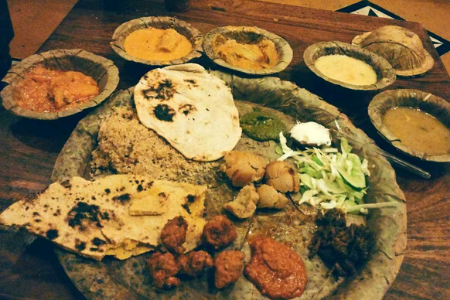
Food of Rajasthan

Rajasthan Traditional Dresses, Food, Dance, Language

Food of Rajasthan: The Rajasthani cuisine reflects the war like lifestyles and the arid atmosphere of the region. The food is prepared in such a manner so that the food did not have to be reheated. Rajasthan is famous for Dal Bati Churma, where dal (lentil curry) is served with sweet Churma and baked atta (flour) Batis. Gatte ki sabji (made from Besan) is also a famous food in Rajasthan.

Dress of Rajasthan: The tradition dresses of Rajasthan is Men wear kurtas along with dhoti/pajama, Angarkha, with paggar or safa (a headgear like turbans). Women wear the traditional ghagra designed with Kanchli (a choli or blouse).

Dance of Rajasthan: The common folk dance of rajasthan include –

  • Ghoomar: The Ghoomar dance was traditionally performed by the women of the Bhil tribe of Rajasthan. The dance is performed women who wear large swirling robes and sway to the tunes of men and women singing. The beautifully coloured clothes and the jewellery of the dancers are the special features of this form of dance. 

Language of Rajasthan: Rajasthani is the state language. It has descended from Old Gujarati.

23. Sikkim
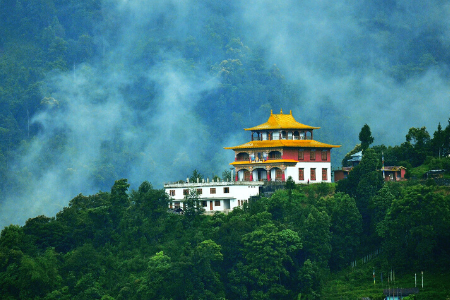
Sikkim Famous Temple

Sikkim Traditional Dresses, Food, Dance, Language

Food of Sikkim: Sikkimese cuisine is quite popular in the whole country. Momos and noodle stalls are spread all over the country and people from all backgrounds are fond of Sikkimese cuisines. Some of the most popular dishes of the Sikkimese cuisine are Gya thuk, Phagshapa, Thukpa etc. 

Dress of Sikkim: Traditional dresses for men and women in Mizoram is called Bakhu. Men wear with a belt and trousers, whereas women style it with a full sleeve silk blouse called Honju.

Dance of Sikkim: The common folk dance of sikkim include –

  • Singhi Chham: This is a traditional dance form wherein dancers wear masks to resemble the snow lion which is the cultural symbol of the region. The music is provided by beating cymbals. 

Language of Sikkim: The Sikkimese language is also called Tibetan, Bhutia or Dranjongke. The language is spoken by the Bhutia community of Sikkim.

24. Tamil Nadu
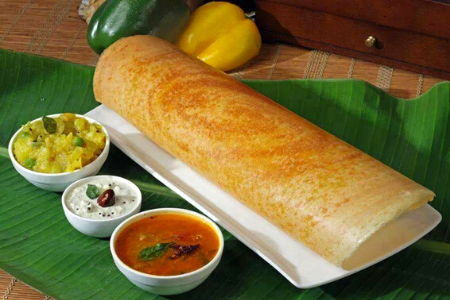
Tamil Nadu Famous Food

Tamil Nadu Traditional Dresses, Food, Dance, Language

Food of Tamil Nadu: Tamil cuisine is another popular Indian cuisine. Idlis, dosas and vadas are some of the popular Tamil Nadu dishes that are relished by most people of India. The dishes are usually rice and wheat based and are spicy and tangy. 

Dress of Tamil Nadu: Most popular traditional dresses among women is Pattu Pavada, a silk skirt and blouse or half saree. Men’s traditional dress is Mundu and shirts.

Dance of Tamil Nadu: The common folk dance of Tamil Nadu include –

  • Bharat Natyam: This is a classical Indian dance form and is a reconstruction of the traditional dance form of devadasis practised in the temples of Tamil Nadu. The dance form is named after Bharat Muni who wrote Natya Shatra.

Language of Tamil Nadu: Tamil language is one of the Dravidian languages of India and has been declared as a classical language by the Indian government. Besides Tamil Nadu, it is also spoken in the neighbouring states of Puducherry, Kerala etc. It is also a major lingua franca in the Andaman and Nicobar islands.

25. Tripura
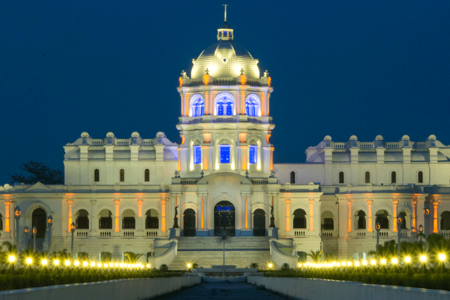
Ujjayanta Palace, Agartala

Tripura Traditional Dresses, Food, Dance, Language

Food of Tripura: The Tripuri cuisine is predominantly non-vegetarian. However, vegetables are added to such dishes to make them more wholesome and nutritious. Tripuri cuisine has some very peculiar and typical ingredients such as the Berma, which is dried and fermented fish. Due to the huge settlements of Bengalis in Tripura, the cuisine is more Bengali than tribal.

Dress of Tripura: Men traditionally wear gamcha called Rikutu gamcha and a shirt called kubai. Women’s traditional dresses is a cloth draped to their knee called Rinnai along with a small cloth called Risa.

Dance of Tripura: The common folk dance of tripura include –

  • Hojagiri: Hojagiri is the traditional dance of the Reang tribal community of Tripura. Young girls dance on an earthen pitcher and balance an object on their head. The music is provided by beating of cymbals.

Language of Tripura: The main languages of Tripura are Bengali and Kokborok. There is a large settlement of Bengalis in Tripura and a majority of the population in the cities speaks Bengali. The native tribals of the state speak Kokborok.

26. Uttar Pradesh
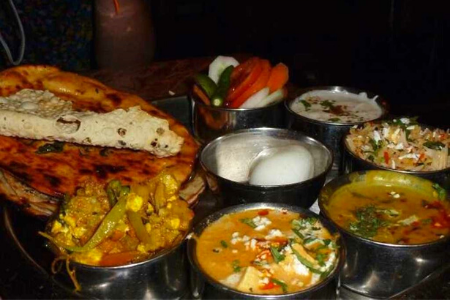
Local Food of Uttar Pradesh

Uttar Pradesh Traditional Dresses, Food, Dance and Language

Food of Uttar Pradesh: The cuisine of Uttar Pradesh is mainly of two types-Awadhi and Mughlai. The cuisine consists of both vegetarian and non-vegetarian dishes. The cuisine of Uttar Pradesh is also famous for its kebabs, biriyani and different mutton recipes. The Mughlai cuisine is influenced by the Mughal era and the Awadhi cuisine is influenced by the cuisines of Punjab and Kashmir. Some of the most popular dishes from the Uttar Pradesh cuisine are chaat, samosa and pakoras.

Dress of Uttar Pradesh: Traditional dresses for men is dhoti-kurta or kurta-pajama, whereas Saree and Salwar-Kameez is popular among women.

Dance of Uttar Pradesh: The common folk dance of uttar pradesh include –

  • Charkula dance: This is a form of traditional folk dance which is performed women. The performers usually cover their faces with a veil and carry a multi-tier arrangement of lamps on their head. There are about 108 lit lamps in this arrangement. The performers dance to the rasiya songs of Lord Krishna. 

 Language of Uttar Pradesh: Hindi is the official language of the state. However, many other languages, including Hindi, and their dialects are spoken in different parts of the state.

27. West Bengal
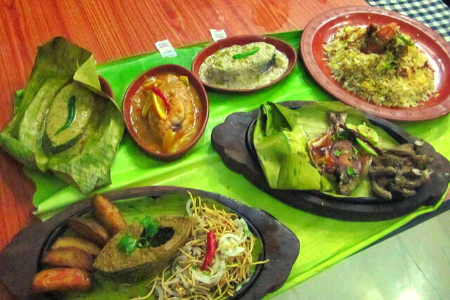
Food of West Bengal

West Bengal Traditional Dresses, Food, Dance and Language

Food of West Bengal: The food in West Bengal has the finest blends of both vegetarian and non-vegetarian dishes. This state is famous for the variety of Maach (fishes), served with various flavours. Hilsa and Chingri fishes are the most loved fishes in the state. West Bengal is also known as the ‘land of Maach & Bhaat’. West Bengal is also famous for the variety of sweets. “Rasgulla’, is the most famous sweet of this state.

Dress of West Bengal: The most traditional dresses among Bengali women is Saree in Bengali style, whereas men wear Dhoti-Kurta.

Dance of West Bengal: The Bengali dance has the shadow of folk tradition, influenced from tribes and the Indian tradition. The famous dances in West Bengal are Chau dance, a rare form of mask dance and the Gaudiya Nritya, the Bengali Classical. Various other forms of Indian classical dances have their origin in West Bengal.

Language of West Bengal: Bengali is the most common and widely spoken language in West Bengal. Other languages spoken are Hindi, Santali, Nepali, Urdu and Oriya.

28. Uttarakhand
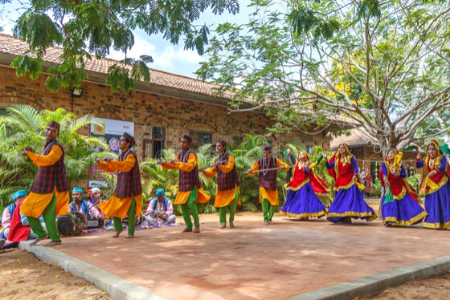
Folk Dance of Uttarakhand

Uttarakhand Traditional Dresses, Food, Dance and Language

Food of Uttarakhand: People of Uttarakhand mostly prefer vegetarian food. However, non-vegetarian lovers can also be fund in different parts of the state. The Uttarakhand food has diverse ingredients, flavours and colours. Pulses and rice are widely eaten. The typical Uttarakhand dishes include Chainsoo, Kafuli, Jholi, Phaanu and Roat. The famous desserts include Kesar Halwa, Gulgula, Arsa and Jhangora Ki Kheer.

Dress of Uttarakhand: Ghagra-choli is a popular traditional dresses in Uttarakhand for women, whereas Dhoti-Kurta/Dhoti with shirt is popular among men.

Dance of Uttarakhand: When it comes to traditional dances, Uttarakhand is known for having unique and diverse forms of dances. The dance forms in Uttarakhand are not similar to that of classical dances in other states. It is rather simpler and beautiful to see. The most popular dance forms of Uttarakhand are Chancheri, Chhapeli, Bhotiya, Barada Narti, Jhora, Choliya, Langvir, Pandav, Jhainta and more.

Language of Uttarakhand: Garhwali and Kumaoni are the most commonly spoken languages in the hilly areas of the state of Uttarakhand. However, Hindi is widely spoken in the plains. Uttarakhand is the only state in India with ‘Sanskrit’, as one of its official languages.

29. Telangana
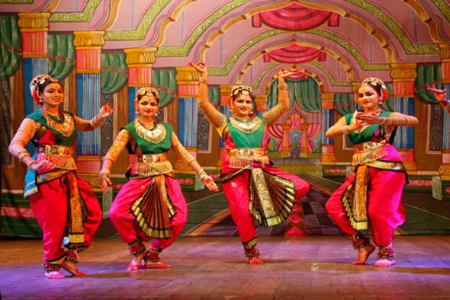
Perini Popular Dance, Telangana

Telangana Traditional Dresses, Food, Dance and Language

Food of Telangana: If you are in Telangana, you can’t afford to miss the Telangana cuisines. Telangana Food is known for its unique flavours and essence, which is popular all around the globe. The ‘Telangana Biryani’ is the most loved cuisine, which is highly demanding in different parts of the planet. Other must-have dishes in Telangana are Pathar-ka-Ghosht, Nahari and Haleem. Telangana Cuisine has sweetness as well. The ‘Telanganai Kheer’ and ‘Seviyon-ka-Meetha’ is much popular.

Dress of Telangana: Andhra Pradesh and Telangana have similar traditional dresses. Women prefer to wear Saree, whereas men prefer to wear dhoti-kurtas.

Dance of Telangana: The Perini is the most popular dance forms in Telangana. The Marfa dance was also introduced in Telangana only. It is widely popular in the Arab countries, as well.

Language of Telangana: Telugu is the official and most commonly spoken language in the state of Telangana. Urdu, is the second most commonly spoken language and English is also used in different parts of the state.

Hope you like the content. Please do share with your friends and comment below your thoughts on this. Happy Reading!

FAQs for Food, Dance and Language of States of India: Complete Guide

Q1. How many states are there in India?

Ans. India currently has 28 states and 8 Union Territories. Each state has its own unique culture, language, traditional food, festivals, and dance forms that reflect the diversity of the country.

Q2. Which language is most commonly spoken in India?

Ans. Hindi is one of the most widely spoken languages in India. However, India is a multilingual country with many regional languages such as Tamil, Telugu, Bengali, Marathi, Kannada, Malayalam, Punjabi, Gujarati, and Assamese spoken in different states.

Q3. Which Indian state is famous for Bharatanatyam dance?

Ans. Tamil Nadu is famous for the classical dance form Bharatanatyam. It is one of the oldest traditional dances in India and is known for graceful movements, expressions, and storytelling.

Q4. What is the famous food of Punjab?

Ans. Punjab is famous for dishes like Makki di Roti, Sarson da Saag, Butter Chicken, and Lassi. Punjabi food is known for its rich taste, butter, and spices.

Q5. Which state is known for Kathakali dance?

Ans. Kerala is known for Kathakali, a traditional classical dance-drama famous for colorful costumes, face makeup, and expressive performances based on mythological stories.

Q6. Why is India called a land of cultural diversity?

Ans. India is called a land of cultural diversity because every state has its own language, traditional dress, dance forms, cuisine, festivals, and customs. This variety makes India culturally rich and unique.

Q7. Which state is famous for Bhangra dance?

Ans. Punjab is famous for the energetic folk dance called Bhangra. It is mainly performed during harvest festivals and celebrations.

Q8. What are some popular foods from South India?

Ans. South Indian states are famous for foods like dosa, idli, sambar, uttapam, pongal, and appam. States such as Tamil Nadu, Karnataka, Kerala, and Andhra Pradesh have different styles of South Indian cuisine.

Q9. Which dance form belongs to Odisha?

Ans. Odisha is famous for the classical dance form Odissi. It is one of the oldest Indian classical dances and is known for elegant poses and devotional themes.

Q10. How do food and language represent the culture of Indian states?

Ans. Food and language reflect the traditions, history, and lifestyle of people living in different Indian states. Traditional dishes, local words, songs, and dance forms help preserve the cultural identity of each region in India.

Also Read: Indian music and dances
State and Union Territory Holiday Calendar 2024

National Calendar of India – History and Uses

The Gregorian Calendar – History and Facts

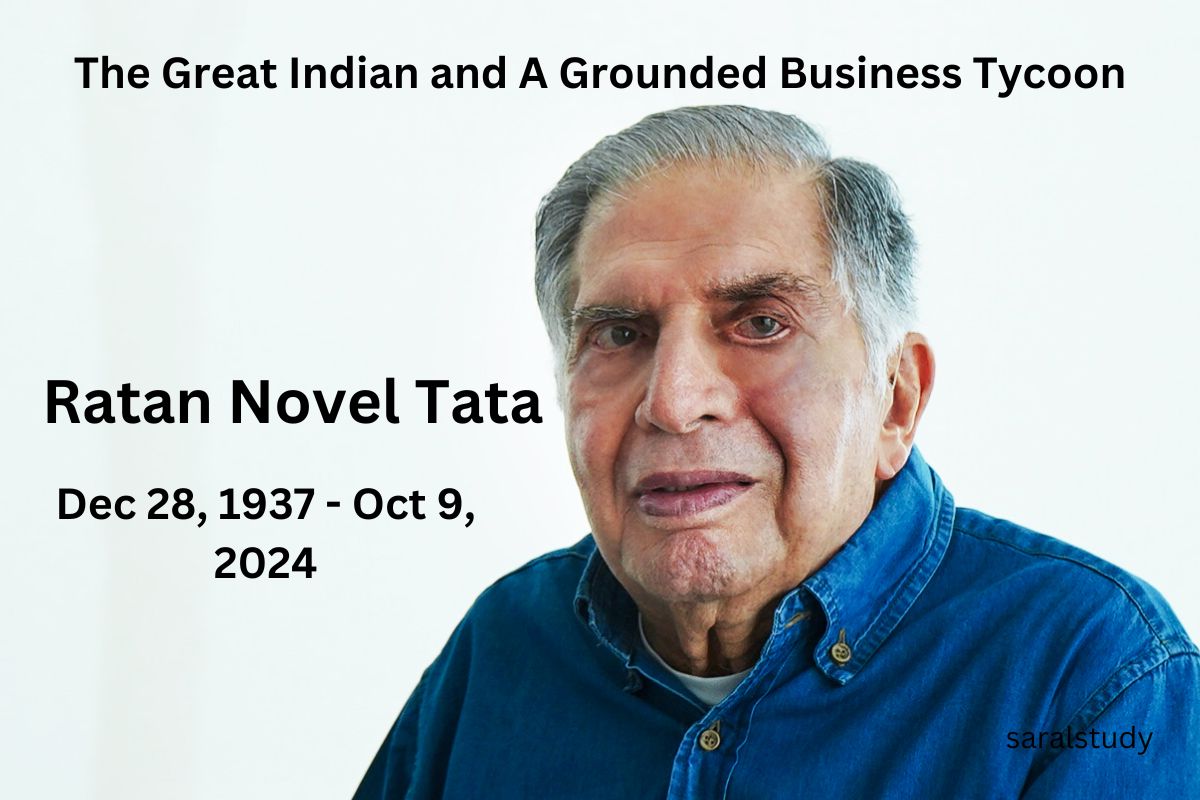
Ratan Tata: A Grounded Business Tycoon | Legacy, Achievements & Future

Ratan Tata: A Grounded Business Tycoon

Ratan Tata, one of India’s most beloved business leaders and philanthropists, passed away on October 9, 2024, leaving behind a legacy of vision, humility, and remarkable business acumen. Known for transforming the Tata Group into a global powerhouse, Ratan Tata’s impact on India’s corporate world remains unparalleled. His passing marks the end of an era, but his values and contributions continue to guide the next generation. In this article, we pay tribute to his extraordinary achievements, his personal life, and the future of the Tata Group.

Ratan Tata’s life and achievements

Full Name Ratan Naval Tata
Date of Birth December 28, 1937
Date of Death October 9, 2024
Early Life Born into the Tata family, he was raised by his grandmother Lady Navajbai Tata after his parents’ separation. He has a younger half-brother, Noel Tata.
Education Bachelor’s in Architecture from Cornell University; Advanced Management Program from Harvard Business School
Career Start Began his career in the Tata Group working on the shop floor of Tata Steel in 1961
Chairmanship Became chairman of Tata Sons in 1991 and led the Tata Group until 2012, creating Tata Consultancy Services (TCS), Tata Motors, and launching the Tata Nano.
Achievements Instrumental in acquiring Jaguar Land Rover (JLR) and Tetley Tea. Expanded Tata Group’s global footprint. Introduced the Tata Nano, a car for the masses.
Philanthropy Known for his contributions to education, healthcare, and rural development through the Tata Trusts.
Honours Padma Vibhushan (2008), Padma Bhushan (2000), Honorary Knight Commander (UK), various international honors.
Legacy A transformative leader in Indian business, is deeply respected for his vision and compassion. His commitment to nation-building and philanthropy continues to shape his legacy.
Family Never married. Survived by his half-brother Noel Tata and extended Tata family.
Business Properties Tata Group has a strong future, with an established leadership under N. Chandrasekaran, as it continues its diverse operations in IT, automobiles, steel, and more globally.

Ratan Tata and Tata Group

Tata is one of the country’s most respected and revered business tycoons. His visionary skills and thought leadership gave the Tata Group a global identity and made it the country’s largest industrial conglomerate.

He is respected for his humility and compassionate attitude towards the general public. This gentle business tycoon is also amazingly intuitive about business prospects and has won the hearts of millions of Indians with his kind-heartedness. Here are some of the highlights of his personality and career.

Ratan Tata: Early Life & Personal Life

Ratan Naval Tata, or RNT, was born on December 28, 1937. His father Naval Tata was the adoptive son of the founder of the Tata Group Jamshedji Tata.

He did his schooling at the Campion School in Mumbai and Cathedral and John Connon School. He graduated in architecture from Cornell University and went on to do an advanced management programme at Harvard Business School in 1975.

Journey Of A Grounded Business Tycoon

Ratan Tata joined his grandfather’s organization in 1962. His first job at the company was shovelling limestone into the blast furnace.

Through sheer hard work, he grew within the ranks of the company and was named as the successor of JRD Tata in 1991.

Since then, Ratan Tata took firm hold of the reins of the company and chartered a victory path so unique and futuristic that it changed the identity of the 144-year-old company and gave it a new face and identity.

Ratan Tata brought all the loosely tied organizations of the group under one umbrella and promoted the group as a brand. He was also one of the few visionaries who went ahead and acquired properties in foreign lands giving the company and the country a new identity.

Business Achievements of Ratan Tata

The acquisition of Tetley Tea, Jaguar Land Rover and Corus established the fact that India Inc was a force to reckon with.

Ratan Tata’s tenure as the chairman of Tata Sons was marked by bold decisions that placed the company on the global map. His most notable achievements include the acquisition of Jaguar Land Rover and Corus Steel, making Tata Group a significant player in the international market. Under his leadership, Tata Group launched the Tata Nano, one of the most affordable cars ever created. He also led Tata Consultancy Services (TCS) to become a global IT services leader.

As a businessman, he is respected worldwide for his business acumen and leadership. He is known to be a soft-spoken person who likes to indulge in the simple pleasures of life.

Unlike other business tycoons, he lives in a simple flat. His indulgences include a trip to Alibaug with his two German Shepherd dogs once in a while.

How Ratan Tata’s Vision for an Affordable Car Gave Birth to the Tata Nano

Disturbed by the sight of a family sitting cramped on a scooter on a rainy day, Ratan Tata decided to make a car that every middle-class family could afford. The technological wonder called ‘Tata Nano’ was unveiled. Although the initial model couldn’t take off so well, the design has been upgraded and re-introduced in the market at a slightly higher price and has found acceptance among the masses. 

Awards To Ratan Tata

Ratan Tata was awarded the Padma Bhushan and the Padma Vibhushan, two of India’s highest civilian honours, for his contributions to industry and commerce. His commitment to ethics and philanthropy was evident in his charitable endeavours through the Tata Trusts, which focused on education, healthcare, and rural development.

Ratan Tata’s Compassionate Response to 26/11: A Leader Who Truly Cared

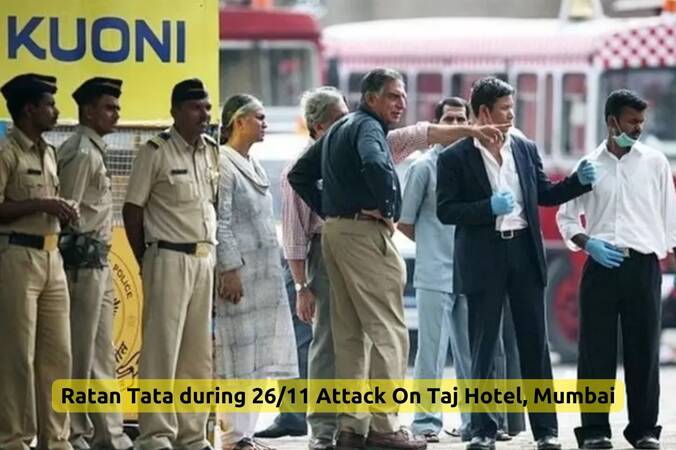
Ratan Tata during 2611 Attack On Taj Hotel
Ratan Tata during 2611 Attack On Taj Hotel, Mumbai, India

Ratan Tata has shown great emotions of compassion and strength during adverse situations. After the 26/11 attacks on the Taj Palace, which is a property of the Tata Group, Ratan Tata personally went and met the family members of the staff who were killed in the attack. While most companies just do with releasing a compensation amount to the bereaved families, this gentle giant went all the way to personally offer his condolences and console them during their grief.

Conclusion:

Ratan Tata’s contributions to India’s corporate world and his philanthropic endeavours are unmatched. His legacy will continue to inspire not only the Tata Group but the entire business community for generations. The Tata Group, with its strong leadership and values, is well-prepared to continue Ratan Tata’s vision for growth, innovation, and social responsibility.

FAQs about Ratan Tata:

Q. What is Ratan Tata’s full name?

Ans. Ratan Naval Tata

Q. Was Ratan Tata married?

Ans. No, Ratan Tata never married.

Q. What was Ratan Tata’s biggest achievement?

Ans. His biggest achievement was leading the global acquisitions of Jaguar Land Rover and Corus Steel, transforming Tata Group into an international conglomerate.

Q. Who will succeed Ratan Tata?

Ans. Natarajan Chandrasekaran is currently the chairman of Tata Sons, while Noel Tata is a potential successor for future leadership roles.

Q. What was Ratan Tata’s philanthropic contribution?

Ans. Ratan Tata’s philanthropic efforts, primarily through Tata Trusts, focused on healthcare, education, and rural development, benefiting millions of lives in India.

Also Read: Narendra Modi – The Most Exciting Political Figure Among India’s Youth

How Can I Get A Scholarship To Study Abroad?

How Can I Get A Scholarship To Study Abroad

Pursuing higher education overseas is a dream for many Indian students, but the high cost can be a significant barrier. Fortunately, a scholarship to study abroad opportunity can help alleviate the financial burden, making international education more accessible. Scholarships are not just limited to academic excellence; many are based on various criteria, including financial need, field of study, extracurricular achievements, and more.

Why does a country offer a scholarship to study abroad?

India has a rich pool of talent, and many global institutions recognize this by offering exclusive scholarships for Indian students. Countries like the USA, UK, Canada, Australia, and Germany have multiple programs aiming to attract brilliant minds from India. These scholarships can cover partial or full tuition fees and, in some cases, also provide for living expenses, travel costs, and even health insurance.

The primary advantage of securing a scholarship is not just the financial aid but also the prestige that comes with it. Scholarships often open doors to networking opportunities, internships, and sometimes even job placements post-study. Moreover, having a scholarship can bolster a student’s CV, making them stand out in a competitive job market.

For Indian students looking to study abroad, understanding the various scholarship options is pivotal. From government-sponsored programs like the Fulbright-Nehru Fellowship to university-specific grants, there is an array of choices to explore. With proper research and timely application, these scholarships can significantly ease the path to acquiring an international degree.

In the following sections, we will delve deeper into the types of scholarships available, the eligibility criteria, and a practical guide to maximizing your scholarship opportunities. Stay tuned to unlock the full potential of studying abroad with financial aid.

Types of Scholarships Available for Indian Students

Securing a scholarship to study abroad can significantly ease the financial burden and make your educational dreams a reality. For Indian students, a variety of scholarships are available that cater to different fields of study, countries, and levels of education. Here’s an overview.

1. Government-Funded Scholarships

Government-funded scholarships are one of the most sought-after options. These scholarships are typically highly competitive and cover a substantial part of tuition fees and living expenses. Some prominent examples include:

Fulbright-Nehru Fellowships

These scholarships are for Indian students wishing to pursue studies in the USA. They cover various fields, from arts to environmental science.

Chevening Scholarships

Funded by the UK government, these scholarships offer full financial support for students pursuing a master’s degree in the UK.

Commonwealth Scholarships

These are mainly for students from developing Commonwealth countries, including India, aiming to study in Commonwealth nations.

2. University-Specific Scholarships

Many universities worldwide offer their own scholarships to attract talented international students. These scholarships vary widely in terms of eligibility, benefits, and the number of awards. For instance:

Rhodes Scholarships

Ideal for those looking to study at the University of Oxford.

Gates Cambridge Scholarships

These are for outstanding applicants from outside the UK to study a full-time postgraduate degree in any subject available at the University of Cambridge.

3. Organization-Based Scholarships

Several organizations and foundations provide scholarships to Indian students to encourage international education and cultural exchange. Examples include:

Inlaks Scholarships

These provide grants and awards for various courses and are typically awarded to students demonstrating exceptional talent.

Tata Scholarships

Specifically for Indian students looking to study at institutions like Cornell University.

4. Subject-Specific Scholarships

Some scholarships are tailored to specific fields of study. These can provide specialized support for students in areas like STEM, arts, or social sciences. Examples include:

The STEM Women Scholarships

Focused on promoting women in Science, Technology, Engineering, and Mathematics.

Understanding the types of scholarships available can guide you toward finding the right fit for your needs, helping you take the next step towards your academic and professional goals.

Eligibility Criteria for Scholarships

Understanding the eligibility criteria is crucial for Indian students aspiring to secure scholarships for studying abroad. Different scholarships come with varying requirements, so it’s vital to thoroughly check each one you plan to apply for.

Academic Excellence

Most scholarships require a strong academic record. This typically means a high GPA or equivalent marks in your previous studies. Some scholarships might also ask for specific qualifications like SAT, GRE, or GMAT scores.

Field of Study

Many scholarships are targeted towards particular fields such as STEM (Science, Technology, Engineering, and Mathematics), arts, or social sciences. Ensure your chosen course aligns with the focus of the scholarship.

Nationality and Residency

Scholarships often specify that applicants must be citizens or permanent residents of India. Some scholarships may also have regional criteria, favoring students from certain states or cities.

Financial Need

Need-based scholarships assess your family’s financial situation to determine eligibility. This might involve submitting income statements or other financial documents as proof.

Language Proficiency

If you’re heading to an English-speaking country, proficiency in English is essential. Scholarships often require standardized test scores like TOEFL or IELTS.

Extracurricular Involvement

Scholarships sometimes look beyond academics. Active participation in extracurricular activities, leadership roles, and community service can boost your application.

Letters of Recommendation

Many scholarships require letters of recommendation from teachers, employers, or mentors. These letters should attest to your character, academic prowess, and potential.

Personal Statement or Essay

A compelling personal statement or essay can set you apart. This is your chance to share your story, aspirations, and why you deserve the scholarship.

By meeting these eligibility criteria and carefully preparing your application, you significantly enhance your chances of securing a scholarship to study abroad. Always read the specific requirements for each scholarship and tailor your application accordingly.

Step-by-Step Guide to Applying for Scholarships

Applying for scholarships to study abroad can seem overwhelming, but breaking the process down into clear, manageable steps can ease the burden. Here’s a structured guide to help you navigate through the application:

1. Research Thoroughly

Start by identifying scholarships available specifically for Indian students. Use reliable sources such as government websites, educational portals, and official university pages. Make sure to note down application deadlines, required documents, and specific eligibility criteria.

2. Prepare Your Documentation

Gather all necessary documents well in advance. Common requirements include academic transcripts, test scores (like IELTS, TOEFL, GRE, or GMAT), a well-crafted resume, letters of recommendation, and personal statements. Keep multiple copies and digital backups of each document.

3. Write a Strong Personal Statement

Your personal statement or essay is your chance to shine. Clearly explain your academic achievements, professional goals, and reasons for choosing the particular program and institution. Tailor your essay to reflect how you meet the scholarship criteria. Authenticity and clarity are key.

4. Get Strong Recommendations

Letters of recommendation should come from faculty or professionals who know you well. Choose recommenders who can provide specific examples of your achievements and character. Provide them with all necessary information to write a compelling letter.

5. Double-Check Requirements

Before submitting your application, meticulously review each scholarship’s specific requirements. Ensure all documents are accurate, your personal statement is error-free, and you meet all stipulated criteria.

6. Apply Early

Submit your applications well before the deadline. Early submission not only ensures your application is reviewed thoroughly but also conveys your enthusiasm and preparedness.

7. Follow Up

After submission, follow up with the scholarship organization if you haven’t received a confirmation. This step shows your dedication and keeps you informed about your application status.

By following these steps, you can streamline your scholarship application process and significantly increase your chances of success. Good luck!

Tips for Maximizing Your Scholarship Opportunities

Securing a scholarship to study abroad can be a game-changer, but the competition is often fierce. Here are some practical tips to help you maximize your chances.

1. Start Early

Begin your search and application process as early as possible. Many scholarships have deadlines several months before the academic year starts, so getting a head start can give you ample time to gather all necessary documents and polish your application.

2. Research Thoroughly:

Look beyond the well-known scholarships and explore options offered by universities, private organizations, and government bodies. Websites like scholarship-positions.com and official university pages are good places to start.

3. Meet Eligibility Requirements

Carefully read the eligibility criteria for each scholarship. Make sure you meet all requirements before spending time on the application. Tailor your applications to highlight how you fit the specific criteria.

4. Craft a Compelling Personal Statement

Your personal statement is your chance to shine. Be authentic and articulate your academic goals, achievements, and why you deserve the scholarship. Don’t forget to mention your future plans and how the scholarship will help you achieve them.

5. Get Strong Recommendations

Strong letters of recommendation can make a significant difference. Choose recommenders who know you well and can speak about your academic and personal strengths. Provide them with enough background information to write a detailed and compelling letter.

6. Prepare for Interviews

Some scholarships require an interview. Practice common questions and conduct mock interviews with friends or mentors to build confidence and get constructive feedback.

7. Utilize Resources

Make use of available resources such as scholarship workshops, counseling sessions, and guidance from educational consultants to fine-tune your application.

By following these tips, you can enhance your chances of securing a scholarship and making your dream of studying abroad a reality. Good luck!

Additional Resources

Additionally, don’t overlook the importance of crafting a compelling personal statement and obtaining strong recommendation letters. Tailoring each application to align with the scholarship’s objectives and demonstrating your unique value can set you apart from other candidates.

As you embark on this journey, arm yourself with as many resources as possible. Websites like Scholarship Portal and DAAD offer extensive listings, while educational consultancies can provide personalized guidance. Universities often have dedicated scholarship offices, and social media platforms can be valuable for staying updated on deadlines and networking with past recipients.

Remember, persistence is key. Apply for multiple scholarships and don’t get discouraged by initial setbacks. Each application is a learning experience that brings you closer to your goal.

For further guidance, you might find the following resources helpful:

Ministry of Human Resource Development, India

Provides detailed guidelines on various government scholarships.

Edupass

Offers comprehensive information on financial aid for international students.

Taking these steps and utilizing these resources will help you navigate the scholarship landscape, making your dream of studying abroad a reality.

Conclusion

In conclusion, obtaining a scholarship to study abroad as an Indian student is a feasible goal with the right preparation and approach. By understanding the types of scholarships available, meeting the eligibility criteria, and meticulously following the application process, you can significantly enhance your chances of receiving funding.

Also Read: Best Exams for Studying Abroad? Find Out Now

Related Articles:

IELTS or TOEFL: Universities’ Top Choice?

Study Abroad: All you need to know about

World’s Most Beautiful Birds – Nature’s Artistry

World's Most Beautiful Birds - Nature’s Artistry

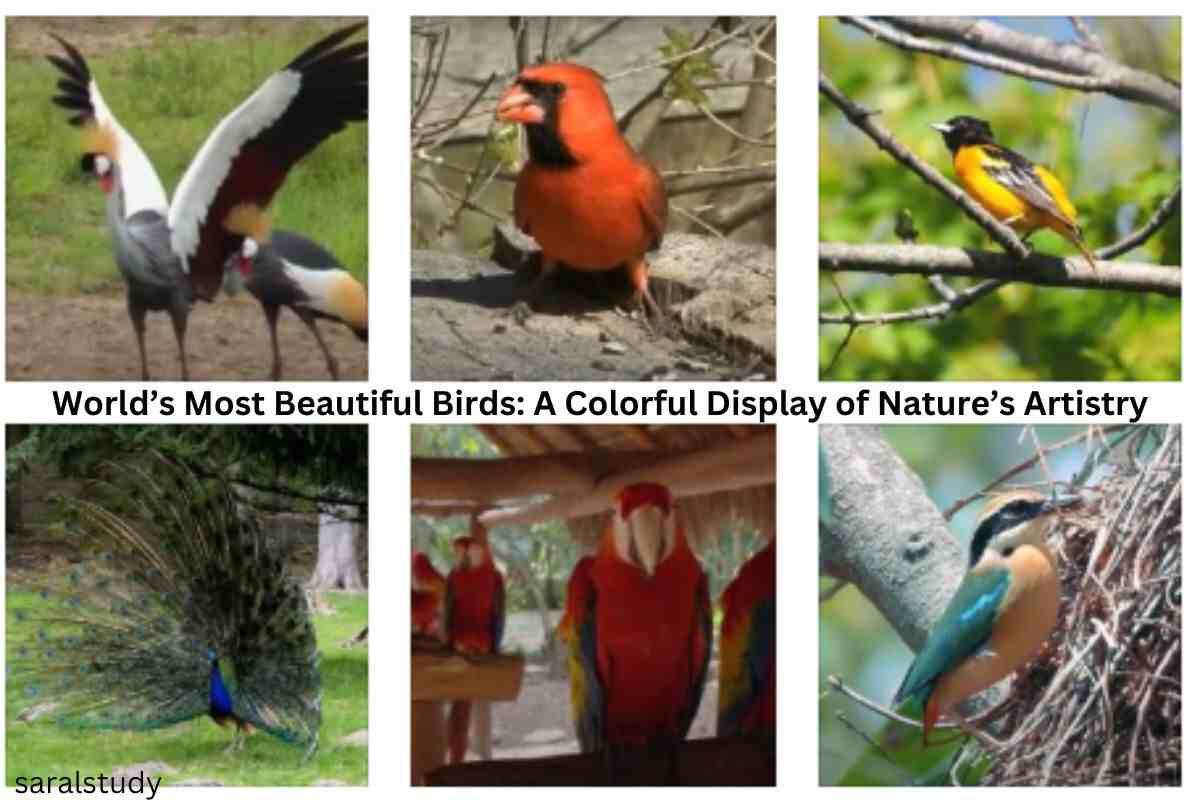
There are numerous beautiful creatures which enhance the beauty of nature and make it look spectacular, but amongst all the beautiful birds are the most beautifully painted and most colourful creatures which endorse our planet. These small or big winged wonders are blessed with the largest colour palette by nature.

Most Beautiful Birds Across The World

These avian marvels, whether small or large, showcase a spectacular array of colours that make our planet even more beautiful

Here is the list of some amazingly colorful birds which bejewel the forest across the world:

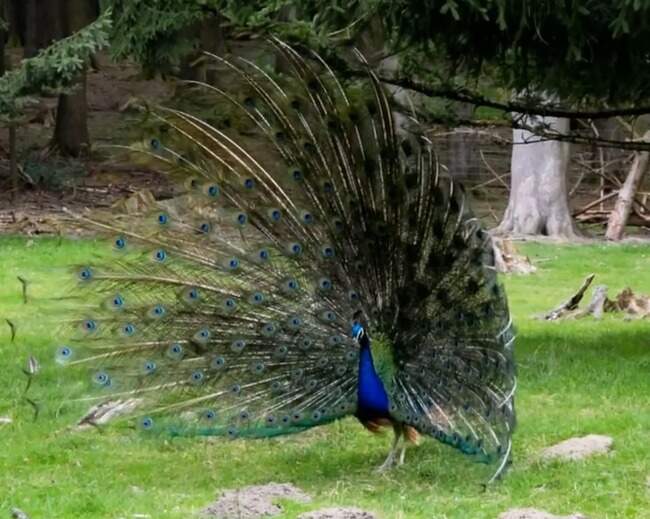
Peacock: The Jewel of the Bird World

Peacock
Peacock | Image source: Youtube

The Peacock, with its legendary and flamboyant feathers, is renowned for its extravagant mating displays. Its iridescent plumage features a mesmerizing range of blues, greens, and golds, making it one of nature’s most visually stunning creatures.

It is also the national bird of India.

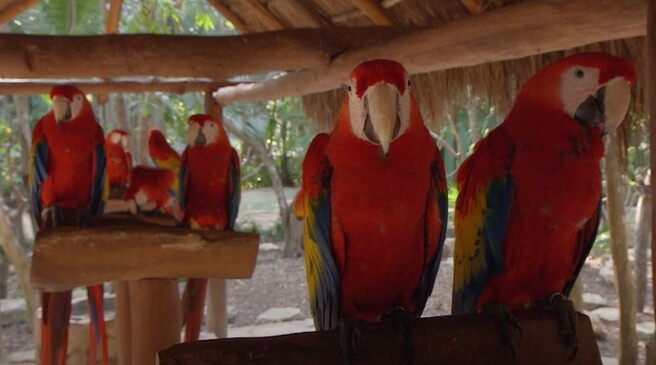
Scarlet Macaw: The Vibrant Parrot

Scarlet Macaw

The Scarlet Macaw, a symbol of the vibrant natural beauty of Honduras, is renowned for its striking combination of red, yellow, and blue feathers. This magnificent parrot not only dazzles with its colors but also captivates with its lively personality and vocalizations.

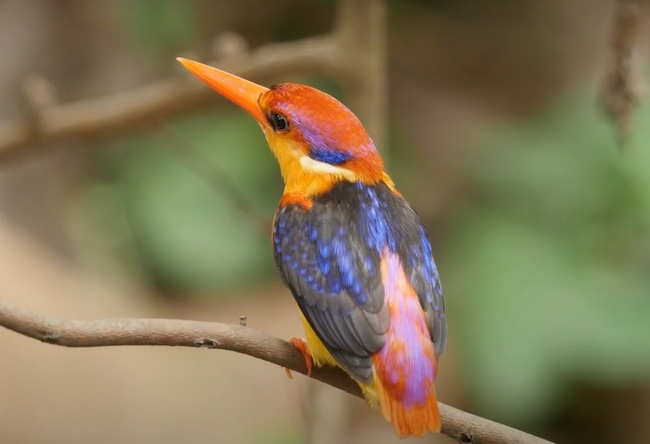
Kingfisher: A Flash of Color

kingfisher

Commonly spotted near water bodies, the Kingfisher is a small but vibrant bird adorned with brilliant shades of orange and blue. Its vivid plumage and swift movements make it a favourite among bird watchers and a stunning sight in its natural habitat.

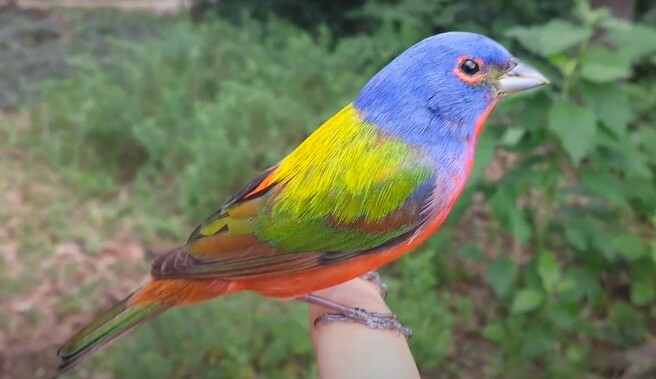
Painted Bunting: North America’s Colorful Gem

Painted Bunting

The Painted Bunting, native to North America, is known for its extraordinary color palette. Males are particularly striking with their mix of bright blues, greens, and reds. Their colorful plumage plays a crucial role in their courtship rituals.

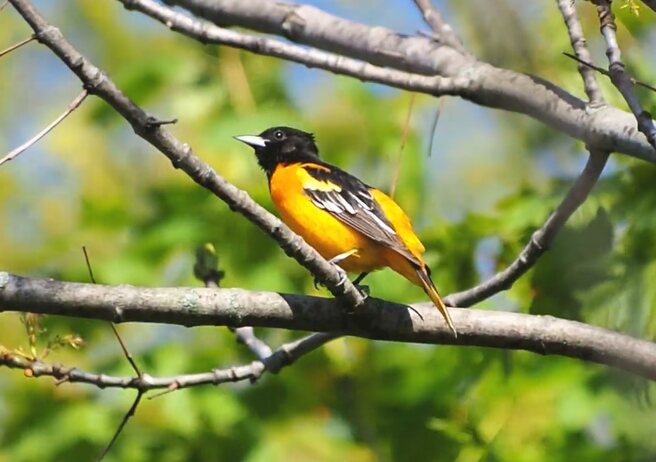
Baltimore Oriole: A Symphony of Color and Song

Baltimore Oriole

The Baltimore Oriole is celebrated for its striking orange and black feathers, which, combined with its melodious song, create a captivating presence. This bird’s vibrant appearance and enchanting voice leave bird watchers in awe.

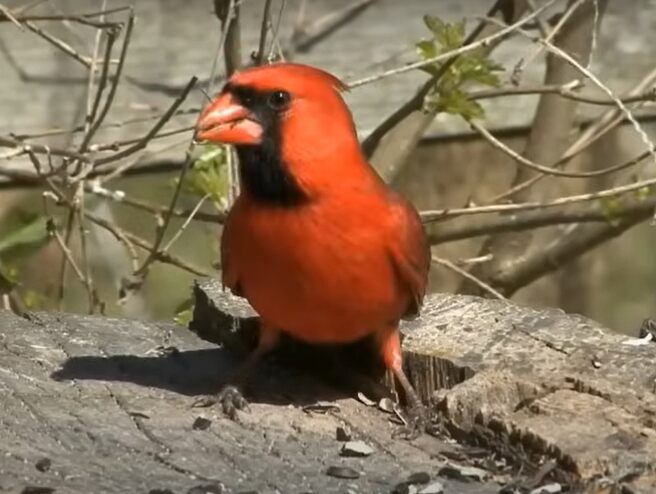
Northern Cardinal: A Scarlet Icon

Northern Cardinal

The Northern Cardinal is an iconic bird, famous for its vivid scarlet plumage. The striking red feathers, complemented by a distinctive black mask around its beak, make this bird a spectacular sight and a symbol of beauty in many regions.

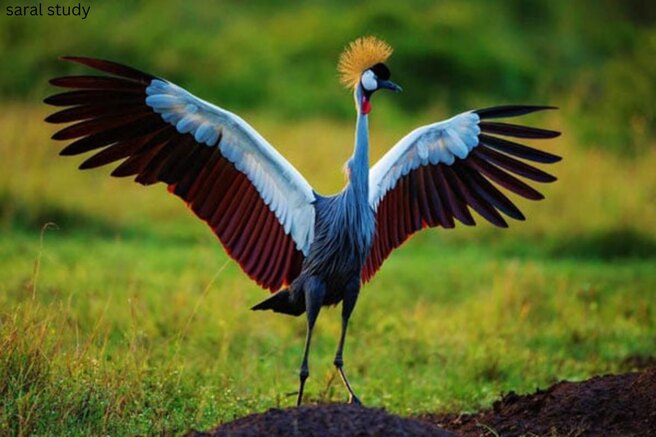
African Crowned Crane: Elegant and Unique

African Crowned Crane | The Grey Crowned Crane | saralsstudy

While not as colorful as some of its counterparts, the African Crowned Crane stands out due to its distinctive appearance. Its elaborate golden crown and striking black and white feathers make it a captivating and elegant bird.

It is also the national bird of Uganda.

Hope you like the content. Do share your thoughts in comment section below and share it with your friends.

FAQs for World’s Most Beautiful Birds – Nature’s Artistry

1. Which is considered the most beautiful bird in the world?

Ans: Many people consider the peacock one of the most beautiful birds because of its colorful feathers and majestic appearance.

2. Why are some birds so colorful?

Ans: Birds have bright colors for attracting mates, protecting territory, and communicating with other birds.

3. Which bird is famous for its rainbow-colored feathers?

Ans: The rainbow lorikeet is well known for its vibrant rainbow-like feathers and striking appearance.

4. What is the national bird of India?

Ans: The Indian peafowl, commonly called the peacock, is the national bird of India.

5. Which bird has the longest tail feathers?

Ans: The male ribbon-tailed astrapia has extremely long tail feathers compared to its body size.

6. Are beautiful birds found in tropical forests?

Ans: Yes, many colorful and beautiful birds live in tropical rainforests because of the rich biodiversity and warm climate.

7. Which bird is known for its dancing display?

Ans: Birds-of-paradise are famous for their unique dancing and courtship displays.

8. Why are hummingbirds considered special?

Ans: Hummingbirds are admired for their tiny size, fast wing movement, and shimmering feathers.

9. Can beautiful birds be kept as pets?

Ans: Some birds like parrots and cockatiels are kept as pets, but many exotic birds are protected wildlife species.

10. Which bird is known for its elegant white feathers?

Ans: The swan is admired worldwide for its graceful movements and elegant white feathers.

Also Read: Indian Birds : Types, Name and Images

Vidyasiri Scholarship 2020-21: Last Date, Application Form, Renewal

Vidyasiri Scholarship

Vidyasiri Scholarship (Karnataka ePass) is one of the welfare scholarships provided to the praiseworthy students belonging to the reserved categories of Karnataka. Vidyasiri Scholarship is basically for the educational encouragement of the eligible students of the state. It’s initiated by the Department of Backward Classes Welfare, Government of Karnataka. The fund issued to the eligible students directly transferred to the bank accounts of the beneficiaries.

Vidyasiri Scholarship links all welfare departments, Colleges, databases of Secondary Schools Leaving Certificate (SSLC), treasury, and Banks to pay out scholarships. It portrays an ecosystem that ensures trouble-free distribution of scholarship funds to the verified beneficiary’s bank accounts.

Vidyasiri Scholarship 2020-21 – Brief Information

Name of Scholarship Vidyasiri Scholarship
Mode of Application Online
Scholarship Provider Department of Backward Classes Welfare, Government of Karnataka
Scholarship Amount SSLC – ₹ 10,000 & PUC – ₹ 15,000
Application Apply Date  April – May 2021
Vidyasiri Scholarship 2020-21 Last Date To Apply Announced in 2020-21

Vidyasiri ePass Scholarship At a Glance

Karnataka ePass (Karepass) is the online portal on which students can apply for various schemes of scholarships in the state of Karnataka. Through this portal, eligible students can apply for the Vidyasiri ePass Scholarship Online. You can find all the updates and information regarding the Vidyasiri Scholarship on the Karnataka ePass website. The registration for Vidyasiri Scholarship 2021 is likely to begin in April or May 2021 Applicants are advised to go through the details mentioned in this article before apply.

Karnataka Vidyasiri ePass Scholarship – Process

The Karnataka Vidyasiri ePass Scholarship is one of a kind, and the application process is very simple. The complete application process is done online on the portal of Karnataka ePass (Karepass). The online system of Vidyasiri Scholarship links the data of the welfare department, treasury, banks, SSLC (Secondary Schools Leaving certificate), and colleges to ensure smooth processing and fast distribution of scholarships. Through Karnataka ePass (Karepass), the government of Karnataka ensures that students receive the delivery of scholarship funds without any hassle. The fund transfer is made directly to the bank account of the beneficiary. The Vidyasiri Scholarship is provided to eligible students for admission to junior colleges and further studies in Karnataka.

Details of online vidyasiri scholarship schemes under Karnataka ePass Scholarship

Eligible scholars from Karnataka can apply to three schemes to obtain the Karnataka ePass Vidyasiri Scholarship.

  • Fee concession for the complete course for PMS FAAS, FC, and NUR.
  • Fee concession and Free hostel accommodation for Matriculation courses.
  • Prathibha Puraskar Scholarship for SSLC / Secondary PUC.

Vidyasiri ePass Scholarship Online Details

Events

Details

Scholarship Provider

Karnataka State Government

Scholarship Scheme Name

Vidyasiri Scholarship 2021 ePass Karnataka

Vidyasiri Scholarship granted to students of

9th, 10th, 11th, 12th, Graduate, Post Graduate

Visyasiri Scholarship Amount

1500/-

Apply Date

September 2021 (Exected)

Last Date to Apply

November (Exected)

Mode of application

Online

Vidyasiri Scholarship Scheme 2020-21

The eligible students from Karnataka can apply for the various Vidyasiri Scholarship Scheme.

1. Free Hostel Accommodation Scheme

  • Karnataka government grant free Hostel accommodation and fee concession for the merit listed students who belong to backward classes such as SC/PWD/ST/OBC.
  • This scheme is available for post-matric programs only if students have passed class – 10th.

2. Prathibha Purskar Scholarship for SSLC / Secondary PUC

  • The Pratibha Puraskar scholarship is meant for praiseworthy students who have passed SSLC / Secondary PUC examination (with more than 90% marks).

Full Course Fees of Vidyasiri Scholarship 2020-21

The applicants need to fulfil the following specifications to be available for full course (Vidyasiri Scholarship fee concession amount) fees concession.

  • The candidate should be a permanent citizen of Karnataka.
  • For SC / ST applicants, the yearly income of the family/parents/guardians should be up to 2 lakh per year.
  • For underprivileged class/PWD applicants, the income of family/parents/guardians should be up to 1 lakh per year.
  • Candidates should is pursuing in post-matric programs approved by the Government of Karnataka.
  • Apply for Vidyasiri Scholarship Online, the candidate should have 75% attendance.

Vidyasiri Scholarship 2020-21 – Important Dates

The applicants can check online the Vidyasiri Scholarship Dates, from the following table given below.

Events

Date

The online scholarship application process starts with

September

Vidyasiri Scholarhip Last Date For Application Form

October

Fresh and Renewal Registrations

September

Vidyasiri ePass Scholarship Eligibility Criteria

Vidyasiri Scholarship extends an opportunity to backward class students, who are meritorious and scoring high marks to accomplish a rejection of tuition fees through a profitable grant from the government of Karnataka. To that, applicants have to fulfil some relevant eligibility requirements. There are three schemes in which Vidyasiri Scholarship has different eligibility conditions. The same has been listed below:

1. Full course fee waiver schemes for Vidyasiri Scholarship 

  • The domicile of the applicant must be Karnataka State only.
  • Applicable only for post-matric aspirants studying in an educational institution in the state.
  • An attendance rate of 75% is compulsory.
  • SC/ST applicants should have their yearly family income less than 2 lakhs per year.
  • OBC candidates /persons with disabilities should have their yearly family income less than 1 lakhs per year.

2. Free hostel accommodation scheme

  • The domicile of the applicant must be Karnataka State only.
  • Applicants should belong to class 1/2A/2B/3A/3B/SC/ST/OBC.
  • The Distance between the house and education institution of the candidate must be greater than 5 kilometers to avail of this facility.
  • Applicants should have their annual family income less than 2.5 lakhs per annum.

3. Pratibha Puraskar Scheme for 10th/12th students

  • The domicile of the applicant must be Karnataka State only.
  • The applicant must be studying in an educational institution [government/private] in Karnataka only.
  • The applicant’s score in the 10th/12th standard should be above 90%.
  • The vidyasiri scholarship is allowed only once to a student per course.
  • Applicants should have their yearly family income less than 2.5 lakhs per year.

Courses offered by Vidyasiri Scholarship

1. Group “A” Course:

Postgraduate degree including PhD. and M.Phil. The Fields covered are Allied Sciences, Agriculture, Architecture, Business Administration, Business Finance, Computer Application, Design, Engineering, Fashion Technology, Management, Medicine, Planning, and Technology.

  • Commercial Pilot License.
  • Post-Doctoral Programs.
  • Professional courses like ICFA, ICWA, CS, CA etc.
  • Post Graduate Diploma in Medicine.
  • Post Graduate Diploma in Management.
  • LLM

2. Group “B” Courses:

  • All PG and UG courses including degree, certificate and diploma for which the minimum eligibility is 10+2.
  • PG courses not covered under ‘Group A’.

3. Group “C” Courses:

  • All programs and course for a graduate degree / certificate not covered under ‘Group A’ or ‘Group B’ like BA, B.Com, BSC and others.

4. Group “D” Courses:

  • Higher Secondary (Class 11th and Class 12th)
  • ITI Course
  • Any 3 years diploma course that can be pursued after passing class 10th, like Polytechnic.

How to Check Online Vidyasiri Scholarship Application Status ?

All applicants that have applied for online scholarship can check Vidyasiri Scholarship status following the steps given below:

  • To check the online scholarship status, Visit the official portal of Vidyasiri Scholarship .
  • Click on the student services tab.
  • Select the application status option.
  • Applicants can be redirected to a login page.
  • Applicants have to enter your application number, academic year, SSLC completion year, etc in the login window.
  • Click on the “Get status” button.
  • Your Vidyasiri scholarship status will display on screen.

How to Know your Application Number for Vidyasiri Scholarship Online?

In case the candidate has forget/miss their application number, they can get it from the online Karnataka ePass Vidyasiri Scholarship online portal. They simply need to adhere to the guidelines gave underneath:

  • Go to the Karnataka ePass Scholarship Online portal i.e. https://karePass.cgg.gov.in.
  • Click on “Student Services” tab.
  • Click on “Now Your Application Number” link.
  • Enter all the necessary information in individual fields. Applicants will be given two alternatives i.e. Vidyasiri Scholarship details and hostel details. For scholarship details they need to tap on “Get Scholarship Details” and for hostel they need to tap on “Get Hostel Details”.
  • At last, application no. and particular details will show up.

Documents Required for Vidyasiri Scholarship 2020-21

As per rules and regulations, aspirants must ensure that they submit all documents within the specified time. Aspirants should scan and upload the documents only in the required size and format (specification). Those applicants who fail to upload documents in the specified time shall miss their opportunity.

Important documents to be submitted for Vidyasiri Scholarship Online are:

  • Aadhaar card of the candidate.
  • Aadhaar card of parents or guardians.
  • Caste certificate
  • Income certificate
  • The Bonafide certificate to be acquired by the applicant from the corresponding educational institution.
  • SSLC or 10th standard mark sheet
  • Domicile certificate.

Vidyasiri Scholarship – Benefits & Rewards

After the process and verification method of Vidyasiri Scholarship Online Application Forms, the govt can prepare a shortlisted form of the selected applicant. They’ll be eligible to receive rewards and advantages from the government. The details are given below:

Full course fee waiver schemes Free hostel accommodation scheme Pratibha Puraskar scheme for 10th/12th students
  • Complete course fee: INR 15000 to around 500 Second PU for the students.
  • Complete course fee: INR 10000 to around 1000 SSLC for the students.
  • Total hostel stay and accommodation charges shall be covered.
  • The full fee of the course pursued further shall be reserved off.

How to Apply Online Vidyasiri Scholarship Application Form 2020-21?

  • To Apply for online vidyasiri scholarship, Visit the website https://karePass.cgg.gov.in/ to apply for Vidyasiri ePass Scholarship Online application form.
  • Click on ‘Student Zone’.
  • Choose the Online Scholarship scheme you wish to apply.
  • Fill the details properly.
  • Upload the Documents asked.
  • Check the Details again and submit.
  • Take the print out of the application form.
  • Post the printed application form to the district officer within the due date.

Vidyasiri Scholarship Amount

  • The Government of Karnataka will give Rs.1500/- to the deserving candidate.
  • In this program, Karnataka Scheme about 20000 pupils will take the advantage of the Post-Matric scholarship.

Contact Details are Call on this number 080-65970005 to the Karnataka ePass Vidyasiri Scholarship Support team between 10:00 AM to 05:30 PM. And if you have any queries.

Vidyasiri Scholarship – Important Instructions

Important Instructions for applicants to follow about Vidyasiri Scholarship Online:

  • The Full Form of ePass Scholarship stands for electronic payment and application system of online scholarship.
  • Aspirants can get out their application number from the student services tab of the official portal on the website.
  • Applicants can also login to the official portal to get the hostel details they are looking for.
  • Know your status of hostel application, applicants need to check into the “hostel application” status.
  • For finding out whether applicants have been elected under the Pratibha Puraskar scheme or not, applicants need to click on -“Pratibha acknowledgment” and download the list given to check for the availability of their names in it.

Reservation of all categories for Vidyasiri Scholarship

CAT 1 15%
CAT 2A 53%
CAT 3A 14%
CAT 3B 18%

Vidyasiri Scholarship 2020-21 Renewal Process

Steps to your Vidyasiri Scholarship 2020-21 Renewal

  • Visit the official website karepass.cgg.gov.in.
  • Choose Renewal and click on “Apply Now.”
  • Click on “0k” to accept that you have gone through the instructions
  • Fill all the required details and documents
  • Download the acknowledgment
  • Have a printout of the Vidyasiri Scholarship 2020-21 application form for future use

Vidyasiri Scholarship – Contact Details

Applicants who have any doubts/queries regarding Vidyasiri Scholarship can contact the following-concerned personnel:

Karnataka Backward Classes Welfare Department,
No. 16/D, 3rd Floor, MillersTank Bed Road,
Vasanth Nagar, Bangalore – 560052
Karnataka
Helpline No. : 805037006, 805077005
Email Id: bcdbng@kar.nic.in

Vidyasiri Scholarship – FAQs

Q1. What is the amount for Vidyasiri Scholarship 2020-21?
Ans. The amount of is Rs.1500/- INR. The shortlisted applicant will get the amount for 10 months.

Q2. Which are the societies that come under the minority portion?
Ans. Muslim, Christian, Jain, Sikh, and Parsi.

Q3. How can I apply for the Vidyasiri Scholarship 2020-21?
Ans. You can submit your application through Karnataka ePass Scholarship portal.

Q4. Do I have to apply separately for each type of scholarship?
Ans. Yes, you can check the eligibility requirements and other details for all the types of scholarships given in this article.

Q5. I am from Kerala, am I eligible for Vidyasiri Scholarship 2020-21?
Ans. No, Vidyasiri Scholarship is only meant for the students of Karnataka state. To avail the advantage you must have Kerala Domicile.

Q6. How are students selected for Vidyasiri Scholarship 2020-21? Is there any selection test?
Ans. No, selection of students is made on the basis of applications and eligibility/ merit. No selection test is conducted.

Q7. Who does the selection of eligible students for the Vidyasiri Scholarship?
Ans. The selection process for the Vidyasiri Scholarship is conducted by the committee formed by the respective Taluka/ District Office.

Q8. When is the Vidyasiri scholarship 2020-21 last date to apply?
Ans. It is yet to be announced. However, expected date of application is August 2021 and Vidyasiri scholarship 2020-21 last date of application is expected in November 2021.

Q9. Where I can check online scholarship status of vidyasiri scholarship?
Ans. Vidyasiri Scholarship status can be checked on official website under student service tab section.

Prime Minister’s Special Scholarship Scheme (PMSSS) for 10+2 students of J&K and Ladakh

The Prime Minister Special Scholarship Scheme (PMSSS)

All India Council for Technical Education (AICTE) is a statutory board of the Government of India which is inviting applications for the Prime Minister’s Special scholarship (PMSSS) for the scholars of Jammu and Kashmir. The government of Jammu and Kashmir is providing the scholarship to different categories so that financial problems does not cause a hindrance to study. The scholarship was launched in 2011-12 to support scholars to pursue higher education outside the state. The registration process will be online. The scheme provides the scholars with academic fees and maintenance allowance for studying in NAAC, NIRF, NBA ranked institutions. Scholars can get up to Rs. 3 lacs scholarship per annum along with other grants. This scholarship is a merit-based scholarship for the youth of Jammu and Kashmir only. 

Objectives of The Prime Minister Special Scholarship Scheme (PMSSS) are:

  • Educating, enabling, and empowering the youth of J&K to compete in the normal course.
  • Facilitates access to quality education to equip them with knowledge, skills, experience, and training.
  • Boosting them with employment.

The Prime Minister Special Scholarship Scheme (PMSSS) Scholarship Eligibility- Who can Apply?

  • Candidates ought to be a permanent resident of Jammu and Kashmir.
  • Annual family gain must not be more than Rs.6lakh.
  • The applicants must have passed a 10+2 examination from Jammu and Kashmir board or CBSE Board situated in J&K.
  • The applicants who are willing to study outside the state of Jammu and Kashmir.
  • If the candidate’s admission through lateral entry then their diploma course must be recognized from any reputed institute under J&K.

Students Not Eligible

  • Applicants not fulfilling the above-mentioned criteria.
  • Applicants who do not register through the online AICTE registration portal.
  • The student who studies from distant or open boards.
  • Applicants who had taken admission through agents or NGOs.
  • Applicants studying any postgraduate courses.
  • Candidates who were absent during counselling.

Qualifying Factors- What Documents are Required?

  • Aadhaar card
  • Caste certificate
  • Residential certificate
  • Income certificate
  • Mark sheets of Grade 10 qualifying exam
  • Mark sheets of Grade 12 qualifying exam
  • Diploma certificate for lateral entry candidates only.
  • The Latest Passport size Photograph
  • Student ID proof

Benefits or Advantages of J&K Scholarship

  • The whole course fee and the maintenance fee is paid by the Government of Jammu and Kashmir.
  • The financial account of the institute gets credited by the fees like tuition fees, exam fee.

Further in this article, there is a complete detail of the rewards and benefits provided to the candidates.

The stepwise application process to apply for the Jammu and Kashmir Scholarship are:

Check how to apply for Prime Minister Special Scholarship Scheme by following these simple steps given below:

  • Visit the official website of Prime Minister Special Scholarship Scheme Home Page @ www.aicte-india.org
  • Now, click the “PMSSS 2020-21: Registration”.
  • Select the Particular Category 12th Registration or Diploma Registration.
  • After this, fill all the necessary details and upload the scanned copy of the photograph, signature, and all supporting documents.
  • Check and preview the details before submitting the final application.
  • Verify the email through the link received on email or SMS.
  • Now, the registration is complete.

For documents, verification visits the nearest Verification Centre from July 14, 2020. The full list of the center is given under.

List of Verification center for 2020 : Check here

J&K scholarship status can be found by login with the official website. Click here

Jammu and Kashmir’s application scholarship status can be found by login with the official website.

Terms and condition for PMSSS

  • It is essential to verify the documents at the Facilitation Cum Verification Centre after submission of the application.
  • The seat allotment is done through online counselling only by AICTE.
  • The merit list will be shown before the 1st round of counselling results.
  • The academic fee will be directly disbursed by AICTE to the institution.
  • The photo and signature uploaded on the portal must be in .jpg, .pdf, .png format with the size of the file not exceeding 2 MB.

For more information Check here

Jammu and Kashmir Scholarship Rewards

A total of 5000 scholarships are awarded for the scholars studying in courses like General Degree, Professional Courses (Engg., Nursing, Pharmacy, Hotel Management, Architecture), and Medical courses.

Courses

Rewards

No. of Scholarship

General Degree

Academic: INR 30,000
Hostel: INR 1 lacs per annum

2070

Professional courses

Academic: INR 1.25 lac per annum
Hostel: INR 1 lac per annum

2830

Medical, B.D.S, courses

Academic: INR 3lacs per annum
Hostel: INR 1 lacs per annum

100

Important dates regarding application 2020-2021

Events

Dates

Last date of online registration

September 18, 2020

Last date of document verification

September 21, 2020

Choice filling option open for all those candidates whose documents have been verified

September 08, 2020

Publishing of Merit list

September 24, 2020

Document Re-verification at Verification center

September 28-September 30, 2020

Publishing of Merit List on Portal

October 06, 2020

NOTE: The calendar of events is tentative and is subject to change due to Covid-19 Pandemic.

Scholarship fee charges

No fee is charged for the application process. It's free to register.


Frequently Asked Questions (FAQ)


Q1. Where to check the details of the Nodal officer?

Ans. Applicants can check the details of the Nodal officer either on the Welcome Letter of the Institute or in their login.

Q2. What documents are needed while document Verification?

Ans. Candidates must bring a Self-attested photocopy and original of the following documents.

  1. AICTE Allotment Letter (in original)
  2. Welcome Letter (in original)
  3. Transfer Certificate
  4. Migration Certificate
  5. Character Certificate of 12th class (in original)
  6. Five Passport size photo
  7. Passed 10th class certificate from school authority showing Date of birth (in original)
  8. Passed 10+2 class certificate from J & K board or CBSE affiliated schools located in J & K state (in original)
  9. Residential certificate
  10. Income certificate
  11. Aadhar card
  12. Bank passbook
  13. Physically handicapped certificate (in original, if any)
  14. Passed Diploma certificate from J&K Technical Board (for lateral entry only)
  15. Reservation Certificate (in original, if any)

Q3. Is it important to attend Counselling?

Ans. Yes, it is important otherwise student will not get benefits.

Q4. Is it necessary to get the documents verified at the Facilitation Centre?

Ans. Yes, it is necessary otherwise students will not be eligible for scholarship.

Telangana ePASS Scholarship Scheme

Telangana ePASS Scholarship Scheme 2020

Many scholarship schemes are announced by the Telangana state government for the students. First, you have to visit the TS ePASS website to apply. ePASS scholarship is an electronic payment and application system of scholarship schemes. This is an online application portal for the scholarship schemes. This ePASS website has made the application and payment process easier and comfortable by linking all the welfare, health authorities, banks, school, colleges, etc to ensure hassle-free payment of scholarships.

These schemes are for the students who belong to SC, ST, BC, EBC, Minority, and Disabled categories and whose annual family income is not more than ₹ 2 lakhs. TS ePASS scheme has made the application process and disbursement more flexible for the applicants.

Details of Telangana ePASS scholarship 2020

Scholarship Name

Provider Name

Application Period

Telangana Pre - Matric
Scholarship

Government of Telangana

September - December

Telangana Post - Matric
scholarship

Government of Telangana

September - December

Mahatma Jyothiba Phule
BC/EBC Overseas Vidya
Nidhi, Telangana

Government of Telangana

December - January

Chief minister’s Overseas
scholarship scheme for
minorities

Government of Telangana

June - July

Ambedkar Overseas Vidya
Nidhi for SC, ST students

AP Social Welfare
Department/Tribal
Welfare Department/BC
Welfare/Kapu Welfare
/Minority Welfare
department

Between August and
September or between
January and February.

Telangana ePASS Scholarship Eligibility- Who can Apply?

  • The applicant should be a permanent resident of the state of Telangana.
  • Applicant should belong to the SC/ST/EBC/Minority category.
  • Annual family income must not be more than Rs.2lakh for SC/ST Category and ₹ 1.50 lakh (rural area) and ₹ 2 lakh (urban area) for BC/EBC Category.
  • Physically challenged students can also apply whose annual family income is below or equal to ₹ 1 lakh.
  • 75% attendance is a must in each quarter or semester to apply to the scholarship.

Telangana ePASS Scholarship Eligibility in Detail

Scholarship Name
Category
Eligibility
Telangana Pre - Matric Scholarship
SC, ST, EBC, BC, PHYSICALLY CHALLENGED
Students of class 9 and 10 can apply.

The annual income of family-Less than 2 lakh (for SC, ST, BC, and Minority student of urban area)

Less than 1.5 lakh(for BC, Minority students of the rural area)

Less than 1 lakh(for EBC, Disabled students)

Attendance of 75% is compulsory.
Telangana Post - Matric Scholarship
SC, ST, EBC, BC, PHYSICALLY CHALLENGED

This scholarship applies to the students who have passed class10.


75% attendance is compulsory.

They should pursue studies at post matriculation level I.e. class 11 to post-graduation.

Mahatma Jyothiba Phule BC/EBC Overseas Vidya Nidhi, Telangana
BC, EBC
The annual income of family -Less than 2 lakh (for an urban area)

Less than 1.5 lakh(rural area)

This Scholarship is given to the only child of the family who is of backward class students to seek higher education in foreign universities.

The students should have secured 60% attendance.
Chief minister’s Overseas
scholarship scheme for
minorities
MINORITIES
The annual family income of the applicant should be less than 2 lakh.

The minimum percentage of marks obtained should be 60%.

This scholarship is given to graduates and postgraduates students in streams like management, medical, law.

Students must be ready to study aboard.

The maximum age limit is 30 years.
Ambedkar Overseas Vidya
Nidhi for SC, ST students
SC, ST
This scholarship is given to graduates and postgraduates students in streams like management, medical, law.

The minimum percentage of marks obtained should be 60%.

Students must be ready to study aboard.

Annual family income less than 2 lakh for SC students and 2.50 lakh for ST students.

The maximum age limit is 35 years.

Students Not eligible

  • Applicants not fulfilling the above-mentioned criteria.
  • The student who studies from distant or open boards.
  • Applicants engaged in part-time or online courses.
  • Students admitted under Sponsored seats, Management Quota seats are not eligible.
  • Students who draw stipend more than the scholarship amount in aggregate per annum.

Qualifying Factors – What Documents are Required?

  • Aadhaar card
  • Bonafide certificate
  • Attendance report duly signed by the head of the institution from an
  • educational institution.
  • Caste certificate
  • Residential certificate
  • The bank passbook (First Page)
  • Income certificate
  • Mark sheets of last qualifying exam
  • Fee receipt number
  • The Latest Passport size Photograph
  • Student ID proof

Benefits of this scholarship

  1. Telangana ePASS Scholarship helps deserving candidates to pursue their education without any financial issues.
  2. This Scholarship offers various rewards and Loans to the applicants to carry on with their studies abroad.
  3. The visa fee is also paid by the scholarship scheme.

Further in this article, there is a complete detail of the rewards and benefits provided to the candidates.

The stepwise application process to apply for the TS ePASS Scholarship

Check how to apply for Telangana ePASS Scholarship by following these simple steps given below:

  • Visit the official website of TS ePASS Home Page @ https://telanganaepass.cgg.gov.in.
  • Click the particular scholarship which you want to apply for. For Example- Click on Post Matric Scholarship.
  • Now, click the Registration option to begin the new application.
  • After this, fill all the necessary details and upload the scanned copy of the photograph, signature, and all supporting documents.
  • Check and preview the details before submitting the final application.
  • After successful completion of the TS ePASS application, you will get an application number which you can note down for future references.

Note: Candidates who want to apply for renewal scholarship will also have to follow the same above steps. But, first, they have to select “renewal registration” to start their application.

Telangana ePASS Scholarship Status

Candidates who have already applied for any of the Telangana ePASS scholarships can check their application status online through the portal.

The stepwise procedure of Telangana ePASS Scholarship Status

Step 1: Visit the notification page of the respective scholarship.

Step 2: Once you have reached the notification page successfully, Click on the “Know Your Application Status” icon on the screen.

Step 3: Enter the necessary information (application number etc.) required and click on the “Submit” button.

Terms and Condition for TS ePASS Scholarship

  • TS ePASS is available for all the candidates belonging to OBC, SC, ST. Students are required to attach a hard copy of the xerox copy of the bank passbook with the application form.
  • Registered candidates must submit the application form in the concerned department, in person and must take the receipt.
  • Candidates should provide their effective mobile phone number, and current email ID.
  • All the details and documents produced by the candidate must be authentic and true. If the information given is found wrong, then the application form and data collected will be rejected.
  • Applications suspected will not be sent for scholarship and will be thrown-away at the same time.
  • Failed students are ineligible and should not apply for the TS ePASS scholarship.
  • Candidates who have applied for the TS ePASS scholarship or preparing to apply are recommended not to share their details, bank account number, IFSC code, class 10th/12th roll number, password, and other sensitive information to anyone.
  • Candidates can review their status of the application at any time on the official website.
  • Candidates are required to produce their application ID and password to see their scholarship status.
  • Candidates who have already enrolled in the portal have to renew the account by adding the updates. No new registration is needed.
  • All updates in the respect of the scholarship are updated on the official portal.
  • Candidates are suggested to stay in touch for regular updates.
  • Candidates are advised to check the scholarship updates on the official portal regularly.

Telangana ePASS Scholarship Rewards

Scholarship

Rewards

Telangana PMS (Pre-Matric) Scholarship for SC, ST, and OBC Disabled Welfare

Cash Rewards

TS PMS (Post- metric) Scholarship for ST, SC, and OBC Disabled Welfare

Tuitions fees- up to 100%
Actual fees or up to Rs.20,000

Mahatma Gandhi Jyotiba Phule BC?EBC overseas Vidhya Nidhi

Living expenses and fees- Rs. 20 lakhs
Education loan- Up to Rs.10 lakh
Passage and visa fees

Chief Minister’s Overseas Scholarship Scheme for Minorities

Living expenses and fees- Rs. 10 lakh
Education loan- Up to Rs. 5 lakh

Ambedkar overseas Vidhya Nidhi

Living expenses and fees- Rs. 10 lakh
Education loan- Up to Rs. 5 lakh
Passage and Visa expenses

Important dates regarding application 2020-2021

Events

Dates

Commencement of application

August onwards

Last date for filling

Last week of December 2020

Last date of renewal

Last week of December 2020

Scholarship fee charges

No fee is charged for the application process. It’s free to register.


Frequently Asked Questions (FAQ)


Q1. How to check Telangana ePASS Scholarship status?

Ans. Visit the official site of the TS ePASS @ telenganaepass.cgg.gov.in.

Now click the “Know your Application Status” icon. Provide the valid information needed to get the application status.

Q2. How can a student get a scholarship under Telangana ePASS?

Ans. A student can get a scholarship by registering themselves on the official website and providing the necessary required information and documents like a scanned soft copy of the mark sheet, aadhaar card, the first page of the bank passbook containing account number, IFSC Code, bank name, account holder name.

Q3. What is a pre-matric scholarship (PMS)?

Ans. A pre-matric scholarship is granted to the students of class 9 to seek SSC examination or equivalent so that they can continue their studies with any financial problem.

Q4. I didn’t apply for a scholarship as the last date is over. Any chances to apply yet?

Ans. No, you cannot apply now. You can apply only unless the date is further extended by the concerned authority.

Best Career Options after 12th in Creative Field

Best Career Option after 12th

Cinematographer

Cinematographer is the person who is responsible for managing the Camera effect and Light impact on a motion picture photography such as TV Show, Music Videos, Film and commercials. He is the Director of photography. He is also responsible to take all artistic and technical decisions related to his motion picture.

For applying for this the mandatory subjects are Maths and Physics. Following are some colleges in which you can study Cinematography:

Accessory Designer

As the name suggests accessory designer is responsible for conceptualising, developing and creating design of the product which are used as an accessory.

These products may be Jewellery, Leather accessories – Handbags, Hats, belt, gloves, shoes, scarves; Watches, Hair accessories or other lifestyle items.

You must have a stream to do this course. But the only thing required is your creative mind.

Following are some colleges in which you can study Accessory Designer:

Animation

When two or more images are arranged and manipulated in such a way that it shows like a moving object this is called animation and the creator of such images are called Animators.

This is specially used to make cartoons and pictures which are used in multimedia productions and their purpose is to entertain, educate people. Animators use computers to create images, give them colour and use special effects to make a film. They generally specialise in animation for gaming, film-making, education etc.

You must have a stream to do this course. But the only thing required is your creative mind.

Following are some colleges in which you can study Animation:

Ceramic Artist

Ceramic artists are those who use clay and ceramic material to make art ware, tile, figurines, sculpture and tableware. Ceramic art is visual art.

You must have a stream to do this course. But the only thing required is your creative mind.

Following are some colleges in which you can study Ceramic Art:


Related Links:

The Career Options After Class 10th – Is Class 12th must to Build a Career?
Career Options in Defence Services After the 12th Class?
Best Career Option After 12th in Scientific Field
Career Prospects for Biology 12th Pass Students

Top 10 Engineering Entrance Examinations in India: Check out the dates here

entrance exams in india

Engineering has always remained one of the most sought after career options in India that many students pursue. While some students sit for engineering entrance exams because of their own interest in the field and some take it up to satisfy their parent’s wish.

No matter what the reason may be, gathering all the information about different kinds of engineering entrance becomes imperative for all.

So, in order to help you out in the process, here is a list of top 10 engineering entrance examinations in India that one could consider to prepare for.

JEE Main

Earlier known as All India Engineering Entrance Examination (AIEEE) sees around thousands of students taking part in it. However, only those who manage to get ranked among the top 1.5 lakh candidates can move to the next stage of JEE Advanced.

JEE Advanced

If you wish to grab one of those coveted seats out of odd 10,000 from the premium IITs in India for undergraduate courses then JEE Advanced is your key to reach that point. This has always been considered to be the toughest engineering exam in India.

BITSAT

Conducted by the Birla Institute of Technology and Science, BITSAT (Birla Institute of Technology and Science Admission Test) is just second to JEE Advanced when it comes to being tough. From last year, BITSAT has become a computer based test, which has at least simplified its conduction.

VITEEE

Every year Vellore Institute of Technology Conducts VIT Engineering Entrance Examination (VITEEE) for admission in approximately 5,000 engineering seats at their college. VIT is counted among one of the best engineering colleges in India, thus their entrance exam is of great value.

WBJEE

Every year more than 2 lakh candidates appear for the West Bengal Joint Entrance Examination (WBJEE), which is also one of the most coveted engineering exams in the country. However, the WBJEE focuses more and evaluates candidates on the basis of the speed with which they solve the problem rather than the intellectual depth they are applying to solving it.

MHCET

If you wish to be a part of any of the premium engineering colleges in Maharashtra then you need to pass the Maharashtra Common Entrance Test (MHCET). This engineering entrance exam takes place at two different times of the year in two phases to accommodate the large number of students who apply for it.

KCET

For admission in any engineering college or institute in Karnataka the aspirant has to sit for Karnataka Common Entrance Test (KCET). It is considered a coveted one for those who aspire to study down south specifically.

AP EAMCET 

This engineering entrance exam is specifically for those seeking admission in various engineering colleges in Andhra Pradesh. Under this, the student has to take up engineering, agriculture and medical common entrance test, which is also its short form (EAMCET). The score that a student will achieve in this exam will be accepted not only in engineering colleges across Andhra Pradesh but also in medical colleges of the state.

UPSEE

The Uttar Pradesh State Entrance Exam (UPSEE) is conducted by Dr. A.P.J.Abdul Kalam Technical University for providing admission in various universities across the state. The examination includes courses like engineering, pharmacy, architecture, fashion & design, business management and more.

KIITEE

KIITEE (Kalinga Institute of Industrial Technology Entrance Examination) is organised and conducted by the Kalinga Institute of Industrial Technology for admission in its various group institutes that primarily includes KIIT University, Kalinga Institute of Medical Sciences, and Kalinga Institute of Social Sciences. From last year onward the test has become Computer based and the same will be followed this year too.


Related Links:

How to prepare IIT or Medical Entrance Exam along with Class 12th
NDA Entrance Exams: All about disciplined Determination
Are Entrance Exams Like 100 Meter Sprints
12 Simple Tips And Tricks To Help You Prepare For Entrance Exams

Sylvester Stallone: The True Stallion

Sylvester Stallone: The True Stallion

Sylvester Stallone: The True Stallion Sylvester Stallone who breathed life into the characters of Rocky Balboa and John Rambo and made them immortal is idolized and revered by movie lovers worldwide. He was the ultimate personification of an action hero and he carried off his characters with such aplomb and conviction that he left his fans mesmerized. Here are a few highlights of this great actor’s life and career:

Sylvester Gardenzio Stallone was born to Frank and Jackie Stallone. Frank Stallone was an Italian who had later migrated to the US in the 1930s.

Interestingly, as his mother Jackie gave birth to Stallone, she went through several complications. The doctors had to use two pairs of forceps during the delivery and the misuse led to the snapping of a vital nerve on Stallone’s face. This led to Stallone being paralysed on the lower left side of his face. This is the reason for Stallone’s snarling look and slurry speech.

His family then moved to Washington DC where his father opened a beauty parlour and his mother opened a gymnasium. His parents divorced when Sylvester was nine and he continued living with his mother after the divorce.

At a point of time when Sylvester was completely broke, he appeared in a soft pornographic film called the’ The Party at Kitty and Stud’s.’ He also appeared in an erotic movie called Score. Sylvester later explained the reason for appearing in such films saying that ‘he was at the rope’s end’ and had no way out.

In the period between 1970 and 1975, Stallone appeared in a number of movies in minor roles. Although some did an average business, Stallone hadn’t won recognition and fame. In 1975, he happened to witness the fight between Muhammad Ali and Chuck Wepner. The fight moved him and inspired him to write the story of Rambo. He had some difficulty in winning the lead role for the project, he convinced his producers to cast him in the role somehow. The movie went on to become one of the greatest hits of the time propelling Stallone to the heights of stardom. The movie won a number of awards and Stallone became a star overnight.

He went to make movies such as Paradise Alley and starred in the social drama F.I.S.T. In the year 1979, he wrote, acted and directed the sequel to Rocky, Rocky II, which became a huge success.

In 1982, Stallone appeared as John Rambo in the movie First Blood. The movie was a huge hit and Stallone was praised for his convincing personification of Rambo.

Stallone continued launching the First Blood and Rocky series which, although did not recreate the same magic the first movies did, were well accepted by the audience. 

Stallone underwent rigorous training and fitness programmes to achieve the look of his characters. He is said to have consulted Mr Olympia Franco Columbu to develop the look for Rocky II and Rambo II movies.


Related Links:

Muhammad Ali – An Immortal Legend
Narendra Modi – The Most Exciting Political Figure Amongst India’s Youth
Ratan Tata – A Grounded Business Tycoon Ratan
Christopher Columbus The Spirited Traveller