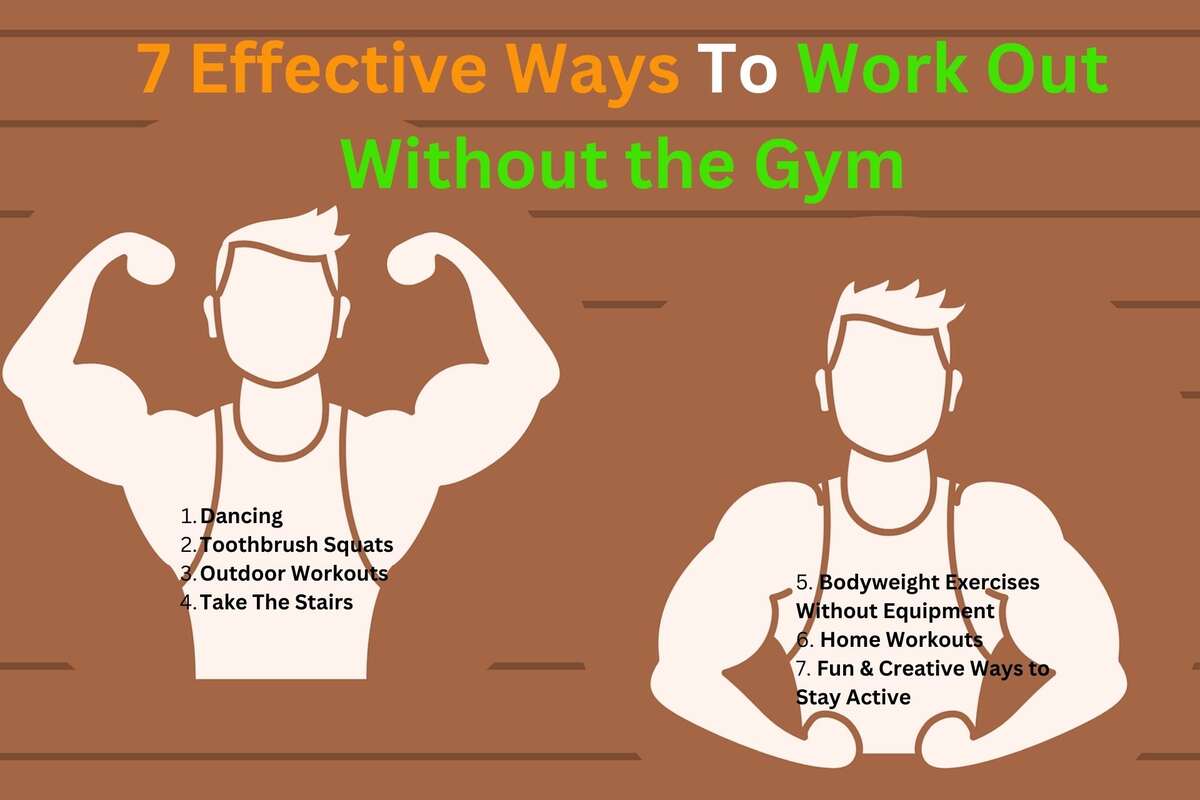
7 Effective Ways to Work Out Without the Gym

7 Effective Ways to Work Out Without the Gym

7 Effective Ways to Work Out Without the Gym: Health is an important factor in a student’s life. A healthy student learns better. Most students seem to understand this as a number of youngsters are joining gymnasiums and health clubs to keep themselves healthy and in shape. But during exam times, most of them miss their workout sessions at gyms and get busy with their books.

Stay Fit Anywhere – Work Out Without The Gym

There are plenty of ways to work out without hitting the gym. From bodyweight exercises to outdoor activities, you can achieve your fitness goals with minimal or no equipment. In this guide, we explore the best gym-free workout options to keep you active and healthy.

7 Activities To Keep You Healthy Without Hitting The Gym

So if you are someone agonizing over missing your workout sessions at the gym because of your examinations, here are a few easy tips that you can use to work out at home. These will not only help you keep yourself fit, but are also effective in stress removal and are useful exam days relief providers.

1. Dancing

Dancing is very effective in stress removal. For those of you who love to dance, this exercise should not be very difficult. So the next time you feel stressed during your study time:

  • Take a break
  • Play your favourite dance number on your music player, and 
  • Dance until you sweat

This will refresh you and help you concentrate better the next time you sit to study.

2. Toothbrush squats

You can exercise while you are brushing your teeth. 

  • Stand against the wall while brushing and keep your legs two feet apart. 
  • Now slide down your back and come to a sitting position. 
  • Stay in the position for as long as you can and come back to the standing position. 
  • Repeat this as many times as you can while you are brushing your teeth. 

This exercise works wonders in toning your rear and legs!

3. Outdoor Workouts

Nature provides the perfect setting for an invigorating workout. Outdoor workouts not only help you stay fit but also boost mental well-being. Here are some great options:

Best Outdoor Exercises:
  • Running or Jogging – Great for cardio and endurance.
  • Cycling – Strengthens legs while being easy on joints.
  • Stair Climbing – A powerful lower-body and cardio workout.
  • Park Bench Workouts – Use a bench for step-ups, triceps dips, and push-ups.
  • Hiking – Combines strength, endurance, and scenic views!
Walking is the best exercise

Do not spend all your time sitting with your books. Take short breaks and go out and take a walk. If you have a dog, take it with you. Go to a nearby park and spend some time walking around. This activity too is a great stress buster and is effective in providing exam days relief.

Fitness Challenge: Set a daily step goal (e.g., 10,000 steps) and track your progress with a fitness app.

Additional benefits of outdoor exercise

Exercising outdoors exposes you to fresh air and vitamin D from sunlight.

4. Take the stairs

Take the stairs instead of the elevator the next time you have to climb up to your house or while visiting a nearby mall. This will help you work out your leg muscles and tone your bottom without having to spend time at the gym.

5. Bodyweight Exercises Without Equipment

Bodyweight workouts are an excellent way to build strength, endurance, and flexibility without needing a gym. Here are some effective moves:

Full-Body Workout Routine:
  • Squats (15 reps) – Strengthens legs and glutes.
  • Push-ups (10 reps) – Targets chest, arms, and core.
  • Lunges (12 reps per leg) – Improves leg and hip strength.
  • Plank Hold (30 seconds) – Enhances core stability.
  • Jumping Jacks (30 seconds) – Boosts cardiovascular fitness.

Tips: Perform 3 rounds of this routine for a full-body workout in just 15–20 minutes!

6. Home Workouts

If you prefer staying indoors, home workouts are a fantastic way to stay fit. You can even use household items as makeshift gym equipment!

Easy Home Workout Ideas:
  • Resistance Band Training – Adds intensity to strength exercises.
  • Yoga & Stretching – Improves flexibility, posture, and relaxation.
  • Dumbbell Workouts – If you have weights at home, they can enhance strength training.
  • Dance Workouts – Burn calories while having fun!
Pro Tip for home workouts

Try following free online workout videos to keep things interesting.

7. Fun & Creative Ways to Stay Active

Sticking to a workout routine doesn’t have to feel like a chore! Here are some unique and engaging ways to stay active:

  • Skipping Rope – A fantastic full-body cardio workout.
  • Martial Arts or Boxing – Great for strength, agility, and self-defense.
  • Playing Sports – Engage in activities like basketball, soccer, or badminton.
  • Household Chores – Cleaning, gardening, or even dancing while cooking can burn calories!
  • Ride your bicycle to school – Chuck the school bus and ride your bicycle to school at least twice a week. This will not only exercise and tone your body, but will refresh your mind. It will also increase your metabolism and burn some calories.

Also Read: Physical education given priority to curb rising childhood obesity in China, know the new guidelines

Make Exercise A Non-negotiable Thing in Your Life

The key to consistency is motivation. Here’s how to stay on track:

  • Set Realistic Goals – Define what you want to achieve (e.g., weight loss, muscle gain, stamina boost).
  • Find a Workout Buddy – Exercising with a friend keeps you accountable.
  • Create a Playlist – Energizing music can make workouts more enjoyable.
  • Mix It Up – Try different workout styles to avoid boredom.

Fitness is a journey, not a destination. Enjoy the process!

Conclusion

Student health is not restricted only to physical fitness. Mental and emotional health too plays an important role in the life of a student. During exam times, when the stress level is high, it is important that you relieve and refresh yourself by taking breaks during your study time. Use these breaks to work out your body using these simple techniques and stay fit and healthy without having to compromise with your study hours. So try these techniques today and stay fit and healthy, even without a gym!

Also Read: Yoga For Students: 5 Best Yoga Poses For Children
Health Education – Purpose and Importance

Health Education – Purpose and Importance

Health is considered the most vital aspect of a person’s life. Therefore, having a piece of excellent knowledge about health (simply health education) is very important. Health education helps provide a comprehensive insight into people’s health and health-related issues.

Nowadays, people are behavioral-induced, a disease affecting their intellectual ability. Moreover, it helps generate an atmosphere where everyone can talk about their health and find a solution with the help of health education. In this article, we will briefly describe the purpose and importance of health education.

What is health education? 

Health education is a critical study related to the body and health of a person. Health education promotes knowledge about the body’s needs and maintains internal and external health. It is widely flourishing because it not only improves physical health but also helps develop mental, emotional, and physiological well-being. At the same time, it contributes a broad role in reducing disability, early deaths, etc.

Health education helps in proving awareness, consequences, and scope of health. However, the prime motive of health education is to educate people about their health and motivate people to stay focused. 

It gives the necessary information for physical, mental, and emotional health. Health education improves students’ ability to improve their health to make their lives happy and healthy. However, people often take various steps to improve their health by avoiding bad lifestyle habits and staying focused on the healthy track.

Health education is nowadays an arising topic among all as it helps a person to improve their attitude towards their health and life. However, as days pass, people are becoming more conscious of their health and more focused on the values that contribute to their wellness.

What is the importance of health education?

Health education is a critical topic that educates students about healthy and unhealthy lifestyles. Furthermore, it creates awareness among people. It even helps educate them about common diseases such as diabetes, STDs, viruses, child obesity, etc. Consequently, people should take health education seriously and understand its importance as it improves a person’s inner being. 

  1. Health education helps create a more reliable and transparent atmosphere at home and in schools. Nowadays, teenagers are pretty considerate about their problems which results in depression, so they always need someone with whom they can get comfortable and ask for help.
  2. Health education helps people to provide a detailed understanding of an individual’s body and hygiene. It also guides them toward the essential steps to safeguard themselves from these deadly diseases.
  3. Health education helps provide cognition towards the important bodily habits that can help a person. While knowing about all our concerns about ourselves helps us tackle all our problems.
  4. Health education helps identify various symptoms regarding varied diseases and creates awareness about many disabilities and ailments in the human body. It even helps make us happy because a healthy body eventually leads to happiness.
  5. Health education recognizes the basic knowledge about first aid, which is essential for everyone to learn to tackle emergencies. It helps in combating sudden problems that arise while driving or working.
  6. Health education helps in improving the quality of life as people become concerned about their habits and practices in their daily life. The more focused you become on your health, the more benefit you’ll gain.
  7. Health education reduces premature deaths by educating about various infectious diseases. Health education helps create a scheduled attitude that can enrich day-to-day health activities.

 What are the benefits of health education in school?

When we talk about health, the essential thing that should recognize is universal development. Providing health education in schools helps build a sense of security in a person’s health. When teenagers listen to all these critical matters, it creates awareness in their minds. It helps improve a child’s physical, mental, emotional and social understanding. Integrating physical activities in schools helps children to develop their minds in a better way. 

What are the aims of health education?

There are various aims and objectives of health education. The following are some of the primary purposes of health education:

  1. To maintain norms of good health:  Health education helps create guidelines for people to lead healthy lives. It encourages the students to improve their lifestyles. It allows people to shift toward hygienic water, clear surroundings, better washrooms, etc.
  2. To create awareness among the school-going students and make them understand the nature and purpose of health education:  Health education helps people to make a good command to know about the defects and disabilities in a person’s body and provides them with reachable cures if needed.
  3. To develop and promote mental health:  Physical health is as important as mental and emotional health. However, the body is working perfectly but cannot make good mental decisions, which can reduce the chances for a person to grow.
  4. To develop a sense of civic responsibility: Health education inculcates a sense of responsibility in everyone to live healthily. The critical aim of health education is to combine people and work for the community’s health.
  5. To take essential measures against infectious diseases:  People often need to be educated about health. In contrast, health education provides a brief knowledge about the crucial steps and actions a person needs to take to avoid infectious diseases such as sexually transmitted diseases, Colds and coughs, etc.
  6.  To provide information about health as a community asset: Health education is a broad field that is not limited to an individual but is more than that. It tells about the importance of a person’s well-being because if a person is healthy and active, they can only contribute to the country’s growth.

Purpose of health education

Health education is a growing concern for the country because it is not concerned with individuals but many people. Schools and colleges are now encouraged to speak about it and its importance. Health education is one of the most critical factors for development because it increases health efficiency and reduces disease. Moreover, the primary purpose of health education is to improve and influence the health behaviors of people.

Conclusion

We all know that a healthy person can enjoy their life more than an unfit person or an unhealthy person. A healthy body means a healthy life and a healthy heart responsibly performing its duties. A healthy person enjoys a long and healthy life. That’s why health education is necessary for every individual.

FAQs on Health Education

1. Why is a health essential in life?

Ans: Health is the most crucial matter in a person’s life. You can only achieve all your goals and dreams if you have better health. Good health will lead to a productive life and helps in living the lifestyle that you want.

2. How can we maintain health?

Ans: Health is a critical aspect of a person’s life that you can attain with simple habits. To maintain your health, you should take a balanced diet, monitor your weight, get enough good sleep, reduce screen time, drink water and stay hydrated, consume less alcohol, limit the number of sugar beverages, etc.

3. What are the factors affecting health?

Ans: The factors affecting health are education, environment, relationships, community, safety, housing, financial aspects, security, etc.

4. What are the benefits of being healthy?

Ans: A healthy person can lead a happy and stress-free life. It helps you live longer, supports muscles, boosts immunity, strengthens bones, reduces heart disease risks, etc.

Also Related: How Honey Benefits Your Health During Winter

Related Articles:

Healthy Eating Slogans For Kids

Study: Junk Food Can Fuel Your Anxiety

Most beneficial way of having proteins – Animal Protein or Plant Protein

Sitting Posture – Comfort is Key

Sitting Posture – Comfort is Key

sitting posture

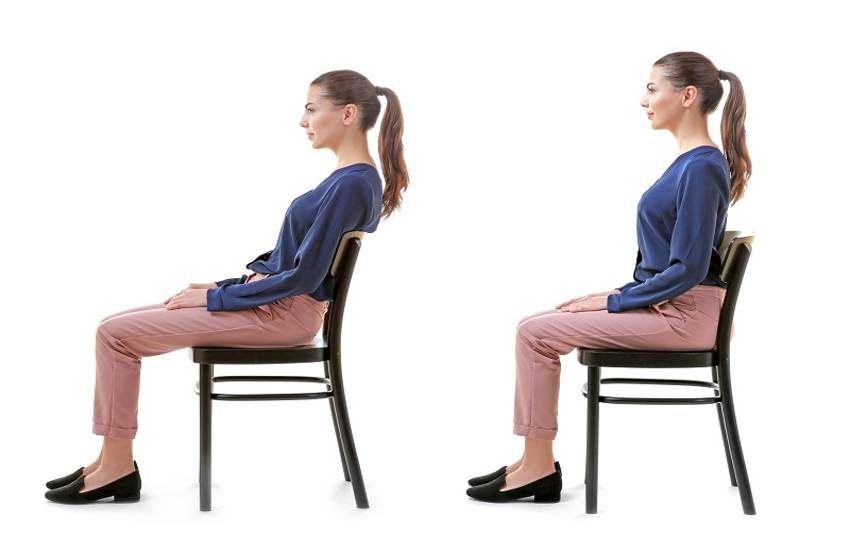
Posture is the position in which the body is maintained and kept upright when we do activities such as walking, sitting and lying down while maintaining the least strain upon the muscles and ligaments involved in such activities. A good posture gives a confident look as well as leads us to have good health. Poor posture not only causes undue strain on our spinal cords and muscles leading to backaches and other health issues, it also gives a negative impression about a person’s personality.

People who have desk-based jobs have to sit on their office chairs and work on the computer for almost 9-10 hours every day. It is very important to maintain a good posture while working and support the back and neck. Nowadays almost every person has a cell phone and youngsters and adults alike are on their phones causing their necks to strain. Carrying a purse on the same shoulder, doing vigorous housework – all these can cause strain upon the back and neck.

Some of the measures listed below should be followed to maintain a good sitting posture:

Always sit with your back supported

Sitting for long work hours requires us to have a proper posture while sitting on office chairs. The chair should be so adjusted so as to support the lower back and not cause excessive strain upon it. The chair should be adjustable so that you can change the height, back position and tilt of the chair based on your needs.

Use a footrest

Your knees should always be below the hips while sitting. The feet should be flat on the ground. If the same is not possible to keep, a footrest can be used so as to maintain a good sitting position.

The computer screen should be at eye level

You should neither lookup by straining your neck nor bend the neck to look down at the computer screen. You should maintain an eye level with the computer screen. If the same is not happening, it is advisable to use a monitor stand to achieve eye level.

Early signs of back pain should not be ignored

You may start feeling backache during a certain time of the day while at work or at night while sleeping. You may also experience back and neck pain while sitting on a new chair in a new office. Do not ignore these early signs or symptoms of poor posture.

Change positions intermittently and take breaks

Sitting for prolonged hours in one position will also add more strain on your neck and back as the muscles get tired which causes slouching, slumping and other poor postures. You should always take regular breaks and stand, move your wrists and feet, walk for 5 minutes and change your sitting position at regular intervals.

Use a cushion/pillow or an ergonomic chair

To support the lower back, a small pillow or a cushion can be kept on your chair. Even a portable lumbar roll or a towel folded like a pillow can be used.

Maintain good posture while sitting

You must not slouch or slump in the chair. Sitting upright with your back straight and shoulders back is the ideal way to sit. The weight of the body should be evenly distributed on both hips.

If you have a persistent problem with back pain, you need to introspect and change your daily standing, sitting, and sleeping habits and the manner in which you bend and lift objects. Proper weight should be maintained according to your height as being overweight can cause unnecessary stress upon your spinal cord and knees which in turn will cause you body pain. Your workstation may need to be revamped to maintain a healthy sitting posture. Regular exercise is also very beneficial to maintaining a good posture as it stretches and strengthens your muscles.

Fitness: Morning Run Benefits

Fitness: Morning Run Benefits

Do we ever think about the morning run benefits? Do we ever ask what the benefits of breathing fresh air are? Do we ever doubt that there is any healer better than nature? Do we ever think that a bit of physical workout is not necessary?

What are Morning Run Benefits?

If the answer to the questions above is yes then you already know why jogging or morning run is important for you. Not just jogging, but jogging in the morning. Why, you ask?

Because it’s that time of the day when the pollution is just about at the minimum level. There are known scientific benefits of running. Wouldn’t it be wonderful to wake up and breathe in the cooler fresher air that we so dearly require these days? 

Wouldn’t it be wonderful to lose those extra kilos you’ve gained without having to go to the gym?

1. How to get started

  • Just make sure you’ve got the right accessories on and start jogging.
  • One precaution you must take is to take it easy in the beginning.
  • Starting off really fast on a marathon doesn’t help. You should ease into the schedule.

2. Benefits of a morning jog

  • When you do arrive for work finally, you arrive wide awake which in turn makes you more alert and directly more productive.
  • Since you’ve already had a workout, you do not have to rush home or to a nearby gym when you do leave work.
  • Your body’s metabolism is up and running in the early parts of the day and helps burn a lot of extra calories.

3. Excuses that come in the way

  • The typical problem of making excuses in order to avoid physical strain.
  • Lack of time, tiredness, other plans, etc.
  • But if we get the morning jogging done then all suck excuses will come to naught.

4. Last but not the least

Lastly, but most importantly, run for yourself. Run that extra mile and gain peace of mind. As the road glides from under your feet, your mind becomes clearer, your thoughts more serene and your ideas – better.

So don’t wait to start because another excuse might come in the way. Start jogging in the morning soon. “The best time to start was yesterday, the next best time is today.”

Also Read: Healthy Diet for Students in Summer

Running And Exercise Required For All Sports

running and exercise

Running is a healthy exercise which is the base for all types of sporting activities. When you are doing brisk running, there are several muscles which are at continuous work. Running is not only about losing weight. It is all about keeping the body in tone and perfect unison. 

Running: What is it, health benefits, How to Get Started, and How to Get Better

No athlete is required to start running fitness programs, though running is sometimes utilized to improve cardiovascular endurance. In general, running is beneficial to improving cardiovascular health and reducing cholesterol, A fast metabolic process increases bone density, as well as increases self-confidence. Competing is the same as cycling because competitors must be first at the finish line. This racing is usually held on specially designed trails on the road. Running was an Olympic competition that began as an ancient Greek activity and was the first competition in its history. 

The Health Benefits of  Running

Running is associated with several benefits:

  • You will have a perfect and healthy body.
  • Your body system will work in a great way.
  • Your digestive system will remain active and therefore all that you eat will get easily digested.
  • You will have a fit body and there are very few chances of facing any aches or sprains.

When You Run, You Get Good Sleep

  • Brisk running will help you in getting stress free and healthy sleep.
  • When you do brisk running, fat is burnt. Fat burning is a complete catabolic process and this helps in inducing sleep.
  • Brisk running will help keep the muscles inactive state, without overstressing them. This would further help in sleeping.

Brisk Running Have No Risks

As far as potential physical risks are concerned with brisk running, they are almost negligible. Gym exercises do have potential risks associated with them, but when it comes to running, you just forget about any kind of risks. In fact, you are modulating your muscles and body system while running and this will help in keeping your body in an active and energetic state.

Brisk Running Make Your Bones and Muscles Strong 

  • Brisk running plays a critical role in increasing the strength of your muscles and bone density of the back, hips and legs.
  • Brisk running will not produce bulky muscle mass as it happens during weight exercises. On the contrary, the strength and lift power of your leg muscles will increase substantially.
  • If you follow a healthy diet, the bone density mass of your leg muscles will increase and you will feel the power to get going.

Running Increases Your Appetite!!!

Do you have a poor appetite? If yes, start with regular brisk running and you will feel the difference. Running is the focal centre of all exercises.

Also Read: Yoga For Students: 5 Best Yoga Poses For Children
5 Ways to Improve Memorization Capacity

memorization capacity

Memories? It seems to be such a fascinating thing- the powerhouse of your brain. It remembers vital details, allows you to learn new things, know about different people, recall various things, and inspires you to perform better. But memory is bizarre too! You might remember an incident that happened 10 years ago, but you might not remember the name of a person you just met an hour ago.

Memorizing information, especially semantic information is vital for the health of your brain as well as for your growth and development. Whether you are a sixteen-year-old teen or a thirty-year-old adult, following ways to improve memorization capacities will help you learn and develop in a more holistic way!

Memory loss: 5 tips to improve your memory

Memorization is important to your cognitive health and growth, in addition to ensuring that all information is properly stored in a memory. Here are the 5 tips, which can improve our memorization skills.

1. Don’t lurk away from sleep and exercise

Yes! Our brain needs exercise, just like your body. So, don’t shy away from exercising. Exercise helps in the formation of new cells, boosts brain activity and helps neurons transmit more information. Therefore, you memorize better. Also, research suggests that sleeping well helps you retain information. So, sleep and exercise to memorize more!

2. Laugh and have fun

“All work and no play makes Johnny a dull boy,” is a quote that applies to memorization as well. Laughing and having a fun time with your friends helps to broaden your memory, allows you to associate and ensures that you learn something new, which in turn improves your memory.

3. Reduce stress

Stressing yourself about an impending examination or an upcoming interview will actually shorten your memorization capacities. In fact, stress attacks cells in the hippocampus region of the brain and therefore reduces the capacity for the formation of new memories. So, meditate, reduce your stress levels to gain more information, memorize well and retrieve older memories.

4. Eat food that boosts your brain

Eating good food, products rich in omega 3s, fruits, veggies and dairy products are like a tonic for the brain that allows you to memorize well.

5. Try mnemonics

Have you heard about mnemonics? Well, these are excellent encoding techniques which allow you to improve your memorization capacities and increase your information retrieval capacities as well. Try these mnemonics for better memorization.

  • Arrange all the information by finding something common between them. For instance, if you want to memorize symptoms of a particular illness, memorize them through a sentence where every first letter corresponds with a symptom.
  • Try rhyming, i.e. use similar terminal words to remember things. This technique is especially useful for learning new languages.
  • Chunk and Organize the information. For instance, divide 10 digits into 3 chunks, this will help you remember them with ease. Organize information in smaller parts and sentences.
  • Using imagery or the method of loci is an excellent way to learn things. For instance, if you are learning history, imagine the scene- imagine how the king reached a particular place and protected it from enemies.

These tips will surely help you to improve your memorization capacities!

10 Easy Ways to Lose Weight

weight loss tips

You can bid a long farewell to all those tiring weight loss techniques that they tell you to adopt and follow. There are much simpler ways to lose weight that don’t ask you to starve or spend most of the day working out in the gym. Staying at home, you can lose weight by simply following a certain lifestyle that guarantees a substantial loss of weight, that too, by NOT putting too much time and effort.

1. A balanced diet:

No one’s asking you to starve. Just balance what you eat. Consult a nutritionist and have him prepare a diet chart for you that suits your lifestyle. Some salads, meat and veggies consumed in a proportionate way can work wonders on your health and help cut down on the excess fat that you might have been accumulating.

 2. Walking/Jogging:

Go out for walks, as and when you can. This helps a lot to shed the extra pounds in your body. Morning or evening walks or jogs can help tone the muscles and speed up your body’s metabolism rate.

 3. Cycling:

Especially for students, cycling can be a great way to keep in shape. Instead of boarding a bus or taking your car out to school or college, you can cycle each day. This practice can keep a student’s health in check.

4. Studying while walking:

Many students have this habit, and they can testify, that studying out loud while walking helps to memorize faster and better. Also, it can help you lose weight if you can manage to do that for some hours. Working professionals can find this practice a bit problematic.

5. Extra Load on The Brain

Exam/ Project Deadline Exam really gets one going. Depending on sincerity or lack of preparation, students and professionals get pepped up at the last minute and really put in efforts beyond their normal capacity. This extra load on the brain affects a student’s health and as a positive effect here, transforms into weight loss.

6. Proper sleeping practices:

Proper sleeping habits are vital in maintaining health. Oversleeping can cause weight gain and under-sleeping causes the opposite. So you should balance it well enough. A student’s health during exam depends a lot on his sleeping habits.

7. No food on the table:

While studying, concentrate only on your study. Don’t keep anything edible nearby. This unnecessary practice causes weight gain in the longer run.

8. Don’t keep your necessary documents in one place:

Keep what you have to study in different places, so as to get up and have a walk whenever you need them. Having everything within an arm’s reach will never give you an incentive to move.

9. No midnight snacks:

Cut down on this habit. During exams, having midnight snacks becomes a necessary habit but try not to pick it up. Sleep followed by snacks adds to your fat content.

10. No junk food:

A health hazard, junk food contains a lot of fat that can take shelter in your body. Avoid junk food especially during exam time, if you study at a single place for hours. 

For students who want to keep a tab on their health, these are simple ways in which you can voluntarily or involuntarily stay or get in shape.