Fairs and festivals in India

Fairs and festivals in India

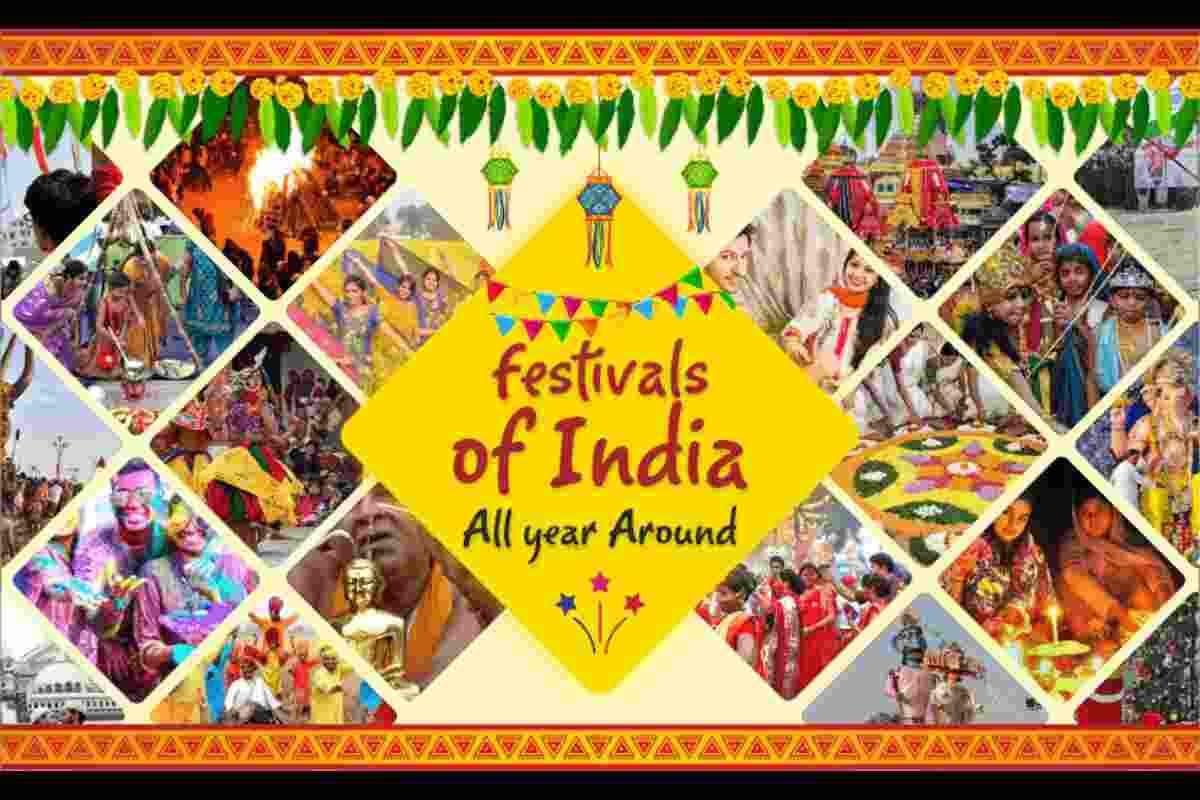
India is wholly known for its rich culture. It is a vibrant land with varied festivals of various religions. India’s diverse cultures can be visible during the festival days; however, Indians spend almost the whole year celebrating different festivals. Festivals in India are celebrated with great joy and spirit, and every festival has a deep meaning hidden inside it. All region of the country follows and celebrates the festival differently, showing cultural diversity with utmost unity. People show utmost dedication towards the rituals, food, fairs, etc. However, each festival and fair offers a tremendous and diversifying artistic environment, creed, history, and legacy of India. 

From all over the country, many tourists visit India to explore the fantastic atmosphere of the country. Every fair and festival is celebrated for a different purpose but eventually leads to pleasure for the people. A large number of locals and tourists visit these fairs and festivals and admire the beauty of India. If you want to know about honest India, whether about its culture, diversity, significance, unity, tradition, food, religion, or anything, fairs, and festivals are the best opportunities to learn about it.  

Top Festivals in India

S.no.

Festival

Month

State

1

Brahmotsavam

October

Andhra Pradesh

2

Losar festival

February

Arunachal Pradesh

3

Bohag Bihu

April

Assam

4

Chhath puja

October / November

Bihar

5

Bastar Dussehra

October

Chattisgarh

6

Carnival

February / march

Go

7

Janmashtmi

September

Gujarat

8

Diwali

October / November

Gujarat

9

Mahashivratri

February

Himachal Pradesh

10

Gochi festival

January

Himachal Pradesh

11

Eid ul Fitr

June

Jammu and Kashmir

12

Bahu mela

September / October

Jammu and Kashmir

13

Holi

February / march

Jharkhand

14

Ugadi

Early April

Andhra Pradesh

15

Onam

August / September

Kerela

Details of top festivals in India

India is a widely diverse country with many festivals, and celebrating every festival provides excellent harmony among the people to respect and cooperate with the varied religions of the country. 

  • Brahmotsavam

It is a festival celebrated in Andhra Pradesh with great joy. It is a festival that defines the pious offering from lord Brahma to lord Vishnu. It is a cleansing ceremony organized in Tirumala in honor of gonorrhea, and one of the largest festivals celebrated in Andhra Pradesh in October.

  • Losar festival

 is the famous festival of Arunachal Pradesh celebrated on the first day of the lunar calendar? It is honored during the spring season. It is celebrated annually by people with great joy and love. People perform various activities to bolster their dedication to this festival, such as folk dance, songs, bonfires, etc., celebrated in February.

  • Bohag Bihu

 It is one of the prime festivals of Assam, also known as Rongali Bihu, held after the end of the Assamese new year. The festival is celebrated during April on the first day of the Hindu solar calendar. This festival defines the happiness and celebrations of people. 

  • Chhath puja

Chhath puja is a widely celebrated occasion all over the country and is considered the major festival of India. It is celebrated for four days for the health and wealth of the family and friends. In remembrance of the sun god, a large number of women fasts for their prosperity. People even visit the river Ganga to gain blessings. It is celebrated in October / November.

  • Bastar Dussehra

is 75 days long festival celebrated in Dandakarnya? It starts in august and lasts till October. It is 75 days long festival and is considered the most extended Dussehra celebration in the country. Various communities and tribes celebrate this festival in many different ways. People celebrate it with varied old customs and cultures, and every tribal group plays it another way yearly.

  • Carnival

Carnival festival is the most celebrated festival of Goa and has been celebrated since the arrival of the Portuguese in this place. Many locals and visitors gather for the carnival festival as it is considered very famous. People wear unique dresses and costumes with masks, tribal troops, energetic dance, and songs are played to pull out the absolute of people. It is celebrated among all the regions of Goa, such as Panjim, Margao, and Vasco da Gama.

  • Janmashtami

It is one of the Hindu community’s most famous and celebrated festivals. It is celebrated in remembrance of lord Krishna on his born day. It is the most liked avatar of Shri Krishna among all, and it is considered very pious that various activities are organized on this day. Mathura is famous for its Janmashtmi celebration, as it is regarded as the house of lord Krishna. This festival is the symbol of the victory of Pandavas against Kauravas.

  • Diwali 

It is the most pious and widely celebrated festival in the country. It is the new year of Hindus. It is held over places in recognition of the goddess Laxmi. People decorate their houses with lighting, and dDiyain hopes to light the person’s home and wealth. It usually comes in October or November month. It is the most awaited and enjoyable festival for kids as they can fire crackers with their family and friends.

  • Mahashivratri

Mahashivratri is an occasion that falls once a year. It is celebrated on the lunar month of the calendar or before the new moon’s arrival. That day is celebrated as Maha Shivratri and in remembrance of lord shiv. People organize yantras all over the country after remembering the dedication of lord shiv. It is also called “The Great Night of Shiva”.

  • Gochi festival

Gochi festival is celebrated in Himachal Pradesh and is famous among all. The prime occasion is held for the families who have a boy child in their family. A social group of people gather and visit these houses and have changed as they treat and bless them. It is organized in the Lahaul, Spiti region of Himachal Pradesh. It is held in January.

  • Eid Ul Fitr

It is the most famous and pious festival in the community. It is held in June. All Muslim families celebrate eid ul Fitr by inviting each other to their homes and making various festivities to express their gratitude. Eid comes after 30 days of tasting trials by the disciple. It falls during the time of Shawwal. People start fasting after the rise of the moon and end simultaneously. 

  • Bahu mela

It is the most famous festival of Jammu and Kashmir, celebrated in September / October. On this occasion, all the people gather in the Bahu fort of Jammu and Kashmir. All the people come there to enjoy and explore the culture and traditions of Jammu and Kashmir. People set up various stalls and flaunt their old and unique festivities there. 

  • Holi

It is the occasion of colors and brightness to the life of the people. It symbolizes the everlasting and eternal love of lord Krishna and Radha. It falls on the lunar month of the Hindu calendar or in February / march. Holi celebration starts with Holika Dahan, which defines the win of right over wrong, and later, on the following day, everyone can play with colors. Pcolorsisit each other houses and shred each other with colors.

  • Ugadi

Ugadi is one of the most famous festivals of Andhra Pradesh. It is the new year celebrated here according to the Hindu Calender. It is celebrated in April. This festival is also known as “Samvatsaradi”, which means ‘beginning of the year. People make beautiful paintings n the floors and decorate them with various colors, colors leaves, called Muggulu. People visit each other’s families and offer gifts and multiple things as a gesture of love.

  • Onam

Onam is a famous festival of Southernhern part of India. It is the harvesting festival for the people of Kerala. It is celebrated as the symbol of good governance by Mahabali, who was a Daitya king. It is celebrated in the month of august or September And celebrated with great joy and harmony.

Top fairs in India 

Fairs and festivals are organized all over India, and thousands of people come together to enjoy themselves. Most of the fairs are contained at pilgrimage sites. Here we provide the top 10 fairs hope this will help you.

Sno

Fairs

Month

State

1

Kumbh mela

The month needs to be defined. It is held when Jupiter enters into an Aquarius.

Haridwar, Nasik, Ujjain, and Allahabad

2

Rann Utsav

November

Kutch, Gujarat

3

Maha Shivratri

April

Maharashtra

4

Pushkar fair

Rajasthan

5

Sonepur mela

November

Bihar

6

Kolayat fair

December

Rajasthan

7

Gangasagar mela

West Bengal

8

Chandrabhaga mela

September

Odisha

9

Ambubachi fair

October

Assam

Details of the top fairs in India

Here we provide some details of the top fairs celebrated in India. We all know that India is a country that celebrates every occasion enthusiastically. India is a land of culture, rituals, diversity, and more, and each community has its fair. These beautiful fairs enhanced the beauty of the country and embraced the identity of Indians.  

  • Kumbh mela 

The number is the largest religious gathering in the world. It is celebrated every 12 years on the bank of the river  Ganga at Allahabad in UP. Thousands of devotees of Lord Shiva come together and perform prayers. The older adults believed that in ancient times when there was a war between god and demons, the few drops of Amrit fell into four places in India: Ujjain, Nasik, Haridwar, and Praygaraj (earlier known as Allahabad).

This festival occurs after 12 years when Jupiter enters an Aquarius, an astrological sign, and then this mela takes place. The Kumbh Mela is held at four alternated venues: Haridwar on the bank of river Ganga, Ujjain on the bank of Shipra, Nasik on the Godavari river, Prayag (Allahabad) where Ganga, Yamuna, and Saraswati join together.

  • Ranntsavtsav 

Rann Utsav is a fair of music and dance. It enhances the beauty of white rann. This festival is celebrated in November t the door village, which is infamous for its different culture and tradition. Many traditional shopping activities are organized in Rann Utsav, such as authentic handicrafts, bandini sarees, ornaments, etc. more than 3450 luxury tents were built by the government of Gujarat. Rann Utsav also offers some unique activities like kite flying, special arrangement on republic day, special gala dinner on white rann.  

  • Maha Shivratri fair 

This fair is celebrated in Maharashtra and is among the most important for Hindus. It is celebrated on the 12th night of the lunar eclipse in the month of Phalguna. This festival is celebrated in April annually and lasts for three days and nights. Millions of devotees perform a prayer at the temple of lord shiva. At the end of the fair, the people take a bath in the Godavari river the next day, and the aarti ceremony is performed before sunrise. 

  • Pushkar fair 

It is the world’s largest camel fair which is organized in Rajasthan. This festival starts according to the Hindu calendar month Kartik and ends on the month of Kartik Poornima. Apart from trading, Pushkar lake is also essential for Hindu devotees. This fair attracts a large number of people men trade their camels, horses, cows, and sheep, and other than this the shops of handicrafts, bracelets, cloths, and textiles are also arranged with music. 

  • Sonepur mela 

This festival is organized in Bihar and is one of India’s largest cow fairs. More than 2 million people come together and sell and buy cows, bulls, and calves at that fair. This festival is held in November on the day of Kartik Poornima when the river Ganga and river Gandhi meet. However, this fair is similar to the kshetra fair in which buffaloes, horses, dogs, birds, elephants, camels, cows, etc., are traded for a month.

  • Kolya fair

This festival is held every year in December. Many Hindus come together at a temple near Kolayat Rajasthan on the occasion of Gokul Ekadashi. The Hindu devotees believe that their ancestor’s ashes are to be present here. During this period, they performed prayers and offered worship to their ancestors. The Hindus and Muslims also participated in this fair; they visited their shrine.

  • Gangasagar mela 

This fair is celebrated every year at Sagar Island in west Bengal. According to the older people, the lord shiva used to take a bath in his confluence every year on the Makar Sankranti. It is believed that the lord shiva would come to his adobe (Uttarakhand) with his wife, ride a hard vahana, and descend on Sagar island. During the Makar Sankranti festival, the devotees of lord shiva take a bath at that point and pray for prosperity.

  • Chandrabhaga mela

It is a Hindu pilgrimage fair celebrated in September at Odisha (Bhubaneswar) on the bank of river Chandra Bhaga. Thousands of devotees come together and take a bath in the Chandra Bhaga river, which originates from the chilka lagoon and meets at the bay of Bengal. The older people believed that the gods take a bath here after the victory over demons. 

  • Ambubachi fair 

It is the largest carnival in India which is celebrated in October in the kokrajhar town of Assam. This fair was observed during the period of the Britishers and later became a part of Indian culture. This fair honors goddess Samkhya’s annual menstrual cycle, and thousands of devotees come together to celebrate this festival.      

New Year festivals in India 

As we all know, India is a vast and diverse country with a large population. 1st January is considered the new year, but India is a country that contains different religions, customs, and traditions. That’s why every state celebrated its new year in its way. So here we are providing you with a list of new year festivals in India. 

Sno

Festival

Month

State

1

Pohang Bihu

April

Assam

2

Cheti Chand

April

Sindh

3

Gudi padwa

March

Maharashtra

4

panasakranti

April

Odissi

5

Pohela Baisakh

April

Bengal

6

Ugadi

March

Andhra Pradesh

7

Vaisakhi

April

Punjab

8

Best varas

November

Gujarat

9

Hijri

December

all India

10

Losar

February

Ladakh

Details of the new year festivals in India 

India contains a variety of people, and they have different cultures and religions. Some people follow the lunar calendar, and some follow the solar calendar. We provide you with a detailed structure of new year festivals in India.

  • Pohang Bihu 

It is also called rangoli Bihu, celebrated in April and popularly known as the new year of Assamese. According to the Assamese calendar, Pohang Bihu is celebrated in mid-April. This Assamese festival is related to harvesting Assam’s agriculture-based state and performing Bihu symbolizes joy and happiness. The people distribute sweets and gifts to their family and friends. This festival is celebrated for three days in which different traditional and ritual practices are organized, and the Bihu dance is one of the most popular ways of celebrating Bihu.

  • Cheti Chand Sindhi new year 

Cheti Chand is a festival celebrated by the Sindh people of India and Pakistan. However, the date of this festival is decided by the Hindu calendar, which is the second day of Chaitra Shukla paksha. Apart from this, it is also celebrated on the day after Ugadi and Gudi puds. According to the Sindhi people, this festival is celebrated on the birth anniversary of ishtadeva Adeola, who is popularly known as hula, the saint of Sindhis. In this festival, the Sindhi people prayed to the river god to protect them from forced conversion. 

  • Gudi padwa Marathi new year 

Gudi padwa is a Marathi new year festival celebrated on the 1st day of the Chaitra month. The pad is a Sanskrit word that means the first day of the lunar fortnight, and the phrase gudi means a flag. Gudi padwa festival is one of the most important festivals of Maharashtra, and the people celebrate with great pomp and enthusiasm. They draw rangoli, a gudi flag with flowers, mango, and neem leaves. People started their day with a holy bath in a river, dressed, went to the temple, and performed prayers. Women wear beautiful nine-yard sarees, and males wear traditional kurta pajamas with a saffron turban.

  • Pana Sankranti Odisha new year

Pana Sankranti is also called visual Sankranti and is a new year for the Odisha people. It is celebrated on the 14th or 15th of April every year. The people fill the earthen pot at this festival with a sweet drink called pana. The whole is made on the bottom of the pot, and the sweet waterfall drop by drop represents the beginning of the rainy season. The mixture of horse gram flour, bananas, and curd is offered to the basil plants; after that, family members consume this mixture.    

  • Pohela boishakh Bengali  new year 

It is also known as Bengal noboborsha and is celebrated as a new year. This festival is celebrated on the month of 14-15 April every year. However, according to the Hindu calendar, it is the 1st day of Baisakh. During this festival, the Bengali people wear new clothes, make traditional dishes people distribute sweets. The people believed this was a new financial year for the Bengali business community; they bought shops and other things for good fortune. They prayed to lord Ganesha and goddess Lakshmi for their promising future. 

  • Ugadi Telugu new year

Ugadi festival is a new year for the teledus of  Andhra Pradesh. Many people started their new businesses, investing and buying new things on this day. Ugadi Telugu new year festival is celebrated on the 1st day of the lunar month Chaitra which is the month of march and April according to the English calendar. On this occasion, the women clean their houses and make rangolis on the floor, and people buy new clothes people start their day by taking sesame messages and bath and, after that having the Ugadi patched. After eating the dish, the family members go to the temple and perform different rituals.   

  • Vaisakhi Punjabi new year

Vaisakhi or Baisakhi is a harvest festival celebrated on the 1st day of Vaisakhi month, April-may. This festival represents the end of the harvesting season in India. This is a significant festival for Sikhs and exceptionally substantial to Punjab and Haryana because most of the Sikh population is situated there, and they celebrate this festival in a tremendously enthusiastic way. However, the people celebrated this festival by bathing in the holy river water, going to the gurudwaras, and performing prayers.   

  • Best varas Gujarati new year

Best varas is a Gujarati new year celebrated after Diwali on 26th October in Kartik month. At these festivals, traders and business people start their startups, and people start their new accounts. The offered prayers to goddess Lakshmi during chopda puja make Gujarati new year special. They wear new clothes, meet, share sweets, and exchange new year wishes. According to the Gujaratis, this day is considered an auspicious day. 

  • Hijri Islamic new year

Muharram is considered the Hijri Islamic new year. In most Islamic countries, this day is regarded as a public holiday. Muharram represents the starting point of the Muslim era which means the prophet’s journey from Mecca to Medina on the first Muharram. The Islamic year is also called the Arabic new year, and the Islamic new year is quiet because the Muslims reflect their mortality.

  • Losar Ladakh  new year

The Buddhist community in Ladakh celebrates this festival in the Tibetan calendar on the 1st day of 11 months. According to the people, this festival is celebrated because this day is considered the birth anniversary of Je Tsongkhapa. 

Conclusion 

Fair and festival is the reason for celebration and provides an excellent opportunity to have fun with family and friends. We all know India is a vast country with different religions, cultures, and traditions. Apart from this, the people of India believe in togetherness because it is essential for the growth of an individual’s personality. The other fairs and festivals are the reason for brotherhood. The people come together and perform various fairs and festivals, which develop the feeling of brotherhood.

Faqs

1. What is the most significant festival in west Bengal?

Ans: Durga puja is the most significant festival of west Bengal, which is celebrated from September – October.

2. What is the importance of fairs in Indian culture?

Ans: Indian culture is widely known for its festivals and fairs all around the country. It combines the people of different communities and religions as the symbol of unity, which signifies that India is a diverse country and one unit for the whole world.

3. How many festivals are celebrated in India?

Ans: There are around 13 festivals that are celebrated all over the year in the country.

4. What is the purpose of fairs in India?

Ans: The purpose of fairs in India is that helps in providing occupation to the labourless people. It initiates trade and promotes employment all over the country.

5. What is the longest festival in India?

Ans: The longest festival in India is Navratri.

Also Read: Indian States Food, Clothes, Dance and Languages

What is Post Secondary Education?

What is Post Secondary Education?

Are you about to finish high school, or have you already earned your high school diploma? But now you are considering studying further for better career opportunities? 

As the name suggests, post-secondary education takes place after high school. Most people see it as a stepping stone to better job opportunities in the future. Education is not limited to college. Therefore, if money hinders your post-secondary education, consider options other than college.

Higher education is the level of education after the successful completion of secondary education. It is commonly referred to as upper secondary education. It includes not only vocational schools but also universities and vocational schools. Post-secondary education usually ends with a college diploma, certificate, or degree. Higher education is decentralized and independent of federal regulation. It is a higher education leading to a university degree. Higher education is also known as post-secondary, secondary, or higher education. The last level of formal schooling occurs after completing secondary education.

This article defines-

  • What is Post-secondary Education?
  • Difference between Secondary and Post-secondary Education
  • What are Post-secondary Institutions?
  • Colleges & Universities
  • Benefits of Post-secondary and Secondary Education
  • Conclusion

What is Postsecondary Education?

Post-secondary education is also called “higher education,” “higher education,” or “tertiary education,” all of which mean the same thing. Subtypes that do not lead to a degree, such as accredited programs and community colleges, are called “continuing education.” These relate to educational programs you can pursue after high school, earning a GED, or similar programs in your country.

Unlike primary and secondary education, which is compulsory for children under 18, post-secondary education is optional. It is the final stage of formal study leading to a degree. Post-secondary education is known as levels 6 to 8 of the International Standard Education Classification. Post-secondary education also includes undergraduate and postgraduate courses.

In the United States, many high school students choose post-secondary education, with more than 21 million students enrolled in high school. 

Many see this as a ticket to financial security, as a college degree can be the key to unlocking more job opportunities in the market. A college is a form of post-secondary education but is not the only form of higher education. Also, even if you have completed your secondary education, you may still get a job offer. Nor does it mean that you will automatically earn more than someone who chooses not to pursue secondary education.

Difference between Secondary and Post-secondary Education

Secondary education, commonly known as high school, can also refer to those who have taken the General Educational Development (GED) test or equivalent anywhere in the world. Unlike post-secondary education, a student must attend secondary school (or at least until they turn 18 and can choose to drop out).

There are also jobs for those who have yet to graduate from high school or high school but have chosen not to pursue secondary education. Let’s say you want to be a doctor. In this case, you will attend a four-year college through an appropriate medical preparation program. You can enter the medical school once he completes his bachelor’s degree. So medical school will only accept a student with a bachelor’s degree, even if they did well in biology in high school.

What are Post-secondary Institutions?

Contrary to popular belief, “post-secondary education” and similar terms are not limited to obtaining a bachelor’s degree in high school. College is the most popular option but not the most economically viable option.

If you are willing to continue your education after High School but would like to consider other options, you have the following options:

  • Vocational Schools

Also known as trade or tech schools, vocational schools teach students on the technical side of certain crafts or skills of a specific job. For a student to pursue a career in a specific vocational field, unlike colleges where they receive their training, apprentices pursue job-specific training that requires specific physical skills rather than academic learning.

These are available in almost every country, even though they have different names. In some countries, the government subsidizes private and public vocational schools. They are for those wishing to acquire skills leading to better job opportunities. 

There are many more vocational courses than are offered, but not all colleges provide all types of studies. We recommend researching the schools in your area, as some may specialize in a particular industry.

Upon completing one of these courses, you will receive a certificate certifying that you have completed and trained in your chosen skill(s). It gives you a competitive advantage in the job market over other high school graduates who have a different education for your skill set. You can also obtain multiple certificates using. For example, if you work in the construction industry, there are certifications for courses in electrician, plumber, and carpenter. It is true even for college graduates who think having a college degree, and a college degree on their resume will set them on their own.

  • Non-Degree Students

Non-Degree Students have two definitions. The first is students who attend a college or university and obtain a bachelor’s, master’s, or doctoral degree but not a degree. These individuals may be interested in studying for a particular class and wish to pursue an academic interest but must be aware of the need to complete a full degree. It may be for the simple reason that you want to study a subject or add that you have taken a course in a particular topic to your resume.

Another type of associate student is an online or face-to-face program in a specific subject. You can use this for resume development and personal enrichment. You will get a certificate of completion instead of a diploma. It’s similar to what you get in a vocational school, but it’s academic rather than skillful.

  • Community Colleges

Community colleges are also known as ‘junior colleges or ‘two-year colleges.’ As the name suggests, community college students earn an associate’s degree in just two years instead of a bachelor’s degree in four years. Some community colleges also offer non-degree certificates and specialized courses, but not all. Apart from academic classes, community colleges provide other programs for the community.

Community colleges offer only the general education requirements that all college students undergo, so it takes half the time to earn a diploma. In a regular college or university, you study for four years. Your first two years are devoted to general education requirements, and the next two years to specialized courses according to your area of ​​expertise.

The Adult Education Center is a step to paid employment and an effort to study. The courses you took at the community college will also allow you to continue your studies at the university for two more years, earning a bachelor’s degree. However, if you decide you don’t need it and want to get a job after attending community college, you can make an associate’s degree upon graduation.

Colleges & Universities

The most popular colleges and universities for post-secondary education offer bachelor’s degrees for high school students and graduate degrees for college students. Examples of graduate degrees that fall into this category include-

  • Graduate school
  • Law school
  • Medical school
  • Dental school
  • Business school

Some go to post-secondary institutions such as graduate and business schools to get their master’s degrees. They give you a head start in the job market for more advanced positions. However, in other institutions, such as law and medical schools, you must complete your education to achieve a specific professional role. For example, a paralegal may require a credential or a bachelor’s degree. It will depend on how competitive the paralegal’s position is in a law firm. However, to become a lawyer, you must complete law school and pass the bar exam.

Some scholarship and grant programs can provide partial or complete tuition without borrowing money. However, many scholarship programs are highly competitive and awarded to students who demonstrate academic or athletic excellence or are most in need of financial assistance.

Benefits of Post-secondary and Secondary Education

Sponsorship of secondary education is much the same as post-secondary education. Still, post-secondary graduates are at higher employment levels than secondary graduates, especially in an economic downturn. It is noticeable that even if post-secondary education is not the main requirement for the job market, education is still essential because it helps us face the more difficult challenges of a modern economy.

As mentioned above, post-secondary education is not compulsory, but because it helps students not only to receive additional education but also to acquire various skills that will ensure their employment at a higher level. It has additional advantages. Please note that post-secondary education requires you to choose the type of school you wish to attend, as your career and areas of interest will determine this.

Conclusion

There are many reasons why Post-secondary education is essential, although it is often related to job requirements in various industries and professions. In some occupations, this level of education may be required to obtain a certification or license. Other industries may not strictly require such education for employment, but it often provides an advantage to those looking for work against the competition. Post-secondary education is also necessary for those interested in further personal development.

FAQs-

  • What is an example of post-secondary education?

Attending college to earn a bachelor’s degree is an example of post-secondary education. Business schools also offer post-secondary education with a focus on specific occupations.

  • What qualifies as post-secondary education?

Education at the post-secondary level includes bachelor’s, master’s, doctoral, and business school programs. Community colleges, four-year universities, and trade schools qualify as post-secondary educational institutions.

Local community colleges typically award degrees at the associate or two-year level, although some offer bachelor’s degrees. Other post-secondary options are public and private colleges. Although universities and colleges refer to as the same, colleges tend to be smaller than universities, with a more limited number of programs to choose from—colleges award bachelor’s, master’s, and doctoral degrees at the undergraduate and graduate levels.

  • Is college post-secondary education?

Post-secondary education is any study after high school—including colleges, universities, and trade schools. These institutions can be public or private, for-profit or not-for-profit, and offer a variety of programs. Before enrolling, it is essential to read more about what qualifies as post-secondary education and determine if the post-secondary school is accredited.

Philosophy of Education – Characteristics and Importance

Philosophy of Education - Characteristics and Importance

The word philosophy has its origin in two Greek words. 

  • The first word, Philo, means “love”. 
  • The second sophy means “wisdom”. 

Philosophy means “love of wisdom”. Each individual has attitudes towards life, children, politics, learning, and past personal experiences that influence and shape beliefs. You may not be aware, but these beliefs and unique philosophies influence how you live, work, and relate to others. What you believe is directly reflected in the teaching and learning process. This article examines various philosophical views that influence the teaching profession.

Must understand how Philosophy and Education relate to each other. To be the most effective teacher, you must understand your beliefs while empathizing with others. This article reviews the study of philosophy, the major areas of philosophy, and the primary philosophical schools of thought in pedagogy. We can examine how these schools help define an individual’s educational philosophy. Establishing your teaching philosophy is an essential step in becoming a teacher. This article will cover five things educators need to know about teaching philosophies.

Philosophy of Education Meaning:

‍‍Philosophy of Education is a branch of philosophy of practice. It is concerned with the nature of education and the philosophical issues that may arise from the theory and practice of teaching.

The philosophy of education deals with education’s goals, forms, methods, and meanings. You can use the term can to describe the fundamental philosophical analysis of these issues and the analysis of the practical pedagogical approach. Its subjects include essential philosophical topics such as

  • The nature of knowledge
  • Worthy of teaching and learning
  • Educational justice’s context

It also includes practical issues such as the social, economic, and legal impact of standardized exams and schools. It consists of both educational policy and practice issues. 

The philosophy of education sees the overarching discipline from the inside and the outside. Its subjects cover fundamental philosophical issues and specific policy and practice educational problems. In doing so, academic philosophers seek clarity of concept, the rigor of argument, fair consideration of the interests of all those involved in and affected by educational endeavors and arrangements, and the usefulness of educational goals and means. Philosophy of Education relies on competent and well-founded assessments.

Thus

  • Educational philosophy is a criticism of the general educational theory.
  • It consists of critical appraisals and systematic reflections of general ideas. 
  • It is a synthesis of pedagogical facts and pedagogical values.

That is the philosophical process of solving educational problems through intelligent methods, starting with a philosophical attitude to reach philosophical conclusions and results. As such, we aim to achieve both general and comprehensive results.

What are the main types of Philosophy?

The four critical branches of philosophy are metaphysics, epistemology, axiology and logic. 

  • Metaphysics deals with issues concerning the physical universe’s nature and ultimate reality. 
  • Epistemology studies how people learn. 
  • Axiology is the study of fundamental principles and values. 
  • Logic follows the organization of thought processes. Logic has two main components; deductive reasoning and inductive reasoning.

What are the main teaching philosophies?

Major educational philosophies fall into three main types: teacher-centered, student-centered, and social-centered ideologies. These include essentialism, perennialism, progressivism, social reconstructionism, existentialism, activism, constructivism, conservatism, and humanism.

Essentialism and perennials are two types of teacher-centered educational philosophies. Essentialism is now the dominant style of public education in the United States. It is the education of basic skills that society needs. Perennialism focuses on the teachings of great works.

  1. There are three types of student-centered teaching philosophy. 
  • Progressivism focuses on developing a moral compass in students. 
  • Humanism is about maximizing the potential of each student. 
  • Constructivism focuses on using education to shape students’ worldviews.

2. There are two types of social-centered educational philosophy. 

  • Reconstructionism is the view that education is a means to solve social problems. 
  • Behaviorism focuses on fostering behaviors that benefit society.

Philosophy of Education or Scope of Philosophy of Education:

The scope of the philosophy of education is limited to the field of education. So it is a philosophy in the field of education. The area of educational philosophy deals with issues of education.

  • Pedagogy Goals and Ideals Philosophy:

Pedagogy deals critically with the various goals and ideals of pedagogy. Different philosophers have put forward these goals and objectives at other times. They are-

  • Personality formation
  • The human formation
  • Harmonious human development
  • Preparation for adult life
  • Citizenship development
  • Leisure use
  • Training for civic life
  • Training for international life
  • Social and national integration
  • Achievement
  • Scientific and technological development
  • Education

Equal educational opportunities strengthen the democratic political order and develop human resources. These and other educational goals put forth by educational thinkers in different times and climates are questioned and evaluated. Therefore, the philosophy of education critically evaluates different educational goals and ideals to be achieved.

  • Interpretation of Humanity:

The philosophical depiction of humanity results from integrating facts borrowed from the human sciences with values ​​discussed in various normative sciences. The intelligent picture is, therefore, broader than the picture of a man painted by biology, sociology, psychology, economics, anthropology, and other human sciences.

  • Educational Values:

Values ​​are typically philosophical subjects as they are more abstract, integrative, and universal. The philosophy of education critically evaluates values and organizes them hierarchically. The educational value is determined by philosophical value. Various philosophers promulgate educational values. They derive from their worlds, perspectives, and perspectives on the meaning of human life. Therefore, investigating worldviews, views, and beliefs is a specific function of philosophy and is necessary for the philosophical treatment of values.

  • Knowledge Theory:

Education has to do with knowledge. It depends on sources, limits, standards and means of learning. All these discussions fall within one branch of philosophy, epistemology, so an important area of ​​the functioning of educational philosophy is related to the theory of knowledge.

  • The relationship between Education and different sectors of national life and various components of the educational system:

One of the most vital contributions to the educational philosophy is to provide a standard for education, economic system and education, curriculum, school organization and management, discipline, etc. These issues have led to evaluations of different educational philosophies.

Educational philosophy provides criteria for critical judgment and judgment in other areas, as philosophy dictates the requirements.

How is an educator’s educational philosophy determined?

Identifying your educational philosophy to understand your values ​​and belief system is essential. It will make it easier for you to explain your teaching style to future employers.

When writing a personal educational philosophy statement, it is essential to consider several key factors. 

  • What is the purpose of education? 
  • What is the teacher’s role? 
  • How Should Teachers Teach? 
  • What is the student’s role? 
  • What should you teach? 

Also, be yourself and be clear and concise. Research the school you are applying to and include its mission and goals in your statement. Remember that teaching is about the student, and focus on your ​​expertise. Think of the most outstanding teachers you have ever had in your life. Don’t forget to get feedback. Also, don’t go too long or derail. Don’t write a resume, know-it-all, or use strong statements.

Functions of Educational Philosophy 

Educational Ideas serve a variety of roles.

  • Determining Educational Goals: 

The Educational Philosophy provides unique ideas about all aspects of education, especially educational goals. There are different views on the philosophy of education, but this situation is beneficial; it helps to provide education according to the needs of society. Differences in educational philosophies reflect the diversity and diversity of human life. The philosophy of education guides the educational process by proposing suitable goals from the variety of life and choosing the means accordingly.

  • Reconciliation of old and new traditions in the field of education:

In the process of social development, old traditions become bygone for people. New practices will replace them. However, this exchange process only sometimes goes smoothly. She faces a lot of opposition from certain orthodoxies in society. At the same time, it must be taken into account that not all “old things” are obsolete, and not all “new things” are perfect. Therefore, both must reconcile to maintain their harmony.

  • Providing educational planners, administrators, and educators with a progressive vision for achieving academic development:

Spencer rightly said that only a true philosopher could give education a practical form. The philosophy of education provides educational planners, administrators, and educators with the right vision to efficiently achieve academic goals.

  • Preparing the Younger Generation for the Challenges of Our Time:

Social commentators have made many labels for the current historical period. For some, it is the information age; for others, it is postmodern, late modern, highly modern, or even the age of uncertainty. Educational philosophy is a guiding, guiding, and liberating force that helps young people and societies face modernization’s challenges.

Conclusion

Therefore, the philosophy of education is today a critical academic field, and its application is undoubtedly an effective tool for dealing with human problems and their effects and causes.

The issues related to education can only be articulated with the presence of philosophy. Since the early days of social unit formation, it has been discussed, experienced, and incorporated into educational perspectives as interrelated themes. It develops students’ critical sense and allows students to practice a sense of argument, self-awareness, and reflection. We need to understand the philosophers and their thesis to approach a new understanding of reality. Understanding reality is the most important thing for the environment. Therefore, we conceptualize the philosophy of education as a set of ideas that define what education is and how important it is not only in the context of school but also in social life and to connect knowledge, thinking, and knowledge skills. It can empower us to develop attitudes toward the facts that surround us and are rooted in society. Therefore, philosophy aims to form more critical citizens who know how to analyze facts with the capacity to understand reality and act as agents of society. We globalize and propose solutions to challenges in a world saturated with information.

FAQs

  • How does Philosophy affect teaching?

The study of philosophy helps students develop their ability and inclination to think critically. While other disciplines also contribute to this function’s performance, philosophy contributes uniquely, focused, and comprehensively to students’ critical thinking skills.

  • How does Philosophy depend on Education?

Education is the application of the basic principles of philosophy, as philosophy gives ideals, values, and principles. Education resolves these ideals, values, and principles. Education without philosophy is like a wanderer who knows the name of the place he wants to go to but doesn’t know how to find it.

  • What are the benefits of studying Educational Philosophy?

The study of philosophy improves one’s ability to think logically and accept criticism. The skills you learn in a philosophy major will help you in almost any career. Students get to know the questions how to ask good questions and distinguish between worthy and unworthy questions.

Study Abroad: All you need to know about

Study Abroad: All you need to know about

We know you are saving every penny to get through the gauntlet of college life. That does not mean you can not kill it with an incredible study abroad experience. However, you have to play it smart, finding ways to cut corners and keeping a close eye on your wallet to maximize this adventure. We want you to jump at the chance to study abroad, roam confidently, and come back with some cash in the bank.

The best thing about studying abroad is that you make rules, but you must first hit a few checkpoints. You need to choose the country you want to visit, figure out exactly how to get there, and make sure you still have some money left over for the trip.

Study Abroad or The Study Away programs are options universities and colleges provide to complete a semester, year, or sometimes more of a study program at another campus, usually in a foreign country. These programs are an excellent opportunity to get to know a new part of the world, experience a different culture, and travel. Relocating temporarily to Europe, Asia, or anywhere else means having an excellent opportunity to take advantage of abundant travel options. It will allow you to maximize your experience and exposure to new places.

What is the importance of studying abroad?

There are numerous reasons why study abroad programs are so popular. For most students, the appeal is a combination of-

  • Receiving a high-quality education
  • Experiencing a new culture and often a second language 
  • Gaining a global mindset 
  • Broadening the prospects of future employment

For some people, leaving home and venturing into the unknown is daunting. Studying abroad is also an exciting challenge. It will lead to improved job opportunities and a broader understanding of the world’s workings.

The type of experience you’ll have during your time abroad will vary greatly depending on where you go, so be sure to choose your study destination based on your interests and the country’s academic reputation to maintain a healthy work/life balance.

How can I log in?

Most programs are through your institution’s partnership with a program or foreign university. Some schools—like NYU—even have their global campuses to send their students to.

However, many schools allow their students to enroll in public or “all-inclusive” study abroad programs for students from different institutions. These programs benefit people who want to study in a specialized location and a specific subject.

If you type in the name of your school and “study abroad,” you’ll usually find your school’s landing page or study abroad office. From there, you’ll be able to sign up for information sessions, schedule an appointment with a study abroad advisor, and—mostly—directly through the website.

10 Things You Should Know Before Studying Abroad

We understand your concern about going to a new place. Here we will provide you with all the essential information you will need for your study abroad trip.

  • Provide accurate paperwork:

Get your passport as soon as possible and apply for your visa on time. Suppose you have a passport; double and triple-check the expiration date. Make sure it lasts even after your semester abroad.

  • Book courses, flights, and accommodation:

All study abroad programs and facilities are unique, but most include traditional courses. Find out what classes you’ll be taking, when they meet, and where you’ll be living to determine your commute. If you’re traveling before the semester starts, that’s great! Just make sure you book a flight to your study-abroad location. 

That is the whole point of the trip, so don’t leave it to chance. You can look at several websites to book your study abroad flights at the cheapest airfares.

  • Keep up-to-date with the exchange office:

Many students consider daily expenses when deciding where to study abroad, but some of the cheapest countries to study are also the least stable. Refrain from assuming that the US dollar will be worth the same while studying abroad as it was when you checked the exchange rate five months ago. If your country has a volatile economy, even small changes can significantly impact when your budget for months instead of days and you suddenly find yourself spending money from Western Europe on a destination you thought was affordable.

  • Follow the news to find news about your destination:

You’ll want to know if your country’s economy is in decline if its subway system is falling apart, if they’re experiencing major political upheaval, if it is in the middle of a health crisis, etc. 

Some significant countries to study abroad are in economic or political flux, so don’t panic because of every little event. Easily incorporate new knowledge into your existing study abroad plans. In the worst-case scenario, the country will close its borders, and your study-abroad trip will cancels. Student travel insurance will protect you in such events.

  • Register for the semester with your home government:

You are going overseas. Wifi can be spotty, cell coverage may be non-existent, and sometimes you’ll be 100% alone. It’s one of the reasons why studying abroad is exciting, but it also makes you vulnerable. Please take comfort that no matter what happens, the government has you on its radar. They know who to turn to in an emergency.

  • Complete all necessary medical examinations and vaccinations:

Your doctor can recommend visiting a travel clinic to find what you’ll need to stay healthy overseas. Check with your health insurance company to know where and when you will be traveling and to request prescriptions in advance.

  • Organize your flights and itinerary:

Gather all your tickets, itineraries, maps, etc., and keep them handy (or actually in your bag – we don’t want any boarding passes or bus tickets left in your seat pockets) for stress-free and efficient travel. Organizing everything ahead of time allows you to sit back and enjoy the ride – especially when you consider all the money you’ve saved with our exclusive student discounts!

  • Let more people know where you’re going and how to get in touch with you:

Of course, you should let friends and family know you’re studying abroad—that goes without saying. However, check in often while you’re traveling and let people know if you’re leaving campus for weekend trips or school breaks. You don’t have to live stream every extracurricular adventure, but don’t go completely off the grid.

  • Consult with your Bank

It is essential to know to find out how your bank cards work overseas. Some banks have hassle-free ATMs in your area, and some may have regional partners who don’t charge cash withdrawal fees. If your account belongs to a smaller bank that has yet to have an international presence, plan for it. Rely on the traveler’s credit card as much as possible and withdraw cash only in necessary cases.

  • Make sure your credits will be accepted at your university:

Preapproved study abroad programs by your department should be exemplary. Still, if you find online or through another office, you should talk to an academic advisor to ensure that you will be on the right track when you return to college school. The last and most important thing you want after studying abroad is to find that none of those classes counts toward your degree.

Do I need to speak a second language to study abroad?

It depends on the country you want to study in and the language. If you are a non-native speaker of the English language but want to explore a course taught in English, you will need to prove that you speak the language. To a relatively high level by providing test results in the English language. It ensures that you can follow your course without any comprehension problems.

The use of English as the language of instruction in several other countries around the world, particularly for postgraduate programs and business degrees. Courses taught in English will be advertised on the university’s website and can sometimes be searched using a centralized database run by a national agency.

Standard tests accepted as proof of English proficiency are TOEFL and IELTS. If you need to prove your knowledge of a language other than English, there are also similar tests in different languages, such as DELF/DALF and TCF-DAP (French) or DSF and TestDaF (German).

Before taking the language test, confirm which results in your chosen school accepts, so you don’t waste money on the wrong test.

Can I work or volunteer while studying abroad?

It all depends on whether your student visa allows you to work. Some countries will not allow international students to work at all. Others allow international students on essential student visas to work. However, other countries require you to complete a particular application to obtain a work permit. If you’re interested, look for the country- or region-specific job requirements.

Even remote work like journalism, video editing, or anything else done entirely digitally requires special authorization to get paid while completing the work in another country.

Volunteering while studying abroad is usually a different story because no salary or paycheck is involved. There are no tax status issues, so volunteering is generally available to international students. However, some countries require you to apply to join any organization. Be sure to check your destination’s requirements before you leave.

There are also plenty of programs that allow you to volunteer or work as an English teacher abroad, read more about them here.

However, most students find that between traveling, class, and meeting new people, there isn’t much time to work—even part-time.

Will study abroad credits work with my degree program?

Therefore, it is essential to have the approval of your university. Ensure your academic advisor knows your plans to study abroad as soon as possible. This way, you can plan for limited study abroad opportunities and permanent degree requirements you must complete before graduation.

Most places will only have some of the classes you need to complete your degree. And some schools will not accept core requirements taken in a non-university program. So you MUST consult with your academic advisor. Your school’s study abroad office can help you work with your advisor, fill out forms to eliminate specific requirements, or clear a particular study abroad class with a primary or core curriculum requirement.

It takes work to plan so far ahead in your academic career. But it is necessary to have the best experience and graduate on time.

Conclusion

Successfully planning a month-long trip abroad is a big challenge. It is especially true when you go to school, on trips, and work or volunteer. Nevertheless, completing something like this will enrich your life with many beautiful experiences and prove that you can handle a big undertaking. Being able to deal with something like this is an important stepping stone in adulthood.

FAQs-

  • What are the significant problems of studying abroad?

Ans: The five most significant challenges of studying abroad include the following:

  1. Feeling like an outsider
  2. Overcoming the language barrier
  3. Get used to currency differences
  4. Being away from your support network
  5. Coping with cultural misunderstandings
  • What is the essential thing to prepare for studying abroad?

Ans: Students must first apply for a passport before studying abroad. Potential study abroad students should get a clean bill of health from a doctor and secure health insurance. You can find cheap flights on many websites. When it comes to packaging, try to pack less. It will save you extra baggage costs.

  • What is the benefit of studying abroad?

Ans: The benefits of studying abroad include seeing new terrain, natural wonders, museums, and landmarks in your host country. Plus, when you’re abroad, you won’t just be limited to traveling in the country you’re studying in – you can see neighboring countries too.

Also Read: Best Exams for Studying Abroad? Find Out Now

Higher education

Higher education

Higher education is the education received after the completion of primary studies. It is an education provided in colleges and secondary schools. It is organized at the degree level. Once you complete your education in schools, you will be promoted to universities where you pursue your higher education in the form of graduation and post-graduation. 

 The prime motive for providing higher education is to specialize in your desired subject. You can study those things you’re interested in, which also helps you provide better knowledge and boost your ability in that subject. Higher education is considered the basis of your career goals, and you can choose your earning medium through it. 

People can opt for higher education according to their goals. There are various jobs where you need to be specialized in that degree. Some careers, such as a doctor, engineer, pilot, etc., are examples of jobs where you need a higher education degree. You can get higher education in subjects familiar and exciting to your overall being.

 It not only helps in providing a career path but also helps you build your knowledge in that subject. Usually, employees with better working skills, teamwork quality, and communication skills are expected to grow early than usual. You should clearly define your goals before opting for higher education. 

Starting a higher institution in university has few requirements, such as the students must have passed their secondary education and should be at least 18 years old. 

History of higher education

The concept of higher education has been derived in Europe. It originated in the middle age. Many countries started providing higher education. While in these countries, the concept of higher education is quite similar to the big countries such as France, Germany, etc. The state was responsible for the administration of higher education in these places. 

Students have to qualify for the entrance examination before starting their higher education. Once you complete your education, you can apply for the baccalaureat exam in France. It is free of cost, and any student can appear in it. If you qualify for the exam, you can get free education. This examination can work as a license for more higher education. The whole process is done systematically. Education in these countries is less expensive, and the government provides all basic amenities to the students.

The objective of higher education

Higher education can help a student to enhance their knowledge and learning in a better way. It also keeps the student intact with the new and upcoming education. Some of the objectives introduced by the famous commissions are given below:

  1.   The rapid change in social, economic, and political matters will provide a brief understanding of the administrative, commercial, and trade departments. 
  2. It provides better knowledge and improves the intellect of the students. It also enhances and develops a person’s social and physical aspects of society.
  3. Higher education helps an individual grow in a better and more acceptable way and should gradually enhance all the things about personality.
  4. It helps in growing and maintaining a better and positive attitude towards things. It also helps students focus on their intellect and grow as a whole.
  5. It helps in providing a sense of teamwork and leadership towards subordinates. It even improves sights towards the reforms. 
  6. It also provides guidelines to the education system to play its role responsibly. 
  7. It creates a sense of togetherness, nationalism, equality, and freedom. Because higher education not only increases knowledge but also enhances a person’s personality toward others.
  8. It provides a sense of social justice among people.
  9. Stages of higher education with the educational corporation 

Stages of higher education with the educational corporation

Purpose of higher education

Some of the purposes of higher education are as follows : 

  1. Production of qualified human resources: higher education provides instruction in a subject and prepares a student as an asset. The students are considered products that will benefit the economy of the country.   The education provided in universities is to develop the intellectual being of a person, and once you achieve that, you will get better jobs according to your ability. It also contributes to the growth of the country.
  2. Building the right kind of teaching–learning environment: higher education helps create a transparent background where you can discuss your issues. It improves the environment for teachers and students and leads to an improved quality of education. This environment will help enhance students’ confidence to face various competitions and situations in the work field. 
  3. Training for a research career: With higher education’s help, students can start their research work from a lower platform. Once you qualify as a scientist or researcher, you can publish your research work. Various institutions help students in completing their research work.
  4. Higher education as a matter of extending life chances: higher education helps people develop their overall knowledge by participating in various educational programs. Once you complete your higher education, it will provide you with multiple lifetime opportunities. 

Rising demand for higher education

After world war 2nd, the demand for higher education increased worldwide. Higher education provides different and challenging environments that help students know their abilities. Higher education plays a vital role in economic and political development by providing knowledge to the young generation.

 It helps to make them responsible in the complex, challenging, and competitive world. However, higher education is in crisis nowadays because there needs to be storage of funds in educational research, and per capita expenditure decreases daily. As a result, the academic standards of primary and secondary education and the quality of teaching standards have suffered very severely.

Challenges of present higher education

We all know that higher education plays a vital role in social-economical, political, and industrial development. Still, there are some challenges in the higher education system, which are mentioned below. 

  • Teaching quality– is the main issue that harms the education system in India. Experiencing is very important in teaching, but teachers must be trained and qualified for their jobs. They need adequate knowledge and experience, a significant problem in the higher education system. 
  • Poor women’s education – In India, women have a lower literacy rate because of culture and tradition. Government makes many initiatives and policies for girls, like midday meals, free books, uniforms, and many more, but Indian culture prevent girls from attending school. 
  • Economic difficulties – the financial problem is a significant factor. Most students come from middle-class families and don’t have the minimum necessities for themselves. Studentspart-timetime jobs to pay their college fees, that’s why they don’t pay much attention to their studies. Today more than 75 percent of student faces financial issues. Also, government learning schemes are ineffective and supportive in facing economic challenges.
  • Corruption in education – corruption make Indian teaching facility worse day by day. 
  • Political factor– nowadays, politics influences the education system very severely. We all know that political leaders play a significant role in governing bodies of universities in which they make their party cells and encourage students to participate on behalf of their political parties. They exploit the energy and power of students for their purpose. That’s why political factors influenced the higher education system.

Suggestions for improving the higher education system

There are some suggestions for improving the higher education system 

  1. Innovative technology– we all know that new technology means new opportunities and development in economic growth, health, service delivery, improved society culture, and many more. The government should make policies and schemes and introduce new technology in the education system. This step helps to build strength and innovative research growth.
  2. Quality development– the quality of education depends on teaching activities, academic programs, research programs, scholarships, etc. the institution provides well-trained teachers, equipped classrooms, good infrastructure, etc., for students.
  3. Funding– the state and central government provide appropriate funding to the authorities by which they provide all the necessary things to the students. 
  4. Foreign collaboration: a collaboration between the government and higher education institutions. It helps to provide better quality and collaborative research.

Conclusion

After independence, the higher education system expanded day by day. Education is one of the most potent factors for the country’s overall development. For better outcomes, India needs a liberal and modern education system to change the economy and world. 

Faqs

  • What is the importance of higher education? 

Job market demands- higher education is a primary factor of development. With the help of higher education, people develop their knowledge and skills, providing them with success and fame in today’s world. Education is necessary for a person to stand anywhere. Education provides them with learning skills by which they person get a job and fulfil their basic needs.   

Critical thinking – education is an essential component of society that help them to understand what is good or bad for themselves and the community. 

Social mobility – the world is dependent on education and educated people. Educated people improve the economy, provide good quality of life, and create innovative ideas and entrepreneurship for students. 

  • What is higher education? 

Higher education is the education received after the completion of primary studies. It is an education provided in colleges and secondary schools. It is pursued at the degree level. Once you complete your education in schools, you will be promoted to universities where you pursue your higher education in the form of graduation and post-graduation.

What is Tertiary education?

What is Tertiary education?

Tertiary education is an education that is received after passing school. This is university-level education, which includes a diploma, graduation, under graduation, doctoral degree, etc. Tertiary education is also called third–level, third – stage or post-secondary education.

This education is commonly more descriptive and briefer and lasts up to around 3 – 4 years. Once you complete tertiary education, you will receive your graduation or master’s degree. It is considered the first step after you finish school academics. Some students prefer studying further to pursue a postgraduate degree which they achieve once they graduate. Various colleges and community schools provide tertiary education with certificates, diplomas, and associate’s and bachelor’s degrees: different colleges provide financial aid and even scholarships to excellent students. 

Various online websites provide graduate, undergraduate, and other degrees. You can apply for this degree along with your job and work. The prime goal of tertiary education is to enhance the student’s knowledge in the desired field. Even government gives opportunities to the students to participate in the national research work of the country. This article will provide you with a brief description of tertiary education.

Importance of tertiary education

Every student wants to study higher and achieve their goals, and tertiary education provides this opportunity. Tertiary education helps to elevate the talent of students. Tertiary education not only benefits single students but also helps in empowering the country. Students pursuing tertiary education are considered more practical and expected to understand every situation. Tertiary education does not provide knowledge to certain limits but also upgrades a person’s overall being. It not only enhances a person’s work field but also enhances the person’s personality.

The knowledge provided in the tertiary market also helps make a person more practical and react to the market more sensibly. People who have pursued tertiary education are likely to be more efficient and effective than regular workers. There is a vast center of training provided to the students, which can help them to tackle problems more efficiently.

What are non –  traditional students?

The non – traditional students have yet to attend school right after high school. Non – traditional students are not traditional students. They may have leaped their students after completing school. There are plenty of students in India who are considered non – traditional due to delays in admission to college. Sometimes students only study part-time in school due to various reasons. Then tertiary education allows these students to complete their academics timely. Colleges and universities are upgrading their rules to help the non – traditional students.

How schools offer tertiary education to the non – traditional students

Educating non – traditional students is quite different from teaching traditional students. These students have yet to gather their academics right after completing their school, which makes a big difference. Every student’s requirement is different from each other. Similarly, various colleges provide opportunities for conducting further studies. The life and experience of non  –  traditional students are quite different as they have not experienced real college life. So teachers try to maintain an atmosphere where they can study without problems.   There are various ways to pursue tertiary education:

  • Online Education

Nowadays, online education is the solution to all the issues in the student’s life. A non – traditional student can only opt for other colleges close to them. Most the non – traditional students are either full-time workers or have part-time jobs. And it becomes impossible for them to leave their locality. While in this situation, online education is considered beneficial. Colleges and universities offer lectures and other training work that improve their skills and upgrade their knowledge in various fields. Online education can be the most convenient medium to pursue your education.

  • Accommodation for in-learners

In-learners refers to those courses which conduct in offline mode. Students can attend their classes physically. It is more beneficial than online classes as students can clear their queries. Even if in-learner types are helpful, it is challenging for the non – traditional student to attend classes regularly. 

  • Text for speech for enhanced studying

Looking at the busy generation, it is only possible to have time for one thing. It would help if you were multitasking to achieve all your goals. At the same time, text-to-speech technology can help a non – traditional students cope with their studies. Even if you have attended the class, you still need to process all the essential topics that occurred in the course. You can listen to videos, audio, slide shows, etc. 

Conclusion

Being an educated person is considered one of the honors of the country. While sometimes, due to various reasons, we cannot continue our studies. But there is no need to regret it. You can start studying along with your jobs, housework, etc. Tertiary education helps in providing growth and employment and reduces poverty. Colleges and universities offer tertiary education to support students. 

FAQs

  • What are the challenges faced by tertiary education institutions?

Nowadays, education is considered the most costly asset for students and families. While rising costs, political interference, student debt, and other things increase the challenges of tertiary education institutions.

  • What is the importance of tertiary education?

Tertiary education can help in rapid employment growth, increased savings, and reduced poverty, automatically contributing to the country’s economy.

  • What comes after tertiary education?

After completing tertiary education, you will prompt for your undergraduate, postgraduate, or doctoral degree.

  • What qualifies as a tertiary qualification?

Once you study a course or program available in your universities, you will gain a tertiary qualification.

  • Is tertiary education essential?

It is essential as it helps uplift the whole society and increase the social mobility needed to drive the country’s economic growth.

NSEC (National standard examination in chemistry)

NSEC (National standard examination in chemistry)

The Homi Bhabha center for science education ( HBCSE) organizes the national standard chemistry examination. It is set up every year nationally and is considered the base examination for international selection. Through this exam, many students show interest in chemistry and get rewarded with many opportunities. 

The NSEC examination contains multiple choice questions also a system of negative marking and is held every year in November the chemistry is the main topic of this examination.

 Those students who qualify for this exam can compete in the INCO (Indian national chemistry olympiad). The NSEC is the first step for those students who want to participate in the UCSC exam. The whole syllabus of the NSEC exam contains the chemistry of classes 11th and 12th.

Stages of national standard examination in chemistry 

  1. The national standard examination in chemistry–  NSEC is organized by the Homi Bhabha center for science education( HBCSE). It is set up every year nationally and is considered the base examination for international selection. Through this exam, many students show interest in chemistry and get rewarded with many opportunities. The NSEC exam contains multiple-choice questions.
  2. Indian national chemistry olympiad– Indian national chemistry Olympiad is an examination organized for high school students and children who want to pursue chemistry as their fieldwork in the future. Preparing for this olympiad is helpful for them. It is celebrated every year and provides plenty of opportunities to the competitors. This exam is held annually and gives a chance to the students to enhance their skills every year. This exam was organized by the HOMI BHABHA CENTRE with the collaboration of the Indian association of chemistry teachers.  
  3. The orientationcum selection camp of chemistry is the 3rd stage of the science olympiad. Those students who are eligible for this stage straightforward primary-level exams. This camp focuses on the development of conceptual and skill-solving problems. In addition, students are trained in the field of astronomy, data analysis, and night sky observation in astronomy. 
  4. Predeparture training camp of INCHO is the final step in which they provide 8-10 days of training to the top 6 students.

Overview of NSEC

Full form  National standard examination in chemistry 
Conducting Body  Homi Bhabha center of science education 

Indian association of physics teacher 

The difficulty level of the exam  Moderate
Total marks  216
Duration of time  2 hour 
Medium of paper  Both English and Hindi

Exam pattern of national standard examination in chemistry

SECTIONS  No of question  Marks per question  Total marks 
SECTION A   48 3 144
SECTION B 12 6 72


  • The national standard examination in chemistry exam is organized by the home Bhabha center for science education and the Indian association of physics Teachers. This exam is conducted every year in November, and different examination centers are designated for this exam.
  • This exam provides an excellent national and international platform for students interested in chemistry who want to pursue careers in chemical science. 
  • This exam contains two sections, section A and section B. Both papers have 60 multiple-choice questions, and the duration was 2 hours. In area A, three marks were given for each correct answer, and reduced one impact was for the incorrect answer. In section B, six effects were shown for the right answer, and there is no negative marking in section B.

Important information related to the NSEC exam 

Exam timing  11 AM-1 PM 
Exam duration  2 hours 
Syllabus  CBSE 1th and 12th class science 
medium Both Hindi and English
Type of question Multiple choice questions 
Total number of questions  80
Total marks  240
Marking scheme  There is a system of negative marking. 

Eligibility criteria of national standard examination in chemistry

  • NSEC exam is only for those students who studied chemistry and scored good marks in their 11th and 12th. The exam has the following requirements:
  • The students should have an Indian passport
  • The student’s date of birth lies between July 1, 2003, and June 2008. Both dates are inclusive 
  • Students must be a citizen of India, and their educational background belongs to India in o. In words, the student should educate by the Indian education system 
  • The students who wanted to prepare for this exam must not have passed the 12th board examination in 2023 
  • Students must have yet to start their studies in any university by June 1, 2023. 

Syllabus for national standard examination in chemistry

Students can strictly follow the syllabus of classes 11th and 12th for this examination 

Class 11
Some basic concepts of chemistry 

Structure of atoms 

Classification of elements and periodicity in properties 

Chemical bonding and molecular structure 

States of matter: solid, liquid, and gas 

Chemical thermodynamics 

Equilibrium 

Redox reaction 

Hydrogen 

s- block elements 

p- block elements

organic chemistry – some basic principles or techniques

hydrocarbons 

environmental chemistry 


                                                              Class 12     
Solid state 

Solution 

Electrochemistry 

Chemical kinematics 

Surface chemistry 

General principle and processes of isolation of elements 

p- block elements 

coordinate compounds 

haloalkanes and haloarenes

alcohol, phenol, and ether 

aldehyde, ketones, and carboxylic acid 

amines 

biomolecules 

polymers 

Chemistry in everyday life.

Awards for national standard examination in chemistry

  • Like other exams, the NSEC exam also provides prizes to the top students. 
  • The certificate will be awarded to the top 10 students in each center.
  • The top 1% of students in each subject will get merit certificates. 
  • The top 1% of students in the country will get a merit certificate.
  • The gold medals will be awarded to the top 35 students. 

Result for national standard examination in chemistry

  • The results of the national standard examination in physics were first provided on its official website.
  • To check the result, you just used your username and date of birth as a password, and DD/MM/YYYY is the birth format.
  • NSEC also released the answer key with the result for the students. The answer key is beneficial for the students for estimated their marks in the NSEC exam.s

Registration for national standard examination in chemistry

The registration form for the NSEC examination can be filled out online by visiting any NSEC center. For smooth registration, you follow some steps, which are given below:

  • Student must visit the NSEC center IAPT are responsible for providing thousands of centers for the NSEC exam students can pick up their application form at any of their local NSEC centers.
  • After visiting the center, students can collect their application form from the center and submit it after filling in all the necessary information. 
  • A student who wants to participate in this exam must pay the registration fees to school authorities and then forward your registration fees to the IAPT.
  • The registration fee is a one-time fee if a student qualifies for this exam, so the next stage is not required to pay the fees until the final step. 
  • The registration fee is 200 per subject, and the registration fee is not refundable.
  • Students have to submit their fees online during enrollment.

Faqs

  • What is the importance of NSEC

Ans: It is a higher-level examination in which higher secondary school students are eligible to participate in this exam. This exam provides an opportunity to participate in our nation on an international platform and develops the student’s skills and knowledge in the field of chemistry. 

  • What is the next step after the NSEC exam?

Ans: All the stages of the NSEC exam were conducted by the home Bhabha center for science education, and the next step after the NSEC exam was the Indian national olympiad.

  • How the student can register for the NSEC exam

Ans: First, you need to visit your nearest NSEC center                                                             Next, you should be filling all the necessary details                                                           Then submit your application form to the respective schools.

CTET: All You Need To Know About It

CTET: All You Need To Know About It

The technology boom and education awareness have increased the demand for teachers. For this reason, many of us are interested in exploring the field of education and learning about various teacher aptitude tests. Want to teach 1st through 8th grade? In that case, she must pass the CTET exam to become a qualified teacher. This test is easy to crack if you know the exam pattern, syllabus, and additional requirements. The CTET syllabus and exams are as follows.

What is CTET?

The Central Teacher Eligibility Test or CTET is a National-Level Test administered twice a year by the CBSE. The CTET certificate is the minimum selection standard for central government teaching positions. CTET credential holders can apply for several federal courses such as ERDO, NVS Army Teacher, and KVS.

After passing the exam, you can be interviewed to become a public school teacher. However, this exam is considered one of the most difficult of the other teacher exams, so the pass rate for this exam needs to be more profound. You will be one of the thousands of students, so consider yourself lucky if you pass the exam with a good percentage. Why is this exam so crucial for becoming a teacher? 

Achieving a CTET certificate qualifies you for employment as a teacher. With this certificate, you are eligible to become a state teacher. In addition, candidates can apply for positions advertised by various schools.

The benefits of clearing a CTET dissertation include opportunities with several private institutions across India. Also, many federal territories prefer her CTET-qualified professionals for hiring contract teachers. CBSE will hold his CTET 2022 exam online in computer-based testing (CBT) mode. The exam will be in several shifts in Exam 1 and Exam 2. CTET Paper 1 allows candidates to teach grades 1-5 (primary teachers), and Paper 2 will enable candidates to teach grades 6-8 (primary teachers). Candidates wishing to teach grades 1 through 8 must complete both exams.

If you consider taking this exam, learning about the CTET syllabus will help you prepare better. Keep scrolling as we walk you through everything you need to know about this exam.

Overview of CTET?

  • CBSE conducts the CTET exam twice a year.
  • CTET is primarily computer-based.
  • Clear CTET qualifies candidates for vacancies in private and public schools. 
  • The CTET consists of two papers, Paper 1 and Paper 2. 
  • The Part 2 exam is for those who want to teach grades 6 through 8.
  • In addition, a candidate wishing to become a teacher from Grade 1 to Grade 8 must pass both exams. 
  • The exam duration is 150 minutes, and each script is worth 150 points.
  • Applicants can take the exam in 20 different languages.
  • The fees for the CTET exam are as follows:
    • General/OBC – INR 1000
    • SC/ST/PwD – INR 500

CTET Exam Pattern

The CTET exam is a computer-based test administered online. The exam contains 150 MC questions on both papers. The 2022 CTET exam template is different for Paper 1 and Paper 2. Check out the exam template highlights below.

Attributes

CTET Paper 1

CTET Paper 2

Number of Subjects

Five

Four

Name of Subjects

Child Development and Pedagogy Language-I Language-II Mathematics Environmental Studies

Child Development and Pedagogy Language-I Language-II Mathematics Science Social Studies

Duration of Exam

150 minutes

150 minutes

Number of Questions

150

150

Type of Questions

MCQs

MCQs

Total marks

150

150

Marking scheme

For correct answer = +1 For incorrect answer = 0

For correct answer = +1 For incorrect answer = 0

Language of Examination

English and Hindi

English and Hindi

What is the CTET exam syllabus?

Did you know that approximately 2,351,725 ​​candidates took this exam in January 2021? If you want to pass this exam successfully, you must familiarize yourself with the syllabus.

CTET Syllabus – Exam 1

  • Child Development and Pedagogy

The Child Development and Pedagogy section contains 30 questions and the following areas.

Number of Questions in CTET Exam 1

  • Education and Children with Special Needs – 5 Questions
  • Primary School Child Development – 15 Questions
  • Learning and Pedagogy – 10 Questions

CTET Curriculum includes topics:

  • Developmental Concepts
  • Developmental Principles
  • Genetic and Environmental Influences on Learning
  • The Critical Perspectives of Piaget, Kohlberg, and Vygotsky
  • Language and Thought
  • Gender – Gender Roles, Gender Bias, and Educational Practices
  • Learning Rating
  • Cognitive & Emotional
  • Motivation & Learning
  • Appealing to Talented, Creative, and Talented Learners
  • Languages ​​– I

CTET Languages ​​– I Component consists of two sections –

  • Language Comprehension – 15 Questions
  • Language Development Pedagogy – 15 Questions

CTET Curriculum includes topics:

  • Principles of Language Teaching
  • Language Skills
  • Language Teaching Challenges
  • A Critical Perspective on Language Learning
  • The Role of Grammar in Language Learning
  • Language Understanding
  • Remedial Teaching
  • Languages ​​– II

CTET’s English curriculum is extensive. Be sure to prepare all types of questions that will appear on the exam.

The components of Language II CTET consist of these two sections –

  • Comprehension – 15 questions
  • Pedagogy of Language Development – ​​15 questions

CTET Curriculum includes topics:

  • Learning and Acquisition
  • Assessing Language Comprehension and Competence
  • Language Difficulties, Errors, and Impairments
  • The Role of Listening and Speaking
  • Mathematics

The mathematics component of CTET has the following sections.

  • Content – 15 questions
  • Educational questions – 15 questions

CTET Curriculum includes topics:

  • Geometry 
  • Shapes & Spatial Understanding 
  • Addition & Subtraction 
  • Multiplication
  • Division 
  • Volume 
  • Data Handling 
  • Diagnostic & Remedial Teaching 
  • Mathematics in Curricula 
  • Community Mathematics 
  • Environmental Education

The Environmental Education part of CTET divides into two sections:

  • Content – ​​15 Questions
  • Educational Questions – 15 Questions

CTET Curriculum includes topics:

  • Relationships 
  • Shelter 
  • Food 
  • Plants 
  • Animals 
  • Approaches to Presenting Concepts 
  • Scope & Relation to Social Science 
  • Learning Principles 
  • Environmental Studies 
  • CTET Syllabus – Exam 2

CTET Paper 2 follows the first three components of Paper 1, and the CTET syllabus tests students’ knowledge in grades 6 through 8.

The last two components of Paper 2 are:

Mathematics and Science

The Mathematics and Science component has 60 problems divided as follows.

  • Mathematics
  • Content – 20 questions
  • Educational questions – 10 questions 
  • Science
  • Content – 20 Questions 
  • Pedagogical Issues – 10 Questions

CTET Curriculum includes topics:

  • Algebra 
  • Fractions 
  • Whole Numbers 
  • Number System 
  • Community Mathematics 
  • Language Mathematics 
  • Sources of Food 
  • Wholesome Food 
  • Components of Food 
  • Materials for Daily Use 
  • Electric Currents, Circuits, and Magnets 

Social Studies

The Social Studies portion comprises 60 questions and divides into two parts.

Part I – History, Geography, Social and Political Life

Part II – Educational Issues

CTET Curriculum includes topics:

  • Political Developments 
  • Culture and Science 
  • The First Empire 
  • Architecture 
  • Air 
  • Water 
  • Resources
  • Agriculture 
  • Unpacking Gender 
  • Parliamentary Government 
  • The Judiciary 
  • Developing Critical Thinking 
  • Concepts of Social Science 

How do I prepare for the CTET exam?

To pass the CTET exam with a high score, candidates must develop a specific preparation strategy. Candidates should first review the latest exam pattern and detailed exam syllabus. After completing the syllabus, candidates should practice the previous year’s practice tests and surveys. It allows candidates to focus on their weak and strong areas. After completing the task, candidates can analyze it to see where it went wrong. It increases the candidate’s level of preparation.

From now on, the candidate should run full speed ahead in her CTET exam preparation. These simple tips ensure you’re following the correct 2023 CTET preparation strategy.

  • Familiarize yourself with the CTET exam template.
  • Thoroughly review each topic in the CTET syllabus.
  • Child Development and Pedagogy is the highest-scoring section of the exam. Make sure you are ready for this section. Don’t forget to read the NCERT book before jumping into the
  • CTET prep book. NCERT books are great resources for exam preparation.
  • Remember to practice the CTET questionnaire and take the CTET practice test. 
  • If you practice regularly, it will improve time management skills and boosts confidence.

Best CTET 2023 Prep Books

There are many CTET 2023 preparation options on the market. Look at some of the best CTET 2023 exam books candidates can refer to for adequate exam preparation.

Name of Book

Publication

Child Development and Pedagogy for CTET & TETs (Paper I & II)

Arihant Publication

Success Master CTET Paper I

Arihant Publication

CTET & TETs Bhasha Hindi Paper I & II

Arihant Publication

CTET and TETs English Language and Pedagogy

Arihant Publication

Success Master CTET (Social Studies) Paper 2

Arihant Publication

CTET Mock Test

The CTET exam is online. To help candidates practice for the online exam, CBSE has prepared sample question papers and mock exams that candidates can access at her Test Practice Center. You can find a list of CTET training center addresses and contact information on the official website. 

You can use the services of these centers free of charge to take their CTET practice exam. Sample CTET question papers are also available online to familiarize candidates with the types of questions to expect on the exam. Candidates can practice for the exam by trying these questions and practice exams.

CTET Question Papers

CBSE will issue CTET question papers for all exam shifts. Candidates are encouraged to practice using her recent CTET questionnaire to understand the type of questions, difficulty level, and scoring schemes that will be presented on the exam.

How to download the CTET Question Papers from the official website?

Candidates can download the CTET questionnaire by following the steps below.

  • Please visit our official website – https://ctet.nic.in
  • Click on the survey link.
  • Choose your exam date and exam paper.
  • Select a language combination from the options provided. Download the
  • question paper as a PDF.

CTET Outcome

CTET Outcome 2022 will be published online after the completion of the evaluation process. The publication of results in the form of scorecards and the grades achieved by candidates on exams. Candidates can check their CTET results by following prescribed procedures.

  • Go to the official website – “octet. nic. in” 
  • Click on the “CTET Results 2023.” 
  • Enter your roll number
  • Download the CTET scorecard 
  • Make a printout for use.

CTET Qualification Scores

See 2022 CTET Limits or Minimum Qualification Scores below.

Category

Minimum Qualifying Marks

For General

90/150

For SC/ ST/ OBC/ PwD

82/150

CTET Certificate Validity

The CTET exam is valid for life. CTET-qualified candidates will receive a Certificate of Aptitude. The validity of the CTET certificate is now extended from seven years to a lifetime. Candidates who qualify for the CTET 2022 exam may apply for central school teacher recruitment at any time until they meet the eligibility criteria stipulated by the relevant recruitment agency or school.

Career Range after CTET Exam

The candidates who pass the CTET exam are eligible to teach grades 1-8 in schools affiliated with CBSE. After passing the CTET exam, applicants can get a job as teachers in the following schools.

  • Central Government Schools – KVS, NVS, and Central Tibetan Schools are considering further education qualifications.
  • State and local governments own schools.
  • All schools under the administrative control of Union Territories and,
  • Private schools that evaluate CTET qualification.

CTET Salary

Like other TET exams, the CTET is a proficiency test with a qualifying character. The CTET certification exam does not guarantee a teaching position. Therefore, there is no fixed CTET salary structure. However, candidates who pass the CTET exam are also shortlisted in the teacher selection process and receive higher salary packages. CTET teacher salaries vary according to qualifications and professional status. 

Conclusion

Now you know the CTET’s eligibility criteria and exam pattern. The CTET exam is highly competitive and requires maximum effort, so you should prepare for the CTET exam. Be well prepared for the upcoming CTET exam. Achieving a CTET certificate qualifies you for employment as a teacher. With this certificate, you are eligible to become a state teacher. In addition, candidates can apply for positions advertised by various schools. Therefore, one needs to burn some midnight oil to clear the examination with flying colors.

FAQs

Where can candidates get the CTET to admit card? 

The candidates can visit the official website ctet.nic.in to download the CTET admission card. Candidates can access their CTET admission card by entering these two details-

  • Registration number
  • Date of birth

What is the CTET Exam?

The Central Teacher Eligibility Test is an exam to determine a candidate’s suitability to teach grades 1 through 8. CTET is a National-Level test administered twice a year by the CBSE. The CTET certificate is the minimum selection standard for central government teaching positions. CTET credential holders can apply for several federal courses such as ERDO, NVS Army Teacher, and KVS.

Are CTETs valid for life?

Previously, CTET credentials were valid for seven years from the results declaration date. However, there is an extension in validity by the NNCTE and CBSE for a lifetime.

How To Become A Life Coach

How To Become A Life Coach

Become A Life Coach: A life coach normally specializes in a particular area, thus there are life coaches from different backgrounds such as relationship or career coaches. Life coaching refers to a practice in which a person helps others to identify and attain their goals in life. However, unlike in other professions, you do not require professional certification or license in order to become a life coach.

As a result, you can easily claim to be a life coach with ease, depending on what you wish to coach people about. The only problem is that you will not be effective, particularly if you do not know what it means to coach.

At the same time, you also need to have background knowledge in the area in which you intend to focus your coaching skills. If for instance, you wish to coach people on relationships, you must have a good grasp of this subject. This is an indication that even if you are not required to be licensed or certified in order to become a life coach, you cannot just bestow this title upon yourself. As this article gives you tips on how to become a life coach, you will no doubt realize that life coaching is not as easy as it seems.

Tips on how to become a life coach

The first step towards becoming a life coach is to determine the area of life coaching in which you intend to specialize. As indicated earlier, you can coach people on different matters such as finances, careers or relationships. It would be advisable to choose an area in which you have previous experience, which will make your coaching more effective. You may need to acquire additional training, which will increase your likelihood of success. Once you have identified your area of specialization, you need training on how to become a life coach.

Currently, there are coach training certification programs, which may take one to three years to complete. The duration of the programs mainly depends on the depth and intensity of the training program you choose. Further, you may want to enrol in programs which are accredited by the ICF (International Coach Federation). In so doing, you will become a certified life coach, such that your career will be secure should a license be required in future.

If you cannot afford these programs, be sure to take introductory courses so that you can familiarize yourself with coaching. There is a lot of information on the internet regarding life coaching, which can provide you with the basics of what it means to be a coach. You can also learn from other successful life coaches, integrating their lessons into your own life.

Coaching knowledge is just as important as having a background in your area of speciality. It is therefore important to hone your skills in these two areas if you wish to be distinct. If you wish to become a career life coach, it is advisable to become certified, even though it is not a requirement. Failure to do this will limit your options, since there are clients or businesses that will not hire a life coach who is not certified, regardless of your previous experience.

Read Also: Upcoming Career Option – Cloud Computing

Hindi Numbers: Learn Numbers in Hindi and Hindi Counting

Hindi Numbers: Learn Hindi Numbers and Hindi Counting

If you are willing to learn Hindi numbers, then you are on the right platform and right place. This article about Hindi numbers and Hindi counting (Hindi ginati) is perfect for you. In this post, we will learn Hindi Numerics from zero to nine and counting from 1 to 100 counting in detail. Also, we will learn English and Hindi counting till the largest number available in the world right now.

After getting freedom due to changes in our education system and in the era of globalization, the trend of studying through the English medium has increased. Now a days very few people know how to write numbers in Hindi, especially the students reading through Hindi medium and who belong to small cities or villages.

Most of the literate people, even if I am talking about the graduates; are asked to write Hindi numbers from 1 to 100 (हिंदी नंबर एवं हिंदी गिनती 1 to 100), will not be able to write. Hindi numbers and words are written in the Devanagari script or alphabet.

Hindi Numbers and Hindi Counting

But with the help of this article, you will not have any problem reading, writing and understanding Hindi numerals. Now let’s learn Hindi numbers from 1 to 100 in detail.

English Number

English Numbers in Words

Hindi Numbers

Hindi Numbers in Words

Hindi Numbers in Roman

1

One

एक

Ek

2

Two

दो

Do

3

Three

तीन

Teen

4

Four

चार

Chaar

5

Five

पाँच

Panch

6

Six

छह

Chhah

7

Seven

सात

Saat

8

Eight

आठ

Aath

9

Nine

नौ

Nau

10

Ten

१०

दस

Das

11

Eleven

११

ग्यारह

Gyarah

12

Twelve

१२

बारह

Barah

13

Thirteen

१३

तेरह

Terah

14

Fourteen

१४

चौदह

Chaudah

15

Fifteen

१५

पन्द्रह

Pandrah

16

Sixteen

१६

सोलह

Solah

17

Seventeen

१७

सत्रह

Sattrah

18

Eighteen

१८

अठारह

Aatharah

19

Nineteen

१९

उन्नीस

Unnis

20

Twenty

२०

बीस

Bees

21

Twenty-one

२१

इक्कीस

Ikkees

22

Twenty-two

२२

बाईस

Baees

23

Twenty-three

२३

तेईस

Teis

24

Twenty-four

२४

चौबीस

Chaubees

25

Twenty-five

२५

पच्चीस

Pachchees

26

Twenty-six

२६

छब्बीस

Chhabbees

27

Twenty-seven

२७

सत्ताईस

Sattaees

28

Twenty-eight

२८

अठ्ठाइस

Aththaees

29

Twenty-nine

२९

उन्नतीस

Unnatees

30

Thirty

३०

तीस

Tees

31

Thirty-one

३१

इक्कतीस

Ekatees

32

Thirty-two

३२

बत्तीस

Battees

33

Thirty-three

३३

तैंतीस

Taintees

34

Thirty-four

३४

चौंतीस

Chuntees

35

Thirty-five

३५

पैंतीस

Paintees

36

Thirty-six

३६

छत्तीस

Chhatees

37

Thirty-seven

३७

सैंतीस

Saintees

38

Thirty-eight

३८

अड़तीस

Adatees

39

Thirty-nine

३९

उन्तालीस

Untalees

40

Forty

४०

चालीस

Chalees

41

Forty-one

४१

इकतालीस

istalees

42

Forty-two

४२

ब्यालीस

Bayalees

43

Forty-three

४३

तैंतालीस

Taintalees

44

Forty-four

४४

चौवालीस

Chauvalees

45

Forty-five

४५

पैंतालीस

Paintalees

46

Forty-six

४६

छियालीस

Chhiyalees

47

Forty-seven

४७

सैतालीस

Saintalees

48

Forty-eight

४८

अड़तालीस

Adtalees

49

Forty-nine

४९

उनंचास

unchaas

50

Fifty

५०

पचास

Pachas

51

Fifty-one

५१

इक्यावन

Ikyawan

52

Fifty-two

५२

बावन

Bawan

53

Fifty-three

५३

तिरपन

Tirapan

54

Fifty-four

५४

चौअन

Chauwan

55

Fifty-five

५५

पचपन

Pachapan

56

Fifty-six

५६

छप्पन

Chhappan

57

Fifty-seven

५७

सत्तावन

Sattavan

58

Fifty-eight

५८

अठ्ठावन

Aththavan

59

Fifty-nine

५९

उनसठ

Unsath

60

Sixty

६०

साठ

Saath

61

Sixty-one

६१

इकसठ

Eksath

62

Sixty-two

६२

बासठ

Basath

63

Sixty-three

६३

तिरसठ

Tirsath

64

Sixty-four

६४

चौंसठ

Chausath

65

Sixty-five

६५

पैंसठ

Painsanth

66

Sixty-six

६६

छियासठ

Chhiyasath

67

Sixty-seven

६७

सड़सठ

Sarsath

68

Sixty-eight

६८

अड़सठ

Arasath

69

Sixty-nine

६९

उनहत्तर

Unahttar

70

Seventy

७०

सत्तर

Sattar

71

Seventy-one

७१

इकहत्तर

Ekahttar

72

Seventy-two

७२

बहत्तर

Bahattar

73

Seventy-three

७३

तिहत्तर

Tihattar

74

Seventy-four

७४

चौहत्तर

Chauhattar

75

Seventy-five

७५

पिचत्तर

Pichhattar

76

Seventy-six

७६

छिहत्तर

Chhihttar

77

Seventy-seven

७७

सतहत्तर

Satattar

78

Seventy-eight

७८

अठहत्तर

Athattar

79

Seventy-nine

७९

उन्नासी

Unnasee

80

Eighty

८०

अस्सी

Assee

81

Eighty-one

८१

इक्यासी

Ikyasee

82

Eighty-two

८२

ब्यासी

Byasee

83

Eighty-three

८३

तिरासी

Tirasee

84

Eighty-four

८४

चौरासी

Chaurasee

85

Eighty-five

८५

पच्चासी

Pachchasee

86

Eighty-six

८६

छियासी

Chhiyasee

87

Eighty-seven

८७

सतासी

Satasee

88

Eighty-eight

८८

अठासी

Athasee

89

Eighty-nine

८९

नवासी

Navasee

90

Ninety

९०

नब्बे

Nabbe

91

Ninety-one

९१

इक्यानवे

Ikyanve

92

Ninety-two

९२

ब्यानवे

Byanave

93

Ninety-three

९३

तिरानवे

Tiranve

94

Ninety-four

९४

चौरानवे

Chauranave

95

Ninety-five

९५

पञ्चानवे

Pichchanve

96

Ninety-six

९६

छियानवे

Chhiyanve

97

Ninety-seven

९७

सत्तानवे

Sattanve

98

Ninety-eight

९८

अट्ठानवे

Aththanve

99

Ninety-Nine

९९

निन्यानवे

Ninyanve

100

Hundred

१००

सौ

Sau


Hindi Counting From 1 to 50
Hindi Counting From 1 to 50. Source: Infojankari.com
Hindi Counting From 51 to 100
Hindi Counting From 51 to 100. Source: Infojankari.com

Hindi Counting For Higher Numbers

Hindi (हिंदी)

Numeric

English

एक (इकाई)

1

One

दस (दहाई)

10

Ten

सौ या सैकड़ा या शत

100

Hundred

हजार या सहस्र

1,000

Thousand

दश हजार या दश सहस्र

10,000

Ten Thousand

लक्ष या लाख

1,00,000

Lac or Hundred Thousand

दश लक्ष या दश लाख

10,00,000

One Million

करोड़

1,00,00,000

Ten Million

दस करोड़

10,00,00,000

Hundred Million

अरब

1,00,00,00,000

One Billion

दस अरब

10,00,00,00,000

Ten Billion

खरब

1,00,00,00,00,000

Hundred Billion

दस खरब

10,00,00,00,00,000

One Trillion

नील

1,00,00,00,00,00,000

Ten Trillion

दस नील

10,00,00,00,00,00,000

Hundred Trillion

पद्म

1,00,00,00,00,00,00,000

One Quadrillion

दस पद्म

10,00,00,00,00,00,00,000

Ten Quadrillion

शंख

1,00,00,00,00,00,00,00,000

Hundred Quadrillion

दस शंख

10,00,00,00,00,00,00,00,000

One Quintillion

महाशंख या अल्द या उपाय

1,00,00,00,00,00,00,00,00,000

Ten Quintillion

अंक या महाउपाध

10,00,00,00,00,00,00,00,00,000

Hundred Quintillion

जल्द

1,00,00,00,00,00,00,00,00,00,000

One Sextillion

माध

10,00,00,00,00,00,00,00,00,00,000

Ten Sextillion

परार्ध

1,00,00,00,00,00,00,00,00,00,00,000

Hundred Sextillion

अन्त्य

10,00,00,00,00,00,00,00,00,00,00,000

One Septillion

महा अन्त्य

1,00,00,00,00,00,00,00,00,00,00,00,000

Ten Septillion

शिष्ट

10,00,00,00,00,00,00,00,00,00,00,00,000

Hundred Septillion

सिंघर

1,00,00,00,00,00,00,00,00,00,00,00,00,000

One octillion

महा सिंघर

10,00,00,00,00,00,00,00,00,00,00,00,00,000

Ten octillion

अदंत सिंघर

1,00,00,00,00,00,00,00,00,00,00,00,00,00,000

Hundred octillion

Even after an octillion, there is counting in English and scientific language, which is as follows.

  • nonillion
  • decillion
  • undecillion
  • duodecillion
  • tredecillion
  • quattuordecillion
  • quindecillion
  • sexdecillion
  • septendecillion
  • octodecillion
  • novemdecillion
  • vigintillion
  • googol
  • centillion
  • googolplex

A Googolplex is believed to be the highest and largest number in the world. It is written as 10googol.

Also Read: Indian music and dances