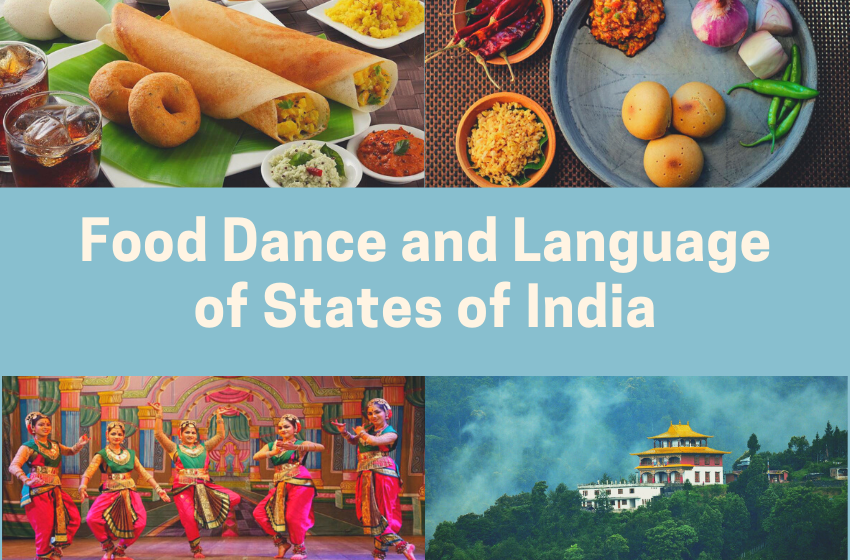
The food, dance and language of states of India represent the true essence of our nation’s incredible diversity. From the aromatic spices of the north to the classical dance forms of the south, every region has a unique story to tell through its traditions. Understanding the food and clothing of India is essential for students and travelers who want to appreciate the “Unity in Diversity” that defines our 28 states and Union Territories.
In this guide, we help you name the language dress food, as well as the capital and festivals of 15 states of India. While we focus on the food, dance and language of states of India, we also provide a detailed look at the famous food of 28 states of India. Whether you are researching traditional food and dress of Indian states for a school project or cultural study, our comprehensive tables provide everything you need in one place.
Food, Dance and Language of States of India: 28 States and 8 Union Territories
The distinctively distinguishable customs and traditions of India give it a unique hue. From the Himalayas in the North to the waves of the Indian Ocean in the South, India has a million different colours. The Indian states dance, language, food and dress of its 29 States and 9 Union Territories; a total of 38 entities differ distinctly from each other.
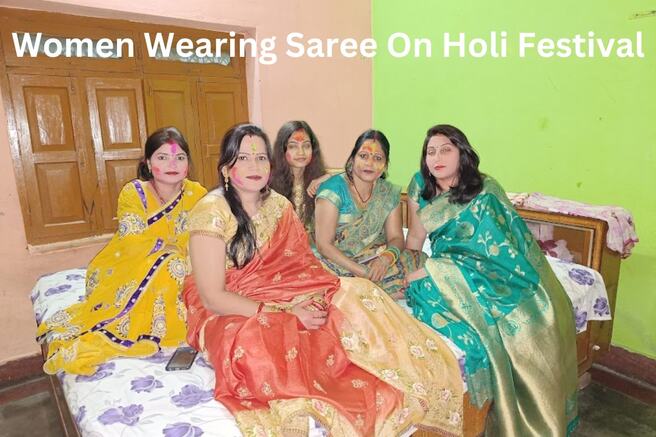
Food, Dress, Dance and Language of 29 States of India
Below is the comprehensive Guide to Food, Dance and Language of States of India
|
State |
Capital | Official Language | Famous Food | Traditional Dance |
Dress |
| Andhra Pradesh | Amaravati | Telugu | Pulihora, Pootharekulu | Kuchipudi | Saree / Dhoti |
| Arunachal Pradesh | Itanagar | English | Thukpa, Pehak | Bardo Chham | Gale (Wrap) |
| Assam | Dispur | Assamese | Masor Tenga | Bihu | Mekhela Chador |
| Bihar | Patna | Hindi | Litti Chokha | Jat-Jatin | Dhoti-Kurta / Saree |
| Chhattisgarh | Raipur | Chhattisgarhi | Muthia, Chila | Panthi | Lugda (Saree) |
| Goa | Panaji | Konkani | Fish Curry, Bebinca | Fugdi | Pano Bhaju |
| Gujarat | Gandhinagar | Gujarati | Dhokla, Thepla | Garba, Dandiya | Chaniya Choli |
| Haryana | Chandigarh | Hindi | Bajra Khichdi | Phag, Saang | Daaman-Kurti |
| Himachal Pradesh | Shimla | Hindi | Dham, Siddu | Nati | Pashmina Shawls |
| Jharkhand | Ranchi | Hindi | Dhuska | Chhau | Bhagwan (Tussar) |
| Karnataka | Bengaluru | Kannada | Bisi Bele Bath | Yakshagana | Ilkal Saree |
| Kerala | Thiruvananthapuram | Malayalam | Sadhya, Appam | Kathakali, Mohiniyattam | Kasavu Mundu |
| Madhya Pradesh | Bhopal | Hindi | Poha, Bhutte Ka Kees | Matki | Chanderi Saree |
| Maharashtra | Mumbai | Marathi | Puran Poli, Misal Pav | Lavani | Nauvari Saree |
| Manipur | Imphal | Meitei | Kangshoi | Manipuri | Phanek |
| Meghalaya | Shillong | English | Jhadoh | Laho | Jainsem |
| Mizoram | Aizawl | Mizo | Bai | Cheraw (Bamboo Dance) | Puan |
| Nagaland | Kohima | English | Smoked Pork | War Dance | Alungstu (Shawl) |
| Odisha | Bhubaneswar | Odia | Dalma, Pakhala | Odissi | Sambalpuri Saree |
| Punjab | Chandigarh | Punjabi | Makki di Roti & Sarson da Saag | Bhangra, Gidda | Phulkari |
| Rajasthan | Jaipur | Hindi | Dal Baati Churma | Ghoomar | Ghagra Kanchli |
| Sikkim | Gangtok | Nepali | Momos, Phagshapa | Singhi Chham | Bakhu |
| Tamil Nadu | Chennai | Tamil | Pongal, Dosa | Bharatanatyam | Kanchipuram Saree |
| Telangana | Hyderabad | Telugu | Hyderabadi Biryani | Perini Sivatandavam | Gadwal Saree |
| Tripura | Agartala | Kokborok, Bengali | Mui Borok | Hojagiri | Rignai |
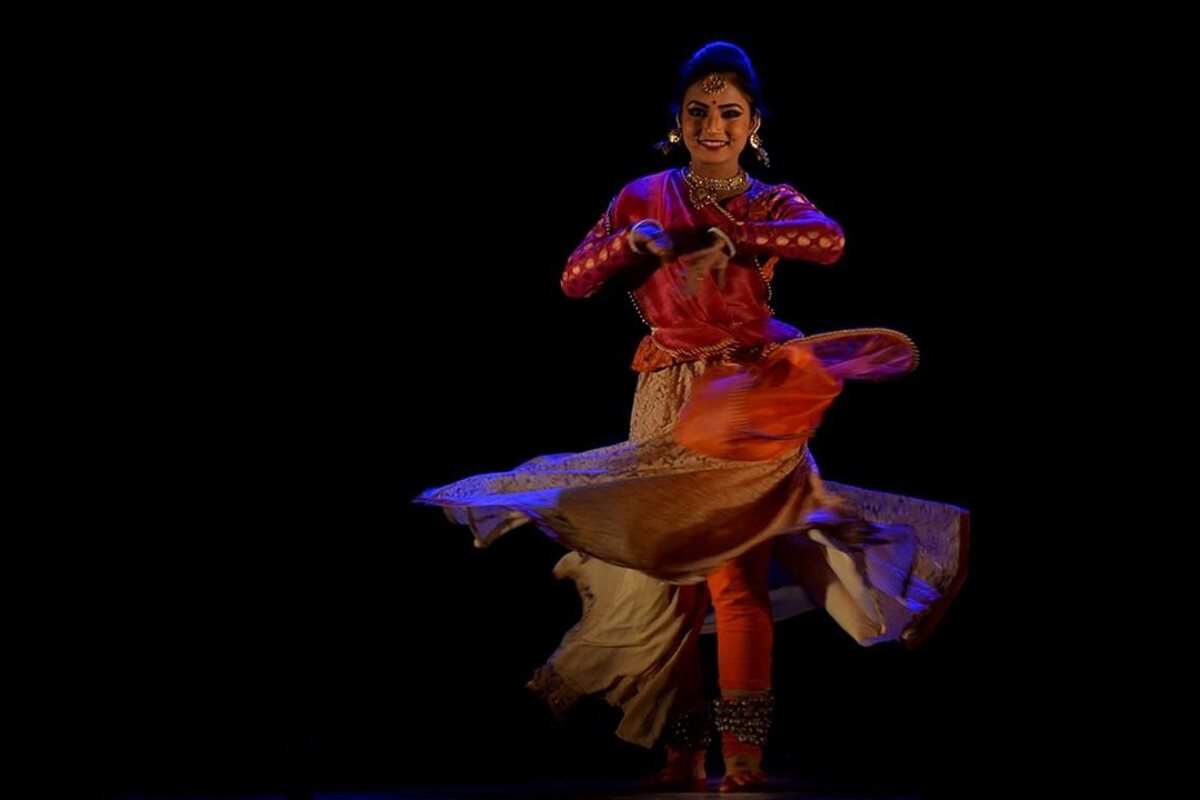
| Uttar Pradesh | Lucknow | Hindi | Galouti Kebab, Petha | Kathak | Chikankari Kurta |
| Uttarakhand | Dehradun | Hindi | Kafuli | Choliya | Pichora |
| West Bengal | Kolkata | Bengali | Kosha Mangsho, Rosogolla | Chhau, Dhunuchi | Tant Saree |
Dance, Language, Food, Dress of 8 Union Territories of India
| Union Territory | Capital | Language | Famous Food | Traditional Dress |
| Andaman & Nicobar | Port Blair | Bengali, Hindi | Sea Food, Coconut | Light Cotton / Tribal attire |
| Chandigarh | Chandigarh | Punjabi, Hindi | Chole Bhature | Kurta Pajama / Salwar Suit |
| Dadra & Nagar Haveli and Daman & Diu | Daman | Gujarati, Hindi | Ubadiyu, Seafood | Dhoti-Kurta / Ghagra |
| Delhi (NCT) | New Delhi | Hindi, Punjabi | Chaat, Nihari | Modern / Ethnic wear |
| Jammu & Kashmir | Srinagar/Jammu | Kashmiri, Dogri | Rogan Josh, Dum Aloo | Pheran |
| Ladakh | Leh | Ladakhi, Tibetan | Thukpa, Skyu | Goncha |
| Lakshadweep | Kavaratti | Malayalam | Fish Curry, Rayerezh | Mundu (Lungi) |
| Puducherry | Pondicherry | Tamil, French | Kadugu Yerra | Saree / Mundu |
Language, Dress, Food, Capital, and Festivals Of States Of India
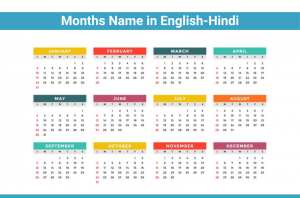
Here are the tables for Language, Dress, Food, Capital, and Festivals of all States and Union Territories of India in English and Hindi.
| State/UT | Capital | Language | Dress | Food | Festival |
| Andhra Pradesh | Amaravati | Telugu | Dhoti, Saree | Pulihora, Pesarattu | Ugadi, Makar Sankranti |
| Arunachal Pradesh | Itanagar | English, Hindi | Jacket, Chuba | Thukpa, Momos | Losar, Dree |
| Assam | Dispur | Assamese | Mekhela Chador | Assam Laksa, Khaar | Bihu, Bohag Bihu |
| Bihar | Patna | Hindi | Dhoti, Kurta, Saree | Litti Chokha, Sattu | Chhath Puja, Teej |
| Chhattisgarh | Raipur | Hindi | Dhoti, Saree | Chana Samosa, Fara | Bastar Dussehra, Hareli |
| Goa | Panaji | Konkani | Pano Bhaju | Fish Curry, Bebinca | Carnival, Shigmo |
| Gujarat | Gandhinagar | Gujarati | Kediyu, Chaniya Choli | Dhokla, Thepla | Navratri, Uttarayan |
| Haryana | Chandigarh | Hindi, Punjabi | Dhoti, Kurta | Bajra Khichdi, Lassi | Teej, Lohri |
| Himachal Pradesh | Shimla | Hindi, Pahari | Dhoti, Kurta, Churidar | Dham, Chana Madra | Dussehra, Lohri |
| Jharkhand | Ranchi | Hindi | Kurta, Saree | Thekua, Rugra | Sarhul, Karam |
| Karnataka | Bengaluru | Kannada | Panche, Saree | Bisi Bele Bath, Ragi Mudde | Ugadi, Makar Sankranti |
| Kerala | Thiruvananthapuram | Malayalam | Mundu, Kasavu Saree | Appam, Sadya | Onam, Vishu |
| Madhya Pradesh | Bhopal | Hindi | Lehenga, Dhoti | Bhutte Ka Kees, Poha | Lokrang Festival, Diwali |
| Maharashtra | Mumbai | Marathi | Nauvari Saree, Dhoti | Puran Poli, Misal Pav | Ganesh Chaturthi, Gudi Padwa |
| Manipur | Imphal | Manipuri, English | Phanek, Innaphi | Eromba, Chamthong | Yaoshang, Ningol Chakouba |
| Meghalaya | Shillong | Khasi, English | Jainsem, Dhara | Jadoh, Dohneiiong | Shad Suk Mynsiem, Nongkrem Dance |
| Mizoram | Aizawl | Mizo, English | Puan, Pawndum | Bamboo Shoot, Bai | Chapchar Kut, Mim Kut |
| Nagaland | Kohima | Nagamese, English | Angami, Shawls | Bamboo Shoot, Fish Rice | Hornbill Festival, Moatsu |
| Odisha | Bhubaneswar | Odia | Sambalpuri Saree, Dhoti | Dalma, Pakhala Bhata | Raja Parba, Durga Puja |
| Punjab | Chandigarh | Punjabi | Salwar Kameez, Kurta Pajama | Makki Di Roti, Sarson Saag | Baisakhi, Lohri |
| Rajasthan | Jaipur | Rajasthani | Ghagra, Choli, Dhoti | Dal Baati Churma, Ghevar | Teej, Gangaur |
| Sikkim | Gangtok | Nepali, English | Kho, Dumvam | Phagshapa, Momos | Losoong, Saga Dawa |
| Tamil Nadu | Chennai | Tamil | Veshti, Saree | Sambar, Idli | Pongal, Thaipusam |
| Telangana | Hyderabad | Telugu | Kurta, Dhoti, Saree | Hyderabadi Biryani, Pesarattu | Bonalu, Bathukamma |
| Tripura | Agartala | Bengali, English | Rignai, Dhuti | Mui Borok, Chakhwi | Garia Puja, Durga Puja |
| Uttar Pradesh | Lucknow | Hindi | Salwar Kameez, Kurta Pajama | Tehri, Kachori | Diwali, Holi |
| Uttarakhand | Dehradun | Hindi | Angrakha, Ghagra Choli | Aloo Ke Gutke, Kafuli | Kumbh Mela, Basant Panchami |
| West Bengal | Kolkata | Bengali | Tant Saree, Dhoti | Macher Jhol, Mishti Doi | Durga Puja, Poila Baisakh |
| Andaman and Nicobar Islands | Port Blair | Hindi, English | Saree, Shirt | Seafood | Island Tourism Festival |
| Chandigarh | Chandigarh | Hindi, Punjabi | Kurta, Salwar | Chhole Bhature, Makki Roti | Baisakhi, Lohri |
| Dadra and Nagar Haveli | Silvassa | Gujarati | Lehenga, Dhoti | Ubadiyu, Rotla | Holi, Diwali |
| Lakshadweep | Kavaratti | Malayalam, English | Mundu, Shirt | Fish Curry | Id-ul-Fitr, Bakrid |
| Delhi | New Delhi | Hindi, Punjabi | Salwar Kameez, Dhoti | Chhole Bhature | Republic Day, Diwali |
| Puducherry | Puducherry | Tamil, French | Veshti, Shirt | Coconut Curry | Pongal, Bastille Day |
The language, dress, food, capital and festivals of states of india in hindi
| राज्य/केंद्र शासित प्रदेश | राजधानी | भाषा | वेशभूषा | खाना | त्यौहार |
| आंध्र प्रदेश | अमरावती | तेलुगु | धोती,
साड़ी |
पुलिहोरा,
पेसरट्टू |
उगादी,
मकर संक्रांति |
| अरुणाचल प्रदेश | ईटानगर | अंग्रेज़ी,
हिंदी |
जैकेट,
चुबा |
थुकपा,
मोमोज़ |
लोसार,
ड्री |
| असम | दिसपुर | असमिया | मेखला
चादर |
असम
लक्सा, खार |
बिहू,
बोहाग बिहू |
| बिहार | पटना | हिंदी | धोती,
कुर्ता, साड़ी |
लिट्टी
चोखा, सत्तू |
छठ
पूजा, तीज |
| छत्तीसगढ़ | रायपुर | हिंदी | धोती,
साड़ी |
चना
समोसा, फरा |
बस्तर
दशहरा, हरेली |
| गोवा | पणजी | कोंकणी | पानो
भज्जू |
फिश
करी, बेबिंका |
कार्निवल,
शिगमो |
| गुजरात | गांधीनगर | गुजराती | केडीयू,
चनिया चोली |
ढोकला,
थेपला |
नवरात्रि,
उत्तरायण |
| हरियाणा | चंडीगढ़ | हिंदी,
पंजाबी |
धोती,
कुर्ता |
बाजरा
खिचड़ी, लस्सी |
तीज,
लोहड़ी |
| हिमाचल प्रदेश | शिमला | हिंदी,
पहाड़ी |
धोती,
कुर्ता, चूड़ीदार |
धाम,
चना मडरा |
दशहरा,
लोहड़ी |
| झारखंड | रांची | हिंदी | कुर्ता,
साड़ी |
ठेकुआ,
रुगरा |
सरहुल,
करम |
| कर्नाटक | बेंगलुरु | कन्नड़ | पंचे,
साड़ी |
बिसी
बेले भात, रागी मड्डे |
उगादी,
मकर संक्रांति |
| केरल | तिरुवनंतपुरम | मलयालम | मुंडू,
कसवु साड़ी |
अप्पम,
साद्या |
ओणम,
विशु |
| मध्य प्रदेश | भोपाल | हिंदी | लहंगा,
धोती |
भुट्टे
का कीस, पोहा |
लोक
रंग उत्सव, दीवाली |
| महाराष्ट्र | मुंबई | मराठी | नौवारी
साड़ी, धोती |
पुरन
पोली, मिसल पाव |
गणेश
चतुर्थी, गुड़ी पड़वा |
| मणिपुर | इंफाल | मणिपुरी,
अंग्रेजी |
फनेक,
इनाफ़ी |
एरोम्बा,
चमथोंग |
याओशंग,
निंगोल चकौबा |
| मेघालय | शिलॉन्ग | खासी,
अंग्रेजी |
जैनसेम,
धारा |
जादोह,
डोहनेइओंग |
शाद
सुक मिनसिएम, नोंगक्रेम नृत्य |
| मिजोरम | आइजॉल | मिज़ो,
अंग्रेजी |
पुआन,
पांडम |
बांस
की शूट, बाई |
चापचार
कुट, मिम कुट |
| नागालैंड | कोहिमा | नागामीज,
अंग्रेजी |
अंगामी,
शॉल्स |
बांस
की शूट, मछली चावल |
हॉर्नबिल
महोत्सव, मोआत्सु |
| ओडिशा | भुवनेश्वर | ओड़िया | सम्बलपुरी
साड़ी, धोती |
दालमा,
पखाला भात |
राजा
पर्व, दुर्गा पूजा |
| पंजाब | चंडीगढ़ | पंजाबी | सलवार
कमीज, कुर्ता पजामा |
मक्की
की रोटी, सरसों का साग |
बैसाखी,
लोहड़ी |
| राजस्थान | जयपुर | राजस्थानी | घाघरा
चोली, धोती |
दाल
बाटी चूरमा, घेवर |
तीज,
गणगौर |
| सिक्किम | गंगटोक | नेपाली,
अंग्रेजी |
खो,
दमवाम |
फगशापा,
मोमोज़ |
लोसोओंग,
सगा दावा |
| तमिलनाडु | चेन्नई | तमिल | वेश्टी,
साड़ी |
सांभर,
इडली |
पोंगल,
थाईपूसम |
| तेलंगाना | हैदराबाद | तेलुगु | कुर्ता,
धोती, साड़ी |
हैदराबादी
बिरयानी, पेसरट्टू |
बोनालु,
बथुकम्मा |
| त्रिपुरा | अगरतला | बांग्ला,
अंग्रेजी |
रिगनाई,
धूती |
मुई
बोरोक, चखवी |
गरिया
पूजा, दुर्गा पूजा |
| उत्तर प्रदेश | लखनऊ | हिंदी | सलवार
कमीज, कुर्ता पजामा |
तेहरी,
कचौरी |
दीवाली,
होली |
| उत्तराखंड | देहरादून | हिंदी | अंगरखा,
घाघरा चोली |
आलू के
गुटके, काफली |
कुंभ
मेला, बसंत पंचमी |
| पश्चिम बंगाल | कोलकाता | बांग्ला | तांत
साड़ी, धोती |
माछेर
झोल, मिष्टी दोई |
दुर्गा
पूजा, पोइला बोइसाख |
Food, Capital, Dress, and Festivals of Union Territories (Table in Hindi): |
||||||
| केंद्र शासित प्रदेश | राजधानी | भाषा | वेशभूषा | खाना | त्यौहार | |
| अंडमान और निकोबार द्वीपसमूह | पोर्ट
ब्लेयर |
हिंदी,
अंग्रेज़ी |
साड़ी,
शर्ट |
समुद्री
भोजन |
द्वीप पर्यटन उत्सव | |
| चंडीगढ़ | चंडीगढ़ | हिंदी,
पंजाबी |
कुर्ता,
सलवार |
छोले
भटूरे, मक्की रोटी |
बैसाखी, लोहड़ी | |
| दादरा और नगर हवेली | सिलवासा | गुजराती | लहंगा,
धोती |
उबडियू,
रोटला |
होली, दीवाली | |
| लक्षद्वीप | कवरत्ती | मलयालम,
अंग्रेज़ी |
मुंडू,
शर्ट |
फिश
करी |
ईद-उल-फितर, बकरीद | |
| दिल्ली | नई
दिल्ली |
हिंदी,
पंजाबी |
सलवार
कमीज, धोती |
छोले
भटूरे |
गणतंत्र दिवस, दीवाली | |
| पुडुचेरी | पुडुचेरी | तमिल,
फ़्रेंच |
वेश्टी,
शर्ट |
नारियल
करी |
पोंगल, बैस्टील दिवस
|
|
1. Andhra Pradesh
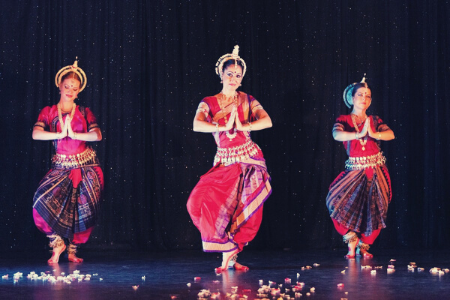
Andhra Pradesh Food, Traditional Dresses, Dance, Language
Food of Andhra Pradesh
The Telugu cuisine is characterised by its spicy and tangy curries and pickles. Being the largest producer of chilies and rice in India, the food in the state is predominated by rice-based dishes with liberal use of chillies and other spices. Lentils find great use in the cuisine too.
Some of the traditional dishes of Andhra Pradesh include pesarattu, pulusu, karapoosa, ariselu, pappu charu, rasam, vepudu, Pootha Rekulu etc.
Traditional Dress of Andhra Pradesh
The traditional dresses of Andhra Pradesh is sarees are most famous among ladies and men prefer wearing Dhoti and Kurtas in Andhra Pradesh.
Dance of Andhra Pradesh
The dance forms of Andhra Pradesh reflect the cultural heritage of the state. They differ in costumes, types and musical instruments used.
Kuchipudi: Kuchipudi is one of the most famous traditional dance forms of Andhra Pradesh. It gets its name from the name of the village where resident Brahmins practised this art form. The dancers sway to the music and tune of a singer who is accompanied by musicians playing mridangam, violin, flute and tambura.
Language of Andhra Pradesh
Telugu is the official language of Andhra Pradesh. However, there are many local dialects that are also spoken in different parts of the state. Some of these dialects include Waddar, Chenchu, Savara, Golari, Kamanthi etc. Telugu has a strong reflection of Sanskrit’s influence as it has absorbed tatsamas from Sanskrit.
2. Arunachal Pradesh
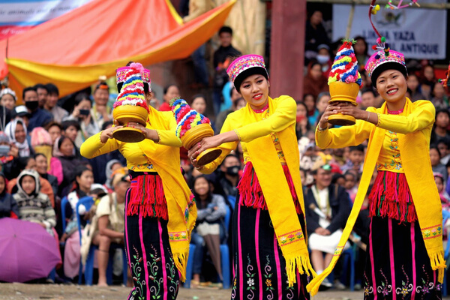
Arunachal Pradesh Food, Traditional Dresses, Dance, Language
Food of Arunachal Pradesh
Momos are a common food item in Arunachal Pradesh. Rice along with fish or meat and a lot of green vegetables form the staple diet of people in Arunachal Pradesh. In addition, Thukpa is a common meal item among the Monpa tribe of the state. Rice beer is a common alcoholic beverage among the people of this hilly state.
Dress of Arunachal Pradesh
Arunachal Pradesh’s traditional dresses for men are ‘Monapas’ and for women, it is ‘Chemise’ with an embroidered, full-sleeve jacket, along with a petticoat or skirt.
Dance of Arunachal Pradesh
The dance forms of Arunachal Pradesh are filled with energy and colours. While in some dance forms, men and women dance separately, in others they perform together. The most common traditional dance form in Arunachal Pradesh is:
- Bardo Chamm: This dance form depicts the fight between good and evil. There is interesting folklore behind this dance form. Dancers wear masks and dress up as animals and dance to the tune of drums and cymbals.
Language of Arunachal Pradesh
Arunachal Pradesh is believed to be one of the linguistically richest states in the country as it is home to possibly at least 30 distinct languages and innumerable dialects thereof. Some of the common languages spoken in the state are Tani, Bodic, Idu, Miju etc. Hindi and English are the official languages used in Arunachal Pradesh.
3. Assam
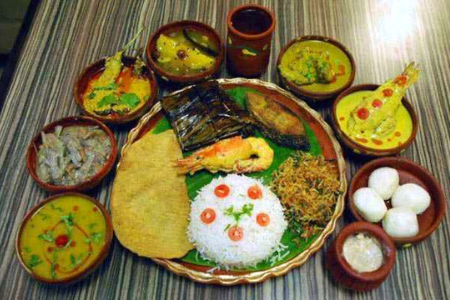
Assam Food, Dance, Traditional Dresses, Language
Food of Assam: Assamese cuisine is a beautiful blend of the techniques used in cooking by people living in the hilly regions and those living in the plains. While fermenting is a standard while cooking food among people in the hills who do not have access to fresh ingredients, people in living in the plains spice up meals with fresh fish and vegetables. A traditional Assamese meal begins with a khar and ends with a spicy and tangy tenga dish. Betel Nut and paan conclude the meal. Some of the traditional dishes of Assam include pura maas mankho, dheakiyasak, pitika etc.
Dress of Assam: The Assamese traditional dresses for men are ‘Dhoti and Kurta’ with Gamcha and for women the popular dress is ‘Muga’ which also called ‘Mekhela Chadar’
Dance of Assam: Some of the common dance forms of Assam are –
- Bihu: This is related to the harvest festival called Bihu. Young men and women dress up in colourful clothes and dance to the tunes of dhol, pepa or gagana.
- Jhumur Nach: This is performed by tea garden workers to the beat of a drum called ‘Madal’.
- Bagurumba: Performed by the Bodo tribal community, this dance is performed by girls alone.
Language of Assam: The people of Assam speak the language Assamese. It is an Eastern Indo-Aryan language and is also the official language of the state.
4. Bihar
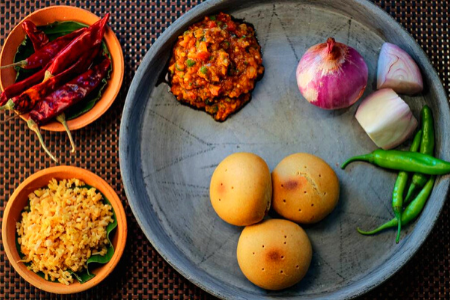
Bihar Food, Traditional Dresses, Language, Dance
Food of Bihar: Bihari cuisine lies somewhat between North and East India. The meals are predominantly vegetarian as there is a strong influence of Buddhism and Hindu values of non-violence on the region. However, due to the presence of many rivers abundant in freshwater fish, there are sections of the population that eat non-vegetarian food items.
Some of the most popular Bihari dishes are Chokha, Sattu Paratha and Bihari Fish Curry.
Dress of Bihar: The traditional dresses of Bihar for men are Dhoti, Kurta and Gamchha, and for women, it is Saree and Choli tops.
Dance of Bihar: The common folk dances of Bihar include:
- Jhijian Dance: This is a form of folk dance in Bihar where women sing and dance to appease Lord Indra.
- Jat Jatin Dance: This is performed by a couple and the dance depicts the hardships and life experiences of an emigrant couple.
- Kajari Dance: The dance is performed during the rainy season. Young girls dance like a peacocks in this form of folk dance.
Language of Bihar: Bihari is the collective name given to the different languages spoken in the region. Some of the common dialects spoken in Bihar include Maithili, Bhojpuri, Magahi, Angika etc. Hindi is the official language and also the medium of instruction in many schools in Bihar.
Read more about Bihar.
5. Chhattisgarh
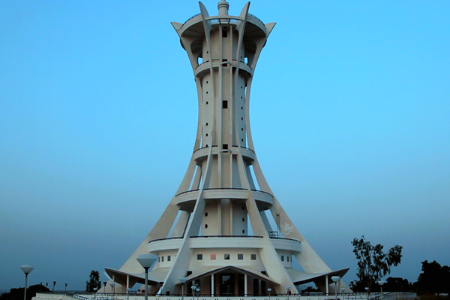
Chhattisgarh Traditional Dresses, Food, Dance, Language
Food of Chhattisgarh
The cuisine of Chhattisgarh is mainly based of maize, wheat and jowar. The people in the state are fond of tangy meal items and sweet dishes. This makes jalebis, petha and rakhia badi popular food items in the state. The food can be categorized into two types –tribal and non-tribal.
Dress of Chhattisgarh
Saree is the most popular dress among Chhattisgarh women, and Dhoti, dhotis and headgears like cotton turbans is the most popular among men.
Dance of Chhattisgarh
The common folk dance of Chhattisgarh includes –
- Panthi: The dance is performed on the birth anniversary of Guru Ghasi Das and has a lot of religious significance.
- Raut Nacha: Performed by Yadavs or Yaduvanshis, this dances resembles the raas leela performed by Lord Krishna with his gopis.
Language of Chhattisgarh
Chhattisgarhi is the official language of the state. Language like Hindi is written in the Devanagari script and has a strong influence of the Munda and Dravidian languages.
6. Goa
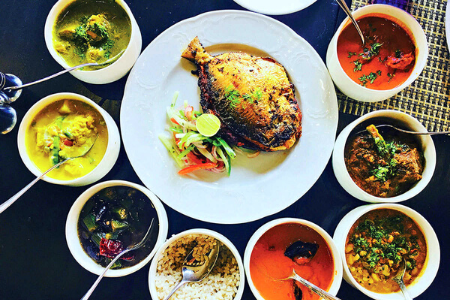
Goa Food, Traditional Dresses, Language, Dance
Food of Goa: Goan cuisine is well known for its tangy and unique taste. Coconut milk, rice and seafood form the main parts of a Goa meal. The food still has a strong Hindu influence and shows many aspects of the impact that the Portuguese had on its food. Kokum is widely used in cooking Goan food.
The Goan fish curry is a very popular dish in the state.
Dress of Goa: In the traditional dresses of Goa, women wear a Saree, also called a Nav Vari and men wear a Dhoti and Shirt
Dance of Goa: The common folk dance of Goa includes –
- Dekni: This is a traditional dance form which is performed by women. The music exhibits influences of both the East and West and so is traditional and contemporary at the same time.
- Kunbi: This dance form depicts the time before the Portuguese conquest of the region. It is mainly a social dance and is devoid of any religious connotation.
- Gofftoo: It is a form of peasant dance and is performed after the harvest season.
Language of Goa: The official language of Goa and the Konkan region is Konkani. Portuguese is still spoken in these parts by the elderly population of Goa. Marathi is also spoken in some places.
7. Gujarat
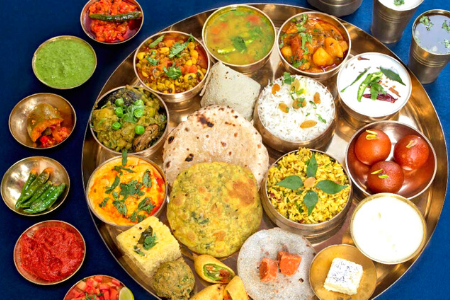
Gujarat Traditional Dresses, Food, Dance, Language
Food of Gujarat: Gujarati cuisine is predominantly vegetarian due to the influence of Jainism and traditional Hindu values. There are four main regions in Gujarat- North Gujarat, Surti Gujarat, Kutch and Kathiawar- which have their own distinctive styles of cooking. A typical Gujarati thali consists of roti, dal, rice and vegetables. Some dishes are a beautiful blend of sweetness, saltiness and hotness.
Dress of Gujarat: The most popular Gujarati traditional dresses for women is Chaniya choli, salwar kameez, and sarees whereas men prefer wearing dhotis, kurtas, or bandis and Kedia along with a turban.
Dance of Gujarat: The common folk dance of Gujarat includes –
- Garba: Garba is a popular form of dance that is performed during the nine-day festival of Navratri. A picture or idol of Goddess Shakti or a lamp is placed in the centre and dancers stand in concentric circles for the performance.
- Dandiya Raas: Dandiya Raas was traditionally performed by men to the tune of traditional instruments. However, these days the dance form has evolved and men and women are seen dancing to foot-tapping numbers during the Navratri festival.
Language of Gujarat: Gujarati is the official language of the state. Gujarati is an Indo-Aryan language and according to studies it is the 26th most spoken native language in the world. The language owes its origin to Old Gujarati which gave birth to the modern day Gujarati and Rajasthani languages.
8. Haryana
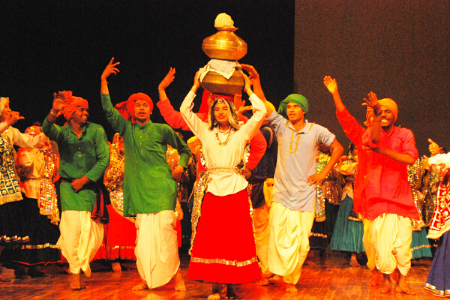
Haryana Traditional Dresses, Food, Dance, Language
Food of Haryana: The food of Haryana is true to its soil. The diet of the people of Haryana mostly consists of rotis and dairy products. Dairy products such as butter and ghee are prepared at home by women and are relished with every meal. Lassi is a commonly prepared beverage that people in Haryana drink. Some of the popular items of the Haryanvi cuisine are Pethe ki subji, teet ka achar, churma, kheer, malpuas etc.
Dress of Haryana: Most popular traditional dresses of Haryana is Dhoti-Kurta paired with Juttis and Paghari (turban) for men and women prefer to wear Ghagra-Choli along with Odni (a headcover)
Dance of Haryana: The common folk dance of haryana include –
- Saang Dance: This dance is performed in groups. Usually comprising of a group of 12, men dress up as women in this dance to play the roles of female characters. The dance is based on folk tales or religious stories.
- Chhathi Dance: This is performed on the birth of a male child. Women perform this dance on the sixth day of the birth of the child. Usually performed at night, the dance depicts romantic stories.
Language of Haryana: The language commonly spoken in this region is Haryanvi. The language is an Indo-Aryan language and is quite similar to Braj Bhasha. It is also considered to be a dialect of Hindi.
9. Himachal Pradesh
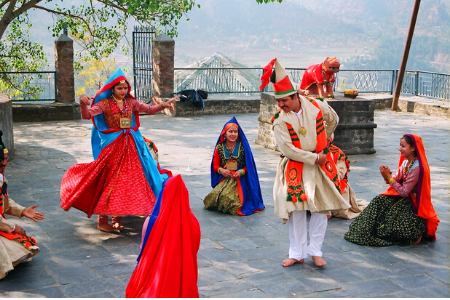
Himachal Pradesh Food, Language, Traditional Dresses, Dance
Food of Himachal Pradesh: The cuisine of Himachal Pradesh is quite similar to the rest of North India. However, the preference of the people for non-vegetarian foods makes it a little different from the rest of North Indian foods. Red meat and wheat bread predominate the cuisine of Himachal Pradesh. Some of the popular dishes of Himachal Pradesh include Madira, Pateer, Til Chutney etc.
Dress of Himachal Pradesh: The traditional dresses of Himachal Pradesh, Men wear dhoti-kurta or pajama-kurta with Pagri (turban), whereas women wear Ghagra, Lehenga-choli, and Kurtis.
Dance of Himachal Pradesh: The common folk dance of himachal pradesh include –
- Kinnauri Nati: A beautiful folk dance which is usually a mime and depicts the sowing of crops and the ensuing festivities.
- Namagen: This is usually performed to welcome the autumn season. The costumes of the dances of this folk dance is particularly interesting because of the variety of colours and women dancers were extremely beautiful silver jewellery.
Language of Himachal Pradesh: Hindi is the official language of Himachal Pradesh. However, in some parts of the state people still speak the Pahari language, which has many dialects and sub-dialects too. Punjabi is also widely spoken in the state.
10. Jammu and Kashmir
(Declared as an Union Territory on 31st Oct 2019)
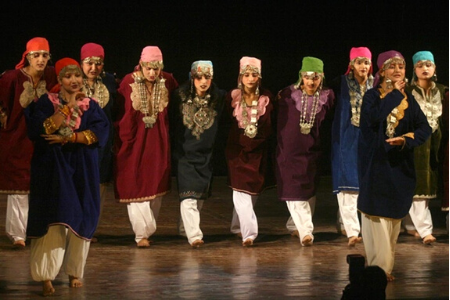
Jammu and Kashmir Traditional Dresses, Food, Dance and Language
Food of Jammu and Kashmir: The Kashmiri cuisine places great emphasis on meats. Even early spiritual texts have mentioned that the people of this region were heavy meat eaters. The most popular non-vegetarian food item in this region is mutton and is cooked in as many as 30 different ways.
Dress of Jammu and Kashmir: The most traditional dresses among men and women is Kashmir. However, women wear Pheran with churidar salwar. Pathani Suit is also a traditional dress among men.
Dance of Jammu and Kashmir: The common folk dance of jammu and kashmir include –
- Kud: It is basically a ritual dance which is performed to appease the gods. Usually performed at night, dancers sway to the tunes of instruments such as the Chhaina, flute and drums.
- Dumhal Dance: This is a popular form of folk dance. Only the men of the Wattal are allowed to perform this dance. The most interesting aspect of the dance is the colourful costume of the dancer.
Language of Jammu and Kashmir: Kashmiri is the most popularly spoken language in the region. Hindi, Urdu and English are also widely used by people to communicate in J&K.
Regional Diversity in the Food, Dance and Language of States of India
It is fascinating to see how the food, dance and language of states of India change every few hundred kilometers. While the food, dance and language of states of India in the desert regions of Rajasthan focus on conservation, the food, dance and language of states of India in the lush greenery of West Bengal celebrate water and harvest.
11. Jharkhand
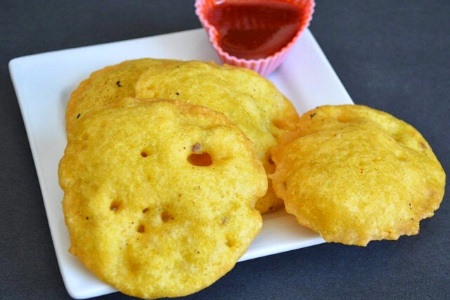
Jharkhand Traditional Dress, Food, Language, Dance
Food of Jharkhand: The authentic cuisine of Jharkhand is not readily available in restaurants. The original recipes can be enjoyed only on a visit to a village. The food consists of both vegetarian and non-vegetarian items. The food is prepared with minimum use of spices and vegetables.
Dress of Jharkhand: The traditional dresses of Jharkhand is ‘Bhagwan’ (a one piece clothing), however, men also wear Dhoti-Kurta with turban, whereas women prefer to wear Saree.
Dance of Jharkhand: The common folk dance of jharkhand include –
- Chhou: The Chhou dance is a form of tribal dance. Dancers wear masks made of paper mache and perform on stories from mythology. The colourful costumes and jewellery are the special attraction of this dance form.
Language of Jharkhand: Although Hindi is the official language of the state, many other languages and dialects are used by the people living in different parts of the state. Such languages include Santhali, Mundari, Kharia, Ho, Bhumiji etc.
12. Karnataka
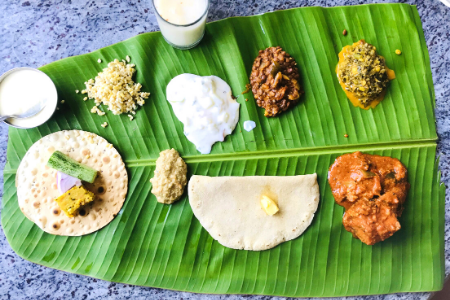
Karnataka Traditional Dresses, Food, Dance, Language
Food of Karnataka: Karnataka cuisine is a wholesome mix of all the essential nutrients needed for the body. The carefully balanced meal consists of rice, lentils, vegetables and is, surprisingly, started with a dessert called Payasam. Some of the popular dishes of Karnataka include Bisibele bhath, Holige, Vangi Bath, Uppittu etc.
Dress of Karnataka: Women prefer to wear Ilakal, silk sarees, and dhavani, whereas men prefer to wear shirt and Panche (a dhoti)
Dance of Karnataka: The common folk dance of karnataka include –
- Kunitha: This is a ritualistic dance performed by the men of the shepherd community.
- Komb-aat: The Komb-aat is also a ritualistic dance which is performed within the temple premises. The dance depicts stories from mythology.
Language of Karnataka: Kannada is the official language of Karnataka. Other languages such as Tulu, Konkani, Kodava and Urdu are also spoken in the state.
13. Kerala
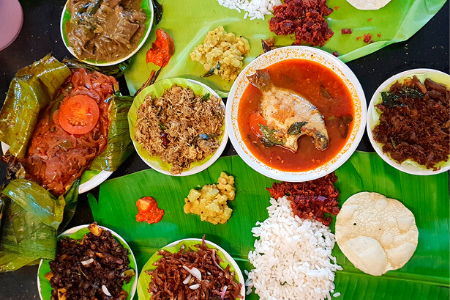
Kerala Food, Traditional Dress, Language, Dance
Food of Kerala: The cuisine of Kerala is distinctive in taste, aroma and flavour. The preparation techniques differ along the length of the state. Seafood is highly popular in the coastal regions of the state. Coconut and coconut oil form an important ingredient of Kerala cuisine.
Dress of Kerala: Kerala women traditional dresses known as Set saree with a golden border, whereas men adorn lungi or mundu with shirt as their traditional dress.
Dance of Kerala: The common folk dance of kerala include –
- Kathakali: A highly dramatised dance drama which depicts stories from mythology. This dance form is particularly important due to the make-up and costumes used by the artists.
Language of Kerala: Malayalam is the official language of the state. However, Hindi, English, Tamil are the other languages that are spoken in the region.
14. Madhya Pradesh
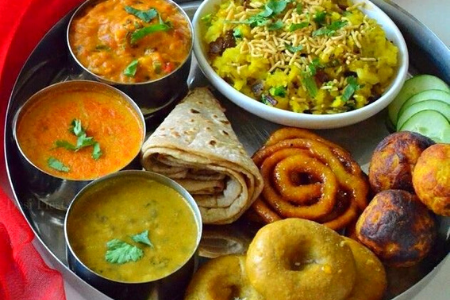
Madhya Pradesh Traditional Dress, Food, Dance, Language
Food of Madhya Pradesh: The cuisine of Madhya Pradesh includes both vegetarian and non-vegetarian items. While the people of Northern and Western Madhya Pradesh keep their food centred around wheat and meat, the people of Southern and Eastern MP keep their food centred around rice and fish. Some of the most popular dishes of Madhya Pradesh are rogan josh, biriyani, pilaf etc.
Dress of Madhya Pradesh: Dhoti-Kurta with turban is the most traditional dresses among men and women prefer to wear saree, lehnga-choli.
Dance of Madhya Pradesh: The common folk dance of madhya pradesh include –
- Tertali: This form of dance is usually performed by women of the Kamar tribe. Dancers cover their head with a veil, tie cymbals on different parts of their body and dance to the tune of a Manjira.
- Charkula: Performed on the third day after Holi, Charkula is presented by women who place lit lamps on their head and dance to appease Lord Krishna.
Language of Madhya Pradesh: Hindi is the official language of Madhya Pradesh. Other languages such as Marathi, Malvi, Nimadi, Bundeli etc are spoken in different parts of the state.
15. Maharashtra
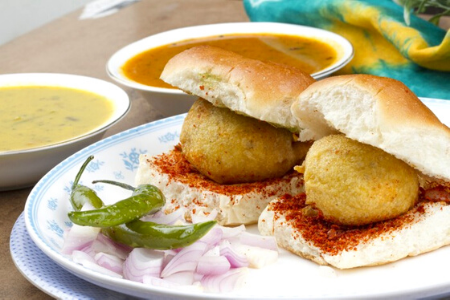
Maharashtra Traditional Dress, Food, Dance, Language
Food of Maharashtra: Marathi cuisine presents a mixed bag of flavours and tastes. The cuisine has dishes that range from mild to spicy dishes. Vegetables, rice, wheat, jowar etc form the main components of the Maharashtrian diet. Some of the popular dishes are bata vada, puran poli etc.
Dress of Maharashtra: Women adorn choli with famous styled saree called Lugda and Nauwari saree. Men prefer to wear traditional dhoti called Dhotar and Pheta as their dress.
Dance of Maharashtra: The common folk dance of maharashtra include –
- Lavani: Lavani is a very popular folk dance form that is performed by women wearing sarees. The beats are quick and the dance form is noted for its powerful rhythm.
Language of Maharashtra: Marathi is the official language of Maharashtra. However, due to high levels of immigration other languages such as Hindi and English are also use widely.
16. Manipur
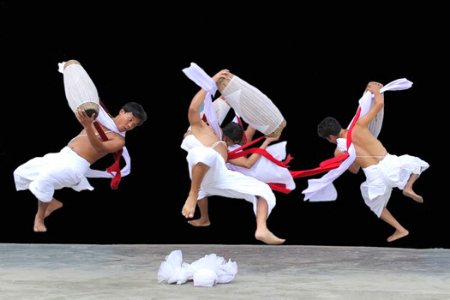
Manipur Traditional Dresses, Food, Dance, Language
Food of Manipur: Manipuri cuisine is centred around rice, vegetables and fish. The cuisine is very seasonal and depends on the kind of vegetables available. However, Manipuri cuisine differs from the food of rest of India due to the use of various herbs and roots that are endemic to the region. Also, there are certain vegetables too that are found only in this region and cannot be found anywhere else. While most food items are cooked using spices and herbs, there are certain items such as fermented bamboo shoots that require an acquired taste.
Dress of Manipur: Traditional dresses among men is jackets styled with dhoti and white turban, whereas women adorn Innaphi and Phanek similar to a sarong.
Dance of Manipur: The common folk dance of manipur include –
- Dhol Cholom: is a drum dance and is performed during Holi. Drums are an integral part of dances in Manipur.
Language of Manipur: Manipur or Meitei language is the state language of Manipur. However, other dialects are spoken in different parts of the state. English is widely used in Manipur.
17. Meghalaya
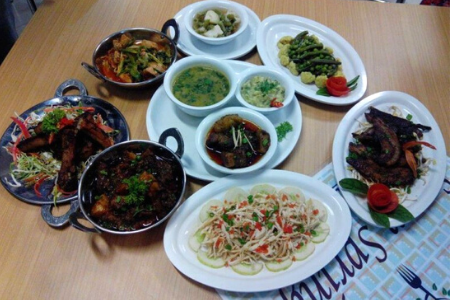
Meghalaya Food, Traditional Dresses, Dance, Language
Food of Meghalaya: The cuisine of Meghalaya is not only distinct from the rest of India but also stands apart from the cuisine of the rest of North Eastern states. The meal is centered on rice and spicy non-vegetarian dishes. People domesticate animals for food and commercial purposes. Some of the popular food items of Meghalaya include Ki Kpu, minil songa, sakin gata etc.
Dress of Meghalaya: Meghalaya traditional cloth is called Jaisen, a single piece of clothing made from mulberry silk. Women style it as saree, whereas men wear it as dhoti. Men wear jackets and turban along with it also.
Dance of Meghalaya: The common folk dance of meghalaya include –
- Laho Dance: is one of the most popular traditional dance forms of Meghalaya. This is performed by a young girl who dances with two young men , hand in hand, as a person recites beautiful couplets on love.
Language of Meghalaya: The main languages of Meghalaya are Garo and Khasi. English is the official language of the state. Nepali is also widely used by the people of Meghalaya.
18. Mizoram
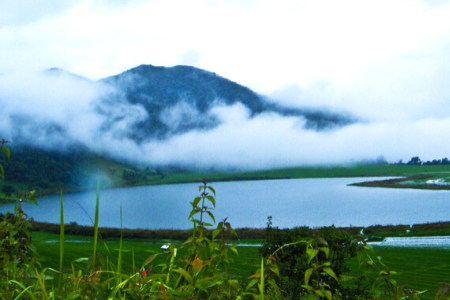
Mizoram Traditional Dresses, Food, Dance, Language
Food of Mizoram: The cuisine of Mizoram is quite distinct in terms of style of cooking and ingredients used. While the cuisine has both vegetarian and non-vegetarian dishes, Mizos use non-vegetarian ingredients even in their vegetarian dishes. The staple food item, like most regions in India, is rice. Fish is quite popular in this region. The Mizo cuisine is quite healthy as very little oil is used while cooking.
Dress of Mizoram: Traditional dresses for men in Mizoram is a single piece cloth just like saree, which is 7 feet long and 5 feet wide, often in red and white stripes along with a thick coat for winter. The traditional dress of women called Puan. Puanchei is the dress worn by most Mizo women during festival, which comes in black and white stripes.
Dance of Mizoram: The common folk dance of mizoram include –
- Cheraw Dance: Cheraw dance is a very popular form of dance that is seen in Mizoram. Men hold bamboo poles to the ground and move them in a pattern according to the rhythm played on drums. Women jump through the gaps in these poles to the beat.
Language of Mizoram: Mizo is the most widely spoken language in Mizoram. Mizo language is also called Lushai. Other languages prevalent in Mizoram are Pawi, Paite and Hmar.
19. Nagaland
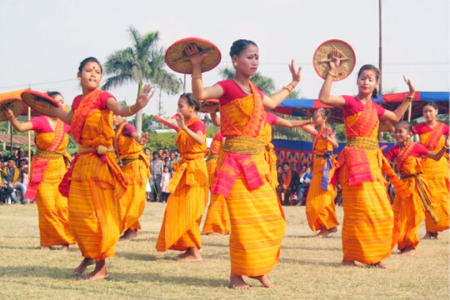
Nagaland Food, Traditional Dresses, Dance, Language
Food of Nagaland: The people of Nagaland have the most unique way of cooking their food. Their food is dried, smoked or fermented. The meal in a Naga family consists of rice, boiled vegetables and a meat dish. The food dishes are generally boiled. Smoked meat is a preferred food dish. Different kinds of chillies are available in Nagaland and these are liberally used in the food items to make them spicy.
Dress of Nagaland: Nagaland traditional dresses of women called Angami, consist of sleeveless top called Vatchi paired with a slip called Neikhro paired with Pfemhou (a white skirt), whereas Men adorn shawl, Ratapfe, and a lungi.
Dance of Nagaland: The common folk dance of nagaland include –
- Chang Lo: Chang lo is a kind of a victory dance which is performed on special occasions and important festivals such as Poanglem, which is a three day harvest festival.
Language of Nagaland: There are different languages in Nagaland which vary according to the tribes. There are about 20 different dialects, but these languages do not have a script of their own.
20. Odisha
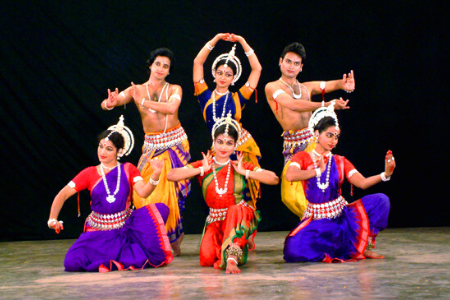
Odisha Traditional Dresses, Food, Dance, and Language
Food of Odisha: The cuisine of Odisha is quite similar to that of West Bengal. The food is spicy and uses the quintessential ginger-garlic paste that is used in Bengali food. Often food is cooked in mustard oil. The sweets made of chenna are quite famous in Odisha.
Dress of Odisha: Most popular traditional dresses for women is Sambalpuri and Kataki saree, whereas the men wear gamcha, dhoti, and kurta.
Dance of Odisha: The common folk dance of odisha include –
- Gotipua: This is a part of the rich cultural heritage of Odisha. This dance is performed by young boys below the age of 14. This dance was performed in the temples of Odisha to appease Lord Jagannath.
- Odissi: This is a beautiful dance form which was practiced by the devadasis of the temples of Odisha. The dance form is characterised by the beautiful costumes, graceful movements and stunning jewellery used by the dancers.
Language of Odisha: Odia is the state language of the state. However, languages such as Hindi, English, Bengali and Telugu are widely used languages in the state.
21. Punjab
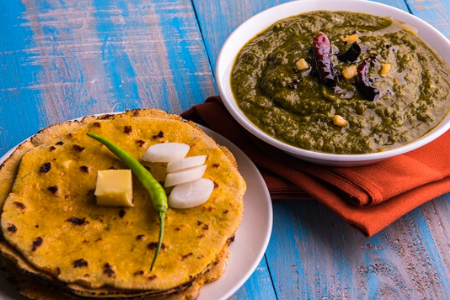
Punjab Food, Traditional Dresses, Dance, Language
Food of Punjab: Punjabi cuisine is one of the most delicious cuisines in the country. The food is characterised by strong flavours and aroma. Although the cuisine includes both vegetarian and non-vegetarian dishes, the meat dishes are quite popular not just in Punjab but all throughout the country. Dairy products are also widely used in the Punjabi cuisine.
Dress of Punjab: Traditional dresses for Punjabi men is kurta along with Tehmat/pajama, or even a dhoti styled with different types of pagri or turban. Women wear salwar kameez suit, Patiala suit with Paranda (a hair ornament) as traditional dresses.
Dance of Punjab: The common folk dance of punjab include –
- Bhangra: Bhangra is one of the most popular traditional dance forms of India. It is usually performed during the harvest season and is noted for the colourful costumes and peppy music.
Language of Punjab: Punjabi is the state language of Punjab and is also the 10th most widely spoken native language in the world. Hindi is also widely spoken in Punjab.
22. Rajasthan
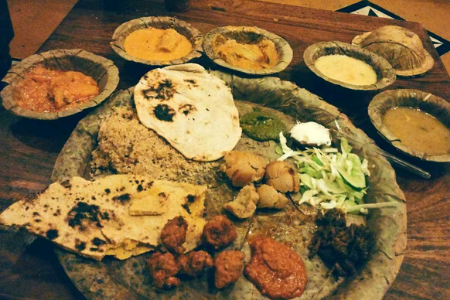
Rajasthan Traditional Dresses, Food, Dance, Language
Food of Rajasthan: The Rajasthani cuisine reflects the war like lifestyles and the arid atmosphere of the region. The food is prepared in such a manner so that the food did not have to be reheated. Rajasthan is famous for Dal Bati Churma, where dal (lentil curry) is served with sweet Churma and baked atta (flour) Batis. Gatte ki sabji (made from Besan) is also a famous food in Rajasthan.
Dress of Rajasthan: The tradition dresses of Rajasthan is Men wear kurtas along with dhoti/pajama, Angarkha, with paggar or safa (a headgear like turbans). Women wear the traditional ghagra designed with Kanchli (a choli or blouse).
Dance of Rajasthan: The common folk dance of rajasthan include –
- Ghoomar: The Ghoomar dance was traditionally performed by the women of the Bhil tribe of Rajasthan. The dance is performed women who wear large swirling robes and sway to the tunes of men and women singing. The beautifully coloured clothes and the jewellery of the dancers are the special features of this form of dance.
Language of Rajasthan: Rajasthani is the state language. It has descended from Old Gujarati.
23. Sikkim
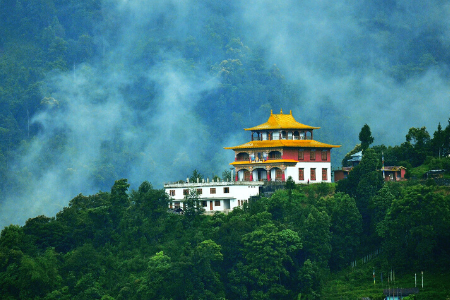
Sikkim Traditional Dresses, Food, Dance, Language
Food of Sikkim: Sikkimese cuisine is quite popular in the whole country. Momos and noodle stalls are spread all over the country and people from all backgrounds are fond of Sikkimese cuisines. Some of the most popular dishes of the Sikkimese cuisine are Gya thuk, Phagshapa, Thukpa etc.
Dress of Sikkim: Traditional dresses for men and women in Mizoram is called Bakhu. Men wear with a belt and trousers, whereas women style it with a full sleeve silk blouse called Honju.
Dance of Sikkim: The common folk dance of sikkim include –
- Singhi Chham: This is a traditional dance form wherein dancers wear masks to resemble the snow lion which is the cultural symbol of the region. The music is provided by beating cymbals.
Language of Sikkim: The Sikkimese language is also called Tibetan, Bhutia or Dranjongke. The language is spoken by the Bhutia community of Sikkim.
24. Tamil Nadu
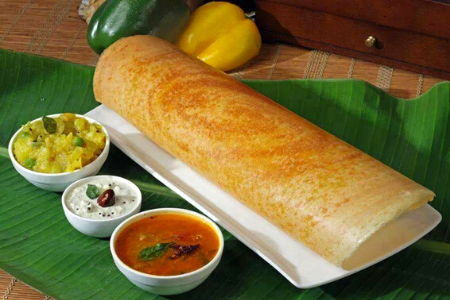
Tamil Nadu Traditional Dresses, Food, Dance, Language
Food of Tamil Nadu: Tamil cuisine is another popular Indian cuisine. Idlis, dosas and vadas are some of the popular Tamil Nadu dishes that are relished by most people of India. The dishes are usually rice and wheat based and are spicy and tangy.
Dress of Tamil Nadu: Most popular traditional dresses among women is Pattu Pavada, a silk skirt and blouse or half saree. Men’s traditional dress is Mundu and shirts.
Dance of Tamil Nadu: The common folk dance of Tamil Nadu include –
- Bharat Natyam: This is a classical Indian dance form and is a reconstruction of the traditional dance form of devadasis practised in the temples of Tamil Nadu. The dance form is named after Bharat Muni who wrote Natya Shatra.
Language of Tamil Nadu: Tamil language is one of the Dravidian languages of India and has been declared as a classical language by the Indian government. Besides Tamil Nadu, it is also spoken in the neighbouring states of Puducherry, Kerala etc. It is also a major lingua franca in the Andaman and Nicobar islands.
25. Tripura
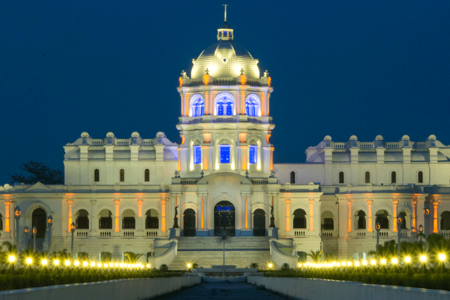
Tripura Traditional Dresses, Food, Dance, Language
Food of Tripura: The Tripuri cuisine is predominantly non-vegetarian. However, vegetables are added to such dishes to make them more wholesome and nutritious. Tripuri cuisine has some very peculiar and typical ingredients such as the Berma, which is dried and fermented fish. Due to the huge settlements of Bengalis in Tripura, the cuisine is more Bengali than tribal.
Dress of Tripura: Men traditionally wear gamcha called Rikutu gamcha and a shirt called kubai. Women’s traditional dresses is a cloth draped to their knee called Rinnai along with a small cloth called Risa.
Dance of Tripura: The common folk dance of tripura include –
- Hojagiri: Hojagiri is the traditional dance of the Reang tribal community of Tripura. Young girls dance on an earthen pitcher and balance an object on their head. The music is provided by beating of cymbals.
Language of Tripura: The main languages of Tripura are Bengali and Kokborok. There is a large settlement of Bengalis in Tripura and a majority of the population in the cities speaks Bengali. The native tribals of the state speak Kokborok.
26. Uttar Pradesh
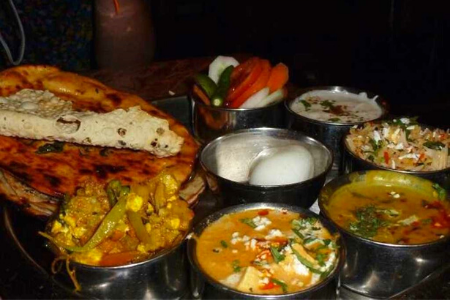
Uttar Pradesh Traditional Dresses, Food, Dance and Language
Food of Uttar Pradesh: The cuisine of Uttar Pradesh is mainly of two types-Awadhi and Mughlai. The cuisine consists of both vegetarian and non-vegetarian dishes. The cuisine of Uttar Pradesh is also famous for its kebabs, biriyani and different mutton recipes. The Mughlai cuisine is influenced by the Mughal era and the Awadhi cuisine is influenced by the cuisines of Punjab and Kashmir. Some of the most popular dishes from the Uttar Pradesh cuisine are chaat, samosa and pakoras.
Dress of Uttar Pradesh: Traditional dresses for men is dhoti-kurta or kurta-pajama, whereas Saree and Salwar-Kameez is popular among women.
Dance of Uttar Pradesh: The common folk dance of uttar pradesh include –
- Charkula dance: This is a form of traditional folk dance which is performed women. The performers usually cover their faces with a veil and carry a multi-tier arrangement of lamps on their head. There are about 108 lit lamps in this arrangement. The performers dance to the rasiya songs of Lord Krishna.
Language of Uttar Pradesh: Hindi is the official language of the state. However, many other languages, including Hindi, and their dialects are spoken in different parts of the state.
27. West Bengal
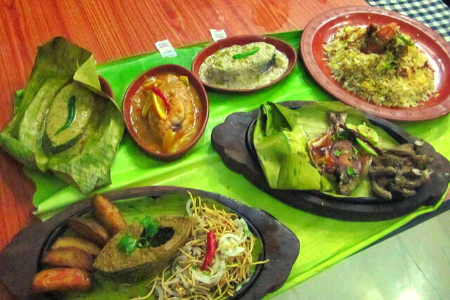
West Bengal Traditional Dresses, Food, Dance and Language
Food of West Bengal: The food in West Bengal has the finest blends of both vegetarian and non-vegetarian dishes. This state is famous for the variety of Maach (fishes), served with various flavours. Hilsa and Chingri fishes are the most loved fishes in the state. West Bengal is also known as the ‘land of Maach & Bhaat’. West Bengal is also famous for the variety of sweets. “Rasgulla’, is the most famous sweet of this state.
Dress of West Bengal: The most traditional dresses among Bengali women is Saree in Bengali style, whereas men wear Dhoti-Kurta.
Dance of West Bengal: The Bengali dance has the shadow of folk tradition, influenced from tribes and the Indian tradition. The famous dances in West Bengal are Chau dance, a rare form of mask dance and the Gaudiya Nritya, the Bengali Classical. Various other forms of Indian classical dances have their origin in West Bengal.
Language of West Bengal: Bengali is the most common and widely spoken language in West Bengal. Other languages spoken are Hindi, Santali, Nepali, Urdu and Oriya.
28. Uttarakhand
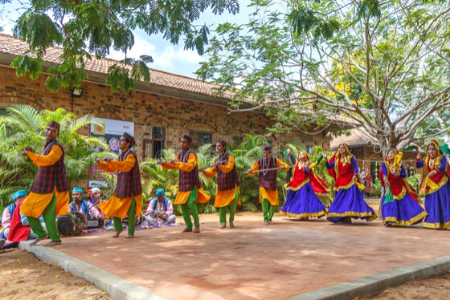
Uttarakhand Traditional Dresses, Food, Dance and Language
Food of Uttarakhand: People of Uttarakhand mostly prefer vegetarian food. However, non-vegetarian lovers can also be fund in different parts of the state. The Uttarakhand food has diverse ingredients, flavours and colours. Pulses and rice are widely eaten. The typical Uttarakhand dishes include Chainsoo, Kafuli, Jholi, Phaanu and Roat. The famous desserts include Kesar Halwa, Gulgula, Arsa and Jhangora Ki Kheer.
Dress of Uttarakhand: Ghagra-choli is a popular traditional dresses in Uttarakhand for women, whereas Dhoti-Kurta/Dhoti with shirt is popular among men.
Dance of Uttarakhand: When it comes to traditional dances, Uttarakhand is known for having unique and diverse forms of dances. The dance forms in Uttarakhand are not similar to that of classical dances in other states. It is rather simpler and beautiful to see. The most popular dance forms of Uttarakhand are Chancheri, Chhapeli, Bhotiya, Barada Narti, Jhora, Choliya, Langvir, Pandav, Jhainta and more.
Language of Uttarakhand: Garhwali and Kumaoni are the most commonly spoken languages in the hilly areas of the state of Uttarakhand. However, Hindi is widely spoken in the plains. Uttarakhand is the only state in India with ‘Sanskrit’, as one of its official languages.
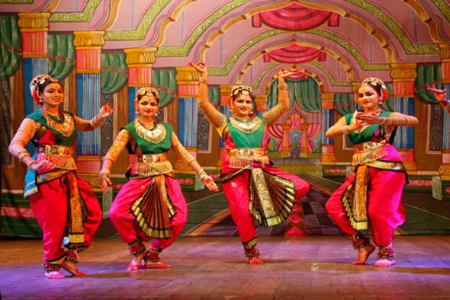
29. Telangana
Telangana Traditional Dresses, Food, Dance and Language
Food of Telangana: If you are in Telangana, you can’t afford to miss the Telangana cuisines. Telangana Food is known for its unique flavours and essence, which is popular all around the globe. The ‘Telangana Biryani’ is the most loved cuisine, which is highly demanding in different parts of the planet. Other must-have dishes in Telangana are Pathar-ka-Ghosht, Nahari and Haleem. Telangana Cuisine has sweetness as well. The ‘Telanganai Kheer’ and ‘Seviyon-ka-Meetha’ is much popular.
Dress of Telangana: Andhra Pradesh and Telangana have similar traditional dresses. Women prefer to wear Saree, whereas men prefer to wear dhoti-kurtas.
Dance of Telangana: The Perini is the most popular dance forms in Telangana. The Marfa dance was also introduced in Telangana only. It is widely popular in the Arab countries, as well.
Language of Telangana: Telugu is the official and most commonly spoken language in the state of Telangana. Urdu, is the second most commonly spoken language and English is also used in different parts of the state.
Hope you like the content. Please do share with your friends and comment below your thoughts on this. Happy Reading!
FAQs for Food, Dance and Language of States of India: Complete Guide
Q1. How many states are there in India?
Ans. India currently has 28 states and 8 Union Territories. Each state has its own unique culture, language, traditional food, festivals, and dance forms that reflect the diversity of the country.
Q2. Which language is most commonly spoken in India?
Ans. Hindi is one of the most widely spoken languages in India. However, India is a multilingual country with many regional languages such as Tamil, Telugu, Bengali, Marathi, Kannada, Malayalam, Punjabi, Gujarati, and Assamese spoken in different states.
Q3. Which Indian state is famous for Bharatanatyam dance?
Ans. Tamil Nadu is famous for the classical dance form Bharatanatyam. It is one of the oldest traditional dances in India and is known for graceful movements, expressions, and storytelling.
Q4. What is the famous food of Punjab?
Ans. Punjab is famous for dishes like Makki di Roti, Sarson da Saag, Butter Chicken, and Lassi. Punjabi food is known for its rich taste, butter, and spices.
Q5. Which state is known for Kathakali dance?
Ans. Kerala is known for Kathakali, a traditional classical dance-drama famous for colorful costumes, face makeup, and expressive performances based on mythological stories.
Q6. Why is India called a land of cultural diversity?
Ans. India is called a land of cultural diversity because every state has its own language, traditional dress, dance forms, cuisine, festivals, and customs. This variety makes India culturally rich and unique.
Q7. Which state is famous for Bhangra dance?
Ans. Punjab is famous for the energetic folk dance called Bhangra. It is mainly performed during harvest festivals and celebrations.
Q8. What are some popular foods from South India?
Ans. South Indian states are famous for foods like dosa, idli, sambar, uttapam, pongal, and appam. States such as Tamil Nadu, Karnataka, Kerala, and Andhra Pradesh have different styles of South Indian cuisine.
Q9. Which dance form belongs to Odisha?
Ans. Odisha is famous for the classical dance form Odissi. It is one of the oldest Indian classical dances and is known for elegant poses and devotional themes.
Q10. How do food and language represent the culture of Indian states?
Ans. Food and language reflect the traditions, history, and lifestyle of people living in different Indian states. Traditional dishes, local words, songs, and dance forms help preserve the cultural identity of each region in India.
Also Read: Indian music and dances