
What Are The Different Types Of Emojis and Their Meaning

Different Types Of Emojis and Their Meaning

Emojis have become an integral part of our digital communication, allowing us to express a wide range of emotions, ideas, and concepts with a single character. From the classic smiley face to the more nuanced expressions, emojis have evolved to become a universal language that transcends linguistic barriers. In this comprehensive guide, we’ll learn the different types of emojis and their meaning, unravelling their meanings and exploring their diverse applications.

The History and Evolution of Emojis

If we talk about the history of emoji, it started in Japan in 1999. Emoji was conceived and created by Shigetaka Kurita to enhance digital communication. Initially started with a set of just 176 basic icons; and now it numbers over 3,600. The Unicode Consortium standardizes these emojis globally. Over the years, emojis have evolved with new additions, diverse skin tones, and gender-neutral options, making them more inclusive and more accessible.

Types of Emojis and Their Meanings

Emojis can be broadly categorized into several groups, each with its own unique set of meanings and usages. Let’s explore the most common types of emojis and their significance:

Smileys and People Emojis and Their Meanings

These emojis depict various facial expressions and human emotions, ranging from joy and happiness to confusion and frustration. They are often used to convey the user’s mood or reaction to a particular situation.

😊 😁 😢 😡 😮 🥳 🤔

Emojis Meaning
😊 Happiness
😁 Joy
😢 Sadness
😡 Anger
😮 Surprise
🥳 Celebration
🤔 Thinking/Confusion
😂 Laughing with tears
😍 Heart eyes (love)
🥳 Party face (celebration)
🤭 Pleading face (puppy eyes)

💙 Hearts & Love Emojis and Their Meanings

Used to express love, affection, and emotions:

Emoji Meaning
❤️ Classic red heart (love)
💖 Sparkling heart (romantic)
💕 Beating heart (adoration)
🤍 Heart hands (affection)

🌟 Objects & Symbols Emojis and Their Meanings

These represent daily objects, activities, and concepts:

Emoji Meaning
💼 Briefcase (work/business)
🎨 Paint palette (art & creativity)
📚 Open book (education/reading)
🚀 Rocket (progress/success)

Animals and Nature Emojis Meanings

These emojis represent a wide array of animals, plants, and natural phenomena. They can be used to express a love for the outdoors, describe a particular setting, or simply add a touch of whimsy to a conversation.

🐶 🐱 🌳 🌸 🌞 🌧️ 🐦

Emoji Meaning
🐶 Dog
🐱 Cat
🌳 Tree
🌸 Flower
🌞 Sun
🌧️ Rain
🐦 Bird

Food and Drink Emojis Meanings

Emojis in this category depict various types of food, beverages, and culinary items. They can be used to express cravings, share food-related experiences, or even describe a delicious meal.

🍔 🍕 🍎 🍰 🍣 ☕ 🍷

Emoji Meaning
🍔 Burger
🍕 Pizza
🍎 Apple
🍰 Cake
🍣 Sushi
Coffee
🍷 Wine

Activities and Objects Emojis and Their Meanings

This category encompasses emojis that represent different activities, hobbies, and everyday objects. They can be used to communicate interests, describe ongoing tasks, or simply add visual interest to a message.

⚽ 🏀 🎨 🎸 🎮 🖥️ 📱

Emoji Meaning
Soccer
🏀 Basketball
🎨 Art/Painting
🎸 Guitar
🎮 Video Games
🖥️ Computer
📱 Mobile Phone

Symbols and Flags Emojis and Their Meanings

These emojis include a variety of symbols, flags, and other graphical representations. They can be used to express cultural or political affiliations, convey specific meanings, or add visual emphasis to a message.

❤️ ✔️ 🚫 ⚠️ 🇺🇸 🇮🇳 🏳️‍🌈

Emoji Meaning
❤️ Love/Heart
✔️ Check Mark
🚫 Prohibition/No
⚠️ Warning
🇺🇸 United States Flag
🇮🇳 India Flag
🏳️‍🌈 Pride Flag

Face Emojis

Face Emojis: These emojis are used to convey emotions such as happiness, sadness, and surprise. They are used to express a wide range of feelings and are often used in informal communication.

Emoji Meaning
😀 Happy
😢 Sad
😮 Surprised
😂 Laughing with tears
😡 Angry

Hand Emojis and their meanings

Hand Emojis: These emojis are used to convey gestures such as high-fiving, waving, and giving a thumbs up. They are used to add a touch of friendliness and informality to messages.

Emoji Meaning
👋 Waving
Raised hand
👍 Thumbs up
🙌 High five
👏 Clapping

Thumb Up Emojis

Thumb Up Emojis: These emojis are used to show approval or agreement. They are often used in a variety of contexts, including social media and text messages.

Emoji Meaning
👍 Approval
👍🏽 Approval (medium skin tone)
👍🏿 Approval (dark skin tone)

High Five Emojis

High Five Emojis: These emojis are used to celebrate or congratulate someone. They are often used in a variety of contexts, including social media and text messages.

Emoji Meaning
🙌 High five (celebration)
🙌🏽 High five (medium skin tone)
🙌🏿 High five (dark skin tone)

📰 Emojis and Cultural Differences

Emojis can carry different meanings in various cultures. For example:

  • 🍻 – In the U.S., the 🍻 beer mug emoji represents casual drinking, while in Japan, it can symbolize a formal toast.
  • 🙏 – The 🙏 folded hands emoji is seen as prayer in India but as “thank you” in Japan.
  • 😡 – The 😡 angry face emoji might mean frustration in the West but is often used jokingly in China.

🎨 The Evolution of Emojis Over Time

  • 1999: Japan introduced the first 176 emojis.
  • 2010: Unicode Consortium standardized emojis for global use.
  • 2015: Apple & Google introduced skin tone variations for more inclusivity.
  • 2021-Present: New emojis like melting face (2022), pink heart (2023), and head shaking (2024) were added.

🚀 Future of Emojis: What’s Next?

Emojis are continuously evolving. Future trends include:

  • More diversity – Inclusive emojis representing different cultures, disabilities, and genders.
  • Interactive emojis – Moving or animated emojis to enhance expression.
  • AI-powered emojis – Emojis generated based on tone detection in messages.

Emoji Usage and Best Practices

Emojis can be a powerful tool for enhancing digital communication, but it’s important to use them judiciously and with consideration for the context. Here are some best practices for using emojis effectively:

  1. Understand the Intended Meaning: Before using an emoji, ensure that you understand its intended meaning and how it might be perceived by the recipient.
  2. Maintain Appropriate Tone: Use emojis to complement the tone of your message, rather than overpowering it. Avoid excessive use of emojis, as it can come across as unprofessional or distracting.
  3. Consider the Audience: Tailor your emoji usage to the specific audience you’re communicating with, as different groups may have different preferences and expectations.
  4. Avoid Ambiguity: When using emojis, strive for clarity and avoid potential misunderstandings. If the meaning of an emoji is unclear, it’s best to provide additional context.

Emoji Table

Emoji Meaning When to Use
Soccer Ball Communicate an interest in sports or a specific activity
🇺🇸 United States Flag Express national pride or cultural affiliation
🍕 Pizza Indicate a craving for a favorite food or share a food-related experience
🐶 Dog Represent a love for pets or a particular animal
😀 Grinning Convey cheerfulness and joy
😃 Smiley Express happiness and positive feelings
😄 Smile Depict happiness and greetings
😠 Angry Face Anger or irritation
😡 Pouting Face Strong anger or displeasure
😦 Frowning Face with Open Mouth Shock or disappointment
😯 Hushed Face Surprise or silence
😲 Astonished Face Amazement or surprise
😳 Flushed Face Embarrassment or surprise
😵 Dizzy Face Confusion or dizziness
😶 Face Without Mouth Speechlessness or silence
🤐 Zipper-Mouth Face Keeping a secret or silence
🤬 Face with Symbols on Mouth Profanity or strong anger
🥱 Yawning Face Boredom or sleepiness

Why Emojis Are So Popular on Social Media

😊 Emojis have become an integral part of our digital communication, and they are especially popular on social media and very important in digital communication nowadays. But why are they so well-liked? 🤔

Emojis Convey Emotions

😊 Emojis are a great way to convey emotions and feelings in a way that words alone cannot. They can add a touch of humor, sarcasm, or even seriousness to a message. 🤣

Emojis Are Easy to Use

📱 Emojis are easy to use and can be accessed on most devices. They are a quick and convenient way to add some personality to a message. 💻

Emojis Are Universal

🌎 Emojis are a universal language that can be understood by people all over the world. They can transcend language barriers and cultural differences. 🌍

Emojis Are Fun

😄 Emojis are fun and can add a touch of whimsy to a message. They can be used to express excitement, joy, or even frustration. 😠

More Emojis

Emoji Meaning When to Use
😊 Smiling Face Express happiness and joy
🤔 Thinking Face Show confusion or thoughtfulness
📱 Mobile Phone Represent technology and communication
🌎 Globe Symbolize global connection and unity
🌍 World Map Represent international travel and exploration
😄 Grinning Face Express amusement and playfulness
😠 Angry Face Show frustration and annoyance
🤣 Laughing Face Represent humor and laughter

Conclusion Of World Of Emojis and their meanings

Emojis have become an integral part of our digital communication, allowing us to express a wide range of emotions, ideas, and concepts with a single character. By understanding the various types of emojis and their meanings, as well as following best practices for their usage, you can effectively leverage the power of emojis to enhance your digital interactions and convey your message with greater clarity and impact.

These emojis are widely used in India and are an integral part of digital communication.

FAQs on Emojis

Q1. Why are emojis so popular on social media?

Emojis are popular on social media because they are a fun and easy way to add personality to a message. They can convey emotions and feelings in a way that words alone cannot.

Q2. Can emojis be used in professional communication?

Yes, emojis can be used in professional communication, but it’s important to use them judiciously and in a way that aligns with the tone and context of the message. 📊

Q3. Are there any guidelines for using emojis?

Yes, there are guidelines for using emojis. It’s important to use them in a way that is respectful and professional and to avoid overusing them.

Q4. Can emojis be used in formal communication?

Yes, emojis can be used in formal communication, but it’s important to use them in a way that is respectful and professional.

Q5. How can I stay up-to-date with the latest emoji trends and updates?

You can stay informed about new emoji releases and trends by following reputable sources, such as the Unicode Consortium, which is responsible for the standardization of emojis.

Q6. What are emojis, and how did they originate?

Emojis are digital icons or pictograms used to express emotions, ideas, and concepts in digital communication. They originated in Japan in the late 1990s and have since become a global phenomenon.

Q7. How can I use emojis effectively in my communication?

Use emojis to complement the tone and context of your message, avoid excessive use, and tailor your emoji usage to the specific audience you’re communicating with.

Q8. Are there any guidelines or best practices for using emojis?

Yes, some best practices include understanding the intended meaning of emojis, maintaining an appropriate tone, considering your audience, and avoiding ambiguity.

Q9. Can emojis be used in professional or formal communication?

Emojis can be used in professional communication, but it’s important to use them judiciously and in a way that aligns with the tone and context of the message. Excessive or inappropriate use of emojis may be perceived as unprofessional.

Q10. How can I stay up-to-date with the latest emoji trends and updates?

You can stay informed about new emoji releases and trends by following reputable sources, such as Unicode Consortium, which is responsible for the standardization of emojis, or tech-focused news outlets that cover emoji-related updates.

Also Read: Is Facebook an Addiction or An Epidemic

Impact of GST on Indian Economy

Impact of GST on Indian Economy

The Goods and Services Tax (GST) law came into effect from July 1, 2017. This marked a historic development in the taxation sector of the country and is being purported to be the biggest tax reform that has come into effect since India’s independence. GST is found on the notion of “one nation, one market, one tax.” We will learn about positive impact of GST and its challenges in India here.

GST consolidates the indirect tax sector by abolishing other forms of taxes such as VAT, CST, Service Tax, CAD, SAD and Excise and removes the cascading effect of double taxation. It has the ability to ease the trade between different states of India as a unified and consistent tax law will be applicable all over India. The impact of GST is dependent upon various sectors in the economy. While some sectors will benefit, others will have to shell out higher taxes.

Positive Impact of GST on the Economy

It has revived India’s fiscal reform program which will strengthen and boost the Indian economy globally as well as internally. It will cause a bit of hardships for the citizens and manufacturers in the country to make a transition into this new reform. Some of the major impacts of GST on the Indian economy are

1. Simplified Tax System

Before GST, businesses had to comply with various taxes like VAT, service tax, excise duty, and octroi. GST merged these into a single tax framework, reducing complexities and making tax compliance easier for businesses of all sizes.

2. Removal of Cascading Taxes

Previously, taxes were levied at multiple stages without input tax credit benefits, leading to a “tax on tax” situation. GST resolved this by allowing businesses to claim tax credits on inputs, ultimately reducing the overall tax burden and making goods and services more affordable.

3. Strengthened National Market

With the introduction of GST, businesses no longer had to navigate different tax rates across states. This created a more integrated and competitive market, improving the ease of doing business and enhancing interstate trade.

4. Boost to Formal Economy & Compliance

GST incentivized businesses to register under the tax system, increasing transparency and reducing tax evasion. The adoption of digital tax filing and e-invoicing has further ensured better compliance and accountability.

5. Growth in Government Revenue

With a broader tax base and improved compliance, GST has contributed to steady growth in government revenue. The adoption of technology-driven tax collection mechanisms has helped minimize leakages and improve efficiency.

Challenges and Areas of Improvement

1. Initial Implementation Hurdles

Despite its long-term benefits, GST faced initial challenges, including frequent rate changes, complex return filing processes, and technological glitches in the GST portal. While many of these issues have been resolved, continuous refinements are necessary.

2. Impact on Small Businesses

Small and medium enterprises (SMEs) initially struggled with compliance due to the requirement for frequent tax filings and invoice matching. The government has since introduced measures like the composition scheme to ease compliance for small businesses.

3. Revenue Concerns for States

Since GST subsumed state-level taxes, some states faced revenue losses. To address this, the central government provided compensation, but as the compensation period has ended, states are now looking for alternative solutions.

Recent Developments in GST

  • The government is considering including petroleum products such as natural gas under GST to bring uniformity in taxation and reduce price variations across states.
  • The GST revenue collection continues to show strong growth, with recent months witnessing record-high collections.
  • Efforts are being made to simplify the tax structure further by reducing the number of tax slabs and ensuring ease of compliance.

The success and benefits of this new tax reform will be seen over a period of time. While the benefits will definitely be seen in favour of the government and international markets, it will also encourage the growth of Indian products both domestically and internationally. The consumer will have to pay less tax on certain goods and services.

Also Read: Union Budget 2025: Key Highlights, Expectations and Impact on Economy

Unsolved Mysteries Of The Earth – What Are They?

Unsolved Mysteries Of The Earth

The Earth is full of mysteries. Its evolution and ability to sustain life, while other planets in the solar system continue to remain uninhabited, is a huge mystery in itself. However, there are a number of happenings in the different parts of the Earth that have baffled mankind. We are yet to find answers to these mind boggling incidents, but these certainly are some amazing mysteries that the Earth has presented before us. In this blog, we will explore some of the most fascinating mysteries of the earth that make our planet truly unique.

10 Biggest Mysteries Of The Earth Which Are Still Unsolved

Some of the most intriguing mysteries recorded from different corners of the Earth are: 

1. Bermuda Triangle

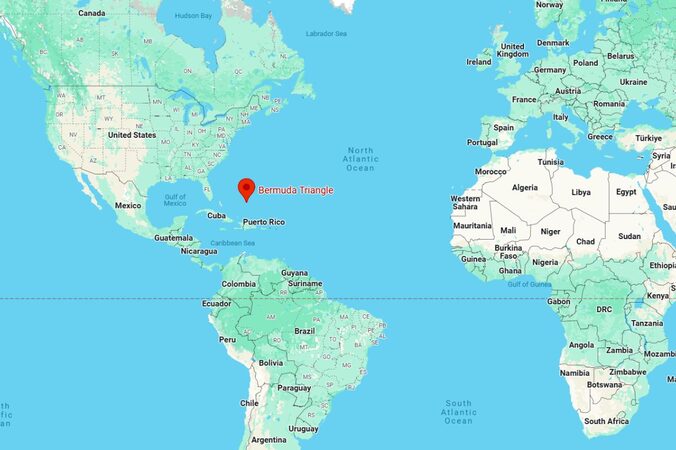
Bermuda triangle, a place of disappearance, which also known as the Devil’s Triangle; Situated in Western North Atlantic region, the Bermuda Triangle is the most infamous mystery of the Earth. This region is believed to engulf ships and aircraft passing over it. Many sea vessels and aircraft have reportedly gone missing from this region.

Bermuda Triangle

Located between Miami, Bermuda, and Puerto Rico, this region has baffled scientists and conspiracy theorists alike.

Possible explanations include:

  • Magnetic anomalies affecting navigation instruments
  • Methane gas eruptions from the ocean floor
  • Extreme weather patterns

Despite modern technology, many incidents in this area remain unexplained, fueling speculations of paranormal activity, alien involvement, or even underwater energy portals.

2. Cuban Underwater City

The Cuban Underwater City is a series of complex granite structures found on the Guanahacabibes coast of Cuba. The structures have perplexed marine biologists and scientists as they exhibit a very organised form of architecture. Scientists have tried to determine the origin and function of these structures through sonar imaging.

While some scientists believe that they are a part of a city which may have submerged under water, others are still skeptical about the structures. However, one thing they agree upon is that such architecture wasn’t possible and does not correspond with the time indicated by structures.

3. Earth Changes

Earth Changes is used to refer to a series of disastrous events that will change the face of the Earth. The theory was first propounded by a psychic from the US, Edgar Cayce. He has predicted that natural calamities such as earthquakes, solar flares, major weather changes etc will lead to these earth changes.

According to his theory, everything that was under water would emerge and the California coast would submerge. The theory has been debated in the past and still continues to be a topic for discussion among intellectuals and think tanks.

4. Mu (lost continent)

Mu is believed to be a fictional continent which existed in one of the planet’s oceans but disappeared with the emergence of the human race. While there was a debate on the existence of the continent in the Atlantic or Pacific oceans, new age scientists have dismissed the idea of Mu saying a continent cannot be destroyed or submerged in so short a time that has been indicated in theories.

Although it is considered to be fictional, it is one of the most mysterious secrets of the Earth.

5. Wawel Chakra

The Wawel Chakra is situated on the Wawel Hill in Poland. The hill is believed to emanate very strong positive energy and is considered to be one of the main centres of energy on the Earth. Popular belief says that similar to a human body which has energy chakras in it, the Earth too has chakras and the Wawel Chakra is one of the strongest of them.

Annie Besant, who visited Wawel Chakra once, said that she could feel the strong magnetic power of the place. However, it is yet to be explained as to why people experience such strange feelings at this place.

6. The Deepest Secrets of the Ocean

Did you know that more than 80% of the ocean remains unexplored? The deep sea is home to unknown species, massive trenches, and bizarre phenomena such as the Mariana Trench, the deepest known point on Earth. Scientists have discovered bioluminescent creatures, hydrothermal vents, and even eerie sounds from the depths that remain unexplained.

One such mystery is the Bloop sound—an ultra-low frequency underwater noise detected in 1997. Some believe it originated from a giant sea creature, while others think it was caused by icebergs breaking apart. The truth remains unknown.

7. The Sailing Stones of Death Valley

In California’s Death Valley, large stones move across the desert floor without human intervention. This strange movement, known as the sailing stones phenomenon, left scientists puzzled for years.

Recent research suggests that a rare combination of ice formation, wind, and temperature changes might be responsible for the movement. However, the exact mechanics behind this natural wonder still intrigue researchers.

8. The Eternal Flame Falls

The Eternal Flame Falls
The Eternal Flame Falls, New York. Source: Google Image

In New York’s Chestnut Ridge Park, a small waterfall has a natural flame burning behind it. This “eternal flame” is fueled by an underground gas source, but what’s mysterious is how the gas keeps escaping through rock formations where such leaks are unlikely.

9. The Mystery of Earth’s Magnetic Field

The Earth’s magnetic field protects us from harmful solar radiation, but scientists have observed shifts and anomalies that remain unexplained.

  • The South Atlantic Anomaly: It is an area where the magnetic field is unusually weak, allowing cosmic radiation to come closer to Earth’s surface.
  • The magnetic poles are shifting: scientists have noticed that the North Pole is moving faster than ever before, but the reason remains uncertain.

If these changes accelerate, it could impact navigation systems, wildlife migration, and even power grids worldwide.

10. The Unsolved Mystery of Ancient Civilizations

Ancient civilizations have left behind incredible structures and artifacts that still puzzle historians and archaeologists.

  • The Pyramids of Egypt: Built over 4,500 years ago, how did ancient Egyptians move massive stones without modern machinery?
  • Stonehenge in England: What was the purpose of this prehistoric monument? Was it an astronomical calendar or a site for rituals?
  • The Nazca Lines in Peru: Gigantic geoglyphs carved into the desert floor—visible only from the sky. Who made them, and why?

These structures raise questions about the knowledge and skills of ancient civilizations, some of which we have yet to fully understand.

Also Read: Valentine’s Day: History, Tradition & Significance

Indian Birds – Types, Name and Images

Indian Birds - Types, Name and Images,

Indian Birds: India is a textile form of art of landscapes that nourished the birdlife. Birds are the most beautiful and diversified creature in all the seven continents which belongs to well-defined vertebrate groups.

They belong to the Kingdom- Animalia, Phylum- Chordata, and Class- Aves which evolved from the reptiles and their connecting link is Archaeopteryx. They are characterised by various features like feathers, various beak shapes, oviparous (which lay eggs)- hard-shelled eggs, four-chambered hearts, warm-blooded in nature, and contain hollow bones or light feathers which help them to fly easily.

Types Of Indian Birds

They are of two types:

  1. Flight birds – which have a locking mechanism in their wings and
  2. Flightless birds – They do not contain this mechanism.

Classification of Indian birds

Classification of the birds depends on the area, according to scientists avian diversity is vast and each one of them created a checklist all over the world in a chronological manner. So many species of birds are common in various places in India but some are uncommon and are found only in a unique place.

Indian birds name along with their scientific names, habitat, diet, and conservation status

Here’s the completed table with Indian bird names and relevant details:

Bird Name Scientific Name Habitat Diet Conservation Status
Peacock Pavo cristatus Forests, farmlands Omnivorous Least Concern
Indian Eagle Aquila rapax Grasslands, deserts Carnivorous Vulnerable
Indian Parrot Psittacula krameri Urban areas, forests Herbivorous Least Concern
House Sparrow Passer domesticus Urban areas Omnivorous Least Concern
Great Hornbill Buceros bicornis Dense forests Omnivorous Near Threatened
Indian Cuckoo Cuculus micropterus Woodlands, forests Insectivorous Least Concern
Common Myna Acridotheres tristis Urban areas, rural areas Omnivorous Least Concern
Indian Roller Coracias benghalensis Open grasslands, forests Insectivorous Least Concern
Painted Stork Mycteria leucocephala Wetlands, marshes Carnivorous Near Threatened
Indian Pitta Pitta brachyura Deciduous forests Insectivorous Least Concern
Black Drongo Dicrurus macrocercus Open fields, forests Insectivorous Least Concern
Baya Weaver Ploceus philippinus Grasslands, farmlands Granivorous Least Concern
White-throated Kingfisher Halcyon smyrnensis Forests, riversides Carnivorous Least Concern
Crested Serpent Eagle Spilornis cheela Forests, grasslands Carnivorous Least Concern
Indian Robin Saxicoloides fulicatus Scrublands, urban areas Insectivorous Least Concern
Greater Flamingo Phoenicopterus roseus Wetlands, saline lakes Omnivorous Least Concern
Common Tailorbird Orthotomus sutorius Gardens, bushes Insectivorous Least Concern
Black Kite Milvus migrans Urban areas, open fields Carnivorous Least Concern
Bar-headed Goose Anser indicus Wetlands, lakes Herbivorous Least Concern
Indian Pond Heron Ardeola grayii Wetlands, marshes Carnivorous Least Concern
Alexandrine Parakeet Psittacula eupatria Forests, urban areas Herbivorous Near Threatened
White-browed Wagtail Motacilla maderaspatensis Riversides, wetlands Insectivorous Least Concern
Spotted Owlet Athene brama Open fields, urban areas Carnivorous Least Concern
Green Bee-eater Merops orientalis Open grasslands, farmlands Insectivorous Least Concern
Rock Pigeon Columba livia Urban areas, cliffs Herbivorous Least Concern
Jungle Babbler Turdoides striata Scrublands, forests Omnivorous Least Concern
Indian Grey Hornbill Ocyceros birostris Forests, urban areas Omnivorous Least Concern
Indian Bush Lark Mirafra erythroptera Grasslands, scrublands Insectivorous Least Concern
Cattle Egret Bubulcus ibis Wetlands, farmlands Carnivorous Least Concern
Black-necked Stork Ephippiorhynchus asiaticus Wetlands, marshes Carnivorous Near Threatened
Common Kingfisher Alcedo atthis Riversides, lakes Carnivorous Least Concern
Lesser Whistling Duck Dendrocygna javanica Wetlands, lakes Herbivorous Least Concern
Eurasian Spoonbill Platalea leucorodia Wetlands, lakes Carnivorous Least Concern
Indian Swallow Hirundo rustica Open fields, urban areas Insectivorous Least Concern
Indian Silverbill Euodice malabarica Grasslands, open fields Granivorous Least Concern
Common Pigeon Columba livia Urban areas, cliffs Herbivorous Least Concern
Black-crowned Night Heron Nycticorax nycticorax Wetlands, marshes Carnivorous Least Concern
Eurasian Collared Dove Streptopelia decaocto Urban areas, farmlands Herbivorous Least Concern
Indian Eagle Owl Bubo bengalensis Forests, open woodlands Carnivorous Least Concern
Indian Scops Owl Otus bakkamoena Forests, urban areas Carnivorous Least Concern
Indian Silverbill Euodice malabarica Grasslands, dry areas Granivorous Least Concern
Shikra Accipiter badius Urban areas, forests Carnivorous Least Concern
Indian Paradise Flycatcher Terpsiphone paradisi Forests, gardens Insectivorous Least Concern
Indian Robin Saxicoloides fulicatus Scrublands, urban areas Insectivorous Least Concern
Indian Spot-billed Duck Anas poecilorhyncha Wetlands, lakes Omnivorous Least Concern
Blue-throated Barbet Psilopogon asiaticus Forests, gardens Omnivorous Least Concern


Some birds are described on the basis of their size, shape, color etc.:

Birds Of India
Birds Of India – Himalayan Range

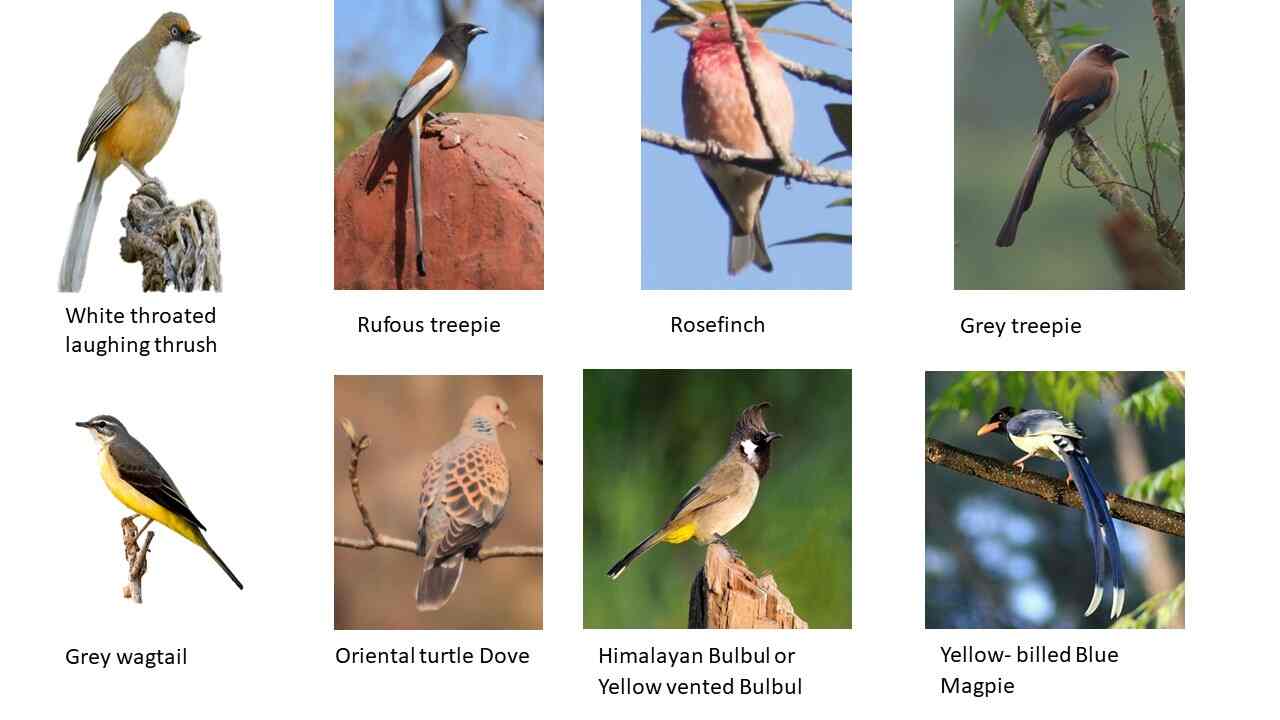
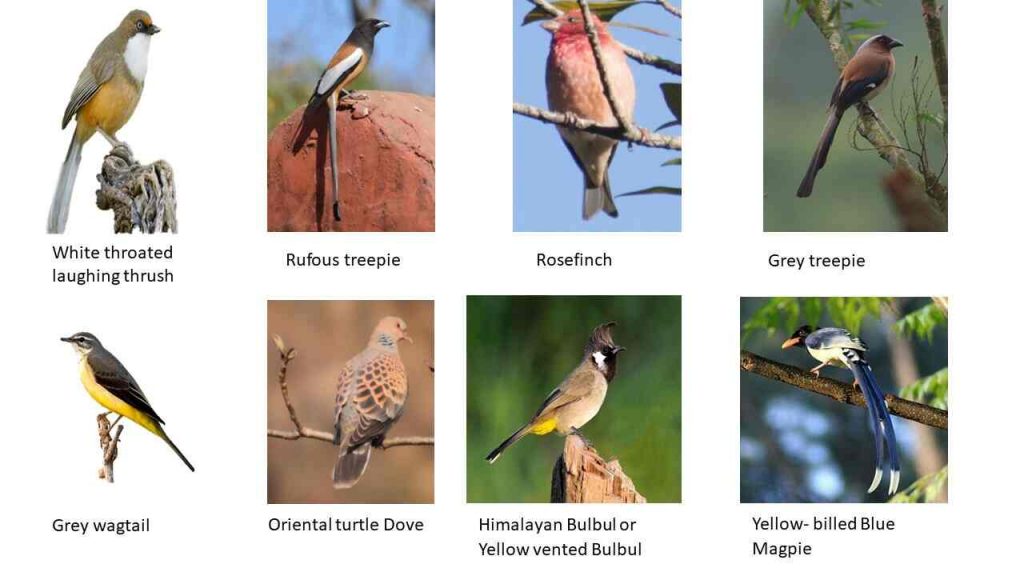
These are some bird pictures that are taken from the camera in the Himalayan region at the time of March or April. So these pictures show the diverse nature of their shape and size in their body, color patterns or beak shape and size, etc. Like the Yellow-vented Bulbul, we have a similar diversification in their species as Red-vented Bulbul which have the red vent; Dove has various varieties like the Oriental turtle Dove, spotted dove, etc., and great diversity contains magpies, treepie, etc.

Interesting Facts About Birds of India

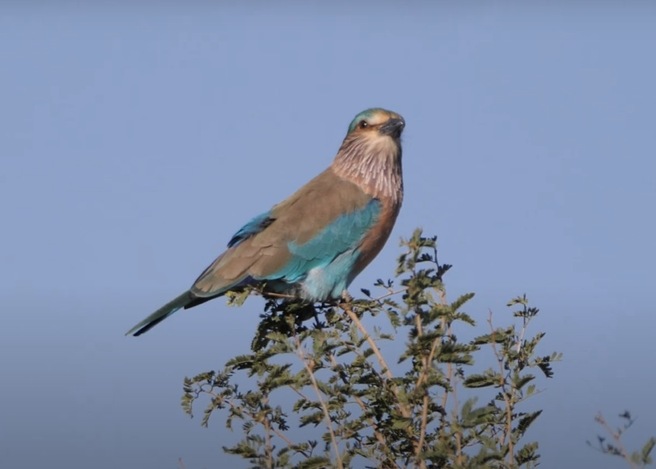
1. Indian Roller: Known for its vibrant blue and purple feathers, the Indian Roller is often seen performing stunning aerial acrobatics during mating displays. It’s also the state bird of multiple Indian states, including Karnataka and Odisha.

Indian Roller - Infojankari
Indian Roller| image source: Youtube

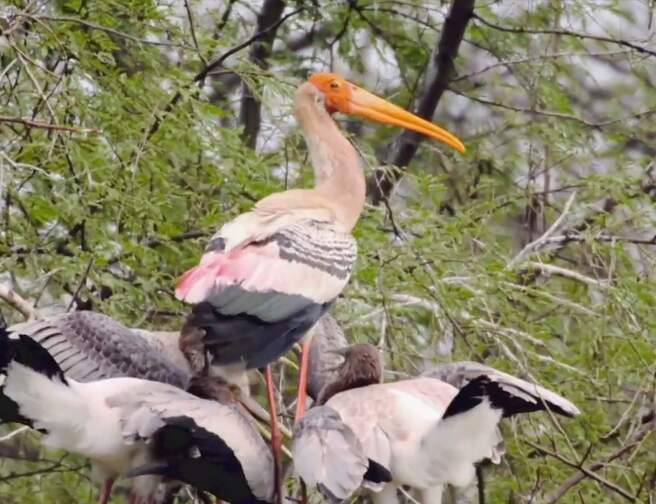
2. Painted Stork: This bird is distinguished by its colorful pink tertial feathers and yellow beak. They nest in large colonies, often with other species, and are commonly found near water bodies across India.

Painted Stork Saral Study
Painted Stork| image source: Youtube

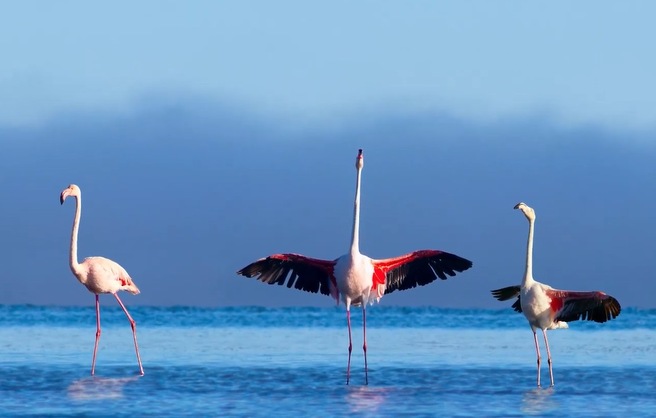
3. Greater Flamingo: Found in large numbers in Gujarat and Rajasthan, the Greater Flamingo gets its iconic pink color from the carotenoids in their diet of algae and crustaceans.

Greater Flamingo - Saral Study
Greater Flamingo| image source: Youtube

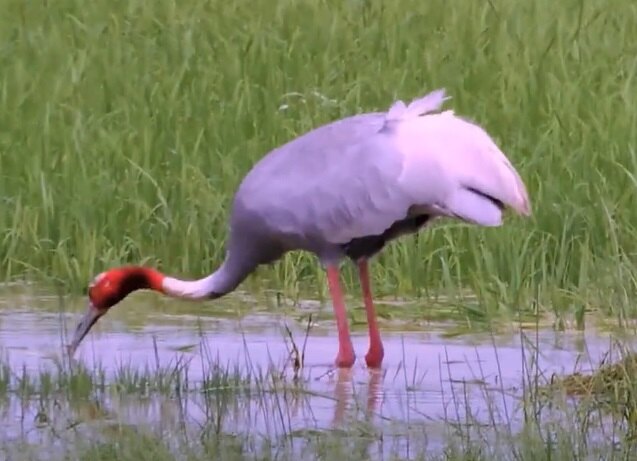
4. Sarus Crane: Standing at about 5 feet, the Sarus Crane is the world’s tallest flying bird. These elegant birds are known for their lifelong pair bonding and synchronized dancing rituals.

Sarus Crane - Saralstudy
Sarus Crane| image source: Youtube

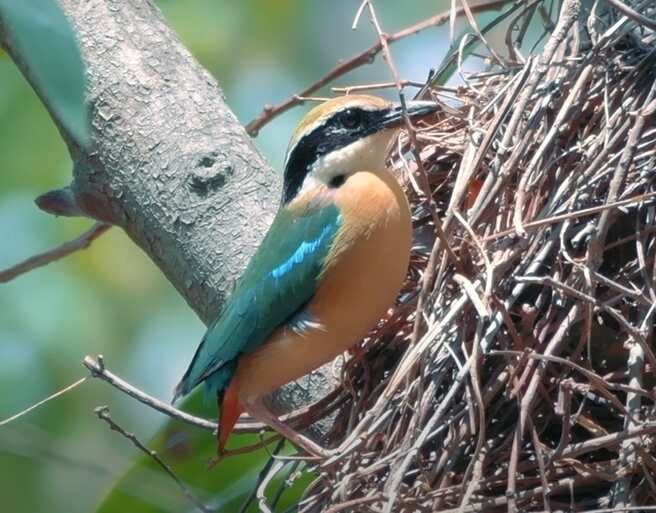
5. Indian Pitta: With its rainbow-like plumage of nine colors, the Indian Pitta is often referred to as the “Navarangi” in Hindi. It’s migratory and can be found in forested areas across the subcontinent.

Indian Pitta Saralstudy
Indian Pitta | image source: Youtube

Bird Conservation Efforts in India

India is home to over 1,300 bird species, but the growing threats from habitat loss, climate change, and human activities have made conservation crucial. Organizations like the Bombay Natural History Society (BNHS) and the Wildlife Institute of India (WII) are actively involved in preserving bird habitats, raising awareness, and advocating for legislation. Projects such as “Save the Indian Vulture” and “The Great Indian Bustard Recovery Program” are focused on protecting endangered species.

Bird-Watching in India: Popular Destinations

India is home to numerous bird sanctuaries that attract bird-watchers from across the world. Here are a few notable ones:

Place Location Establishment Significance
Bharatpur Bird Sanctuary (Keoladeo Ghana National Park) Bharatpur, Rajasthan 1971 A UNESCO World Heritage Site, home to over 370 species of birds, especially during winter migration.
Ranganathittu Bird Sanctuary Karnataka 1940 Located near the Cauvery River, this sanctuary attracts migratory birds from Siberia and North America.
Chilika Lake Bird Sanctuary Odisha 1981 Asia’s largest brackish water lagoon, a wintering ground for hundreds of species, including flamingos.
Kumarakom Bird Sanctuary Kerala 1980 Nestled along Vembanad Lake, known for migratory species like Siberian cranes and waterfowl.
Vedanthangal Bird Sanctuary Tamil Nadu 1936 One of the oldest bird sanctuaries in India, known for species like painted storks and pelicans.
Sultanpur Bird Sanctuary Haryana 1989 Popular for bird-watching and is home to 250 bird species, particularly migratory waterfowl during winter.

These destinations offer rich birding experiences, with many sanctuaries serving as vital stopovers for migratory birds from around the globe. Visitors can enjoy bird-watching in these peaceful natural reserves, especially during the migratory season (November to February).

Impact of Climate Change on Bird Migration

The changing climate has significantly impacted bird migration patterns in India. Traditionally, migratory birds such as the Siberian Cranes and Amur Falcons arrive during specific seasons, but erratic weather patterns have altered their arrival times. Some species have delayed migrations, while others have changed their routes or skipped migration altogether. This disrupts the balance of local ecosystems and raises concerns over long-term impacts on biodiversity.

Bird extinction is the major cause of degradation in the number of species through human interference. The main reason is habitat destruction, chemical contaminants through the developing projects or industries, etc. so we should do less pollution to save the flora and fauna. When some of the species reach the brink of extinction, some important measures have been taken to decrease the number.

What is Ornithology?

The study of birds is known as Ornithology which is done by Ornithologists as they are diversified in their body shape and size, color illustration, habitat, distribution on the local, regional, or continental scale, etc. Birds also have been studied or identified on the basis of their feeding habits, breeding, mating, courtship dance, or behavior.

The diversity of flora vegetation and fauna depends on latitude, longitude, and Climatic factors. For the wealth of bird’s abundance, they seek migration. Bird migration is the movement from one place to another according to seasonal or climatic influence. Where the temperature is too low there will be low bird diversity and where there is a moderate temperature, diversity will be high. Most of the bird species adapted or migrated the low land areas or lower altitudes for habitation because of the suitable temperature or the environment for example Blue-throated barbet, Great barbet, etc. were seen at the time of April but not in March at the same place. But some birds are native to their place and are found in the same place. Some are only found in the rainy season like the variety of Rose finches.

Methods to count the birds

There are various methods to count the birds like Random visualization or point counts and area searches and can be identified by their beak shape or size, colour distribution, body-streaked patterns, tail shape or size and their feeding habits, song, calls, Habitat whether they live domesticated, open areas or on the edges, etc. like the variety of tit birds have the short beaks; Drongo and magpie bird’s varieties have the long tail and feather features, etc.

Very valuable and important methods are applied for the bird’s identification. Some common birds can be identified or described very easily but this is not applied on all varieties.

When an unidentified bird is seen, draw a sketch or write their characteristics in the notebook, and click the picture in the camera. For the bird’s identification, we must take a field guide in which various varieties are given, match the characteristics and if two or three birds are of the same characteristics then see their distribution and also consult from the internet or the field guide. A field assistant can also be hired for the identification. Another method is to write their characteristics on Google and find a similar image of that species of bird and at last, see their geographical distribution and colour patterns of the body. Some field guides are preferred like Birds of the Indian Subcontinent (Ranjit Manakadan, J.C. Daniel & Nikhil Bhopale, 1886).

Indian birds species with voice descriptions, and interesting facts

Bird Name Scientific Name Voice/Call Other Information
Indian Peafowl / Peacock Pavo cristatus Loud, repetitive “mee-ow” The national bird of India, males display feathers in courtship.
Rose-ringed Parakeet Psittacula krameri High-pitched screeching Common pet, vibrant green color.
Great Hornbill Buceros bicornis Deep, resonant calls Known for casque on beak, found in forests.
Asian Koel Eudynamys scolopaceus Distinct “ku-oo” Often heard in early morning, parasitic bird.
House Sparrow Passer domesticus Chirping, chatter Common in urban areas, small and social.
Indian Roller Coracias benghalensis Harsh calls Noted for its vivid blue wings.
Common Hoopoe Upupa epops “hoo-hoo-hoo” calls Known for its distinct crown of feathers.
Red-vented Bulbul Pycnonotus cafer Varied whistles and chirps Found in gardens and forests, active singer.
Painted Stork Mycteria leucocephala Silent, occasional clattering Large wading bird found near wetlands.
Indian Cuckoo Cuculus micropterus Repeated “bo-ko bo-ko” Migratory, associated with monsoon season.
Common Myna Acridotheres tristis Loud, clear whistles and chatter Often found in human settlements, opportunistic feeder.
Baya Weaver Ploceus philippinus Continuous chirping Known for intricate nest weaving.
Black Drongo Dicrurus macrocercus Sharp, aggressive calls Small, aggressive bird, protects its territory.
Indian Pitta Pitta brachyura Sharp two-note whistle Colorful, ground-dwelling bird.
Brahminy Kite Haliastur indus High-pitched shrieks Often seen near coasts and rivers.
Jungle Babbler Turdoides striata Harsh chattering Known as “Seven Sisters” due to its social groups.
Greater Flamingo Phoenicopterus roseus Low honking sounds Found in large flocks near wetlands and salt flats.
Black Kite Milvus migrans Shrill whistling Scavenger bird, commonly seen circling in urban areas.
Indian Paradise Flycatcher Terpsiphone paradisi High-pitched trills Strikingly long tail feathers in males.
White-throated Kingfisher Halcyon smyrnensis Loud, cackling calls Found near water bodies, feeds on fish.
Cattle Egret Bubulcus ibis Soft, low croaking Often seen near grazing cattle, feeds on insects.
Common Tailorbird Orthotomus sutorius Rapid, repetitive “chee-up” Known for stitching leaves to build nests.
Indian Robin Saxicoloides fulicatus Melodic whistles Found in scrublands and urban areas.
White-breasted Waterhen Amaurornis phoenicurus Loud, grating calls Seen in marshy areas, recognizable by white face and breast.
Crested Serpent Eagle Spilornis cheela Shrill, high-pitched cries Feeds mainly on snakes and other reptiles.
Bar-headed Goose Anser indicus Honking calls Known for high-altitude migration over the Himalayas.
Spot-billed Pelican Pelecanus philippensis Silent, occasional grunting Found in large water bodies, feeds on fish.
Indian Scops Owl Otus bakkamoena Soft, mellow hoots Small owl found in forests and urban areas.
Eurasian Collared Dove Streptopelia decaocto Cooing “coo-coo-coo” Often seen in rural and urban gardens.
Lesser Whistling Duck Dendrocygna javanica Soft whistling calls Common in wetlands and paddy fields.
Rufous Treepie Dendrocitta vagabunda Harsh, grating calls Related to the crow family, known for its boldness.
Grey Francolin Francolinus pondicerianus Repeated “ka-tee-turrr” calls Ground-dwelling bird often found in dry scrublands.
Common Kingfisher Alcedo atthis Shrill, high-pitched whistles Found near freshwater bodies, bright blue and orange plumage.
Alexandrine Parakeet Psittacula eupatria Loud screeching calls Large parakeet with a green body and maroon shoulder patches.
White-browed Wagtail Motacilla maderaspatensis High-pitched chirps Often seen near water bodies, wags its tail continuously.
Indian Bush Lark Mirafra erythroptera Melodic whistles Found in grasslands, known for its aerial display.
Black-headed Ibis Threskiornis melanocephalus Silent, occasional croaking Found in wetlands, easily recognizable by its black head and neck.
Brown Fish Owl Ketupa zeylonensis Deep, booming hoots Found near water bodies, preys on fish and small mammals.
Indian Grey Hornbill Ocyceros birostris Loud, cackling calls Found in forests and urban areas, known for its casque on the beak.
Indian Swallow Hirundo rustica Soft, melodic twittering Found in open country, often nests in human structures.
Little Cormorant Microcarbo niger Grating, croaking calls Common in wetlands, feeds on fish.
Spotted Owlet Athene brama High-pitched screeching Small, nocturnal bird often seen in urban areas.
Eurasian Spoonbill Platalea leucorodia Silent Large, white bird with a distinctive spoon-shaped bill.
Indian Pond Heron Ardeola grayii Harsh croaks Common near freshwater bodies, often seen hunting fish.
Indian Silverbill Euodice malabarica Soft, twittering calls Small, gregarious bird found in grasslands and open areas.
Shikra Accipiter badius Shrill “kee-kee” calls Small bird of prey, commonly found in forests and urban areas.
Blue-throated Barbet Psilopogon asiaticus Resonant, repetitive “kutroo-kutroo” Colorful bird found in forests, known for its bright blue throat.
Rock Pigeon Columba livia Soft cooing Common in urban areas, a symbol of peace in various cultures.
Green Bee-eater Merops orientalis Soft trill Known for catching bees and other insects mid-flight.
Black-necked Stork Ephippiorhynchus asiaticus Grunting and hissing Large stork found in wetlands, known for its striking black and white plumage.
Indian Parakeet Psittacula eupatria Loud screeching calls A large green parrot found in forests and urban areas.


Hope this content helps you to find detailed information on Indian birds. Do let us know in case of you have any questions or suggestions for this topic. Feel free to put your comments below.

Also Read: World’s Most Beautiful Birds

Yoga For Students: 5 Best Yoga Poses For Children

Yoga For Students: 5 Best Yoga Poses For Childrens

In today’s electronic world, where children are even used to mobile and TV, yoga for students be the most important things to grow your child healthy. In this article we will learn 5 easy but very important yoga, to keep the students healthy and fit.

The biggest problem is when the children are sick because many times they are unable to express themselves by saying or cannot bear the pain. And their parents are unable to see their problems. But if children are made to do yoga or exercise regularly, then their immunity power will be correct and they will fall sick less. So in today’s article, we are telling you some yoga asanas, which not only help children develop completely but also cause them to fall ill less. Just get the children to do this Yogasana daily for only 5 minutes and ensure their complete development.

5 Essential Yoga For Students

There must be at least 30 minutes of yoga practice and exercise for the children. Usually, children spend 14-16 hours studying, tuition, going to school, eating, drinking and sleeping. In the midst of this run-of-the-mill life and broken family, children have started living a mechanical life.

Benefits of Yoga For Students

Along with bringing health and awareness in children, yoga and asanas make them vigorous and bright and at the same time, they are helpful in bringing awareness towards the country and the society.

  • It is helpful in increasing the height.
  • Increases concentration.
  • Reduces mental stress.
  • Increases physical flexibility.
  • It is helpful in increasing memory.
  • Regular practice of Pranayama increases the health of the lungs and provides relief from respiratory diseases.
  • Regular practice of yoga brings mental strength and students can contribute to the society and country

Every child must do Pranayam daily for 5-10 minutes so that their memory and concentration can increase. Along with this, due to the supply of plenty of oxygen in the lungs, health also prevails. But only pranayama does not work, the practice of yoga asanas is also essential for physical and mental health.

So let us discuss the five best easy yoga poses for children which will make them fit and fit.

1. Shirsasana (Head stand pose or sirsasana)

Shirshasana is made up of two words, head and asana. Shirshasana is called the king of asanas. Children should do this asana for 1 to 2 minutes.

Sirsasana-Headstand
Sirsasana-Headstand | source: pixahive

Benefits: Shirshasana sharpens the mind of children and increases concentration. Those whose mind is not engaged in studies, start paying attention to studies. Since the flow of pure blood from this asana is towards the brain, then the eye, Ears, nose etc get healthy. This asana heals the pituitary and pineal gland, which activates the brain and improves memory, intelligence and concentration.

Read sirsasana in detail: Sirsasana steps, benefits, and precautions

2. Sarvangasana for students

It comes second in the list of most beneficial asanas. Those who cannot do Shirshasana or those who are prohibited from doing Shirshasana can also do Sarvangasana. This asana can be done for 1-2 minutes.

sarvangasana
sarvangasana |source: arogyabhava

Sarvangasana Benefits: Due to the activation of the thyroid and pituitary glands by this asana, it helps in increasing the height of the children. The rest of the benefits like an increase in brain power, and help in concentration, are similar to Shirshasan. This asana gives relief from tiredness and tension.

3. Halasana (Plow Pose) for students

Your children definitely learn this asana. The spine can be made healthy and flexible by this asana. Due to this children can be effective in sports, exercise, and athletics. This asana also removes the problem of obesity in children.
Children who cannot do Halasana should practice Mandukasana or Shasakasana.

halasana- plow pose
halasana- plow pose| source: ArogyaBhava

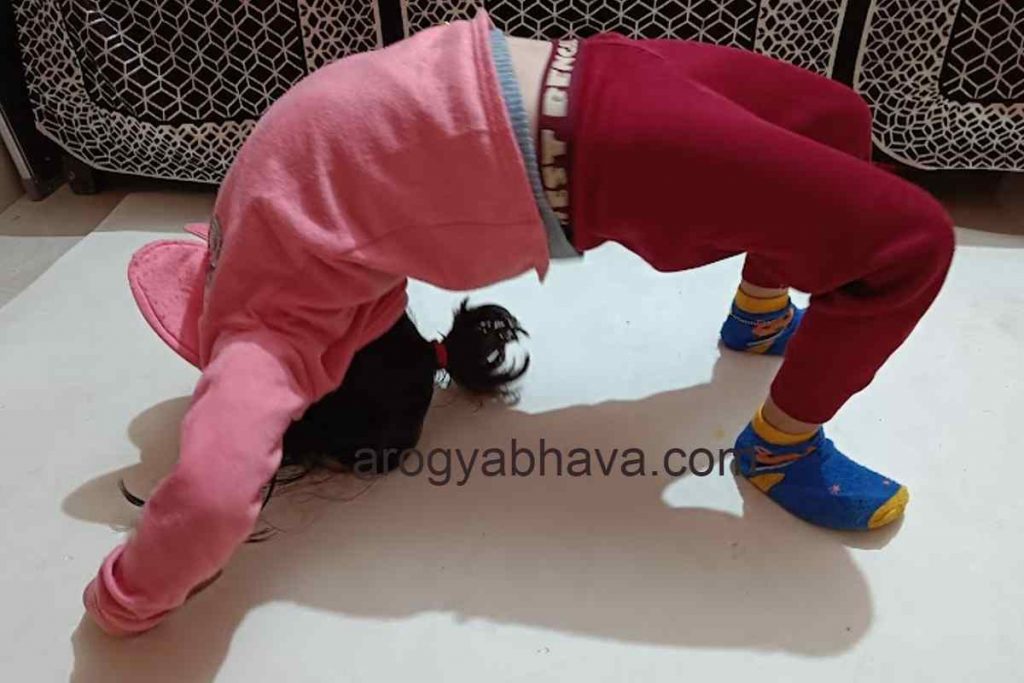
4. Chakrasana (Wheel pose or upward-facing bow)

Chakrasana is a beneficial asana for children. The spine becomes flexible through the practice of this asana. Appetite also feels good and intestines become active. As a result of the practice of this asana, the energy in the body, strength, and brightness of the face increases. It works like a panacea for children who have breathing problems, headaches, or eye disorders.

Chakrasana - Wheel Pose
Chakrasana | Wheel Pose | Image source: arogyabhava

Chakrasana steps:

Lie on your back with your knees bent. The heels should be as near to the buttocks as possible. Maintain equilibrium by keeping both hands upside down behind the shoulders at a small distance. Inhale and raise your waist and chest. Slowly pull the hands and feet closer together, so that the body forms a circle.

Read chakrasana (wheel pose) in detail: Chakrasana steps, benefits, and precautions

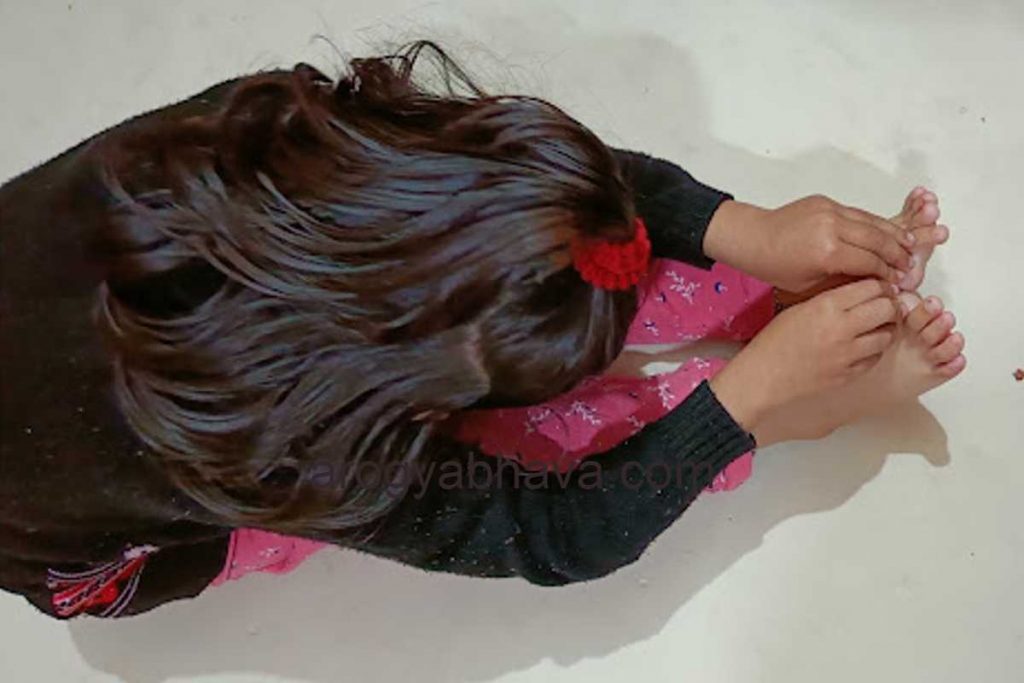
5. Paschimottanasana (Seated Forward Bend Yoga Pose)

Paschimottasana (Two legged forward bend)
Paschimottasana|Two legged forward bend|source:arogyabhava

Paschimottanasana is a very beneficial asana for school-going students. By practising this asana, the back muscles of children expand and become healthy. Due to the contraction of the muscles of the stomach, the health of the stomach improves. According to Yoga Shastras, this asana directs the Prana towards the Sushumna, which helps in the awakening of the Kundalini. Children’s concentration increases and their mind is also engaged in studies.

Also Read: Healthy Eating Slogans For Kids

Related Articles:

Healthy Diet for Students in Summer

Study: Junk Food Can Fuel Your Anxiety


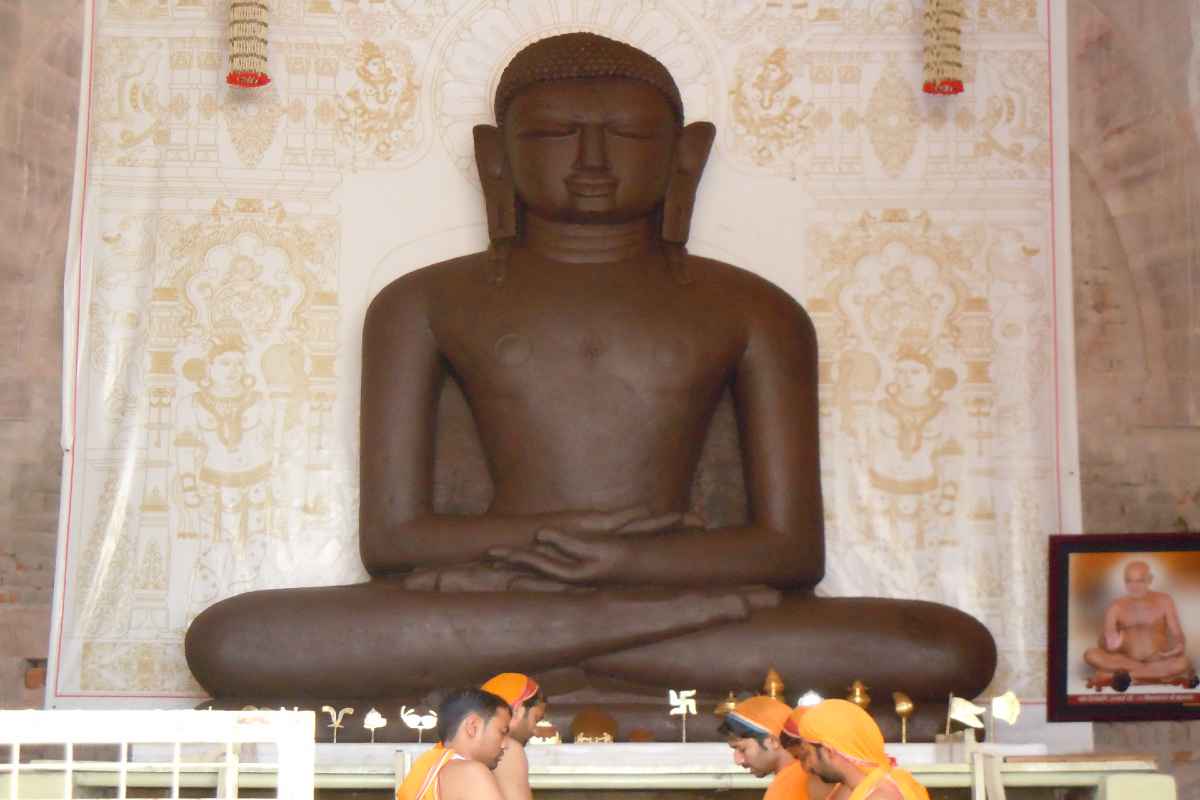
The First Tirthankara – Lord Rishabhdev

The First Tirthankara - Lord Rishabhdev

Bhagwan Rishabhdev is the first Tirthankara of Jainism. Tirthankara means one who creates a pilgrimage. Those who create the pilgrimage from the world ocean (cycle of birth and death) to salvation, are called Tirthankara. Bhagwan Rishabhdev Ji is also called Adinath. 

First Tirthankara of Jainism – Bhagwan Rishabhdev

Bhagwan Rishabhdev is the first Tirthankara of the present Avasarpini period.

Bhagwan Rishabhdev was born in Ayodhya on Ashtami-Navami of Chaitra Krishna to the seventh Kulkar Nabhiraj and his wife Marudevi in ​​the tradition of Kulkars. He had a hundred sons including Bharat and Bahubali and two daughters Brahmi and Sundari. Rishabhdev was in the fifth generation from Swayambhuva Manu in this order – Swayambhuva Manu, Priyavrata, Agnidhra, Nabhi and then Rishabh.

Lord Rishabhdev took initiation on the Ashtami of Krishna Paksha of Chaitra month and got Kaivalya on Ashtami of Falgun Krishna Paksha. He attained Nirvana on Magha Krishna 14 in Ashtapada of the Kailash mountain region. His symbols are Bull, Chaityavriksha – Nygrodha, Yaksha – Govdanal, and Yakshini – Chakreshwari.

Lord Rishabhdev History

According to the Jain Puranas, Bhagwan Rishabhdev was the son of the last Kulkar king Nabhiraj. Bhagwan Rishabhdev was married to Nanda and Sunanda. Bhagwan Rishabhdev had 100 sons and two daughters. Among them, Chakravarti Bharat was the eldest and the first Chakravarti emperor, after whom the country was named Bharatvarsha. The second son Bahubali was also a great king.

Apart from these, Bhagwan Rishabhdev also had 98 sons namely Vrishabhsen, Anantvijay, Anantavirya, Achyut, Veer, Varveer etc. and two daughters named Bramhi and Sundari, to whom Rishabhdev first gave the knowledge of scriptology (alphabetism) and numerology respectively at the beginning of the era. Bahubali and Sundari’s mother’s name was Sunanda. Yashavati was the mother of Chakravarti Bharata, Brahmi and 98 other sons.

Lord Rishabhdev was born in the city of Ayodhya on the Chaitra Krishna Navami date. Bhagwan Rishabhdev’s parents were Marudevi (mother) and Nabhiraya (father). Bhagwan Rishabhdev had 100 sons and 2 daughters. His son Anantavirya was the first to attain salvation. Vrishabhsen, the son of Bhagwan Rishabhdev, was his first Gandhar. Bhagwan Rishabhdev had done penance for one thousand years. Bhagwan Rishabhdev got his first meal after fasting for one year and 39 days. In Hastinapuri, King Shreyans (the grandson of lord Rishabhdev) gave him the diet of Ikshuras for the first time.

Preaching

There were eighty-four Gandhars in Bhagwan Rishabhdev’s Samavasaran. His son named ‘Vrishabhsen’ had obtained the post of chief Gandhar after taking the first initiation in Samvasaran. Chakravarti king Bharat, the elder son of Bhagwan Rishabhdev, was the main audience in his Samvasaran. Aryika Brahmi Mataji, the chief consort of Bhagwan Rishabhdev’s consort, was the daughter of Bhagwan Rishabhdev himself.

On the date of Falgun Krishna Ekadashi, Bhagwan Rishabhdev attained Kevalgyan after doing penance for one thousand years in the garden of “Purimtalpur” city. Bhagwan Rishabhdev’s body was a golden colour. The length of his body is 500 Dhanush i.e. two thousand cubits. On Magha Krishna Chaturdashi, Bhagwan Rishabhdev attained nirvanapad from Mount Kailash. Anantavirya, the son of Bhagwan Rishabhdev, became the first Mokshagami of this era. All the sons of Bhagwan Rishabhdev attained salvation from the same Bhava by taking Diksha.

Bhagwan Rishabhdev, Ajitnath, Abhinandannath, Sumatinath and Anantnath these five Tirthankaras have taken birth in Ayodhya.

Kaivalya Gyan (Knowledge)

According to Jain texts, Bhagwan Rishabhdev only attained enlightenment after doing penance for about 1000 years. The following fasts were observed in the presence of Bhagwan Rishabhdev:

  • 84 Ganadhar
  • 22 thousand Kevali
  • 12,700 Muni Mana: Adorned with the knowledge of Paryayajna
  • 9,000 from Muni Awadhi Gyan
  • 4,750 Shrut Kevali
  • 20,600 Riddhi Dhari Muni
  • 3,50,000 Aryka Mata Ji
  • 3,00,000 devotees

Rishabhdev in Hinduism

In Vedic philosophy, the description of Bhagwan Rishabhdev comes in most of the texts like Rigveda, Atharvaveda, eighteen Puranas and Manusmriti. In Vedic philosophy, Bhagwan Rishabhdev is established as one of the 24 incarnations of Vishnu. Whereas in Shiva Purana, he has been given a place as an incarnation of Bhagwan Shiva. Rishabhdev has been called Vrishabhdev in Hindu scriptures.

There is a detailed description of him in Bhagwat as Arhan Raja. According to the fifth canto of Srimad Bhagwat, Priyavrat’s son was Agnidhra, whose son was King Nabhi (referred to as Nabhiraya in Jainism). King Nabhi’s son was Bhagwan Rishabhdev, who became a great emperor. According to the Bhagavata Purana, Bhagwan Rishabhdev was married to Jayanti, the daughter of Indra. This gave birth to one hundred sons. Among them, Bharat Chakravarti was the greatest and the most virtuous; it was Bharat who became the first Chakravarti emperor of India; after whose name India was named Bharat. Kushavart, Ilavart, Brahmavart, Malay, Ketu, Bhadrasen, Indrasprik, Vidarbha and Keekat, these nine princes were bigger and superior to the remaining ninety brothers. Younger than him were Kavi, Hari, Antriksh, Prabuddha, Pippalayan, Avirhotra, Drumil, Chamas and Karbhajan.

There is an 84 feet giant statue of Bhagwan Rishabhdev at a place called Bawangaja in the Barwani district of Madhya Pradesh state in India and also a 108 feet giant statue of Bhagwan Rishabhdev at Mangitungi (Maharashtra). The famous city of Udaipur district is also famous by the name of Bhagwan Rishabhdev, where a huge temple pilgrimage area of ​​Bhagwan Rishabhdev exists, in which a very charming, beautiful, charming and miraculous statue of Bhagwan Rishabhdev is situated.

Stories of 24 Tirthankara of Jainism

stories of 24 tirthankara of jainism

There are 24 Tirthankaras in Jainism. The meaning of Tirthankar is – the saviour, the one who saves. Tirthankaras are called Arihants. Arihant means one who has conquered his inner enemies. A person who has attained Kaivalya Gyan. Arihant also means God.

24 Tirthankara of Jainism

(1) Rishabhdev

Rishabhdev was born in Ayodhya on Ashtami-Navami of Chaitra Krishna to the seventh Kulkar Nabhiraj and his wife Marudevi in ​​the tradition of Kulkars. He had two sons Bharat and Bahubali and two daughters Brahmi and Sundari. Rishabhdev was in the fifth generation from Swayambhuva Manu in this order – Swayambhuva Manu, Priyavrata, Agnidhra, Nabhi and then Rishabh. You took initiation on the Ashtami of Krishna Paksha of Chaitra month and you got Kaivalya on Ashtami of Falgun Krishna Paksha. You attained Nirvana on Magha Krishna 14 in Ashtapada of the Kailash mountain area. Your symbols are Bull, Chaityavriksha – Nygrodha, Yaksha – Govdanal, and Yakshini – Chakreshwari.

(2) Ajitnathji

Second Tirthankar Ajitnathji’s mother’s name was Vijaya and his father’s name was Jitshatru. You were born in Ayodhya on the Dashami of Magh Shukla Paksha. You took initiation on the Navami of Magh Shukla Paksha and you got Kaivalya knowledge on Ekadashi of Paush Shukla Paksha. On Panchami of Chaitra Shukla, you attained Nirvana at Sammed Shikhar. Your symbol is Gaj, Chaitya tree – Saptaparna, Yaksha – Mahayaksha, Yakshini – Rohini.

(3) Sambhavnathji

The mother’s name of the third Tirthankar Sambhavnathji is Susena and the father’s name is Jitari. Sambhavnathji was born in Shravasti on the Chaturdashi of Marshish. You took initiation on the full moon day of Shukla Paksha of Marshish and after rigorous penance, you got Kaivalya knowledge on Kartik Krishna Panchami. You attained Nirvana on Sammed Shikhar on Panchami of Chaitra Shukla Paksha. According to the followers of the Jain religion, their symbols are Horse, Chaityavriksha – Shawl, Yaksha – Trimukh, and Yakshini – Prajapati.

(4) Abhinandanji

The mother’s name of the fourth Tirthankar Abhinandanji is Siddhartha Devi and the father’s name is Sanvar (Samvar or Sanvara Raj). You were born in Ayodhya on the Baras of Magh Shukla. You took initiation on Magh Shukla’s Baras and after rigorous penance, you got Kaivalya Gyan on Chaturdashi of Paush Shukla Paksha. On the sixth or seventh day of Baisakh Shukla, you attained Nirvana at Sammed Shikhar. According to the followers of the Jain religion, their symbols are the monkey, Chaityavriksha – Saral, Yaksha – Yaksheshwar, and Yakshini – Vraj chain.

(5) Sumatinathji

The name of the fifth Tirthankar Sumatinathji’s father was Megrath or Meghprabha and his mother’s name was Sumangala. You were born in Saketpuri (Ayodhya) on the Ashtami of Baisakh Shukla. According to some scholars, you were born on the Ekadashi of Chaitra Shukla. You took initiation on the Navami day of Baisakh Shukla and Ekadashi of Chaitra Shukla Paksha, you attained Kaivalya Gyan. On the Ekadashi of Chaitra Shukla, you attained Nirvana at Sammed Shikhar. According to the followers of the Jain religion, their symbols are Chakwa, Chaityavriksha – Priyangu, Yaksha – Tumburav, and Yakshini – Vajrankusha.

(6) Padmaprabhuji

The father name of the sixth Tirthankar Padmaprabhuji was Dharan Raj and his mother’s name was Susima Devi. You were born in Vats Kaushambi on the Dwadashi of Kartik Krishna Paksha. You took initiation on the Trayodashi of Kartik Krishna Paksha and on the full moon day of Chaitra Shukla Paksha you attained Kaivalya Gyan. On Chaturdashi of Phalgun Krishna Paksha, you attained Nirvana at Sammed Shikhar. According to the followers of the Jain religion, his symbol is Lotus, Chaityavriksha-Priyangu, Yaksha-Matang, and Yakshini-Aprati Chakreshwari.

(7) Suparshwanath

The father’s name of the seventh Tirthankar Suparshwanath was Pratisthasen and the mother’s name was Prithvidevi. You were born in Varanasi on the Baras of Jyestha Shukla Paksha. You took initiation on the Trayodashi of Jyeshtha Shukla Paksha and the Saptami of Falgun Krishna Paksha, you got Kaivalya Gyan. On the Saptami of Falgun Krishna Paksha, you attained Nirvana at Sammed Shikhar. According to the followers of the Jain religion, your symbol is Swastik, Chaityavriksha – Shirish, Yaksha – Vijay, Yakshini – Purushdatta.

(8) Chandraprabhu

Eighth Tirthankar Chandraprabhu’s father’s name was Raja Mahasen and his mother’s name was Sulakshana. You were born in Chandrapuri on the day of Paush Krishna Paksha’s Baras. Enlightenment was achieved. On the Saptami of Krishna Paksha of Bhadrapada, you attained Nirvana at Sammed Shikhar. According to Jainism, your symbol is Ardhachandra, Chaityavriksha – Snake tree, Yaksha – Ajit, and Yakshini – Manovega.

(9) Pushpadanta

The ninth Tirthankara Pushpadanta is also known as Suvidhinatha. Your father’s name was Raja Sugriva Raj and mother’s name was Rama Rani, who belonged to the Ikshvaku dynasty. You were born in Kakandi on the fifth day of Krishna Paksha of Marshish. You took Diksha on Chhath (6th) of Krishna Paksha of Margashirsha and Tritiya (3rd) of Kartik Krishna Paksha you attained Kaivalya Gyan at Sammed Shikhar. On the Navami of Shukla Paksha of Bhadra, you attained Nirvana at Sammed Shikhar. Your symbol is Capricorn, Chaityavriksha – Aksha (Baheda), Yaksha – Brahma, Yakshini – Kali.

(10) Sheetalnath

Tenth Tirthankar Sheetalnath’s father’s name was Dridharatha and his mother’s name was Sunanda. You were born in Baddhilpur on Dwadashi (12) of Magha Krishna Paksha. You took Diksha on Magha Krishna Paksha’s Dwadashi and on Paush Krishna Paksha’s Chaturdashi (14) you got Kaivalya Gyan. You attained Nirvana on Sammed Shikhar on the dark fortnight of Baisakh. Your symbol is Kalpataru, Chaityavriksha – Dhuli (Malivriksha), Yaksha – Brahmeshwar, and Yakshini – Jwalamalini.

(11) Shreyansnathji

The eleventh Tirthankar Shreyansnathji’s mother’s name was Vishnushree or Venushree and his father’s name was Vishnuraj. You were born on the 10th day of Falgun Krishna Paksha at a place called Sinhapuri. You attained Nirvana on Sammed Shikhar (Shikharji) on the full moon day of Shravan Shukla Paksha. According to the followers of Jainism, their symbols are Rhinoceros, Chaityavriksha-Palash, Yaksha-Kumar, and Yakshini-Mahakali.

(12) Vasupujya

The twelfth Tirthankara Vasupujya Prabhu’s father’s name was Vasupujya and his mother’s name was Jaya Devi. You were born in Champapuri on Chaturdashi (14) of Phalgun Krishna Paksha. You took initiation on the new moon day of Falgun Krishna Paksha and attained Kaivalya knowledge on Magha’s Duj (2). You attained Nirvana in Champa on the Chaturdashi of the Shukla Paksha of Ashadh. According to the followers of the Jain religion, your symbol is Buffalo, Chaityavriksha – Tendu, Yaksha – Shanmukh, Yakshini – Gauri.

(13) Vimalnath

Thirteenth Tirthankar Vimalnath’s father’s name was Kritaverma and his mother’s name was Shyam Devi (Suramya). You were born in Kapilpur on Magha Shukla Teej. You took initiation on the Teej of Magha Shukla Paksha and attained Kaivalya on the Shashthi of Paush Shukla Paksha. Nirvana was attained on Shri Sammed Shikhar on the seventh day of Ashada Shukla. According to the followers of Jainism, your symbol is Pig, Chaityavriksha is Patal, Yaksha is Patal, and Yakshini is Gandhari.

(14) Anantnathji

The fourteenth Tirthankar Anantnathji’s mother’s name was Sarvayasha and his father’s name was Singhsen. You were born in Ayodhya on the day of Trayodashi (13) of Vaishakh Krishna Paksha. You took initiation on Vaishakh Krishna Paksha Chaturdashi (14th) and after hard penance attained Kaivalya knowledge on the day of Vaishakh Krishna’s Trayodashi. On the fifth day of Chaitra Shukla, you attained Nirvana at Sammed Shikhar. According to the followers of Jainism, their symbols are Sehi, Chaityavriksha – Peepal, Yaksha – Kinnar, and Yakshini – Vairoti.

(15) Dharmanath

The father’s name of the fifteenth Tirthankar Shri Dharmanath was Bhanu and the mother’s name was Suvrata. You were born in Ratnapur on Tritiya (3) of Magha Shukla. You took initiation on the Trayodashi of Magha Shukla and you got Kaivalya on the full moon day of Paush. Nirvana was attained at Sammed peak on the Panchami of Jyeshtha Krishna Paksha. According to the followers of Jainism, your symbols are Vajra, Chaityavriksha – Dadhiparna, Yaksha – Kimpurush, and Yakshini – Solsa.

(16) Shantinath

Shantinath, the sixteenth Tirthankara of Jainism, was born in the Ikshvaku clan in Hastinapur on the Trayodashi of the Krishna Paksha of Jyestha month. Shantinath’s father was King Vishwasen of Hastinapur and his mother’s name was Arya (Achira). You took Diksha on Chaturdashi of Krishna Paksha of Jyestha month and you got Kaivalya on Navami of Paush Shukla Paksha. On the Trayodashi of Krishna Paksha of Jyeshtha month, Nirvana was attained at Sammed Shikhar. According to the followers of the Jain religion, your symbols are Deer, Chaityavriksha – Nandi, Yaksha – Garuda, and Yakshini – Anantmati.

(17) Kunthunathji

Seventeenth Tirthankar Kunthunathji’s mother’s name was Shrikanta Devi (Sridevi) and his father’s name was Raja Suryasen. You were born in Hastinapur on the Chaturdashi of Vaishakh Krishna Paksha. Took initiation on the fifth day of Vaishakh Krishna Paksha and attained Kaivalya knowledge on the fifth day of Chaitra Shukla Paksha. Nirvana was attained on Sammed peak on the day of Ekam of Vaishakh Shukla Paksha. According to the followers of the Jain religion, your symbol is Chaag (goat), Chaitya tree – Tilak, Yaksha – Gandharva, Yakshini – Manasi.

(18) Arhnathji

Eighteenth Tirthankar Arhnathji or Ar Prabhu’s father’s name was Sudarshan and his mother’s name was Mitrasen Devi. You were born in Hastinapur on the tenth day of Shukla Paksha of Marshish. You took initiation on Gyaras of Shukla Paksha of Marshish and got Kaivalya knowledge on Baras of Kartik Krishna Paksha. Nirvana was attained at Sammed peak on the tenth day of Marshish. According to the followers of the Jain religion, their symbols are Tagarkusum (fish), Chaityavriksha – Mango, Yaksha – Kuber, and Yakshini – Mahamansi.

(19) Mallinath

Nineteenth Tirthankar and the only female tirthankar Mallinath’s father’s name was Kumbhraj and her mother’s name was Prabhavati (Rakshita). You were born in Mithila on the bright fortnight of Margashirsha. Took initiation on the Ekadashi of Shukla Paksha of Margshish and also attained Kaivalya on the date of this month. Baras of Phalgun Krishna Paksha attained Nirvana at Sammed Shikhar. According to the followers of the Jain religion, your symbol is Kalash, Chaityavriksha – Kankeli (Ashoka), Yaksha – Varuna, and Yakshini – Jaya.

(20) Munisuvratnath

Tirthankar Munisuvratnath’s father’s name was Sumitra and his mother’s name was Prabhavati. You were born in Rajgarh on the eighth day of Krishna Paksha. You took initiation on the Baras of Falgun Krishna Paksha and attained Kaivalya knowledge only on the Baras of Falgun Krishna Paksha. Nirvana was attained at Sammed Shikhar on the Navami of Jyestha Krishna Paksha. According to the followers of Jainism, your symbols are Kurma, Chaitya tree – Champak, Yaksha – Bhrikuti, and Yakshini – Vijaya.

(21) Naminath

Twenty-first Tirthankar Naminath’s father’s name was Vijay and his mother’s name was Subhadra (Subhrada-vapra). You yourself were the king of Mithila. You were born in the Ikshvaku clan in Mithilapuri on the Ashtami of the Krishna Paksha of the month of Shravan. You took initiation on Ashtami of Shukla of Ashadh month and attained Kaivalya on Ekadashi of Shukla Paksha of Marshish. On Dashami of Vaishakh Krishna attained Nirvana at Sammed Shikhar. According to the followers of the Jain religion, your symbol- is Utpal, Chaityavriksha- Bakul, Yaksha- Gomedh, Yakshini- Aparajita.

(22) Neminath

The name of the twenty-second Tirthankara Neminath’s father was Raja Samudravijay and his mother’s name was Shivadevi. You were born in Shaurpuri (Mathura) in the Yadav dynasty on the Panchami of the Krishna Paksha of the month of Shravan. Neminath was the son of Samudravijaya, the eldest son of the Yadav dynasty king Andhakvrishni of Shaurpuri (Mathura). Lord Krishna was born to Vasudev, the youngest son of Andhakvrishni. Thus both Neminath and Shri Krishna were cousins. You took initiation on the Shashthi of the Krishna Paksha of the month of Shravan and attained Kaivalya on Mount Girnar on the new moon day of the Krishna Paksha of the month of Ashadha. You attained Nirvana on Ujjain or Mount Girnar on Ashtami of Ashada Shukla. According to the followers of the Jain religion, your symbol is a conch shell, Chaityavriksha is Aries, Yaksha is a side, and Yakshini is polymorphic.

(23) Parshwanath

The father’s name of the twenty-third Tirthankar Parshwanath was Raja Ashwasen and the mother’s name was Vama. You were born in Varanasi (Kashi) on the Dashami of Paush Krishna Paksha. You took initiation on the Chaturthi of Chaitra Krishna Paksha and attained Kaivalya only on the Chaturthi of Chaitra Krishna Paksha. On the Ashtami of Shravan Shukla attained Nirvana at Sammed peak. According to the followers of the Jain religion, your symbol is- Snake, Chaityavriksha-Dhav, Yaksha-Matang, Yakshini-Kushmadi.

(24) Mahavir

The twenty-fourth Tirthankar Lord Mahavir Swami’s birth name was Vardhaman, his father’s name was Siddhartha and his mother’s name was Trishala (Priyankarini). You were born in Kundalpur on the Trayodashi day of Chaitra Shukla. You took initiation on the Dashami of Margshish Krishna Paksha and attained Kaivalya on the Dashami of Vaishakh Shukla. You spent 42 years as a seeker. You attained Nirvana in 72 years at Pawapuri on the new moon day of Krishna Paksha of Kartik month. According to the followers of the Jain religion, your symbol is Lion, Chaityavriksha is Shawl, Yaksha is Guhmak, and Yakshini is Padma Siddhayini.

24 Tirthankaras name list

S.No.

Tirthankara

Birthplace

Mother

Father

Symbol

Tree

Place of Nirvana

1

Rishabhanatha

Ayodhya

�Marudevi

Nabhiraja�

Bull

Vata

Kailash

2

Ajitanatha

Ayodhya

�Vijaya

Jitashatru�

Elephant

Shala

Sammed Shikharji

3

Sambhavanatha

Shravasti

�Sena

Jitari�

Horse

Prayala

Sammed Shikharji

4

Abhinandananatha

Ayodhya

�Siddharhta

Samvara�

Monkey

Priyangu

Sammed Shikharji

5

Sumatinatha

Ayodhya

�Mangala

Megharatha�

Goose

Shala

Sammed Shikharji

6

Padmaprabha

Kaushambi

�Susima

Shridhara�

Lotus

Chhatra

Sammed Shikharji

7

Suparshvanatha

Varanasi

�Prithvi

Supratishtha�

Swastika

Shirisha

Sammed Shikharji

8

Chandraprabha

Chandrapura

�Lakshmana

Mahasena�

Crescent Moon

Naga

Sammed Shikharji

9

Pushpadanta

Kakandi

�Rama

Sugriva�

Crocodile

Shala

Sammed Shikharji

10

Shitalanatha

Bhaddilapura

�Nanda

Dridharatha�

Kalpavriksha

Priyangu

Sammed Shikharji

11

Shreyansanatha

Simhapuri

�Vishnu

Vishnuraja�

Rhinoceros

Tanduka

Sammed Shikharji

12

Vasupujya

Champapuri

�Jaya

Vasupujya�

Buffalo

Patala

Champapuri

13

Vimalanatha

Kampilyapura

�Shyama

Kritavarma�

Boar

Jambu

Sammed Shikharji

14

Anantanatha

Ayodhya

�Suyasha

Simhasena�

Porcupine

Ashoka

Sammed Shikharji

15

Dharmanatha

Ratnapuri

�Suvrata

Bhanu�

Vajra

Dadhiparna

Sammed Shikharji

16

Shantinatha

Gajapura or�Hastinapuri

�Achira

Vishvasena�

Deer

Nandi

Sammed Shikharji

17

Kunthunatha

Gajapura or�Hastinapuri

�Shridevi

Suraraja�

Goat

Vata

Sammed Shikharji

18

Aranatha

Gajapura or�Hastinapuri

�Devi

Sudarshana�

Fish

Amba

Sammed Shikharji

19

Mallinatha

Mithila

�Prabhavati

Kumbharaja�

Kalasha

Ashoka

Sammed Shikharji

20

Munisuvrata

Rajagriha

�Padmavati

Sumitraraja�

Tortoise

Champaka

Sammed Shikharji

21

Naminatha

Mithila

�Vapra

Vijayaraja�

Blue Water Lily

Bakula

Sammed Shikharji

22

Neminatha

Sauripura

�Shivadevi

Samudravijaya�

Shankha

Vetasa

Girnar

23

Parshvanatha

Varanasi

�Vamadevi

Ashvasena�

Snake

Dhataki

Sammed Shikharji

24

Mahavira

Kundalapura

�Trishala

Siddhartharaja�

Lion

Teka

Pavapuri

FAQs on 24 Thirthankara

Qes. Who was the 24th Tirthankara of Jainism?

Ans. Bhagwan Mahavira was the 24th tirthankara of Jainism

Qes. Who was the first Tirthankara of Jainism?

Ans. Rishabhdev bhagwan was the first tirthankara of Jainism.
 

Qes. Who was the only lady Tirthankara of Jainism?

Ans. According to the Svetambara tradition in Jainism, Mallinathji was the only female Tirthankara in Jainism, perhaps the only example of a female tirthankara in any religion.
 

India National Currency – Rupee

India’s international identity for financial transactions and economic power is typified by the Indian Rupee symbol (symbol: ₹; code: INR). The symbol for the Indian rupee is an allusion for Indian culture. The two parallel horizontal stripes at the top of the emblem, which combines the Devanagari “Ra” and the Roman capital “R,” stand for the national flag and the “equal to” sign, respectively. The Indian government adopted the symbol for the rupee on July 15, 2010.

The emblem was picked from among thousands of concept submissions by resident Indian nationals in an open competition, and it was conceptualised and developed by Udaya Kumar, a postgraduate in Design from the Indian Institute of Technology Bombay.

India National Anthem – Jana, Gana Mana

Rabindranath Tagore first wrote the song Jana-gana-mana in Bangla, and on January 24, 1950, the Constituent Assembly chose its Hindi rendition as India’s National Anthem.

The national anthem’s playing time is approximately 52 seconds.

The full version of the national anthem

Jana-gana-mana-adhinayaka jaya he
Bharata-bhagya-vidhata
Punjaba-Sindhu-Gujarata-Maratha
Dravida-Utkala-Banga
Vindhya-Himachala-Yamuna-Ganga
uchchala-jaladhi-taranga
Tava Shubha name jage, tava shubha asisa mage,
gahe tava jaya-gatha.
Jana-gana-mangala-dayaka jaya he
Bharata-bhagya-vidhata.
Jaya he, Jaya he, Jaya he,
jaya jaya jaya, jaya he.

The short version of the national anthem

On some occasions, the National Anthem is also played in a condensed version that just includes the opening and closing verses. This is what it says:

Jana-gana-mana-adhinayaka jaya he
Bharata-bhagya-vidhata.
Jaya he, jaya he, jaya he,
Jaya jaya jaya, jaya he.

The short version lasts for roughly 20 seconds.


The Indian National Flower Lotus

The Lotus (Nelumbo Nucifera Gaertn) is India’s national flower. It is a sacred flower with a unique place in ancient Indian art and mythology, and it has been an auspicious symbol of Indian culture since time immemorial.

India is abundant in flora. According to current data, India ranks tenth in the world and fourth in Asia in terms of plant diversity. The Botanical Survey of India has described 47,000 plant species from approximately 70% of the geographical area surveyed thus far (BSI).