Yoga For Students: 5 Best Yoga Poses For Children

Yoga For Students: 5 Best Yoga Poses For Childrens

In today’s electronic world, where children are even used to mobile and TV, yoga for students be the most important things to grow your child healthy. In this article we will learn 5 easy but very important yoga, to keep the students healthy and fit.

The biggest problem is when the children are sick because many times they are unable to express themselves by saying or cannot bear the pain. And their parents are unable to see their problems. But if children are made to do yoga or exercise regularly, then their immunity power will be correct and they will fall sick less. So in today’s article, we are telling you some yoga asanas, which not only help children develop completely but also cause them to fall ill less. Just get the children to do this Yogasana daily for only 5 minutes and ensure their complete development.

5 Essential Yoga For Students

There must be at least 30 minutes of yoga practice and exercise for the children. Usually, children spend 14-16 hours studying, tuition, going to school, eating, drinking and sleeping. In the midst of this run-of-the-mill life and broken family, children have started living a mechanical life.

Benefits of Yoga For Students

Along with bringing health and awareness in children, yoga and asanas make them vigorous and bright and at the same time, they are helpful in bringing awareness towards the country and the society.

  • It is helpful in increasing the height.
  • Increases concentration.
  • Reduces mental stress.
  • Increases physical flexibility.
  • It is helpful in increasing memory.
  • Regular practice of Pranayama increases the health of the lungs and provides relief from respiratory diseases.
  • Regular practice of yoga brings mental strength and students can contribute to the society and country

Every child must do Pranayam daily for 5-10 minutes so that their memory and concentration can increase. Along with this, due to the supply of plenty of oxygen in the lungs, health also prevails. But only pranayama does not work, the practice of yoga asanas is also essential for physical and mental health.

So let us discuss the five best easy yoga poses for children which will make them fit and fit.

1. Shirsasana (Head stand pose or sirsasana)

Shirshasana is made up of two words, head and asana. Shirshasana is called the king of asanas. Children should do this asana for 1 to 2 minutes.
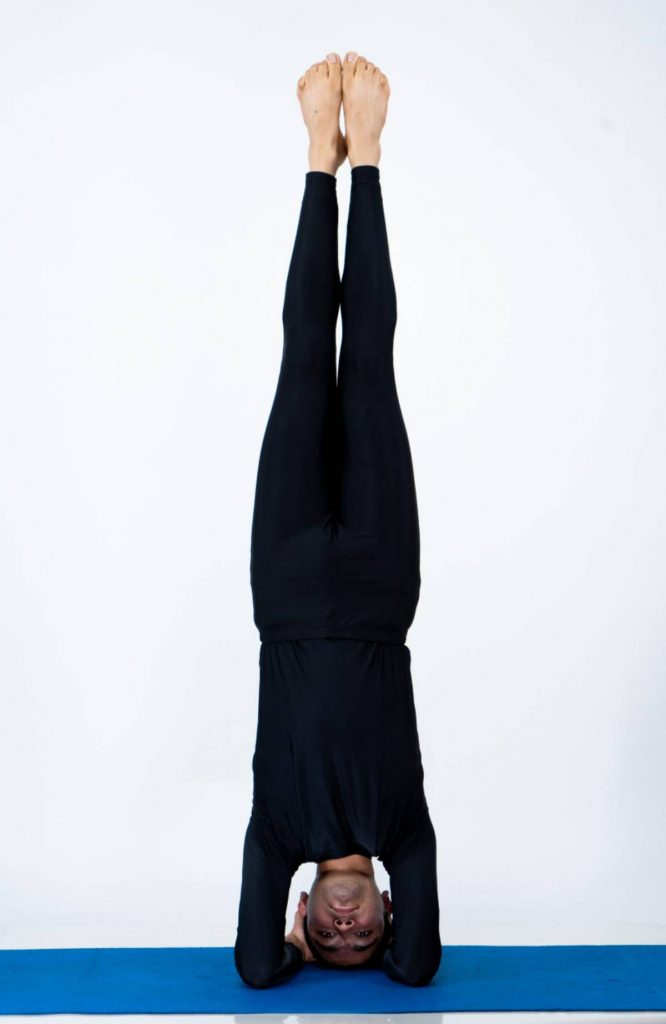
Sirsasana-Headstand
Sirsasana-Headstand | source: pixahive

Benefits: Shirshasana sharpens the mind of children and increases concentration. Those whose mind is not engaged in studies, start paying attention to studies. Since the flow of pure blood from this asana is towards the brain, then the eye, Ears, nose etc get healthy. This asana heals the pituitary and pineal gland, which activates the brain and improves memory, intelligence and concentration.

Read sirsasana in detail: Sirsasana steps, benefits, and precautions

2. Sarvangasana for students

It comes second in the list of most beneficial asanas. Those who cannot do Shirshasana or those who are prohibited from doing Shirshasana can also do Sarvangasana. This asana can be done for 1-2 minutes.
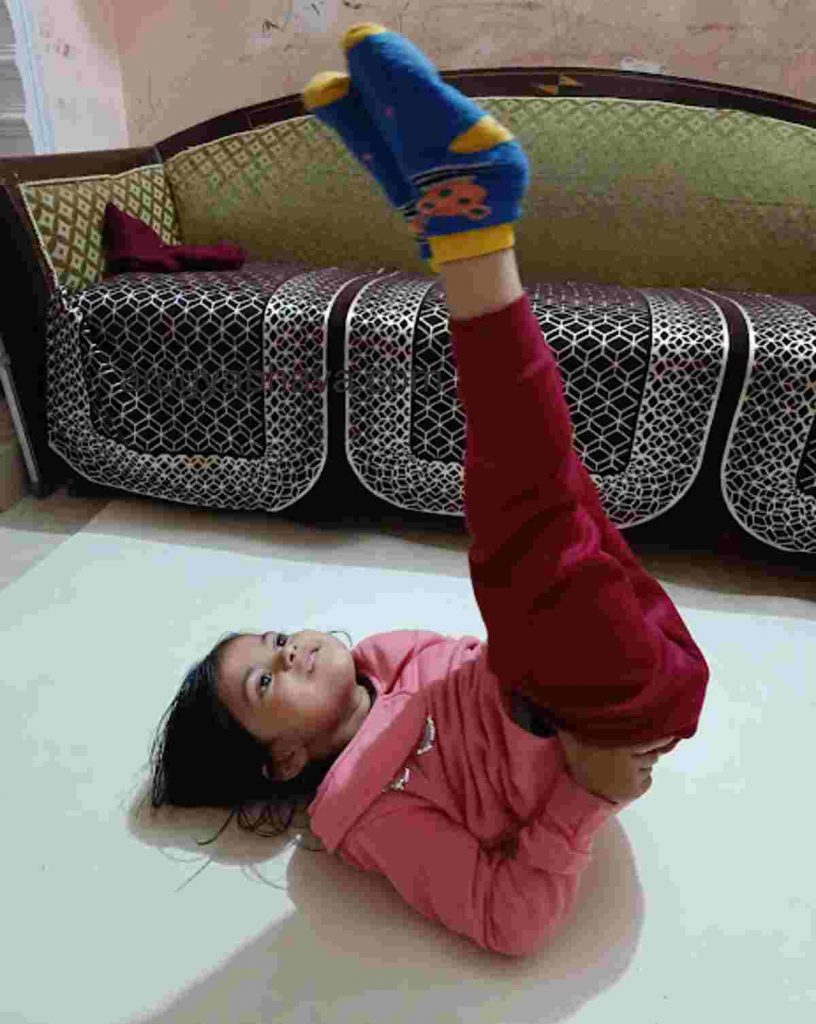
sarvangasana
sarvangasana |source: arogyabhava

Sarvangasana Benefits: Due to the activation of the thyroid and pituitary glands by this asana, it helps in increasing the height of the children. The rest of the benefits like an increase in brain power, and help in concentration, are similar to Shirshasan. This asana gives relief from tiredness and tension.

3. Halasana (Plow Pose) for students

Your children definitely learn this asana. The spine can be made healthy and flexible by this asana. Due to this children can be effective in sports, exercise, and athletics. This asana also removes the problem of obesity in children.
Children who cannot do Halasana should practice Mandukasana or Shasakasana.
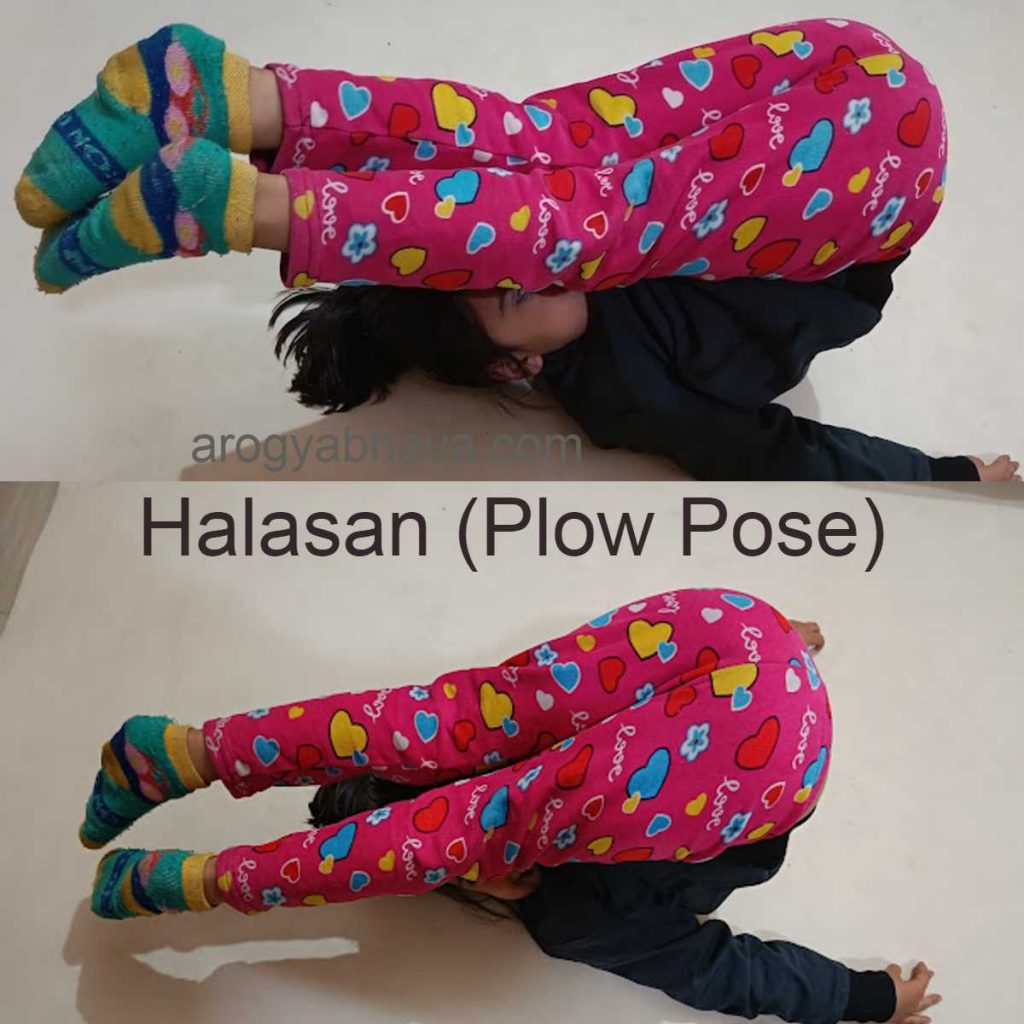
halasana- plow pose
halasana- plow pose| source: ArogyaBhava

4. Chakrasana (Wheel pose or upward-facing bow)

Chakrasana is a beneficial asana for children. The spine becomes flexible through the practice of this asana. Appetite also feels good and intestines become active. As a result of the practice of this asana, the energy in the body, strength, and brightness of the face increases. It works like a panacea for children who have breathing problems, headaches, or eye disorders.
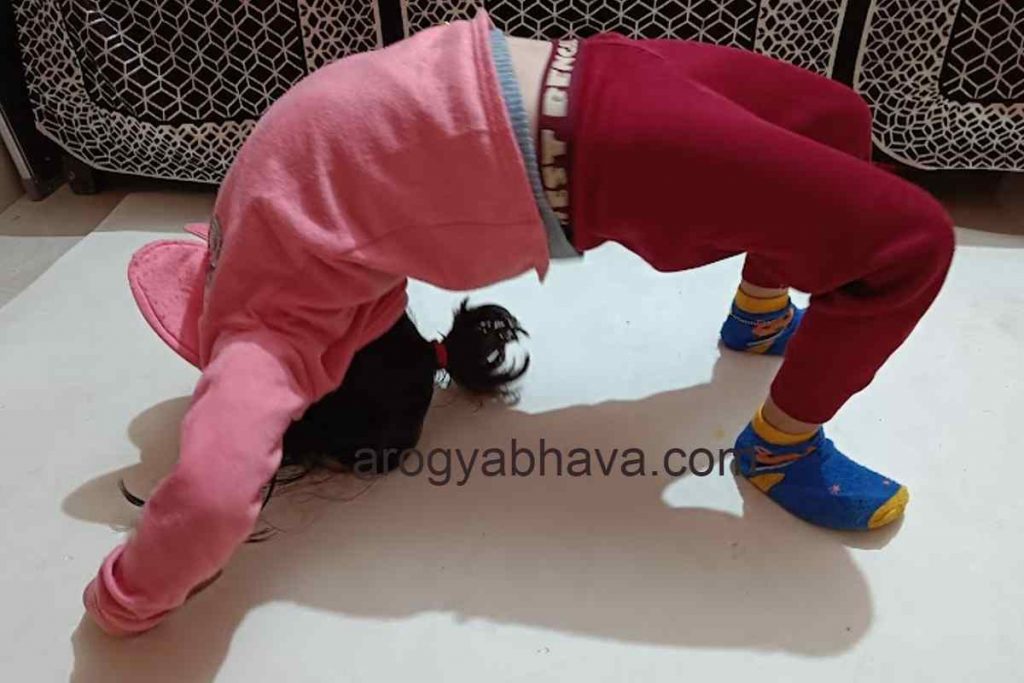
Chakrasana - Wheel Pose
Chakrasana | Wheel Pose | Image source: arogyabhava

Chakrasana steps:

Lie on your back with your knees bent. The heels should be as near to the buttocks as possible. Maintain equilibrium by keeping both hands upside down behind the shoulders at a small distance. Inhale and raise your waist and chest. Slowly pull the hands and feet closer together, so that the body forms a circle.

Read chakrasana (wheel pose) in detail: Chakrasana steps, benefits, and precautions

5. Paschimottanasana (Seated Forward Bend Yoga Pose)
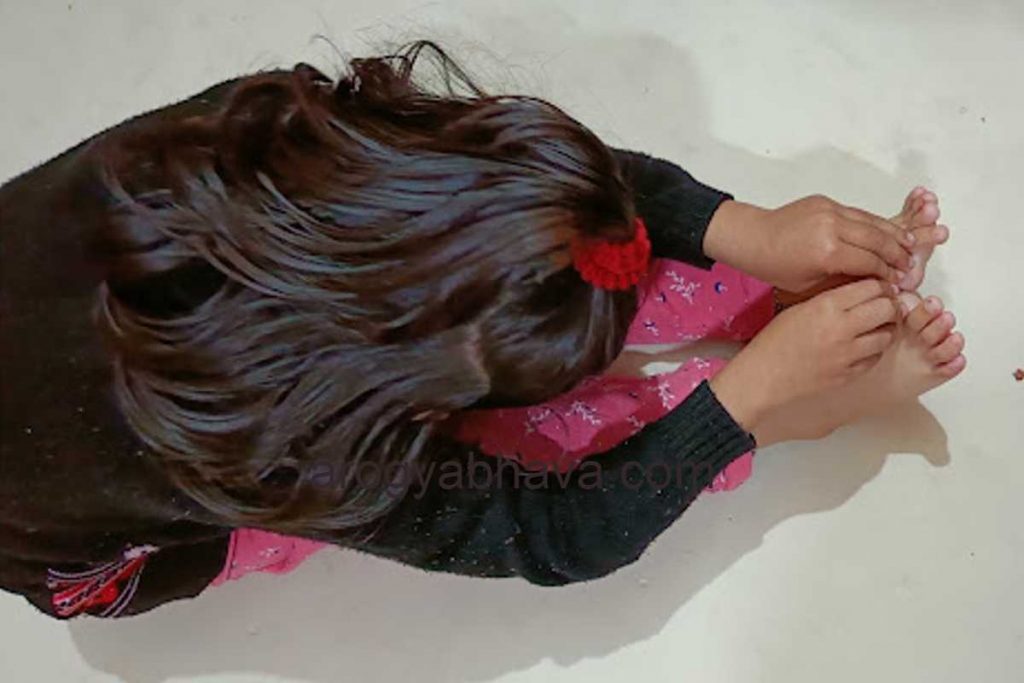
Paschimottasana (Two legged forward bend)
Paschimottasana|Two legged forward bend|source:arogyabhava

Paschimottanasana is a very beneficial asana for school-going students. By practising this asana, the back muscles of children expand and become healthy. Due to the contraction of the muscles of the stomach, the health of the stomach improves. According to Yoga Shastras, this asana directs the Prana towards the Sushumna, which helps in the awakening of the Kundalini. Children’s concentration increases and their mind is also engaged in studies.

Also Read: Healthy Eating Slogans For Kids

Related Articles:
Healthy Diet for Students in Summer

Study: Junk Food Can Fuel Your Anxiety


CBSE Class 9 Revised Syllabus 2020-21: Download Revised Syllabus PDF

CBSE Class 9 Revised Syllabus 2020-21

CBSE Class 9 Syllabus 2020-21: CBSE Class 9 is a very important stage for building a strong foundation for the Class 10th Board exam. Normally the CBSE Syllabus and Exam pattern doesn’t change every year. However, boards have the right to change the curriculum and exam pattern as and when required. This year (2020) due to COVID-19 pandemic CBSE and other boards have reduced the CBSE Class 9 syllabus 2020-21 up to 30%.

The new revised CBSE Class 9 Syllabus 2020-21 contains complete information about the latest academic curriculum, structure of course, exam-pattern, project and assessment guidelines etc. The learning of CBSE Class 9 Syllabus 2020-21 is important for the preparation of CBSE Class 9 annual exams. To gain maximum marks in CBSE Class 9 annual exams 2021, you need to know about the revised class 9 Syllabus. Students of class 9 should also check other important resources for the preparation of upcoming CBSE board exams 2020-21. 

Here we are providing CBSE Class 9 syllabus for all the subjects as mentioned within the official CBSE website. So, students are advised to prepare for the exam as per the curriculum mentioned here.

Highlights of CBSE Class 9 Syllabus 2020-21

Name of Examination CBSE Board Exam 2021
For Class Class 9
Subjects All Subjects
Category New Syllabus
Released Date (Reduced Syllabus) 7th July 2020
Official Website www.cbse.nic.in

CBSE Class 9 Syllabus 2020-21 (Revised) – Free PDF Download

CBSE Class 9 syllabus for all the subjects. This detailed syllabus will help CBSE Class 9 students, to score well in the Class 9 examination. For the students of class 9, we have provided the detailed CBSE Class 9 syllabus for all the subjects.

CBSE Class 9 Subjects 2020-21 Download PDF
CBSE Class 9 English Syllabus 2020-21 Click Here
CBSE Class 9 Hindi A Syllabus 2020-21 Click Here
CBSE Class 9 Hindi B Syllabus 2020-21 Click Here
CBSE Class 9 maths Syllabus 2020-21 Click Here
CBSE Class 9 science Syllabus 2020-21 Click Here
CBSE Class 9 Social Science Syllabus 2020-21 Click Here

CBSE Class 9 Syllabus 2020-21 (Deleted) – Free PDF Download

CBSE Class 9 Syllabus (Deleted) for the main subjects is given below. Students can click on the direct links given below and download the deleted syllabus.

CBSE Class 9 Deleted Subjects for 2020-21 Download PDF
CBSE Class 9 English Deleted Syllabus for 2020-21 Click Here
CBSE Class 9 Hindi A Deleted Syllabus for 2020-21 Click Here
CBSE Class 9 Hindi B Deleted Syllabus for 2020-21 Click Here
CBSE Class 9 Maths Deleted Syllabus for 2020-21 Click Here
CBSE Class 9 Science Deleted Syllabus for 2020-21 Click Here
CBSE Class 9 Social Science Deleted Syllabus for 2020-21 Click Here


All the schools in the nation are shut down as per the notice of the government due to the spread of the COVID-19. Right now, Students are advised not to waste their time and should be doing self-learning with the help of these recent changes in the syllabus. NCERT books are easily accessible on the internet. You can take the assistance of the
CBSE Class 9 NCERT Solutions and CBSE Class 9 NCERT Books. Solutions and Books links are given below:

NCERT Solutions for Class 9 Science NCERT Books for Class 9 Science
NCERT Solutions for Class 9 Maths NCERT Books for Class 9 Maths
NCERT Solutions for Class 9 English NCERT Books for Class 9 English
NCERT Solutions for Class 9 Hindi NCERT Books for Class 9 Hindi
NCERT Solutions for Class 9 Social Science NCERT Books for Class 9 Social Science

CBSE Syllabus and the NCERT books are the most important things for complete learning throughout the year. While analyzing a section in the NCERT Book, the student should initially study the course of that subject to know the points which should be covered in that specific part. This is the best method to begin your examinations as it assists you by avoiding unrelated subject topics and saves your time and efforts.

CBSE Class 9 Syllabus 2020-21 – FAQs

Q1. What is the syllabus of CBSE Class 9?
Ans. CBSE 9 Class Syllabus comprises 4 primary subjects – English, Mathematics, Science and Social Science. Students will have to choose one language subject as per their choice.

Q2. Did CBSE reduced Syllabus for 2020-21?
Ans. After a thorough analysis of the situation and suggestions from experts & teachers, the Central Board of Secondary Education (CBSE) reduced the syllabus up to 30 percent for classes 9 to 12 for the academic year 2020-21. This action was taken to reduce course load of students amid the COVID-19 crises.

Q3. Is the CBSE syllabus the same as NCERT?
Ans. Yes, CBSE Syllabus is the same as the NCERT Syllabus. CBSE is a governing body, and NCERT is a publishing body (publisher). CBSE runs Institutions and prescribes NCERT books for it’s courses.

Q4. Has the CBSE Syllabus changed?
Ans. Yes, In order to reduce the pressure of students in view of loss in studies due to COVID-19, the school syllabus for class 9 to 12 has been reduced to 30 percent for the CBSE Academic Year 2020-2021.

CBSE Releases Guidelines for Art-Education & Art-Integrated Learning for Classes 1 to 10

CBSE Releases Guidelines for Art-Education & Art-Integrated Learning

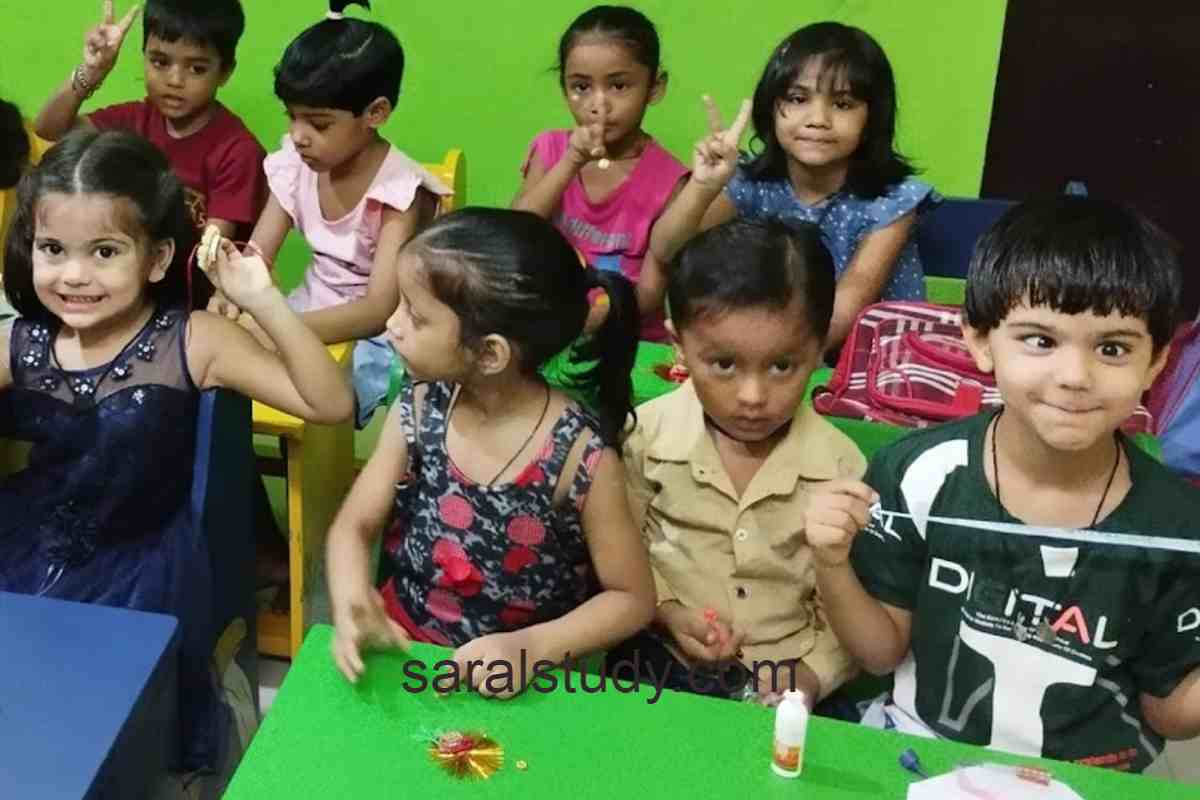
According to the new CBSE circular, CBSE art-integrated activities are compulsory from 2020-21 in each subject for class 9 and 10 which would be considered for interior appraisal. CBSE students of classes 1 to 8 need to make one project each year not restricted to any one subject.

CBSE students of Classes 1 to 8 need to make in any event one art-integrated project in every academic year which can be considered for Internal Assessment in the subjects concerned the task doesn’t need to focus on just one subject.

But, CBSE students of classes 9 and 10 need to take up an art-integrated task for each subject which will be considered for internal assessment.

CBSE explained in the circular that art-integrated learning was being presented as an instructing apparatus and not to help art skills in general. It was an approach to utilize art to both educate and comprehend different subjects better.

Given below are all guidelines that CBSE schools and CBSE students need to follow for art-integrated projects.

Guidelines for CBSE schools to present art integrated learning:

  1. Classes I–VIII, Art Integrated Project should be of trans-disciplinary nature. The project work can include more than one subject and this can be considered for Internal Assessment in the subjects concerned.
  2. Classes IX and X, the students will take up the art integrated project work as subject enrichment activity in all the subjects for internal assessment.
  3. One of the objectives of art integrated education is to make the students aware of the vast and diverse cultural heritage of our country. Therefore, Students will take up integration with any form of Indian Art – visual or performing, as it will be helpful to students to easily understand the project that is culturally connected to them. Teachers need to facilitate learning of the chosen Indian art form and ensure that the students are able to creatively integrate the art form(s) being used in the project.
  4. In minimum one project work of students from classes I –X, it is mandatory to integrate any art form of the paired State/UT, as defined under Ek Bharat Shreshtha Bharat Programme. For example, CBSE students of Delhi will need to integrate the art form of Sikkim. Click here to confirm the latest pairings
  5. Subject teachers along with Arts teachers must plan and discuss the projects in advance at the beginning of the academic session so that students can be given proper guidance to undertake various projects.
  6. The focus should be given on research of new topics that are not yet taken up in the classroom. Teachers must facilitate exploration of research on the topics to give students hands-on experience.
  7. The project should be taken up in an eco-friendly manner, using readily available local resources without any financial burden on parents or guardians.
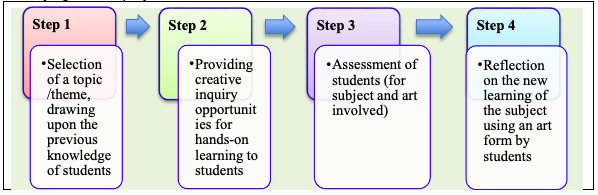
  8. The teachers may follow the following process of embedding arts with other subjects for carrying out the project work:
    CBSE Art Integrated Project
  9. The Project should be done by students in groups with 4-5 students in each group.
  10.  While creating projects, it may also be seen that it should not be too much pro art that it becomes difficult for the subject teacher to take it forward and guide the students. The projects should be simple and doable for the subject teachers and students without the assistance of art teachers/artists or others.
  11. Assessment techniques should be relevant and age appropriate. Criteria along with rubrics for assessment can be devised collectively by teachers and students while planning the projects. Students must be informed about the criteria decided for assessment along with maximum marks before commencement of work on the project.
  12. Schools and teachers may prepare their calendar by assigning dates and months for the execution of project work by the students and the records of assessment of these project works should be maintained at the schools.
  13. The Art integrated project work shall also be an integral part of assessing the student’s participation in art related activities and attainment of learning outcomes for the subject/s.
  14. The marks awarded for these projects, as part of subject-enrichment activities of class X, will be collected by the Board at the time of uploading marks of internal assessment.

Art-Integrated Learning (AIL) as a Pedagogical Tool from classes I to XII

AIL will continue as a pedagogical tool for classes I to XII, in addition to the Art Education under co-scholastic area as provided in the Secondary School Curriculum of the Board.

The objective of AIL is not to promote arts and skills of arts but to use art as a tool to teach other subjects. The focus here should be to accept arts as a medium of the learning process.

So the subject teachers may make use of simple art forms in the classrooms; and give opportunities to students to enjoy planned art activities and while they are experiencing beauty of arts, they also learn and articulate the core concept of different subjects and apply it in daily life.

Art activities which can be integrated with different subjects to aid learning are given in annexure. The activities given in the annexure are only suggestive. Correlation of AIL activities is to be seen broadly and should not restrict to one or the other kind of subjects. For example, what helps us in Agriculture as a subject can also connect to Mathematics and Science subjects. Therefore, the teachers and learners should not limit themselves in the rigid boundaries as suggested in the said annexure.

In AIL activities, teachers and students may go for integration of visual and performing arts too. Since skill of making art is not the criteria of evaluation, children can explore and might come out with very creative expressions that enable achievement of the learning outcomes.

Reporting of Implementation of Art-Education (AE) and Art-Integrated Learning (AIL)

The Board has prepared the Art Education (AE) and Art Integrated Learning (AIL) – AE & AIL portal for reporting of the implementation of Art-Education (AE) and Art-Integrated Learning (AIL). The schools are required to upload data of the Art-Education and ArtIntegrated Learning projects of students in the AE & AIL portal for enabling students of class X and XII to appear in Board exams.

Pairing of States and Union Territories for CBSE AE&AIL Project Work

The following engagement matrix has been adapted from EBSB programme:

  • Jammu & Kashmir: Tamil Nadu
  • West Bengal : Ladakh
  • Punjab : Andhra Pradesh
  • Himachal Pradesh : Kerala
  • Uttarakhand : Karnataka
  • Haryana : Telangana
  • Rajasthan : Assam
  • Gujarat : Chhattisgarh
  • Maharashtra : Odisha
  • Goa : Jharkhand
  • Delhi : Sikkim
  • Madhya Pradesh : Manipur & Nagaland
  • Uttar Pradesh : Arunachal Pradesh & Meghalaya
  • Bihar : Tripura & Mizoram
  • Chandigarh : Dadra & Nagar Haveli
  • Puducherry : Daman & Diu
  • Lakshadweep : Andaman & Nicobar

Check out the full CBSE circular

The CBSE circular was addressed to the heads of all CBSE schools. Look at the full CBSE circular here alongside all the annexures to get the details of what kind of CBSE art-integrated projects are normal for students of classes 1 to 10. 

The Art-Integration guidelines of CBSE enrolls different suggestive exercises, projects, tasks and lesson designs and are accessible here.