In today’s electronic world, where children are even used to mobile and TV, yoga for students be the most important things to grow your child healthy. In this article we will learn 5 easy but very important yoga, to keep the students healthy and fit.
The biggest problem is when the children are sick because many times they are unable to express themselves by saying or cannot bear the pain. And their parents are unable to see their problems. But if children are made to do yoga or exercise regularly, then their immunity power will be correct and they will fall sick less. So in today’s article, we are telling you some yoga asanas, which not only help children develop completely but also cause them to fall ill less. Just get the children to do this Yogasana daily for only 5 minutes and ensure their complete development.
5 Essential Yoga For Students
There must be at least 30 minutes of yoga practice and exercise for the children. Usually, children spend 14-16 hours studying, tuition, going to school, eating, drinking and sleeping. In the midst of this run-of-the-mill life and broken family, children have started living a mechanical life.
Benefits of Yoga For Students
Along with bringing health and awareness in children, yoga and asanas make them vigorous and bright and at the same time, they are helpful in bringing awareness towards the country and the society.
It is helpful in increasing the height.
Increases concentration.
Reduces mental stress.
Increases physical flexibility.
It is helpful in increasing memory.
Regular practice of Pranayama increases the health of the lungs and provides relief from respiratory diseases.
Regular practice of yoga brings mental strength and students can contribute to the society and country
Every child must do Pranayam daily for 5-10 minutes so that their memory and concentration can increase. Along with this, due to the supply of plenty of oxygen in the lungs, health also prevails. But only pranayama does not work, the practice of yoga asanas is also essential for physical and mental health.
So let us discuss the five best easy yoga poses for children which will make them fit and fit.
1. Shirsasana (Head stand pose or sirsasana)
Shirshasana is made up of two words, head and asana. Shirshasana is called the king of asanas. Children should do this asana for 1 to 2 minutes.
Sirsasana-Headstand | source: pixahive
Benefits: Shirshasana sharpens the mind of children and increases concentration. Those whose mind is not engaged in studies, start paying attention to studies. Since the flow of pure blood from this asana is towards the brain, then the eye, Ears, nose etc get healthy. This asana heals the pituitary and pineal gland, which activates the brain and improves memory, intelligence and concentration.
It comes second in the list of most beneficial asanas. Those who cannot do Shirshasana or those who are prohibited from doing Shirshasana can also do Sarvangasana. This asana can be done for 1-2 minutes.
sarvangasana |source: arogyabhava
Sarvangasana Benefits: Due to the activation of the thyroid and pituitary glands by this asana, it helps in increasing the height of the children. The rest of the benefits like an increase in brain power, and help in concentration, are similar to Shirshasan. This asana gives relief from tiredness and tension.
3. Halasana (Plow Pose) for students
Your children definitely learn this asana. The spine can be made healthy and flexible by this asana. Due to this children can be effective in sports, exercise, and athletics. This asana also removes the problem of obesity in children.
Children who cannot do Halasana should practice Mandukasana or Shasakasana.
halasana- plow pose| source: ArogyaBhava
4. Chakrasana (Wheel pose or upward-facing bow)
Chakrasana is a beneficial asana for children. The spine becomes flexible through the practice of this asana. Appetite also feels good and intestines become active. As a result of the practice of this asana, the energy in the body, strength, and brightness of the face increases. It works like a panacea for children who have breathing problems, headaches, or eye disorders.
Lie on your back with your knees bent. The heels should be as near to the buttocks as possible. Maintain equilibrium by keeping both hands upside down behind the shoulders at a small distance. Inhale and raise your waist and chest. Slowly pull the hands and feet closer together, so that the body forms a circle.
Paschimottanasana is a very beneficial asana for school-going students. By practising this asana, the back muscles of children expand and become healthy. Due to the contraction of the muscles of the stomach, the health of the stomach improves. According to Yoga Shastras, this asana directs the Prana towards the Sushumna, which helps in the awakening of the Kundalini. Children’s concentration increases and their mind is also engaged in studies.
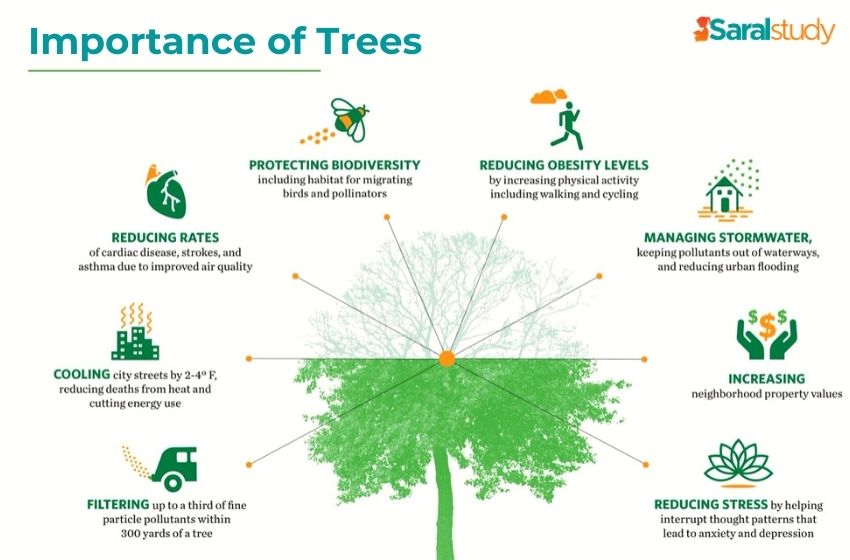
Importance of Trees: Trees play a significant importance in our environment and human well-being. Trees provide us with fresh water to drink, air to breathe, shade, and food for humans, animals, and plants. Trees give habitats for various species of fauna and flora, materials for construction, and places of spiritual, cultural, firewood for cooking, and heat and recreational importance. Trees are so essential for the global environment and the health of the species that live there. And they want our unconditional care and protection.
Why Trees Are Important?
Trees also play an important part in every community. Streets, parks, playgrounds, and backyards are filled with trees that form a peaceful, aesthetically pleasing atmosphere. Trees enhance our quality of life by bringing natural elements and wildlife habitats into urban environments. We collect under the cool shade they provide during outdoor activities with family and friends. Several areas are also the home of quite old trees which serve as historic landmarks and a great reference of town pride.
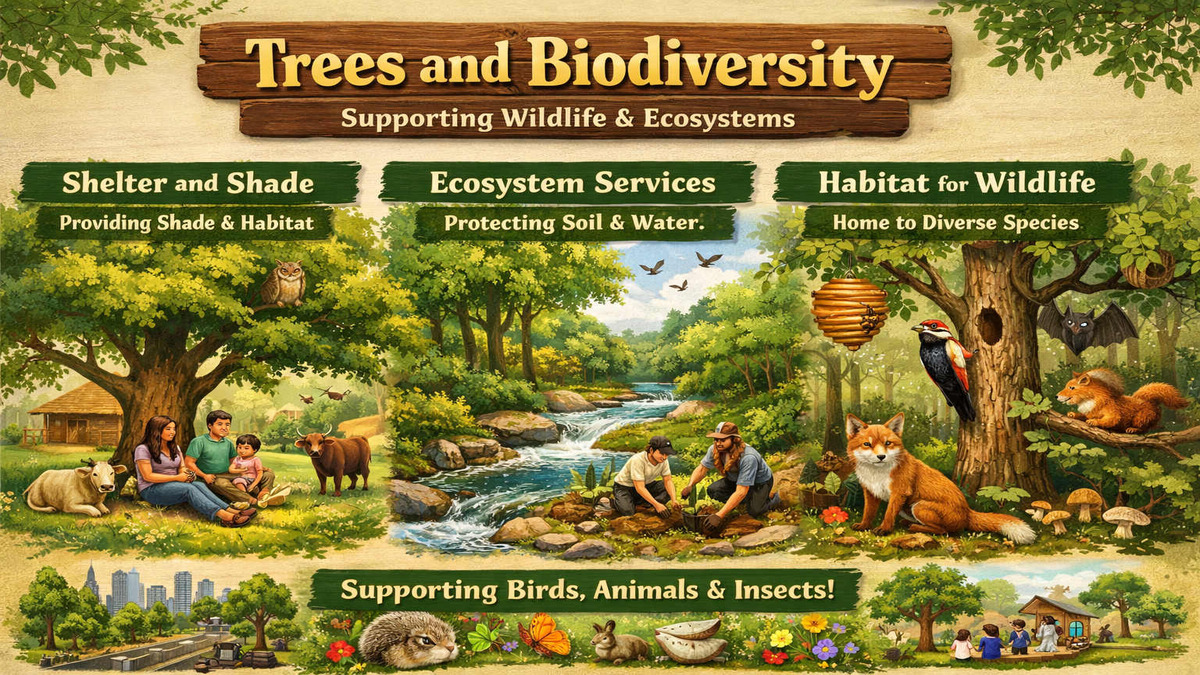
Many birds, animals, and insects call trees home. The different levels and canopies of trees give habitat to a different array of wildlife from the lower levels up to the very high canopies. Forest Garden farmers usually also use trees as a place to build hives to bring bees to their land to help in pollination and to get honey. We are currently losing species at a dangerous measure so the space for biodiversity is critical as it helps keep our planet thriving.
1. Trees Provide Shelter and Shade
When it is hot, human beings and animals look for an old tree that can give shade. There are several trees that people grow to give a good canopy for them to hold meetings and also have wonderful places to relax.
Besides, people from various cultures choose to hold meetings under trees. And, trees also provide building materials for human shelter as well as their animals. Trees also decrease the rate of evaporation and make the ground a better place to stay.
2. Ecosystem Services
Trees offer essential ecosystem services such as water filtration, flood control, and pollination. They support the delicate balance of our natural ecosystems, which in turn supports human life.
Trees protect the earth from soil erosion, fires, flooding, etc. Forest Garden farmers use trees as fences, windbreaks, and restrictions. Farmers use a living fence technique that has proven especially helpful in providing by forming a green wall to enhance their soil, provide a boundary, keep livestock out, and absorb and redirect heavy rains.
3. Trees boost wildlife 🐦
Trees host complex microhabitats. When young, they give habitation and food to wondrous communities of birds, insects, lichen, and fungi. When ancient, their trunks also provide the hollow cover required by species such as bats, wood boring beetles, and woodpeckers, etc.
One mature oak can be home to as many as 500 various species. Richmond Park is full of such trees, which is one of the purposes it has been named a National Nature Reserve and Site of Special Scientific Interest.
Social and Economic Benefits of Trees
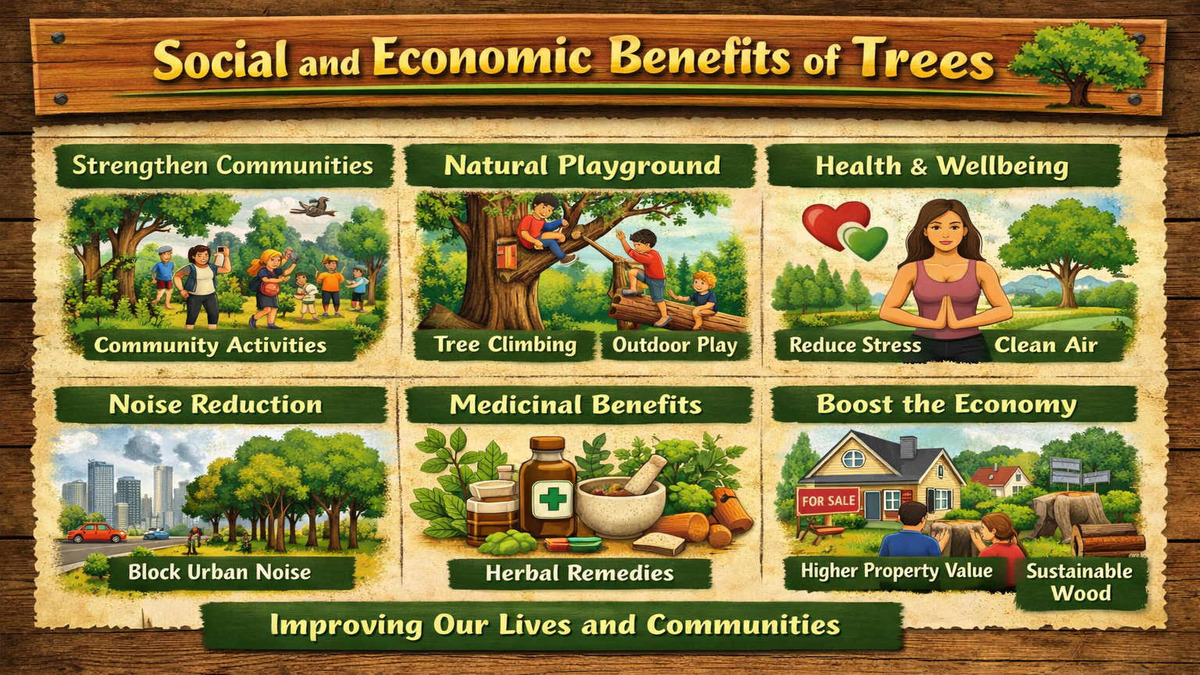
4. Trees strengthen communities
Trees sustain the distinctive character of a place and promote local pride. Woodlands can serve as an educational source and drive groups together for activities like walking and bird-watching. Trees are also valuable for children to play in and explore their sense of adventure.
5. Trees are a natural playground
The tree gives a great place to climb and explore. This is especially exciting in a world where technology can consume people’s interest. Children can learn to take risks while climbing trees. Adults can climb for robustness and strength building. Felled trees can become scale beams and a tall tree can give a good shelter or lookout during playtime.
6. Mental and Physical Health
The canopies of trees serve as a physical filter, confining dust, and absorbing pollutants from the air. They also provide shade from solar radiation and lessen noise.
Above 20 species of British trees and shrubs are recognized to have medicinal properties. Research proves that within minutes of being enclosed by trees and green space, your blood pressure drops, your heart rate slows and your stress levels come down.
7. Trees Control Noise Pollution
Trees decrease urban noise almost as efficiently as stone walls. Trees, planted at strategic positions in a neighbourhood or around your house, can reduce major noises from freeways and airports.
8. Trees are an Essential Source of Medicine🌱
For many years people used trees to use various ailments both in humans as well as their animals. Some of them are used for preparing solutions to drink. Others are rubbed on parts that are hurt. With time people applied to modern medicine, most of which is formed from different trees.
Now even with technology, most people still depend on holistic trees for medication. Trees treat most ailments.
9. Trees grow the economy
People are want to live, work, and invest in green surroundings. Research reveals that average house prices are 5-20 % higher when properties are near to mature trees. Companies get profit from a healthier, happier workforce if there are parks and trees nearby.
10. Trees provide sustainable wood
While alternative energy is ideal, the truth is that much of the world depend on wood to cook meals and boil water for purification. Where we work in Africa, approximately 80% of households rely on fuel wood and charcoal. While it can be demonstrated that planting trees for fuel or wood compete with food production, in the Forest Garden model, the two can coincide and complement one another. This means farmers are not increasing deforestation by cutting in the ancient forests.
Environmental Benefits
11. Trees benefit the environment🌍
Trees absorb carbon dioxide while they grow and the carbon that they store in their wood aids reduces the rate of global warming.
Trees decrease wind speeds and cool the air as they lose moisture. And it reflects heat upwards from their leaves. It’s considered that trees can lessen the temperature in a city by up to 7°C. Trees also assist prevent flooding and soil erosion, etc.
12. Controls Climate 🌡️
As trees inhale Carbon dioxide in the atmosphere, tree plantation is the best organic way that could be efficiently practised to reverse global warming and prevent climate change. In recent days, the importance of tree plantation has gained significant ground in many countries.
And there is so much more!
Trees become a source of medicines, foods, and materials, improving our planet and lives in limitless ways. We are continually discovering new ways that trees can benefit us. Research is uncovering hidden and beneficial ways in which trees enrich our planet and our lives. Without trees, we should not have a future.
Benefits of Trees
Trees offer numerous benefits, including:
Providing oxygen
Increasing property values and business traffic
Preventing soil erosion and slowing water runoff
Reducing noise pollution and combating climate change
Offering habitats for wildlife and cooling urban areas
Protecting from UV rays and providing medicines
Offering food and creating economic opportunities
Giving us invaluable resources like vegetables, fruits, wood, and paper
Supporting good rainfall and controlling air pollution
Playing a crucial role in maintaining the ecosystem balance by inhaling carbon dioxide and exhaling oxygen.
Steps to Protect and Preserve Trees
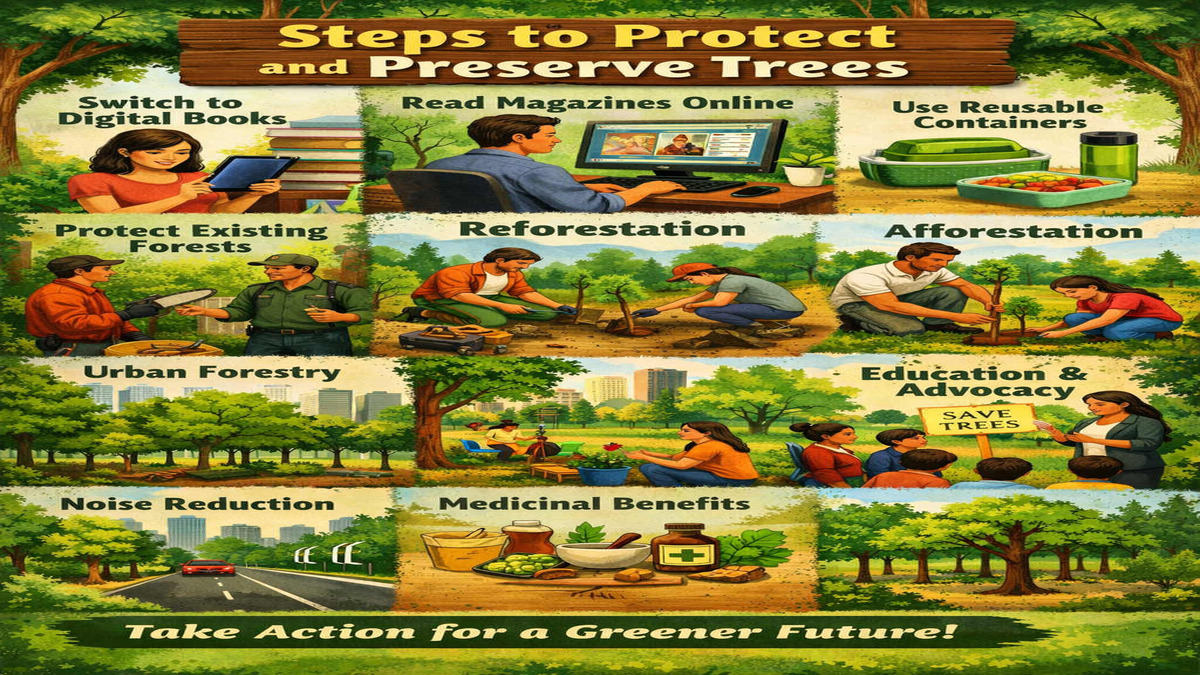
1. Switch to Digital Books
Digital Books create less of a demand for paper. Digital books are also more suitable as you have an infinite supply of books on a single device. You can also read from a digital device in the dark, unlike with a book published on paper.
2. Read Your Magazines Online
Most magazines offer the same content online if you sign up for a subscription with them. You will also get the content shortly after it is released instead of waiting.
3. Use Reusable Containers
Use containers that can be used several times for your food, gadgets, and just anything.
4. Protect Existing Forests
In addition to the threat that humans act for forests, they are also endangered by parasitic fungi, viruses, rusts, mistletoe, and nematodes. These all destroy the trees. An effort should be made to administer a chemical spray or some other treatment to destroy the parasites.
5. Reforestation
The sustainable yield system also needs that every tree that gets cut down must be replanted. So, any tree that gets burned down due to forest fires or mining activities must also get replanted. This can be done by natural or artificial methods. In the rough ground, aerial seeding is the method of choice.
6. Afforestation
Fresh afforestation programs should also be started. New plantations will enhance the forest cover and will also aid in making up the eco-balance. For afforestation, the range of trees should be made according to local geographical conditions. And then care must be taken during the initial growth of the trees.
7. Urban Forestry
Urban forestry involves the management and care of trees in urban settings. This includes planting trees in parks, streets, and residential areas, as well as maintaining existing trees to ensure their health and longevity.
8. Education and Advocacy
Raising awareness about the importance of trees and advocating for policies that protect forests are essential steps in conservation efforts. Engage with local communities, schools, and policymakers to promote tree planting and conservation initiatives.
Government Initiatives
Both central government and state governments can take some steps in this direction, such as:
Pass acts for the conservation of forests,
Survey of the forest resources,
Discover the areas where reforestation can be done,
Regulate the commercial use of forest products,
Preserve forest from fire, mining, and other natural disasters,
Develop national parks,
Boost forest developmental activities like social forestry, agroforestry, etc., and
Prepare master plans, both for long-term and short-term periods, etc.
Conclusion
Trees have a lot of importance in our lives, and it gives seamless service to the environment. We somehow have not protected them and that is why as of today we are being affected by global warming, severe pollution, and other ill effects of deforestation. Trees can be used and nurtured nicely so that human beings can survive on this planet. We should help others to plant more and more trees. It is for our own progress and the earlier we understand this the better it is for us.
We should realize that one of the severe issues in the present condition is the devaluation of trees. Henceforth the attention to planting trees must be broadly spread to make our world’s condition greener and better. One should start contributing at an individual level. We should stop cutting down trees and remember that if there will be no tree, there will be no life.
The tree plays a major role in our life. Everyone must be aware of the importance of tree plantation and also motivate and inspire others to plant more trees. It is not just for the present generation who can enjoy the benefits of having trees but also the future generation should also get the advantages of having trees around.
Frequently Asked Questions
Q1. Which is the largest tree in the world?
Ans. General Sherman, a giant sequoia, is the largest tree by volume in the world, standing 275 feet (83.8m) tall with 52,000 cubic feet (1,486.6m) of wood.
Q2. How much water can a large tree intake in a single day?
Ans. In one day, one large tree can lift 100 gallons of water out of the ground and release it into the air as oxygen and water vapour.
Q3. How are trees useful for us?
Ans. Trees are an integral part of the ecosystem. It assists to maintain balance and also acts as a valuable source of various resources
Q4. What is the importance of the tree?
Ans. Trees are one of the most valuable natural resources on earth. It is also an essential part of the ecosystem, as many organisms depend on trees for their food and shelter.
Q5: What are the main uses of trees?
Ans. Trees give many invaluable resources such as medicine, shelter, raw materials, and more.
Q6. How do forests help us?
Ans. Forests act as a shelter to various species of animals and plants. They also give humans several resources such as medicine and raw materials.
Q7. How do we save trees?
Ans. We can save trees by not cutting them down. We must plant more trees if trees are cut in other areas.
Q8. Why are trees important for the environment?
Ans. Trees play a vital role in maintaining environmental balance by reducing air pollution, controlling climate change, conserving water, and providing habitat for wildlife.
Q9. How do trees help in reducing pollution?
Ans. Trees absorb harmful gases like carbon dioxide and release oxygen, helping to purify the air and reduce pollution levels in the environment.
Q10. What will happen if trees are cut down?
Ans. If trees are cut down excessively, it can lead to problems like global warming, soil erosion, loss of biodiversity, and imbalance in the ecosystem.
Q11. Why should we plant more trees?
Ans. Planting more trees helps improve air quality, reduce global warming, conserve water, and create a healthier environment for humans and wildlife.
Q12. How do trees help humans in daily life?
Ans. Trees provide oxygen, food, medicine, wood, shade, and clean air, making them essential for human survival and everyday life.
Q13. What role do trees play in climate change?
Ans. Trees help fight climate change by absorbing carbon dioxide from the atmosphere and reducing the effects of global warming.
All types of pollution; in any form around the world is a threat to the health of the planet Earth and the life forms that are settled in it. According to a report, children are most at risk due to pollution as it impacts the health and well-being of a child. Due to this, there can be a rapid increase in non-communicable diseases among children e.g. cancer, diabetes, asthma, birth defects, etc.
What is Pollution?
The definition of pollution is complex to define yet is easy to see at the same time. In distinction to it, pollution is the process of making land, water, air, or other parts of the environment not safe or suitable to use. This is due to the contaminant present in a natural environment. Things such as light, sound, and temperature can also be considered pollutants when introduced artificially into an environment.
Types of Pollution
There can be different types of pollution in our surroundings but the three major types of pollution are water, air, and land pollution.
1. Water Pollution
Water pollution is the release of substances into groundwater, lakes, sea, and oceans which makes it unsafe for drinking, swimming, washing, etc. People who drink polluted water are exposed to perilous chemicals that may make them sick. Around 4,000 children die every day due to drinking dirty water. Sometimes, these polluted waters can harm people indirectly. As the fish that live in polluted water is unsafe to eat which can make one sick. Because they have too many pollutants in their flesh. There are many sources of water pollution and some of them are given below:
Oil and natural gas, which can leak into oceans and lakes from natural underground sources are known as petroleum seeps which causes water pollution. The Coal Oil Point Seep is the world’s largest petroleum seep. It affects marine plant and animal life.
Another source of water pollution is Oil spills. The Deepwater Horizon oil rig detonated in the Gulf of Mexico, in April 2010 causing oil to burst from the ocean floor is an example of oil spills. In the following months of the same year, hundreds of millions of gallons of oil spewed into the gulf waters resulting in the killing of swamp plants and aquatic organisms such as crabs and fish.
The most common source of water pollution is Sewage. Around the world, many cities have a poor facility of sewage systems and sewage treatment plants. For instance, Delhi, the capital of India, is home to more than 21 million people, and the waste produced within the city is dumped in the Yamuna River. This makes it dangerous to use as a source of water for drinking, washing, and hygienic purposes.
One of the major sources of water pollution is the fertilizer which is used in agriculture. As it contains large amounts of the element’s nitrogen and phosphorus, which help plants to grow. Rainwater washes fertilizer into streams and lakes which makes water polluted.
Garbage is also one of the sources of water pollution. As many plastics such as bottles, caps, bags are seen floating in the river. Which are carried through the Ocean to certain places on the globe. The Great Pacific Garbage Patch is one of the largest garbage patches in the ocean which is the size of Texas.
2. Air Pollution
Air pollution is one of the foremost types of pollution. As air pollutants persevere in the atmosphere and are carried long distances by winds. Air pollution surpasses local, regional, and international boundaries. This affects the global climate and air, which consists mostly of 78% nitrogen, 21% oxygen, and the remaining 1% is inert gases. But now it is under the constant attack of various harmful gases which are released through industries and automobiles.
More than 2 million people die each year due to air pollution only. As it affects the respiratory organ. Due to which there is a rapid increase in asthma cases and other respiratory diseases. Depending on the pollutant present in the atmosphere, human health can vary widely. The effects on health can be extensive and severe if the pollutant present in the atmosphere is highly toxic.
For example, over 2,000 people were killed in the Bhopal gas tragedy in 1984 and 200,000 suffered respiratory problems. Its effect can be seen to date.
3. Land Pollution
All around the world waste materials like household garbage and industrial waste are deposited on Land. According to a report Urban India right now produces 62 million tons of waste and is further assumed that in 2030 it will reach 165 million tons. Commercial or industrial waste is an important share of solid waste. Wastes are classified into two parts hazardous and non-hazardous. Materials that come under Non-hazardous are construction material, medical waste (like bandages, surgical gloves, surgical instruments, discarded needles, etc.).
Hazardous waste is any liquid, solid, or slops waste that contains properties that are dangerous to human health and the environment. These hazardous wastes are generated from mining, petroleum refining, pesticide manufacturing, and other chemical production. Hazardous wastes are generated from households as well, including paints and solvents, motor oil, fluorescent lights, aerosol cans, and ammunition.
Some other types of Pollution
4. Noise Pollution
Albeit humans can’t see or smell noise pollution, but it still affects the environment. The main sources of noise pollution are mostly Industries, Vehicles, Constructions, Planes, etc. Noise can be more than an annoyance. At a certain point in time, it can cause physical damages in the eardrum which can result in temporary or permanent hearing loss. According to a report in addition to causing hearing loss, it also raises blood pressure, pulse rates, causes irritability, anxiety, and mental fatigue.
Underwater noise pollution is also one of the forms of noise pollution as it affects aquatic life. Like the sound coming from ships can disrupt the navigation system of whales, dolphins, and other species as well as marine.
5. Light Pollution
An undesirable or unnecessary artificial light which is a form of waste energy can cause an adverse effect and degrade the quality of the environment. Although light pollution may not appear harmful for public health, it is an environmental quality affair of no small importance. It harms birds, other animals, and astronauts, etc.
Light pollution is assessed as one of the contributing factors in the affected decline of certain migratory birds’ population over the past several decades. Even lights from an impartially small town with a population of mere 3,000 people can cause significant night sky degradation for an observer.
6. Indoor Air Pollution
The air present inside our house can also be polluted. As air and carpet cleaners, insect sprays, and cigarettes are all sources of indoor air pollution.
Effects of Pollution
The pollution effects can be seen every day, around us on water, air-land, and other forms.
1. Effects of Air Pollution
An increased risk of heart attack, wheezing, coughing, breathing problems, and irritation of the eyes, nose, and throat are all the causes of high levels of air pollution.
It can also cause worsening of current heart problems, asthma, and other lung complexities.
Due to air pollution animals also suffer from numerous health problems like humans such as birth defects, reproductive failure, and diseases.
The chief cause of acid rain is air pollution. The formation of acid rain is due to the nitrogen oxide and sulfur dioxide which are released by industries. It makes soil and water bodies acidic and damages trees, monuments, etc. By the burning of fossil fuels, nitrogen oxides are released into the air which is responsible for toxic algae blooms.
The depletion of the ozone layer is also the effect of air pollution. As the release of man-made compounds including hydrochlorofluorocarbons, chlorofluorocarbons, and halons formerly used as coolants, foaming agents, pesticides, solvents, aerosol propellants, and fire-extinguishers are depleting the ozone. Because of which harmful ultraviolet rays are entering the surface of the earth and giving rise to Global Warming.
2. Effects of Water Pollution
Water pollution effects depend on which chemicals are being dumped whereas it is a serious threat to humans, animals, and aquatic life.
By dumping garbage and chemicals, water bodies that are near metro areas tend to be heavily polluted, both legally and illegally.
The death of aquatic creatures by far is the biggest outcome of water pollution. Due to the aquatic creature, human beings are also being affected by it directly or indirectly. Through this polluted water, only many infectious diseases like typhoid, jaundice, cholera, dysentery, and malaria are now common. It also causes algal bloom in a lake; the generation of newly introduced nutrients encourages the growth of plants and algae which in return reduces the level of oxygen in the water.
Acidification of the ocean is making shellfish and corals difficult to survive. As they absorb carbon pollution which is created each year due to the burning of fossil fuels, oceans are becoming acidic day by day.
3. Effects of Land Pollution
Land pollution has substantial consequences for humans, animals, microorganisms, and aquatic life. Contaminated land can cause various problems on the skin, respiratory problems, and even different kinds of cancers.
These toxic substances come into touch with the human body directly by eating fruits and vegetables that have been produced in polluted soils, being consumed through drinking water that has been contaminated, direct contact with the skin, and breathing in air polluted with particles and dust.
Deforestation is the most important concern when it comes to land degradation and soil erosion. Clear cutting of vegetation and tree cover creates severe conditions that devastate ecosystems and habitats.
Deforestation also creates an imbalance in atmospheric conditions, reducing the amount of carbon that is naturally taken out of the atmosphere. This is a severe problem acknowledging that most pollution generated by people is carbon-based.
4. Effects of Noise & Light Pollution
Noise pollution can cause stress, hearing loss, headaches, irritation, and sleep loss resulting in decreased productivity.
Oil drills, submarines, and other vessels on and in the ocean can cause unnecessary noise that has resulted in the damage or death of marine animals, particularly whales.
Too much light causes eye strain and anxiety, harming our eyes and reducing our quality of life. Light pollution also causes a reduction in the hormone melatonin that helps us to fall asleep, resulting in restlessness and exhaustion.
Many birds, mammals, insects, and reptiles are photoperiodic meaning their movement, mating, growth and development, and eating cycles are controlled by natural light patterns. Light pollution can prevent these natural ways and cycles, causing a decrease in wildlife populations.
How to Control Pollution
Pollution prevention is major global attention because of its devastating effects on people’s health and the environment. As we are all inhabitants on Earth. So everyone is a stakeholder, and every person has something to contribute to advance effective pollution prevention and awareness. Environmental protection is a natural extension of caring for ourselves, loving our children, and securing a sustainable future for generations to come.
Every action or inaction of any person affects the environment—be it good, neutral, or negative. By becoming aware and doing the right thing, we want to be part of the solution. Some things that you can do mention below:
Use Eco-Friendly Transportation.
Drive an electric or hybrid car, or at least prefer one that uses unleaded gasoline.
Keep your car in good running condition to avoid discharges.
Share a ride or carpool.
If possible, choose to walk or ride a bicycle whenever.
Dispose of Waste Responsibly
Never use open fires to dispose of waste, mainly chemicals, and plastic.
Adopt the 3 R’s of solid waste management that are reduced, reuse, and recycle.
Use sustainable, enhanced, or recycled building materials.
Start composting leaves and clippings from your yard and food scraps from your kitchen to decrease waste while improving your soil.
Take care to well dispose of your pet’s waste.
Adopt Renewable Sources of Energy
Utilize the power supplied abundantly and freely by wind and sun. Hang your laundry to dry to reduce your use of gas or electricity, and open a window or put on a sweater rather than switching on the air conditioner or heater.
Examine investing in solar panels or other renewable energy sources for your home or business.
Support Conservation as a Consumer
Purchase local foods and goods. In this method, the use of fuel for transporting goods can be reduced.
See around your house or place of business for means you could conserve water.
Use and purchase products that are eco-friendly or made with biodegradable materials.
Avoid plastic.
Always carry a bag when you shop.
Avoid Disrupting the Ecosystem.
Plant more trees. More number of trees means clean air, more oxygen, and beautiful surroundings.
Say a big “NO” to pesticides and GMOs (genetically modified organisms).
How long does some garbage Last?
Different materials decompose at different rates. How long do these common types of trash take to break down?
Paper
2-4 weeks
Tin can
100 years
Plastic Bottle
450 years
Glass Bottle
500 years
Styrofoam
Never
Orange Peel
6 months
Milk Carton
5 years
Plastic Bag
15 years
Universal bodies who are trying to control the pollution
Around the world, people and governments are making efforts to resist pollution. Recycling, for instance, is becoming more prevalent. In recycling, waste is processed so its useful materials can be used again. Aluminum, Glass, cans, and various types of plastic can be melted and reused. Paper can be broken down and converted into a new paper. There are the highest recycling rates in Australia and Switzerland. These nations recycle between 50 and 60 percent of their waste. The United States recycles about 30 percent of its waste.
Governments can resist pollution by passing laws that limit the amount and types of chemicals factories and agribusinesses are permitted to use. The smoke formed due to coal-burning power plants can be filtered. People and businesses that illegally dump pollutants into the water, land, and air can be penalized for millions of dollars. Some government programs, such as the Superfund program in the United States can impose polluters to clean up the sites they polluted. Different actions taken by governments and organizations are given below.
International agreements can also reduce pollution. The Kyoto Protocol, a United Nations agreement to limit the eruption of greenhouse gases has been signed by 191 countries. This law limited what pollutants could be released into the water and set measures for how clean water should be. Today, the Cuyahoga River is much cleaner. Fish have returned to regions of the river where they once could not persevere. But even as some rivers are becoming cleaner and others are becoming more polluted. Countries with growing economies normally need more power plants, which produce more pollutants.
International Environmental Law (IEL) is regarded as an attempt to control pollution and the reduction of natural resources within the framework of sustainable development. It is a branch of public international law – a body of law formed by states for states to govern problems that arise between states.
The Clean Air Campaign is a not-for-profit organization. Under this organization, the Georgians take steps to improve the quality of the air and reduce traffic congestion. The organization was established in 1996 by the government, business, environmental, civic, health, and educational organizations to address traffic congestion and air quality concerns in the metro Atlanta region.
An international organization, the International Union for Conservation of Nature is serving in the field of nature conservation and sustainable usage of natural resources. It is required in data collection and analysis, research, advocacy, field projects, and education. IUCN’s mission is to encourage, influence, and aid societies throughout the world to conserve nature and to ensure that any usage of natural resources is equitable and ecologically sustainable.
United Nations Water (UN-Water) is an interagency mechanism that organizes the efforts of United Nations entities and organizations working on water and sanitation issues. There are over 30 UN organizations that give out water and sanitation programs, considering the point that water problems run in all of the UN’s main focus areas. UN-Water’s role is to organize so that the UN family ‘delivers as one’ in acknowledgment of water-related challenges. India’s role in pollution control.
India’s Role in Pollution Control
In India, all pollution control measures are based on the three major acts: The Water act (1974), The Air act (1981), and The Environment Protection Act (1986). Recently the pollution limits of industries have been bound, and decades-old and outdated norms have been updated. Still, there are gaps in matching global best practices and control measures. For instance, the Orange and Green category industries are not rigorously observed as the Red category industries. Pollution control actions and solutions are not based on technological advancement.
The authorized organization, CPCB (The Central Pollution Control Board), was established under the Water (Prevention and Control of Pollution) Act, in September 1974. Moreover, CPCB was trusted with the powers and functions under the Air (Prevention and Control of Pollution) Act, 1981. It helps as area development and also gives technical services to the Ministry of Environment. And Forests of the provisions of the Environment (Protection) Act, in 1986. The basic purposes of the CPCB, as spelled out in the Water (Prevention and Control of Pollution) Act, in 1974. And the Air (Prevention and Control of Pollution) Act, in 1981.
To encourage cleanliness of streams and wells in many areas of the States by prevention, control, and reduction of water pollution, and
To enhance the quality of air and to prevent, control, or reduce air pollution in the country.
The National Green Tribunal has been founded on 18 October 2010 under the National Green Tribunal Act 2010. For efficient and expeditious disposal of cases associating with environmental protection and conservation of forests and other natural resources including implementation of any legal right associating with the environment and providing relief and reimbursement for damages to property and persons and matters connected therewith or incidental thereto. It is a specialized body provided with the requisite expertise to manage environmental conflicts involving multi-disciplinary problems. The Tribunal shall not be bound by the procedure set down under the Code of Civil Procedure, 1908, but shall be conducted by principles of natural justice. New Delhi is the Principal Place of Sitting of the Tribunal and Kolkata, Bhopal, Pune, and Chennai shall be the other four areas of sitting of the Tribunal.
Conclusion
Pollution impact is not something any individual causes or can totally prevent or correct. So, to reduce pollution and its harmful effects we must hang together and should initiate in stopping people from litter. As even as individuals we are not impotent in the battle to preserve our environment.